
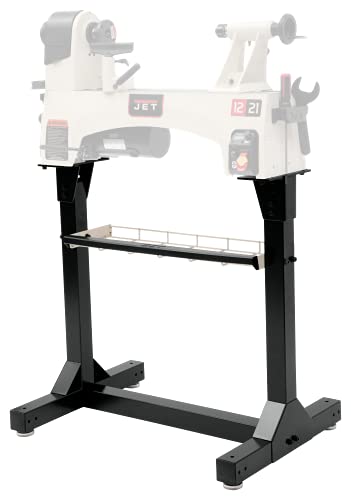

Is the JET JWL-1221VS Good?
Yes. The JET JWL-1221VS is a strong choice for home woodworkers who want room for longer projects and fine speed control. Its 1 HP motor runs on standard 115V power. It has three speed ranges, from 60 to 3,600 RPM. That low starting speed helps when you work with large or uneven blanks. You can start slowly and raise the speed as the work becomes balanced.
The 20.5-inch distance between centers is one of its best features. It gives you more room for long spindles, table legs, and similar work. The digital speed display also makes speed checks simple. I would put this lathe high on the list for a serious home shop. It is not a full-size production machine, but it offers a useful mix of control, capacity, and size.
What Makes It Stand Out
- 1 HP MotorThe 1 HP motor runs on 115V single-phase power. It suits many home workshops and common woodturning jobs.
- Wide Speed RangeThe lathe offers 60 to 3,600 RPM. You can select one of three belt ranges to suit the work.
- 20.5-Inch Center DistanceThe longer bed gives you more room for spindles and other long workpieces than the Rikon.
- Digital Speed ReadoutThe display shows spindle speed. This helps you check and repeat useful settings during a project.
- Forward And ReverseThe forward and reverse control gives you more options for sanding and finishing. Always stop the spindle before changing direction.
- 24 Indexing positionsThe built-in indexing system helps with evenly spaced marks, grooves, and decorative details.
- Cast-Iron ConstructionThe heavy cast-iron body helps reduce vibration and gives the machine a stable feel when mounted on a firm stand.
- MT2 TapersThe headstock and tailstock use MT2 tapers. This is a common size for many woodturning accessories.
My Recommendation
Choose the JET if you turn long spindles, need a low starting speed, or want a digital speed display. It is a strong fit for a regular home workshop.
| Best For | Why |
|---|---|
| Long spindle projects | Its 20.5-inch center distance gives you more working room. |
| Large rough blanks | Its 60 RPM low range helps you start slowly. |
| Regular home turning | The 1 HP motor, speed display, and indexing system offer useful control. |
Is the Rikon 70-150VSR Good?
Yes. The Rikon 70-150VSR is a good choice for woodworkers who want a compact variable-speed lathe. It has a 1 HP DC motor and a 12-inch swing. Its center distance is 16.5 inches. This gives you enough room for pens, small bowls, tool handles, and many short spindle projects.
One feature I like on paper is its forward and reverse function. This gives you more options when sanding and finishing. Its three speed ranges cover 250 to 3,200 RPM. The motor and speed setup make it a useful workshop machine. However, its 250 RPM minimum is higher than the JET’s 60 RPM. That matters when you work with large or uneven pieces. The Rikon makes more sense when compact size and everyday small projects matter most.
What Makes It Stand Out
- 1 HP DC MotorThe 1 HP DC motor runs on 115V single-phase power. It provides useful power for common small and medium turning tasks.
- Variable Speed ControlThe electronic speed system covers 250 to 3,200 RPM. You can adjust the speed to match the wood and project.
- Three Speed RangesThe ranges are 250 to 850, 430 to 1,450, and 950 to 3,200 RPM. Belt changes help select the right working range.
- 12-Inch SwingThe 12-inch swing over the bed supports many small and medium bowl projects.
- 16.5-Inch Center DistanceThe bed supports short spindle work, tool handles, and similar pieces.
- Forward And ReverseYou can run the spindle in either direction. This can help with some sanding and finishing tasks.
- 24 Indexing PositionsThe indexing system supports evenly spaced decorative details around a workpiece.
- MT2 TapersThe headstock and tailstock use MT2 tapers. This gives you access to many common accessories.
- Outboard Turning OptionThe machine offers an outboard turning arrangement. Its published outboard swing is 15 inches, subject to the correct setup and accessories.
My Recommendation
Choose the Rikon if you mainly make pens, handles, small bowls, and short spindle projects. It is a sensible option when you want a compact 1 HP machine with reverse operation.
| Best For | Why |
|---|---|
| Small bowl turning | The 12-inch swing offers useful room for many small bowls. |
| Pen and handle makers | Its 16.5-inch center distance suits many short turning projects. |
| Compact workshops | Its 95-pound net weight is easier to manage than the heavier JET. |
JET JWL-1221VS vs Rikon 70-150VSR: Side-by-Side Test
Both machines use a 1 HP motor and variable-speed control. Both have a 12-inch class swing and MT2 tapers. They also support forward and reverse operation. So, the main difference is not motor size. It is the working space, low-speed range, and machine design.
The JET has more room between centers and starts at a lower speed. The Rikon is lighter and offers an outboard turning option. These details can shape your choice more than the brand name.
1. Motor Power: Are They Equal?
Motor power matters when you turn dense wood or remove a lot of material. Both lathes list a 1 HP motor, so neither has a clear horsepower edge.
| Feature | JET JWL-1221VS | Rikon 70-150VSR |
|---|---|---|
| Motor power | 1 HP | 1 HP |
| Motor type | Induction motor | DC motor, TEFC |
| Voltage | 115V | 115V |
| Current | 6 amps | 6 amps |
⭐ JET – 9/10 | Rikon – 9/10
This category is a tie. Both offer 1 HP, but their motor designs differ.
2. Speed Range: Which Has Better Control?
Speed control is vital when you turn bowls, spindles, and uneven blanks. A low starting speed can make a big difference with rough wood.
| Feature | JET JWL-1221VS | Rikon 70-150VSR |
|---|---|---|
| Minimum speed | 60 RPM | 250 RPM |
| Maximum speed | 3,600 RPM | 3,200 RPM |
| Speed ranges | 60-900, 110-1,800, 220-3,600 RPM | 250-850, 430-1,450, 950-3,200 RPM |
| Speed display | Digital readout | Electronic variable speed |
⭐ JET – 10/10 | Rikon – 8/10
The JET wins. Its 60 RPM minimum gives you more control with large and unbalanced blanks.
3. Turning Capacity: Which Has More Room?
The size of your workpiece sets the limits of a lathe. Check both the swing and the distance between centers before you buy.
| Feature | JET JWL-1221VS | Rikon 70-150VSR |
|---|---|---|
| Swing over bed | 12.5 inches | 12 inches |
| Distance between centers | 20.5 inches | 16.5 inches |
| Swing over tool rest base | 9.45 inches | 9.25 inches |
| Outboard swing | Not listed as a standard feature | 15 inches |
⭐ JET – 10/10 | Rikon – 8/10
The JET wins for regular inboard work. The Rikon has an outboard turning option for larger work with the correct setup.
4. Build Quality: Which Feels More Solid?
A heavy base can help reduce vibration. This matters when you turn dense wood or work at higher speeds.
| Feature | JET JWL-1221VS | Rikon 70-150VSR |
|---|---|---|
| Main construction | Cast iron | Cast iron |
| Net weight | About 121 pounds | About 95 pounds |
| Indexing | 24 positions | 24 positions |
| Mounting | Firm bench or optional stand | Firm bench or suitable stand |
⭐ JET – 9/10 | Rikon – 8/10
The JET has the weight advantage. Its heavier body can help provide a steadier base when properly mounted.
5. Reverse Operation: Which Offers More Flexibility?
Reverse operation can help with certain sanding and finishing tasks. It is useful, but it does not replace good sanding technique.
| Feature | JET JWL-1221VS | Rikon 70-150VSR |
|---|---|---|
| Forward operation | Yes | Yes |
| Reverse operation | Yes | Yes |
| Sanding use | Supports reverse sanding | Supports reverse sanding |
| Direction control | Electronic control | Electronic control |
⭐ JET – 9/10 | Rikon – 9/10
This category is a tie. Both machines offer forward and reverse operation.
6. Ease Of Use: Which Is More Convenient?
Simple controls save time in a busy workshop. A clear speed display and easy belt access can make routine work smoother.
| Feature | JET JWL-1221VS | Rikon 70-150VSR |
|---|---|---|
| Digital speed readout | Yes | No digital readout listed in the manual |
| Variable speed | Yes | Yes |
| Belt range changes | Manual belt changes | Manual belt changes |
| Indexing positions | 24 | 24 |
⭐ JET – 9/10 | Rikon – 8/10
The JET has the edge because its digital speed display makes it easier to check the spindle speed.
7. Size And Weight: Which Fits A Small Shop?
A small workshop needs smart space planning. A lighter lathe can be easier to move, but a heavy machine can offer more stability.
| Feature | JET JWL-1221VS | Rikon 70-150VSR |
|---|---|---|
| Net weight | About 121 pounds | About 95 pounds |
| Overall length | About 39.3 inches assembled | About 39 inches |
| Swing | 12.5 inches | 12 inches |
| Workshop setup | Needs a sturdy bench or stand | Needs a sturdy bench or stand |
⭐ JET – 8/10 | Rikon – 9/10
The Rikon wins for easier handling because it weighs about 26 pounds less.
8. Value: Which Gives You More For Your Money?
Price can change with the seller, stock, and current offers. It is best to compare the full package rather than the machine price alone.
| Feature | JET JWL-1221VS | Rikon 70-150VSR |
|---|---|---|
| Motor | 1 HP | 1 HP |
| Variable speed | 60-3,600 RPM | 250-3,200 RPM |
| Long work capacity | 20.5-inch centers | 16.5-inch centers |
| Extra feature | Digital speed readout | 15-inch outboard swing option |
⭐ JET – 9/10 | Rikon – 8/10
The JET offers more standard inboard capacity and a wider speed range. The Rikon can be better value if its selling price is lower and its capacity suits your work.
Final Verdict: Which Should You Buy?
The JET JWL-1221VS is my overall pick based on its published specifications. It has a longer bed, a lower starting speed, a higher top speed, and a digital readout. These features make it more flexible for many home woodturners.
The Rikon 70-150VSR still makes sense. It weighs less, has a 1 HP motor, and offers forward and reverse operation. Its outboard turning option is also useful. Choose the JET for longer work and better low-speed control. Choose the Rikon for compact projects and easier handling.
FAQs Of JET JWL-1221VS vs Rikon 70-150VSR

John Anderson
Contributor