
A band saw is a safe, versatile saw for curves, resawing, and joinery.
If you want clean curves, straight veneers, and calm, safe cuts, this is your place. I wrote The Complete Band Saw Guide to give you clear steps, tested tips, and pro tricks. You will learn how to set up, tune, and use your saw with confidence, even if you are new to the tool.

What a Band Saw Is and How It Works
A band saw uses a thin, endless blade that runs on two wheels. The blade moves in one direction. That steady motion gives smooth, low-stress cuts. You can cut curves, rip boards, and resaw thick stock with control.
The table tilts for bevel cuts. Guides and a thrust bearing support the blade as wood feeds in. The throat sets how wide a piece you can cut. The resaw height sets how tall a piece you can slice. Variable speed lets you cut metal and plastic too.
I learned early that a band saw shines when you slow down. Let the teeth do the work. That mindset anchors The Complete Band Saw Guide and helps you cut better from day one.
Types of Band Saws
Not all band saws are the same. The right style depends on your work, space, and budget.
- Benchtop band saws: Compact, light, great for small shops. Best for thin stock and light curves.
- Floor-standing band saws: Heavier frames and more power. Better resaw height and smoother cuts.
- Wood vs metal band saws: Wood saws run fast. Metal saws need slower speeds or gear reduction.
- Portable band saws: Handheld units for pipes, rebar, and jobsite use.
- Two-wheel vs three-wheel: Two-wheel saws last longer on blades. Three-wheel saves space but bends blades more.
If you are tight on space, a 10 to 12 inch benchtop saw works. If you want veneers and big curves, a 14 to 18 inch floor model is the move. The Complete Band Saw Guide breaks down what to buy and why it matters.

Key Components and Terminology
Know the parts, and setup gets simple. Here are the core terms I use in The Complete Band Saw Guide.
- Blade width: Narrow blades turn tight curves. Wide blades track straight.
- TPI (teeth per inch): Lower TPI cuts fast and rough. Higher TPI cuts slow and smooth.
- Tooth forms: Hook, skip, and variable pitch match different tasks.
- Gullet: The valley between teeth that carries chips out.
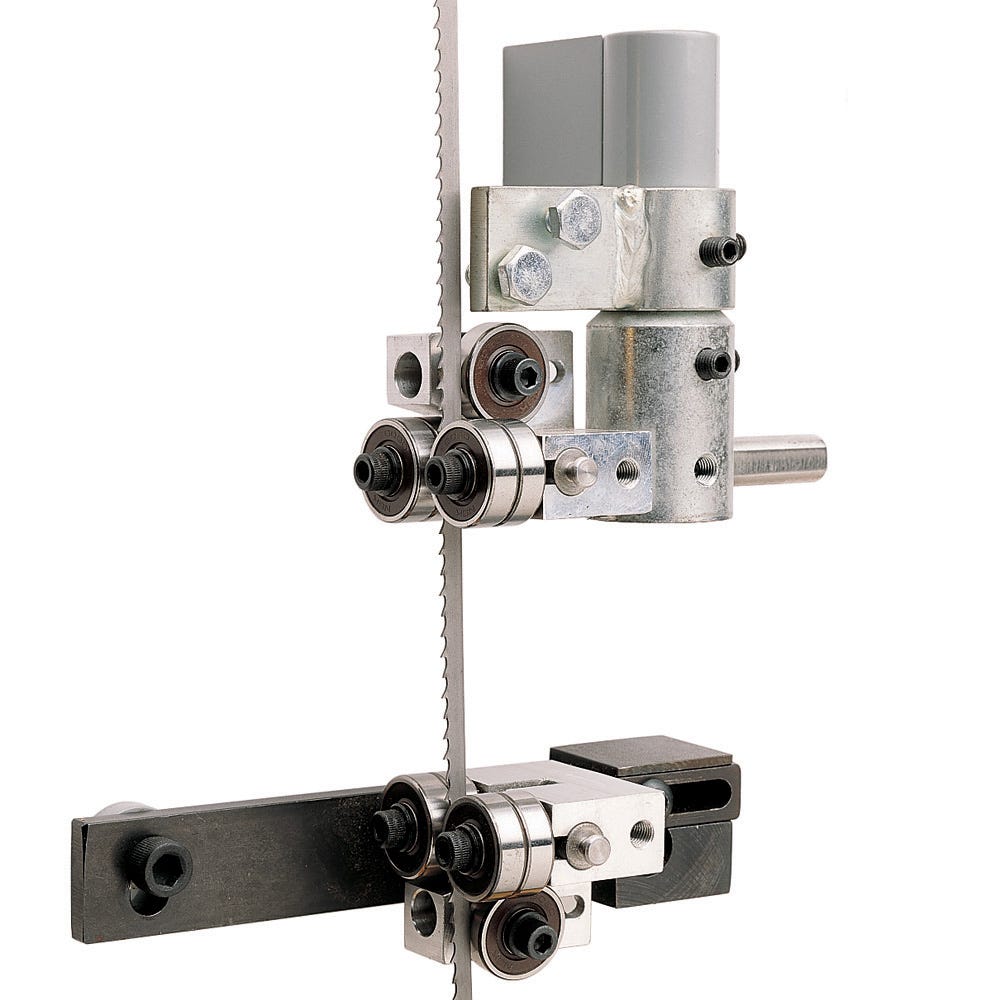
- Guides: Blocks or bearings that steady the blade left and right.
- Thrust bearing: Stops the blade from moving back under load.
- Tires: Rubber or urethane rings on the wheels that grip the blade.
- Fence and miter gauge: Help with straight rips and angled cuts.
- Quick-release: A lever to relax blade tension when not in use.
Each item plays a role. When one is off, the cut suffers. This is why the checks in The Complete Band Saw Guide start with parts and end with process.

Band Saw Blades: Selection and Setup
Blade choice is the heart of the cut. The wrong blade makes work slow and rough. The right blade makes it smooth and easy.
- Width guide: 1/8 to 1/4 inch for tight curves. 3/8 to 1/2 inch for general work. 3/4 inch or wider for resaw.
- TPI guide: Keep at least three teeth in the cut. 3 TPI for thick wood and resaw. 6 to 10 TPI for general cuts. 14+ TPI for thin stock, plastics, and metal.
- Tooth type: Hook tooth for fast rip and resaw. Skip tooth for green or stringy wood. Variable pitch for low vibration and smoother cuts.
- Blade types: Carbon steel for wood. Bi-metal for metal. Carbide tipped for thick hardwood resaw.
Setup steps I teach in The Complete Band Saw Guide are simple:
- Unplug the saw. Install the blade with teeth pointing down toward the table.
- Tension to the blade width using the scale as a start.
- Track the blade so it rides near the crown of the upper tire.
- Set side guides just off the blade, not touching.
- Set the thrust bearings a paper’s thickness behind the blade.
- Raise the guard to sit about 1/4 inch above the work.
Break in a new blade with light feed and mild cuts for a few minutes. This helps the teeth last longer.
What TPI is best for resawing?
Use 2 to 4 TPI with deep gullets. Wide blades with hook teeth clear chips and keep the cut cool.
How tight should a band saw blade be?
Tight enough that the blade does not flutter under light cut. Tap the blade; a higher, steady ping is a good sign. Use a gauge if you have one.

Setup and Calibration: Drift-Free, Straight Cuts
Good cuts start with a tuned machine. My process in The Complete Band Saw Guide takes 10 to 15 minutes.
- Square the table to the blade with a small square.
- Center the blade on the tire. Adjust tracking so it runs true.
- Set guides and thrust bearings with a paper gap.
- Check fence to miter slot. Make them parallel.
- Make a short test cut. If the cut walks, fine-tune the fence to match the blade path.
- Add a tall fence and featherboards for resaw work.
You can also use a point fence for drift. It lets you steer and keep the cut line easy to follow.
Do you need to compensate for drift?
A well-tuned saw can cut with near zero drift. If drift remains, a point fence or small fence angle fixes it fast.

Safety Essentials and Best Practices
The band saw is one of the safest shop saws. Still, respect it. A calm shop is a safe shop. I teach these habits in The Complete Band Saw Guide.
- Wear eye and hearing protection. Tie back hair and loose sleeves.
- Keep the guard close to the work. About 1/4 inch is good.
- Use push sticks and keep fingers clear of the blade line.
- Make relief cuts when cutting tight curves. Do not twist the work.
- Let the blade stop before you lift the work or reach near the blade.
- Do not side-load the blade to force a turn. Use the right blade width.
- Keep the floor clean and use dust collection for clear sight lines.
A sharp, clean blade is a safety tool. Dull blades make you push hard. That is when slips happen.
Cutting Techniques: Curves, Resawing, Veneers, and Joinery
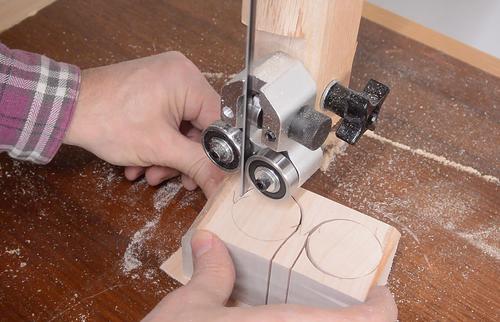
Curves need the right blade and a relaxed feed. Make small relief cuts so waste can fall away. For tight shapes, I use a 1/4 inch blade and light, steady hands.
Resawing turns thick boards into bookmatched panels or veneers. Use a wide, low-TPI blade and a tall fence. Joint one face and one edge first. Add featherboards to hold stock to the fence and table. Feed slow and let the gullet clear chips.
You can do joinery too. Tenons, gentle miters, and even dovetail waste cuts are fast and clean. With a sled, the band saw makes straight and safe joinery cuts.
Can a band saw replace a table saw?
Not fully. It excels at curves and resaw. For sheet goods and dead-straight rips with crisp edges, a table saw still wins.

Materials and Applications
A band saw cuts more than wood. The Complete Band Saw Guide shows how to match blade and speed to each material.
- Hardwood and softwood: Use hook or skip teeth. Carbide blades shine for tall resaws.
- Green wood: Skip tooth blades clear wet chips. Great for bowl blanks.
- Plastics: Higher TPI and slow feed. Avoid melting by using a cool blade and steady pace.
- Aluminum and non-ferrous metal: 10 to 14 TPI works well. Wax the blade for smoother cuts.
- Steel: Use a bi-metal blade and slow speed. A metal-cutting saw or speed reduction is best.
When in doubt, test on scrap. Listen to the cut. A smooth, even sound means a good match.

Maintenance, Troubleshooting, and Upgrades
A little care keeps your saw accurate and quiet. I keep a simple routine from The Complete Band Saw Guide.
Routine care:
- Brush dust off tires and guides after use.
- Check blade tension and tracking before each session.
- Clean pitch from blades with solvent when they start to burn.
- Lubricate bearings as the maker suggests.
Quick fixes:
- Wandering cuts: Increase tension, set guides closer, or switch to a wider blade.
- Burning wood: Dull blade, too many teeth, or feed too slow. Clean or change the blade.
- Vibration: Check belt, balance wheels, or add weight to the base.
- Blade breaks: Over-tight, small wheel diameter, or metal fatigue. Relax tension after work.
Smart upgrades:
- Quick-release tension lever for blade life.
- Better fence with micro adjust for resaw.
- Ceramic or bearing guides for cooler cuts.
- LED task light and a zero-clearance throat plate.
- Riser block for extra resaw height if your model allows it.
Buying Guide and Sizing Your Band Saw
Pick a saw that fits your space and goals. The Complete Band Saw Guide suggests you plan for the work you want to do next year, not just today.
Key specs to weigh:
- Throat and resaw height: Bigger gives more room for real projects.
- Motor power: 3/4 to 1 horsepower for small work. 1.5 to 3 horsepower for resaw and hardwoods.
- Frame and weight: Heavier frames vibrate less and cut smoother.
- Table size and tilt: A large, flat table makes work easy to control.
- Blade length and width: Make sure common sizes are easy to source.
- Speed control: Needed for metal and plastics.
- Brakes: Foot or disc brakes stop the blade faster for safety.
- Power: 120V is fine for small saws. 240V helps larger motors.
Buying used? Check for cracks in frames, smooth wheel spin, even tire wear, and a flat table. Turn it on and listen for rumble. A calm hum is a good sign.
Accessories and Shop-Made Jigs
A few extras make your saw even better. In The Complete Band Saw Guide, I share the jigs I reach for most.
- Tall resaw fence for veneers and bookmatch panels.
- Point fence to manage drift with ease.
- Featherboards to hold stock to fence and table.
- Circle-cutting jig for perfect rounds and wheels.
- Miter sled for repeatable joinery cuts.
- Mobile base for small shops.
- Blade storage hooks to keep coils safe and tame.
Most of these are simple to build from scrap. They boost accuracy and safety at low cost.
Real-World Tips, Mistakes, and Lessons Learned
I have made every band saw mistake you can think of. That is why The Complete Band Saw Guide leans on habits.
- Do not force the cut. If you must push hard, the setup or blade is wrong.
- Use the right blade. A 3 TPI blade for resaw, a 1/4 inch blade for curves, and a 1/2 inch blade for daily work covers most jobs.
- Keep blades clean. Pitch and dust turn a good blade bad fast.
- Relax tension after use. It saves tires and blade life.
- Mark a clear cut line. Good light and a steady feed beat speed every time.
One lesson stands out. A fresh, sharp blade fixes 80% of problems. It is cheaper than lost time and ruined stock.
Frequently Asked Questions of The Complete Band Saw Guide
What size band saw should a beginner buy?
A 10 to 12 inch benchtop saw is enough for crafts and small furniture. If you plan to resaw, move to a 14 inch floor model.
How do I stop blade drift?
Tune tracking, set guides close, and use a sharp, wide blade. If a small drift remains, angle the fence or use a point fence.
Why does my band saw burn wood?
Dull blades, too many teeth, or slow feed cause heat. Clean or replace the blade and reduce TPI for thick cuts.
Can I cut metal on a wood band saw?
Yes, with a bi-metal blade and slow speed. If your saw lacks speed control, use a separate metal-cutting saw.
How high should the blade guard be?
Set it about 1/4 inch above the work. This supports the blade and protects your hands.
How often should I change blades?
Change when cuts wander, burn, or take more force. For heavy users, that can mean weekly; for hobby work, every few months.
Do I need dust collection on a band saw?
It helps a lot. Clear chips improve sight, blade life, and air quality.
Conclusion
A band saw rewards patience and setup. With the right blade, a tuned fence, and steady hands, you get smooth curves, flat veneers, and safe, quiet cuts. The Complete Band Saw Guide gives you a simple path to that level of control.
Set aside an hour this week to tune your saw, swap to the right blade, and try a small resaw. Track your results. When you see cleaner faces and easier cuts, keep going. Ready for more? Explore advanced jigs, sign up for updates, and share your wins and questions in the comments.