Cabinet door alignment requires adjusting hinges so doors sit level, flush, and evenly spaced.
In U.S. homes, cabinet doors often become misaligned after years of daily use, temperature changes, cabinet settling, or loose hinge screws. Most modern kitchen cabinets use adjustable concealed hinges that allow homeowners to correct small alignment issues without replacing the doors.
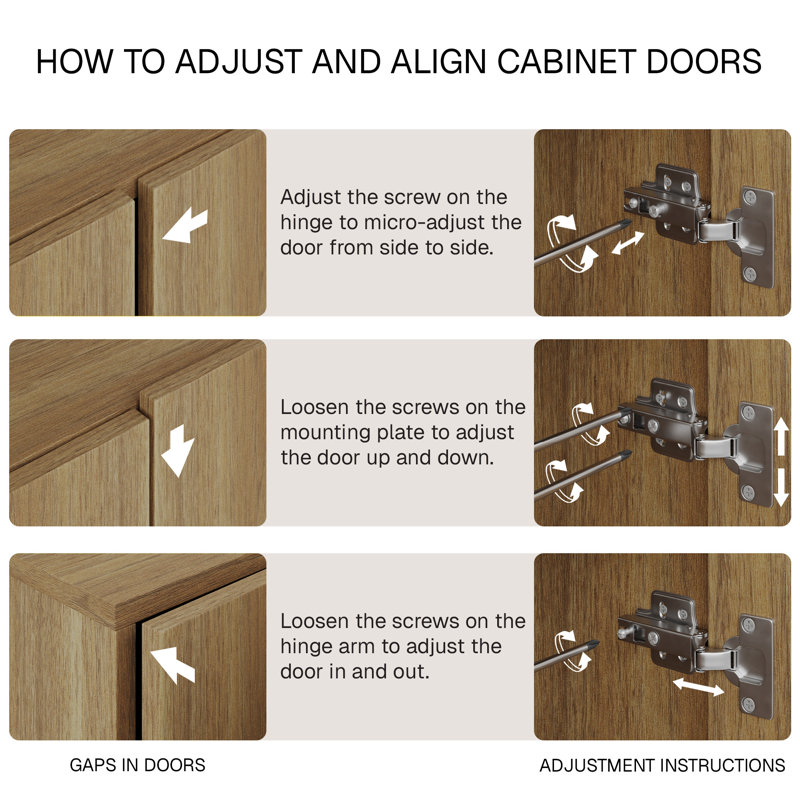
Cabinet door alignment involves checking the door position from three directions: side-to-side, up-and-down, and in-and-out. Correct adjustments create consistent gaps, prevent rubbing, and help doors close properly.
Source: wfcdn.com
What Cabinet Door Alignment Means
Cabinet door alignment describes how accurately a cabinet door matches the cabinet frame and neighboring doors. A properly aligned door has even gaps, sits at the correct depth, and opens and closes without rubbing.
The most common signs of poor alignment include uneven spaces between doors, doors that sit higher or lower than nearby doors, rubbing against the cabinet frame, or doors that do not close completely.
Source: amerock.com
Side-to-side alignment
Moves the door left or right to create consistent gaps between doors and cabinet edges.
Height alignment
Raises or lowers the door so the top and bottom edges line up correctly.
Depth alignment
Moves the door closer to or farther from the cabinet box so it sits flush.
Tools Needed Before Adjusting Cabinet Doors
Most cabinet door alignment tasks require only a screwdriver and a careful visual inspection. A level, measuring tape, and flashlight can help identify uneven gaps or loose mounting points.
Basic tools
Use a compatible screwdriver, level, and measuring tool for accurate adjustments.
How to Adjust Cabinet Door Alignment Step by Step
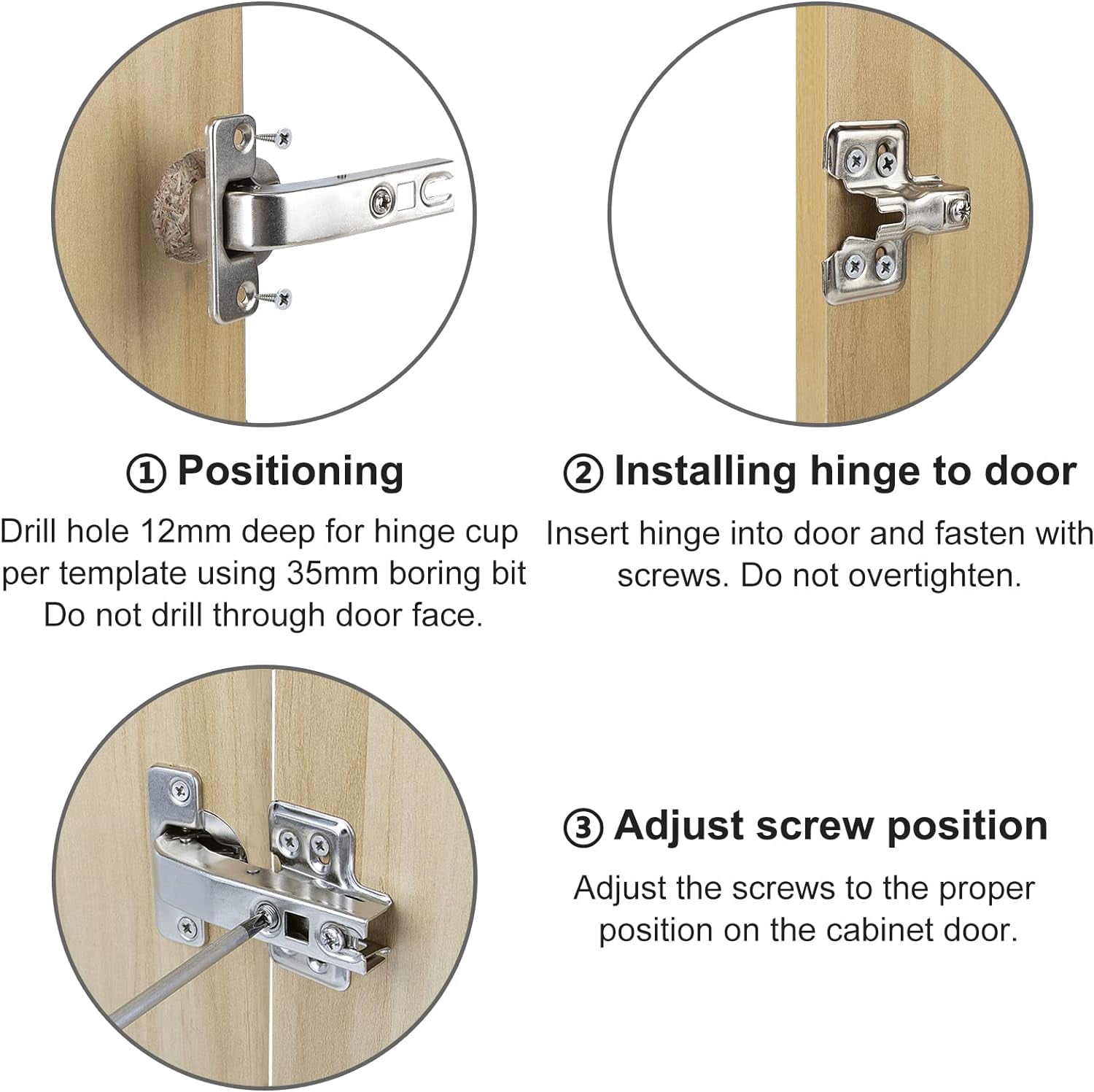
Start by opening the cabinet door and identifying the hinge adjustment screws. Modern European-style concealed hinges usually control different movements through separate screws.
Make small changes, close the door, and inspect the result after each adjustment. Large turns can move the door too far and make fine tuning more difficult.
Source: walmartimages.com
1. Check loose screws
Tighten hinge mounting screws before making alignment adjustments because loose hardware can imitate alignment problems.
2. Adjust side position
Turn the side adjustment screw to move the door horizontally until gaps appear even.
3. Adjust height and depth
Move the door vertically or forward and backward until it matches the cabinet frame.
How to Know the Adjustment Worked
A successful cabinet door alignment adjustment creates a consistent reveal around the door, allows smooth opening, and prevents contact with nearby cabinet parts.
Check the gaps
Compare the spaces at the top, bottom, and sides of the door.
Common Cabinet Door Alignment Problems and Fixes
Cabinet door problems usually come from incorrect hinge settings, loose hardware, or cabinet movement. Identifying the symptom first prevents unnecessary adjustments.
If a door remains misaligned after hinge adjustment, inspect the cabinet box, mounting screws, and door panel for structural issues.
Source: thisoldhouse.com
Door rubs on the frame
Adjust side-to-side positioning and check whether the hinge screws are secure.
Door sits unevenly
Use height adjustment to match the door with surrounding cabinet doors.
Door will not sit flush
Use depth adjustment or check for warped doors and damaged hinges.
When Hinge Adjustment Is Not Enough
Some alignment issues cannot be corrected with screws alone. Warped doors, stripped screw holes, damaged mounting plates, or cabinets installed out of square may require repair or replacement parts.
Frequently Asked Questions
Q
Why do cabinet doors become misaligned?
Cabinet doors can shift because of loose screws, regular use, cabinet settling, or changes in the surrounding environment. Hinge adjustments often correct minor movement.
Q
How often should cabinet door alignment be checked?
There is no fixed schedule for adjustment. Check alignment when doors begin rubbing, gaps become uneven, or doors stop closing properly.
Q
Can I align cabinet doors without replacing hinges?
Yes, many modern concealed hinges include adjustment features that allow alignment without replacement. Older hinge styles may have fewer adjustment options.
Q
What gap should cabinet doors have?
The exact gap depends on the cabinet style and installation method, but consistent spacing between doors is usually more important than a single measurement.
Q
Why is my cabinet door still crooked after adjustment?
A crooked door may indicate a bent hinge, damaged screw hole, warped door, or cabinet box issue. Inspect these areas if normal adjustments do not solve the problem.
✦ Wrapping Up
Conclusion
Cabinet door alignment is mainly a process of making small hinge adjustments until the door sits evenly with the cabinet frame. Understanding side-to-side, height, and depth adjustments makes most minor corrections straightforward.
Careful inspection, small movements, and checking the result after each change help avoid over-adjusting the hinges. More serious problems may require hardware repair or cabinet inspection.
💡 Key Takeaway
Start by tightening loose hardware, then make small hinge adjustments while checking door gaps after every change.