furniture stays stable when its weight is well balanced, its base gives firm support, its joints stay tight, and its parts resist movement. A wide base, low center of gravity, strong connections, and proper floor contact help prevent wobbling and tipping.
In American homes, furniture must work on many types of floors and in rooms with different layouts. A dining table may sit on hardwood, while a tall bookcase may stand on carpet. Each setting can affect how well the furniture stays in place. Good design must account for weight, shape, floor contact, and daily use.
Furniture stability is more than making a chair feel firm or a table stop rocking. It is the way a whole piece handles weight and force. A dresser must stay upright when drawers open. A desk must resist movement when someone leans on its edge. A chair must support a person without tipping during normal use.
The best way to build stable furniture is to plan for balance from the start. Choose a sound base, use suitable materials, place supports in useful spots, and make strong joints. Then check the finished piece on the floor where people will use it. These steps help reduce common problems and improve long-term safety.
This guide explains the main rules behind stable furniture. It covers balance, center of gravity, base size, leg placement, frame strength, joints, materials, and floor contact. It also gives a simple inspection method for checking furniture at home or in a workshop.
Source: storage.googleapis.com
What Are Furniture Stability Principles?
Furniture stability principles are the design rules that help a piece stay upright, firm, and safe during use. They guide the shape of the base, the placement of legs, the choice of materials, and the way parts connect. They also help designers decide where weight should sit.
A stable piece does not move, rock, or tip under the forces it should handle. It can support its intended load without bending too much or losing its shape. This does not mean that furniture can resist every force. Climbing, jumping, misuse, and poor setup can still cause failure.
Stability has a close link with strength, but the two terms do not mean the same thing. Strength describes how much force a part can handle before it breaks or bends too far. Stability describes how well the whole piece stays in balance and keeps its position.
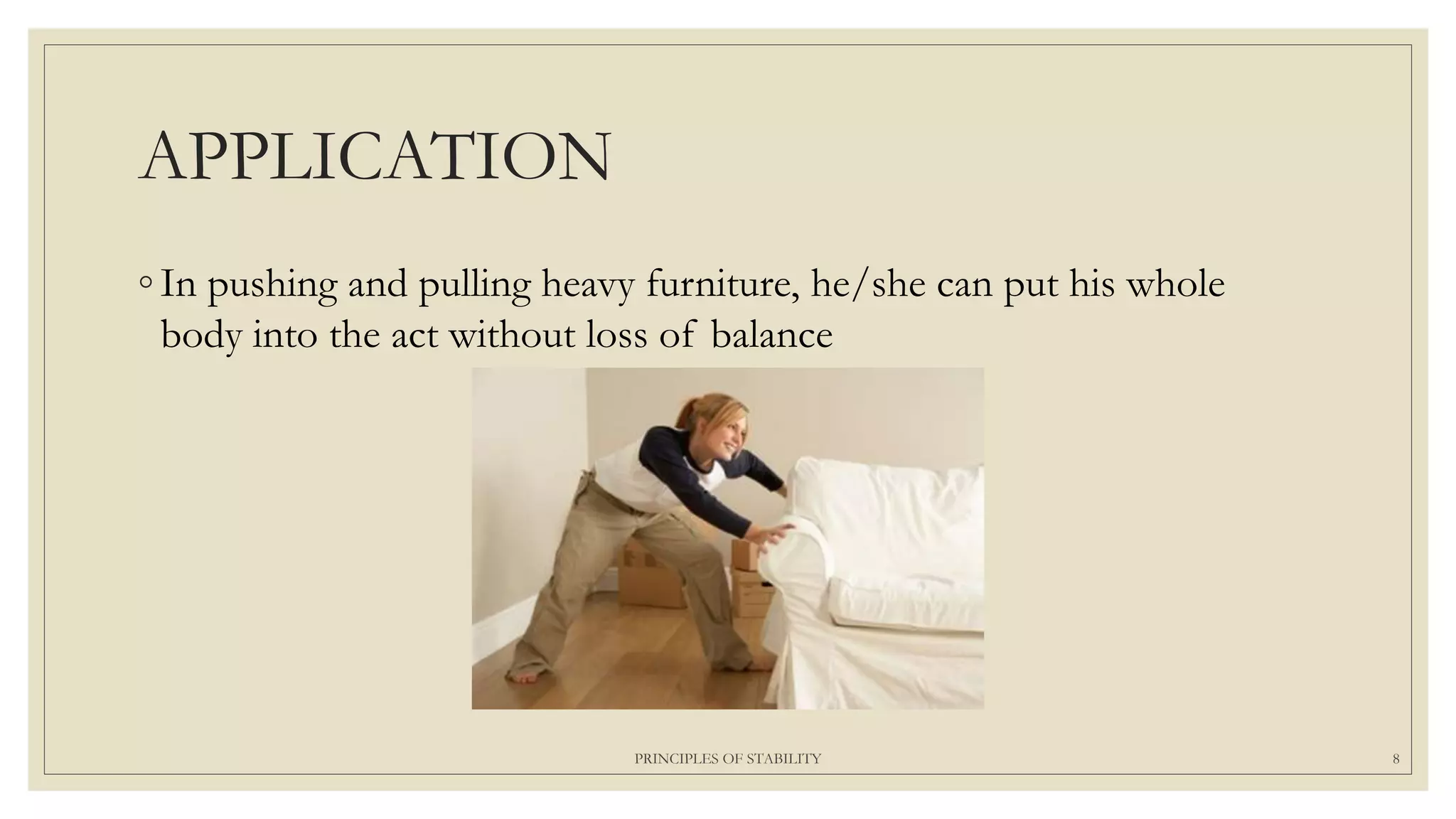
Source: slideshare.net
Static stability
This is the ability to stay in place while the furniture holds a steady load. A bookcase with books on its shelves is one example.
Dynamic stability
This describes how furniture handles forces during movement or use. A chair must remain steady when a person sits down or shifts position.
Structural stability
This is the ability of the frame and its parts to keep their shape under load. Strong rails, panels, braces, and joints help provide it.
Tip resistance
This is the ability of furniture to resist turning over when a force acts near an edge or above its base.
Why Stability Matters in Furniture Design
A stable design improves comfort and makes daily tasks easier. A table that rocks can spill drinks. A loose chair can shift under a person. A weak cabinet can sag and cause doors to stop lining up.
Stability also matters for safety. A tall storage unit can fall if a child pulls on an open drawer. A heavy object on top can make the problem worse. Good design helps lower these risks, but proper wall anchoring is still needed for tall furniture.
Better daily use
Stable furniture feels firm when people sit, work, eat, or store items.
Longer service life
A sound frame and tight joints help reduce wear caused by repeated movement.
Lower safety risks
A balanced shape and suitable anchors help reduce the chance of tip-over events.
Center of Gravity and Furniture Balance
The center of gravity is the point where the weight of an object acts as if it were gathered in one place. Its position affects how easily furniture can tip. A low center of gravity usually makes a piece harder to overturn than a high one.
Think of a short, wide cabinet and a tall, narrow cabinet. If both have the same weight, the short cabinet will often resist tipping better. Its weight sits closer to the floor, and its shape gives it a more stable base.
The center of gravity can change during use. A person may place a heavy item on the top shelf of a bookcase. A dresser may have several full drawers pulled out at once. These changes can move the combined center of gravity toward the front or top.
Good furniture design accounts for both the empty piece and its likely load. The designer should consider what people will store, where they will place it, and how they may use doors and drawers.
Source: homeflair.com
Keep heavy parts low
Place heavy items and built-in weights near the base when the design allows it.
Avoid a heavy top
Do not place large loads on top of tall or narrow furniture without a safe design and suitable support.
Plan for open drawers
An open drawer moves weight forward. Several open drawers can raise the risk of a dresser tipping.
Consider the full load
Check how stored items affect the balance of the whole unit, not just the weight of the empty frame.
How to Understand the Center of Gravity
Imagine a line that runs straight down from the center of gravity to the floor. If that line falls within the support area, the furniture may remain balanced under static conditions. If it moves beyond the support edge, the piece can begin to tip.
This idea explains why a narrow cabinet can fall when someone pulls a heavy drawer. The drawer shifts part of the load toward the front. If the support area cannot keep the combined weight in balance, the unit may turn forward.
This is a basic model, not a full safety test. Real furniture also faces side forces, floor changes, movement, and sudden loads. A piece that appears balanced while empty may become unsafe when loaded.
Support area
This is the area formed by the points where the furniture touches the floor.
Weight shift
A load that moves away from the center can change the balance of the whole piece.
Tipping edge
This is the edge around which furniture may rotate when its balance is lost.
A Simple Furniture Balance Example
Consider a hypothetical tall cabinet that weighs 100 pounds. Its main weight sits low in the frame. Now imagine placing another 30 pounds of books on the top shelf. The cabinet has become heavier, but that does not mean it has become more stable.
The extra weight sits high and may raise the center of gravity. If someone pulls the cabinet or opens a large drawer, the unit may have less resistance to tipping. This example shows why total weight alone cannot tell you whether furniture is stable.
Useful design choice
Place dense books and other heavy items on lower shelves.
Poor design choice
Use the top of a tall, narrow cabinet to hold heavy objects or large equipment.
Base Width, Depth, and Support Area
The base gives furniture its main contact with the floor. A wider and deeper support area can help resist tipping, but the best shape depends on the furniture type. A dining table, bookcase, sofa, and small stool do not need the same base design.
The base should support the load from all normal directions. A narrow front-to-back base may resist a side force but fail when someone pulls a drawer forward. A wide but shallow base may have the opposite problem.
Designers should look at the full support area rather than only the distance between two legs. The position of every leg, foot, wheel, or base panel affects how the piece handles weight.
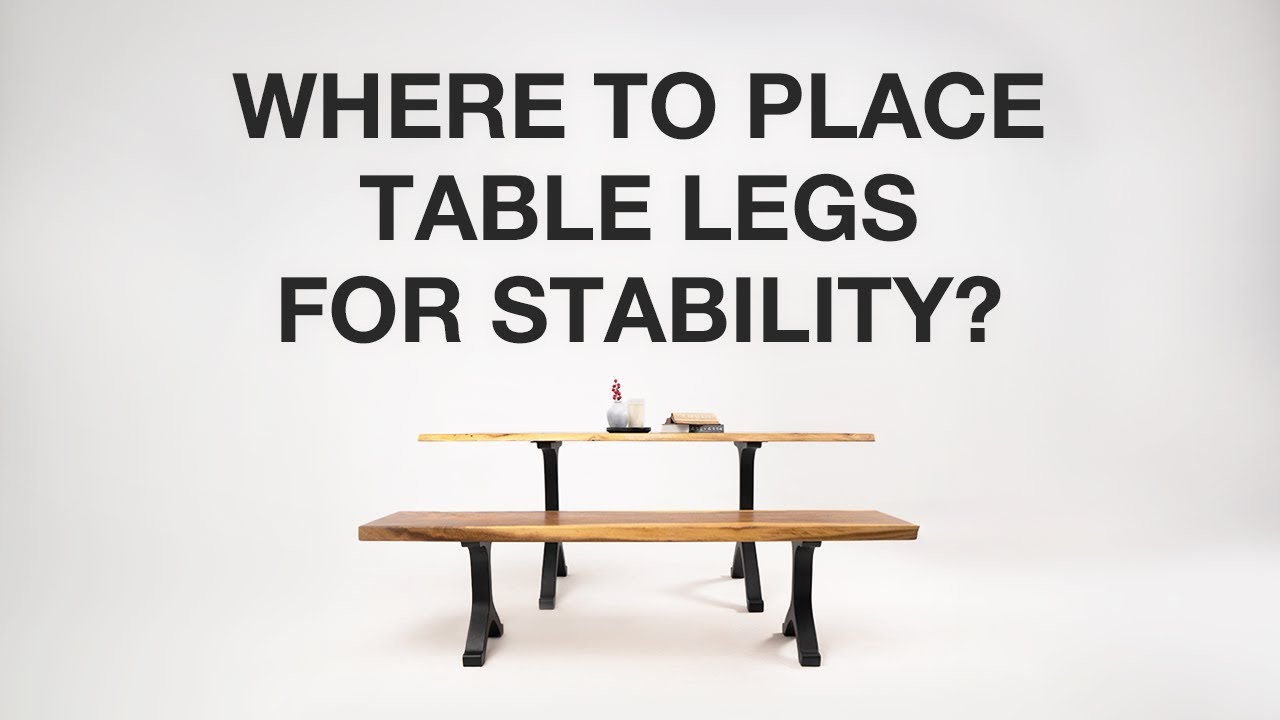
Source: youtube.com
Wider support
A broad base can give a piece more room to resist tipping.
Suitable depth
Front-to-back depth matters for furniture with drawers, doors, or loads that may move forward.
Even floor contact
All designed support points should touch the floor as intended.
Sound base joints
A wide base cannot help much if its legs or frame connections are loose.
How Base Design Changes by Furniture Type
A dining table needs a base that supports the top without blocking normal leg room. A table with corner legs may need strong connections between the legs and the frame. A central pedestal needs enough width and mass to resist force near the edge.
A bookcase needs support that works across its full depth. A broad base can help, but the unit must also resist side movement. A sofa needs a frame that spreads body weight across its legs or base rails.
A stool needs a firm footprint that matches its height. A tall stool with a small base can feel less steady than a low stool with a wide base. The user should also consider the way people sit and move on it.
Tables
Plan leg and pedestal positions around edge loads and normal seating space.
Storage units
Use a base that supports the full body and helps limit forward and side movement.
Seating
Match the footprint to the height and the forces created by sitting and leaning.
Leg Placement and Load Distribution
Leg placement affects how furniture carries weight and resists movement. The legs must support the load without creating weak points in the frame. Their position also changes how the piece reacts when someone pushes, pulls, or leans on it.
Table legs placed near the corners can create a broad support area. However, the frame must connect them well. A table with legs set too far inward may have a larger top that extends beyond its support points. A heavy load near the edge can then create a strong turning force.
The right leg layout depends on the top size, frame shape, material, and intended load. A central pedestal can work well when its base is designed to resist tipping. A four-leg design can also work well when the legs and rails form a firm frame.
Source: slideshare.net
Match leg positions to the top
Plan support points based on the size and shape of the work surface.
Keep support balanced
Avoid layouts that place most of the load on one side of the frame.
Use sound leg connections
Secure legs with suitable joinery, bolts, brackets, or other planned connections.
Check side movement
Test whether the frame can resist a gentle push from more than one direction.
Why Tables Need Careful Leg Placement
A table may feel firm when someone presses its center but move when a person leans on an outer corner. This happens because the force acts farther from the support points. The frame must transfer that force to the legs without twisting or loosening.
A good layout gives the table enough support while leaving useful space for chairs and feet. The designer should also account for the material and thickness of the top. A heavy stone top, for example, creates a different design need from a light wood top.
Corner support
Can provide a broad footprint for many standard rectangular tables.
Pedestal support
Can improve seating access but needs a stable and well-sized base.
Cross rails
Can connect legs and help limit unwanted movement.
Strong Frames and Structural Connections
A stable piece needs a frame that can hold its shape under normal loads. The frame connects the base, legs, rails, panels, and top. If these parts move against each other, the furniture may wobble even when each part seems strong on its own.
A square frame is often easier to keep stable than a loose frame that can twist. Cross rails and corner blocks can help hold the shape. Back panels can also add support when they are made and attached for that purpose.
The best connection depends on the furniture design. A simple shelf may use screws and brackets. A solid wood chair may need carefully cut joints. A cabinet may use a mix of panels, rails, screws, and glue.
Rigid frame
A firm frame helps spread force across several parts instead of placing it on one weak point.
Cross support
Rails and braces can reduce side sway and help keep the frame square.
Secure panels
Panels must have sound connections if the design relies on them for support.
Sound fasteners
Screws and bolts must match the material and the load they will carry.
How Bracing Improves Furniture Stability
Bracing helps stop parts from shifting out of position. A bookcase with a strong back panel may resist side sway better than one with no rear support. A table with rails between its legs may also resist movement better than a design with weak leg connections.
Diagonal braces can help resist side movement in some designs. Corner blocks can add support where rails meet legs. The exact choice depends on the shape, material, and way the furniture will be used.
A brace should connect to sound parts of the frame. Adding a small brace to a weak panel will not fix a major design problem. The whole load path must work from the point of force to the base.
Back panels
Can help stop a cabinet or bookcase from twisting when securely fitted.
Diagonal braces
Can reduce frame movement by helping resist changes in shape.
Corner blocks
Can strengthen joints between legs, rails, and other frame parts.
The Role of Joinery
Joinery is the way two or more furniture parts connect. Good joinery keeps parts in place and helps transfer force across the frame. Weak joints can loosen over time as people move, lift, and use the furniture.
Mortise-and-tenon joints, dowel joints, and suitable screw connections can all work well when designed and made correctly. No joint is automatically strong in every setting. Material type, joint size, fit, glue, fasteners, and load direction all matter.
A joint that looks neat may still be weak if it has little contact area or poor support. Check the full connection, not only its visible face. For chairs and other load-bearing furniture, a loose joint should be repaired before use.
Mortise and tenon
Uses a shaped end that fits into a matching opening and can create a strong frame connection.
Dowel joint
Uses fitted wooden pins to help align and connect parts.
Screw connection
Can secure furniture parts when the screw size, length, and material are suitable.
Corner bracket
Can add support to a joint when the bracket and its fasteners suit the design.
Material Choice and Its Effect on Stability
Materials affect furniture weight, strength, stiffness, and resistance to wear. A material that works well for a shelf may not be suitable for a chair leg. Designers must match the material to the part and the job it must do.
Solid wood can provide good strength and can hold many types of joints. However, wood can change size as moisture levels change. Poorly planned joints and wide panels may move, warp, or crack if the design does not allow for this change.
Plywood has layers that run in different directions. This structure can help it resist changes in shape. It is often useful for cabinet sides, shelves, and back panels. Its performance still depends on grade, thickness, support, and the quality of its edges.
Medium-density fiberboard, or MDF, has a smooth and even surface. It works well for many cabinet panels and furniture parts. However, it can be weaker around poorly placed fasteners, and water damage can affect its strength.
Particleboard is used in many low-cost furniture products. It can work for suitable loads when the design supports it well. Poor fastener placement, moisture, and heavy loads can lead to damage or sagging.
Solid wood
Useful for frames, legs, rails, and many load-bearing parts when the species and dimensions suit the job.
Plywood
Useful for panels and shelves because its layered structure can provide good dimensional stability.
MDF
Useful for smooth cabinet panels and doors, but edges and fastener zones need careful design.
Particleboard
Can serve in supported furniture panels, but moisture and weak fastener areas are key limits.
Metal
Can provide strong frames and supports, but connections and resistance to bending still need proper design.
Why Material Thickness Matters
A thick panel is not always stronger in every way, but thickness can affect how much it bends under load. A long shelf may sag if it is too thin or lacks enough support. Adding a center support or reducing the span can help.
The span is the open distance between supports. As the span grows, bending can become a bigger concern. A shelf with a short span may hold the same load with less movement than a longer shelf made from the same material.
Designers should consider material type, thickness, width, span, and load together. A single thickness rule cannot cover every shelf, cabinet, or table.
Long shelves
May need a thicker panel, a stronger material, or an extra support.
Narrow rails
Need enough section size to resist bending and twisting.
Fastener zones
Need enough material around screws and bolts to limit splitting or pullout.
Moisture and Material Stability
Moisture can affect many furniture materials. Wood may swell when it takes in moisture and shrink when it dries. MDF and particleboard may also swell or lose strength when exposed to water.
Furniture for bathrooms, kitchens, porches, and other damp spaces needs suitable materials and finishes. A protective finish can slow moisture entry, but it does not make every material waterproof.
Keep furniture away from standing water and fix leaks near cabinets. Let wet furniture dry in a safe way, and check for swelling, soft areas, loose joints, or damage before using it again.
Dry storage
Keep wood-based furniture in a space with suitable moisture control.
Protected edges
Seal exposed panel edges where the product design calls for it.
Regular checks
Look for swelling, cracks, soft spots, and loose connections after water exposure.
Furniture Stability and Floor Contact
Even well-built furniture can wobble if it does not sit evenly on the floor. Uneven floor surfaces can leave one leg unsupported. A loose foot or damaged wheel can also change how weight moves through the frame.
Hard floors can make small gaps easy to notice. Carpet may hide them, but it can also compress under weight. Thick carpet can affect the way some tall storage units sit and may increase the risk of movement.
Before changing the furniture, check the floor and all support points. A loose screw, worn foot, or uneven leg can often explain a small wobble. If the frame itself has bent or cracked, a simple pad may not fix the problem.
Level floor
Use furniture on a firm surface that supports all designed contact points.
Sound feet
Replace broken or missing feet with parts suited to the furniture.
Correct leveling
Use suitable adjustable feet when the furniture design allows them.
Carpet awareness
Check for compression and movement, especially under tall storage units.
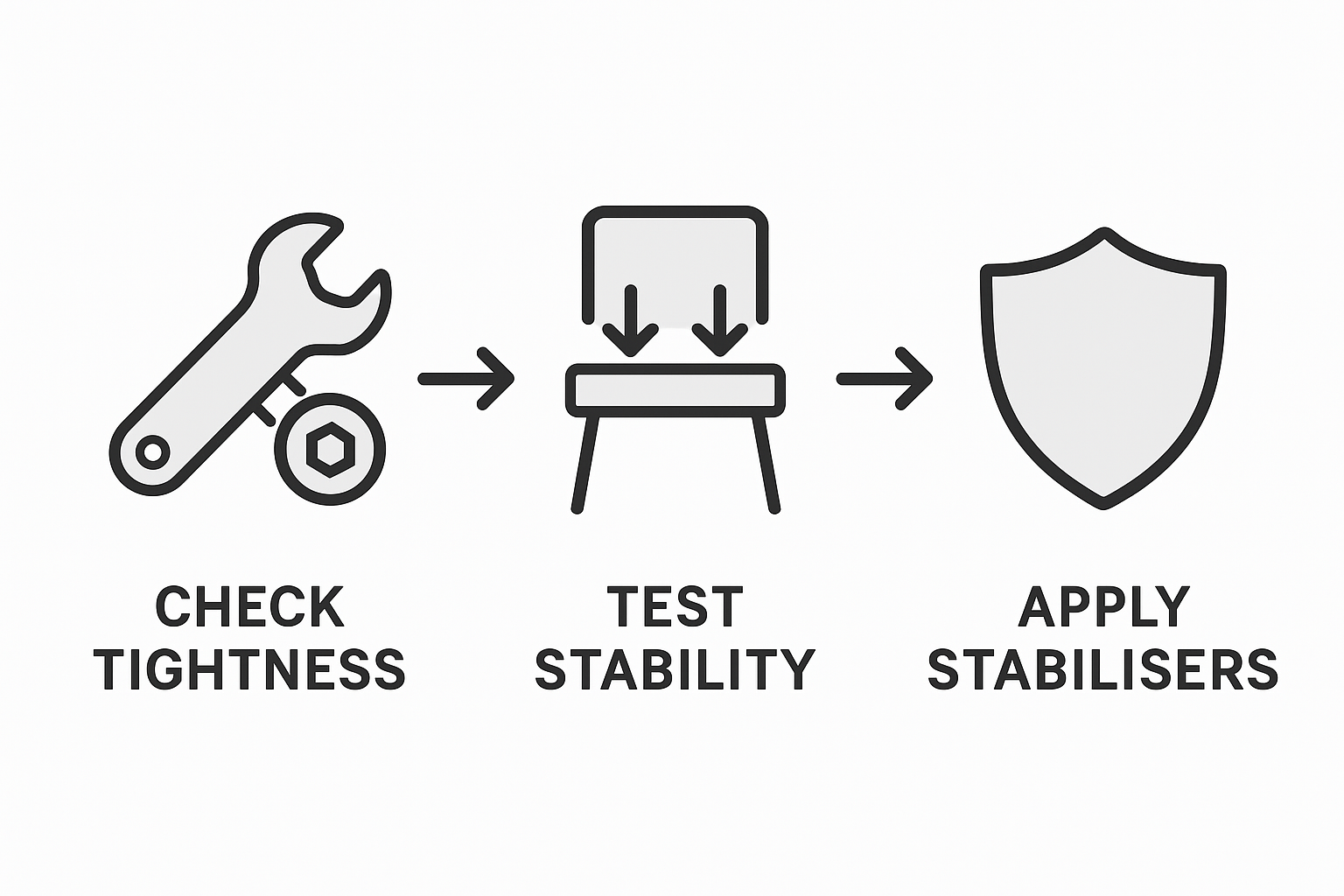
How to Fix a Wobbly Table
Start by removing objects from the table. Move it to a firm area of the floor and press each corner gently. Watch for a leg that lifts or moves more than the others.
Check the leg connections and frame rails. Tighten loose fasteners only if the parts remain sound. Do not force a screw into a damaged hole, as this can make the connection weaker.
If the floor is uneven, use a proper leveling foot or a firm furniture shim designed for the job. Do not use folded paper or soft cardboard as a long-term fix. These materials can shift or break down.
First check
Look for loose bolts, screws, damaged feet, and uneven contact.
Second check
Look for bent legs, cracked rails, and weak joints.
Final check
Place the table back on the floor and check each corner with light hand pressure.
Preventing Furniture Tip-Overs
Furniture tip-over prevention is a key part of safe design and home setup. Tall dressers, bookcases, cabinets, and wardrobes can fall when a force pulls them forward or sideways. Children may use open drawers as steps or pull on shelves and doors.
In the United States, the Consumer Product Safety Commission adopted ASTM F2057-23 as a mandatory safety standard for covered clothing storage units. The rule includes stability testing on carpet, tests with loaded and open drawers, and tests that represent a child interacting with the unit. The rule took effect on September 1, 2023.
This standard applies to covered clothing storage units. It does not mean every type of furniture has the same test or legal requirement. Buyers should check the product’s safety information and follow its instructions.
A stable design is helpful, but wall anchoring adds another layer of protection. The CPSC advises consumers to secure dressers and other furniture to the wall. Use the correct anchor for the furniture and wall type.
Anchor tall furniture
Secure dressers, bookcases, and other tip-prone furniture to suitable wall support.
Keep heavy items low
Store heavy books and objects on lower shelves or in lower drawers.
Use drawer stops
Use suitable stops or interlocks to limit the number of drawers that can open at once.
Keep climbing items away
Do not place toys, remotes, or tempting objects high above the floor.
Check wall connections
Make sure the anchor connects to a suitable wall support and is installed as directed.
Choosing and Installing Furniture Anchors
An anti-tip device connects the furniture to a wall or another suitable support. It helps stop the unit from falling forward. Common types include metal brackets, straps, and other approved restraint systems.
The correct anchor depends on the wall material. A screw that works in a wood stud may not work in drywall alone. Brick, concrete, and other wall types may need different hardware.
Read the furniture and anchor instructions before drilling. Find the right wall support and use the fasteners listed for the system. If you cannot identify the wall type or install the anchor safely, ask a qualified installer for help.
Do not assume that a strap supplied with furniture will work with every wall. The full connection must be suitable, from the furniture to the anchor and from the anchor to the wall.
Wood studs
Use the correct screw and attachment method for the stud and anchor system.
Drywall
Do not rely on an ordinary screw in drywall alone unless the anchor instructions specifically allow that use.
Masonry
Use hardware made for the exact wall material and follow its installation directions.
Furniture Stability in Homes With Children
Children may climb furniture even when an adult is nearby. A dresser can become a ladder when drawers are open. A bookcase can also fall when a child pulls on a shelf or tries to reach an object.
Anchor tall furniture even when it feels heavy or solid. Keep televisions off dressers when possible. Store attractive items at a safe height and use drawer safety features when needed.
A stable base alone cannot prevent every tip-over. Wall anchoring, good storage habits, and regular checks work together to lower risk.
Anchor every suitable unit
Do not rely on furniture weight as the only protection against tipping.
Remove climbing rewards
Keep toys and other tempting items away from high shelves.
Check straps, brackets, screws, and wall connections from time to time.
How to Check Furniture Stability Step by Step
A simple inspection can reveal many common stability problems. It cannot replace a formal product test, but it can help you find loose parts, damaged joints, and poor floor contact. Check furniture before regular use and after moving it.
Start with the floor and the base. Then inspect the frame, joints, fasteners, and moving parts. Finish by checking the furniture under a normal and safe load. Never use a person, child, or heavy object to test whether a weak piece can hold weight.
Step 1: Check the floor
Make sure the furniture stands on a firm surface and that its support points touch the floor as designed.
Step 2: Inspect the base
Look for bent legs, broken feet, loose wheels, cracks, and signs of damage.
Step 3: Check the frame
Look for gaps, twisting, loose rails, and panels that have moved out of place.
Step 4: Inspect fasteners
Check screws, bolts, brackets, and other visible connections for looseness or damage.
Step 5: Check moving parts
Open doors and drawers one at a time. Watch for excessive movement or signs that the unit shifts.
Step 6: Review the load
Make sure stored items stay within the maker’s limits and that heavy items sit low.
Step 7: Check tip protection
Confirm that tall furniture has the required anti-tip device and that the wall connection is secure.
Signs of Stable Furniture
Stable furniture should sit firmly on its support points. Its frame should not twist during normal use. Doors and drawers should move as intended without pulling the whole unit out of position.
A table should not rock during normal use. A chair should not shift or make sharp cracking sounds when someone sits down. A bookcase should remain upright with its normal load and its safety anchor in place.
No home inspection can prove that furniture meets a formal test standard. Use the maker’s instructions and product safety information when available.
Firm contact
The furniture sits evenly on the floor.
Tight connections
The frame and joints show no unwanted movement.
Smooth operation
Drawers and doors work without shifting the whole piece.
No visible damage
There are no cracks, bent supports, loose panels, or broken feet.
What to Do When Furniture Fails the Check
Stop using furniture that has a cracked frame, loose load-bearing joint, bent leg, or damaged base. Remove stored items and keep people away until the cause is clear. Do not try to fix a serious fault by adding weight to the opposite side.
Tighten a loose fastener only when the material and hole remain sound. Replace broken feet and damaged hardware with suitable parts. If a joint has split or a panel has failed, a furniture repair professional may need to assess it.
If a tall storage unit lacks a safe wall anchor, do not treat it as secure. Install a suitable restraint before placing it in a room where children may enter. Seek qualified help if the wall or furniture connection is unclear.
Small loose fastener
Check the hole and part first, then tighten or replace the fastener as the maker directs.
Broken structural part
Stop use and arrange a proper repair or replacement.
Unsafe tip risk
Remove nearby hazards and install a suitable anti-tip system before use.
Common Furniture Stability Problems and Their Causes
Furniture problems often begin with a small fault. A loose screw can cause a chair to wobble. A weak shelf can sag under books. A tall cabinet can become unsafe when heavy items sit high or several drawers open at once.
Finding the cause is better than hiding the symptom. A floor shim may stop a small table from rocking, but it will not repair a cracked leg. A new screw may hold a joint for a short time, but it will not fix damaged material.
Wobbly table
Possible causes include uneven floors, loose leg joints, bent legs, and damaged feet.
Sagging shelf
Possible causes include a long span, a heavy load, thin material, or weak support.
Shaking bookcase
Possible causes include a loose back panel, weak joints, poor floor contact, or a missing wall anchor.
Unsteady chair
Possible causes include loose rails, worn joints, cracked legs, and damaged seat supports.
Dresser tipping forward
Possible causes include open drawers, a high center of gravity, heavy top loads, and a missing anchor.
Why Furniture Becomes Loose Over Time
Furniture faces repeated forces during daily use. People sit down, stand up, pull drawers, move tables, and shift stored items. These actions can place stress on joints and fasteners.
Moving furniture can also weaken connections. Dragging a table or cabinet may twist its frame. Lifting it by a weak rail can place force on a part that was not designed to carry the full weight.
Changes in moisture can affect wood-based parts. Loose fasteners, swelling, and shrinkage may all change how the joints fit. Regular checks help catch these issues before they become serious.
Repeated movement
Can loosen fasteners and wear joints over time.
Poor handling
Can twist frames and damage weak connection points.
Moisture changes
Can change the size and strength of wood-based parts.
When to Repair and When to Replace
A small repair may be suitable when the main frame is sound and the fault is limited to a replaceable foot or loose fastener. The repair must restore the intended connection. It should not hide a larger structural problem.
Replacement may be the safer choice when several load-bearing parts have failed, the frame has major cracks, or the furniture cannot be anchored as required. A piece that has tipped over should be checked for hidden damage before anyone uses it again.
For chairs, beds, and other furniture that supports people, seek a qualified repair when a main joint or support has failed. Do not rely on glue or a small bracket alone unless the repair method suits the design.
Repair may work
The damage is limited, the main structure remains sound, and suitable replacement parts are available.
Professional help is needed
A main joint, frame rail, leg, or load-bearing panel has failed.
Replace the unit
The damage is severe, repair cannot restore safe use, or suitable parts are not available.
Furniture Stability Standards and Testing
Furniture testing helps show how a product handles certain loads and use conditions. A test standard gives a defined method. It may include set forces, loads, cycles, and limits. The result applies to the product type and test scope covered by that standard.
In North America, BIFMA develops standards for several types of commercial furniture. These include office chairs, desks, tables, and storage units. Different standards address different products and performance needs.
Some standards test stability, while others focus on strength, durability, or other features. A chair that passes a stability test has not automatically passed every possible test. Buyers should check the exact standard and product category.
For covered clothing storage units in the United States, ASTM F2057-23 is part of the federal safety framework under the STURDY Act. Its test conditions include carpet placement, loaded drawers, multiple open drawers, and forces that represent a child interacting with the unit.
A test result is useful evidence, but it is not a promise that furniture cannot fail. Setup, wear, damage, wrong use, and changes to the product can affect performance. Always follow the maker’s instructions and use furniture within its stated limits.
Stability testing
Checks whether furniture resists tipping under defined test conditions.
Strength testing
Checks whether parts can handle set loads without breaking or bending beyond the test limit.
Durability testing
Checks how a product handles repeated use over a defined test cycle.
Product scope
Defines which furniture types and uses the standard covers.
What Buyers Should Check Before Purchase
Look for clear product details about intended use, load limits, assembly, and safety features. For tall storage units, check whether the product includes an anti-tip device and clear installation steps.
Ask whether the product has been tested to a relevant standard. Check the exact standard name and the furniture type it covers. Do not assume that a general claim of tested quality proves every type of stability.
Review the recall information when buying used furniture. A used dresser or cabinet may have missing hardware, changed parts, or hidden damage. Ask for the instructions and anchor kit if they are available.
Check product details
Read the maker’s stated use, load limits, assembly steps, and warnings.
Check safety features
Look for drawer stops, interlocks, and suitable anti-tip hardware.
Check recalls
Search the CPSC recall database before buying or using older furniture.
Practical Design Rules for Building Stable Furniture
Stable furniture begins with a clear design plan. Decide what the piece must hold, where it will stand, and how people will use it. Then choose a base, frame, material, and joint system that can handle those needs.
Do not begin with appearance alone. A slim leg or narrow base may look attractive, but it must still support the expected load. If a design choice reduces support, the frame may need stronger connections or a different layout.
A good workshop plan also includes a final inspection. Check the frame for square, confirm that the legs sit in the right place, and make sure each connection is secure. Test the piece in a safe way before putting it into regular use.
Plan the intended load
Write down what the furniture will support and where that weight will sit.
Choose a stable footprint
Give the furniture a base that suits its height, shape, and expected forces.
Use suitable materials
Match the material and thickness to the part, span, and load.
Build sound joints
Use a connection method that suits the material and the direction of force.
Check the full frame
Look for twisting, gaps, weak supports, and poor floor contact.
Add tip protection
Use proper anchors on furniture that could fall forward or sideways.
A Simple Furniture Stability Planning Table
Use this table as a starting point when planning a furniture project. It shows the main design concern for common furniture types. The final dimensions and material sizes must still match the actual load and product design.
Dining table
Plan leg positions, frame rails, top support, and resistance to corner loads.
Bookcase
Plan shelf support, back-panel strength, base depth, and wall anchoring.
Dresser
Plan a stable base, low load placement, drawer stops, and anti-tip hardware.
Chair
Plan strong leg joints, rails, seat support, and resistance to side movement.
Desk
Plan leg support, frame stiffness, top strength, and resistance to leaning forces.
Cabinet
Plan panel connections, shelf spans, door weight, and safe wall attachment where needed.
How to Improve an Existing Furniture Design
Start by finding the part that moves or bends. Do not add braces or fasteners at random. Trace the force from the point where it acts to the floor. This can help show where the frame needs more support.
If a table sways from side to side, check the leg joints and rails. If a shelf sags, check its span and support. If a cabinet tips forward, reduce high loads and install a suitable wall restraint.
Any change should work with the original material and design. Adding a large screw to a thin panel may split the panel. Adding a brace in the wrong place may block a drawer or weaken another connection. Seek professional advice for major structural changes.
Find the weak point
Identify the exact part that moves, bends, or fails.
Trace the load
Work out how force travels through the frame and into the floor.
Choose a suitable fix
Use a repair or brace that suits the material and connection.
Inspect again
Check the whole piece after the repair, not only the part that was changed.
Common Mistakes That Reduce Furniture Stability
Many stability problems come from small design or setup errors. A furniture piece may look strong but still have weak joints or poor balance. Avoiding these mistakes can improve its useful life and reduce safety risks.
Using a narrow base on tall furniture
A tall unit with a small footprint may tip more easily, especially when loaded high or used on carpet.
Ignoring loose fasteners
Small amounts of movement can grow into larger joint problems with repeated use.
Overloading shelves
A shelf may sag, split, or lose its support when its load exceeds the design limit.
Using the wrong material
A panel or fastener that suits a light cabinet may not suit a chair or heavy table.
Skipping wall anchors
Heavy furniture can still tip when a person pulls on it or several drawers are open.
Ignoring floor conditions
Uneven floors and soft carpet can change how the furniture sits and handles force.
Making repairs without finding the cause
A quick fix may hide a damaged joint or weak frame without restoring safe use.
Why Looks Alone Cannot Prove Stability
A heavy piece is not always stable. Weight can help in some designs, but a high center of gravity or small base can still make furniture easy to tip. A solid feel during a quick touch test does not prove that a dresser can resist a child pulling on an open drawer.
The finish also tells little about the strength of a joint. A smooth painted surface can hide loose screws, weak panels, or poor connections. Buyers and builders should check the structure and the safety details rather than relying on appearance.
Check the structure
Look at the base, frame, joints, and support parts.
Check the intended use
Make sure the furniture suits the loads and actions expected in the room.
Check safety instructions
Follow the maker’s directions for assembly, anchoring, and use.
Frequently Asked Questions
Q
What makes furniture stable?
Furniture is stable when its weight stays within its support area and its frame can handle normal use. A suitable base, low center of gravity, strong joints, and even floor contact all help. Tall storage units also need proper wall anchors when they can tip over.
Q
Does a wider furniture base always mean better stability?
A wider base can improve resistance to tipping, but width alone does not prove stability. Base depth, height, weight placement, leg position, and joint strength also matter. The design must support the forces that the furniture may face during normal use.
Q
How can I stop a dresser from tipping over?
Secure the dresser to a suitable wall support with an approved anti-tip device. Place heavy items in lower drawers, avoid heavy objects on top, and use drawer stops or interlocks where suitable. Follow the furniture and anchor instructions.
Q
Which material is best for stable furniture?
There is no single best material for every furniture part. Solid wood can work well for frames and legs. Plywood can suit panels and shelves. MDF and particleboard can work in supported designs, but their edges, fastener zones, and moisture limits need care. The right choice depends on the load and use.
Q
How often should I check furniture stability?
Check furniture after assembly, after moving it, and whenever it begins to wobble or make unusual sounds. Tall storage units should also have their anti-tip connections checked from time to time. Follow any inspection advice from the maker.
Q
Can carpet make furniture less stable?
Yes. Carpet can compress under the weight of furniture and may change how its base sits. Thick carpet can also affect tall storage units. Check the furniture after placing it on carpet and use the maker’s setup instructions. Do not assume a unit is safe just because it feels heavy.
✦ Wrapping Up
Conclusion
Furniture stability depends on several parts working together. A low center of gravity, a suitable base, sound legs, strong joints, and proper floor contact all help a piece stay firm. Good material choices and careful construction also help reduce bending, wobbling, and wear.
The way people use furniture matters just as much as its design. Heavy objects should sit low, shelves should stay within their load limits, and tall storage units should be anchored to suitable wall support. These steps help reduce common risks in American homes.
Before using a new or repaired piece, inspect its base, frame, fasteners, and moving parts. Stop using furniture with serious cracks, loose load-bearing joints, or a damaged support system. A proper repair is safer than a quick fix that hides the problem.
💡 Key Takeaway
Start with the base and center of gravity when planning or checking furniture. Inspect every joint, keep heavy loads low, confirm even floor contact, and anchor tall storage units to suitable wall support. If a structural part is damaged, stop using the furniture until it has been properly repaired.