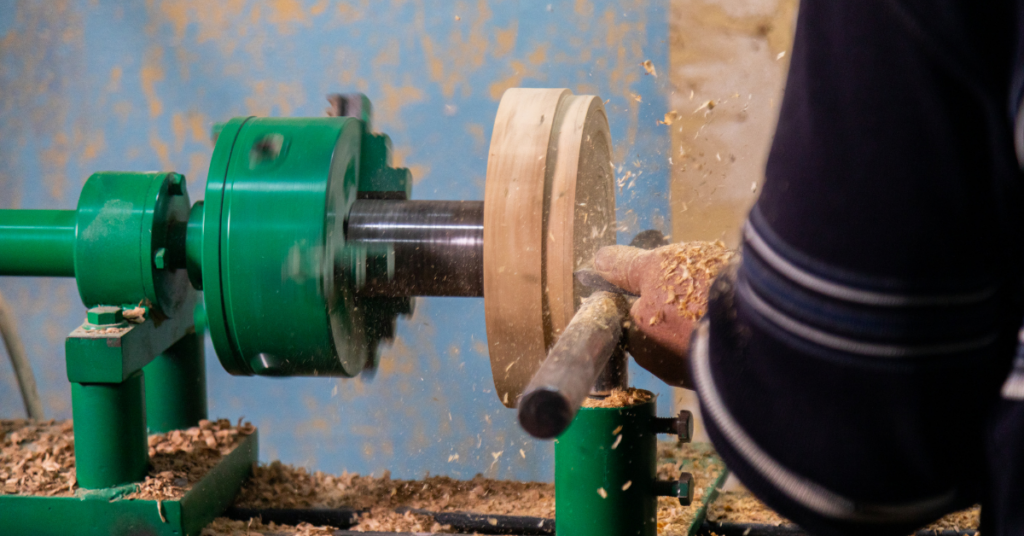
Wood turning vibration happens when the lathe, workpiece, cutting tool, or mounting system moves more than it should. The best way to stop it is to check the workpiece mounting, lathe stability, tool support, cutting speed, and tool sharpness. Fix the cause before increasing speed or continuing to cut.
Across home workshops and professional woodworking shops in the United States, a wood lathe helps turn rough lumber into bowls, spindles, pens, and other useful objects. But even a well-made lathe can shake during a turning job. The vibration may feel like a small buzz at first. It can also become a strong shake that moves the machine or makes the wood difficult to control.
Wood Turning Vibration is more than a finish problem. It can cause rough cuts, uneven surfaces, chatter marks, loose workpieces, and damage to cutting tools. In severe cases, a poorly secured blank may come loose. That can put the operator at risk.
The source is not always the lathe motor. An unbalanced blank, loose belt, worn bearing, weak bench, poor tool support, or incorrect cutting method can all create vibration. A useful repair starts with finding where the movement begins. Changing several settings at once can hide the real cause.
This guide explains how to recognize different vibration patterns, inspect a wood lathe, improve workpiece balance, and choose a safer turning method. It also covers thin spindles, bowl blanks, speed selection, and common mistakes. The goal is to help beginners and experienced woodturners make stable cuts without guessing.
Source: turnawoodbowl.com
What Is Wood Turning Vibration?
Wood turning vibration is repeated movement in the lathe or workpiece while the wood spins. It may move from side to side, up and down, or in several directions at once. The movement can come from the machine, the wood, or the way the tool meets the surface.
A small amount of movement can occur during rough cuts on uneven wood. However, strong or growing vibration is not something to ignore. A stable lathe should hold the work firmly and allow the operator to make controlled cuts.
Vibration can also create a repeating pattern on the wood. This pattern is often called chatter. It may look like small waves, ridges, or rings across a turned surface. Chatter is a visible sign of movement during the cut, but it does not always identify the exact source.
Source: protoolguide.com
Machine vibration
The lathe frame, motor, bearings, belt, or bench moves while the machine runs.
Workpiece vibration
The spinning blank moves because of poor balance, weak mounting, uneven mass, or a long unsupported section.
Cutting vibration
The tool catches, rubs, flexes, or cuts too aggressively against the spinning wood.
Resonance
A part of the machine or workpiece vibrates strongly at a particular speed or natural frequency.
Why Does Vibration Matter?
Vibration affects both the quality of the cut and the control of the machine. A moving blank can make a sharp tool leave uneven marks. The operator may then apply more pressure to correct the surface, which can make the movement worse.
Strong movement can also loosen a mounting system or increase stress on machine parts. A loose chuck, damaged bearing, or poorly secured faceplate needs attention before more turning takes place.
The safest response is simple: stop the lathe when movement becomes unusual, find the cause, and correct it before starting again.
Surface quality
Repeated movement can leave rings, ridges, and rough patches that require extra sanding.
Tool control
A moving workpiece makes it harder to keep the cutting edge in a stable position.
Machine wear
Continued operation with loose or damaged parts can increase wear and create further faults.
Common Causes of Wood Lathe Vibration
The most common causes are poor workpiece balance, loose mounting, weak support, excessive speed, and cutting problems. Machine faults are also possible. The best approach is to check simple external causes before assuming that the motor or bearings have failed.
Think of the lathe as a complete system. The wood, spindle, chuck, bearings, frame, motor, and workbench all affect how smoothly the machine runs. A problem in one area can transfer movement to the rest of the setup.
Source: turnawoodbowl.com
Unbalanced wood
An irregular blank has more mass on one side, creating an uneven rotating load.
Loose workholding
A chuck, faceplate, center, or other mounting part does not hold the blank securely.
Unstable lathe support
A light bench, uneven floor, loose feet, or weak frame allows the machine to move.
Worn machine parts
Damaged bearings, a worn belt, or a loose pulley may cause vibration even without a workpiece.
Incorrect cutting method
Poor tool presentation, a dull edge, or an overly aggressive cut may create chatter.
Unbalanced or Irregular Wood Blanks
An unbalanced blank is a common source of vibration, especially during the first stages of turning. A rough bowl blank may have a large amount of wood on one side and very little on the other. As it spins, the uneven mass creates a changing load.
This effect becomes more noticeable when the blank is large or heavy. A small imbalance may be manageable at a low speed, while a larger imbalance can make the entire lathe shake.
Inspect the blank before mounting it. Look for cracks, loose bark, weak knots, and major differences in its shape. Remove loose material and prepare the mounting surface before the first rotation.
Check the blank
Look for large projections, loose bark, cracks, and weak areas that could become dangerous during turning.
Improve the balance
Prepare the blank to reduce extreme unevenness while retaining enough material for the planned design.
Start slowly
Use a conservative speed that keeps the blank under control during initial roughing.
Loose Chuck, Faceplate, or Center
A secure mounting system keeps the blank centered and transfers the turning load to the lathe. If the chuck or faceplate is loose, the workpiece may wobble even when the wood itself is well balanced.
Check the threads, mounting surfaces, jaws, screws, and center points with the machine switched off and isolated from power. Remove wood chips and dust that could prevent parts from seating correctly.
A faceplate should use suitable screws that provide adequate holding power for the blank and the turning forces. Do not use short or damaged screws simply because they fit the holes. Follow the faceplate and lathe instructions for suitable fasteners.
Check seating
Make sure the chuck or faceplate sits correctly against its mounting surface.
Inspect fasteners
Replace damaged screws and inspect chuck jaws for wear or damage.
Check alignment
Confirm that the workpiece is mounted as intended and does not have unwanted movement.
Weak Bench or Poor Lathe Support
A stable lathe needs a stable base. If the bench bends, rocks, or shifts, vibration from the spinning workpiece can make the whole setup move. A light lathe on a weak table may shake more than the same machine on a rigid support.
Check the floor and bench before changing the lathe settings. Uneven feet can cause rocking. Loose bolts can allow the frame to flex. A damaged bench may also make the vibration worse as the cutting load changes.
Use a solid stand or workbench that can support the machine and its intended work. Follow the machine maker’s mounting guidance. Extra mass can help some machines, but added weight does not repair loose joints or a weak frame.
Level the machine
Set the lathe on a suitable, stable surface and adjust its feet when the design allows it.
Tighten the base
Inspect mounting bolts, stand joints, and other approved fasteners.
Check the floor
Look for soft flooring, uneven concrete, loose boards, or movement under the stand.
How to Diagnose Wood Turning Vibration
Diagnose vibration by checking the machine, mounting system, and cutting setup in a safe order. Do not begin by increasing speed or making deeper cuts. Those changes can increase the load without fixing the real problem.
First, switch off and isolate the lathe from power. Wait until every moving part has stopped. Remove loose wood and inspect the work area before touching the machine.
A useful diagnosis separates vibration that happens with no wood mounted from vibration that appears only when a workpiece is installed. This simple distinction helps narrow the possible causes.
Source: woodmagazine.com
Observe the pattern
Note whether the vibration begins at startup, increases with speed, or appears only during cutting.
Inspect the mounting
Check the blank, chuck, faceplate, centers, and approved fasteners.
Inspect the machine
Look for loose parts, visible damage, belt problems, and unstable support.
Test only when safe
Use the manufacturer’s approved procedure and a suitable test setup after correcting visible problems.
Step 1: Check Whether the Empty Lathe Vibrates
If the manufacturer permits operation without a workpiece, an empty-lathe check can help separate machine vibration from workpiece vibration. Remove accessories only when the manual allows it and keep guards in place.
If the lathe still vibrates without a workpiece, inspect the machine support, motor, belt, pulleys, spindle, and bearings. Do not remove guards or reach near moving parts during a test.
If the machine runs smoothly without a workpiece but vibrates after mounting wood, focus on the blank, workholding, speed, and cutting method.
Vibration with no blank
This may point to a machine, motor, belt, spindle, bearing, or support problem.
Vibration with a blank
Check balance, mounting, workpiece shape, and the selected operating speed.
Step 2: Inspect the Workpiece Mounting
With the lathe disconnected, inspect the blank and its mounting system. Look for cracks around screw holes, damaged chuck jaws, worn centers, and wood that has shifted from its original position.
Check that the tailstock and headstock centers align as intended for spindle work. For faceplate or chuck work, confirm that the workpiece is held according to the manufacturer’s instructions.
Do not continue if the blank has a crack near a mounting point or if its hold is uncertain. Rework the mounting or replace the blank when needed.
Look for movement
Check for signs that the wood has shifted or the mounting hardware has loosened.
Check contact surfaces
Remove packed dust and chips that could interfere with correct seating.
Step 3: Check the Tool Rest and Cutting Tool
A loose tool rest can move under cutting pressure. Its movement may feel like vibration even when the lathe itself runs smoothly. Check the locking handle, support post, and rest surface before turning.
The cutting tool also matters. A dull edge needs more force to remove wood. A poorly supported tool can flex and bounce against the surface.
Use a sharp tool with a suitable edge and a stable presentation. Keep the tool rest close to the workpiece without allowing it to touch the rotating wood.
Secure the tool rest
Lock the rest firmly and check that its position is suitable for the cut.
Check tool sharpness
Sharpen damaged or dull edges using the correct method for the tool.
Check tool support
Keep enough of the tool supported on the rest to reduce unwanted flex.
Step 4: Look for Mechanical Problems
A worn bearing or damaged belt can create vibration that remains even after the workpiece and tool setup have been corrected. Listen for unusual grinding, squealing, or rumbling sounds. Also look for visible belt damage or a loose pulley.
Do not assume that every noise comes from a bearing. A belt, motor mount, loose cover, or other moving part may produce a similar sound. Use the manual to identify service points and approved inspection steps.
If the spindle has noticeable play, the bearing becomes unusually hot, or the machine makes a new mechanical noise, stop using it. Have the machine inspected by a qualified service technician.
Spindle movement
Unusual play may indicate a bearing, spindle, or adjustment problem.
Inspect approved mounting points for loose or damaged fasteners.
How to Stop Wood Turning Vibration
The right fix depends on the source. A loose bench needs a different repair from an unbalanced bowl blank. Work through one cause at a time so you can see which change improves the result.
Begin with the safest and simplest checks. Correct mounting problems, stabilize the machine, and review the cutting setup before considering repairs to internal machine parts.
After each repair, reassess the setup before running the lathe. A machine that still shows strong movement needs further inspection rather than more cutting pressure.
Source: woodworkersinstitute.com
Secure the machine
Use a sound stand, stable floor, and suitable mounting hardware.
Balance the workpiece
Prepare irregular wood and remove unsafe loose material before turning.
A rigid base helps limit movement from the machine and the workpiece. Tighten approved mounting bolts and make sure the stand does not rock. If the lathe has adjustable feet, set them according to the manual.
Some woodturners add mass to a suitable lathe stand to help reduce movement. A properly designed shelf or ballast system may help, but the added weight must not overload the stand or floor.
Vibration-damping pads may reduce some vibration transferred to the floor. However, soft pads can make a machine less stable if they allow it to rock. Use only support materials suitable for the lathe and its mounting system.
Solid support
Choose a bench or stand that does not flex under the machine’s operating load.
Suitable mass
Add weight only when the stand and floor can safely support it.
Correct damping
Use suitable vibration-control materials without creating an unstable base.
Balance the Wood Before Turning
Preparing the blank can make a major difference, especially when turning green wood or irregular bowl blanks. Remove loose bark and inspect the wood for defects. Shape the blank to reduce extreme imbalance when the project allows it.
A bandsaw can help prepare a rough bowl blank by removing excess corners before mounting. Use proper support and safe cutting methods. Do not try to remove large amounts of material by hand while the blank is spinning.
For a large blank, use a speed suitable for its size, weight, condition, and mounting method. The correct speed is not the highest number on the lathe dial. It is the speed at which the setup runs in a controlled and stable manner.
Prepare the shape
Reduce unnecessary projections and major differences in mass when practical.
Inspect for defects
Reject wood with unsafe cracks or weak mounting areas.
Use a low starting speed
Begin cautiously and stop if the machine or workpiece moves excessively.
Use the Correct Cutting Technique
Good tool control helps prevent chatter during turning. Keep the cutting tool supported on the rest and approach the wood with a controlled movement. Avoid forcing the cutting edge into the blank.
A sharp tool generally cuts with less effort than a dull one. However, sharpness alone does not prevent vibration. The tool angle, cutting direction, wood grain, speed, and support all affect the result.
If the tool starts to bounce, stop the cut and reassess your position. Do not press harder to force the tool through the rough area. That response can increase the cutting load and make the movement worse.
Support the tool
Keep the tool on the rest and maintain control throughout the cut.
Take light cuts
Remove smaller amounts of wood when the workpiece is difficult to control.
Maintain a sharp edge
Use a suitable sharpening method and inspect the edge during the job.
Choosing the Right Lathe Speed to Reduce Vibration
Lathe speed has a direct effect on the movement of an unbalanced workpiece. As rotational speed increases, the forces created by an imbalance can rise sharply. This is why a large rough blank should not be started at the same speed used for a small, balanced spindle.
The correct speed depends on several factors. These include the diameter, mass, balance, mounting method, wood condition, and lathe capacity. A speed that works for one blank may be unsuitable for another.
Always follow the speed guidance supplied by the lathe manufacturer. If the blank shakes at a selected speed, stop and investigate. Do not keep increasing speed in the hope that the movement will disappear.
Blank diameter
Larger workpieces generally require more caution because their rotating mass can create substantial forces.
Workpiece balance
An uneven blank needs a conservative starting speed.
Mounting strength
The workpiece and mounting system must be suitable for the intended speed and cutting load.
Machine limits
Never exceed the speed rating or operating instructions for the lathe and its accessories.
Why Increasing Speed Can Make Vibration Worse
A common mistake is to assume that a higher speed will smooth out every rough cut. That may be true in some controlled cutting situations, but it is not a safe way to correct a poorly balanced blank.
An unbalanced object creates a rotating force. Increasing its speed can increase that force. The result may be more shaking, greater stress on the mounting system, and a higher chance of losing control.
Correct the balance and mounting first. Only then should you select an appropriate operating speed for the job.
Do not chase a smooth sound
A quiet motor does not prove that the blank is secure or properly balanced.
Stop at unusual movement
Do not continue when vibration increases as speed rises.
Example of Speed Selection
Consider two hypothetical projects. The first is a small, balanced spindle blank with secure centers. The second is a large, uneven bowl blank mounted on a faceplate.
The spindle may be suitable for a higher operating speed once it is secure and the lathe instructions permit it. The bowl blank needs a much more cautious starting speed because its uneven mass can create greater movement.
This example shows why a single speed chart cannot replace an inspection of the actual workpiece. Use manufacturer guidance and stable operation as the deciding factors.
Small spindle
Check the centers, support, diameter, balance, and machine speed limits.
Large bowl blank
Check its mass, balance, faceplate or chuck mounting, and stability before rotation.
Wood Turning Vibration During Thin Spindle Turning
Thin spindle turning often creates vibration because a long, narrow piece of wood can flex under cutting pressure. As the spindle becomes thinner, it loses stiffness. Even a secure workpiece may begin to move when the tool removes too much material.
This problem often appears while turning chair legs, table parts, handles, and other narrow shapes. The center of the spindle may shake while the thicker sections remain stable.
The best solution is to reduce unsupported length, improve support, use controlled cuts, and leave enough material until the final stages. Do not remove too much wood from the center in one pass.
Source: lathehub.com
Long unsupported spans
A longer spindle section can bend more easily under cutting pressure.
Excessive tool pressure
Heavy cuts can push the thin wood away from the tool.
Dull cutting edges
A dull edge may push and scrape the wood instead of cutting cleanly.
Insufficient support
Poor support can allow the spindle to flex and create repeated chatter.
Use Tailstock Support
The tailstock supports the free end of a spindle and helps limit movement along its length. It is useful when the project design allows the wood to remain between centers.
Make sure the tailstock center is properly seated and aligned. Apply only the pressure needed for secure support. Excessive pressure can damage the wood, increase friction, or place unnecessary stress on the machine.
Tailstock support does not make every thin spindle safe. The wood must still have enough strength, and the tool technique must suit its size.
Align the centers
Check that the headstock and tailstock centers meet the workpiece correctly.
Apply suitable pressure
Secure the spindle without crushing or splitting the wood.
Watch for flex
Stop if the center begins to move excessively during cutting.
Use a Steady Rest When Suitable
A steady rest can support a long spindle at an intermediate point. It helps reduce flex when the workpiece is too long for unsupported turning. The device must be suitable for the spindle size and installed according to its instructions.
Adjust the support carefully. The contact points should guide the wood without forcing it out of alignment. Incorrect adjustment can create friction, heat, or unwanted pressure.
Use a steady rest as an additional support method, not as a substitute for correct mounting and cutting technique.
Check the support position
Place the steady rest where it reduces flex without blocking the planned cut.
Inspect contact points
Make sure the rollers or other support surfaces are clean and in suitable condition.
Wood Turning Vibration When Turning Bowls
Bowl turning can produce strong vibration because bowl blanks are often wide, heavy, and irregular before roughing. Their shape and mass can create a large rotating load. The risk is higher when the blank has uneven projections or a weak mounting area.
The first step is to inspect the blank and choose a suitable mounting method. A faceplate, chuck, or other approved system must provide secure support for the size and condition of the wood.
Keep the speed conservative during roughing. As the blank becomes more balanced and round, the vibration may reduce. However, do not assume that a smoother sound means the mounting is secure.
Source: turnawoodbowl.com
Check the blank
Inspect cracks, loose bark, knots, and uneven projections before mounting.
Use suitable workholding
Choose a mounting system rated and suited to the blank and planned operation.
Reduce excess material
Prepare the blank safely before turning to reduce unnecessary imbalance.
Rough at a cautious speed
Use a low speed appropriate to the actual blank and increase only when stable.
Why Bowl Blanks Shake More Than Small Spindles
A bowl blank may have a wide diameter and an irregular outer shape. This creates a different balance problem from a small spindle that is already close to round.
The larger rotating mass can place more stress on the lathe and mounting system. A loose screw or weak chuck grip may become more serious under these conditions.
The blank should be secure before the lathe starts. If it moves during a manual inspection, correct the mounting rather than relying on speed or tool pressure to control it.
Large diameter
The outer sections travel faster than the center at the same rotational speed.
Uneven mass
Heavy sections create an uneven rotating load.
Mounting stress
The holding system must safely manage the blank’s weight and turning forces.
How to Reduce Bowl Turning Chatter
Bowl chatter may appear as repeated ridges or waves on the inside or outside surface. The cause can include tool vibration, unsupported wood, poor tool presentation, or movement in the workpiece.
Check the tool rest position and use a suitable bowl gouge or other appropriate tool. Keep the cutting edge sharp and make controlled cuts that match the grain and shape.
If chatter continues, stop and inspect the mounting, blank thickness, and support. Do not try to remove every ridge with heavy cuts while the workpiece is shaking.
Improve tool support
Keep the tool rest close to the cut and maintain a stable tool position.
Use suitable cuts
Choose a controlled cutting direction and avoid excessive tool pressure.
Check the bowl wall
Avoid making a thin section before the workpiece is stable and properly supported.
Common Mistakes That Make Lathe Vibration Worse
Some attempts to fix vibration create more problems. A common example is increasing speed before checking the blank. Another is applying more cutting pressure when the tool begins to bounce.
A good troubleshooting process uses small, controlled changes. Stop the machine, inspect the relevant parts, and correct the cause before returning to the cut.
Never treat severe movement as a normal part of woodworking. If the machine shakes strongly or a workpiece moves in its mounting, stop the job.
Starting too fast
An uneven blank can become difficult to control when it spins too quickly.
Ignoring loose parts
A loose tool rest, mounting bolt, or chuck can allow unwanted movement.
Using dull tools
A dull cutting edge can increase cutting pressure and produce chatter.
Taking heavy cuts
Removing too much wood at once can make a flexible or unbalanced workpiece move.
Ignoring unusual sounds
Grinding, knocking, and new squealing sounds may indicate a mechanical fault.
Do Not Hold a Vibrating Workpiece by Hand
Never use your hand to steady a spinning blank that is shaking. The rotating wood can catch clothing or fingers, and an unsecured workpiece may come loose without warning.
Stop the lathe and wait until all movement ends. Isolate the machine from power before inspecting the workpiece or its mounting.
Use approved workholding and support methods. If the setup cannot be secured safely, do not continue the job.
Keep hands clear
Never touch a rotating workpiece to control its balance.
Wait for a full stop
Do not inspect or adjust the setup while the spindle is moving.
Do Not Use Sanding to Hide Chatter
Sanding can remove light tool marks, but it is not a repair for severe vibration. Deep chatter often reflects a problem that needs correction before the surface can be finished properly.
Sanding a moving workpiece can also create heat and other hazards. Follow safe sanding methods and the lathe manufacturer’s instructions.
Fix the movement first. Then use a suitable cutting or scraping method to improve the surface before sanding.
Correct the source
Find out why the workpiece or tool is moving before finishing the surface.
Avoid excessive sanding
Do not remove large amounts of wood simply to erase repeated vibration marks.
Wood Lathe Maintenance to Prevent Vibration
Regular maintenance can help prevent vibration caused by loose or worn machine parts. A simple inspection before each turning session can identify problems before they affect the work.
The maintenance schedule should follow the lathe manufacturer’s instructions. Different machines use different bearing designs, belt systems, spindle arrangements, and lubrication requirements.
Keep the machine clean and remove dust and chips from approved areas. Do not blow debris into sealed bearings, electrical parts, or other sensitive components.
Inspect the belt
Check for wear, cracks, glazing, and incorrect tension according to the manual.
Check fasteners
Inspect approved mounting points and machine supports.
Clean the lathe
Remove dust and chips from the bed, tool rest, and other accessible areas.
Inspect the spindle
Watch for unusual movement, noise, or resistance.
Check accessories
Inspect centers, faceplates, chuck jaws, and other workholding parts.
Bearing Inspection
Spindle bearings support the rotating shaft. If they become worn or damaged, the spindle may develop unwanted movement or noise. This can affect the finish and the stability of the workpiece.
A new grinding sound, unusual heat, or noticeable spindle play deserves attention. Do not assume that tightening a random adjustment will solve the issue.
Bearing inspection and replacement may require special tools and machine-specific procedures. Contact a qualified technician if the problem is beyond the maintenance steps in the manual.
Listen
Watch for new rumbling, grinding, or other unusual sounds.
Observe
Check for unusual spindle movement when the machine is safely stopped.
Service
Use the approved service procedure or seek qualified repair help.
Belt and Pulley Inspection
The belt transfers power from the motor to the spindle. A worn, damaged, or incorrectly tensioned belt may create vibration or noise. A loose pulley can also cause movement.
Disconnect the lathe before opening an approved access cover. Inspect the belt and pulley surfaces for visible wear. Replace damaged parts with suitable components specified for the machine.
Do not operate the lathe with a missing guard or an exposed moving belt. Refit all required guards before starting the machine.
Check belt wear
Look for cracks, fraying, glazing, and other visible damage.
Check pulley alignment
Follow the machine instructions for inspecting the motor and spindle pulleys.
Refit guards
Make sure all protective covers are correctly installed before operation.
When Should You Stop Using a Vibrating Wood Lathe?
Stop using the lathe when vibration becomes strong, increases suddenly, or comes with unusual noise. Also stop if the workpiece moves in its mounting, the tool rest becomes loose, or the machine shifts on its base.
Some movement may be linked to a rough blank or an unsuitable cut. But the operator should not try to judge a dangerous setup while it is running. Stop the machine and inspect it safely.
A damaged spindle, bearing, motor, electrical part, or mounting system may need professional service. Do not continue turning until the fault has been identified and corrected.
Sudden severe shaking
Stop immediately and inspect the workpiece and machine after all movement ends.
Workpiece movement
Do not restart until the blank is securely mounted or replaced.
Burning smell or smoke
Switch off power when safe and investigate the electrical or mechanical fault.
Grinding or knocking
Stop operation and have the machine checked if the sound suggests internal damage.
Electrical fault
Do not open or repair electrical components unless you are qualified to do so.
When to Call a Qualified Technician
Seek qualified service when vibration continues with no workpiece mounted and the approved basic checks do not reveal the cause. Internal bearing damage, spindle problems, motor faults, and electrical defects need proper diagnosis.
A technician can inspect the machine using suitable tools and the manufacturer’s service information. This is safer than replacing parts based on sound or guesswork.
If the lathe has a damaged power cord, exposed wiring, smoke, or signs of overheating, stop using it. Do not reconnect the machine until the electrical fault has been assessed.
Persistent vibration
The machine continues to shake after the workpiece and support problems have been ruled out.
Bearing or spindle damage
There is unusual play, grinding, or other evidence of internal mechanical trouble.
Electrical concerns
The motor, cord, switch, or wiring shows signs of damage or overheating.
A Practical Wood Lathe Vibration Troubleshooting Table
The table below connects common vibration symptoms with possible causes and the first checks to make. These are diagnostic clues, not proof of a specific fault. Several problems can create similar movement or sounds.
Always disconnect power before inspecting the machine. If a symptom suggests loose workholding or mechanical damage, do not continue turning until the cause has been corrected.
Vibration during startup
Possible causes include an unbalanced blank, loose mounting, or unstable machine support. Check the blank and mounting first.
Vibration that increases with speed
Possible causes include imbalance, resonance, or a machine fault. Reduce the risk by stopping and inspecting the setup.
Vibration only during cutting
Possible causes include poor tool presentation, excessive cutting pressure, or weak workpiece support.
Chatter on thin spindles
Possible causes include spindle flex, long unsupported sections, and heavy cuts. Review tailstock or steady-rest support.
Grinding with no workpiece
Possible causes include a damaged bearing, belt, pulley, or motor. Seek qualified service when basic checks do not identify the fault.
Lathe stand movement
Possible causes include loose fasteners, an uneven floor, or a weak bench. Correct the support before turning.
How to Know Whether the Fix Worked
A successful repair should produce a stable setup and predictable tool control. The lathe should not rock, the workpiece should remain securely mounted, and unusual mechanical sounds should be absent.
Inspect the result only after following the manufacturer’s safe startup procedure. Do not place your hands near the rotating workpiece to test whether it is balanced.
If strong movement returns, stop and repeat the inspection. A temporary improvement does not prove that a worn part or weak mounting system has been repaired.
Stable operation
The machine and workpiece run without unusual or growing movement.
Secure mounting
The blank remains correctly held throughout the approved operation.
Controlled cutting
The tool can make a smooth cut without repeated bouncing or chatter.
Normal machine sound
No new grinding, knocking, or other warning sound appears.
Safety Practices for Reducing Wood Lathe Vibration
Safe turning begins before the motor starts. Inspect the blank, mounting system, tool rest, machine support, and work area. Wear suitable eye and face protection, and follow the safety instructions for the lathe.
Avoid loose clothing, jewelry, and unsecured long hair. Keep the work area clear of objects that could become caught or interfere with movement. Use suitable dust control and respiratory protection when sanding or creating fine wood dust.
Never leave a running lathe unattended. Stay in a safe position and avoid standing directly in the path of a possible workpiece release. Follow the machine manufacturer’s guidance for speed, guards, and approved workholding.
Wear suitable protection
Use appropriate eye and face protection for woodturning and suitable respiratory protection for dusty tasks.
Secure the workpiece
Check the mounting and wood condition before starting.
Remove loose items
Keep loose clothing, jewelry, and unsecured hair away from rotating parts.
Use safe tool support
Position and lock the tool rest before starting the machine.
Stop before adjustments
Wait for a complete stop and isolate power before inspecting or changing the setup.
Protect Yourself From a Workpiece Release
A loose or damaged blank can separate from the lathe. This is one of the most serious risks linked to strong vibration. Proper workholding and a suitable starting speed help reduce the chance of this happening.
Do not turn wood with cracks that weaken the mounting area. Do not exceed the capacity of the chuck, faceplate, or lathe. If the wood cannot be secured with confidence, choose another blank or mounting method.
A face shield and other suitable protective equipment provide an added layer of protection. They do not make an unsafe mounting arrangement acceptable.
Inspect the wood
Reject blanks with unsafe defects near the holding points.
Use rated accessories
Choose workholding equipment suitable for the blank and intended operation.
Respect machine limits
Follow the stated capacity and speed restrictions.
Frequently Asked Questions
Q
Why does my wood lathe vibrate at high speed?
A wood lathe may vibrate at high speed because of an unbalanced workpiece, loose mounting, machine resonance, or a mechanical fault. Higher speed can increase the forces caused by an imbalance. Stop the machine, inspect the setup, and correct the cause before using it again.
Q
Can an unbalanced wood blank damage a lathe?
Yes. A severely unbalanced blank can place extra stress on the spindle, bearings, mounting system, and machine support. It can also make the workpiece difficult to control. Use a suitable starting speed and prepare the blank safely before turning.
Q
Does adding weight to a lathe stop vibration?
Adding suitable mass to a stable lathe stand may reduce some movement. However, weight alone cannot repair worn bearings, loose mounting parts, an unbalanced blank, or a weak bench. Check the source of vibration before adding weight, and make sure the floor and stand can support the added load.
Q
Why does my wood lathe vibrate when turning thin spindles?
Thin spindles can flex when the cutting tool applies pressure. Long unsupported sections, dull tools, and heavy cuts can make this movement worse. Use suitable tailstock or steady-rest support, take controlled cuts, and leave enough wood for the final shaping.
Q
Can a worn bearing cause wood lathe vibration?
Yes. A worn or damaged spindle bearing may cause rumbling, grinding, heat, or unwanted spindle movement. These symptoms can also come from other mechanical parts. Stop using the lathe if you suspect bearing damage and seek qualified service.
Q
Should I increase lathe speed to remove chatter?
Not automatically. Increasing speed may make vibration worse when the blank is unbalanced or poorly mounted. First inspect the workpiece, mounting, tool rest, and cutting method. Use a speed that suits the blank and follows the lathe manufacturer’s instructions.
✦ Wrapping Up
Conclusion
Wood Turning Vibration can come from several parts of a turning setup. An unbalanced blank, loose chuck, weak bench, dull tool, unsupported spindle, or worn bearing can all create unwanted movement. The key is to find the real source instead of trying random speed changes.
Start with the safest checks. Stop the machine, isolate power, inspect the mounting, and make sure the lathe stands on a stable base. Then check the tool rest, cutting method, belt, spindle, and other mechanical parts as needed.
Good turning habits also help prevent future problems. Prepare the wood before mounting it, use suitable speeds, keep tools sharp, and take controlled cuts. Support thin spindles when the job requires it and never ignore a sudden change in machine movement.
A smooth cut begins with a stable setup. If vibration remains after basic checks, stop using the machine and seek qualified service rather than risking a damaged workpiece or injury.
💡 Key Takeaway
Before your next turning session, inspect the blank, mounting hardware, tool rest, lathe stand, and machine condition. Start at a suitable low speed, watch for unusual movement, and stop immediately if the setup becomes unstable.