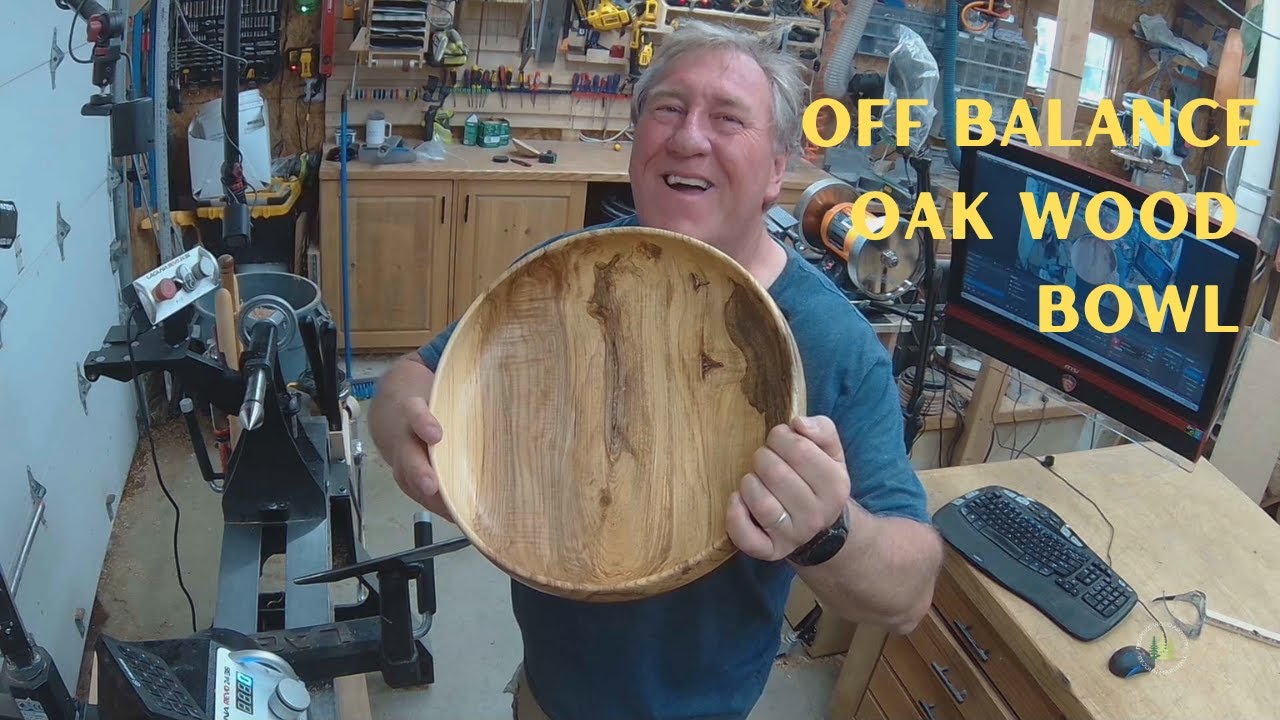
Wood turning balance means setting up a wood blank so it spins with minimal unwanted movement, vibration, and wobble. You can improve balance by checking the blank, finding its center, securing the mounting, starting at a low speed, and removing excess wood from heavy areas.
Woodturning is a popular hobby in American home workshops, professional woodworking shops, and community makerspaces. Many turners use a wood lathe to make bowls, spindles, table legs, pens, and decorative objects. One skill helps make these projects safer and easier: proper balance. An uneven blank can shake the lathe, make cutting difficult, and place extra stress on the mounting system.
Wood turning balance is not just about making a round piece of wood spin smoothly. It also involves the weight, shape, center point, mounting method, and speed of the workpiece. A square blank and a natural-edge bowl blank need different care. Both can start with an uneven shape, but the turner must control that imbalance before increasing the speed.
The American Association of Woodturners recommends starting slowly, checking the workpiece, and reducing speed when vibration occurs. Its safety guidance also stresses secure mounting and proper protective equipment. These principles give beginners and experienced turners a clear way to manage uneven wood.
This guide explains how balance works, why wood blanks wobble, and how to correct common problems. You will also learn how to check your lathe, select a suitable starting speed, and recognize when a blank is too risky to turn. The goal is steady work, better control, and fewer surprises in the shop.
Source: thewoodenify.com
What Is Wood Turning Balance?
Wood turning balance is the control of weight and rotation in a workpiece mounted on a lathe. A balanced blank spins with less unwanted movement around its turning axis. This makes it easier to guide a cutting tool and produce an even shape.
Think of a spinning bicycle wheel. When its weight is spread evenly, it rotates with little shaking. If one side carries much more weight, the wheel can shake as it spins. A wood blank can behave in a similar way.
The goal is not always to make every part of a project equal in weight. Some artistic projects use an uneven shape on purpose. The main goal is to understand the forces involved and keep the work within the safe limits of the lathe and its mounting system.
Static balance
Static balance describes how the weight of an object sits around its center. A blank with a heavy side may settle toward that side when it rests freely.
Dynamic balance
Dynamic balance concerns how a rotating object behaves while it spins. A workpiece may seem acceptable while still but produce strong vibration at higher speeds.
Turning axis
The turning axis is the line around which the lathe rotates the wood. Correct mounting helps place the intended shape around this axis.
Out-of-balance work
An out-of-balance blank has uneven weight or an uneven shape around its rotation axis. This can cause shaking, movement, and extra stress on the lathe.
Why Balance Matters During Woodturning
A stable workpiece gives you better control over each cut. Your tool can follow the surface with less unwanted movement. This helps create cleaner curves and more even surfaces.
Balance also affects the load on the lathe. A heavy section can create a strong force as it moves around the axis. This force increases with speed and can make a weak mounting or unstable stand more likely to fail.
Good balance does not remove every risk. Wood can contain hidden cracks, loose knots, or weak grain. A balanced blank still needs a careful inspection before and during turning.
Better cutting control
Less vibration makes it easier to hold the tool steady and guide the cutting edge.
Smoother surfaces
A stable blank can reduce vibration marks and uneven cuts.
Less machine stress
Good balance can reduce unwanted shaking and stress on the lathe, stand, and mounting parts.
What Causes an Unbalanced Wood Turning Blank?
An unbalanced blank usually comes from uneven shape, uneven weight, poor centering, or an insecure mounting. These problems may appear before the first cut or develop during a turning session.
A square piece of stock is a simple example. Its corners extend farther from the center than its flat sides. This creates interrupted cuts as the blank spins. A natural-edge bowl blank can have an even greater difference because its outer shape may follow the original tree.
Wood density also matters. A knot, moisture pocket, or large area of different grain can make one part heavier than another. A blank can look nearly round and still produce unwanted vibration.
Source: youtube.com
Incorrect center placement
A blank mounted away from its intended center may rotate unevenly. Poor alignment can also cause an unwanted eccentric shape.
Uneven wood weight
Dense knots, wet areas, and changes in grain can create heavy sections that affect rotation.
Irregular blank shape
Burls, natural edges, branches, and rough-sawn stock can place more wood on one side.
Loose mounting
A weak chuck grip, loose faceplate, or slipping drive center can allow the workpiece to move.
Lathe problems
Loose fasteners, a poorly seated chuck, a worn bearing, or an unstable stand can produce vibration even with a well-prepared blank.
Changes in wood moisture
Green wood can shrink, swell, or change shape as moisture moves through it. This may affect balance and mounting.
How to Recognize an Out-of-Balance Blank
The first sign is often a repeating shake when the lathe begins to spin. You may also notice the machine moving on its stand or hear a regular knocking sound. These signs need attention before you continue cutting.
A rough blank may move through several different positions as it rotates. That movement can make the cutting edge meet the wood with changing force. If the vibration becomes stronger as speed rises, stop and inspect the setup rather than trying to push through it.
Visible wobble
The blank appears to move from side to side or up and down during rotation.
Repeating vibration
The lathe or stand shakes in a pattern as the heavy part of the blank moves around.
Unusual noise
A knocking, rattling, or scraping sound may point to poor balance, loose parts, or contact with another component.
Changing mounting position
A blank that shifts in the chuck or between centers needs to be stopped and checked.
How to Balance Wood on a Lathe Before Turning
The best time to correct major balance problems is before the lathe starts. Begin with a sound blank, find the correct center, and choose a mounting method that can hold its size and weight. Do not use lathe speed to overcome a poor setup.
You will need a pencil, a ruler or measuring tape, a square when useful, and suitable mounting hardware. A center finder can help with round stock. A compass or simple diagonal marks can help with square stock.
Always disconnect the lathe from its power source before making adjustments that could cause the machine to start by accident. Keep the workpiece supported while you prepare its mounting points.
Source: pinterest.com
Preparation tools
Use a pencil, measuring tool, center finder, suitable screws, and the correct chuck or faceplate for the blank.
Safety equipment
Prepare a full face shield, suitable clothing, hearing protection when needed, and dust control for later cutting and sanding.
Stable machine
Check that the lathe is firmly mounted and that its stand does not rock or slide.
Step 1: Inspect the Wood Blank
Start by checking every side of the blank. Look for cracks, splits, loose knots, bark pockets, and areas that may break away. Pay close attention to the ends because cracks can extend deeper than the visible surface.
Remove loose bark and weak material when the work allows it. Do not assume that a small crack will disappear after the first cut. A deep defect may remain inside the blank and cause a piece to separate during rotation.
Avoid turning stock with serious structural defects. Glue is not a reliable way to make an unsafe blank suitable for high-speed rotation.
Check the grain
Look for severe grain runout and weak areas that may split during turning.
Check the bark
Make sure any bark you plan to retain is firmly attached and suitable for the intended project.
Check moisture
Note whether the blank is green, partly dry, or fully dry because moisture changes can affect its shape.
Step 2: Find the Center of the Blank
Finding the center helps you mount the blank in the intended position. For a square blank, draw lines from opposite corners. Their crossing point marks the geometric center.
For round stock, measure across the diameter and mark the midpoint. Repeat the measurement from another direction to confirm the location. If the blank is irregular, use your planned design and mounting method to select the correct axis.
The geometric center is not always the artistic center. A natural-edge bowl or eccentric project may need an offset mounting point. In that case, mark the intended axis clearly and check that the shape has enough clearance.
Square stock
Draw diagonal lines from opposite corners and mark their intersection.
Round stock
Measure across the blank in different directions to locate its center.
Irregular stock
Plan the finished shape and identify a suitable axis that the lathe can support safely.
Step 3: Prepare the Mounting Surface
A flat and clean mounting surface helps the blank sit securely. If you use a faceplate, make sure the contact area is suitable for the plate and its screws. If you use a chuck, prepare a tenon or recess that matches the chuck jaws.
Use the correct screws for the faceplate and wood. The American Association of Woodturners recommends sturdy sheet metal screws of at least #10 or #12 for faceplate mounting. Never substitute brittle drywall or deck screws.
A chuck tenon should have the correct size, shape, and shoulder for the jaws. Follow the chuck maker’s instructions. A poor tenon can reduce grip and allow the blank to move.
Faceplate mounting
Use suitable screws and make sure the plate sits firmly against the wood.
Chuck mounting
Cut a suitable tenon or recess that fits the jaws and follows the chuck maker’s guidance.
Between-center mounting
Make sure the drive center and live center engage the wood firmly without splitting it.
Step 4: Mount and Check the Workpiece
Fit the blank to the lathe and tighten the mounting system according to its instructions. Use the tailstock for extra support whenever the turning method allows it. Check the tailstock lock, tool rest base, and other locking levers.
Turn the blank through a full rotation by hand. Check that it clears the tool rest, bed, banjo, and nearby machine parts. Make sure no protruding corner or natural edge can strike another component.
Remove the chuck key, wrench, and other loose tools before switching on the machine. Stand to the side of the workpiece rather than directly in front of or behind it when starting.
Check mounting security
Confirm that the workpiece cannot move freely in the chuck or on the faceplate.
Check full rotation
Move the blank by hand through a complete turn and confirm that all parts have clearance.
Check the machine
Make sure all required locks are tight and the spindle and mounting surfaces are clean.
Step 5: Start at a Low Speed
Set the lathe to a low speed before turning it on. This is especially important for large, rough, or uneven blanks. Keep your body outside the main path of the rotating workpiece.
Start the lathe while standing to the side. Watch the blank from a safe position and listen for unusual sounds. If the machine shakes, lower the speed. If vibration remains or the blank moves, switch off the lathe and inspect the cause.
As you remove excess wood and the shape becomes more regular, you may be able to increase the speed. Make each change carefully. There is no need to reach a high speed if the work already cuts well at a lower setting.
Begin slowly
Use the lowest suitable speed for the blank and the machine.
Watch for movement
Look for shaking, movement in the mounting, or contact with nearby machine parts.
Increase with care
Raise speed only when the workpiece runs smoothly and the mounting remains secure.
How to Reduce Vibration During Wood Turning
Reduce vibration by checking the workpiece, mounting system, lathe, and speed in a safe order. Do not assume every shake comes from an uneven blank. A loose headstock, dirty spindle shoulder, or poorly seated chuck can create a similar problem.
A useful approach is to stop the machine and inspect the setup before making another cut. The American Association of Woodturners’ vibration guidance discusses several possible sources, including the blank, mounting hardware, machine fasteners, and wood movement.
Work through the checks one at a time. This makes it easier to find the actual cause instead of changing several things without knowing which one helped.
Source: youtube.com
Stop and inspect
Switch off the lathe and wait for the workpiece to stop fully before touching or adjusting anything.
Check the blank
Look for uneven sections, loose material, shifting centers, and changes in the shape.
Check the mounting
Inspect the chuck, faceplate, screws, drive center, and tailstock for movement or poor seating.
Check the lathe
Inspect the stand, headstock locks, spindle, and machine fasteners.
Correct the Centering Problem
If the blank was mounted off center by mistake, stop and remount it. Recheck the center marks and make sure the drive center and tailstock line up with the intended axis.
A small alignment error can become more noticeable as the blank spins. For projects that need a true round shape, correct the mounting before removing more material.
Check the center marks
Compare the mounted position with the marks made during blank preparation.
Check spindle alignment
Confirm that the headstock and tailstock centers line up when the setup requires them.
Remove Excess Wood From Heavy Areas
When a blank has a heavy section, removing excess wood can help reduce its imbalance. The safest method depends on the blank, its shape, and how it is mounted. For major corrections, remove the workpiece and support it securely before using a suitable cutting tool or bandsaw.
Do not reach toward a spinning blank to remove a heavy area by hand. Do not attach improvised weights while the lathe is running. Any counterweight system must be designed and secured for the machine, workpiece, and intended speed.
After correction, mount the blank again and repeat the hand-rotation and clearance checks. Begin at a low speed to assess its behavior.
Identify the heavy side
Inspect the blank and its shape to identify areas that create unwanted weight differences.
Remove material safely
Take the blank off the lathe and use a suitable method to remove excess material when appropriate.
Check the new setup
Remount the blank, inspect its grip, and test its movement at a low speed.
Inspect the Chuck and Faceplate
A chuck or faceplate that does not sit correctly can cause wobble. Dirt, damaged threads, loose jaw bolts, and poor contact with the spindle shoulder can affect the setup.
Clean the mating surfaces and inspect the threads when the machine is disconnected. Make sure the chuck or faceplate fits the spindle correctly and that its parts are tight.
The AAW vibration checklist also describes checking whether a chuck runs true. Such checks should follow the correct machine procedure and use a suitable safe setup. Do not touch a rotating chuck with a hand or loose object.
Clean contact surfaces
Remove dirt and debris from the spindle shoulder, chuck, and faceplate mating surfaces.
Inspect the threads
Look for damage, wear, or debris that may prevent proper seating.
Check the jaws
Confirm that the chuck jaws are secure and grip the workpiece correctly.
Check the Lathe Stand and Headstock
A light or unstable stand can make vibration feel much worse. Check whether the machine rocks, shifts, or moves across the floor. Tighten the approved mounting fasteners and make sure the lathe sits evenly on its support.
Inspect the headstock and other movable parts. A loose headstock lock can allow movement during rotation. Worn bearings or damaged spindle parts may also need attention from a qualified service technician.
Adding mass to a suitable lathe stand can sometimes help reduce vibration, but extra weight is not a cure for poor mounting or unsafe work. Follow the machine maker’s instructions and do not overload the stand.
Check the floor
Use a firm, level surface and remove loose material that could affect the stand.
Check the stand
Make sure the stand is stable and all approved mounting points are secure.
Check the headstock
Confirm that its locking system is tight and that the spindle turns without unusual noise.
Choosing the Right Lathe Speed for Balanced Wood
The correct lathe speed depends on the workpiece diameter, shape, weight, balance, mounting method, and machine capacity. Large blanks need more caution than small, evenly shaped pieces. A rough bowl blank also needs a different starting approach from a small spindle blank.
Rotations per minute, or RPM, tells you how many times the workpiece turns in one minute. However, RPM alone does not tell you whether a setup is safe. A large blank at a given RPM has a different surface speed and rotating force from a small blank at the same RPM.
The American Association of Woodturners provides general spindle speed guidance, but its figures are not universal limits for every blank. For rough or unbalanced work, start below normal working speeds and follow the lathe maker’s instructions.
Source: alamy.com
Large diameter
A large workpiece has more mass and may create greater forces when it is uneven.
Small diameter
A small, sound, balanced blank may allow a higher working speed within the lathe’s limits.
Rough shape
Uneven stock needs a slower starting speed while the shape is brought under control.
Machine capacity
The lathe’s rated speed, size, mounting system, and condition all affect the safe operating range.
General Spindle Speed Reference
The following figures are general suggested speeds published in American Association of Woodturners safety material for spindle stock. They are reference values, not instructions to start an unbalanced blank at these speeds.
Use lower speeds when stock is rough, poorly balanced, unusually heavy, or outside your experience. Always follow your own lathe manual when its limits are more restrictive.
Stock up to 1 inch
A general suggested spindle speed is 3,000 RPM for suitable, balanced stock.
Stock around 1.5 inches
A general suggested spindle speed is 2,500 RPM for suitable, balanced stock.
Stock around 2 inches
A general suggested spindle speed is 2,000 RPM for suitable, balanced stock.
Stock around 3 inches
A general suggested spindle speed is 1,500 RPM for suitable, balanced stock.
Why Bowl Blanks Need Extra Care
Bowl blanks often have a large diameter and uneven outer shape. Natural-edge bowls may also have bark, knots, and changing grain. These features can make the workpiece difficult to balance at the start.
Do not apply a simple diameter formula as a guarantee of safe speed. The American Association of Woodturners warns that common diameter-based formulas can suggest speeds that are too high for some unbalanced bowl blanks.
Begin at a low speed and make suitable cuts to bring the blank into a more regular shape. Increase speed only after the work runs smoothly and remains securely mounted.
Large bowl blanks
Use a cautious starting speed and check the mounting system before every start.
Natural-edge bowls
Account for protruding edges and check that the full blank has enough clearance.
Uneven wood
Do not assume that an attractive or nearly round blank has equal weight around its axis.
Balancing Different Types of Wood Turning Projects
Different turning projects need different balance methods. A spindle usually rotates around its length, while a bowl rotates around an axis that crosses the face of the blank. Pens, plates, and natural-edge projects also have their own mounting needs.
Before choosing a method, consider the finished shape and the amount of material that will extend beyond the mounting point. A method that works for a small spindle may not provide enough support for a heavy bowl.
Source: vanduynwoodwork.com
Spindle turning
The wood rotates between the headstock drive center and the tailstock live center. Correct alignment and firm support are key.
Bowl turning
The blank often has a wide diameter and may start with a rough or uneven shape. A secure faceplate or chuck setup is essential.
Pen turning
Small blanks are usually easier to manage, but poor alignment or an insecure mandrel can still cause vibration.
Natural-edge turning
Irregular edges and changing weight require extra care with speed, clearance, and mounting.
How to Balance Spindle Turning Stock
Spindle stock is commonly mounted between centers. The blank should have sound ends that can hold the drive and live centers. Mark the intended axis and make sure the tailstock applies suitable pressure.
A square spindle blank will produce interrupted cuts at first. Start slowly and remove the corners in a controlled way. As the shape becomes round and stable, you can reassess the working speed.
Avoid forcing a dull tool into the stock. Use the correct tool for the cut and keep it supported on the tool rest.
Check the center points
Make sure both ends provide secure contact and that the centers follow the intended axis.
Use suitable support
Keep the tailstock engaged when the operation allows it.
Remove corners gradually
Use controlled cuts to bring square stock toward a round shape.
How to Balance Bowl Turning Blanks
Bowl blanks often begin as thick sections of a log. The wood may contain a natural edge, uneven grain, and areas with different moisture levels. These features can make the first stage challenging.
Inspect the blank and prepare a suitable mounting surface. Use a faceplate or chuck that matches the size and weight of the work. A tailstock may provide added support during early shaping when the setup permits it.
As the outside becomes more regular, stop and check the blank. A secure mounting and suitable wall thickness remain important during hollowing. Thin walls can begin to flex and vibrate, even when the outer shape looks smooth.
Inspect the rim
Check natural edges, bark, cracks, and loose sections before starting.
Choose strong mounting
Use a faceplate or chuck suitable for the blank’s weight and size.
Monitor wall thickness
Check the walls and base during hollowing because thin sections can flex.
How to Balance Natural-Edge Wood
Natural-edge turning keeps part of the tree’s original outline. This creates an attractive shape, but it may also leave an uneven mass around the rotation axis. The blank needs a secure mounting and a very cautious starting speed.
Inspect the bark and outer edges. Loose bark can become a dangerous flying object. Remove loose sections before turning, or reject the blank if its structure is not sound.
Do not try to make an unstable natural-edge blank run smoothly by increasing speed. Stop and reconsider the mounting or blank selection if the vibration remains.
Preserve sound edges
Keep only material that is firmly attached and structurally suitable.
Check the turning path
Make sure all high points have enough clearance from the tool rest and lathe.
Use a cautious speed
Start slowly and reassess the blank as material is removed.
Static Balance and Dynamic Balance in Woodturning
Static and dynamic balance describe related but different parts of rotation. Understanding the difference helps explain why a blank can appear stable while still producing vibration on the lathe.
Static balance concerns the distribution of weight when an object is at rest. Dynamic balance concerns the behavior of the object while it rotates. A simple static check cannot prove that a workpiece is safe at every speed.
For ordinary woodturning, you do not need advanced balancing equipment for every project. You do need a sound blank, correct mounting, a stable machine, and a safe working speed.
Understanding Static Balance
Imagine a blank resting on a suitable balance point. If one side carries more weight, that side may turn downward. This shows that the weight is not evenly distributed around the support point.
A static check can help identify a major heavy area. However, the result depends on the blank’s shape and how it is supported. It should be treated as one part of preparation rather than a full safety test.
Useful for rough checks
A suitable static check may reveal a large weight difference before mounting.
Limited for rotation
It does not show how the blank will behave under all rotating conditions.
Understanding Dynamic Balance
Dynamic balance concerns forces that appear while the blank spins. A heavy area can create a repeating force during each rotation. As speed rises, the effects can become much more noticeable.
The shape and diameter of the workpiece also matter. A large blank with an uneven edge can produce strong movement even when its total weight does not seem unusual.
For a normal turning project, the safest practical approach is to begin slowly and stop if vibration occurs. Do not use a high-speed test to find the limit of an unstable blank.
Rotation matters
Dynamic behavior appears while the workpiece moves around its axis.
Speed changes the forces
Higher speed can make an existing imbalance more severe.
Mounting remains essential
Even a well-balanced blank needs a secure connection to the lathe.
Common Wood Turning Balance Mistakes
Many balance problems begin with small mistakes during preparation. A center mark may be slightly wrong, a chuck may not fit the blank, or the turner may choose a speed that is too high for the rough shape.
The best way to prevent these problems is to follow a repeatable setup routine. Check the blank, mounting, machine, and clearance before every start. Stop when something feels or sounds unusual.
Source: pinterest.com
Starting too fast
A large or uneven blank can create strong vibration at an unsuitable speed. Start slowly instead.
Ignoring cracks
Hidden cracks and loose knots can cause a blank to break apart. Inspect the wood carefully.
Using the wrong screws
Brittle or unsuitable screws can fail under load. Use mounting hardware designed for the task.
Skipping the hand-turn check
A protruding edge may strike the tool rest or another machine part. Check the full rotation by hand.
Ignoring loose parts
A loose tailstock, headstock, or tool rest can create movement and reduce control.
Forcing the cut
Heavy pressure can increase tool movement and create poor cuts. Use sharp tools and controlled cutting.
Leaving green wood mounted
Moisture changes can affect the blank’s shape and balance. Do not leave green stock mounted longer than necessary.
Adding improvised counterweights
Poorly secured weights can become dangerous projectiles. Never use an improvised weight system on a running lathe.
When Should You Stop Turning?
Stop immediately if the lathe shakes strongly, the blank shifts, the chuck loosens, or you hear a new knocking sound. Do not try to hold a moving workpiece in place with your hands.
Wait for the machine to stop fully before inspecting it. Check the wood, mounting, and machine. If the cause is unclear, ask an experienced woodturner or a qualified technician for help.
Reject a blank if it has severe cracks, loose sections, or defects that make it unsuitable for safe rotation. Some pieces of wood are better used for another project.
Strong vibration
Stop the machine and find the cause before restarting.
Loose mounting
Do not continue until the mounting system has been inspected and corrected.
Cracked wood
Do not turn a structurally unsafe blank simply because its appearance is attractive.
Machine damage
Have worn or damaged machine parts checked before further use.
Wood Lathe Balance and Personal Safety
Good balance is only one part of safe woodturning. A secure machine, sound workpiece, proper protective equipment, and safe body position all matter. Never assume that a smooth-running blank cannot break or come loose.
The American Association of Woodturners recommends a full face shield whenever the lathe is running. It also advises against gloves, loose clothing, and dangling items that could catch in rotating parts.
Keep your feet clear of shavings and maintain a stable stance. Know where the stop switch is before starting the machine. Keep other people outside the danger zone.
Wear a full face shield
Protect your face from wood fragments and other material that may come loose.
Avoid loose clothing
Tie back long hair and avoid gloves, jewelry, and dangling items near rotating parts.
Use dust protection
Use suitable respiratory protection, dust collection, and ventilation during cutting and sanding.
Stand to the side
Move outside the main path of the blank when starting the lathe.
Keep the work area clear
Remove loose tools, shavings, and objects that could cause a trip or interfere with the machine.
Wait for a full stop
Never adjust the tool rest, measure the work, or remove the blank while the lathe is moving.
Maintain a Safe Working Position
Stand in a comfortable position with both feet firmly on the floor. Avoid leaning over the spinning blank. Keep your hands away from the rotation path unless you are performing an operation that specifically requires contact under an approved safe method.
Place the stop switch where you can reach it quickly. Keep your attention on the workpiece and avoid distractions. Do not operate the lathe when tired or under the influence of alcohol or drugs.
Keep good footing
Remove sawdust and wood shavings from the floor around the machine.
Keep a clear view
Use suitable lighting and a face shield that allows you to see the work clearly.
Stay alert
Stop and investigate any unusual vibration, sound, or movement.
How to Maintain Wood Turning Balance Over Time
Balance can change as a project develops. Material removal changes the weight and shape of the blank. Moisture loss can also change the size and form of green wood.
Check the workpiece throughout the session rather than assuming that a good first setup will remain unchanged. This is especially useful when turning large bowls, natural-edge pieces, and thick green blanks.
Regular machine maintenance also helps prevent vibration. Clean the spindle and mounting surfaces, check fasteners, and follow the lathe maker’s service schedule.
Source: pinterest.com
Check the chuck regularly
Make sure the jaws remain tight and the workpiece has not shifted.
Inspect the tailstock
Check that its locking system and live center remain secure.
Monitor wood movement
Watch for changes in green wood as moisture leaves the blank.
Maintain the lathe
Keep the spindle, headstock, stand, and moving parts in good working condition.
Check Balance After Removing Material
A workpiece changes as you cut it. Removing wood from one side may reduce an imbalance, while a poorly planned cut may create another. Check the shape and vibration after important stages.
For hollow forms and bowls, pay attention to the base and wall thickness. A thin section may flex as the tool makes contact. Stop if the work begins to vibrate or change shape unexpectedly.
Inspect the new shape
Check whether material removal has improved or changed the weight distribution.
Check the base
Make sure enough sound material remains to support the mounting and finished form.
Check the walls
Avoid cutting sections so thin that they lose their stability.
Store and Prepare Green Wood Carefully
Green wood contains moisture that can change its shape during storage and turning. A blank that was stable earlier may become distorted as it dries. This can affect its balance and the way it fits the mounting system.
Store unfinished blanks in a way that suits the project and the wood species. If you need to pause a turning session, remove the blank when appropriate and store it safely. Plastic wrapping may slow moisture loss for some green-wood projects, but it does not replace proper storage or inspection.
Before restarting, inspect the blank again. Check for cracks, distortion, and changes in the mounting surface.
Check for distortion
Look for changes in the shape or center marks before remounting.
Inspect new cracks
Reject the blank if drying has caused serious structural damage.
Check the mounting
Make sure the chuck, tenon, or faceplate still provides secure support.
A Practical Wood Turning Balance Checklist
A simple checklist can help you prepare every blank in the same way. It is useful for beginners who are still learning lathe setup and for experienced turners handling unusual stock.
Complete the checks before switching on the lathe. If one important item fails, correct the problem before continuing. A short inspection is far better than taking a risk with an unstable blank.
Wood condition
The blank has been checked for cracks, splits, loose knots, bark pockets, and weak sections.
Center position
The intended rotation axis has been marked and checked.
Mounting system
The chuck, faceplate, or centers suit the workpiece and are properly secured.
Machine condition
The headstock, tailstock, tool rest, stand, and other required locks are secure.
Clearance
The blank has been turned by hand through a full rotation and clears nearby parts.
Speed
The lathe is set to a suitable low starting speed.
Protective equipment
The face shield and other suitable safety equipment are ready.
Starting position
The turner and any observers are outside the main danger zone.
How to Know When the Blank Is Running Well
A well-prepared blank should rotate without unwanted movement that makes the machine shake. The mounting should remain secure, and the work should clear the tool rest and other machine parts.
As the blank becomes more regular, cutting should feel more controlled. You should not need to force the tool or fight strong vibration. These signs suggest that the setup is improving, but they do not replace ongoing inspection.
Stable rotation
The lathe and workpiece run without concerning vibration.
Secure mounting
The blank remains firmly attached throughout the operation.
Controlled cutting
The tool follows the work without excessive movement or force.
No unusual sounds
The lathe does not produce new knocking, scraping, or rattling sounds.
Frequently Asked Questions
Q
Why Does My Wood Lathe Vibrate When Turning?
A wood lathe may vibrate because the blank is uneven, poorly centered, or not mounted securely. Loose machine parts, a weak stand, and a poorly seated chuck can also cause vibration. Stop the machine, wait for it to stop fully, and inspect the setup before restarting.
Q
How Do I Balance an Uneven Wood Blank?
Start by inspecting the blank and finding its intended turning axis. Choose a secure mounting method and check the full rotation by hand. If the blank has a heavy area, remove it from the lathe and correct the weight distribution with a suitable method. Remount it and begin at a low speed.
Q
What Is the Best Speed for an Unbalanced Wood Blank?
There is no single safe speed for every unbalanced blank. The correct setting depends on diameter, shape, weight, mounting, lathe capacity, and wood condition. Start at the lowest suitable speed and do not increase it until the blank runs smoothly. Follow the speed limits in your lathe manual.
Q
Can I Turn a Natural-Edge Bowl Without Removing the Uneven Edges?
Yes, natural-edge bowls can retain their uneven outer shape when the wood is sound and the workpiece is mounted securely. However, the uneven shape can create strong vibration. Check for loose bark and cracks, confirm full clearance, and use a cautious starting speed. Reject the blank if its structure or mounting cannot support the work safely.
Q
Does a Heavier Lathe Reduce Woodturning Vibration?
A heavy, stable lathe may absorb some vibration better than a light machine. A firm stand and secure floor mounting can also help. However, extra weight does not correct a loose chuck, damaged spindle, unsafe blank, or poor mounting. Find and correct the actual cause rather than relying on machine mass.
✦ Wrapping Up
Conclusion
Wood turning balance is a basic skill that supports safer and more controlled work on a lathe. It begins with a sound blank, a correct center, and a mounting system that can hold the work securely. Careful speed control then helps you bring the wood into a more regular shape without placing needless stress on the machine.
The most useful habit is to stop and inspect whenever you notice vibration, wobble, or unusual noise. Check the blank, mounting, spindle, stand, and machine locks before making another cut. Do not try to solve a serious imbalance by increasing speed or holding the workpiece by hand.
Every piece of wood behaves differently. A small spindle blank may be simple to prepare, while a large natural-edge bowl may need more care and experience. Learn to recognize your limits and choose sound stock that suits your lathe and skill level.
💡 Key Takeaway
Before your next woodturning project, inspect the blank, mark its intended center, secure the mounting, check full rotation by hand, wear a full face shield, and start at a low suitable speed. Stop and investigate any unwanted vibration before continuing.