Wood insect damage occurs when insects eat, bore into, or build nests inside wooden materials. termites, powderpost beetles, carpenter ants, and carpenter bees are common causes. Look for small holes, wood dust, hollow areas, mud tubes, and weak timber. Identify the insect before choosing a repair or treatment.
Across the United States, wood insect damage affects homes, barns, decks, fences, furniture, and other wooden structures. Warm, damp areas often create good conditions for many wood-damaging insects. Homes in humid parts of the Southeast may face different pest pressures from those in dry parts of the West. Still, no region is completely free from wood pests.
The damage can start out of sight. A tiny beetle larva may spend months inside a board. A termite colony may feed behind a wall. Carpenter ants may build a nest inside a damp window frame. By the time holes, dust, or weak wood appear, the insects may have been active for some time.
The first step is to find out what caused the damage. Different insects leave different signs. Termites eat wood. Carpenter ants remove wood to make nests. Carpenter bees bore round tunnels. Beetle larvae create hidden paths inside timber. These differences affect the right treatment.
This guide explains how to spot wood pests, tell their damage apart, inspect affected areas, and choose a safe repair plan. It also explains when a pest control company or qualified building professional should take over. The goal is to stop active damage and protect sound wood.
Source: pinterest.com
What Is Wood Insect Damage?
Wood insect damage is the harm that insects cause when they feed on wood or use it as a place to live. Some insects eat wood as part of their life cycle. Others chew through it to create tunnels or nesting spaces. Both actions can weaken wooden parts over time.
The damage may affect the outer surface, the inner wood, or both. A board can look sound while insects eat the material inside. This makes early inspection useful, especially around floors, roof frames, decks, door frames, and support posts.
Not every insect found near wood is a wood-destroying pest. Some insects only visit the surface. Others arrive in firewood and die without spreading to the building. A correct identification helps avoid needless treatment.
Source: cutthewood.com
Feeding damage
Some insects eat wood or feed on its nutrients. Termites and wood-boring beetle larvae are common examples.
Nesting damage
Carpenter ants and carpenter bees remove wood to create spaces for nests. Their activity can leave large cavities or long tunnels.
Hidden internal damage
Larvae can live inside timber and create tunnels before adults leave through small holes in the surface.
Surface damage
Some insects leave small openings, rough patches, loose fibers, or piles of wood dust that make an inspection easier.
Why Wood Damage Can Become Serious
Wood has a natural structure that helps it carry weight. Insects can remove parts of this structure. As tunnels and cavities grow, less solid material remains to support the load.
A few holes in a decorative trim board may have little effect on a building. Damage inside a floor joist, roof beam, or support post can have a much greater effect. The location and depth of the damage matter more than the number of visible holes.
Moisture can make the problem worse. Wet wood may attract some pests and can also suffer from fungal decay. When insects and decay affect the same area, the wood may lose strength faster.
Common Types of Insects That Damage Wood
Several insect groups can damage wood in American homes. Their habits, feeding patterns, and signs are not the same. Learning the main differences helps narrow down the cause before you start repairs.
Some insects attack living trees or fresh lumber. Others can infest dry, finished wood inside a home. This difference matters because a pest that lives in fresh firewood may not be able to establish itself in dry indoor timber.
Source: storage.googleapis.com
Termites
Termites feed on wood and other materials that contain cellulose. Subterranean termites often reach buildings through soil or mud tubes. Drywood termites can live inside dry timber without direct soil contact.
Powderpost beetles
The larvae of these beetles feed inside wood and create tunnels. Adult beetles leave small round holes and may push fine powder from the openings.
Carpenter ants
These ants remove wood to build nests. They often choose damp or decayed timber, although they do not eat the wood.
Carpenter bees
Female carpenter bees bore round openings and create tunnels for their young. They often attack exposed, unpainted, or weathered wood.
Other wood-boring beetles
Old house borers and other beetles can attack certain types of timber. Their larvae may create large internal tunnels and leave larger exit holes.
Termite Damage
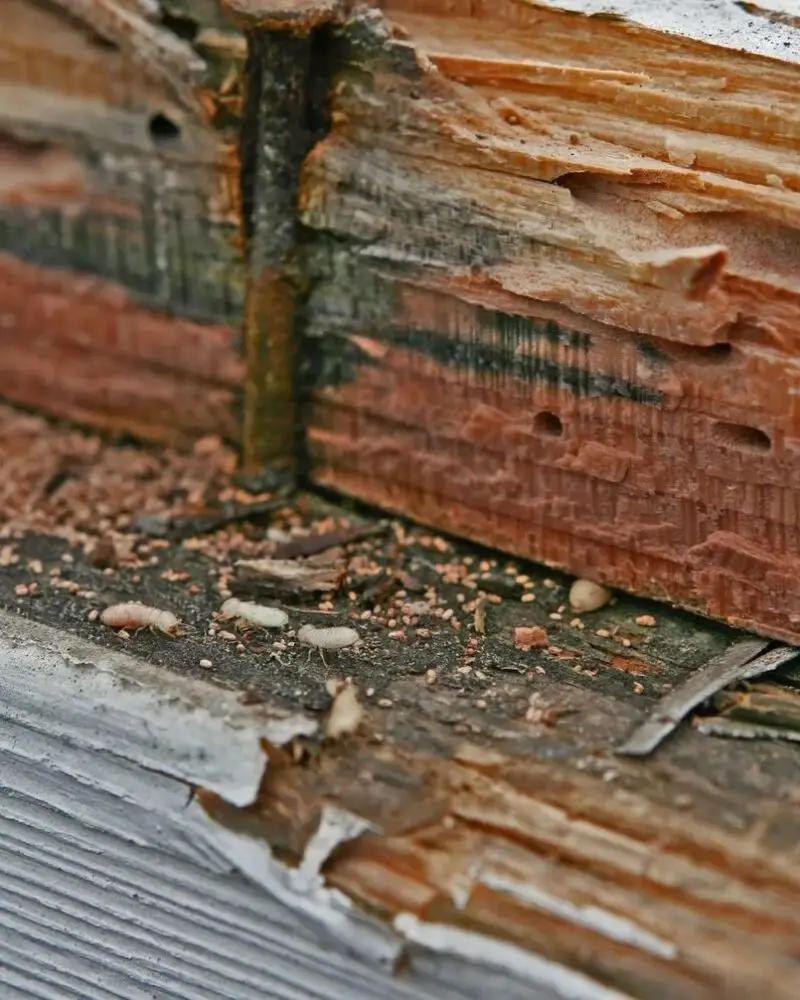
Termites are among the most serious wood-damaging insects because colonies can feed on building materials over long periods. Subterranean termites often build mud tubes to travel between the soil and wood. These tubes help protect them from dry air and open exposure.
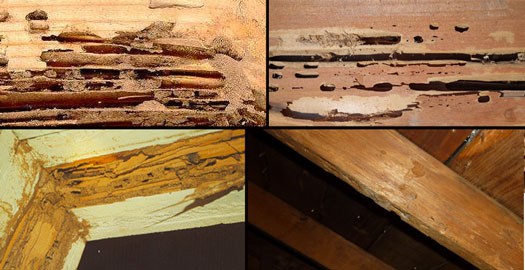
Damaged wood may contain hollow spaces and galleries. Some termite galleries run along the grain. Subterranean termite damage may include soil and other material inside the tunnels. Drywood termite damage can include small, dry pellets pushed out through openings.
A termite swarm can also provide a warning. Winged reproductive termites may appear indoors when a mature colony sends out new members. Shed wings near windows or doors can be another clue. A swarm alone does not show the full size or exact location of the colony.
Suspected termite activity in a building needs a proper inspection. Do not rely on a surface spray or a simple wood filler repair. The colony, entry points, and affected structural areas must be assessed.
Common signs
Mud tubes, hollow-sounding timber, damaged wood, discarded wings, and live termites.
Likely locations
Foundation edges, crawl spaces, floor supports, sill plates, basement areas, and wood close to soil.
Powderpost Beetle Damage
Powderpost beetles can damage hardwood flooring, furniture, trim, stored lumber, and some structural timbers. Their larvae live inside the wood and feed as they grow. Adults later emerge through small, round holes.
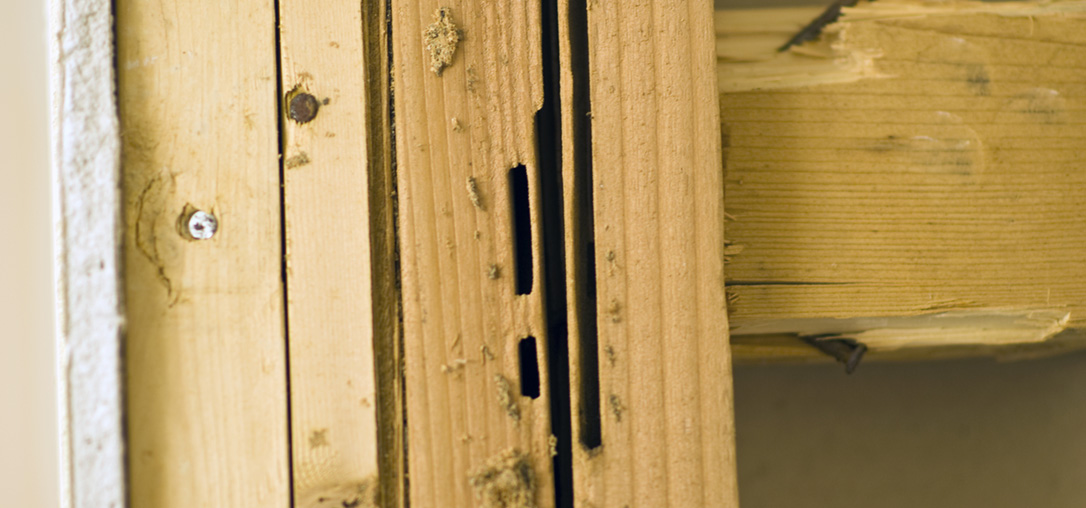
Fine powder beneath the holes is a common sign. The dust may look like flour or fine talc, although its texture varies among beetle groups. Some species leave gritty material. The size and shape of the holes can help narrow down the insect group.
A common mistake is to assume every old hole means a live infestation. Old beetle holes can remain for many years. Dust may also fall from old tunnels after the insects have died. Fresh powder that appears again after cleaning is a stronger clue of recent activity.
The type of wood also matters. Some powderpost beetles prefer the sapwood of hardwoods. Other wood-boring beetles attack softwoods. A pest specialist can examine the holes, dust, wood type, and age of the damage.
Common signs
Small round exit holes, fine wood powder, weakened timber, and adult beetles near windows.
Carpenter ants do not eat wood. They chew it and remove the pieces to make nesting chambers. These chambers can spread through wall voids, roof spaces, damp framing, and other protected areas.
Their galleries often have smooth walls. The ants may push coarse wood shavings out of an opening. This material is called frass. It may contain insect parts and other debris, unlike the fine powder often linked to powderpost beetles.
Carpenter ants often choose wood that has already been weakened by water or decay. A leaking roof, poor drainage, or a damp window frame can create a suitable nesting place. Removing the ants without fixing the moisture source may not solve the wider problem.
Look for ant trails, coarse shavings, and activity near damp wood. A nest may have a satellite nest inside the house while the main colony remains outdoors. A proper inspection can help locate both.
Common signs
Large dark ants, coarse wood shavings, smooth internal galleries, and damp or decayed timber.
Likely locations
Roof edges, window frames, wall spaces, crawl spaces, decks, and areas near plumbing leaks.
Carpenter Bee Damage
Carpenter bees bore into wood to make nesting tunnels. A female often starts with a clean, round opening that looks similar to a drilled hole. The tunnel then turns along the grain inside the wood.
These bees often choose exposed wood on decks, porches, fascia boards, eaves, railings, and outdoor furniture. Painted or sealed wood is generally less attractive than unfinished wood, although coatings do not guarantee protection.
Repeated nesting can increase the damage. New generations may return to the same area and extend existing tunnels or make new ones. Woodpeckers may also break into the wood to reach developing bee larvae.
Carpenter bees are pollinators, so control should focus on places where their nesting creates a real problem. A pest professional can assess active tunnels and choose a suitable approach.
The best way to identify insect damage is to compare several signs instead of relying on one mark. Look at the holes, dust, wood texture, nearby insects, and moisture conditions. A single hole may have more than one possible cause.
Start with a visual check. Use a flashlight to examine corners, joints, undersides, and hidden faces of wooden parts. Check both the damaged surface and the area around it. Some insects leave clear signs outside while most of the damage stays hidden inside.
Do not cut into a wall, remove a support, or drill a large opening just to look for insects. If the damaged area is structural or difficult to reach, arrange a professional inspection.
Source: diy.stackexchange.com
Small round holes
These may indicate adult beetles have emerged from wood or carpenter bees have made nest openings. Compare hole size, shape, dust, and location.
Fine wood dust
Fresh powder near small holes may point to beetle activity. Repeated dust after cleaning deserves further investigation.
Coarse wood shavings
Shavings and debris near smooth galleries may point to carpenter ants. Check for damp wood and ant trails.
Mud tubes
Narrow earthen tubes on foundations, posts, or walls are a strong warning sign of subterranean termites.
Hollow or soft wood
A hollow sound or weak surface may indicate internal damage, decay, or both. A sound test alone cannot confirm the cause.
Discarded insect wings
Piles of similar wings near windows or doors may indicate a termite swarm. Save a sample for identification.
How to Check Whether Damage Is Active
First, take clear photos of the holes, dust, and damaged areas. Record the date and location. This gives you a simple way to compare changes during the next few days or weeks.
Next, remove loose dust from a small area without disturbing the wood. Place a clean sheet of paper or another suitable collection surface below the opening. Check it again after a reasonable period. New dust can suggest ongoing activity, but the result still needs correct identification.
Look for live insects, new openings, fresh shavings, and changes in the damaged surface. A professional may use moisture meters, probes, or other inspection tools to assess hidden areas. No single home test can confirm every pest.
Photograph the damage
Take close and wide photos so the location and size of the affected area remain clear.
Mark visible openings
Record the number and position of holes without filling or sealing them.
Check for fresh debris
Look for new powder, pellets, or shavings after cleaning a small test area.
Arrange identification
Ask a qualified pest professional or local Cooperative Extension Service for help if the cause remains uncertain.
Why Old Damage Can Be Misleading
Wood can keep the marks of an old infestation long after the insects are gone. Exit holes do not close by themselves. Old tunnels also remain inside the timber.
A repaired board may still show holes or stains. This does not prove that the insects are active. The key question is whether new activity is taking place or whether the wood has already suffered permanent damage.
Before paying for treatment, ask the inspector to explain the evidence of active infestation. A clear report should separate old damage, current insect activity, moisture problems, and structural concerns.
Wood Insect Damage Identification Chart
The chart below compares common wood pests by the signs they leave. Use it as a starting point, not a final diagnosis. Several insects can create similar holes or damaged surfaces.
The type of wood, location, moisture level, and age of the damage all affect the result. A pest professional may need to examine an insect sample or the damaged material to confirm the species.
Source: storage.googleapis.com
Termites
Look for mud tubes, hidden galleries, hollow wood, and possible swarm wings. Some species leave dry pellets rather than soil-filled tubes.
Powderpost beetles
Look for small round exit holes and fine or gritty powder. Check hardwood floors, furniture, and stored lumber.
Carpenter ants
Look for smooth galleries, coarse shavings, large ants, and moisture-damaged wood.
Carpenter bees
Look for round openings in exposed wood and tunnels that run along the grain.
Old house borers
Look for larger oval exit holes and internal tunnels, especially in susceptible softwood framing.
Which Insects Eat Wood and Which Only Bore Into It?
Termites consume wood as food. Many wood-boring beetle larvae also feed on wood while they develop. Carpenter ants and carpenter bees use wood mainly to make nests, rather than eating it for food.
This difference affects the inspection. Termite and beetle damage may involve extensive feeding galleries. Carpenter ant damage often creates nest chambers. Carpenter bee damage usually begins with a round opening and a tunnel inside the timber.
The distinction also affects treatment. Killing insects is only one part of the job. You may also need to replace weak timber, remove moisture sources, seal entry points, or protect exposed surfaces.
How to Inspect Wood for Insect Damage
A careful inspection helps you find visible damage and possible entry points. You do not need special tools for a basic visual check. A flashlight, camera, notebook, and small inspection mirror can help.
Begin with places where wood meets soil or stays damp. Then check hidden areas around plumbing, roof edges, windows, doors, and crawl spaces. These locations can hold moisture or provide easy access for pests.
If you find damage in a beam, joist, post, stair support, or roof frame, do not assume the member is safe because it still looks solid. A qualified building professional should assess the remaining strength.
Source: bernackiconservation.com
Check the foundation
Look for termite tubes, damp soil, wood close to the ground, and gaps around service openings.
Inspect the crawl space
Check floor joists, support posts, sill plates, insulation, and signs of standing water.
Examine the attic
Look at roof framing, rafters, stored timber, and areas below roof leaks.
Check doors and windows
Inspect frames, sills, trim, and corners where water may enter.
Inspect outdoor wood
Check decks, fences, porches, sheds, railings, and exposed posts for holes and nesting activity.
Tools That Help With a Basic Inspection
A flashlight helps you see inside dark corners and narrow spaces. A small mirror lets you view the back of trim or the underside of a wooden surface. A camera helps record changes over time.
A moisture meter can help locate damp wood. However, readings depend on the meter, wood species, temperature, and test conditions. A high reading does not identify an insect or prove that the timber has lost strength.
Avoid using a sharp tool to force your way into a structural member. Aggressive probing can damage sound wood or make a weak section worse. Leave deep or uncertain damage to a qualified inspector.
Flashlight
Use it to inspect dark corners, joints, and hidden wood surfaces.
Inspection mirror
Use it to view the underside and rear of exposed timber.
Moisture meter
Use it as a screening tool to find areas that may need further moisture checks.
Camera and notebook
Record hole patterns, damaged areas, dates, and changes.
How to Treat Wood Insect Damage
The correct treatment depends on the insect, the location, the extent of the damage, and whether the infestation is active. Treating the wrong pest can waste money and leave the source untouched.
A good plan has two main goals. First, stop the active infestation. Second, assess and repair the damaged wood. In many cases, you must also correct moisture problems or conditions that allowed the insects to enter.
For termites, extensive beetle infestations, or pests inside structural timber, contact a qualified pest management company. Treatment may involve a labeled soil application, bait system, targeted wood treatment, or another method suited to the pest and building.
Source: advantagepestcontrol.com
Identify the pest
Confirm the likely insect before choosing a pesticide or repair method.
Find the full affected area
Check nearby wood and hidden spaces so the treatment does not miss an active part of the infestation.
Stop moisture entry
Repair leaks, improve drainage, and dry affected areas where possible.
Apply suitable pest control
Use a treatment labeled for the exact pest and site, or hire a licensed professional.
Repair damaged timber
Replace or reinforce wood only after the infestation and structural condition have been assessed.
Treating Termite Damage
Termite control should start with a professional inspection. The inspector should identify the likely termite group, locate active signs, and assess how the insects reach the building.
Treatment options may include soil-applied termiticides, bait systems, or approved wood treatments. The right option depends on the species, building design, soil conditions, and product label. Some treatments need specialist equipment and training.
Do not pour household insecticide into termite tubes or spray random areas of the foundation. These actions may kill visible insects without reaching the colony. They can also expose people, pets, and the environment to an unsuitable product.
Once the pest problem is controlled, have damaged structural members assessed. A pest treatment does not restore wood that termites have already eaten.
Professional treatment
Use a qualified provider who can explain the treatment method, target pest, product label, and follow-up plan.
Structural assessment
Ask a qualified building professional to assess damaged beams, joists, posts, and other load-bearing parts.
Treating Powderpost Beetles
Powderpost beetle treatment depends on the beetle group and the affected wood. A small furniture item may be easier to isolate and treat than a large group of structural timbers.
For small valuable objects, a pest professional or wood conservation specialist may recommend a controlled treatment. Larger infestations can need professional heat treatment, fumigation, or another approved method. These methods are not suitable for every material or building.
Surface products do not always reach larvae deep inside wood. A coating may protect suitable exposed surfaces, but it cannot be assumed to kill every insect inside a thick board.
Before replacing a floor or piece of furniture, confirm that the infestation is active. Old exit holes alone do not always justify expensive treatment.
Isolate affected items
Keep suspected infested furniture or lumber separate when practical until it has been assessed.
Confirm the beetle group
Use hole size, frass texture, wood type, and insect samples to guide identification.
Choose a suitable treatment
Match the treatment to the wood size, finish, location, and pest species.
Treating Carpenter Ants and Carpenter Bees
Carpenter ant control starts with finding the nest and removing the conditions that attract the ants. Repair water leaks and replace severely decayed wood where needed. A professional can locate indoor and outdoor nests and choose a suitable bait or other labeled treatment.
For carpenter bees, the aim is to manage active nesting while protecting useful pollinators. A pest professional can treat active tunnels when needed. Once activity has ended and the treatment instructions allow it, the openings can be repaired and the wood protected with a suitable exterior finish.
Do not seal an active bee tunnel before dealing with the insects inside. Closing the opening too soon may trap insects or lead them to make new exits. Follow the advice of the person carrying out the treatment.
Fix moisture problems
Dry damp framing and repair leaks that make the wood suitable for ant nests.
Locate active nests
Check nearby trees, stumps, roof edges, and hidden spaces rather than treating only visible ants.
Protect exposed timber
After active bee tunnels are addressed, repair openings and maintain a suitable exterior coating.
How to Repair Wood After Insect Damage
Repair begins after you have dealt with active insects and checked the remaining wood. Filling holes alone is not enough when tunnels have removed a large part of the timber.
The right repair depends on the item’s purpose. A damaged picture frame may need careful filling and refinishing. A weak floor joist may need replacement or a designed structural repair. These jobs should not use the same method.
If the wood supports a roof, floor, deck, balcony, or stair, ask a qualified professional to assess the damage before removing or cutting it. Temporary support may be needed during a structural repair.
Source: structuralworkshop.com
Clean loose material
Remove loose dust and debris after the pest treatment and inspection. Wear suitable protection and avoid spreading contaminated material.
Check the remaining wood
Assess the depth, location, and extent of the damaged area before deciding whether to fill, reinforce, or replace it.
Replace severely damaged sections
Remove and replace timber that cannot safely perform its intended job.
Use suitable repair materials
Choose wood filler or epoxy for appropriate non-structural repairs, not as a substitute for sound load-bearing timber.
Apply a protective finish
Seal exposed surfaces with a coating suited to the wood and its indoor or outdoor conditions.
When Wood Filler Is Suitable
Wood filler can repair small holes, shallow cavities, and surface marks in sound timber. It can help restore the appearance of furniture, trim, and other decorative items after the pest problem has ended.
Choose a filler that suits the wood, finish, and expected exposure. Some fillers work better indoors, while others are designed for exterior use. Follow the maker’s directions for surface preparation, drying time, sanding, and coating.
Filler does not replace wood that insects have removed. Do not use it to hide deep galleries or to restore the strength of a damaged beam, joist, or support post.
Good uses
Small non-structural holes, shallow surface defects, and minor decorative damage.
Poor uses
Large internal cavities, badly weakened timber, active insect tunnels, and load-bearing repairs.
When Wood Replacement Is Better
Replacement may be the better choice when insects have removed a large amount of wood or the remaining material is soft, split, or unstable. This is common when damage has continued for a long time.
For furniture, a damaged rail, leg, or panel may need a new wood section. A furniture repair specialist can match the wood species, grain, and finish. For outdoor structures, the replacement timber must also suit the exposure and design.
Structural replacement needs more care. A professional must consider the load, span, connections, support, and condition of nearby members. Do not remove a support member without a safe repair plan.
Replace
Use replacement when the remaining wood cannot provide the needed strength or stable attachment.
Reinforce
Use a designed reinforcement method when a qualified professional confirms that the existing member can remain in service.
Refinish
Refinish sound wood after treatment and repair to improve appearance and protect the surface.
How to Prevent Future Wood Insect Damage
Prevention works best when you reduce moisture, limit insect access, and inspect wood on a regular basis. No single coating or spray can protect every type of wood from every insect.
Many wood pests take advantage of damp, exposed, or poorly maintained areas. Fixing leaks and improving drainage can remove conditions that attract certain pests. Keeping wood away from soil can also reduce access for subterranean termites.
Prevention should cover the whole property. Check the building, outdoor structures, stored lumber, and firewood. Small changes in storage and maintenance can make a useful difference.
Source: pinterest.com
Keep wood dry
Repair roof leaks, plumbing leaks, damaged gutters, and other sources of unwanted water.
Improve drainage
Direct water away from the foundation and avoid standing water near wooden structures.
Separate wood from soil
Maintain suitable clearance between soil and exposed structural wood, following local building requirements.
Store firewood carefully
Keep firewood away from the house and bring indoors only the amount needed for immediate use.
Protect exposed wood
Maintain suitable paint, stain, or sealant on exterior wood, and repair damaged coatings.
Inspect regularly
Check crawl spaces, foundations, decks, attics, and other areas where pests may enter.
Choose and Store Wood Carefully
Inspect lumber before bringing it into a home or workshop. Look for holes, powder, stains, bark, and signs of insect activity. Ask the supplier about storage and treatment when buying large amounts of timber.
Keep stored wood off the ground and protect it from rain while allowing suitable airflow. Do not keep damp lumber in a closed indoor space. Poor storage can create conditions that support wood pests and decay.
Avoid storing firewood against siding, near doors, or beneath wooden decks. Insects may emerge from firewood indoors. Bring in only what you plan to burn soon and inspect it before storage near the home.
Inspect new lumber
Check for fresh holes, dust, insects, and other signs before using the material.
Keep stored wood dry
Use a suitable cover and allow airflow around the stack.
Separate firewood
Use an outdoor rack away from the house rather than storing large amounts indoors.
Maintain Exterior Wood
Exterior wood faces rain, sun, changing temperatures, and insects. Paint and stain can help reduce direct exposure, but coatings need regular care. Cracks, peeling areas, and open joints can let water reach the timber.
Inspect decks, fences, porch posts, railings, and fascia boards at least as part of your regular home maintenance. Pay close attention to end grain and joints because water can enter these areas more easily.
Trim plants that touch the house where practical. Keep soil, mulch, and stored materials from hiding the foundation or covering vulnerable wood. These simple steps also make future inspections easier.
When to Call a Pest Control or Building Professional
Professional help is needed when insects may be damaging a building’s structure or when the pest cannot be identified with confidence. Termites, large beetle infestations, and hidden nests can be difficult to manage with home methods.
A licensed pest management professional can inspect the property, identify likely pests, and explain suitable treatment options. In the United States, check the provider’s state license and ask for written details of the proposed work.
A pest inspector and a structural professional do different jobs. The pest inspector looks for insects and treatment needs. A qualified building professional assesses whether the remaining wood can safely carry its load. Some cases need both.
Source: amdro.com
Possible termite activity
Arrange professional help if you find mud tubes, live termites, swarmers, discarded wings, or suspected termite galleries.
Damage to structural timber
Get an assessment if joists, beams, posts, rafters, stairs, or other load-bearing parts show damage.
Large or spreading infestations
Seek help if new holes, dust, or insect activity appear in several areas.
Uncertain pest identity
Ask for identification before using a pesticide or starting major repairs.
Valuable furniture or antiques
Consult a wood conservation specialist before using heat, chemicals, sanding, or invasive repair methods.
Questions to Ask a Pest Control Company
Ask the company to explain what insect it found and what evidence supports that conclusion. A good inspection should identify affected areas and explain whether the signs suggest active or old damage.
Request a written treatment plan. It should state the target pest, treatment method, product information, preparation steps, safety instructions, and any follow-up visits. Ask how the company will check whether the treatment worked.
Compare the scope of work rather than price alone. A low-cost surface treatment may not address an underground termite colony or larvae deep inside wood. The right treatment should match the pest and the building.
What insect did you identify?
Ask for the evidence, photos, or samples that support the identification.
Is the infestation active?
Ask which signs show current activity and which marks may be old.
What treatment will you use?
Request the treatment method and product label where applicable.
What happens after treatment?
Ask about monitoring, inspections, warranties, and conditions that may affect coverage.
Safety During Inspection and Repair
Wear suitable gloves and eye protection when handling damaged timber or loose debris. Avoid breathing wood dust. Use appropriate respiratory protection when a task creates airborne dust, and follow the instructions for the specific product or equipment.
Never mix pesticides or apply them in ways that the label does not allow. Some termite products can pose serious risks when misused. Keep children and pets away from treatment areas as directed by the label.
Stop work if a floor, deck, stair, or support member seems unstable. Do not stand on weak flooring or cut into a damaged structural member without a safe plan. Ask a qualified professional to assess the risk.
Common Mistakes When Dealing With Wood Insect Damage
Many repair problems happen because people treat the visible mark instead of the source. A hole may be easy to fill, but the insect or damaged wood may remain inside. Good results come from identification, treatment, and repair in the right order.
Avoid quick fixes that hide the evidence. Keep records and ask for an inspection when the damage affects a large or important part of the building.
Source: advantagepestcontrol.com
Filling holes too early
Filler can hide signs that help identify the pest. Confirm and manage the infestation before cosmetic repair.
Assuming every hole means termites
Beetles, carpenter bees, and other insects can leave holes. Look for other signs before choosing treatment.
Ignoring moisture
Some pests prefer damp or decayed wood. Repair the water source as part of the control plan.
Using general insect spray
A household spray may not reach insects inside timber or a termite colony below ground.
Painting over fresh damage
A coating can hide new holes and dust. Record and inspect the damage before refinishing.
Replacing wood without pest control
New timber can face the same infestation if the insects and entry conditions remain.
Why Surface Repairs May Fail
A surface repair improves the look of wood but does not always reach the insect. Beetle larvae may be deep inside a board. Termites may travel through hidden paths. Ant nests may extend into nearby framing.
If the active pest remains, the damage can continue behind a new finish. This can lead to repeat repairs and higher costs. Complete the pest inspection and treatment before closing access to the affected area.
A sound repair should deal with the cause and the damage. It should also reduce the chance of another infestation by correcting moisture, access, or storage problems.
How Much Does Wood Insect Damage Repair Cost?
The cost depends on the pest, size of the infestation, building access, treatment method, and amount of wood that needs repair. A few damaged furniture holes can be a small repair. An active termite infestation involving several parts of a building can require a much larger project.
There is no reliable single price for every property. Local labor rates, regional pest activity, the size of the structure, and the type of timber all affect the final amount. Get written estimates that separate pest treatment from wood repair.
A useful estimate should explain the inspection findings, treatment area, materials, repair scope, and follow-up plan. If the work involves load-bearing wood, the estimate should also state who will assess and approve the structural repair.
Source: storage.googleapis.com
Pest inspection
The cost depends on the size of the property, access, inspection scope, and need for specialist testing.
Pest treatment
Treatment cost depends on the insect, affected area, product, method, and number of visits.
Wood repair
Small cosmetic repairs generally require less work than replacing damaged flooring, framing, or support members.
Moisture correction
Roof, plumbing, drainage, and ventilation repairs may add to the total project cost.
Follow-up inspection
Monitoring and repeat inspections may be part of the treatment plan or a separate service.
How to Compare Repair Estimates
Ask each provider to inspect the same areas and describe the same work. This makes it easier to compare estimates fairly. Check whether each quote includes treatment, removal of damaged wood, replacement materials, disposal, and finishing.
A very low estimate may leave out important work. For example, one company may quote only for a surface application while another includes a wider inspection and follow-up visits. Compare the full scope before making a choice.
Do not delay urgent work on a weakened structural member simply to collect several routine estimates. If a building area appears unsafe, keep people away and seek a prompt professional assessment.
Research Notes and Important Evidence Limits
This guide uses published educational and government information about wood-damaging insects. The reviewed material includes guidance from Cornell Integrated Pest Management, University of Florida IFAS Extension, the U.S. Environmental Protection Agency, the USDA Forest Products Laboratory, and university extension programs.
The sources describe differences in insect behavior, damage patterns, and control needs. The USDA Forest Products Laboratory documents distinct gallery patterns for termites, beetles, and carpenter ants. Cornell explains why carpenter ants often use moisture-damaged wood and why carpenter bees create tunnels rather than eating wood.
University of Florida IFAS Extension describes powderpost beetle life cycles, wood preferences, emergence holes, and frass. The EPA explains termite treatment options and the importance of following pesticide labels. These sources support the identification and safety guidance in this article.
No hands-on inspection, laboratory test, or field experiment was performed for this article. The information is a synthesis of published guidance, not a claim of personal pest identification or treatment experience. Actual findings can differ by insect species, wood type, building design, and local conditions.
Source: cutthewood.com
DOCUMENTED
Termites, powderpost beetles, carpenter ants, and carpenter bees can damage wood through feeding or nesting activity.
DOCUMENTED
Pest groups leave different patterns of holes, tunnels, dust, galleries, and other signs.
ANALYSIS
Combining insect identification with moisture checks and structural assessment provides a more useful repair plan than treating visible holes alone.
NOT ESTABLISHED
A photograph or isolated hole cannot always prove the insect species, whether an infestation is active, or how much structural strength remains.
Next-Question Gap Map
The following questions represent useful next decisions after a reader finds suspected insect damage. They are labeled as inferred needs rather than verified search demand. They are included because each one can affect treatment, repair, or safety.
Can old beetle holes still be active?
Reader stage: After inspection. Basis: Inferred next need. Reviewed coverage: ANSWERED. Benefit: Explains why fresh dust and new signs matter more than old holes alone.
Can insect-damaged floor joists be repaired?
Reader stage: Repair planning. Basis: Inferred next need. Reviewed coverage: SHALLOW. Benefit: Shows why a structural assessment is needed before filling or reinforcing a damaged joist.
How can I tell carpenter ants from termites?
Reader stage: Pest identification. Basis: Inferred next need. Reviewed coverage: ANSWERED. Benefit: Helps readers avoid choosing the wrong treatment.
Does wet wood attract wood-damaging insects?
Reader stage: Prevention. Basis: Inferred next need. Reviewed coverage: ANSWERED. Benefit: Connects moisture control with pest prevention and wood preservation.
Can I repair insect damage in antique furniture?
Reader stage: Specialized repair. Basis: Inferred next need. Reviewed coverage: SHALLOW. Benefit: Encourages appropriate conservation advice before chemical or heat treatment.
Frequently Asked Questions
Q
What are the first signs of wood insect damage?
Common early signs include small round holes, fresh wood dust, mud tubes, discarded wings, coarse shavings, and hollow-sounding timber. The signs depend on the insect. Look for more than one clue before deciding what caused the damage.
Q
Can wood insect damage be repaired?
Yes. Minor surface damage can often be repaired with suitable wood filler and refinishing after the infestation has ended. Deep damage may require wood replacement or professional reinforcement. Structural timber must be assessed before repair.
Q
Do carpenter ants actually eat wood?
No. Carpenter ants chew and remove wood to create nesting galleries. They feed on other food sources, such as insects and sweet materials. They often choose damp or decayed timber for their nests.
Q
Does every small hole in wood mean an active infestation?
No. Old beetle exit holes and carpenter bee openings can remain long after activity ends. Fresh dust, new holes, live insects, and repeated signs provide stronger clues. A professional inspection can confirm the likely cause.
Q
What is the best way to prevent wood insect damage?
Keep wood dry, repair leaks, improve drainage, store firewood away from the building, and maintain exterior finishes. Inspect foundations, crawl spaces, attics, decks, and wooden frames on a regular basis. Arrange professional checks when you find signs of termites or widespread damage.
✦ Wrapping Up
Conclusion
Wood insect damage can start with a tiny hole and grow into a much larger problem. Termites, beetles, carpenter ants, and carpenter bees all leave different signs. Learning these differences helps you choose the right next step and avoid unnecessary repairs.
Start with a careful inspection. Look for fresh dust, holes, mud tubes, galleries, live insects, and moisture problems. Record what you find and seek professional identification when the cause is unclear. Do not assume that old damage means an active infestation.
Once the insects have been controlled, assess the wood itself. Small cosmetic defects may need only a suitable filler and finish. Weak or damaged structural members may need professional repair or replacement. Always correct the conditions that allowed the problem to develop.
💡 Key Takeaway
Inspect affected wood, photograph the damage, check for fresh insect activity, and identify the pest before starting repairs. If termites, widespread damage, or weakened structural timber are involved, contact a qualified pest management professional and arrange a separate structural assessment when needed.