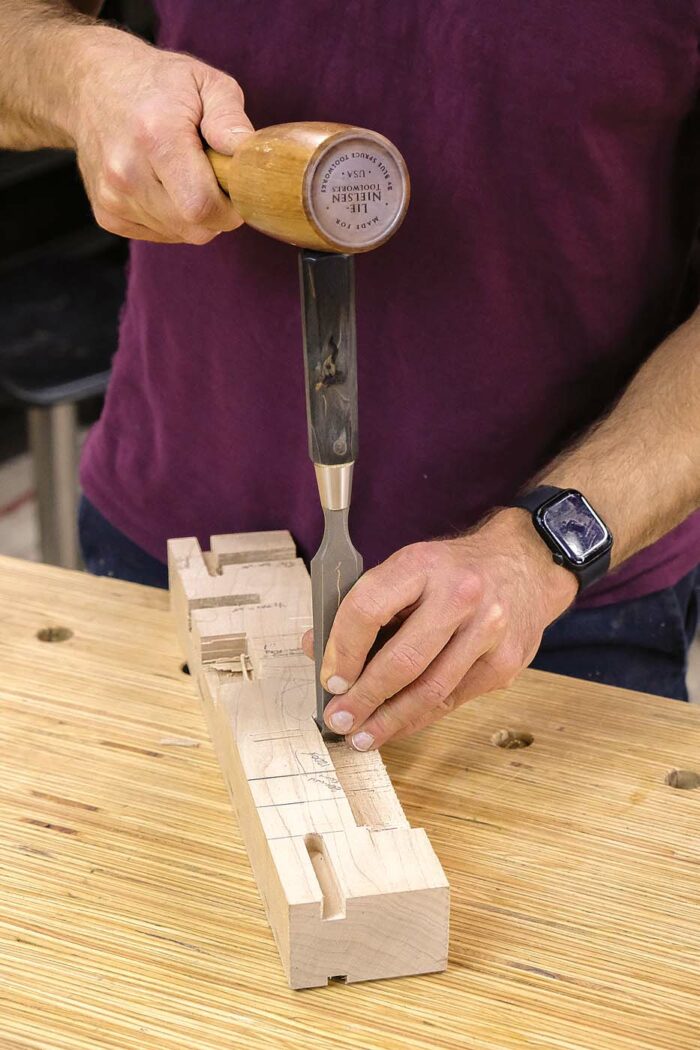
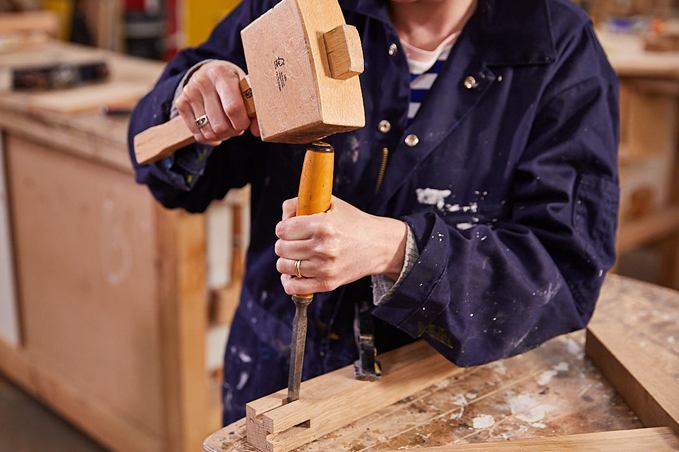
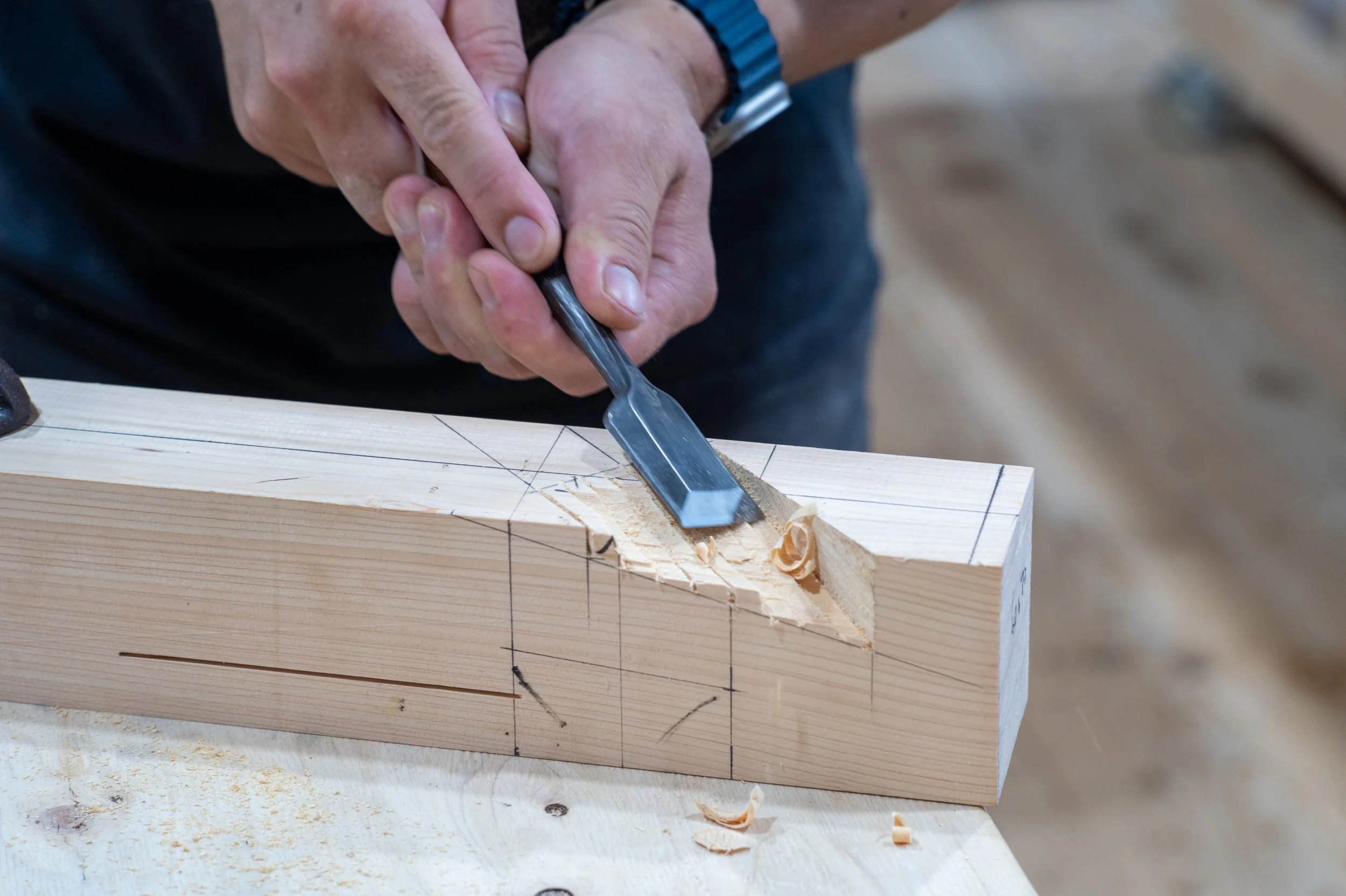
The wood chisel chopping technique uses controlled mallet strikes to remove wood waste while keeping cuts accurate.
For American woodworkers building furniture, repairing trim, or practicing traditional joinery, the wood chisel chopping technique is one of the basic hand-tool skills used in many workshops. The method involves driving a sharp chisel into wood with a mallet to remove material in controlled layers rather than forcing out large pieces at once.
Successful chopping depends on four factors: a sharp chisel, stable workholding, correct blade orientation, and measured strikes. The technique is commonly used for mortises, recesses, hinge pockets, and other areas where wood must be removed without damaging surrounding surfaces.
Source: zinio.ahpc.us
What Is the Wood Chisel Chopping Technique?
The wood chisel chopping technique is a cutting method where a chisel is positioned into wood and struck with a mallet to break away waste material. Unlike paring, which removes thin slices using hand pressure, chopping is designed for deeper material removal.
The technique is especially useful when creating mortises, square corners, slots, and cavities. The goal is not to remove the maximum amount of wood with each strike, but to maintain control over depth, direction, and surface quality.
Source: finewoodworking.com
Primary purpose
Remove larger amounts of wood during rough shaping and joinery preparation.
Main tools
A sharp wood chisel, suitable mallet, stable workbench, and accurately marked layout lines.
How to Perform a Wood Chisel Chopping Technique Step by Step
Start by marking the area that needs to be removed and securing the workpiece firmly. Movement during chopping can cause the blade to slip and damage the surrounding wood.
Work from the waste area inward. Short, controlled strikes allow the chisel to remove chips while leaving enough material for final cleanup cuts.
Source: paulsellers.com
Prepare the cut
Mark boundaries clearly and confirm the chisel width matches the intended opening when possible.
Position the chisel
Hold the blade square to the surface unless the cut requires a specific angle.
Strike carefully
Use firm mallet blows and check progress frequently instead of forcing deep cuts.
Clean the surface
Finish with lighter paring cuts to refine the bottom and edges.
Removing Waste Without Splitting the Wood
Deep cuts can cause the grain to split or the chisel to wander. Removing material in layers gives the cutting edge less resistance and improves control.
Take shallow bites
Small cuts reduce the chance of tearing fibers below the intended line.
Choosing the Right Chisel and Mallet for Chopping
The best chisel for chopping depends on the task. Heavy-duty chopping operations often benefit from thicker blades designed to handle repeated mallet impacts, while lighter chisels are useful for smaller recesses and cleanup work.
A wooden or specialized woodworking mallet is commonly used because it delivers controlled impact while reducing unnecessary damage to the tool handle.
Source: blackhorseworkshop.co.uk
Bench chisels
Suitable for general woodworking tasks and moderate chopping.
Mortise chisels
Designed for repeated heavy chopping when creating deep joints.
Mallet choice
Use a tool that provides enough force without requiring uncontrolled swings.
Common Wood Chisel Chopping Mistakes and How to Fix Them
Most chopping problems come from excessive force, poor blade positioning, or removing too much wood too quickly. Correcting these issues usually requires slower cuts and more frequent checks.
Understanding the cause of a failed cut helps prevent repeated mistakes and protects both the project and the tool.
Source: squarespace-cdn.com
Chisel drifts sideways
Cause: uneven pressure or cutting too aggressively. Fix: reduce the depth of each strike and reset the blade position.
Wood fibers tear
Cause: cutting against grain direction or removing large chips. Fix: use smaller cuts and approach from another direction if needed.
Edges become uneven
Cause: poor layout control. Fix: leave a small amount of waste and finish with precise paring.
Safety Tips for Using a Chisel and Mallet
Safe chopping starts with controlling the direction of the blade and keeping hands away from the cutting edge. Always secure the workpiece before applying force.
A sharp chisel is generally safer to control than a dull one because it requires less force to cut. Inspect the tool condition before starting.
Source: leevalley.com
Protect your hands
Keep fingers behind the cutting path and avoid holding the workpiece near the blade.
Maintain the tool
Keep edges sharp and check handles for damage before use.
Frequently Asked Questions
Q
What is the difference between chopping and paring with a chisel?
Chopping uses a mallet to drive the chisel into wood for deeper material removal. Paring uses hand pressure to remove thin layers and refine surfaces.
Q
How deep should each chisel chop be?
The depth depends on the wood and task, but smaller controlled cuts usually provide better accuracy than trying to remove deep sections immediately.
Q
Can a regular bench chisel be used for chopping?
Many bench chisels can handle light chopping, but repeated heavy impacts may require a stronger chisel designed for that purpose.
Q
Why does my chisel split the wood?
Splitting often happens when cuts follow the grain, the chisel is driven too deeply, or too much force is applied. Smaller cuts and better positioning usually improve results.
Q
How do I know if my chisel is sharp enough?
A sharp chisel should cut cleanly with controlled pressure and should not require excessive force to enter the wood.
✦ Wrapping Up
Conclusion
The wood chisel chopping technique is a practical skill that combines accurate marking, proper tool control, and careful material removal. Whether cutting joinery or shaping recesses, controlled strikes produce better results than aggressive force.
Consistent practice with sharp tools and secure workholding helps woodworkers develop the precision needed for reliable hand-tool work.
💡 Key Takeaway
Practice on scrap wood first, focus on shallow controlled cuts, and adjust your technique based on how the grain responds.