
MDF is a smooth, stable, budget-friendly engineered wood used for furniture, cabinets, and trim.
If you have ever wondered why MDF shows up in so many shops, homes, and DIY projects, this guide will make it click. I have worked with MDF in real-world projects for years, and I can tell you it is one of those materials that looks simple on the surface but has a lot going on underneath. The Ultimate MDF Guide will walk you through what MDF is, how it is made, where it shines, where it fails, and how to use it the smart way.

What MDF Is and Why It Matters
MDF stands for medium-density fiberboard. It is an engineered wood product made from wood fibers, wax, and resin, then pressed into dense, flat panels. The result is a material that is uniform, smooth, and easy to machine.
I like to think of MDF as the “clean slate” of the wood world. Unlike solid wood, it has no knots, no grain direction, and no surprise weak spots. That makes The Ultimate MDF Guide useful for beginners, contractors, cabinet makers, and anyone trying to get a clean painted finish.
MDF is popular because it balances cost, workability, and appearance. It is not always the strongest choice, but for many indoor projects, it is one of the most practical.

How MDF Is Made
The production process explains a lot about MDF’s behavior. Manufacturers break wood into fibers, mix those fibers with resin and wax, and then press the blend under heat and pressure. This creates a dense sheet with a very even texture.
The fine fiber structure is what gives MDF its smooth face. It is also why it cuts cleanly and does not splinter as much as some natural woods. In The Ultimate MDF Guide, this is one of the biggest reasons MDF is trusted for painted furniture and detailed trim.
The basic steps are:
• Wood is turned into tiny fibers
• Fibers are blended with binding agents
• The mix is formed into mats
• Heat and pressure create panels
• Sheets are trimmed, sanded, and graded
That engineered process gives MDF consistency. You know what you are getting from sheet to sheet, which is a big deal in production work.
Key MDF Properties You Should Know
MDF has a few traits that define how it performs. If you understand these, you will make better decisions on the job or in your workshop.
• Smooth surface: Great for paint and veneer
• Uniform density: Easy to cut and shape
• No grain pattern: Less risk of tear-out
• Heavy for its size: Denser than many softwoods
• Moderate strength: Good for many indoor uses
• Moisture sensitivity: Needs protection from water
One lesson I learned early: MDF is forgiving in some ways and unforgiving in others. It is easy to work with, but if you ignore moisture protection, it can swell fast and ruin an otherwise clean build.
Common Types of MDF
Not all MDF is the same. Different grades are made for different jobs, and choosing the right one matters more than many people think.
Standard MDF
This is the most common type. It is used for cabinets, furniture, shelving, and decorative panels. It offers a smooth finish and a good balance of cost and performance.
Moisture Resistant MDF
This type is made with additives that help it resist humidity better than standard MDF. It is often used in kitchens, bathrooms, and utility spaces, though it still should not be exposed to standing water.
Fire Retardant MDF
This version is treated to slow the spread of flame. It is often used in commercial spaces where fire performance is important.
Exterior Grade MDF
This is less common and is designed for special outdoor or semi-exposed applications. Even then, it usually needs protective coatings and proper installation.
When I worked on a built-in bench for a laundry area, I used moisture resistant MDF instead of standard sheets. That small choice saved the project from future swelling near the floor.
Best Uses for MDF
The Ultimate MDF Guide would not be complete without the practical side. MDF shines in projects where the finish matters more than raw structural strength.
Common uses include:
• Painted cabinets
• Bookshelves
• Interior trim and molding
• Wall panels
• Closet systems
• Speaker boxes
• Craft projects
• Display units
• Furniture parts that will be painted
MDF is especially good when you want clean edges and a polished paint job. It is a favorite for shaker-style doors and custom trim because it machines well and keeps lines crisp.
Where MDF Falls Short
MDF is useful, but it is not magic. Knowing its limits helps you avoid expensive mistakes.
• It swells when wet
• It is heavy to carry and install
• It can chip at edges if handled roughly
• It does not hold screws as well as plywood in some cases
• Dust from cutting can be messy and needs good protection
One common mistake is using MDF where water may collect. I have seen it used at the base of bathroom vanities without enough sealing, and the result was predictable: soft edges, swelling, and a lot of regret.
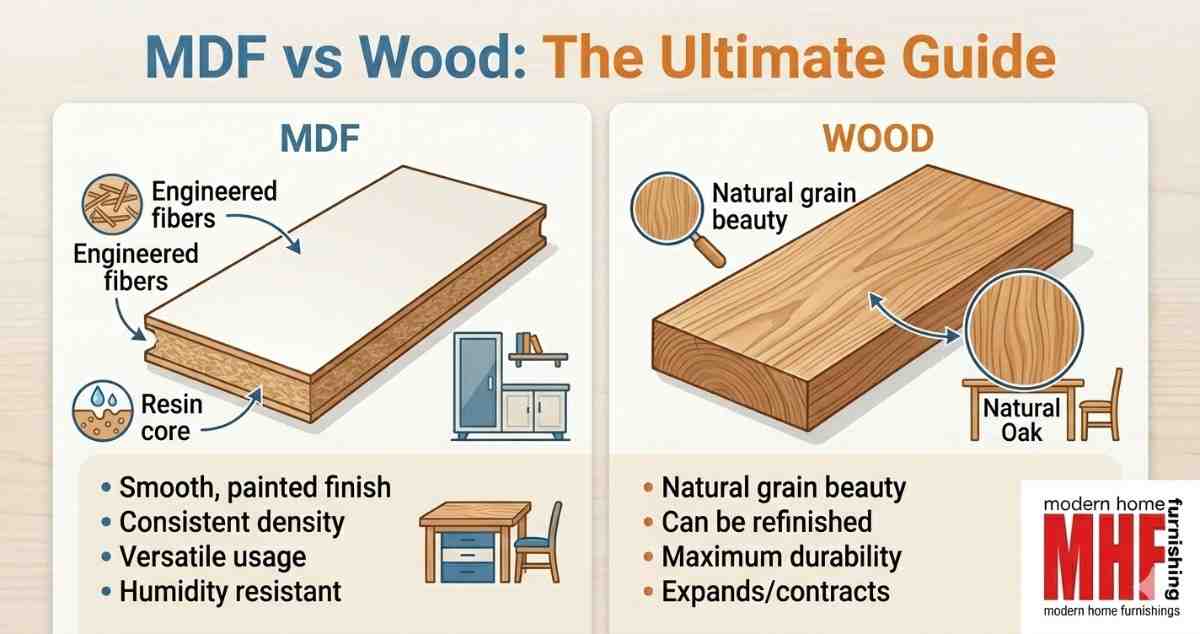
MDF vs Plywood vs Solid Wood
People often compare MDF with plywood and solid wood because each has a different job.
MDF vs Plywood
Plywood is made from thin wood layers glued together. It is usually stronger and handles moisture better than MDF. MDF is smoother and often cheaper, which makes it better for painted surfaces.
MDF vs Solid Wood
Solid wood is natural, strong, and repairable, but it can warp, expand, and contract with humidity. MDF stays stable and flat, which makes it better for many indoor painted projects.
Which One Should You Choose?
Choose MDF if you want:
• A smooth painted finish
• A lower material cost
• Easy shaping and machining
• Consistency across panels
Choose plywood if you need:
• Better strength
• Better moisture resistance
• More reliable screw holding in structural uses
Choose solid wood if you want:
• Natural grain beauty
• Long-term repairability
• A classic look for visible furniture
The Ultimate MDF Guide is really about matching the material to the task. That is where good results come from.
How to Cut MDF Cleanly
Cutting MDF is simple if you use the right tools and keep dust under control. A sharp blade is your best friend here. A dull blade burns the edges and makes the cut rough.
Helpful tips:
• Use a carbide-tipped blade
• Score cut lines before full cuts when needed
• Support the sheet well to avoid breaking edges
• Use dust control and a proper mask
• Cut in a well-ventilated space
In my own work, a fresh blade made a bigger difference than almost anything else. A clean cut on MDF often comes down to blade quality, support, and patience.
How to Seal and Finish MDF
Finishing is where MDF can look excellent. Because the surface is smooth and even, paint often looks better on MDF than on rough natural wood.
Before painting, seal the edges first. MDF edges soak up paint like a sponge, so a primer or sealing coat is essential. Once sealed, you can sand lightly and apply a quality primer and topcoat.
Best finishing steps:
• Sand the surface lightly
• Seal edges with primer, shellac, or dedicated edge sealer
• Apply a high-build primer if needed
• Sand again after primer
• Finish with paint, laminate, or veneer
A mistake I have made before is rushing the edges. The face may look perfect, but the edges can still telegraph texture if you skip sealing. A little extra time here pays off in a big way.
MDF in Furniture and Cabinet Making
MDF is widely used in furniture and cabinets because it offers a clean, modern look. It is especially strong in painted face frames, door panels, and carcass parts that do not need to carry extreme loads.
For cabinet making, MDF works well in:
• Painted cabinet doors
• Drawer fronts
• Decorative side panels
• Interior shelving in dry rooms
For furniture, MDF is useful in:
• Dressers
• TV stands
• Desks
• Storage cubes
• Built-in shelving
The key is reinforcement and smart design. If the piece will support heavy loads or get a lot of abuse, combine MDF with stronger materials where needed.
Safety Tips for Working With MDF
MDF dust is not something to ignore. Cutting, sanding, and routing produce fine dust that should not be breathed in.
Good safety habits include:
• Wear a dust mask or respirator
• Use dust extraction if possible
• Work in a ventilated area
• Wear eye protection
• Keep the workspace clean
I always tell people this: MDF is easy to work with, but the dust is the tax you pay for that convenience. Respect the dust, and the material becomes much safer to use.
Environmental Considerations
MDF has environmental pros and cons. On the positive side, it often uses wood fibers that might otherwise go to waste. That can make it a more efficient use of raw material than some alternatives.
However, some MDF products use resins that may release volatile organic compounds, especially if they are low quality. If indoor air quality matters to you, look for low-emission or CARB-compliant products when available.
If you care about sustainability, ask about:
• Recycled content
• Low-VOC adhesives
• Certifications for emissions
• Responsible forestry sourcing
Being informed here helps you choose better products for your home and health.
Buying Tips for Better MDF Results
Not every MDF board is worth buying. The best sheets are flat, consistent, and free from damage.
Look for:
• Smooth, even faces
• Clean edges
• Minimal swelling or chips
• The right thickness for your project
• Moisture resistant options when needed
If a sheet feels warped in the store, pass on it. A bad sheet can waste time, money, and a lot of patience once the project starts.
Common Mistakes to Avoid
Even experienced builders make these errors from time to time.
• Using standard MDF in wet areas
• Skipping edge sealing before paint
• Over-tightening screws
• Using the wrong blade
• Not controlling dust
• Choosing MDF for load-bearing parts without support
The biggest lesson from my own projects is this: MDF rewards careful prep. It is not the kind of material you can rush and hope for the best.
Frequently Asked Questions
What is MDF best used for?
MDF is best used for painted furniture, cabinets, trim, and indoor decorative work. It gives a smooth finish and cuts cleanly, which makes it ideal for projects where appearance matters.
Is MDF stronger than plywood?
No, plywood is usually stronger and better at handling moisture. MDF is smoother and often better for painted surfaces, but it is not the best choice for heavy structural use.
Can MDF be used in bathrooms?
Yes, but only with caution and preferably moisture resistant MDF. It must be sealed well and kept away from direct water exposure, or it may swell and fail over time.
Why does MDF swell?
MDF swells when it absorbs moisture because its wood fibers expand. This is why sealing, proper installation, and keeping it dry are so important.
Is MDF safe to use indoors?
Yes, MDF can be used indoors, but dust control and product quality matter. Use proper ventilation and choose low-emission boards when possible to reduce indoor air concerns.
Conclusion
MDF is one of the most useful engineered wood products you can work with when you understand its strengths and limits. It offers a smooth surface, solid value, and excellent results for painted projects, but it also demands respect for moisture, dust, and edge sealing.
If you are planning a cabinet, shelf, trim project, or custom furniture build, use what you learned here to choose the right grade and finish it the right way. A smart MDF choice today can save you from a frustrating repair later, so start with the right sheet, work carefully, and build with confidence. If this guide helped you, explore more woodworking resources, subscribe for future tips, or leave a comment with your own MDF experience.