
The Ultimate Woodworking Drill Guide shows how to pick, set, and drill flawlessly.
You want smooth holes, tight joinery, and zero tear-out. I’ve spent years testing drills, bits, and jigs on furniture, cabinetry, and site builds. This is The Ultimate Woodworking Drill Guide you can trust. I’ll show what to buy, how to set RPM and torque, and how to drill cleaner, safer, and faster than ever. Read on if you want pro results without the guesswork.

Choosing the right drill for woodworking
The Ultimate Woodworking Drill Guide starts with tool choice. A good cordless drill handles most shop work. Add a drill press when you need perfect angles and repeat holes. Impact drivers are for screws, not for drilling clean holes in wood.
Pick the right size for your work. A 12V drill is light and great for small holes. An 18V or 20V drill adds power for Forstner bits and hardwood. Look for a half-inch chuck, a low gear, and a clutch.
Key features to value:
- Variable speed trigger for gentle starts
- Mechanical low and high gear for torque or speed
- All-metal chuck for grip and accuracy
- Brushless motor for long life and cool running
- Side handle for big bits and safer control
What drill is best for beginners? A compact 12V drill with a clutch is easy to handle and covers most needs. Upgrade as your projects grow. The Ultimate Woodworking Drill Guide keeps the learning curve smooth.
Drill bits 101: types, uses, and materials
Bits matter more than you think. The Ultimate Woodworking Drill Guide leans on purpose-made wood bits for clean holes. Use metal bits only when you must.
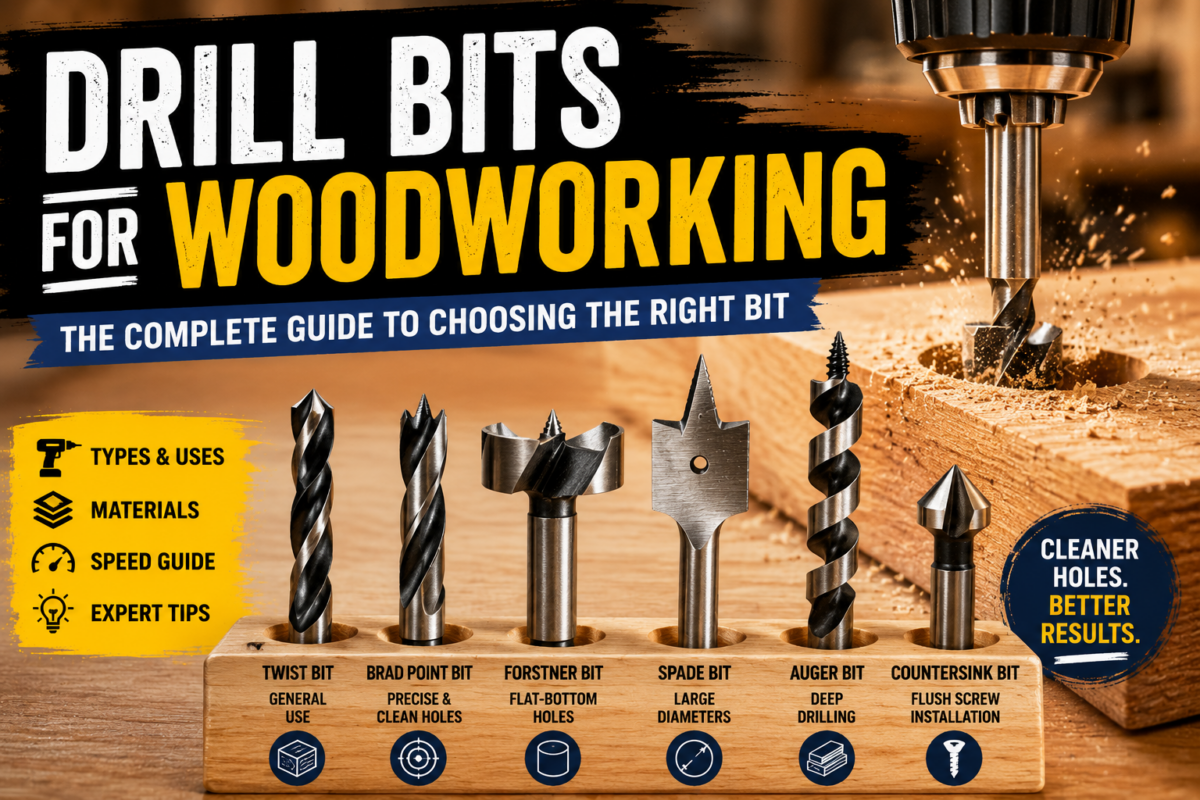
Common wood bits:
- Brad-point bits cut clean entry holes and stay on your mark.
- Forstner bits make flat-bottom holes for joinery, hinges, and plugs.
- Spade bits are fast for rough work, studs, or utility runs.
- Auger bits clear deep chips in thick stock and timbers.
- Hole saws cut large holes for vents and cable runs.
- Plug cutters make grain-matched plugs to hide screws.
- Countersink bits sit screw heads flush and prevent splits.
Bit materials:
- High-speed steel is the everyday workhorse for wood.
- Cobalt blends hold edge longer in abrasive woods.
- Carbide tips shine in laminate, MDF, and lots of sheet goods.
How do I avoid tear-out? Use a brad-point or Forstner bit, clamp a backer board, and slow the exit. That trio is simple and works.
Speed, torque, and control settings that matter
Speed and torque shape every hole. The Ultimate Woodworking Drill Guide keeps this simple. Small bits like speed. Large bits like torque and slower RPM.
Use these ranges as a safe start:
- 1/8 to 1/4 inch brad-point in softwood: 1,800 to 2,500 RPM
- 3/8 inch brad-point in hardwood: 1,000 to 1,500 RPM
- 1 inch Forstner in hardwood: 500 to 800 RPM
- Large spade or hole saw: 400 to 600 RPM
Control tips:
- Start slow to prevent bit walk.
- Let chips clear. Peck the trigger, then pause.
- Use low gear for big bits and dense wood.
- Set the clutch when driving screws to avoid splits.
If the bit burns, your RPM is high, or your feed is too light, or the bit is dull. Slow down, push a bit more, or sharpen.

Marking, drilling, and accuracy techniques
Clean layout leads to clean holes. The Ultimate Woodworking Drill Guide favors simple steps that never fail. Mark the center with a knife and awl. Use a brad-point tip to lock into that mark.
Accuracy moves that help:
- Use a center punch or awl for twist bits.
- Add tape as a depth flag or use a stop collar.
- Clamp a square block to keep the drill at 90 degrees.
- Drill halfway from one side, then flip to finish to avoid blowout.
- Score hinge circles with a knife before a Forstner cut.
For repeat work, set up a fence and stop. When shelf drilling, use a jig and a plunge router or brad-point with bushings. Your holes will align, and pins will sit snug.
Workholding, jigs, and guides
Clamps are your third hand. The Ultimate Woodworking Drill Guide keeps the work still, so the bit can cut true. Support thin parts on a backer. Use cauls to spread pressure.
Useful jigs and aids:
- Dowel jig for strong, hidden joints
- Pocket-hole jig for fast face frames and repairs
- Shelf pin jig with 32 mm spacing for cabinets
- V-block for round dowels and pipes
- Shop-made drill guide block bored on the drill press
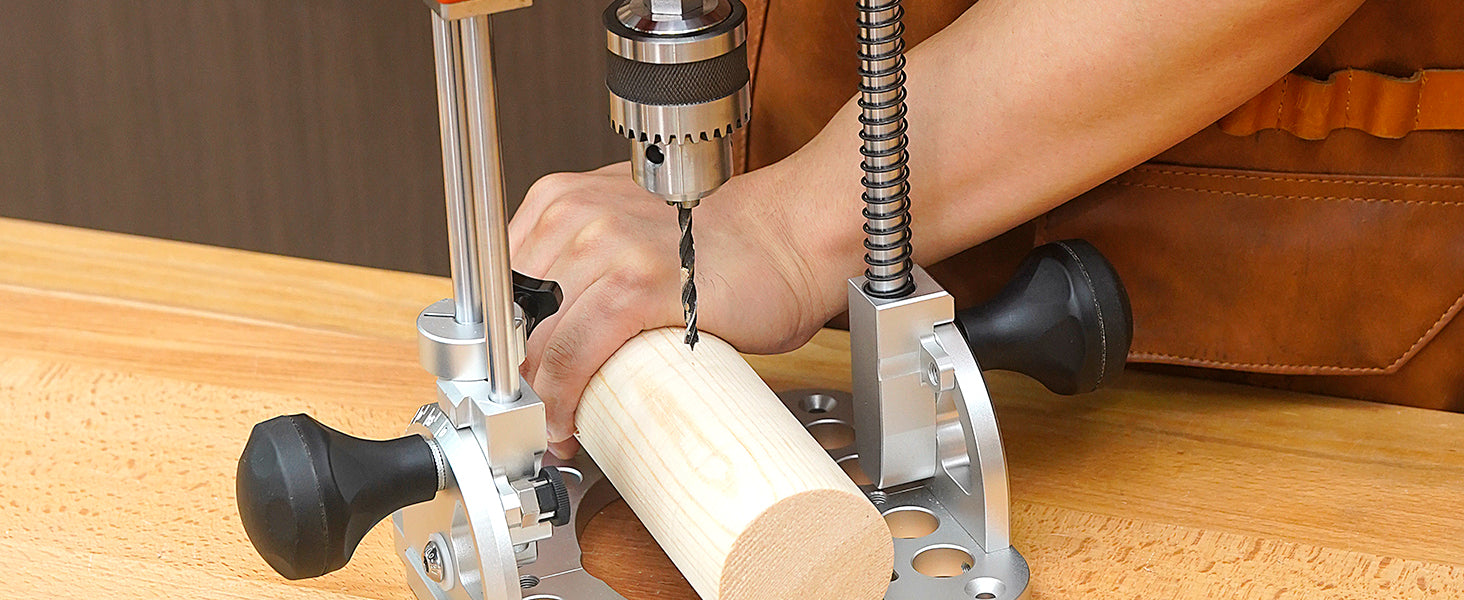
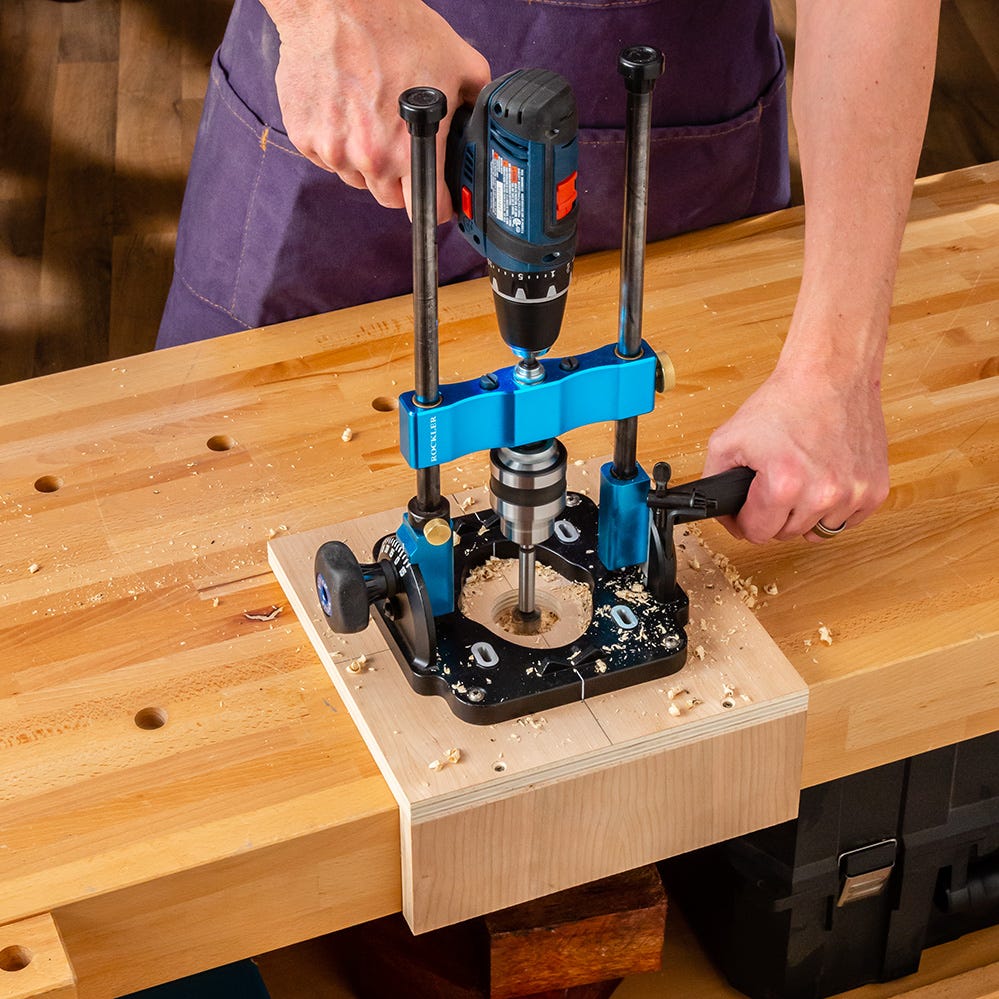
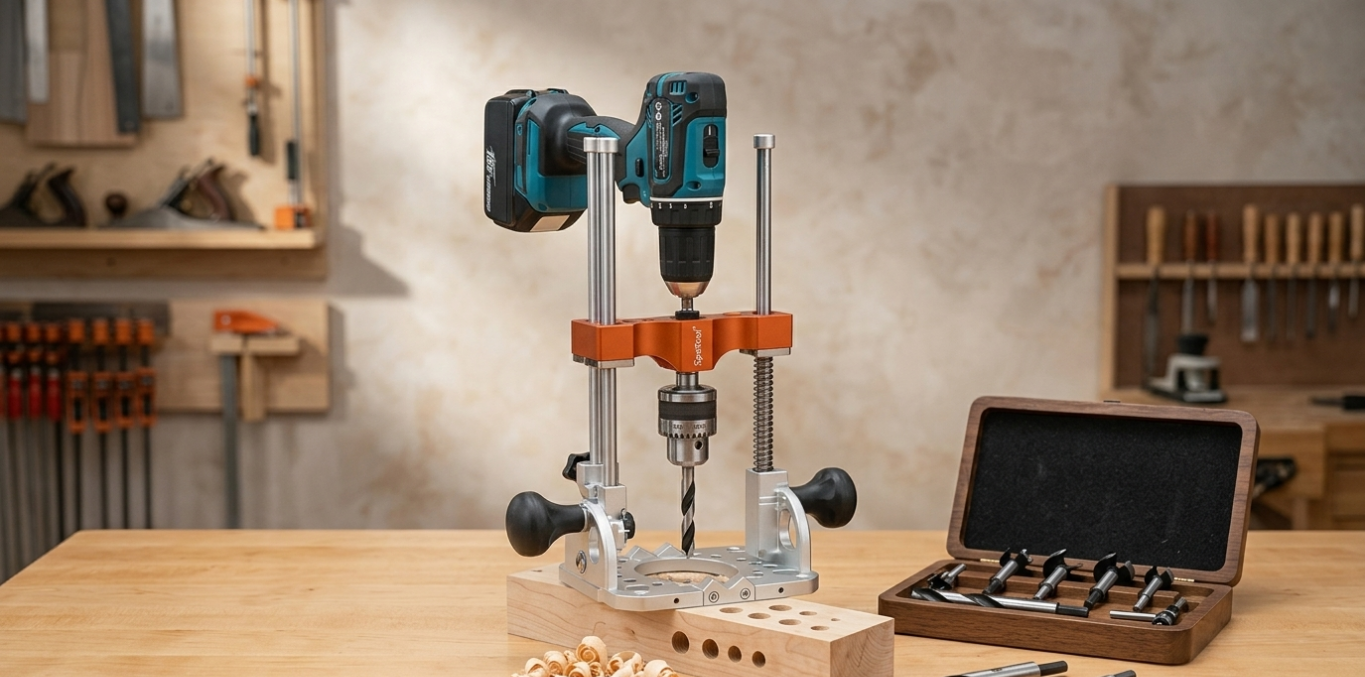
For field work, a handheld drill guide with bushings is gold. It keeps holes square when a press is not around. I keep one in my install kit at all times.

Safety, dust, and PPE
Safety is simple and strict. The Ultimate Woodworking Drill Guide follows core rules. Wear eye and hearing protection. Tie back hair. No loose sleeves. Keep hands clear. Clamp the work.
Safer drilling habits:
- Let the bit stop before you set the drill down.
- Use a side handle for big bits.
- Support the exit side to avoid blowout and kick.
- Clear chips often to prevent heat.
- Use dust control on MDF and sheet goods.
If you work on walls, scan for wires and pipes first. Use a detector and drill shallow pilot holes before going deep.
Maintenance and sharpening
Sharp bits save time and heat. The Ultimate Woodworking Drill Guide treats bits like blades. Clean pitch with mineral spirits. Wipe with light oil to prevent rust. Store in an index.
Sharpening tips:
- Touch brad-point spurs and lips with a small file.
- Hone Forstner rims and cutters with a diamond card.
- True twist bits with a guided sharpener for even lips.
- Dress scorched wood off bits to keep edges cool.
Lubrication is rare in wood. A touch of paste wax can ease countersinking in very hard species. If burning shows, sharpen first, then adjust speed.
Troubleshooting common drilling problems
Problems tell a story. The Ultimate Woodworking Drill Guide helps you fix fast. Read the signs, then act.
Quick fixes:
- Bit wandering: Use an awl, start slow, switch to brad-point.
- Tear-out: Add a backer, score, or drill from both sides.
- Burning: Lower RPM, clear chips, sharpen the bit.
- Oval holes: Check chuck grip and bit straightness.
- Stalling: Use low gear, reduce bit size, or step up in sizes.
- Ragged countersinks: Sharpen the cutter and slow down.
If holes are out of square, your wrists are chasing the bit. Use a guide block or drill press. Let the setup do the aiming.
:max_bytes(150000):strip_icc()/JS_1864-2008bd548fb548db8f5729d54b71976b.jpg)
Real-world shop examples and pro tips
Shop wisdom grows with each project. The Ultimate Woodworking Drill Guide draws on jobs from small boxes to big built-ins. These tips came from time at the bench and on site.
Practical tips I use:
- Blue tape on both sides of plywood reduces chip-out.
- For perfect dowels, drill press plus fence beats freehand every time.
- When hinge cups burn, clear chips every second and slow to 600 RPM.
- Use depth stops for shelf pins so every cabinet matches.
- For plugs, cut them from offcuts near your part for best grain match.
On a walnut credenza, I drilled all shelf pins with a bushing jig and stop. Every shelf sat level, and the client smiled. It is small care that makes the work look pro.
Frequently Asked Questions of The Ultimate Woodworking Drill Guide
What drill should I buy first for woodworking?
Start with a compact 12V or 18V cordless drill with a clutch. It is light, strong enough, and works for most holes and screws.
What bits make the cleanest holes in wood?
Brad-point and Forstner bits give the cleanest entry and walls. For flush hinges or flat-bottom holes, use Forstner.
How do I stop tear-out on plywood?
Use a sharp brad-point, clamp a backer board, and drill slow on exit. You can also score with a knife.
What RPM should I use for large bits?
Use low gear and 400 to 800 RPM for big Forstner or hole saws. Let chips clear to avoid heat.
Do I need a drill press for accurate holes?
A drill press helps with square, repeat holes and depth control. A good guide block and clamps can get close with a handheld drill.
How big should a pilot hole be for screws?
Match the pilot to the screw’s root diameter. In hardwood, go a hair larger; in softwood, go a hair smaller.
Conclusion
You now have a clear path to clean, accurate holes. The Ultimate Woodworking Drill Guide showed how to choose the right drill, match bits to tasks, set speeds, and avoid tear-out. You also saw simple jigs, safe habits, and fixes that work fast.
Use one tip today. Add a backer board, sharpen a bit, or set a depth stop. Small gains stack up and raise the whole build. Want more? Bookmark this guide, share it with a shop friend, and drop your questions or wins in the comments.