Regular circular saw maintenance means cleaning sawdust and resin, inspecting the blade and guards, checking the arbor and fasteners, keeping moving parts in the condition specified by the manufacturer, and storing the tool dry and protected. Always disconnect a corded saw from power or remove the battery from a cordless saw before maintenance.
For homeowners, remodelers, carpenters, and contractors in the United States, circular saw maintenance is less about taking the tool apart and more about keeping its critical parts clean, secure, and functional. A few minutes of routine care can help preserve cut quality and make it easier to spot a damaged blade, sticking guard, loose hardware, clogged vent, or other problem before the next cut.
Current manufacturer instructions show why maintenance should be model-specific. For example, DEWALT documentation for some circular saws calls for regular cleaning of air vents and says certain bearings are self-lubricating, while brush-equipped models may require periodic carbon-brush inspection. OSHA woodworking guidance likewise emphasizes functional guards, sharp and properly maintained saws, clean machinery, and inspection before continued use. The exact maintenance interval and lubrication points therefore belong to the owner’s manual for the specific saw.
Source: powertecproducts.com
Why Circular Saw Maintenance Matters
Circular saw maintenance keeps the tool’s cutting system, protective components, motor cooling system, and moving mechanisms in usable condition. The goal is not to make an old saw look new; it is to prevent avoidable problems from affecting cutting performance or creating a safety hazard.
A dirty blade can behave like a dull blade. Resin and pitch from wood can collect around the teeth and gullets, increasing friction and heat while making it harder for the teeth to clear material. Woodcraft and Lowe’s both describe this relationship in their blade-cleaning guidance. Cleaning can therefore be a useful diagnostic step before deciding that a blade needs sharpening or replacement.
Maintenance also gives you an opportunity to find defects that cleaning cannot fix. OSHA’s woodworking requirements state that dull, badly set, improperly filed, or improperly tensioned saws should be removed from service when they can contribute to sticking, jamming, or kickback. The same guidance calls for clean machinery, properly lubricated bearings where applicable, and circular-saw arbors free from play.
Source: thisoldhouse.com
Better cutting behavior
A clean blade and unobstructed guard system allow the saw to operate as designed. Resin buildup, packed dust, and a restricted dust path can interfere with normal operation.
Earlier fault detection
Routine inspection can reveal damaged teeth, loose hardware, a sticking guard, excessive arbor movement, damaged cords, worn brushes, or other problems before they become more serious.
Longer useful service life
Keeping dust away from vents and moving mechanisms and following the manufacturer’s lubrication and service instructions can reduce avoidable wear.
Safer operation
Maintenance helps keep guards and other protective systems functional. A saw with a damaged or malfunctioning safety component should not be returned to normal use until the problem is corrected.
What Parts of a Circular Saw Need Maintenance?
The main maintenance areas are the blade, lower and upper guards, shoe or base plate, arbor and blade-mounting hardware, dust port and air vents, electrical components, adjustment mechanisms, and motor components. Cordless models also require appropriate battery care according to the battery manufacturer’s instructions.
Not every component is user-serviceable. A maintenance routine should distinguish between cleaning and inspection that an operator can reasonably perform and repairs that belong with an authorized service center or qualified technician.
Blade
Inspect for damage and clean resin, pitch, sawdust, and light surface contamination when appropriate.
Blade guard
Check that the guard is not cracked, obstructed, or sticking and that it returns correctly according to the tool’s design.
Arbor and hardware
Check for abnormal play, contamination, damaged mounting surfaces, and properly secured blade hardware.
Motor and vents
Keep cooling openings clear and inspect for excessive dust accumulation, unusual noise, burning smell, or abnormal sparking.
How to Perform Routine Circular Saw Maintenance
Start every maintenance session by making the saw incapable of starting. Unplug a corded model. Remove the battery from a cordless model. If the saw is used in a workplace where servicing creates an unexpected-start hazard, follow the applicable lockout and tagout procedure rather than relying only on the switch.
Place the saw on a stable work surface with the blade stopped and accessible. Wear eye protection when brushing or cleaning debris, and use appropriate hand protection when handling a removed blade. Keep fingers away from the teeth even when the tool is disconnected.
Source: lowes.com
Step 1: Clean loose dust
Use a soft brush or suitable vacuum method to remove sawdust from the shoe, blade area, guard, housing, dust port, and accessible vents. Do not clean a running or coasting saw.
Step 2: Inspect the blade
Look for chipped or missing teeth, cracks, warping, heavy corrosion, unusual wear, or other damage. A structurally damaged blade should be replaced rather than restored through cleaning.
Step 3: Inspect the guard
Operate the lower guard by its normal mechanism while the saw is disconnected. It should move through its intended travel without sticking. Do not use the saw if the guard is damaged or fails to function correctly.
Step 4: Check the shoe and adjustments
Remove packed debris around the base plate and check the depth and bevel mechanisms for smooth, secure adjustment. Confirm that adjustment levers or knobs lock as intended.
Step 5: Inspect the arbor area
With the blade removed according to the owner’s manual, inspect the arbor, flange surfaces, and blade-mounting area for dirt, damage, or abnormal movement. Do not operate a saw with excessive arbor play.
Step 6: Check the power system
For corded tools, inspect the cord, plug, strain relief, and switch area for visible damage. For cordless tools, inspect the battery interface and housing for damage and follow the battery manufacturer’s storage and charging instructions.
Step 7: Follow model-specific service instructions
Check the owner’s manual before lubricating, opening the motor housing, replacing carbon brushes, servicing the brake, or removing internal components. If the manual assigns a repair to an authorized service center, follow that instruction.
A Practical Maintenance Schedule
There is no single maintenance interval that applies to every circular saw. Use the manufacturer’s schedule first, then increase inspection frequency when the saw is exposed to heavy dust, resinous wood, demanding jobsite conditions, or frequent use.
After each use
Remove loose sawdust, check the blade and guard, and wipe accessible exterior surfaces.
Regularly during frequent use
Inspect vents, dust ports, blade condition, adjustment mechanisms, power cords, battery interfaces, and fasteners.
When cutting performance changes
Inspect for resin buildup, blade wear, damaged teeth, incorrect blade selection, binding, or other causes before continuing.
At the manufacturer’s service interval
Have specified internal inspection, lubrication, brush service, brake service, or other repairs performed as required.
How to Clean and Maintain a Circular Saw Blade
Clean a circular saw blade when resin, pitch, sawdust, or corrosion begins affecting its condition. The safest process is to remove the blade according to the manufacturer’s instructions, place it on a stable protected surface, use a cleaner compatible with the blade’s coating, scrub carefully with an appropriate brush, rinse when the cleaner’s instructions permit, and dry the blade completely before storage or installation.
Lowe’s current blade-cleaning guidance recommends checking the tool and blade documentation first, disconnecting the saw, wearing eye protection and appropriate gloves, inspecting for damage, and using a mild cleaning approach for resin. It also warns against harsh chemical cleaners that can damage a blade or its finish.
Source: woodcraft.com
Remove the blade safely
Disconnect the saw, follow the owner’s manual for blade removal, and avoid placing fingers on the cutting edges.
Use an appropriate cleaner
Use the cleaner specified or permitted by the blade manufacturer. A mild detergent solution may be suitable for some uncoated blades, while coated blades may require different treatment.
Scrub carefully
Use a soft or synthetic-bristle brush for general cleaning. If the blade manufacturer permits a brass-bristle brush, use light pressure and avoid damaging the tooth geometry or coating.
Rinse and dry
Follow the cleaner’s instructions for rinsing, then dry the blade completely. Moisture left on bare steel can encourage corrosion.
Protect for storage
If appropriate for the blade material and manufacturer instructions, use a light rust-preventive coating for storage. Remove excess residue before reinstalling a blade for cutting.
Dirty Blade or Dull Blade?
A blade that cuts slowly, produces burn marks, or requires more force is not automatically dull. Resin buildup can create similar symptoms by increasing friction and interfering with the cutting teeth. Inspect the blade before replacing or sharpening it.
Cleaning is appropriate when the teeth remain structurally intact and the main problem is removable buildup. A blade with chipped carbide, cracks, severe corrosion, warping, or other structural damage should be removed from service. If a blade is simply dull but otherwise sound, sharpening should be handled according to the blade manufacturer’s recommendations and by a qualified sharpening service when required.
Likely buildup
Sticky or dark resin around the teeth and gullets, with otherwise intact tooth tips.
Likely wear
Rounded or damaged cutting edges, repeated poor cuts after cleaning, or visible tooth damage.
Replace the blade
Cracks, significant warping, missing teeth, severe rust, or other damage that compromises blade integrity.
Lubrication, Carbon Brushes, and Internal Components
Do not automatically add oil or grease to a circular saw. Modern saws can use sealed or self-lubricating bearings and other components that require no routine user lubrication. Adding lubricant where none is specified can attract dust, contaminate electrical parts, damage plastics, or interfere with a guard mechanism.
DEWALT’s DWE575 documentation, for example, states that self-lubricating ball and roller bearings do not require relubrication and recommends periodic service-center inspection and lubrication of the gear case. Other saw designs can have different requirements, so the model manual should determine where lubricant is permitted and what type to use.
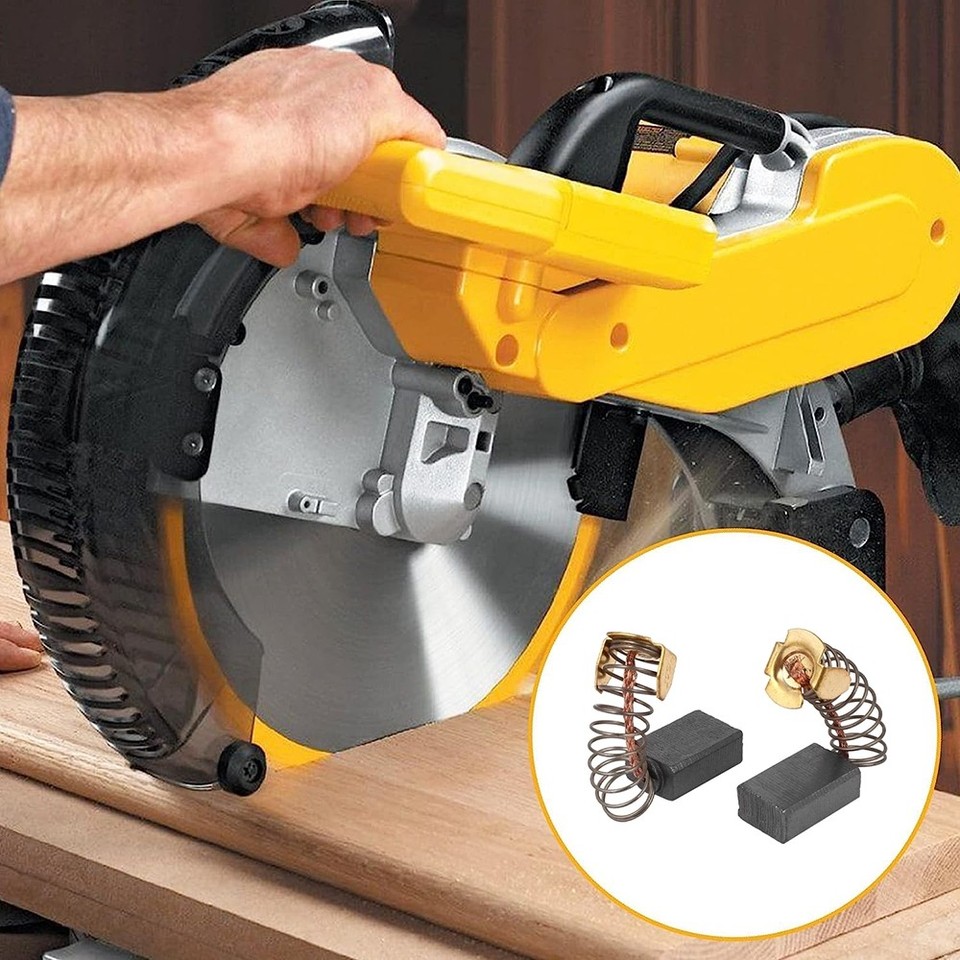
Carbon-brush maintenance applies only to saws that use brushed motors. Some brushed circular saw manuals instruct users to inspect brushes regularly and replace them when they reach the manufacturer’s wear limit. Brushless circular saws use a different motor design and do not require conventional carbon-brush replacement.
Source: ebay.com
Do not lubricate by guesswork
Only lubricate a component when the manufacturer identifies it as a lubrication point and specifies an appropriate lubricant or service procedure.
Inspect brushes only when applicable
If the saw has accessible carbon brushes and the manual permits user inspection, check them at the specified interval and replace them with the correct parts.
Use matching replacement parts
Manufacturer documentation may specify original or identical replacement brushes, hardware, or other service parts because component characteristics can affect tool operation.
Leave complex repairs to qualified service
Brake problems, internal electrical faults, damaged gears, bearing failures, repeated overheating, and other internal defects can require professional diagnosis.
Signs That Internal Service May Be Needed
Stop using the saw when maintenance symptoms point to a mechanical or electrical problem rather than ordinary dirt. Persistent abnormal noise, excessive vibration, repeated overheating, unusual burning smell, significant sparking, an electric brake that stops functioning correctly, or excessive arbor play warrants further inspection.
Do not open a saw’s motor housing merely to investigate if the manufacturer directs those repairs to an authorized service center. Disconnecting power prevents accidental startup, but it does not make electrical or mechanical repair automatically safe for an untrained person.
Persistent vibration
Check the blade and mounting system first. If vibration remains after correcting obvious causes, stop and seek service.
Abnormal sparking
Minor brush-related behavior can vary by motor design, but excessive or unusual sparking is a reason to stop and inspect the tool according to the manual.
Brake failure
If an electric brake does not behave as specified by the manufacturer, do not continue normal operation until the problem has been addressed.
Arbor movement
An arbor should not have abnormal play. Continued use with a damaged or loose arbor system can create a serious mechanical hazard.
Common Circular Saw Maintenance Mistakes and Troubleshooting
Most maintenance mistakes come from treating every circular saw as if it has the same construction and service requirements. The better approach is to use general maintenance principles for cleaning and inspection, then use the exact owner’s manual for lubrication, disassembly, brush replacement, blade specifications, and service intervals.
OSHA guidance also makes a useful distinction between cleaning and safe maintenance. Workers should not clean saws with their hands while the machine is running, and safeguards should remain functional. In workplace settings, servicing machinery may also require formal energy-control procedures.
Source: commons.wikimedia.org
Mistake: Cleaning while the blade is still coasting
A blade can continue moving after the trigger is released. Wait for complete stoppage, disconnect the power source, and only then begin maintenance.
Mistake: Using harsh solvents on plastic parts
Some manufacturers specifically warn that harsh chemicals can weaken or damage nonmetallic components. Use only cleaners approved by the manufacturer.
Mistake: Replacing a dirty blade immediately
Inspect and clean an otherwise sound blade first when resin buildup is the likely cause of poor cutting.
Mistake: Sharpening a damaged blade
Sharpening does not repair cracks, major corrosion, missing teeth, or structural damage. Damaged blades should be replaced.
Mistake: Adding lubricant everywhere
Lubricant belongs only where the manufacturer specifies it. Sealed bearings may require no user lubrication.
Mistake: Operating with a faulty guard
A guard that sticks, fails to return, or is damaged is a safety defect. Correct the problem before returning the saw to service.
Mistake: Ignoring the blade choice
The correct blade must match the saw and the cutting application. A maintenance routine cannot compensate for a blade that is unsuitable for the material or tool.
Troubleshooting by Symptom
Use the symptom as a starting point, not as a diagnosis. Disconnect the saw before inspecting any physical component, and stop troubleshooting if the problem could involve an internal electrical or mechanical failure.
Burn marks on wood
Inspect for resin buildup, a dull or damaged blade, incorrect blade selection, excessive feed pressure, or material binding. Clean or replace the blade as appropriate.
Rough or inaccurate cuts
Check blade condition, mounting, shoe alignment, bevel and depth settings, and the stability of the workpiece.
Lower guard sticks
Disconnect the saw and inspect for sawdust or physical obstruction. If the guard remains unreliable, stop using the tool and follow the manufacturer’s repair procedure.
Motor overheats
Check for clogged vents, excessive cutting load, a damaged or dull blade, or other abnormal operating conditions. Persistent overheating requires service.
Excessive vibration
Inspect blade condition and mounting first. If the vibration continues, stop using the saw and have the mechanical system inspected.
Blade does not stop as expected
For saws equipped with an electric brake, follow the manufacturer’s brake troubleshooting instructions. Persistent brake problems require qualified service.
Frequently Asked Questions
Q
How often should I clean my circular saw?
Remove loose sawdust after regular use, especially around the blade guard, shoe, vents, and dust port. Deeper cleaning should be performed when resin or debris begins affecting operation. Some manufacturers specify additional cleaning intervals for particular models, so the owner’s manual should take priority.
Q
Should I oil my circular saw blade?
A light rust-preventive coating can be appropriate for some bare-metal blades during storage, but do not leave an inappropriate oily residue on a blade that is about to cut material. Follow the blade manufacturer’s instructions. Lubricating the saw’s internal bearings or mechanisms is a separate issue and should only be done where the tool manufacturer specifies it.
Q
How do I know if my circular saw blade needs cleaning or replacement?
If the blade has removable resin or pitch but the teeth are intact, cleaning may restore performance. Chipped teeth, cracks, significant warping, severe corrosion, or other structural damage are reasons to replace the blade. A sound but dull blade may need professional sharpening if the blade manufacturer permits sharpening.
Q
Can I use compressed air to clean a circular saw?
Compressed air can be useful for removing loose dust from some tools, but it should be used carefully and according to the manufacturer’s instructions. Avoid directing debris into sensitive areas or creating a cloud of hazardous dust. OSHA woodworking guidance emphasizes effective housekeeping and specifically advises against using compressed air to blow chips and debris in certain workplace cleaning situations.
Q
Do brushless circular saws need carbon-brush maintenance?
No. Brushless motors do not use conventional carbon brushes. Brushed circular saws may have carbon brushes that require inspection or replacement according to the manufacturer’s service instructions. Check the exact motor design of your saw before attempting brush maintenance.
Q
When should I take a circular saw to a service center?
Use professional service when the saw has persistent electrical faults, excessive sparking, brake problems, abnormal internal noise, excessive arbor play, repeated overheating, damaged gears or bearings, or another problem that is not resolved by routine cleaning and inspection. Manufacturer manuals may also require authorized service for internal repairs or brush replacement.
✦ Wrapping Up
Conclusion
Good circular saw maintenance is a repeatable routine: disconnect the power source, remove loose dust, inspect the blade and guard, clean resin when necessary, check the arbor and adjustments, keep cooling openings clear, and follow the manufacturer’s instructions for lubrication and internal service. The most useful maintenance habit is inspection because it helps distinguish ordinary dirt from a component that should be repaired or replaced.
For a U.S. homeowner or professional using a circular saw regularly, there is no reason to wait for a major problem before checking the tool. A clean blade, functioning guard, clear ventilation, secure hardware, and correct blade selection are basic conditions for returning the saw to work.
💡 Key Takeaway
Before your next cutting session, disconnect the saw, inspect the blade and lower guard, clear sawdust from the tool, and verify that every adjustment and safety mechanism works as specified in the owner’s manual. If you find structural blade damage, excessive arbor play, brake failure, electrical problems, or a guard that does not function correctly, keep the saw out of service until the issue is properly repaired.