The safest general method is to remove the blade from the saw, place it on a stable protected surface, apply a cleaner that is approved for the blade, allow the residue to loosen, gently brush away pitch and resin, rinse only when the cleaner instructions call for it, and dry the blade completely before reinstalling or storing it.
For U.S. homeowners, DIYers, woodworkers, and jobsite crews, circular saw blade cleaning is a simple maintenance task that can restore cutting performance when resin, pitch, adhesive, and sawdust have accumulated on the blade. A dirty blade can behave like a dull blade because buildup increases friction and interferes with the teeth as they enter and leave the material.
Before cleaning, disconnect the saw from its power source and remove the blade according to the saw manufacturer’s instructions. Wear appropriate hand and eye protection, handle the blade by areas away from the cutting edges, and inspect it before spending time cleaning it. Cleaning can remove contamination, but it cannot repair cracked steel, missing carbide teeth, a warped plate, or a genuinely dull cutting edge.
The right cleaning product depends on the blade construction and its coating. Purpose-made blade cleaners are available, while some manufacturers and woodworking references describe mild cleaners or degreasers for resin and pitch. Always check the blade and cleaner instructions before soaking or applying chemicals, particularly when the blade has a special coating.
Source: powertecproducts.com
Why Clean a Circular Saw Blade?
Cleaning removes material that has accumulated on the blade rather than removing material from the blade itself. Wood resin, pitch, glue residue, fine sawdust, and other deposits can collect around the teeth, gullets, and blade plate. As this buildup increases, the blade can generate more friction and heat and may produce rougher cuts or burn marks.
Softwoods such as pine can leave particularly noticeable resin deposits, while plywood, MDF, and other manufactured wood products can leave adhesive or fine dust contamination. The exact buildup depends on the material, blade design, cutting conditions, and how frequently the blade is used.
A clean blade is also easier to inspect. Once deposits are removed, you can see the carbide tips, gullets, expansion slots, and plate more clearly. That makes it easier to distinguish a dirty blade from one that actually needs sharpening or replacement.
Source: microjig.com
Reduced buildup
Cleaning removes pitch, resin, adhesive residue, and compacted sawdust that can interfere with the cutting teeth.
Better inspection
A clean blade makes cracks, chipped carbide, missing teeth, corrosion, and other physical damage easier to identify.
More consistent cutting
Removing contamination can help a blade return closer to its normal cutting behavior when buildup was the cause of poor performance.
How Can You Tell a Blade Is Dirty Instead of Dull?
A blade may be dirty when you can see a layer of sticky pitch, resin, glue, or compacted dust on the teeth and the cutting performance declined gradually after cutting resinous or manufactured wood. Burn marks, slower cutting, and increased friction can have several causes, so cleaning is a useful maintenance check but not a diagnosis by itself.
If the blade remains difficult to use after the buildup has been removed, inspect the teeth and plate. Chipped or missing carbide, a warped blade, visible cracks, or an edge that remains dull after cleaning points to a repair, sharpening, or replacement decision rather than another cleaning cycle.
What You Need for Circular Saw Blade Cleaning
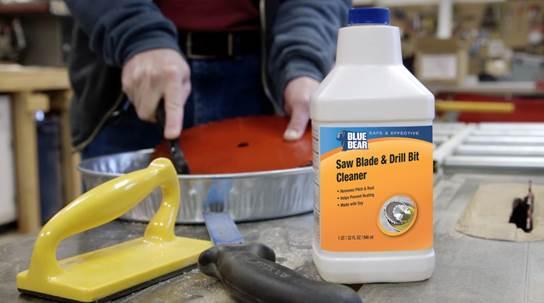
For a routine cleaning job, you generally need a stable work surface, a compatible blade cleaner, a shallow tray or container, an appropriate brush, clean cloths, and protective equipment. The exact supplies should follow the blade and cleaner manufacturer’s instructions.
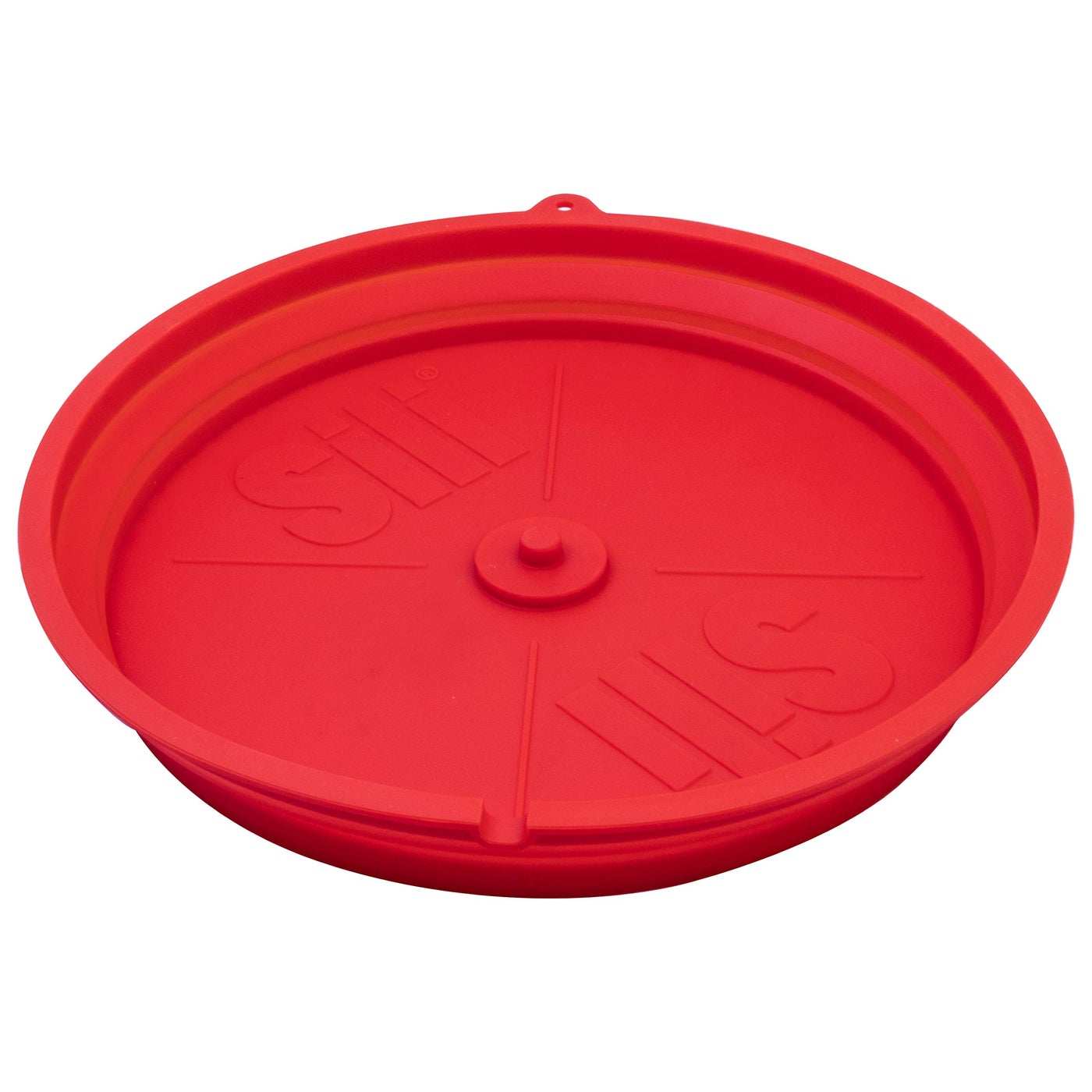
A shallow container keeps the blade supported while allowing cleaner to reach the contaminated areas. Purpose-built blade-cleaning trays can also make handling easier, especially with larger table-saw and miter-saw blades.
Choose the brush based on the blade and cleaner instructions. Nylon or other soft brushes are useful for light contamination and reduce the chance of unnecessarily scratching a coated surface. Some purpose-made blade-cleaning systems use brass or other specialized brushes for stubborn deposits. Do not assume that a more aggressive brush is automatically better.
Source: woodworkingnetwork.com
Cleaner
Use a product specifically intended for saw blades when possible, or another cleaner that the blade manufacturer permits.
Tray or shallow container
Use a stable container large enough to support the blade without forcing the teeth against a hard surface.
Brush
Use a suitable nylon, soft-bristle, or manufacturer-approved brass brush for the type of buildup and blade surface.
Protective equipment
Use appropriate work gloves and eye protection, and provide ventilation when the cleaning product requires it.
Dry cloth
Keep a clean cloth available for removing loosened residue and drying the blade after cleaning.
What Cleaner Should You Use?
A dedicated saw blade or blade-and-bit cleaner is a straightforward option because these products are formulated for the type of pitch, resin, and residue found on cutting tools. Some water-based cleaners are designed specifically to remove pitch and resin, while other products are intended to be sprayed on, allowed to work briefly, and wiped away.
A mild household cleaner or degreaser may also be suitable for some blades, but compatibility varies. Coatings, adhesives used to attach carbide teeth, and the blade manufacturer’s care instructions can affect the choice. Do not use a product simply because it works on another blade.
Avoid assuming that oven cleaner, strong solvents, acids, or aggressive degreasers are safe for every circular saw blade. Some cleaning systems specifically warn against solvent-based cleaners. Read the product label and safety data before using an unfamiliar chemical.
How to Clean a Circular Saw Blade Step by Step
The basic process is remove, inspect, loosen, brush, clean, dry, and inspect again. The goal is to soften the contamination so that it can be removed with controlled pressure rather than scraping aggressively against the blade or carbide teeth.
Source: noon.com
Step 1: Disconnect the saw
Unplug a corded saw or remove the battery from a cordless saw before touching the blade or performing maintenance.
Step 2: Remove the blade
Follow the saw manufacturer’s procedure for locking the spindle and removing the arbor nut and blade.
Step 3: Inspect the blade
Look for cracks, warping, damaged carbide, missing teeth, severe corrosion, or other conditions that may make the blade unsuitable for use.
Step 4: Remove loose dust
Brush away or gently blow off loose sawdust before applying liquid cleaner.
Step 5: Apply compatible cleaner
Wet the contaminated areas according to the cleaner’s instructions and give the product enough contact time to loosen hardened deposits.
Step 6: Brush gently
Work around the teeth, gullets, and blade plate with an appropriate brush. Focus on loosening residue rather than forcing it away.
Step 7: Remove the cleaner
Rinse only when the cleaner instructions call for rinsing. Otherwise, wipe away the loosened residue according to the product directions.
Step 8: Dry completely
Remove moisture from the blade before reinstalling or storing it. Pay attention to the teeth, gullets, arbor hole, and other areas where moisture can remain.
Step 9: Inspect again
Confirm that the buildup is gone and check the teeth and plate for damage that was hidden by the residue.
How Long Should a Circular Saw Blade Soak?
There is no universal soaking time because cleaners have different formulations and directions. Some products specify a short contact period, while other cleaning systems allow longer soaking for hardened deposits. Follow the label or manufacturer’s instructions rather than treating a fixed time as appropriate for every cleaner and blade.
For stubborn buildup, a second application is generally preferable to aggressive scraping when the cleaner permits repeated applications. If the residue does not soften, stop and verify that the cleaner is appropriate for the blade rather than escalating to a more aggressive chemical.
How Do You Brush the Teeth Without Damaging Them?
Support the blade securely and keep your hands away from the cutting edges. Work the brush into the areas where residue has accumulated, using controlled pressure. Do not grind, file, bend, or reshape carbide teeth during routine cleaning.
A purpose-made blade-cleaning tool can reduce direct contact with the blade and may provide a controlled way to scrub the surface. Whatever method you use, the cleaner should do much of the work on hardened residue.
Cleaning Resin, Pitch, Glue, and Rust
Different deposits require slightly different treatment. Resin and pitch are usually sticky or hardened organic deposits from wood, while glue and adhesive residue may come from plywood, MDF, laminates, or other manufactured materials. Rust is corrosion of the metal and should not be treated as if it were simply another layer of sawdust.
Start with the least aggressive method that is compatible with the blade. Allow the cleaner to loosen organic buildup, then brush or wipe it away. If corrosion is present, follow a rust-removal method that is approved for the blade and its coating. Deep corrosion, pitting, or structural damage can be a reason to replace the blade rather than continue cleaning.
Source: 1rv.nl
Resin and pitch
Apply a compatible blade cleaner, allow adequate contact time, then gently brush the softened residue from the teeth and plate.
Glue and adhesive
Use a cleaner that is compatible with the blade and effective against the particular adhesive residue; avoid aggressive scraping against carbide tips.
Sawdust
Loose sawdust can usually be removed with a brush or controlled air before liquid cleaning begins.
Light surface rust
Use a rust-removal method suitable for the blade and coating, then dry and protect the exposed metal as directed.
Deep corrosion
Pitting or significant corrosion may affect the blade’s condition and should be evaluated before the blade is returned to service.
Can You Use Water to Clean a Circular Saw Blade?
Water can be part of a cleaning process when the cleaner manufacturer permits rinsing or when a water-based cleaning method is specifically appropriate for the blade. The key issue is what happens afterward: the blade must be dried thoroughly so moisture does not remain on the steel and promote corrosion.
Do not assume that every blade cleaner should be rinsed with water. Some products are designed to be wiped off without rinsing and may leave a protective film. Follow the specific product directions.
Should You Use Oven Cleaner on a Saw Blade?
Do not treat oven cleaner as a universal saw-blade cleaning product. Strong chemical cleaners can be incompatible with particular blade coatings, materials, or cleaning systems. Some blade-cleaning equipment manufacturers specifically advise against oven cleaners and solvent-based cleaners.
A purpose-made blade cleaner or another product explicitly approved for the blade is a more controlled starting point. If you are uncertain about compatibility, check the blade manufacturer’s maintenance instructions before applying the chemical.
What to Do After Cleaning the Blade
After cleaning, the blade should be clean, dry, and free of loosened residue before it goes back onto the saw. This is also the best time to inspect the blade closely because contamination can hide damage.
If the blade is clean but still produces excessive burning, rough cuts, unusual vibration, or requires excessive feed pressure, cleaning may not be the underlying solution. Check the blade condition, the material being cut, the saw setup, and the blade’s suitability for the application.
Source: Wikimedia Commons
Dry the blade
Remove all visible moisture before installation or storage, especially from the arbor hole and spaces around the teeth.
Inspect the carbide
Check for chipped, cracked, loose, or missing carbide teeth. Do not use a blade that has damage requiring replacement.
Check the plate
Look for cracks, distortion, severe corrosion, or other damage to the steel body.
Protect against corrosion
If the cleaner or blade manufacturer recommends a corrosion-protection product, apply it according to the instructions and remove excess before use.
Reinstall correctly
Install the blade in the correct rotation direction and tighten the arbor hardware according to the saw manufacturer’s instructions.
Store carefully
Keep clean blades protected from moisture and prevent teeth from striking other blades, tools, or hard surfaces.
How Often Should You Clean a Circular Saw Blade?
Clean the blade when buildup begins to affect cutting or becomes clearly visible rather than relying on a universal calendar interval. A blade used frequently on resinous softwood may need attention more often than a blade used occasionally on clean, dry material.
A quick visual inspection after demanding jobs can prevent heavy buildup. If the teeth are visibly coated with pitch or the saw begins cutting differently, cleaning is a reasonable maintenance step before assuming the blade needs sharpening.
Signs the Cleaning Worked
A successful cleaning leaves the blade visibly free of the targeted buildup and makes the teeth and plate easier to inspect. During the next appropriate cut, the saw should return closer to its previous behavior if contamination was the main cause of the performance change.
Cleaning is not a substitute for sharpening. If the blade remains dull after contamination has been removed, have a suitable carbide blade professionally sharpened when appropriate or replace it according to its condition and intended use.
Common Circular Saw Blade Cleaning Mistakes
Most cleaning problems come from treating the blade like an ordinary piece of metal instead of a precision cutting tool. The objective is to remove contamination while preserving the blade’s plate, coating, carbide attachment, and tooth geometry.
Avoid working on an installed blade, using an unknown chemical, or applying enough force to change the tooth shape. If a blade is structurally damaged, cleaning it does not make it safe to use.
Source: woodcraft.com
Cleaning while the blade is installed
Never clean around an installed blade while the saw is connected to power. Remove the blade first unless the manufacturer’s maintenance procedure specifically states otherwise.
Using excessive force
Aggressive scraping, grinding, or mechanical abrasion can damage surfaces or cutting components.
Using an incompatible chemical
A cleaner that works on one blade may damage another blade’s coating or materials. Verify compatibility before use.
Leaving the blade wet
Moisture left on steel can contribute to corrosion. Dry the blade completely after any wet cleaning process.
Ignoring damaged teeth
Cleaning cannot correct missing, cracked, or badly chipped carbide. A damaged blade should not be returned to service simply because it looks clean.
Assuming every performance problem is dirt
Burning, vibration, rough cuts, and slow cutting can also result from dull teeth, incorrect blade selection, saw alignment, material movement, or other mechanical issues.
When Should You Stop Cleaning and Replace the Blade?
Stop treating the blade as a cleaning problem when you find cracks, a badly warped plate, missing or severely damaged teeth, significant corrosion, or other damage that affects the blade’s structure. Manufacturer instructions should determine whether a particular defect can be repaired or requires replacement.
If the blade is intact but simply dull, professional sharpening may be an option for a suitable carbide-tipped blade. The decision depends on the blade’s condition, construction, sharpening requirements, and replacement cost.
Frequently Asked Questions
Q
What is the best way to clean a circular saw blade?
The safest general approach is to disconnect the saw, remove the blade, inspect it, apply a compatible blade cleaner, allow the residue to soften, gently brush the buildup away, and dry the blade completely. The cleaner’s instructions should determine whether the blade needs rinsing or can simply be wiped clean.
Q
Can I clean a circular saw blade without removing it?
For routine cleaning, removing the blade is the safer and more controlled approach. Disconnect the saw from its power source before removing the blade and follow the manufacturer’s removal procedure. Cleaning an installed blade creates unnecessary exposure to sharp edges and moving-machine hazards.
Q
What can I use to remove resin from a circular saw blade?
A cleaner specifically formulated for saw blades and cutting tools is a practical choice for resin and pitch. Some mild cleaners or degreasers may also be suitable, but compatibility depends on the blade and its coating. Follow the cleaner and blade manufacturer’s instructions rather than choosing a chemical solely because it removes resin.
Q
Can I use a wire brush to clean a carbide circular saw blade?
Do not assume that any wire brush is safe for every carbide blade. Some blade-cleaning systems use specialized brass or other brushes, while aggressive wire wheels can damage cutting components or surfaces. Use the brush type recommended by the blade or cleaner manufacturer and let the cleaning solution loosen the residue before brushing.
Q
How do I know whether my circular saw blade needs cleaning or sharpening?
Inspect the blade first. Visible pitch, resin, glue, or compacted sawdust suggests contamination that cleaning may address. If the blade is clean but still cuts poorly, burns material, requires unusual feed pressure, or has visibly worn or damaged teeth, the problem may be dullness or damage rather than dirt.
✦ Wrapping Up
Conclusion
Circular saw blade cleaning is primarily about removing the buildup that prevents a cutting tool from working as intended. Pitch, resin, glue, and sawdust can accumulate around the teeth and plate, particularly when cutting softwood, plywood, MDF, and other materials that leave residue. Removing that buildup can restore normal cutting behavior when contamination is the underlying problem.
The safest routine is straightforward: disconnect the saw, remove and inspect the blade, use a compatible cleaner, let the residue soften, brush gently, follow the cleaner’s rinsing instructions, and dry the blade completely. Afterward, inspect the teeth and plate again before reinstalling the blade.
If cleaning does not resolve the cutting problem, do not keep escalating the cleaning method. Check for dullness, damaged carbide, warping, corrosion, incorrect blade selection, or a problem with the saw or cutting setup. Cleaning is maintenance, not a repair for structural blade damage.
💡 Key Takeaway
Before your next U.S. DIY or woodworking project, inspect the circular saw blade for visible pitch and resin buildup, clean it with a compatible product using controlled pressure, dry it completely, and replace or professionally sharpen it when cleaning cannot correct the underlying condition.