
Below is an SEO-improved rewrite of your blog post. I’ve kept the original intent, added stronger keyword targeting, improved readability, fixed flow issues, and expanded sections where useful for search performance.
The best wood for your project depends on how you plan to use it, your budget, your climate, and the look you want.
If you are trying to choose the right lumber for furniture, cabinets, outdoor builds, or shop projects, this guide will help. The Complete Wood Selection Guide is designed to make wood selection easier by explaining species, grades, moisture content, finishes, and buying tips in a practical way. Whether you are a beginner or an experienced woodworker, you will learn how to choose wood with confidence and avoid costly mistakes.
 <figcaption style=”font-size: 14px; color: #555; margin-top: 8px;”>
Source: usabuildersdepot.com
Understanding wood basics
Wood is a natural material, and that means it behaves differently depending on the direction of the grain, humidity, and the species you choose. One of the most important things to understand in any wood selection guide is that wood expands and contracts with moisture. If you ignore that movement, even a beautiful project can warp, split, or fail over time.
Hardwoods come from broadleaf trees such as oak, maple, cherry, and walnut. Softwoods come from conifer trees such as pine, fir, and cedar. Even though hardwoods are often harder than softwoods, that is not always true. For example, balsa is technically a hardwood but very soft, while Southern yellow pine is a softwood that is quite strong and dense.
Two of the most useful measurements when comparing wood are density and Janka hardness. Density affects strength and weight, while Janka hardness helps show how well a wood resists dents and wear. Grain structure also matters because it affects both appearance and how well a finish absorbs into the surface.
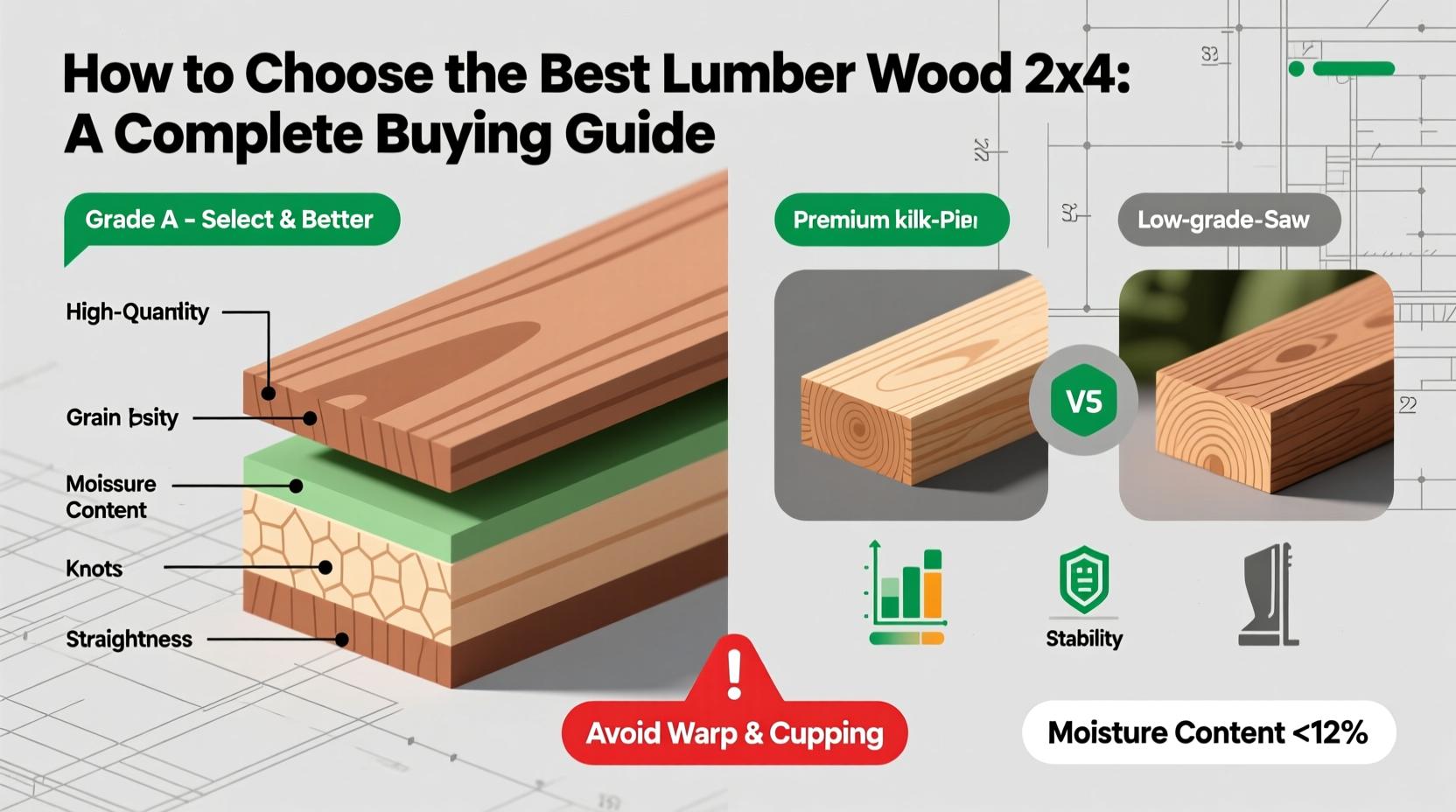
Moisture content is another critical factor. A board that is too wet when brought into a dry indoor space may shrink, cup, or twist as it acclimates. For most indoor woodworking projects, aim for wood that is around 6–8% moisture content before construction begins.
Key terms to know:
- Janka hardness: A measure of how much force is needed to dent wood.
- Moisture content (MC): The amount of water in the wood, measured as a percentage of its weight.
- Tangential and radial movement: The way wood shrinks and expands across the grain as humidity changes.
Key factors to consider before you buy
Before you buy lumber, think about what the project actually needs to do. A shelf, a dining table, a cabinet door, and an outdoor planter all need different wood characteristics. This is where the right wood selection strategy saves time, money, and frustration.
Ask yourself these questions:
- Will the project be used indoors or outdoors?
- Do you need strength, stability, workability, or appearance?
- Will the wood be painted, stained, oiled, or left natural?
- What is your budget, and what species are available locally?
Strength and stability are not the same. A wood can be very hard but still move seasonally. For example, maple is durable and wear-resistant, but it may still react to changes in humidity. Quarter-sawn white oak is often a smart choice when stability is more important, especially for doors, panels, and high-end furniture.
For painted projects, poplar is one of the best value hardwoods available. It cuts easily, sands well, accepts paint smoothly, and keeps project costs down. That makes it ideal for cabinets, trim, and utility furniture.
Other important factors include:
- Workability: Some woods tear out, burn, or chip more easily than others.
- Weight: Heavy woods like walnut can affect portability and hanging hardware.
- Fastener compatibility: Tannic woods like oak can corrode standard steel screws in damp conditions, so stainless or coated fasteners are often better.

Popular wood species and best uses
You do not need to know every wood species to make a good choice. In most woodworking projects, a short list of common species will cover nearly everything. Below are some of the best wood types for furniture, cabinets, outdoor projects, and shop use.
Common softwoods:
- Pine: Affordable, lightweight, and easy to work with. It dents easily, but it is excellent for painted furniture, shelves, and shop jigs.
- Douglas fir: Strong and dependable for structural work, framing, and beams. It can splinter, so sharp tooling matters.
- Cedar: A favorite for outdoor projects because it naturally resists rot and has a pleasant aroma. Great for fences, planters, and storage chests.
Common hardwoods:
- Oak (red and white): Strong, traditional, and attractive with open grain. White oak is better for outdoor use and stains well.
- Maple (hard and soft): Smooth, durable, and ideal for cutting boards, furniture tops, and high-wear surfaces.
- Walnut: Rich in color and easy to machine. It is a premium furniture wood with a higher price tag.
- Cherry: Smooth, easy to finish, and known for its warm color that deepens over time.
- Poplar: One of the best budget hardwoods for painted work and interior framing.
- Ash: Strong, flexible, and useful for chairs, tool handles, and furniture parts.
- Birch: Fine-grained and commonly used in cabinetry, though stain can absorb unevenly.
- Teak and mahogany: Excellent for outdoor or high-end applications. Teak is oily, so prep before gluing or finishing.
A practical tip: white oak is one of the best choices for outdoor tables and chairs because it handles moisture better than many other hardwoods. For toys or kitchen items, hard maple is a reliable option because it is durable and food-safe when finished properly.

Lumber cuts, grades, and sizes
The same species can perform very differently depending on how it was cut from the log. Understanding lumber cuts is important when choosing stable wood for furniture or cabinetry.
Common board cuts:
- Plain-sawn: The most common and most affordable cut. It shows wider grain arches and moves more across its width.
- Quarter-sawn: Produces straighter grain and better dimensional stability. Often preferred for doors, tabletops, and premium furniture.
- Rift-sawn: The most uniform grain pattern and often the most stable, but it produces narrower boards and costs more.
Grades and sizing:
- Hardwood grades: FAS, Select, No. 1 Common, and No. 2 Common. Higher grades have fewer defects and longer clear sections.
- Softwood grades: Often based on structural strength and appearance. Knots and grain slope can affect performance.
- Nominal vs actual size: A 2×4 is not actually 2 by 4 inches. Its real dimensions are closer to 1.5 by 3.5 inches.
Board feet is the standard way to compare lumber cost. The formula is: thickness × width × length ÷ 144. Learning this calculation can save money and help you better estimate material needs for woodworking projects.
Engineered woods: plywood, MDF, and more
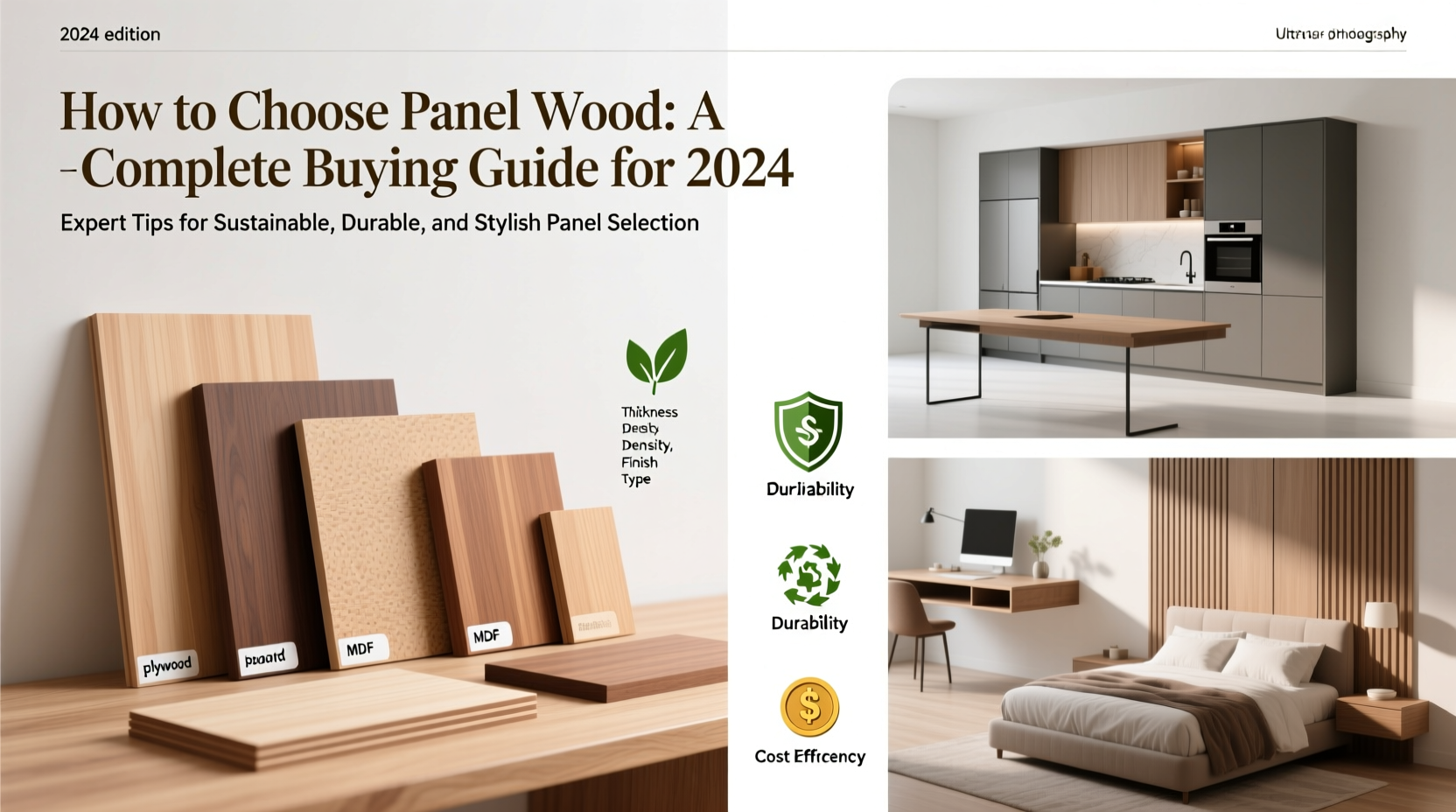
Solid wood is not always the best choice. Engineered wood products are often flatter, more stable, and more cost-effective for many furniture and cabinet projects.
Plywood:
- Made from cross-laminated veneers for strength and stability.
- Great for cabinets, casework, shelving, and subassemblies.
- Choose the right core type, such as veneer core, MDF core, or Baltic birch, depending on the job.
MDF:
- Very flat, smooth, and ideal for paint-grade work.
- Heavier than plywood and weaker on edges, so screw placement matters.
- Best for painted panels, trim, speaker boxes, and cabinetry components.
OSB and LVL:
- OSB: Commonly used for subfloors and sheathing, but not ideal for fine furniture.
- LVL: Very strong and stable, mainly used in structural applications.
For painted cabinet doors, a strong option is MDF panels inside solid hardwood frames. This gives you smooth paintability on the center panel and durable structure in the frame.
Finishes, glue, and fasteners
The finish you choose affects not only appearance but also durability and maintenance. A good wood finish protects the surface, enhances grain, and extends the life of the project.
Common wood finishes:
- Oil and wax: Easy to apply and gives a natural look, but usually needs regular refreshment.
- Polyurethane: A durable finish that works well on tables, cabinets, and furniture. Water-based versions keep wood lighter, while oil-based versions add warmth.
- Hardwax oil: Popular for tabletops and floors because it is easy to repair.
- Stain: Always test first, especially on maple and birch, which can stain unevenly.
Glue and fasteners:
- PVA glue: Suitable for most interior woodworking projects.
- Epoxy: Useful for gap filling and bonding difficult or oily woods.
- Pre-drilling: Helps prevent splitting when using hardwoods.
- Stainless or coated screws: Best for damp areas and tannic woods like oak.
One of the most common mistakes in woodworking is skipping the test sample. A small offcut can show you how the wood will react to stain or finish before you commit to the full project. That simple habit can save hours of rework.
Sustainability, safety, and health
Choosing the right wood also means thinking about sustainability and safety. The best wood for furniture or home projects should be responsibly sourced and safe to work with.
Sustainability tips:
- Buy wood from responsibly managed forests whenever possible.
- Look for credible certification when available.
- Choose local species to reduce shipping impact and support regional supply.
Safety and health tips:
- Some wood dusts can cause irritation or allergic reactions.
- Use dust collection and wear a respirator when sanding or milling.
- Ventilate your workspace when applying finishes.
- Avoid using pressure-treated lumber for food-contact items.
When working with tropical hardwoods, take extra precautions. Some species produce irritating dust, so long sleeves, good ventilation, and a proper respirator are smart choices.

Buying smart: reading tags, costs, and board feet
Walking into a lumberyard can feel overwhelming at first, but once you understand the labels, it becomes much easier to choose the right wood for your project.
How to read lumber tags:
- Species and grade: These tell you the type of wood and quality level.
- Thickness: Common hardwood thicknesses include 4/4, 5/4, and 8/4.
- Surfacing: S2S or S4S means the wood has been planed on two or four sides.
- Moisture level: Kiln-dried lumber is usually best for indoor projects, but always verify moisture content.
Cost-saving tips:
- Buy standard lengths to reduce waste.
- Use No. 1 Common lumber for furniture parts when you can cut around defects.
- Consider veneer over Baltic birch if you want a premium look at a lower price.
I often buy rough cherry, mill it down myself, and sort the clearest boards for visible parts. This approach gives me more control over quality and often saves money compared to buying fully surfaced lumber.
Storage, acclimation, and stability
Wood is always moving until it reaches equilibrium with the environment around it. That is why proper storage and acclimation are essential in any woodworking project.
How to acclimate wood:
- Stack boards with stickers so air can move between layers.
- Let them sit for several days to a week, depending on conditions.
- Weight the stack to reduce twisting or warping.
- Measure moisture content with a pin or pinless meter before building.
How to design for wood movement:
- Let panels float inside frame-and-panel construction.
- Use slotted holes or figure-eight fasteners on tabletops.
- Seal all sides of a board so moisture absorption stays balanced.
One common mistake is rushing a project before the lumber has acclimated. If the wood is still adjusting to your shop or home, it can move after assembly and damage joints or finishes. Patience here pays off.
Quick decision framework and real-world picks
If you are still unsure which wood to use, this simple decision framework can help you choose quickly and confidently.
Best wood choices by project type:
- Painted indoor furniture: Poplar frames with MDF panels
- Clear-finished indoor furniture: Walnut, cherry, white oak, or maple
- High-wear surfaces: Hard maple or white oak with a durable topcoat
- Outdoor projects: White oak, cedar, teak, or thermally modified ash
- Shop jigs and utility builds: Pine or plywood
- Food-contact items: Hard maple, cherry, beech, or walnut with a food-safe finish
Simple checklist before buying:
- Will the project be exposed to moisture?
- What look do you want?
- How much wear will it take?
- What tools and skills do you have?
- What fits your budget and local supply?
Keeping a sample box of finished swatches is one of the best ways to make fast decisions. When you can compare color, grain, and finish in person, you avoid surprises and make better lumber choices.
Frequently asked questions about wood selection
What is the best wood for a beginner’s first furniture project?
Poplar is one of the best beginner woods because it is inexpensive, easy to machine, and ideal for paint-grade furniture. Pine is another good option, though it dents more easily.
How do I stop wood from warping after I buy it?
Let the lumber acclimate in your workspace, stack it with stickers, and keep airflow moving around the boards. After milling, seal all sides evenly to help control moisture movement.
Which wood holds up best outdoors without a finish?
White oak, cedar, and teak are among the best outdoor woods because they naturally resist decay. Even so, sealing the end grain will improve performance.
Can I mix solid wood and plywood in the same project?
Yes. This is common in cabinets, tables, and built-ins. Just account for solid wood movement and use solid trim where visible edges need a finished look.
What finish is best for a dining table?
Hardwax oil gives a natural look and is easy to repair, while polyurethane offers stronger long-term protection. The best choice depends on use, sheen, and maintenance preferences.
Conclusion
Choosing the right wood is one of the most important decisions in any woodworking project. The species, grade, cut, moisture content, and finish all affect how the final piece looks, performs, and lasts. With the information in this guide, you can confidently choose the best lumber for furniture, cabinets, outdoor builds, and more.
Start with one project, test your materials, and pay attention to how wood behaves in your space. The more you work with different species and finishes, the better your instincts will become. If this guide helped, consider subscribing for more practical woodworking tips, or leave a comment with the project you are planning next.
If you want, I can also do one of these next:
- Turn this into a fully SEO-optimized blog format with title, meta description, slug, and FAQ schema
- Shorten it for readability while keeping SEO value
- Rewrite it in a more human, conversational tone
- Optimize it specifically for a keyword like “wood selection guide” or “best wood for furniture”