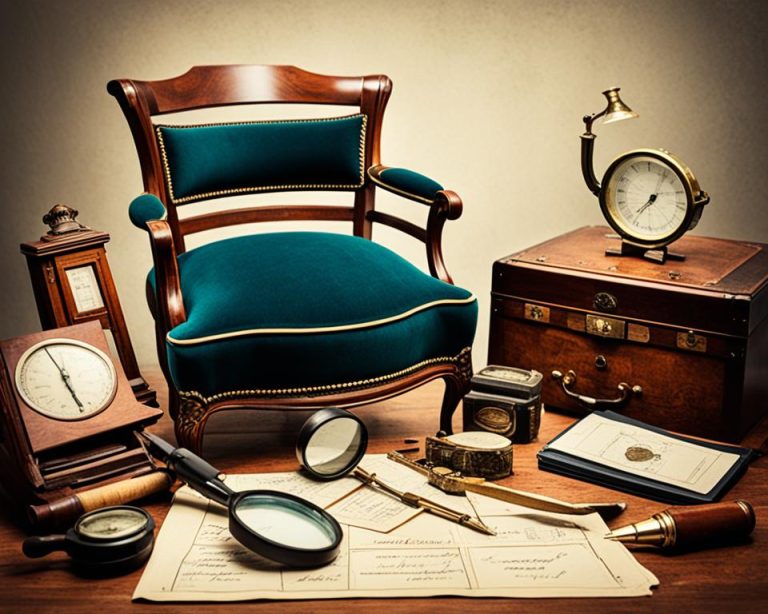
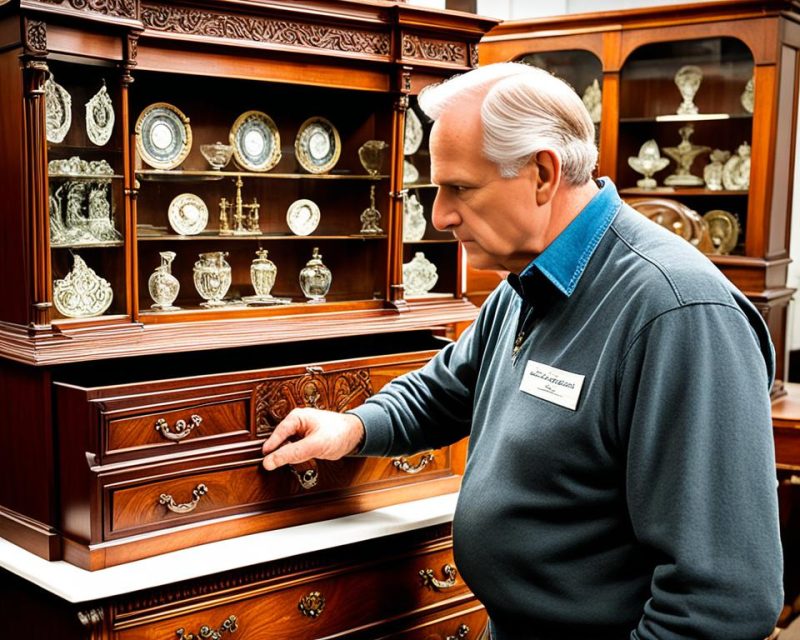
Antique furniture assessment is the process of checking a piece’s age, maker, materials, construction, originality, condition, history, and current market value. A reliable assessment combines physical inspection, historical research, and recent sales of similar furniture.
Across the United States, antique furniture passes through estate sales, family homes, auction houses, antique shops, and private collections. A wooden dresser in a Massachusetts farmhouse may have a very different story from a similar-looking cabinet found at an estate sale in Virginia. Both may look old, but their age, maker, condition, and value can differ greatly.
A careful assessment helps buyers, sellers, collectors, and families make informed choices. It can reveal whether a piece is genuinely old, a later reproduction, or a mix of original and replaced parts. It also helps explain why two pieces with similar designs may sell for very different amounts.
The process starts with a close look at the whole item. Then you inspect its wood, joints, hardware, finish, labels, and signs of repair. Finally, you compare the findings with reliable records and recent sales. No single clue proves age or value on its own.
Source: ebohemians.com
What Is Antique Furniture Assessment?
Antique furniture assessment is a structured review of an old or potentially old piece of furniture. It examines what the item is, when it may have been made, how it was built, and what condition it is in. The process also considers its history and the market for similar objects.
The word antique often refers to an item that is at least 100 years old. This is a common benchmark in the United States, but age alone does not establish authenticity or value. A piece made 120 years ago may have little collector demand, while a well-designed mid-century chair may attract strong interest.
Assessment and appraisal are related but different. An assessment is a broad examination that may provide an initial opinion. A formal appraisal is a documented opinion of value prepared for a stated purpose, such as insurance, estate planning, donation, or a potential sale.
Age assessment
Estimates when the furniture was made by studying style, materials, construction, hardware, and historical clues.
Authenticity assessment
Checks whether the item, its maker attribution, and its claimed period are supported by physical and historical evidence.
Condition assessment
Records wear, cracks, loose joints, missing parts, repairs, finish loss, and structural problems.
Market assessment
Studies comparable sales and current demand to estimate a suitable value for a specific purpose.
Why Does a Proper Assessment Matter?
A proper assessment can prevent an expensive buying mistake. It can also help a seller set a realistic price and help a family document inherited furniture. Most of all, it can prevent well-meaning repairs from damaging a piece’s original features.
For example, a family may inherit a wooden desk and assume its dark finish is simply old paint. A closer look may reveal an original shellac finish, hand-cut joints, and an old maker’s label. Those details can change how the desk should be cleaned, repaired, and valued.
For buyers
Check the seller’s claims and identify repairs or replacements before paying.
For sellers
Prepare an accurate description and choose a suitable selling channel.
For families
Record inherited items and understand their possible historical or financial importance.
How to Identify the Age of Antique Furniture
Start by estimating a date range rather than assigning an exact year. A reliable date usually comes from several clues that support one another. Furniture styles, construction methods, materials, and maker information can narrow the period.
Do not rely on appearance alone. A modern cabinet can copy an older design with great care. Likewise, an old piece may have newer handles, screws, or replacement boards from later repairs.
Source: ebohemians.com
Study the design
Look at the shape, legs, feet, carvings, drawer layout, moldings, and decorative details.
Inspect construction
Check joints, tool marks, panel methods, and the way the furniture was assembled.
Check hardware
Record the type of hinges, pulls, locks, screws, nails, and other metal parts.
Search for marks
Look for maker stamps, paper labels, workshop marks, dates, and retailer information.
Recognize Historical Furniture Styles
Furniture design changed across different periods. These changes can help place a piece within a broad historical range. American furniture also reflects regional styles, imported influences, and local workshop traditions.
Colonial furniture often has practical forms and simple decoration. Federal furniture commonly uses balanced shapes, fine veneers, and classical details. Victorian furniture often has heavier forms and rich ornament. Arts and Crafts furniture favors clear construction, visible wood, and simple lines.
These are broad design clues, not fixed dating rules. Later makers copied earlier styles. A cabinet with a Victorian look may have been built many years after the Victorian era.
Colonial and early American styles
Look for practical forms, turned legs, simple carving, and regional variations in wood and construction.
Federal style
Look for symmetry, delicate inlay, tapered legs, classical motifs, and refined casework.
Victorian style
Look for carved details, curved forms, decorative veneers, and heavier visual designs.
Arts and Crafts style
Look for sturdy construction, visible joinery, simple decoration, and natural wood finishes.
Examine Joints, Screws, and Nails
Joinery provides useful clues about how furniture was made. Dovetail joints are common in drawers and case furniture. Hand-cut dovetails may show small differences in spacing and shape. Machine-cut joints are often more regular, but machinery alone does not prove that a piece is modern.
Look at the screws and nails too. Older hardware may show hand-forged features or irregular forms. Later factory-made furniture often has more uniform metal parts. However, furniture may contain hardware from several periods because owners repaired or updated it.
Check the back, underside, and inside of drawers. These areas often reveal more about construction than the finished front. Do not force a drawer or remove a fixed panel just to inspect a joint.
Hand-cut dovetails
May show slight variation in spacing and shape. They can support an older construction date when other clues agree.
Machine-cut dovetails
Often have consistent spacing and shapes. They may indicate factory production, but need context.
Screw heads
Record the slot, head shape, threading, and placement. Replaced screws are common on old furniture.
Nail patterns
Look for differences in head shape and placement. Do not assign an exact date from nails alone.
Assess Wood, Materials, and Craftsmanship
The materials and workmanship can reveal a great deal about a furniture piece. Start by identifying the visible wood, then check the hidden and secondary parts. A piece may use expensive wood on its outer surfaces and a different wood for its drawer sides, backs, or interior structure.
Common furniture woods include oak, walnut, mahogany, maple, cherry, pine, and birch. Each has different grain patterns, colors, and working qualities. Yet wood identification takes practice, and stains can make one species look like another.
A skilled assessment looks beyond the name of the wood. It checks the quality of the cuts, the fit of the joints, the design of the panels, and the way decorative parts meet the main structure.
Source: nonamehiding.com
Oak
Often shows a clear grain with visible rays in some cuts. It appears in many American furniture styles.
Walnut
Can show rich brown tones and varied grain. It appears in both traditional and later furniture.
Mahogany
Often has a warm reddish-brown color and a fine, varied grain. It has been widely used in fine case furniture.
Maple
Often has a light tone and a fine grain. It can also show attractive figured patterns.
Pine
Often has a lighter color, visible knots, and a softer surface than many hardwoods.
Check Veneer and Solid Wood
Veneer is a thin layer of wood placed over a base material. It allows a maker to use attractive grain patterns without building the entire piece from one expensive wood. Quality antique furniture can contain both solid wood and veneer.
Do not assume that veneer means poor quality or modern construction. Some highly valued historic furniture uses carefully arranged veneers. The key is to check whether the veneer is original, stable, and in good condition.
Look for lifting edges, bubbles, missing sections, and visible patches. Also check the grain direction at corners and edges. These details may reveal how the piece was built and whether someone has changed it.
Original veneer
May support the historical integrity of a piece, especially when its pattern and placement fit the design.
Replacement veneer
May affect originality and value. Record its location and the quality of the work.
Solid wood parts
Check for splits, shrinkage, warping, and repairs along joints and edges.
Evaluate Craftsmanship
Good craftsmanship often appears in small details. Check whether drawers fit properly, doors sit square, and decorative parts meet cleanly. Look at the underside and back for signs of careful assembly.
Handmade furniture can show small variations. These differences may reflect the tools and methods used by a craftsperson. However, uneven work is not proof of age. Poor repairs and low-quality modern production can also create irregular results.
A strong assessment considers the whole construction. A single hand-cut joint cannot prove that an entire cabinet is an original antique.
Joint quality
Look for tight connections and suitable joinery for the part and its intended use.
Surface detail
Check carving, inlay, molding, and edge work for consistent execution.
Structural balance
Check whether the furniture stands level and whether its main parts align.
Inspect the Condition of Antique Furniture
Condition has a direct effect on how antique furniture can be used, sold, and preserved. A piece may be historically important but have serious structural damage. Another may look clean and attractive but contain extensive modern repairs.
Inspect the item in good light. Start with the main frame, legs, feet, top, doors, drawers, and joints. Then check the finish, veneer, decorative parts, and hardware.
Record both visible damage and signs of previous repair. A repair is not always a serious flaw. A stable, well-documented repair may be acceptable, while a poorly fitted replacement part can affect appearance, strength, and originality.
Source: slideserve.com
Structural damage
Look for loose joints, broken legs, weak frames, cracks, and unstable connections.
Surface damage
Record scratches, dents, stains, fading, finish loss, and water marks.
Veneer damage
Look for lifting edges, bubbles, missing pieces, and visible patches.
Missing parts
Check for absent pulls, handles, shelves, keys, locks, feet, and decorative elements.
Pest damage
Look for small exit holes, fresh wood dust, weakened areas, and signs of active insect activity.
Check the Frame and Joints
The frame carries the weight of the furniture. Check each leg, rail, support, and connection without placing extra pressure on weak areas. A table that rocks may have loose joints, uneven legs, or a damaged support.
For chairs, inspect the legs, seat rails, stretchers, and back connections. For cabinets and dressers, check whether the case remains square and whether doors and drawers move without force.
Never sit on a chair or load a shelf simply to test it. If the structure looks weak, ask a furniture conservator or qualified repair professional to inspect it.
Loose joints
May cause movement, creaking, or separation between structural parts.
Cracked wood
Can result from age, changes in humidity, impact, or stress.
Warped panels
May prevent doors and drawers from fitting correctly.
Examine the Finish and Surface
An original finish is part of the furniture’s history. It can also influence market value. Old shellac, varnish, paint, and other coatings may show wear from years of use. Their appearance can help a specialist understand the item’s history.
Look for cloudy areas, peeling, dark stains, worn edges, and uneven color. These signs need careful interpretation. Some may come from normal use, while others may result from water, heat, cleaning products, or later refinishing.
Do not use household polish, alcohol, water, sandpaper, or chemical stripper as a test. These materials can damage old coatings. A conservator can help identify the finish and suggest a suitable treatment.
Original finish
May preserve important evidence about age, use, and past care.
Refinished surface
May have a newer coating or a stripped and stained surface. Record the visible signs.
Painted surface
May contain several historical paint layers. Avoid removing them before specialist review.
Find Maker Marks, Labels, and Provenance
Maker marks and ownership records can help identify antique furniture. Some makers used stamps, paper labels, metal plates, or handwritten marks. Others left no identifying mark at all.
Check the back, underside, drawer interiors, inside doors, and hidden areas. Use a flashlight to inspect dark spaces. Photograph each mark before attempting to clean it.
A mark is useful evidence, but it does not prove that every part of a piece is original. Labels can be moved, copied, or attached to later furniture. Compare the mark with the construction, materials, and documented work of the maker.
Source: ebohemians.com
Maker’s stamp
A stamped name or workshop mark may help identify the producer.
Paper label
May provide a maker, retailer, address, model, or production clue.
Serial or model number
May help match the piece to a company record or catalog.
Ownership records
Old receipts, letters, photographs, and estate documents may support the item’s history.
What Does Provenance Mean?
Provenance is the known history of an object. For furniture, it may include the maker, original owner, location, date of purchase, later owners, and records of repair or sale.
Good provenance can support a historical claim. For example, an old family photograph showing a particular cabinet in a home may help establish that the piece existed by the date of the photograph. A matching receipt or inventory may provide further support.
Be careful with family stories that have no records. A claim that a desk belonged to a famous person needs strong evidence. Do not treat an oral story as proof of ownership or value.
Photographs
Can show the furniture in an earlier setting and may help establish a timeline.
Receipts and inventories
May record the maker, purchase date, price, or owner.
Letters and estate papers
May support a documented ownership history.
How to Estimate Antique Furniture Value
Estimate value only after you have identified the piece and recorded its condition. A realistic estimate needs comparable sales, not just a visual guess. The closest comparisons are furniture pieces with similar makers, designs, sizes, dates, materials, and condition.
Start with recent auction records and completed online sales. Search using the maker’s name, furniture type, style, wood, and known date range. A search for an exact model or design can be more useful than a broad search for an old dresser.
Do not treat a seller’s asking price as proof of market value. An item may remain unsold for months at a high price. A completed sale gives stronger evidence that a buyer paid a particular amount under specific conditions.
Source: ebohemians.com
Maker and attribution
Known makers and well-supported attributions may attract stronger collector interest.
Age and rarity
Early or unusual furniture may be desirable, but age and rarity do not guarantee demand.
Condition
Structural damage, missing parts, poor repairs, and refinishing can affect the price.
Originality
Original hardware, finish, wood, and decorative parts may support collector value.
Market demand
Buyer interest, design trends, location, and the selling channel can change the result.
Understand Different Types of Furniture Value
There is no single value that fits every purpose. A dealer’s retail price may differ from the amount a seller receives at auction. An insurance replacement value may be higher than the amount someone could expect from a quick private sale.
Before asking for an appraisal, explain why you need it. The appraiser should know whether the purpose is an insurance schedule, estate division, charitable donation, tax matter, or sale. The correct method and value definition depend on that purpose.
A verbal estimate at an antique fair is not the same as a written appraisal. A formal report should explain the item, the value definition, the purpose, the date, and the method used.
Fair market value
A value based on a hypothetical willing buyer and willing seller, with neither under pressure and both having reasonable knowledge of the relevant facts.
Auction value
An estimate or result based on an auction setting, including its buyer pool, fees, location, and sale conditions.
Retail value
The price a dealer or shop may ask when offering a piece to a customer.
Insurance replacement value
A value used to estimate the cost of replacing an item under the policy’s stated terms.
Use Comparable Sales to Build an Estimate
Choose several sales that closely match the furniture. Compare the same type of item whenever possible. A large mahogany dining table should not be valued by comparing it with a small pine side table, even if both are old.
Record the sale date, final price, buyer’s premium if reported, condition, dimensions, maker, and location. Check whether the result includes a set or a single item. Also note whether the sale was local, online, or part of a specialist auction.
For a simple working estimate, use the range of the closest comparable sales. Then explain why your piece may fall above or below that range. Do not apply an arbitrary percentage to every repair or age difference.
Step 1
Write a detailed description of the furniture, including type, size, materials, style, and known maker.
Step 2
Find recent completed sales of similar items from credible auction records and sales platforms.
Step 3
Remove comparisons that differ greatly in design, condition, size, or completeness.
Step 4
Compare the remaining results and explain the main differences.
Step 5
State an estimated range and the value type it represents.
A Practical Antique Furniture Assessment Checklist
A written checklist makes the assessment easier to repeat and review. It also helps prevent important details from being missed. Use the same process for furniture you plan to buy, sell, inherit, or preserve.
Take photographs before moving or cleaning the piece. Include the front, sides, back, underside, interior, joints, hardware, labels, and areas of damage. Keep the original images so that future changes can be compared.
Item description
Record the furniture type, style, dimensions, visible materials, and any known maker.
Age evidence
Record construction clues, hardware, design features, marks, and possible date ranges.
Originality
Record replacement parts, later hardware, repairs, refinishing, and altered sections.
Condition
Record structural issues, surface wear, veneer problems, pest signs, and missing parts.
History
List ownership records, photographs, receipts, and other supporting documents.
Market evidence
Save comparable sales, dates, prices, and the source of each result.
Example Assessment Record
Consider a hypothetical American walnut dresser found at an estate sale in Pennsylvania. The seller describes it as a late nineteenth-century piece. It has a dark finish, several drawers, decorative pulls, and visible wear along the drawer edges.
The first inspection finds machine-made and hand-worked features in different areas. One drawer has replacement hardware, and a rear panel appears newer than the rest of the case. No maker’s label is visible. These details do not prove a date, but they show why a broad style label is not enough.
The assessor records the measurements, photographs the joints, checks the drawers, and searches for similar completed sales. The final report gives a possible date range and identifies the features that remain uncertain. A specialist appraisal is recommended if the owner needs a defensible value.
Furniture type
Walnut dresser.
Possible date
Late nineteenth century, subject to further verification.
Condition
Visible wear, one replaced hardware set, and a possible later rear panel.
Attribution
Unknown maker because no identifying mark has been found.
Value
Not established until comparable sales and the intended value type are reviewed.
When to Hire a Professional Furniture Appraiser
Hire a qualified appraiser when a furniture piece may have substantial value or when you need a documented opinion for an important decision. A professional can examine details that may be difficult to interpret without specialist training and reference material.
Professional help is especially useful for unusual furniture, disputed maker claims, early American pieces, rare designs, and items with complex ownership histories. It is also useful when a piece has extensive restoration or several generations of repairs.
In the United States, the American Society of Appraisers offers personal property appraisal credentials, including specialties in antique furniture and antiques and decorative arts. You can also look for qualified appraisers through other recognized professional organizations. Check the person’s training, relevant furniture experience, ethics, and report standards.
Insurance needs
A written appraisal may help establish an appropriate scheduled value for an insurance policy.
Estate matters
A professional report can help document furniture for estate administration and family discussions.
High-value sales
A specialist can help confirm attribution and identify an appropriate auction or sales route.
Uncertain authenticity
A trained specialist can investigate reproductions, altered pieces, and questionable maker claims.
What to Ask Before Hiring an Appraiser
Ask whether the appraiser has experience with the exact furniture type and period. Someone who mainly values jewelry or modern household goods may not have the right knowledge for an early American cabinet.
Explain your purpose and ask which value definition the report will use. Request information about fees, inspection methods, research, photographs, and the expected delivery date.
A reliable appraiser should explain the limits of the available evidence. Be cautious if someone guarantees a high value before inspecting the furniture or offers to buy the item immediately after giving an appraisal.
Relevant experience
Ask about previous work with similar furniture and historical periods.
Professional credentials
Check training, professional membership, and applicable appraisal standards.
Written scope
Confirm the purpose, value type, inspection method, and report format.
Independence
Look for clear disclosure of any financial interest in buying or selling the item.
Common Mistakes During Antique Furniture Assessment
A rushed assessment can lead to poor decisions. Many errors happen when someone relies on one visual clue or changes the furniture before documenting it. A careful process protects both the object and the quality of the research.
The best approach is to record what you can observe, separate facts from assumptions, and seek specialist help when evidence is unclear. This keeps an attractive story from becoming an unsupported claim.
Judging age by appearance
A traditional design may be a later reproduction. Check construction, hardware, materials, and marks before assigning a date.
Treating every old item as valuable
Age does not create strong demand. Maker, rarity, condition, and buyer interest also matter.
Ignoring replacement parts
New handles, legs, panels, and hardware can affect originality and value.
Using asking prices as proof
An unsold listing does not show what a buyer will pay. Use completed sales when possible.
Cleaning before inspection
Polish, water, solvents, and stripping products can harm old finishes and remove useful evidence.
Accepting unsupported ownership stories
Family stories can guide research, but records are needed to support important provenance claims.
Why You Should Avoid Early Restoration
Restoration can change the value and historical character of antique furniture. Stripping an old finish may remove evidence of age, previous care, and original craftsmanship. Replacing old hardware may also remove details that help identify the piece.
Before any repair, photograph the furniture and record its current condition. Ask a furniture conservator to review valuable or fragile pieces. A conservator can advise whether a repair is needed and how to reduce the risk of damage.
If the furniture has active insect activity, isolate it from other wooden items and seek professional advice. Do not apply household pesticides or seal the object without understanding the material and treatment risks.
Preserve the original finish
Do not strip or refinish a potentially valuable antique before professional review.
Keep original hardware
Store removed parts with the item and record where each part came from.
Document every repair
Keep photographs, dates, receipts, and details of the work.
How to Protect Antique Furniture After Assessment
Good care helps preserve antique furniture after you have assessed it. Stable surroundings are often more useful than frequent cleaning or polishing. Sudden changes in temperature and humidity can cause wood to expand, shrink, crack, or loosen at its joints.
Keep furniture away from direct sunlight, heat vents, radiators, fireplaces, and damp areas. Avoid placing a valuable piece where water can spill onto the surface. Use suitable support when moving heavy furniture, and never lift it by handles, decorative trim, or weak sections.
Dust only when needed. Use a clean, soft cloth and avoid snagging loose veneer or carved details. If the finish is fragile, consult a conservator before using any cleaning product.
Control the environment
Keep the room as stable as practical and avoid sudden humidity changes.
Limit sunlight
Use curtains or suitable placement to reduce fading and finish damage.
Move with care
Support the main structure and remove loose contents before moving a cabinet or chest.
Monitor pests
Check hidden areas for fresh dust, exit holes, and other signs of insect activity.
Keep records
Save the assessment, photographs, receipts, repair details, and future condition reports.
What to Do if Furniture Shows New Damage
Stop using the affected area if a crack, loose joint, or structural weakness appears. Do not add weight to a damaged shelf or sit on an unstable chair. Photograph the change and record when you first noticed it.
If you see fresh insect dust or new holes, separate the piece from nearby wooden furniture. Contact a conservator or pest specialist with experience in historic objects. The right treatment depends on the insect, the furniture materials, and the extent of the activity.
For structural damage
Avoid use until a qualified repair professional has checked the affected area.
For finish damage
Avoid home cleaning experiments and seek conservation advice.
For possible infestation
Isolate the item and arrange an informed inspection.
Research Method and Assessment Limits
This guide draws on published appraisal guidance, antique furniture identification resources, museum and conservation care guidance, and documented appraisal explanations. The research was reviewed on November 4, 2026, with a focus on readers in the United States.
The reviewed material included the American Society of Appraisers’ personal property guidance, its explanation of professional appraisal practice, PBS Antiques Roadshow’s appraisal guidance, furniture identification resources, and conservation advice from public heritage organizations.
The main research finding is that age, condition, originality, provenance, and market value must be considered together. Appraisal value also depends on the purpose and the market being examined. A verbal estimate, a dealer’s asking price, and a formal written appraisal should not be treated as equal evidence.
This article does not identify or value a specific furniture item. It also does not report hands-on testing, laboratory analysis, or direct inspection of a particular object. A final date, maker attribution, and monetary value remain uncertain until the actual piece and its supporting records are examined.
DOCUMENTED
Professional personal property appraisal organizations recognize antique furniture as a specialist appraisal category.
DOCUMENTED
Appraisal values depend on the intended value type, market conditions, location, condition, and the date of the opinion.
ANALYSIS
Combining physical clues with records and comparable sales gives a stronger basis for assessment than relying on appearance alone.
NOT ESTABLISHED
No exact age, maker, or value can be confirmed without examining the specific furniture and its evidence.
Next-Question Gap Map
The following map separates practical next needs inferred from the assessment process from questions that require a separate specialist investigation. It is an editorial planning aid, not a claim about measured search demand.
The reviewed resources cover identification, appraisal purposes, value factors, and basic care. More detailed advice on a specific maker, regional workshop, restoration treatment, or disputed attribution requires evidence about the actual piece.
How do I know if a piece is a reproduction?
Basis: Inferred next need. Reviewed coverage: ANSWERED at a general level. Reader benefit: Compare construction, hardware, materials, and labels before buying. Placement: Age and authenticity sections.
Does refinishing reduce antique furniture value?
Basis: Inferred next need. Reviewed coverage: ANSWERED at a general level. Reader benefit: Understand why original finishes matter and when conservation advice is needed. Placement: Condition and restoration sections.
How much does a professional furniture appraisal cost?
Basis: Inferred next need. Reviewed coverage: NOT CHECKED for current fees. Reader benefit: Prepare questions about hourly, item-based, and report-based charges. Placement: Professional appraiser section. Current local fees require direct provider checks.
What documents should I prepare for an estate appraisal?
Basis: Inferred next need. Reviewed coverage: SHALLOW. Reader benefit: Gather ownership records, photographs, receipts, and item descriptions before an inspection. Placement: Provenance and professional appraisal sections.
Should I restore furniture before selling it?
Basis: Inferred next need. Reviewed coverage: ANSWERED at a general level. Reader benefit: Avoid unnecessary changes that may remove original evidence. Placement: Restoration and condition sections.
Frequently Asked Questions
Q
How can I tell if my furniture is a real antique?
Start by checking its age, construction, materials, hardware, finish, and maker marks. A piece that is at least 100 years old may meet the common antique age benchmark, but age alone does not confirm authenticity.
Compare several physical clues with reliable historical records. If the maker or date is uncertain, ask an antique furniture specialist to examine it.
Q
Does old furniture always have a high value?
No. Age is only one factor in furniture value. Condition, originality, rarity, craftsmanship, maker, design, provenance, and current buyer demand also affect the price.
A common old dresser may sell for less than a well-preserved piece from a recognized modern designer. Recent sales of similar items provide a better guide than age alone.
Q
Can I assess antique furniture without an appraiser?
Yes. You can make an initial assessment by recording the furniture type, dimensions, materials, construction, condition, marks, and ownership history. You can also research comparable completed sales.
However, a personal assessment is not the same as a formal appraisal. Seek a qualified professional when the furniture may be valuable or when you need a written report for insurance, estate, or other formal purposes.
Q
Does refinishing antique furniture reduce its value?
It can. Removing an original finish may reduce historical integrity and collector interest. The effect depends on the furniture, its market, the quality of the work, and the condition before treatment.
Do not strip or repaint a potentially important piece before an assessment. Ask a furniture conservator whether cleaning, stabilization, or another treatment is suitable.
Q
Where can I get antique furniture appraised in the United States?
You can contact a qualified personal property appraiser through a recognized professional appraisal organization. The American Society of Appraisers lists personal property specialties that include antique furniture and antiques and decorative arts.
You can also contact reputable specialist auction houses and established antique dealers for market guidance. Confirm whether the service provides an informal estimate or a formal written appraisal.
Q
What photographs should I take before an appraisal?
Take clear photographs of the front, back, sides, top, underside, interior, drawers, joints, and hardware. Include close-ups of maker marks, labels, signatures, repairs, damage, and unusual details.
Photograph the whole item from a few angles and record its height, width, and depth. Keep the images unedited so the appraiser can review the original condition.
✦ Wrapping Up
Conclusion
Antique furniture assessment is much more than deciding whether an old table or cabinet looks valuable. It is a careful process that connects age, construction, materials, originality, condition, provenance, and market evidence. Each detail helps build a clearer picture of the furniture’s identity and possible value.
The best starting point is a full visual inspection. Photograph the item, record its measurements, examine its joints and hardware, and look for maker marks or ownership records. Then compare it with similar furniture that has actually sold. Keep uncertain claims separate from facts, and avoid changing the finish or replacing parts before the assessment is complete.
When a piece has unusual features, possible historical importance, major damage, or a high potential value, seek help from a qualified appraiser or furniture conservator. Their specialist knowledge can help protect the item and support a more reliable decision.
💡 Key Takeaway
Before buying, selling, restoring, or insuring antique furniture, photograph the entire piece, record its dimensions and condition, document every visible mark and repair, research comparable completed sales, and obtain a qualified written appraisal when the decision requires a defensible value.