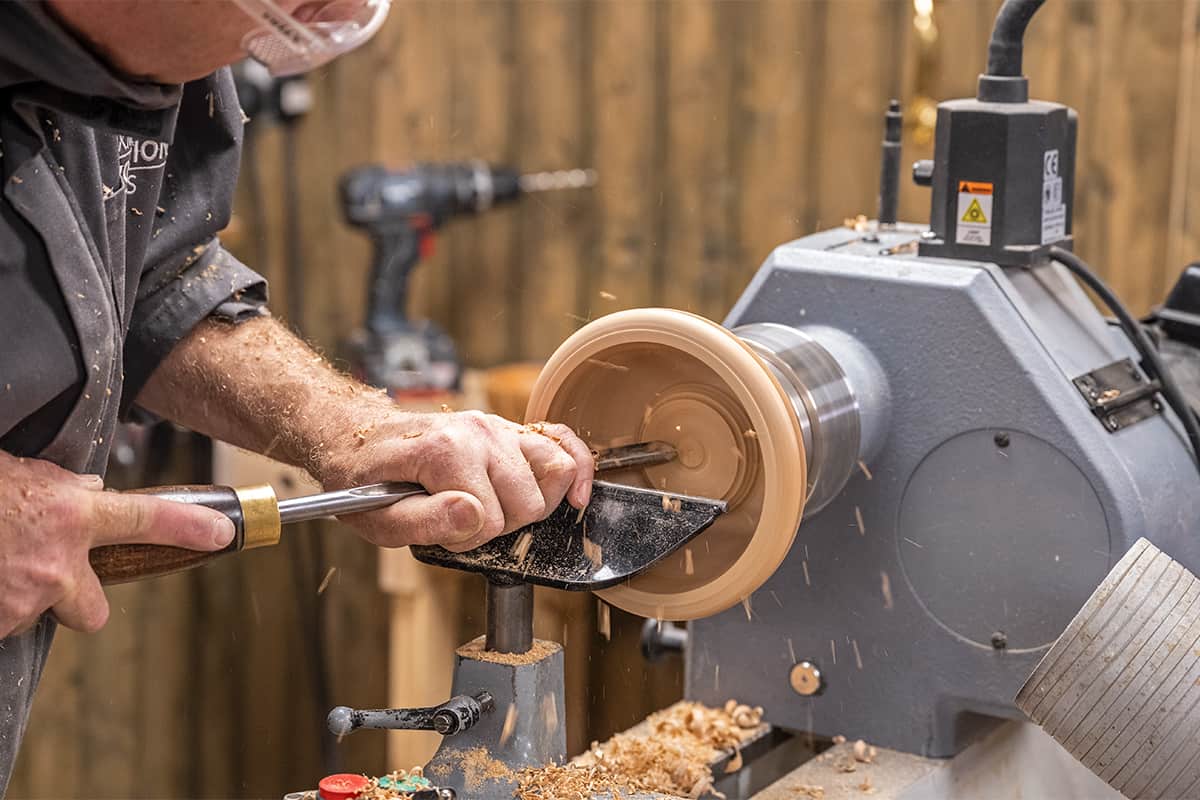
A bowl turning guide explains how to mount, shape, hollow, sand, and finish a wooden bowl safely on a lathe.
In the United States, woodturners use bowl turning as a common lathe project for creating functional kitchen bowls, decorative pieces, and artistic forms. The process involves securing a wood blank, cutting the outside shape, hollowing the interior, and refining the surface with careful tool control.
A successful bowl depends on more than removing wood. Proper mounting, sharp tools, correct tool rest position, controlled cutting speed, and attention to wood grain all affect the final result. This guide focuses on practical methods that help beginners understand the complete turning process.
Source: blogcdn.axminstertools.com
What Is Bowl Turning and How Does It Work?
Bowl turning is the process of shaping a piece of wood into a hollow bowl form using a wood lathe. The lathe rotates the wood while cutting tools remove material, allowing the turner to create curved exterior and interior surfaces.
The main difference between bowl turning and many spindle turning projects is the direction of the wood grain and the way cutting tools approach the material. Bowl turners often work across changing grain directions, which requires controlled cuts and sharp edges.
Source: bmwoodturning.com
Wood blank
A bowl begins as a solid piece of wood, often a round blank cut from a log section or prepared hardwood stock.
Lathe rotation
The lathe spins the mounted wood so cutting tools can remove material evenly around the shape.
Bowl gouge
A bowl gouge is commonly used to shape curves, remove bulk material, and refine surfaces.
Tools and Materials Needed Before Turning a Bowl
Before starting a bowl turning project, prepare the lathe, cutting tools, measuring equipment, and safety gear. Having the correct setup reduces interruptions and helps prevent avoidable mistakes.
Beginners usually start with smaller bowls because smaller blanks are easier to balance and require less material removal. Larger bowls require a stronger lathe, heavier mounting methods, and more experience managing vibration.
Source: popularwoodworking.com
Essential tools
Common tools include a bowl gouge, parting tool, scraper, sharpening equipment, calipers, and a chuck or faceplate.
Safety equipment
Wear eye protection or a full face shield, avoid loose clothing, and use dust protection when sanding.
Wood selection
Maple, cherry, walnut, ash, and other hardwoods are commonly used because they provide useful grain patterns and turning characteristics.
Choosing Between Green Wood and Dry Wood
Green wood contains more moisture and is often easier to cut because it is softer. However, it can change shape as it dries, so many turners rough turn green bowls and complete final shaping after drying.
Dry wood is more stable for final dimensions but can be harder on tools and may produce more dust during sanding.
Step-by-Step Bowl Turning Process
A typical bowl turning process follows a repeatable sequence: prepare the blank, mount it securely, shape the outside, create a mounting point, hollow the inside, and finish the surface.
Turners should stop the lathe before making adjustments to the tool rest, chuck position, or workpiece mounting. Small setup errors can create vibration or unsafe conditions.
Source: blogcdn.axminstertools.com
Step 1: Prepare the blank
Find the center of the wood, remove unstable material, and choose a mounting method such as a faceplate or chuck.
Step 2: Shape the outside
Use controlled cuts to create the bowl profile, including the rim, sides, and base.
Step 3: Hollow the inside
Reverse mount the bowl and remove interior material while maintaining even wall thickness.
Step 4: Finish the bowl
Sand carefully, remove dust, and apply a suitable finish based on whether the bowl is decorative or intended for food use.
How to Know When a Bowl Shape Is Finished
A finished bowl should have balanced proportions, consistent wall thickness, a stable base, and a surface free from major tool marks or torn grain.
Many turners use calipers to check thickness because visual judgment alone can be inaccurate, especially on deeper bowls.
Common Bowl Turning Problems and How to Fix Them
Most beginner bowl turning problems come from setup issues, tool control, or wood behavior. Identifying the cause before making another cut usually prevents additional damage.
Source: images-na.ssl-images-amazon.com
Tool catches
A catch often happens when the cutting edge contacts the wood incorrectly. Improve control by using a sharp tool, supporting the bevel, and avoiding aggressive cuts.
Torn grain
Tear-out occurs when fibers lift instead of being cut cleanly. Lighter finishing cuts and sharper tools can reduce the problem.
Bowl vibration
Vibration may result from an unbalanced blank, weak mounting, excessive tool pressure, or a workpiece that is too large for the lathe.
Uneven bowl walls
Use calipers regularly and remove material gradually to maintain consistent thickness.
Frequently Asked Questions
Q
What size wood blank is best for a first bowl?
A smaller blank is usually easier for beginners because it creates less vibration and requires less cutting. Many new turners start with bowls that fit comfortably within their lathe capacity.
Q
Can beginners turn bowls on a small wood lathe?
Yes, many beginners use smaller lathes for small bowls. The important limits are the lathe’s swing capacity, motor strength, and ability to securely hold the workpiece.
Q
How thick should a turned wooden bowl be?
Wall thickness depends on the bowl size, wood movement, and intended use. Many turners aim for visually balanced walls rather than following one universal measurement.
Q
Why does my bowl crack after turning?
Cracking often occurs because wood continues to lose moisture and move after turning. Grain direction, drying conditions, and the type of wood can influence cracking.
Q
What finish should be used on a wooden bowl?
The best finish depends on the bowl’s purpose. Decorative bowls can use different protective finishes, while bowls intended for food contact should use finishes specifically labeled for that purpose and follow manufacturer instructions.
✦ Wrapping Up
Conclusion
A bowl turning guide helps woodworkers understand the complete process from selecting wood to creating a finished bowl. The most important skills are safe mounting, sharp tools, controlled cuts, and patience during shaping.
Successful bowl turning develops through practice. Starting with manageable projects and focusing on consistent technique helps beginners improve accuracy and confidence over time.
💡 Key Takeaway
Start with a small, securely mounted wood blank, use sharp tools, and focus on controlled cuts before attempting larger or more complex bowls.