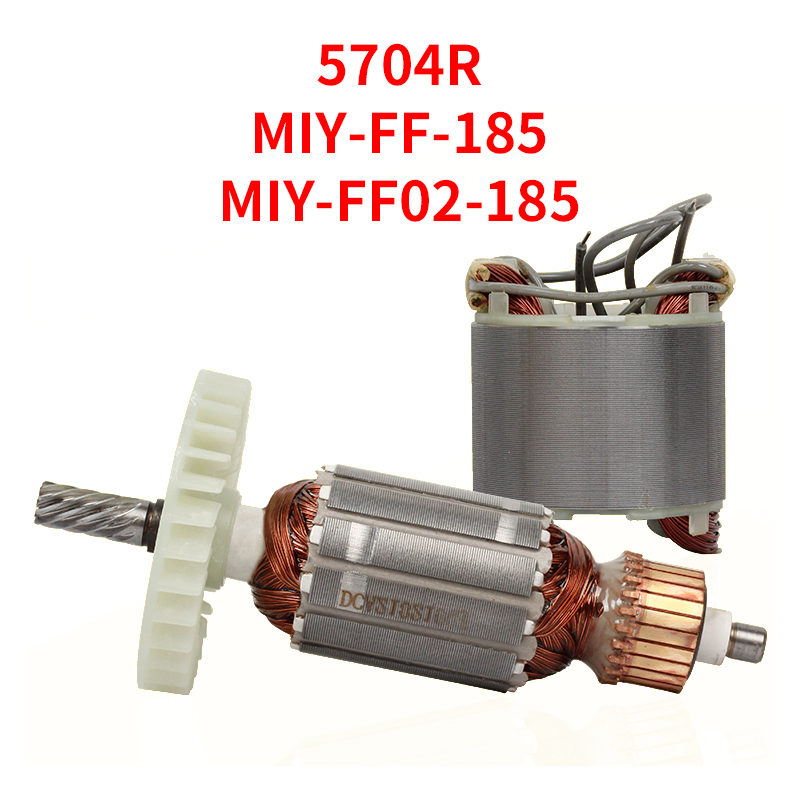
A circular saw motor converts electrical energy into the rotation needed to drive the blade. For most handheld saws sold in the United States, corded models use high-speed brushed motors, while newer cordless models commonly use electronically controlled brushless motors. Motor power, operating voltage, current draw, RPM, torque, gearing, cooling, and the blade all work together, so no single rating tells the whole story.
For American homeowners, DIY users, framers, remodelers, and contractors, understanding the motor is useful because the motor determines how a circular saw responds when the blade enters plywood, dimensional lumber, hardwood, or another approved material. A saw that maintains useful blade speed under load can make a cut more consistently, while a motor that is overloaded can slow down, heat up, or trigger an electronic protection system.
The motor should not be considered separately from the rest of the tool. A sharp, properly selected blade reduces the load placed on the motor, while a dull or unsuitable blade can make a powerful saw work harder. Manufacturer specifications also vary by model and test method. For example, current U.S. cordless circular saws can list brushless motors at different no-load speeds, while corded professional saws may publish input power in watts or current in amps. Always use the exact specifications and operating instructions for your saw.
Source: lsengineers.co.uk
What Is a Circular Saw Motor and How Does It Work?
A circular saw motor is the power unit that creates rotary motion at the blade drive system. Electrical energy enters the motor, magnetic forces create rotation, and that rotation is transferred through the motor shaft, gears where applicable, and arbor to the saw blade.
In a typical handheld saw, the motor is housed close to the blade drive system so the tool can deliver high rotational speed in a compact package. Some saw designs use direct-drive arrangements, while worm-drive saws use gearing to transfer motor rotation to the blade at a different speed and torque relationship.
The motor does not cut wood by itself. The blade performs the actual cutting, and the motor supplies the mechanical energy needed to keep the blade moving against resistance. That distinction explains why blade selection and cutting technique can have a major effect on motor temperature and performance.
Source: nexusapp.co
Motor
Converts electrical energy into mechanical rotation.
Shaft and bearings
Support and transmit the motor’s rotating motion.
Gearing
Used on some saw designs to change the relationship between motor speed and blade speed or torque.
Arbor
The rotating spindle that secures and drives the circular saw blade.
Blade
Uses the motor’s mechanical energy to remove material and form the cut.
What Parts Are Inside a Brushed Motor?
A traditional brushed motor contains a rotating armature, a stationary magnetic field system, a commutator, and carbon brushes. The brushes maintain electrical contact with the rotating commutator so current can reach the armature windings. Friction causes the brushes to wear over time, which is why they are considered serviceable wear components on applicable tools.
The armature is the rotating assembly that contains electrical windings and works with the motor’s magnetic field to produce rotation. If brushes become excessively worn, damaged, or contaminated, electrical contact can deteriorate and the saw may develop intermittent operation, reduced power, increased sparking, or other symptoms.
Carbon brushes
Transfer current to the rotating armature through the commutator.
Commutator
A segmented rotating electrical contact that works with the brushes.
Armature
The rotating electromagnetic assembly that produces mechanical motion.
Field system
Creates the magnetic field required for motor operation.
What Is Different About a Brushless Motor?
A brushless motor removes the mechanical brushes and commutator from the motor’s normal operating system. Electronic controls switch current through the motor windings at the appropriate time, while a rotating magnetic assembly produces motion. This design reduces a major source of mechanical contact and brush wear.
Brushless does not mean maintenance-free. The motor still contains bearings, windings, magnets, electronic controls, and cooling passages that can be affected by contamination, impact, excessive heat, moisture, or overload. Cordless brushless saws also depend on battery electronics and tool controls.
No routine carbon brush replacement
Brushless motors do not use the traditional replaceable carbon brushes found in brushed motors.
Electronic commutation
Electronic circuitry controls current switching instead of a mechanical commutator and brushes.
Thermal management still matters
Removing brushes does not eliminate heat, overload, bearing wear, or electronic protection concerns.
Brushed vs. Brushless Circular Saw Motors
The main practical difference is how the motor switches electrical current and how much mechanical wear occurs inside the motor. Brushed motors use brushes and a commutator, while brushless motors use electronic control. Both designs can power a circular saw effectively when correctly engineered for the tool.
Brushless motors are especially common in current cordless circular saws because electronic control can coordinate the motor with the battery and tool protection system. Manufacturers may use sensors, sensorless control, current monitoring, overload protection, or automatic speed and torque adjustments depending on the model.
A brushed motor can still be a practical choice, particularly in corded tools where continuous access to utility power is available and the design is intended for that application. The motor type should therefore be evaluated together with the saw’s intended workload, serviceability, power source, and specifications.
Source: kmstools.com
Brushed motor advantage
The design is established, mechanically straightforward, and serviceable on models that provide replaceable brushes.
Brushed motor limitation
Brushes and the commutator experience mechanical wear and can require inspection or replacement.
Brushless motor advantage
The design eliminates traditional brush wear and allows electronic control of motor operation.
Brushless motor limitation
The motor depends more heavily on electronic controls, and a failed electronic component can require specialized diagnosis or replacement.
Which Motor Type Is Used in Corded Circular Saws?
Many handheld corded circular saws use high-speed universal-style brushed motors because these motors can operate from AC utility power and deliver high rotational speed in a compact package. Current manufacturer specifications show corded professional circular saws with substantial input-power ratings and high no-load speeds.
Do not assume that every corded circular saw has the same motor architecture. Check the exact model’s manual or specification sheet before ordering motor parts or attempting repairs.
Typical power source
120-volt household or jobsite AC power is common for U.S. corded handheld saws.
Common service item
Carbon brushes may be replaceable on applicable brushed designs.
Which Motor Type Is Used in Cordless Circular Saws?
Modern cordless circular saws frequently use brushless DC motor systems. The battery supplies DC power, while electronic controls regulate current and motor operation. Current U.S. models are available in several battery platforms, including systems marketed around 12V, 18V, 20V MAX, 24V, and 40V MAX classes.
Battery voltage by itself does not establish cutting performance. A higher nominal or maximum voltage does not automatically mean a saw will cut faster or maintain speed better. Motor design, controller capability, battery output, gearing, blade selection, and the load all affect real cutting behavior.
Battery platform
The battery must match the manufacturer’s specified voltage and tool platform.
Electronic protection
Many cordless systems monitor conditions such as current, temperature, or overload and may stop the tool to protect the motor or battery.
Understanding Circular Saw Motor Power, Amps, Volts, Watts, RPM, and Torque
Circular saw motor specifications are easier to understand when each number is treated as a different measurement. Amps describe current draw, volts describe electrical potential, watts describe power, RPM describes rotational speed, and torque describes rotational turning force. These values interact, but one cannot be substituted directly for another.
For a simplified electrical relationship, power in watts can be expressed as voltage multiplied by current under appropriate conditions. A 120-volt tool drawing 10 amps has a simple electrical input calculation of 1,200 watts. Actual motor output is lower than electrical input because motors and control systems have losses, and manufacturers may specify input power differently from usable mechanical output.
Cordless tools require additional care when interpreting ratings. A battery marketed as 20V MAX, for example, can have a nominal voltage of 18V in many tool systems. The battery, controller, motor, and load form one system, so comparing cordless and corded wattage figures directly can be misleading.
Source: amazon.com
Amps
Current draw. On corded tools, a higher amp rating can indicate greater electrical input capability, but it does not by itself prove better cutting performance.
Volts
Electrical potential. On cordless tools, voltage identifies the battery platform and part of the electrical system.
Watts
Electrical or mechanical power depending on how the specification is defined. Always check whether the manufacturer means input power or output power.
RPM
Revolutions per minute. No-load RPM is measured without the normal cutting load and should not be treated as the actual cutting speed.
Torque
Rotational turning force. A saw needs enough torque to keep the blade working when cutting resistance increases.
Does Higher RPM Mean a More Powerful Circular Saw?
Not necessarily. A high no-load RPM can indicate a motor designed for high blade speed, but cutting performance also depends on torque, gearing, electronic control, blade diameter, blade design, material, and how well the motor maintains speed under load.
For example, two saws can have similar no-load RPM figures but behave differently when cutting thick hardwood because their motors, controllers, gearing, and blades respond differently to increased resistance. This is why manufacturers sometimes emphasize speed under load, power ratings, or tested cutting capacity instead of RPM alone.
No-load speed
Useful for understanding the motor’s unloaded operating speed, but not a direct measurement of cutting performance.
Loaded speed
Changes when the blade encounters material and resistance.
Blade speed limit
The blade must be rated for the saw’s operating speed. Never install a blade whose maximum permitted speed is below the tool’s specified no-load speed.
How Much Motor Power Does a Circular Saw Need?
There is no single motor power rating that is correct for every circular saw. A homeowner making occasional cuts in plywood has different requirements from a framer making repeated cuts in dimensional lumber or a professional cutting dense hardwood.
For a U.S. corded saw, the nameplate current rating and manufacturer specifications are more useful than an internet-generated horsepower conversion. For cordless tools, evaluate the complete battery and motor platform, published cutting capacity, tested runtime information where available, and the manufacturer’s intended applications.
Light DIY work
A compact saw can be adequate when cutting thin stock and sheet goods within its rated capacity.
Framing and repeated cuts
Look for a motor and power system designed to maintain useful performance under repeated loads.
Dense materials
Use a blade specifically approved for the material and a saw rated for that application rather than relying only on a large motor rating.
How to Keep a Circular Saw Motor Running Properly
The safest motor maintenance is usually preventive rather than invasive. Keep ventilation openings clear, use the correct blade, avoid forcing the saw through material, follow the manufacturer’s inspection schedule, and stop using the tool when it develops abnormal electrical or mechanical symptoms.
Always disconnect a corded saw from its power source before inspection or maintenance. For cordless models, remove the battery before working on the tool. Do not open a battery pack or attempt repairs to electronic protection circuitry unless you are qualified and the manufacturer specifically permits the work.
Source: greenweez.com
Keep cooling openings clear
Dust and debris can restrict airflow and contribute to heat buildup. Clean according to the manufacturer’s instructions without forcing debris deeper into the tool.
Use the correct blade
Select a blade compatible with the saw, material, arbor, diameter, kerf requirements, and maximum permitted speed.
Avoid excessive force
Let the blade perform the cutting instead of forcing the saw aggressively through the workpiece.
Inspect the power cord
For corded models, stop using the saw if the cord, plug, strain relief, or insulation is damaged.
Inspect brushes when applicable
Follow the specific manufacturer’s instructions for brush inspection and replacement on brushed models.
Should You Lubricate a Circular Saw Motor?
Do not automatically add oil to a circular saw motor. Many motor bearings are sealed or lubricated for their intended service life, and adding oil in an unauthorized location can attract sawdust, contaminate electrical components, or interfere with the tool’s design.
Some saw mechanisms outside the motor may require lubrication, but the correct lubricant and location vary by model. Follow the owner’s manual rather than applying general-purpose oil to the motor housing.
Motor bearings
Often sealed or otherwise designed for long-term lubrication, depending on the model.
Gear assemblies
May use specific factory grease or a service procedure that differs from motor lubrication.
Guard and pivot mechanisms
May have separate maintenance requirements in some models.
How Can You Reduce Motor Heat During Cutting?
Reduce unnecessary motor load. Use a sharp blade designed for the material, support the workpiece correctly, maintain the intended cutting depth, keep the saw moving at a controlled rate, and avoid binding the blade in the kerf. If the saw repeatedly becomes excessively hot or shuts down under ordinary rated use, investigate the cause instead of simply continuing to operate it.
On cordless models, heat can involve both the tool and the battery. Electronic protection may interrupt operation when the system reaches a monitored limit. Allow the equipment to cool according to the manufacturer’s instructions before attempting another cut.
Sharp blade
A sharp, appropriate blade generally requires less cutting effort than a dull or damaged blade.
Correct depth
Set cutting depth according to the manufacturer’s guidance and the workpiece rather than unnecessarily exposing a large amount of blade.
Straight feed
Keep the saw aligned with the intended cut to reduce side loading and blade binding.
Circular Saw Motor Troubleshooting: Symptoms and Causes
Start troubleshooting with the safest and simplest checks. Disconnect power before inspecting mechanical components, and do not continue operating a saw that produces smoke, a strong burning odor, severe arcing, unusual grinding, or signs of electrical damage.
Motor symptoms can originate outside the motor itself. A dull blade, incorrect blade, damaged cord, weak battery, obstructed ventilation, worn brushes, defective switch, damaged bearings, controller fault, or gear problem can all appear as a motor-performance issue. Diagnose the complete drive system before replacing an expensive motor assembly.
Source: fix.com
Saw will not start
Check the power source, battery charge and seating, cord and plug condition, switch or lock-off operation, and any manufacturer-specified protection state. Do not bypass a safety switch or electronic protection system.
Motor runs but blade loses speed quickly
Possible causes include excessive cutting load, a dull or unsuitable blade, low battery condition, overload protection, worn brushes on applicable models, or a motor or controller fault.
Heavy sparking from a brushed motor
A small amount of brush sparking can occur in brushed motors, but heavy or abnormal sparking can indicate worn brushes, commutator damage, contamination, or another electrical problem.
Motor smells hot or burns
Stop using the saw. Excessive load, restricted cooling, electrical faults, damaged windings, or other failures can cause overheating.
Grinding or rough noise
Possible causes include damaged bearings, gear problems, debris, or mechanical misalignment. Continued operation can increase damage.
Cordless saw repeatedly shuts down
The tool or battery may be reaching an electronic protection threshold, or the cutting load may be excessive. Check the manual for the model’s protection indicators and operating limits.
When Should You Replace the Motor?
Motor replacement makes sense only after the motor has been identified as the actual failed component and the replacement part is confirmed for the exact model and type. Many manufacturers and parts suppliers organize replacement components by model and part number because visually similar motors may have different shafts, electrical characteristics, mounting points, or electronic requirements.
Before buying a replacement motor, record the complete model number, type number or revision, serial information where applicable, and the part number shown in the official parts diagram. Do not assume a motor from another circular saw will work simply because its voltage or physical appearance is similar.
Confirm the exact model
Use the tool’s identification label and manufacturer documentation.
Confirm the motor part number
Match the official parts diagram or service documentation rather than relying only on photographs.
Check repair economics
Compare the cost of the motor, labor, bearings, switches, brushes, or electronic components with the cost of a replacement saw.
Use qualified service when necessary
Internal electrical repairs can expose you to shock, rotating components, stored energy, and other hazards.
How to Choose a Circular Saw Based on Its Motor
Choose the motor and saw as a complete system rather than selecting the largest number on the specification sheet. Start with the material you plan to cut, frequency of use, required cutting depth, available power source, and acceptable tool weight. Then compare motor type, published power information, no-load speed, battery platform if cordless, and the manufacturer’s stated applications.
For a U.S. jobsite, a corded saw can make sense when continuous power is available and long cutting sessions are expected. A cordless brushless saw can be useful when portability, repeated movement around a jobsite, or compatibility with an existing battery platform matters. Neither configuration is universally appropriate for every user.
When comparing two models, use like-for-like specifications. Compare similar blade sizes, power sources, applications, and test conditions. A 7-1/4-inch corded saw and a compact 5-3/8-inch cordless saw serve different roles even if both are marketed as circular saws.
Source: nexusapp.co
For occasional household work
Prioritize manageable weight, adequate cutting capacity, easy blade changes, and a motor system suited to the materials you actually cut.
For framing
Look for a saw and motor system designed for repeated cuts in dimensional lumber, with adequate depth and a suitable blade.
For sheet goods
A compact saw may be sufficient, particularly when paired with an appropriate fine-tooth or application-specific blade.
For extended professional use
Pay attention to thermal management, overload protection, serviceability, manufacturer support, battery availability, and documented performance.
A Practical Motor Specification Checklist
Before buying or replacing a circular saw, write down the specifications that actually affect your work. This prevents a high RPM number or large voltage label from becoming the only deciding factor.
Motor type
Identify whether the saw uses a brushed or brushless motor.
Power source
Check whether the tool is corded or cordless and verify the required electrical or battery system.
No-load RPM
Use this as a speed specification, not as a direct measure of cutting power.
Cutting capacity
Confirm the maximum depth at 90 degrees and at the bevel angles you intend to use.
Protection features
Check for overload, overheat, electronic brake, soft-start, or battery protection features where relevant.
Service information
Make sure manuals, parts diagrams, brushes, batteries, and other important service components are available for the exact model.
Circular Saw Motor Safety and Repair Boundaries
Treat the motor as an electrical and mechanical component, not as a part to experiment with while the saw is energized. Before inspection, unplug corded tools or remove the battery from cordless tools. Follow the manufacturer’s service instructions and use only parts specified for the exact tool.
Never defeat a thermal protector, electronic cutoff, safety switch, brake circuit, or other protective device to keep a saw running. If protection repeatedly activates during normal rated work, determine why it is happening rather than bypassing it.
Internal motor and electronic repairs can require specialized testing equipment and knowledge. If the problem involves burned windings, damaged electronic controls, exposed conductors, severe commutator damage, a damaged battery pack, or an uncertain electrical fault, professional service is the safer boundary.
Source: kmstools.com
Disconnect power first
Unplug the cord or remove the battery before inspection, cleaning, blade changes, or service.
Never bypass protection
Do not defeat switches, thermal protection, battery protection, brakes, guards, or electronic controls.
Use correct replacement parts
Match manufacturer part numbers and tool revisions before installation.
Watch for electrical warning signs
Smoke, strong burning odor, melted insulation, abnormal arcing, or repeated electrical faults require the tool to be removed from service.
Follow blade requirements
Use blades approved for the saw and material, with a maximum permitted speed at least as high as the tool’s no-load speed.
What Should You Do If the Motor Overheats?
Stop cutting and disconnect the tool from its power source. Allow the saw to cool according to the manufacturer’s instructions, then inspect the blade, cutting depth, ventilation openings, workpiece support, and operating conditions. If the same overheating occurs again during normal use, stop using the saw until the cause is identified.
Do not cool a hot motor by spraying it with water or another liquid. Sudden temperature changes, moisture intrusion, and electrical exposure can create additional problems.
Stop the cut
Do not continue forcing a saw that is overheating.
Check the load
Inspect blade sharpness, blade suitability, material thickness, cutting depth, and feed technique.
Check airflow
Make sure cooling openings are not blocked by dust or debris.
Escalate repeated faults
Repeated overheating can indicate a mechanical, electrical, battery, controller, or motor problem that requires service.
Frequently Asked Questions
Q
Are brushless circular saw motors better than brushed motors?
Brushless and brushed motors use different designs, and both can be effective. Brushless motors eliminate traditional carbon brushes and use electronic commutation, while brushed motors use brushes and a commutator. For cordless tools, brushless systems are common because they can be integrated closely with electronic motor and battery controls. The appropriate choice depends on the tool’s application, design, service requirements, and specifications.
Q
Why does my circular saw motor slow down during a cut?
Some reduction in speed under load is normal, but significant slowdown can indicate excessive cutting resistance. A dull or unsuitable blade, excessive cutting depth, material that exceeds the saw’s intended capacity, blade binding, low battery condition, worn brushes on applicable models, or a motor or controller problem can all contribute.
Q
How long does a circular saw motor last?
There is no universal service-life figure for a circular saw motor. Life depends on workload, operating conditions, cooling, maintenance, blade condition, dust exposure, electrical conditions, and the motor’s design. A saw used occasionally for light cuts experiences a very different duty cycle from one used every day for repeated professional cutting.
Q
Can I replace a circular saw motor myself?
Some mechanically experienced users can replace a motor assembly when the manufacturer provides the appropriate parts diagram and service procedure. However, internal electrical repairs can involve shock hazards, damaged wiring, electronic controls, bearings, gears, and safety systems. Disconnect the power source first and use the exact replacement part specified for the tool. If the repair requires electrical diagnosis beyond your training, use qualified service.
Q
Can a dull blade damage a circular saw motor?
A dull or inappropriate blade can increase cutting resistance and therefore increase the load placed on the motor. That can contribute to heat buildup and overload, particularly during prolonged or aggressive cutting. Replace or sharpen the blade according to the manufacturer’s guidance and use a blade intended for the material and saw.
✦ Wrapping Up
Conclusion
A circular saw motor is only one part of the cutting system, but understanding it makes specifications and troubleshooting much easier. Brushed motors rely on carbon brushes and a commutator, while brushless motors use electronic control. Amps, volts, watts, RPM, and torque describe different characteristics and should be interpreted alongside the blade, gearing, battery or power source, and intended application.
For reliable operation, use the correct blade, avoid forcing the saw, keep cooling passages clear, follow the model-specific maintenance schedule, and respond to abnormal heat, noise, odor, or electrical behavior by stopping the tool and investigating the cause. When a motor or controller genuinely fails, confirm the exact model and replacement part before attempting repair.
💡 Key Takeaway
For your next circular saw purchase or motor repair, start with the exact model number, identify the motor type, verify the manufacturer’s power and RPM specifications, match the blade to the tool and material, and use the owner’s manual as the final authority for maintenance and service.