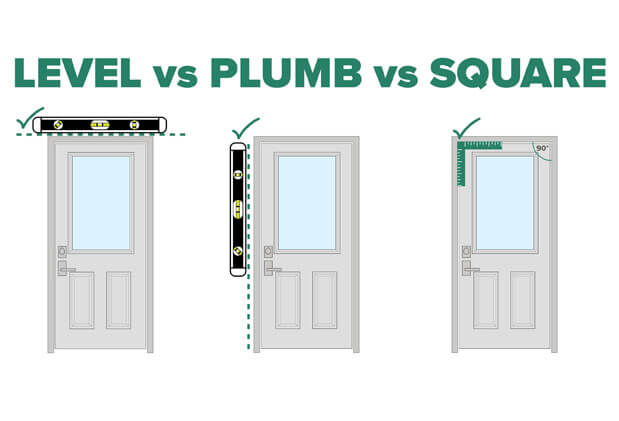
Door squareness means the door, frame, and opening form accurate right angles so the door fits, swings, and closes correctly.
In U.S. homes, door squareness is a key measurement during new construction, remodeling, and door replacement projects. A square door frame has corners close to 90 degrees, with the jambs properly aligned and the opening sized evenly. When a door opening is not square, homeowners may notice rubbing, uneven gaps, difficult latching, or a door that swings open or closed by itself.
Checking squareness requires more than looking at the door visually. Carpenters measure diagonal distances, check levels and plumb alignment, and inspect the relationship between the door slab and frame. Correcting the issue early can prevent additional adjustments after installation.
Source: mastercraftdoors.com
What Is Door Squareness?
Door squareness describes how accurately a door unit or opening matches a true rectangular shape. A properly square door has opposite sides parallel, corners near 90 degrees, and consistent gaps between the door slab and frame.
A door can appear straight while still being out of square. For example, the top-left and bottom-right corners may not line up correctly, causing uneven reveals around the door.
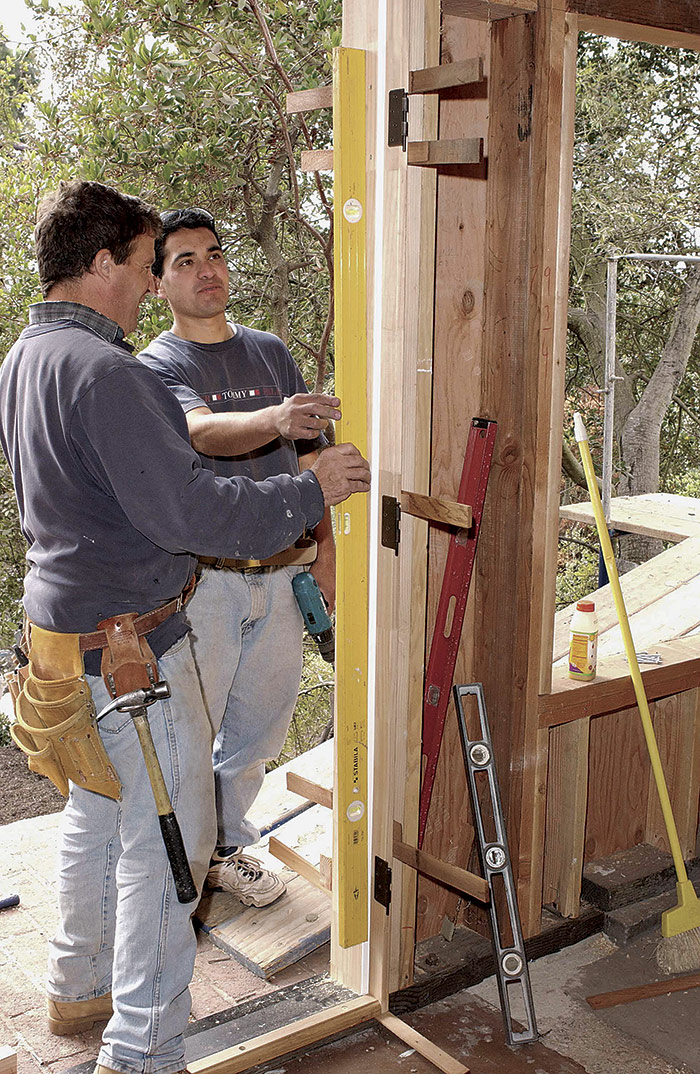
Source: finehomebuilding.com
Square corners
The corners of the door frame should form right angles instead of leaning or creating uneven diagonal distances.
Even reveals
The gap between the door slab and frame should remain relatively consistent around the perimeter.
Why Door Squareness Matters
A square door frame allows hinges, latch hardware, and seals to work as designed. When the frame is distorted, the door may bind against the jamb, fail to latch, or create visible gaps that affect appearance and weather resistance.
Better operation
A square installation helps the door open and close smoothly without unnecessary force.
How to Check if a Door Frame Is Square
The most common field method for checking door squareness is comparing diagonal measurements from opposite corners. If both diagonal measurements are the same or very close, the frame is likely square.
Before measuring, confirm that the frame is installed in the correct position and that the jambs are reasonably level and plumb.
Source: shopify.com
Measure diagonals
Measure from the top corner on one side to the opposite bottom corner, then repeat from the other top corner. Compare the two numbers.
Check corners
Use a framing square or carpenter’s square to inspect whether corners form a true 90-degree angle.
Inspect gaps
Look at the space between the door and frame to find uneven areas.
Example of Diagonal Measurement
For a hypothetical door opening, if one diagonal measures 82 inches and the opposite diagonal measures 82 inches, the frame is likely square. If one diagonal measures 82 inches and the other measures 82 3/8 inches, the difference suggests the opening is slightly out of square and may need adjustment.
Use consistent measuring points
Measure from the same reference locations at each corner to avoid inaccurate results.
Common Causes of an Out-of-Square Door
A door can become out of square because of installation errors, changes in building materials, or movement in the surrounding structure. Identifying the cause helps determine whether a simple adjustment is enough.
Not every door problem comes from squareness. Hinges, hardware, warped slabs, and damaged frames can create similar symptoms.
Source: outrank.so
Incorrect installation
Frames that were not properly shimmed or fastened during installation may shift out of alignment.
Moisture and material movement
Wood can expand, contract, or warp as humidity conditions change.
Building movement
Settling or structural changes can affect door openings over time.
How to Fix a Door That Is Not Square
The correct fix depends on the amount of misalignment and where the problem occurs. Small installation issues may be corrected by adjusting hinges, repositioning shims, or modifying hardware. Larger frame problems may require removing and reinstalling parts of the door unit.
Start with the least invasive checks before making permanent changes such as cutting the door or rebuilding the opening.
Source: gettyimages.com
Adjust hinges
Loose or incorrectly positioned hinges can change how the door hangs and may create uneven gaps.
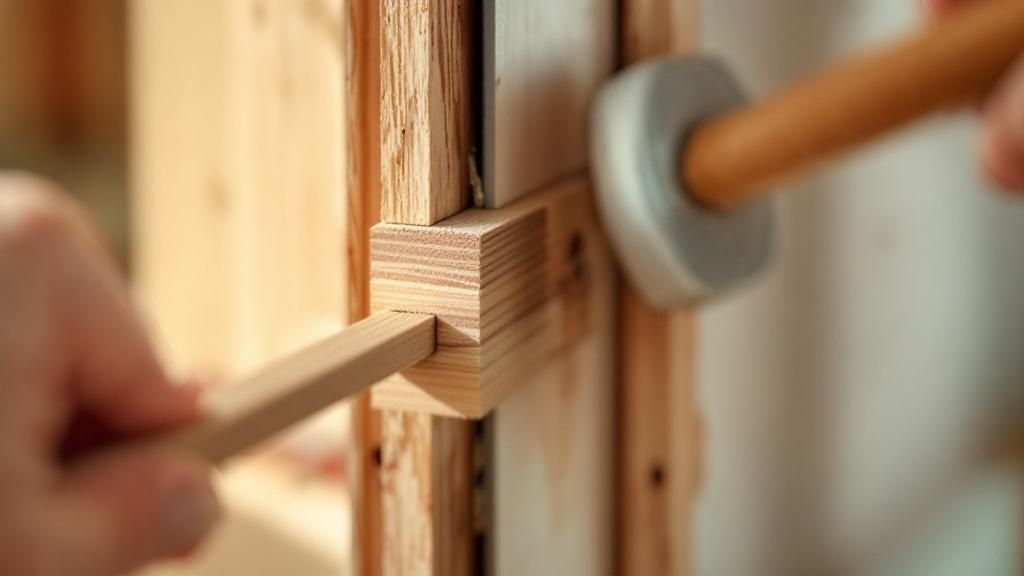
Reset shims
Repositioning shims behind the jamb can improve alignment in some installed frames.
Rebuild when necessary
Severely distorted openings may require professional correction instead of minor adjustments.
When Professional Help May Be Needed
Consider qualified help when the opening has signs of structural movement, major wall damage, repeated alignment failure, or exterior door problems involving water penetration and sealing.
Door Squareness Problems and Symptoms
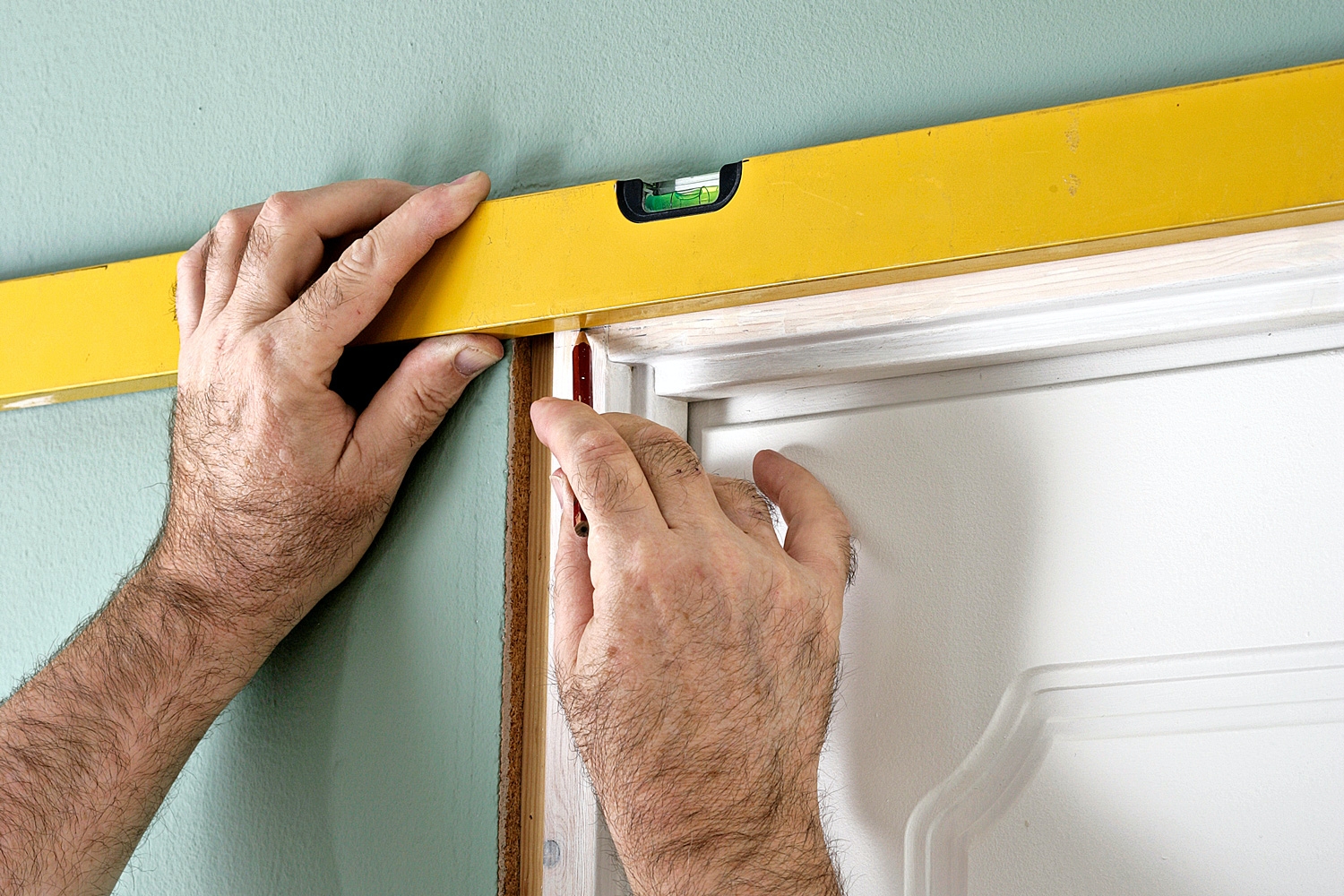
Common symptoms of poor door squareness include uneven gaps, doors that scrape the frame, latch problems, and visible differences between the top and bottom reveals.
The symptom alone does not always identify the exact cause, so inspection should include the door slab, hinges, frame, and surrounding wall.
Source: images-bonnier.imgix.net
Door rubs at one corner
This may indicate the frame, hinges, or door slab is not aligned correctly.
Latch does not line up
Misalignment between the latch and strike plate can result from movement or inaccurate installation.
Uneven spacing
Changing gaps around the door often reveal alignment problems.
Frequently Asked Questions
Q
How do you know if a door is square?
Measure the two diagonal distances across the door frame. Similar measurements indicate the frame is square, while a noticeable difference suggests the opening may be out of square.
Q
Can a door be fixed if the frame is not square?
Yes, some minor problems can be corrected through hinge adjustments, shimming, or hardware changes. Severe frame distortion may require more extensive repair.
Q
What tools are needed to check door squareness?
Common tools include a tape measure, level, framing square, and pencil for marking measurements.
Q
Why does my door close unevenly?
Uneven closing can result from an out-of-square frame, loose hinges, warped materials, or incorrect latch alignment.
Q
Does humidity affect door squareness?
Humidity can affect wood movement, which may change door fit and create alignment issues over time.
✦ Wrapping Up
Conclusion
Door squareness is a basic but important part of proper door installation and maintenance. A square frame improves door movement, hardware alignment, and overall appearance.
Checking diagonal measurements, inspecting gaps, and identifying the actual cause of misalignment are the best first steps before attempting repairs.
💡 Key Takeaway
Before adjusting or replacing a door, measure the frame diagonals and confirm whether the issue is caused by squareness, hardware, or another alignment problem.