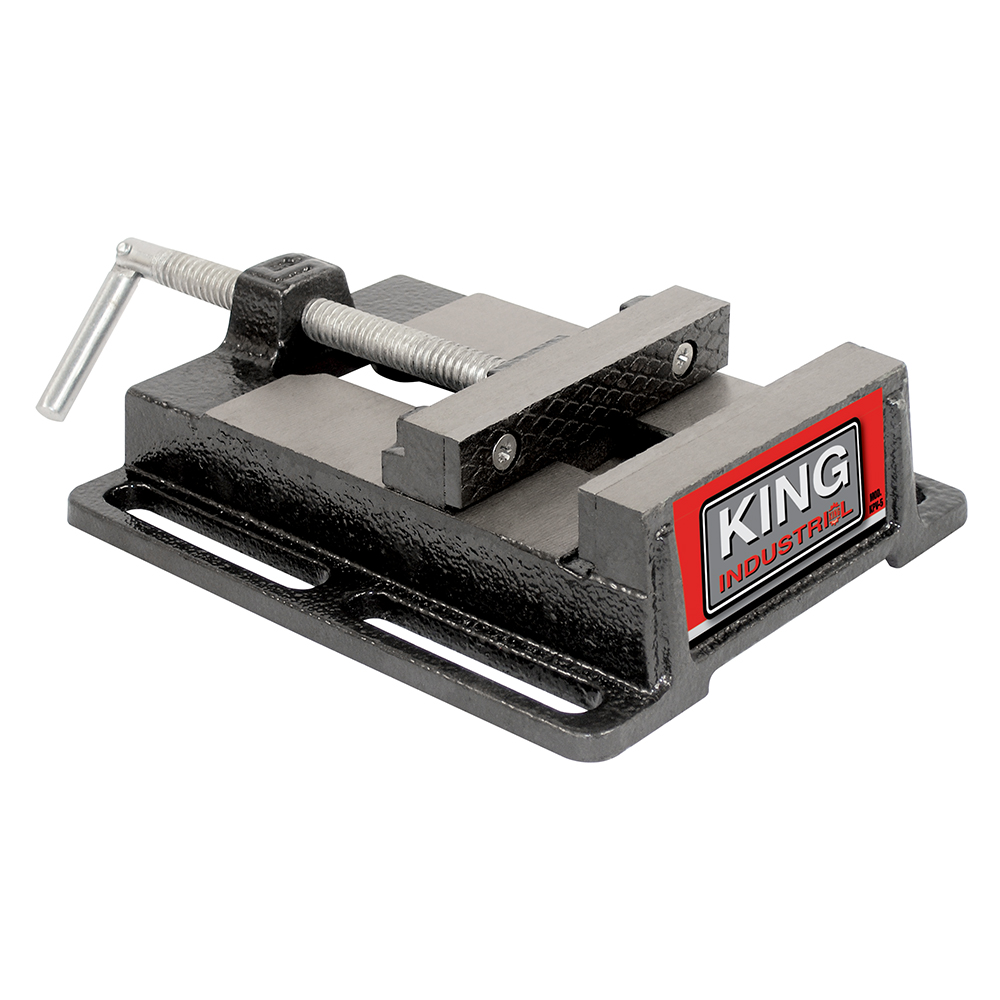
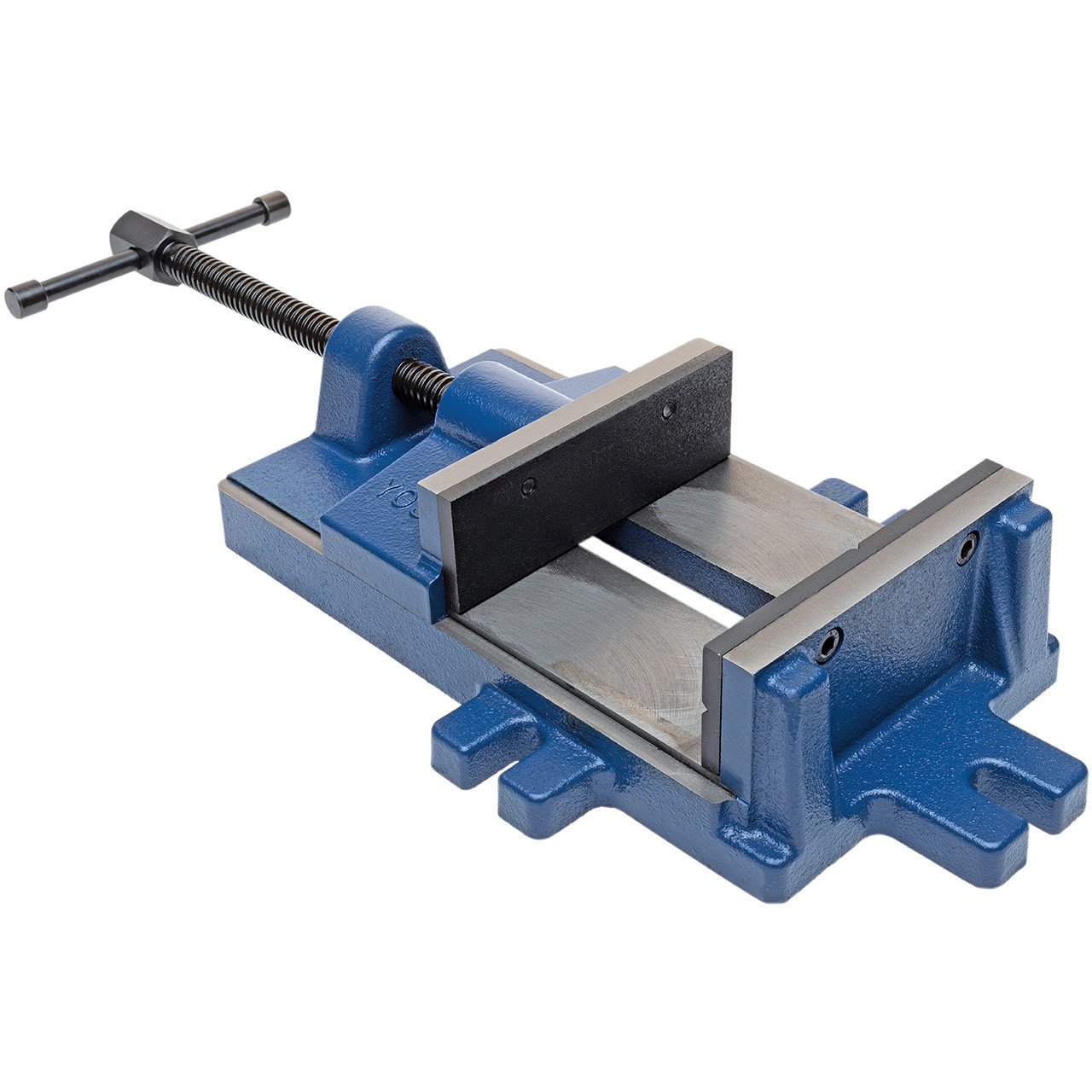
A drill press vise is a clamping tool that holds a workpiece securely on a drill press table, helping create straighter, safer, and more repeatable holes.
In US workshops, including home garages, fabrication shops, and maintenance areas, a drill press vise is commonly used to prevent material movement while drilling. The tool attaches to the drill press table and uses fixed and moving jaws to hold wood, metal, plastic, or other materials in position.
A properly selected and adjusted drill press vise improves drilling control, but it does not replace correct machine setup. The workpiece, drill bit, speed setting, and clamping method all affect the final result. This guide explains how drill press vises work, how to use them correctly, and what factors matter when choosing one.
Source: assets.1.commercebuild.com
What Is a Drill Press Vise?
A drill press vise is a mechanical clamping device designed to attach to a drill press table and hold a workpiece during drilling operations. It normally has two jaws: one stationary jaw and one movable jaw controlled by a threaded screw and handle.
Unlike a general bench vise, a drill press vise is designed around the vertical drilling motion of a drill press. Its low-profile base allows it to sit on the machine table while leaving enough clearance for the drill bit and workpiece.
Source: cdn11.bigcommerce.com
Main purpose
The vise prevents the material from shifting while the drill bit enters and exits the workpiece.
Common materials held
Drill press vises are used for metal, wood, plastic, and other rigid materials when properly supported.
How Does a Drill Press Vise Work?
A drill press vise works by applying controlled clamping pressure between two jaws. Turning the handle rotates the screw, moving the sliding jaw toward or away from the fixed jaw.
When installed correctly, the vise transfers drilling forces into the machine table instead of allowing the operator to manually control the workpiece. This improves repeatability and reduces the chance of the material spinning with the drill bit.
Source: northerntool.com
Fixed jaw
The fixed jaw provides a stable reference surface for positioning the workpiece.
Moving jaw
The moving jaw adjusts to different material thicknesses.
Mounting slots
Slots allow bolts or clamps to secure the vise to the drill press table.
How to Install and Use a Drill Press Vise Safely
Before drilling, confirm that the drill press is turned off and that the vise is positioned correctly on the table. The workpiece should sit flat against the vise jaws or supporting surface.
The safest setup uses a securely mounted vise with the correct drill speed and a suitable drill bit for the material.
Source: northerntool.com
Step 1: Position the vise
Place the vise on the drill press table and align it with the intended drilling location.
Step 2: Secure the vise
Use appropriate mounting hardware through the base slots to prevent movement.
Step 3: Clamp the workpiece
Tighten the jaws until the material is held firmly without unnecessary crushing force.
Step 4: Test alignment
Lower the drill bit manually to confirm that it meets the intended drilling point.
Signs of a Correct Setup
A correct setup keeps the workpiece stable, allows the drill bit to enter the marked location, and prevents visible movement when light pressure is applied.
Stable material
The workpiece does not shift when the spindle is lowered.
Accurate alignment
The drill bit contacts the intended drilling point.
How to Choose the Right Drill Press Vise
The right drill press vise depends on the size of the drill press, the material being drilled, and the size of the workpieces. A larger vise is not always better because it can reduce available table space on smaller machines.
Source: northerntool.com
Jaw width
Common sizes range from small hobby models to larger industrial versions. Choose a width that matches typical projects.
Jaw opening
The maximum opening determines the largest workpiece thickness the vise can hold.
Construction material
Cast iron and steel models are common because they provide rigidity for drilling tasks.
Base design
A slotted base allows flexible mounting while swivel or cross-slide designs provide additional positioning options.
Common Drill Press Vise Mistakes
Many drilling problems come from incorrect setup rather than the vise itself. Checking alignment and securing the workpiece before drilling prevents many common issues.
Source: walmart.com
Holding the workpiece by hand
Hand holding material on a drill press can allow the workpiece to rotate or move unexpectedly.
Over-tightening the jaws
Excessive force can damage softer materials or distort thin workpieces.
Using the wrong vise size
A vise that is too small may not support the material correctly.
Ignoring mounting security
An unsecured vise can shift during drilling and reduce accuracy.
Frequently Asked Questions
Q
Can you use any vise on a drill press?
A drill press should use a vise or clamp designed for machine table mounting. A regular bench vise may not provide the correct height, mounting options, or stability.
Q
What size drill press vise do I need?
Choose a size based on your typical workpieces and drill press table size. Small benchtop machines usually pair well with compact vises, while larger machines can support wider models.
Q
Should a drill press vise be bolted down?
For drilling operations, securing the vise to the table is recommended because it reduces movement and improves safety.
Q
Can a drill press vise hold round material?
Some drill press vises include V-grooves or shaped jaw surfaces that help hold round stock more securely. Standard flat jaws may require additional support.
Q
How do you maintain a drill press vise?
Keep the screw mechanism clean, remove chips after use, and apply suitable lubrication to moving parts according to the manufacturer’s recommendations.
✦ Wrapping Up
Conclusion
A drill press vise is a practical accessory that improves control, repeatability, and safety during drilling tasks. Selecting the correct size and installing it securely are the most important steps for reliable performance.
The best results come from treating the vise as part of the complete drillingsetup, including the machine speed, drill bit choice, workpiece support, and operating technique.
💡 Key Takeaway
Before drilling, secure the vise, confirm alignment, and make sure the workpiece is firmly supported.