Hand saw rake angle controls how aggressively a tooth enters wood and how easily the saw starts cutting.
Woodworkers across the United States use hand saw rake angle as one of the key measurements when sharpening or selecting a saw. The angle describes the position of the tooth face compared with a line perpendicular to the blade and directly affects the balance between cutting speed, smoothness, and control.
A lower rake angle generally creates a more aggressive cutting action but can make starting a cut more difficult. A higher rake angle usually makes the saw easier to start and smoother to control, especially for detailed woodworking tasks.
display: block; margin: 0 auto;”>
Source: sharpeninghandbook.info
What Is Hand Saw Rake Angle?
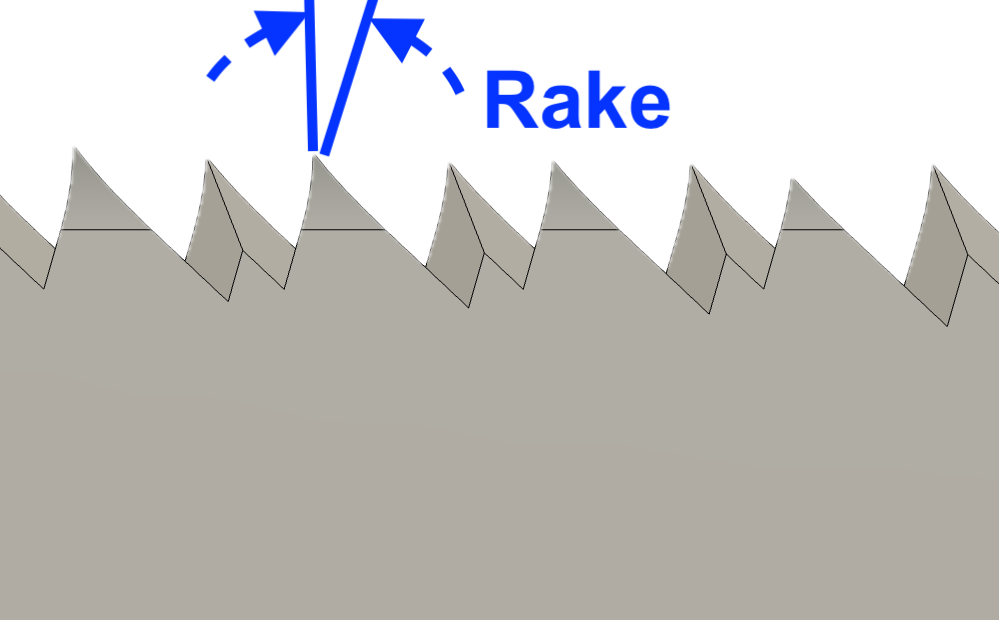
Hand saw rake angle is the angle between the front face of a tooth and an imaginary line drawn perpendicular to the saw plate. It is one part of overall saw tooth geometry, along with pitch, fleam, point slope, and set.
The rake angle determines how the cutting edge meets the wood. A tooth with little rake bites into material more aggressively, while a tooth with more relaxed rake enters the wood more gradually.
Source: highlandwoodworking.com
Low rake angle
Creates a more direct cutting action and can remove material quickly, but may require more skill when beginning a cut.
Higher rake angle
Reduces the aggressiveness of the cut and often provides smoother starting and better control.
Rake Angle Compared With Other Saw Angles
Rake angle is often confused with fleam or bevel angle. Rake describes the tooth face from the side view, while fleam describes the side-to-side angle that creates a slicing action on crosscut teeth.
Rake
Controls how the tooth enters the wood.
Fleam
Controls the slicing effect across the grain.
How Rake Angle Changes Saw Performance
The best rake angle depends on the type of cutting a saw is designed to perform. A woodworking saw used for rough dimensioning may favor faster cutting, while a joinery saw may prioritize control and accuracy.
For example, a rip saw often uses a smaller rake angle because its teeth work more like small chisels cutting along the grain. Crosscut saw teeth usually use a more relaxed rake because they need a controlled slicing action across fibers.
Source: robcosman.com
Cutting speed
More aggressive rake geometry can increase bite but may require better control.
Starting the cut
A more relaxed rake often helps the tooth begin tracking without grabbing.
Wood hardness
Harder woods may benefit from less aggressive tooth geometry to reduce harsh cutting behavior.
Common Rake Angle Ranges
Exact values vary by manufacturer, sharpening method, and saw purpose. Many traditional hand saws use rake angles ranging from near zero degrees on aggressive rip designs to around 15 degrees or more on easier-starting crosscut designs.
Rip saws
Often use low rake angles for efficient cutting with the grain.
Crosscut saws
Often use more relaxed rake angles for smoother cutting across grain.
How to Choose or Sharpen a Hand Saw Rake Angle
When choosing a rake angle, start with the purpose of the saw rather than a single preferred measurement. A cabinetmaker making precise joinery cuts may prefer different geometry than someone cutting construction lumber.
During sharpening, consistency is usually more important than chasing a specific number. Uneven rake angles across teeth can make a saw cut unpredictably.
Identify the saw type
Determine whether the blade is designed for ripping, crosscutting, or general-purpose work.
Match the existing geometry
Preserving the original tooth design is often safer than making large angle changes.
Test the cut
A successful sharpening result should produce controlled cutting without excessive grabbing or wandering.
Signs the Rake Angle May Not Suit the Task
A saw that grabs aggressively, struggles to start, or requires excessive force may have tooth geometry that does not match the intended use. The issue may also come from dull teeth, incorrect set, or damaged teeth, so rake angle should not be adjusted without checking the entire tooth profile.
Saw grabs immediately
The rake may be too aggressive for the user or material.
Saw feels slow
The geometry may be too relaxed or the teeth may need maintenance.
Frequently Asked Questions
Q
What does rake angle do on a hand saw?
Rake angle controls how the front of each tooth contacts the wood. It affects cutting aggressiveness, starting ease, and overall control.
Q
Is a lower hand saw rake angle better?
A lower rake angle is not automatically better. It can increase cutting aggressiveness, but the ideal angle depends on the saw design, material, and user preference.
Q
What rake angle is common for crosscut hand saws?
Many crosscut hand saws use moderate rake angles that balance smooth cutting with easy starting. The exact value varies by design and sharpening approach.
Q
Can I change rake angle when sharpening a saw?
Yes, rake angle can be changed during sharpening, but removing significant material changes the tooth geometry and may affect the saw’s intended performance.
Q
Does rake angle affect beginners more than experienced woodworkers?
Yes. Beginners often benefit from a more forgiving rake angle because it can make starting and controlling a cut easier.
✦ Wrapping Up
Conclusion
Hand saw rake angle is a small measurement with a major effect on how a saw behaves. Understanding it helps woodworkers select, maintain, and sharpen saws more effectively.
The correct rake angle is not a universal number. It depends on the saw type, cutting direction, material, and the level of control the user needs.
💡 Key Takeaway
Before changing a saw’s rake angle, identify its purpose, understand the existing tooth geometry, and make small adjustments while checking the resulting cut.

 display: block; margin: 0 auto;”>


