Miter saw cutting capacity is the maximum width and thickness of material a specific saw can cut at a stated miter and bevel angle. In the United States, a common 10-inch sliding miter saw may handle a 2×12 board in a straight crosscut, while a 12-inch sliding model can often handle wider stock, but the exact capacity depends on the saw design and cutting angle.
For American DIYers, remodelers, carpenters, and woodworkers, the most useful way to compare miter saws is not simply by blade diameter. A saw’s published cutting-capacity chart tells you how much material it can actually cut at 90 degrees, at common miter angles such as 45 degrees, and during bevel or compound cuts. Two saws with the same blade diameter can have noticeably different capacities.
Capacity also changes with the type of saw. A non-sliding compound miter saw generally has less horizontal capacity than a sliding model because the blade assembly cannot travel forward and backward. Fence height, blade diameter, rail or glide design, bevel position, and the shape of the workpiece can all affect the usable cutting envelope. Always compare the manufacturer’s capacity specifications for the exact model before attempting a cut.
Source: finewoodworking.com
What Does Miter Saw Cutting Capacity Mean?
Miter saw cutting capacity is the largest workpiece dimension a saw is designed to cut in a particular configuration. Manufacturers commonly describe capacity using width and height, such as 2 inches by 12 inches, and specify the miter and bevel settings used to achieve that measurement.
A straight crosscut at 0 degrees miter and 0 degrees bevel usually provides the most straightforward capacity figure. Angling the table or tilting the blade changes the geometry of the cut, so the maximum usable width or height can decrease. This is why a manufacturer’s specification may list several different capacities rather than one maximum number.
Capacity should also be distinguished from the saw’s physical blade diameter. A 10-inch blade does not mean the saw can cut a 10-inch-wide board in one pass. The blade diameter influences the available cutting depth, but the slide mechanism, fence arrangement, arbor position, table geometry, and other design features determine how much material the complete saw can handle.
Source: cdn.shopify.com
Horizontal capacity
The maximum width of material the saw can crosscut when the workpiece is lying flat on the table.
Vertical capacity
The maximum height of material that can be cut while the workpiece is positioned against the fence.
Crown capacity
The maximum crown molding size the saw can accommodate in the manufacturer’s specified orientation, often nested against the fence.
Compound capacity
The usable workpiece dimensions when the saw is set for both a miter angle and a bevel angle.
Why the Published Capacity Is Not One Universal Number
A capacity number only has meaning when its conditions are known. For example, a saw may cut a particular width at 90 degrees but accept a smaller width at a 45-degree miter. A bevel cut can reduce the available cutting height or width further. Some manuals also provide separate figures for different workpiece thicknesses.
This means capacity should be read as a set of operating limits rather than as a single headline measurement. When planning a project, find the row in the manual that matches the material orientation and angle you intend to use.
Check the angle
Confirm the miter and bevel settings before comparing a capacity figure with your workpiece.
Check the orientation
A board lying flat can have a different capacity from the same board positioned vertically against the fence.
Check the exact model
Capacity varies between models even when the saws use the same blade diameter.
How Much Can 7-1/4, 10, and 12-Inch Miter Saws Cut?
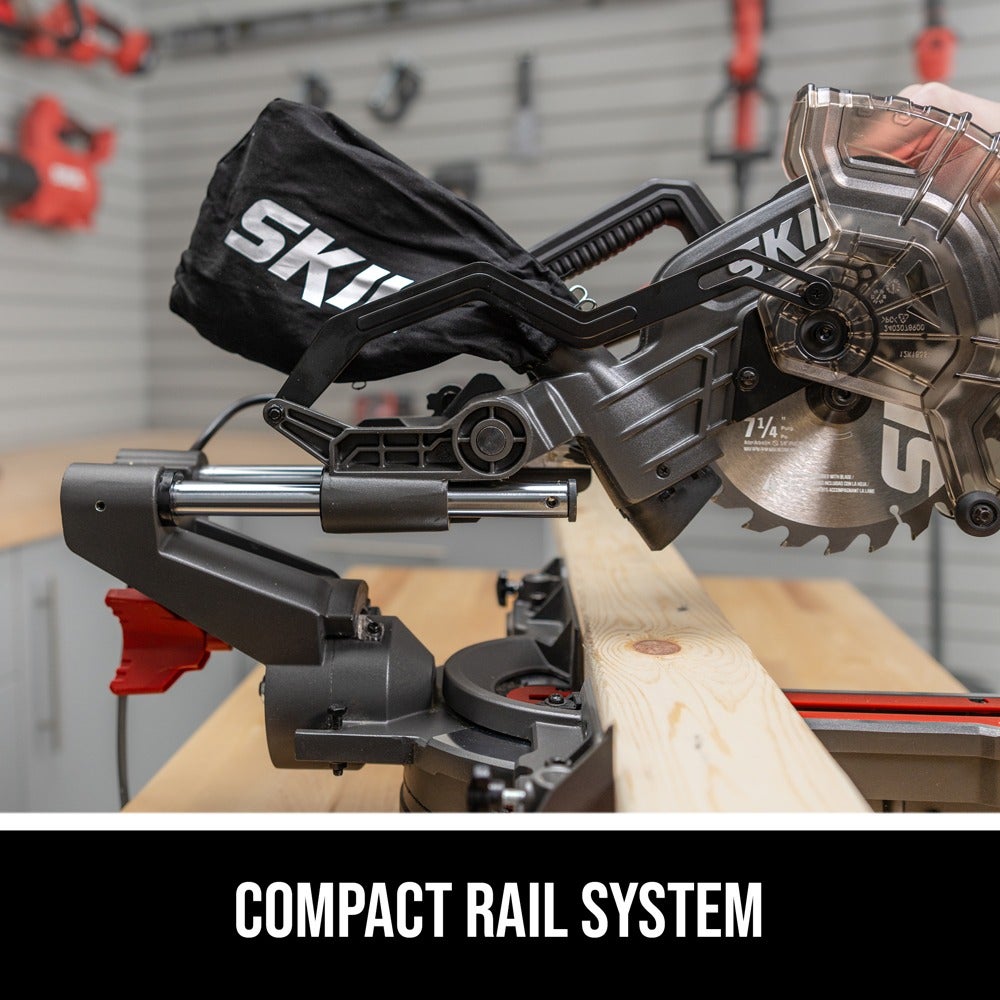
Blade size provides a useful starting point, but it should not be treated as a direct measurement of cutting width. A compact 7-1/4-inch sliding saw can have substantial horizontal capacity because its rails allow the blade to travel through wider stock. Likewise, some 10-inch sliding saws can crosscut boards wider than their blade diameter.
Manufacturer specifications illustrate this difference. One 7-1/4-inch sliding model lists a maximum 2×10 crosscut at 0 degrees, while a 10-inch sliding model from another manufacturer lists a 2×12 horizontal capacity at 90 degrees. A 12-inch sliding saw can provide still greater capacity, with some models designed for wide dimensional lumber and large molding.
These figures are examples rather than universal standards. The correct capacity for your project is the capacity published for your exact saw model, blade configuration, material orientation, and angle.
Source: powertools.ridgid.com
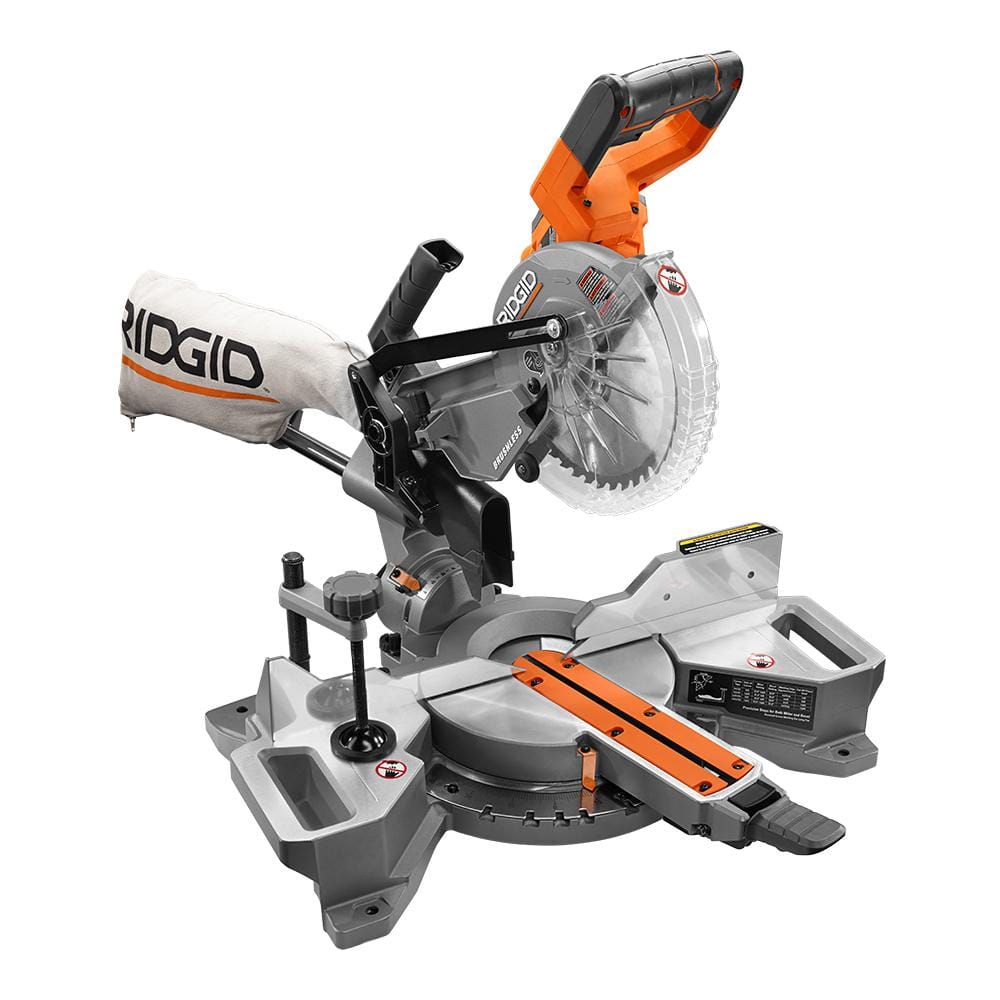
7-1/4-inch saws
Compact models can handle common trim and framing work, especially when a sliding mechanism increases horizontal reach.
10-inch saws
Many 10-inch sliding models are suited to common residential lumber, trim, shelving stock, and other medium-width workpieces.
12-inch saws
Larger models generally provide more cutting depth and capacity and are often selected for wider dimensional lumber, large baseboards, and crown molding.
Example Capacity Comparison
The following examples show why model-specific specifications matter. A SKIL 7-1/4-inch sliding model lists a 2×10 capacity at 0 degrees and a 2×6 capacity at 45 degrees left or right. A CRAFTSMAN 10-inch sliding model lists a maximum 2×12 crosscut. A WEN 10-inch dual-bevel sliding model states that it can crosscut boards up to 12 inches wide and 3.75 inches thick. These figures come from individual manufacturer specifications and should not be generalized to every saw of the same blade size.
7-1/4-inch example
SKIL MS6306-00: up to 2×10 at 0 degrees and up to 2×6 at a 45-degree miter.
10-inch example
CRAFTSMAN CMXEMAX69434501: maximum crosscut listed as 2 inches by 12 inches.
10-inch dual-bevel example
WEN MM1015: manufacturer states boards up to 12 inches wide and 3.75 inches thick can be crosscut.
Why Sliding Miter Saws Usually Handle Wider Stock
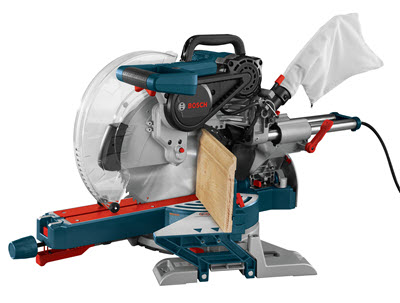
A sliding miter saw allows the motor and blade assembly to move along rails or another guided mechanism. This movement increases the distance the blade can travel through the workpiece. As a result, a sliding saw can often crosscut wider boards than a non-sliding saw using the same nominal blade diameter.
The extra capacity comes with additional moving components and a larger operating envelope. The saw still has a defined maximum capacity, and the slide mechanism must be used according to the manufacturer’s instructions.
Non-sliding design
The blade pivots through the workpiece from a fixed position, so horizontal capacity is more limited by the blade’s reach.
Sliding design
The blade assembly travels through the material, allowing a wider crosscut within the published capacity.
How Miter and Bevel Angles Affect Cutting Capacity
Cutting capacity changes when you rotate the table or tilt the saw head. A 45-degree miter removes material along a diagonal path, while a bevel tilts the blade through the thickness of the workpiece. When both settings are used together, the available cutting envelope can become smaller than it is for a straight crosscut.
For example, DEWALT lists a 12-inch sliding compound saw with a 2×14 dimensional-lumber capacity at 90 degrees and a 2×10 capacity at 45 degrees. That difference shows why using the 90-degree capacity to judge a 45-degree cut can lead to an incorrect assumption about what the saw can safely cut.
The same principle applies to molding. A saw may have a generous horizontal crosscut capacity while offering a different maximum for baseboard or crown molding positioned against the fence. The shape and orientation of the molding matter just as much as its nominal width.
Source: wenproducts.com
90-degree crosscut
Usually provides the largest straightforward crosscut capacity because the blade is perpendicular to the table.
45-degree miter
Often reduces usable crosscut width because the blade travels through the material at an angle.
45-degree bevel
Can reduce the maximum material height or width because the blade is tilted relative to the workpiece.
Compound cut
Uses both miter and bevel angles, so its capacity must be checked using the manufacturer’s compound-cut specifications.
How to Read a Cutting-Capacity Chart
Start by identifying the workpiece orientation shown in the manual. Then find the miter angle and bevel angle that match your intended cut. Manufacturers may report capacity as height by width, width by height, or using a dimensional-lumber designation. Do not assume the order of the dimensions is the same across all brands.
If the chart lists multiple capacities for different material thicknesses, use the row that matches your actual workpiece. If the workpiece is larger than the listed capacity, do not attempt to gain extra reach by changing the guard, fence, table, blade, or other components unless the manufacturer specifically provides an approved procedure.
Find the exact model
Use the owner’s manual or official specification page for the saw you own.
Match both angles
Use the capacity corresponding to the intended miter and bevel settings.
Match the material orientation
Confirm whether the capacity applies to material lying flat, standing against the fence, or another specified position.
What Determines a Miter Saw’s Cutting Capacity?
Several parts of the saw work together to establish cutting capacity. Blade diameter is one factor, but it is only part of the equation. A larger blade can provide more cutting depth, while a sliding rail system can increase horizontal reach. Fence height can determine how tall a board or piece of molding can be supported for a vertical cut.
The design of the saw head also matters. Some models use conventional rails, while others use articulated or glide-style mechanisms. These designs can provide different combinations of cutting capacity and physical footprint. The manufacturer’s published dimensions remain the appropriate reference for the specific machine.
The blade itself also affects what can be cut effectively. A blade must be compatible with the saw and appropriate for the material. Capacity specifications generally describe the mechanical cutting envelope, but that does not mean every material or blade configuration is suitable for every cut.
Source: skil.com
Blade diameter
Influences the available cutting depth and contributes to the overall cutting envelope.
Slide or glide mechanism
Controls how far the blade can travel through wider material.
Fence height
Affects how much material can be supported vertically, including baseboard and crown molding.
Table design
Determines the available support area and how the workpiece sits relative to the blade.
Bevel and miter range
Determines which angled cuts are possible and how the cutting envelope changes at those angles.
Baseboard and Crown Molding Capacity
Trim capacity is often listed separately from ordinary crosscut capacity because molding can be positioned vertically or nested against the fence. A saw might crosscut a wide board horizontally but have a different maximum height for baseboard or crown molding.
Crown molding is especially dependent on orientation and spring angle. The correct setup may involve holding the molding nested against the fence or laying it flat and making a compound cut. The method affects the required miter and bevel settings as well as the available cutting envelope.
Base molding
Check the manufacturer’s vertical capacity against the fence rather than relying on the saw’s horizontal crosscut number.
Crown molding
Check the listed nested crown capacity and confirm the orientation specified by the manufacturer.
Large trim
Support long stock securely and keep the workpiece within the saw’s published capacity.
How to Determine Whether Your Miter Saw Can Make a Cut
The safest way to determine whether a miter saw can handle a workpiece is to compare the workpiece dimensions with the manufacturer’s capacity chart for the exact cutting configuration. Do not estimate capacity from blade diameter alone.
Before cutting, measure the material at the point where the blade will pass through it. Then determine whether the workpiece will be positioned flat, vertically against the fence, or in another orientation. Finally, check the intended miter and bevel settings against the manual.
If the workpiece exceeds the published capacity, stop and choose another method that is designed for the required cut. Depending on the material and project, that may mean using a circular saw with an appropriate guide, a table saw for suitable straight cuts, or another tool intended for the workpiece.
Source: filecache.mediaroom.com
Step 1: Measure the workpiece
Record its actual width and thickness rather than relying only on the nominal lumber size.
Step 2: Identify the cut
Determine whether the cut is a straight crosscut, miter, bevel, or compound cut.
Step 3: Set the workpiece orientation
Determine whether the material will lie flat or stand against the fence.
Step 4: Check the capacity chart
Use the manufacturer’s exact dimensions for the selected angle and material orientation.
Step 5: Check support and clamping
Make sure long or awkward stock is properly supported and secured according to the owner’s manual.
Step 6: Make the cut only within the rated envelope
If the workpiece exceeds the published capacity, use a different cutting method rather than forcing the saw to reach farther.
Signs That a Workpiece Is Too Large for the Saw
The clearest sign is that the measured workpiece exceeds the manufacturer’s published capacity for the selected angle and orientation. Another warning sign is when the material cannot sit firmly against the intended support surfaces or cannot be secured without placing hands in an unsafe position.
Do not try to increase capacity by removing guards, cutting through unsupported material, holding the workpiece by hand in the blade path, or using an improvised setup. Manufacturer manuals commonly specify that the workpiece must be properly supported and that the operator must keep clear of the blade.
The material exceeds the chart
Treat the published maximum as a limit for the specified configuration.
The workpiece cannot be securely supported
Change the setup or use another tool rather than making an unstable cut.
The cut requires an improvised modification
Do not modify guards, fences, or other safety components to gain additional capacity unless an approved manufacturer procedure specifically permits it.
Safety Limits That Matter When Cutting Large Stock
Large workpieces create additional support and control challenges. Keep the material firmly supported on both sides as appropriate for the cut, follow the owner’s manual for clamping, and keep hands outside the manufacturer’s marked no-hands areas. Allow the blade to reach operating speed before entering the workpiece and wait for the blade to stop before removing the cutoff piece.
Sliding miter saws also require the correct cutting motion specified by the manufacturer. Guidance from Fine Woodworking explains that sliding miter saws are designed to cut on the push stroke rather than being pulled through the material. The exact procedure for your model should always come from its owner’s manual.
Support long material
Use suitable extensions, stands, or other support equipment so the stock remains stable during the cut.
Keep hands clear
Use clamps when appropriate and stay outside the marked danger areas around the blade.
Wait for the blade to stop
Do not reach for the cutoff piece while the blade is still coasting.
Follow the model-specific manual
Capacity and operating procedures vary between saws, so the owner’s manual takes precedence over generic advice.
Frequently Asked Questions
Q
What is the typical cutting capacity of a 10-inch miter saw?
There is no single capacity for every 10-inch miter saw. Sliding models can commonly handle wider stock than non-sliding models, and individual specifications vary. For example, some 10-inch sliding models list a 2×12 horizontal crosscut capacity. Check the exact manufacturer’s specifications for your saw.
Q
Can a 10-inch miter saw cut a 2×12?
Some 10-inch sliding miter saws can cut a 2×12 in a straight crosscut, but this is model-dependent. A CRAFTSMAN 10-inch sliding model and a WEN 10-inch dual-bevel sliding model both publish 12-inch-wide crosscut capabilities. The exact thickness and angle limits still need to be checked in the applicable manual.
Q
Is a 12-inch miter saw better for cutting 4×4 lumber?
A 12-inch saw can provide more cutting depth than many smaller saws, but suitability depends on the exact model and the dimensions of the intended cut. A 4×4 should not be assumed to fit simply because the saw has a 12-inch blade. Check the manufacturer’s maximum height and width for the specific cut.
Q
Does a sliding miter saw cut wider boards than a non-sliding saw?
Generally, the sliding mechanism allows the blade to travel through a wider portion of the workpiece, so sliding models can offer greater horizontal crosscut capacity. The actual maximum is model-specific and must be confirmed using the manufacturer’s capacity specifications.
Q
Does cutting at 45 degrees reduce miter saw capacity?
Yes, it can. Changing the miter or bevel angle changes the blade’s path through the material. Manufacturers often publish smaller capacities for 45-degree cuts than for straight 90-degree crosscuts. Use the capacity listed for the exact angle you plan to cut.
Q
Can I cut material larger than the stated miter saw capacity?
You should not exceed the manufacturer’s published cutting capacity. If the workpiece is too large, use a cutting method and tool designed for its dimensions. Do not remove guards, improvise unstable support, or modify the saw simply to gain additional cutting reach.
✦ Wrapping Up
Conclusion
Miter saw cutting capacity is determined by more than blade diameter. The saw’s sliding or fixed design, fence height, table geometry, blade position, miter angle, bevel angle, and workpiece orientation all affect how much material it can safely cut. This is why a 10-inch sliding saw can sometimes cut a wider board than its blade diameter might suggest, while two saws with the same blade size can have different published capacities.
For project planning, start with the exact dimensions of the workpiece and the type of cut you need. Then check the manufacturer’s capacity chart for the exact saw model and configuration. Pay particular attention to separate figures for 90-degree crosscuts, 45-degree miters, bevel cuts, vertical base molding, and nested crown molding.
If the material exceeds the listed capacity or cannot be securely supported, do not force the cut. Choose a suitable alternative tool or cutting method and follow the applicable manufacturer’s safety instructions.
💡 Key Takeaway
Measure your workpiece, identify the required miter and bevel angles, and compare those conditions with the exact cutting-capacity chart in your miter saw manual before making the cut.