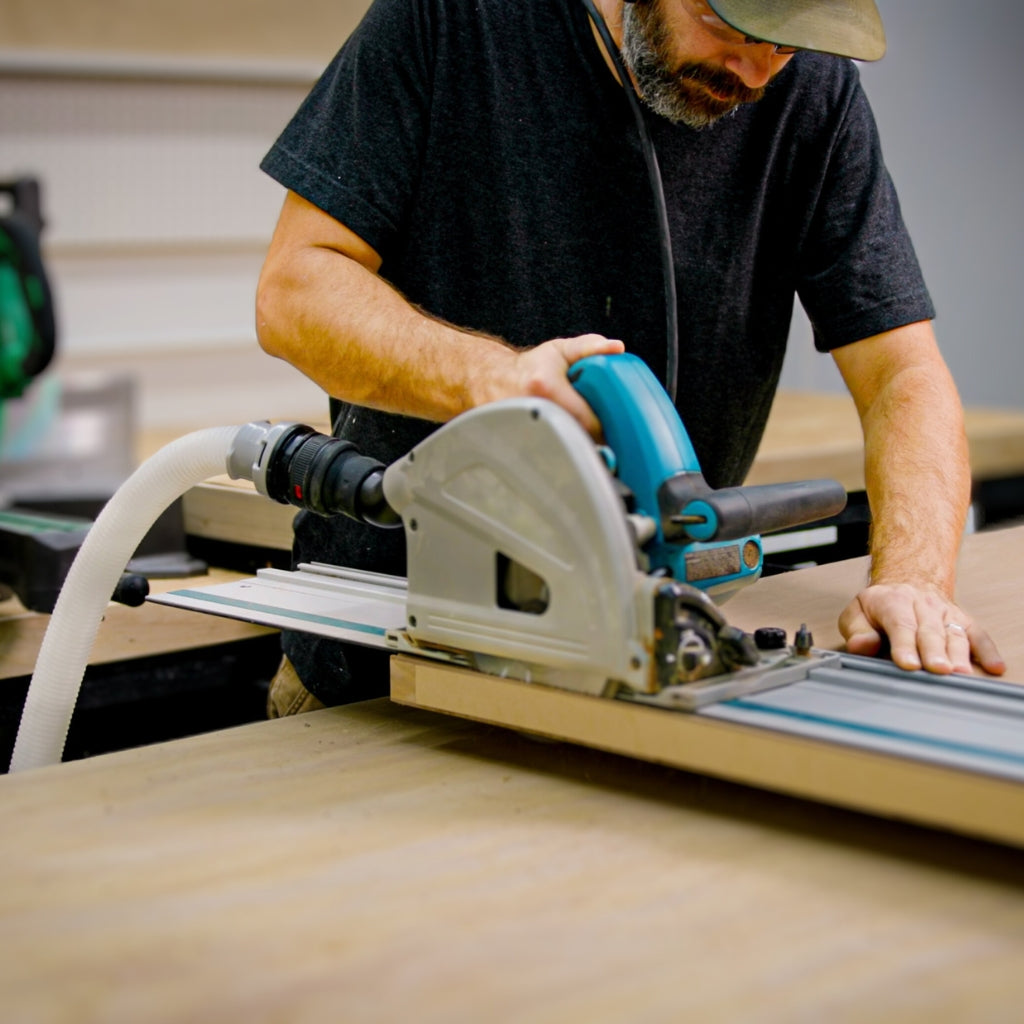
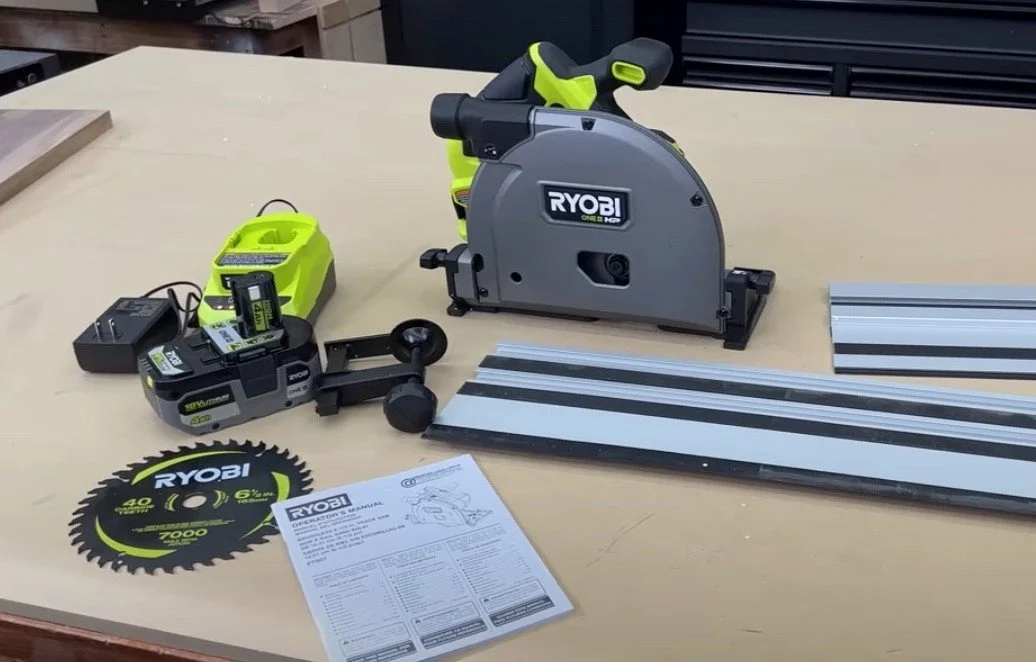
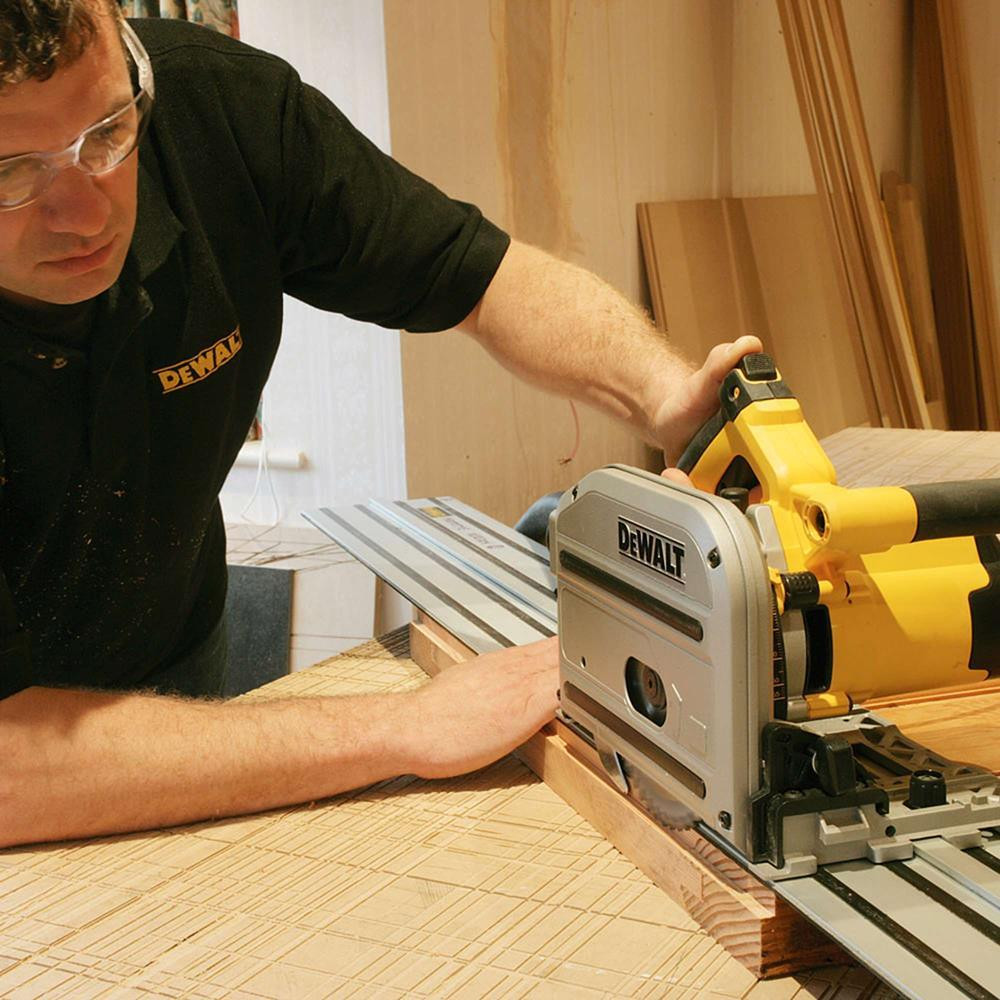
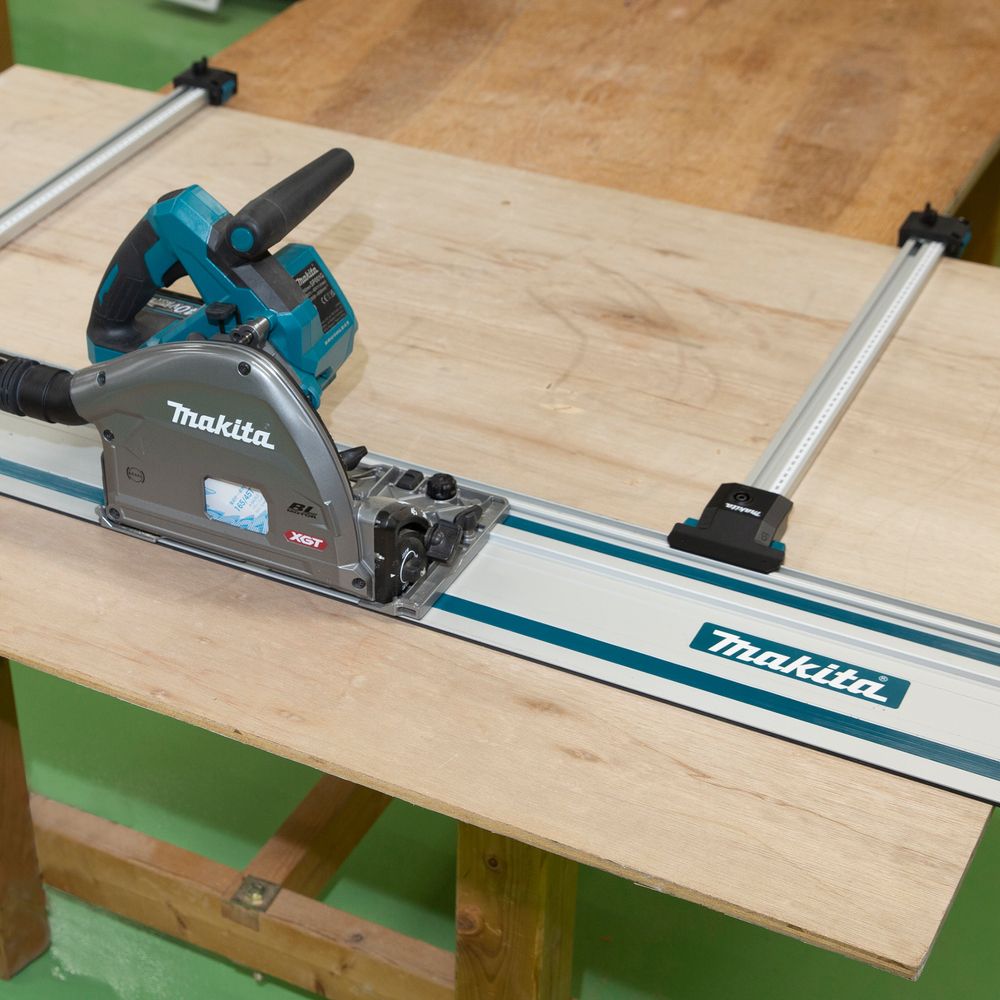
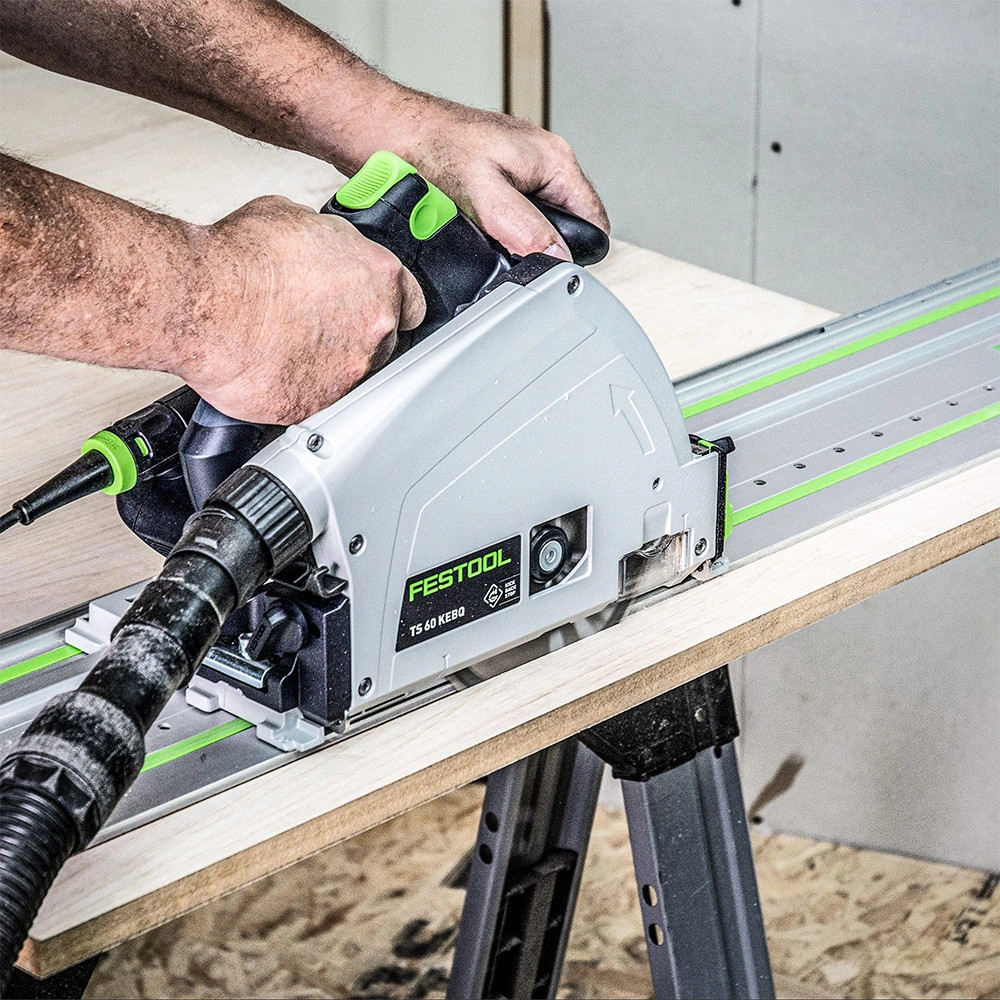
Track saw maintenance mainly involves keeping the saw, blade, guide rail, dust-extraction path, and moving parts clean and properly adjusted. Disconnect power or remove the battery before maintenance, inspect the blade and safety components before use, remove accumulated sawdust, keep the guide rail clean and protected, and follow the maintenance instructions for your exact model.
For U.S. woodworkers, cabinetmakers, remodelers, and DIY users, a track saw is often used for large plywood panels, hardwood, trim stock, and other sheet goods where a straight, controlled cut matters. Regular maintenance helps preserve that accuracy while reducing problems caused by sawdust, resin, dull blades, damaged components, or a contaminated guide rail.
Track saws are not maintained exactly the same way across brands. Manufacturer instructions can differ on issues such as compressed-air cleaning, lubrication, brush replacement, and internal service. Some models are designed with sealed or pre-lubricated components, while others have specific service procedures. The safest approach is to use this guide for routine care and use the exact manual for model-specific adjustments, electrical service, and internal repairs.
Source: mullettools.com
What Does Track Saw Maintenance Include?
Track saw maintenance is the routine inspection, cleaning, adjustment, and care needed to keep the saw and guide-rail system operating correctly. It includes more than simply wiping dust from the housing. The blade, blade guard, plunge mechanism, bevel mechanism, base, dust-extraction path, guide rail, splinter guard, and other accessible components all affect performance.
A useful maintenance routine has three levels: checks before use, cleaning after significant use, and periodic inspection. The frequency depends on how often you use the saw and what materials you cut. Plywood and clean solid wood may produce different amounts of dust and resin than MDF, coated panels, laminates, or abrasive sheet materials.
Manufacturer manuals consistently emphasize disconnecting the power source before maintenance. Corded models should be unplugged, while cordless models should have the battery removed. This prevents accidental startup while your hands are near the blade, guard, arbor, or moving mechanism.
Source: 731woodworks.com
Before every use
Check the blade, guard, base, cord or battery interface, guide-rail fit, fasteners, and general condition of the saw.
After heavy cutting
Remove accumulated sawdust from accessible areas, inspect the dust port, and clean the guide rail and saw contact surfaces.
Stop and investigate unusual noise, vibration, reduced cutting power, binding, poor cut quality, or a safety component that does not operate correctly.
Why Regular Maintenance Matters
Sawdust is not harmless just because it looks soft. Fine dust can accumulate around moving parts, cooling openings, the blade area, and dust-extraction passages. Manufacturer maintenance instructions warn that abrasive dust can contribute to premature wear. A dirty extraction path can also reduce the system’s ability to remove dust from the cutting area.
Maintenance also protects accuracy. A dirty guide rail or contaminated sliding surface can change how the saw moves along the rail. Damage or wear to the rail, splinter guard, or saw base can create problems that appear to be blade or cutting errors.
How to Clean a Track Saw Safely
The basic cleaning process is straightforward: isolate the power source, remove loose debris, clean the accessible surfaces, clear the dust-extraction path, and inspect the tool before putting it back into service. Always follow the cleaning instructions for the specific track saw because manufacturers differ in what they permit around the motor housing and electrical components.
Do not immerse the saw or allow liquid to enter the housing. Manufacturer instructions commonly recommend a clean cloth and, where permitted, mild soap and water for exterior non-metallic surfaces. Avoid gasoline, acetone, ammonia-containing cleaners, harsh solvents, and other chemicals that can damage plastic components.
Source: rockler.com
1. Disconnect the power source
Unplug a corded saw or remove the battery from a cordless saw. Wait for the blade to stop completely before handling the tool.
2. Remove loose dust
Vacuum accessible sawdust and chips from the housing, base, blade area, and dust port. Avoid pushing debris deeper into the tool.
3. Clean exterior surfaces
Use a dry cloth for routine dust removal. Where the manual allows it, use a cloth lightly dampened with water and mild soap, then dry the surface.
4. Clear the extraction path
Inspect the dust outlet, duct, hose connection, and surrounding blade area for packed sawdust or chips that could restrict airflow.
5. Inspect moving areas
Check the plunge mechanism, bevel hinges, guards, and accessible adjustment points for debris or binding.
6. Reassemble and inspect
Make sure any removed component is correctly installed before reconnecting power or reinstalling the battery.
Compressed Air Requires Model-Specific Care
Compressed air is not automatically the right choice for every track saw. Some manufacturer manuals permit clean, dry air for specific external areas, while other manuals specifically warn against using compressed air on the electrical tool because it can drive foreign material through ventilation openings. Festool’s TS 55 documentation, for example, specifically warns against using compressed air to clean the electrical tool.
For that reason, do not adopt a universal compressed-air rule. Check the manual for your exact model. If compressed air is permitted for a particular area, use appropriate eye protection and keep the airflow controlled rather than forcing debris into the housing.
Avoid liquid inside the tool
Never spray cleaner directly into the housing, vents, switches, motor area, or electrical connections.
Do not assume more pressure is better
Aggressive air pressure can move dust into areas that are difficult to clean or service.
Follow the exact manual
Cleaning instructions can differ substantially between corded and cordless models and between manufacturers.
Track Saw Blade Maintenance
The blade is one of the most important maintenance points because its condition directly affects cutting quality, feed resistance, heat, vibration, and the appearance of the cut. Inspect the blade before use and replace or professionally sharpen it when it is dull, damaged, excessively worn, or otherwise unsuitable for the material.
A dirty blade can collect resin and material residue around the teeth and body. Cleaning can restore the blade’s condition when the teeth themselves are still serviceable, but cleaning cannot repair damaged carbide teeth or correct an improperly sharpened blade.
Source: 731woodworks.com
Check for dull teeth
A blade that requires noticeably more feed pressure or produces poorer cuts than usual may be dull, contaminated, damaged, or mismatched to the material.
Inspect carbide teeth
Look for chipped, missing, cracked, or otherwise damaged teeth. Do not continue using a blade with damage that can affect safe operation.
Remove resin and buildup
Use a blade-cleaning method and product approved for the blade and its materials. Avoid harsh cleaners that can damage the blade or surrounding components.
Check the arbor area
When changing the blade, inspect the arbor, flanges, and blade seating surfaces for sawdust or buildup that could prevent correct seating.
Use the correct replacement
Match blade diameter, arbor size, kerf, tooth configuration, and other requirements to the exact track saw and intended material.
How Often Should You Clean a Track Saw Blade?
There is no universal number of cuts or hours that determines when a blade should be cleaned. Inspect it based on condition and use. If you are cutting resinous wood, laminated panels, or materials that leave significant residue, the blade may require attention more frequently than when cutting clean, dry plywood.
A practical sign is a change in performance. If the same material that previously cut cleanly now requires more force, creates excessive burning, produces rougher edges, or causes unusual vibration, inspect the blade before assuming the motor is failing.
Should You Sharpen a Track Saw Blade Yourself?
Carbide-tipped circular saw blades should generally be sharpened by a qualified sharpening service rather than manually ground with improvised tools. Manufacturer guidance warns that improper sharpening can damage the blade, saw, workpiece, or operator. If the blade has significant tooth damage, replacement may be more appropriate than sharpening.
Guide Rail and Splinter Guard Maintenance
The guide rail deserves its own maintenance routine because the rail is part of the cutting system. Keep the rail’s contact and sliding surfaces clean, protect the anti-slip material from contamination, and inspect the splinter guard for damage or wear.
Dust, chips, adhesive residue, and other debris can interfere with how the saw sits on or slides along the rail. A damaged or worn splinter guard can also affect the edge-reference system and may no longer provide the same visual indication of the cut line.
Source: woodcraft.com
Clean the top sliding surface
Remove dust and chips that could interfere with smooth saw movement.
Inspect the anti-slip material
Look for peeling, contamination, cuts, or excessive wear that could reduce rail stability.
Check connectors
If multiple rails are joined, inspect the joining hardware and make sure the connection remains secure and properly aligned.
Inspect the splinter guard
Replace damaged or excessively worn splinter protection according to the rail manufacturer’s procedure.
Store rails carefully
Keep long rails supported so they are less likely to be bent, struck, or contaminated during storage and transport.
Can You Lubricate a Track Saw Guide Rail?
Do not automatically add oil or general-purpose lubricant to a guide rail. Many rail systems rely on clean, low-friction contact surfaces rather than wet lubrication. Oil can attract dust and create a contaminated surface that changes how the saw slides or how the rail grips the workpiece.
If a manufacturer specifies a particular maintenance product or lubricant for a specific rail component, follow that instruction. Otherwise, prioritize cleaning, inspection, and proper storage.
How to Store a Guide Rail
Store guide rails in a dry location where they are protected from impacts and bending. Long rails should have adequate support rather than being left where their weight can cause them to deform. Keep the rail away from wet areas, loose metal hardware, and materials that can contaminate the anti-slip or sliding surfaces.
Dust Extraction and Vent Maintenance
Dust extraction is both a cleanliness and maintenance issue. A blocked or poorly connected dust path can leave more debris around the blade and inside accessible areas of the saw. Some track saw manufacturers specifically instruct users to connect the saw to an appropriate dust-extraction system.
Inspect the dust port, hose connection, duct, and extractor before heavy cutting. If the airflow suddenly becomes weaker, stop and check for a blocked port, packed dust, a damaged hose, or a full extraction container or filter.
Source: its.co.uk
Inspect the dust port
Look for chips or compacted dust around the outlet and remove buildup using the method permitted by the manufacturer.
Check the hose
Make sure the hose is not crushed, kinked, disconnected, or obstructed.
Check the extractor
A full collection container or loaded filter can reduce airflow even when the saw itself is clean.
Keep cooling openings clear
Dust buildup around ventilation openings can interfere with cooling and should be addressed according to the model’s cleaning instructions.
What If the Dust Port Keeps Clogging?
First remove the power source and inspect the dust path rather than continuing to cut. Check the saw’s outlet, hose, extractor inlet, filter, and collection container. Also consider the material being cut because some materials generate finer or more difficult-to-extract dust.
Do not insert random metal objects into a dust port or internal duct. If the blockage cannot be safely cleared using the procedure in the owner’s manual, stop and use the manufacturer’s service guidance.
Inspecting Moving Parts, Adjustments, and Safety Components
A track saw should move through its intended adjustments smoothly without binding, excessive play, or unusual resistance. Pay particular attention to the plunge mechanism, bevel adjustment, blade guard, base, locking controls, and any model-specific anti-kickback or safety mechanism.
Do not ignore changes that appear minor. Manufacturer maintenance guidance identifies unusual sounds, declining cut quality, reduced cutting power, and malfunctioning safety devices as reasons to inspect the saw rather than simply continuing to operate it.
Source: koempf24.de
Plunge action
The saw should move through its intended plunge range without abnormal binding or hesitation.
Blade guard
Verify that the guard operates as designed and does not remain stuck or obstructed.
Bevel mechanism
Keep the adjustment area clean and verify that the bevel setting locks securely at the intended position.
Base and fasteners
Check the base for damage, deformation, or loose hardware that could affect the saw’s relationship with the guide rail.
Safety systems
Do not use the saw if a required safety device is disabled, damaged, or malfunctioning.
When Should a Track Saw Be Serviced?
Professional service is appropriate when the problem involves the motor, gear housing, internal electrical components, or another area that the manufacturer identifies as non-user-serviceable. Internal repairs can involve electrical hazards, incorrect assembly, damaged insulation, or calibration problems.
Stop using the tool and seek qualified service if the saw has a damaged power cord, persistent electrical problems, burning smells, severe vibration, unusual mechanical noise, a malfunctioning safety device, or an internal fault that cannot be resolved through the owner’s maintenance procedure.
Track Saw Maintenance Schedule
A simple schedule prevents maintenance from becoming an occasional emergency. The exact intervals should come from your model’s manual, but a condition-based routine works well for most users. The more frequently you cut, the more abrasive the material, and the heavier the dust load, the more often you should inspect and clean the tool.
Do not treat a calendar interval as permission to keep using a tool that has already developed a problem. A damaged blade, failed guard, loose component, electrical defect, or serious change in cutting behavior should be addressed immediately.
Before every cutting session
Inspect the blade, guard, base, power source, guide rail, splinter guard, and general tool condition.
After heavy or dusty work
Vacuum accessible dust, inspect the extraction path, clean the rail, and check the blade for buildup.
Weekly for frequent users
Perform a more detailed cleaning and inspect moving parts, vents, rail surfaces, fasteners, and the condition of the blade.
Periodically
Review the manufacturer’s service requirements, inspect wear points, and arrange professional service when required.
Before long-term storage
Clean the saw and rail, remove loose debris, inspect for damage, and store the equipment in a dry, protected location.
A Practical Maintenance Checklist
Before returning a maintained track saw to service, perform a final visual and functional inspection. The blade should be correctly installed, the guard should operate normally, the guide rail should be clean and stable, and the dust-extraction connection should be secure.
For cordless models, also keep the battery and machine contacts clean and follow the manufacturer’s battery storage instructions. Do not attempt to repair a damaged battery pack yourself.
Clean
Remove dust and chips from accessible areas without forcing debris into the housing.
Inspect
Look for damaged blades, loose hardware, worn rail components, damaged cords, and abnormal wear.
Adjust
Confirm that required user adjustments operate and lock according to the manufacturer’s instructions.
Test
After maintenance, verify normal operation before making an important or precision cut.
Common Track Saw Maintenance Mistakes
Most maintenance problems come from using a generic cleaning or repair method when the manufacturer specifies something different. Track saws look similar from one brand to another, but their internal designs, lubrication requirements, electrical systems, and cleaning instructions can vary.
Avoid treating maintenance as an opportunity to modify the tool. Removing guards, bypassing safety systems, adding unapproved lubricants, or altering electrical components can create hazards and may also affect warranty or service support.
Source: its.co.uk
Cleaning with harsh solvents
Solvents such as gasoline, acetone, and ammonia-based cleaners can damage plastic components on some tools.
Lubricating everything
Many track saws use sealed or pre-lubricated components, so unnecessary lubricant can attract dust or interfere with movement.
Ignoring a dull blade
Continuing to force a dull blade can reduce cut quality and place unnecessary load on the tool.
Forcing a stuck plunge mechanism
Binding can indicate debris, damage, or a mechanical problem. Find the cause instead of forcing the mechanism.
Using a damaged guide rail
A bent or badly damaged rail can undermine cutting accuracy and should be evaluated before use.
Opening the motor housing unnecessarily
Internal electrical and gear components should generally be serviced only according to the manufacturer’s authorized procedure.
Continuing after safety-system failure
A malfunctioning guard or other required safety feature is a reason to stop using the saw until the problem is corrected.
Signs That Maintenance Has Not Solved the Problem
Cleaning should not be used as a substitute for diagnosis. If the saw remains noisy, vibrates excessively, loses power, binds, produces inconsistent cuts, overheats unusually, or shows electrical problems after routine cleaning, stop using it and consult the model-specific troubleshooting and service instructions.
A maintenance problem can also be caused by an accessory rather than the saw itself. Check blade compatibility, blade condition, rail condition, dust-extraction equipment, and material setup before assuming the motor or electronics have failed.
Frequently Asked Questions
Q
How often should I clean my track saw?
Clean the saw whenever significant dust or chips accumulate and perform a basic inspection before each use. Frequent users should perform a more detailed cleaning regularly, while the exact service intervals should come from the manufacturer’s manual. Heavy dust, resinous wood, MDF, and abrasive materials can require more frequent cleaning.
Q
Can I use WD-40 or oil on a track saw?
Do not apply general-purpose oil or WD-40 to a track saw unless the manufacturer specifically recommends it for that component. Many track saws contain sealed or pre-lubricated parts, and lubricant can attract sawdust. The guide rail should generally be kept clean rather than coated with a substance that can collect dust.
Q
How do I know when a track saw blade needs maintenance or replacement?
Inspect the blade for resin buildup, dull teeth, chipped or missing carbide, unusual vibration, and damage. A change in cut quality, increased feed resistance, burning, or reduced performance can also indicate that the blade needs cleaning, sharpening by a qualified service, or replacement.
Q
Should I use compressed air to clean my track saw?
Only if the manufacturer’s instructions permit it for the area you are cleaning. Some manufacturers allow controlled dry air for specific external components, while others warn against using compressed air on the electrical tool because it can force debris into the housing. Check the exact manual before using compressed air.
Q
How do I maintain a track saw guide rail?
Keep the rail clean and dry, remove chips and dust from the sliding surfaces, inspect the anti-slip material and splinter guard, and check rail connectors when multiple sections are joined. Store long rails where they are protected from bending and impacts. Avoid adding lubricant unless the rail manufacturer specifically calls for it.
Q
Why is my track saw making a strange noise after cleaning?
A new or unusual noise should not be dismissed as normal after cleaning. Check for loose components, blade damage, debris around moving parts, an improperly installed blade, or a problem with the guide rail. If the noise persists or comes from the motor or gear housing, stop using the saw and follow the manufacturer’s service procedure.
✦ Wrapping Up
Conclusion
Good track saw maintenance is mostly preventive. Keep the saw clean, inspect the blade and safety components, maintain the dust-extraction path, protect the guide rail, and address unusual behavior before it develops into a larger problem. These simple habits help preserve the accuracy and predictable operation that make a track saw useful for panel cutting and woodworking.
The most important limitation is that maintenance procedures are model-specific. One manufacturer may permit a cleaning method that another explicitly prohibits, and internal service requirements can differ significantly between corded and cordless designs. Use this guide for general care, then verify any model-specific procedure in the owner’s manual before performing it.
💡 Key Takeaway
Before your next project, disconnect the track saw from its power source, clean the accessible dust and extraction areas, inspect the blade and guide rail, check the guard and adjustment mechanisms, and resolve any unusual noise, vibration, binding, or safety problem before making another cut.