Wood outdoor durability depends on the wood species, moisture exposure, sunlight, insects, construction methods, and surface protection. Choose naturally resistant or properly treated wood, keep it dry, allow airflow, and maintain a suitable outdoor finish.
Across the United States, outdoor wood faces very different weather conditions. A deck in Florida may deal with heavy rain, high humidity, and termites. A porch in Arizona may face strong sunlight, dry air, and large temperature changes. In the Pacific Northwest, long wet seasons can keep wood damp for weeks. These conditions all affect how long outdoor wood can last.
Wood can remain useful outdoors for many years when people choose the right material and build it with care. Cedar, redwood, black locust, and some tropical hardwoods have natural resistance to decay. Pressure-treated lumber offers another option when wood must face regular moisture or ground contact. However, no wood species can overcome poor drainage and constant dampness forever.
Wood outdoor durability means more than resistance to rain. It also includes resistance to fungal decay, insects, sunlight, surface wear, cracking, and changes in moisture. A strong board may still rot if water stays trapped around its joints. A naturally durable board may also turn gray and develop surface checks after years of sun exposure.
The most useful approach combines three things: good wood selection, smart construction, and regular care. This guide explains how each factor affects outdoor wood, how to choose materials for different projects, and how to extend the useful life of decks, fences, furniture, siding, and other exterior structures.
Source: woodworkingadvisor.com
What Does Wood Outdoor Durability Mean?
Wood outdoor durability describes how well wood keeps its useful shape, strength, and appearance when exposed to outdoor conditions. It includes natural resistance to decay and the ability to handle repeated changes in temperature and moisture. It also includes resistance to insects, sunlight, and physical wear.
People often confuse durability with hardness. These are different properties. Hardness describes how well wood resists dents and surface damage. Natural durability mainly describes its ability to resist biological damage, especially fungi and insects.
For example, a hard wood can still rot when it stays wet. A softer wood can last for many years when its natural heartwood resists decay and the design keeps water away. This is why material selection should match the actual job rather than rely on one strength rating.
The USDA Forest Products Laboratory explains wood durability through related topics such as moisture behavior, decay, preservation, and exterior finishing. These factors work together. A good result depends on the complete system, not just the name of the tree.
Source: core77.com
Biological durability
This describes resistance to fungi, termites, and other wood-damaging organisms.
Weathering resistance
This describes how well wood handles sunlight, rain, wind, and repeated wetting and drying.
Dimensional stability
This describes how well wood resists excessive swelling, shrinking, cupping, and warping.
Mechanical durability
This describes resistance to wear, impact, splitting, and other physical damage during normal use.
Natural Durability and Treated Durability
Natural durability comes from the wood itself. Certain heartwoods contain natural extractives that make them less attractive or less suitable for decay organisms. The amount and type of these substances vary among species and even among individual trees.
Treated durability comes from a protective process. Pressure treatment forces approved preservatives into wood under controlled conditions. The result can provide protection beyond what the untreated species offers. The level of protection depends on the chemical, retention, penetration, and intended use.
Neither approach makes wood indestructible. Natural resistance can vary, and preservatives do not correct poor construction. A well-designed structure still needs drainage, suitable fasteners, and access for inspection.
Natural wood
Useful when the species and grade provide enough resistance for the expected exposure.
Preservative-treated wood
Useful when higher decay protection is needed, especially for demanding outdoor applications.
What Causes Outdoor Wood to Deteriorate?
Outdoor wood usually deteriorates because several harmful conditions work together. Rain wets the surface, sunlight changes its outer layers, and temperature changes affect moisture movement. If water remains trapped, fungi and insects may cause more serious damage.
Understanding these causes helps homeowners choose the right prevention method. A faded surface does not always mean the wood has lost its strength. Soft, crumbling wood around a post base, however, may indicate decay that needs prompt attention.
Moisture
Repeated rain, standing water, damp soil, and poor drainage increase the risk of fungal decay.
Sunlight
Ultraviolet radiation breaks down compounds near the wood surface and contributes to fading and weathering.
Temperature changes
Repeated heating and cooling can affect moisture movement and increase dimensional stress.
Fungi
Decay fungi can break down wood when moisture, temperature, oxygen, and other conditions support their growth.
Insects
Termites and wood-boring insects can damage wood even when its surface looks fairly sound.
How Moisture Leads to Wood Rot
Moisture is one of the main factors behind outdoor wood decay. Wood naturally absorbs and releases water as the surrounding air and weather change. This movement causes the material to swell and shrink.
Problems begin when wood stays damp for long periods. Fungi can become active under suitable conditions and gradually break down the wood structure. The damaged area may become soft, weak, discolored, or crumbly.
The risk increases when boards touch soil, leaves collect around posts, or water gathers near joints. Even a small gap that traps rain can create a long-term problem. Keeping water moving away from wood is often more effective than applying another coat of finish.
Standing water
Water that remains on horizontal boards or inside joints creates a prolonged wet condition.
Poor airflow
Tight spaces can slow drying and allow moisture to remain around the wood.
Ground contact
Soil can supply moisture and expose untreated wood to decay organisms and insects.
How Sunlight and Weather Damage Wood
Sunlight affects outdoor wood even when rain is not a problem. Ultraviolet rays break down lignin, a natural substance that helps hold wood cells together. The exposed surface can lose its original color and become weathered.
Rain and wind can then remove weakened surface fibers. Repeated wetting and drying may also cause small cracks called checks. These changes do not always mean that a board has lost its structural strength, but they can increase maintenance needs.
A suitable exterior finish helps reduce sunlight damage. Paint provides strong surface coverage, while pigmented stains can offer UV protection without forming the same type of thick film. Clear finishes generally allow more sunlight to reach the wood.
Color fading
Sun exposure can change the original color of natural wood.
Surface checking
Small cracks may form as wood repeatedly gains and loses moisture.
Fiber erosion
Wind, rain, and surface movement can gradually wear away exposed fibers.
How Insects Affect Outdoor Wood
Insects create a separate durability risk. Termites may attack wood that is close to soil or hidden behind exterior finishes. Some beetles lay eggs in suitable wood, and their larvae can create tunnels as they feed.
Look for small exit holes, fine wood dust, hollow sounds, mud tubes, and damaged sections. These signs do not all identify the same insect, so avoid assuming that every hole means active termites.
If you find mud tubes, widespread hollow areas, or ongoing insect activity, contact a qualified pest professional. A surface coating alone will not solve an established insect problem.
Termites
Some species can damage structural wood and hidden support members.
Wood-boring beetles
Their larvae may create tunnels inside wood and weaken affected sections.
Carpenter ants
They excavate damp or damaged wood to create nesting spaces, although they do not eat wood as food.
Which Wood Species Offer the Best Outdoor Durability?
The best outdoor wood depends on the project, climate, budget, and maintenance plan. Some species resist decay naturally. Others need preservative treatment or a protective finish to perform well.
Do not judge a board by its species name alone. Heartwood usually provides more natural decay resistance than sapwood. A cedar board with a large amount of sapwood may not offer the same protection as a board made mostly from durable heartwood.
Wood grades, growing conditions, source, and board quality also matter. When buying lumber, ask the supplier to identify the actual species and intended use. This is especially important for tropical hardwoods sold under broad or confusing trade names.
Source: tjsdeckrailingrepair.com
Western red cedar
A common outdoor choice for siding, fences, trim, and furniture. Its heartwood offers useful natural decay resistance and is relatively easy to work.
Redwood
Its naturally resistant heartwood can work well for decks, fences, and exterior features. Availability and cost vary by region.
Black locust
A naturally durable domestic hardwood often used for demanding outdoor applications, including fence posts.
White oak
Its closed cellular structure and natural properties make it useful for some exterior and marine applications, provided the correct grade and detailing are used.
Teak
A durable tropical hardwood used for outdoor furniture and marine applications. Responsible sourcing and cost should be considered.
Sapele
A tropical hardwood used for exterior doors, furniture, and joinery when the correct material and finish are selected.
Pressure-treated pine
A practical option for decks, posts, framing, and other applications when the treatment is rated for the intended exposure.
Cedar and Redwood for Outdoor Projects
Cedar and redwood are popular because they combine useful natural decay resistance with good workability. They are often selected for fences, siding, outdoor furniture, and decorative structures.
Their heartwood is generally more resistant than their sapwood. Buyers should therefore check the actual lumber rather than assume that every board sold under a species name has the same durability.
Both woods can weather and change color when exposed to sunlight. A suitable stain or finish can help maintain the desired appearance, while good construction helps prevent moisture damage.
Best uses
Siding, trim, fences, outdoor furniture, and decorative structures.
Main limitation
They can still crack, fade, or decay under prolonged damp conditions.
Is Ash a Durable Outdoor Wood?
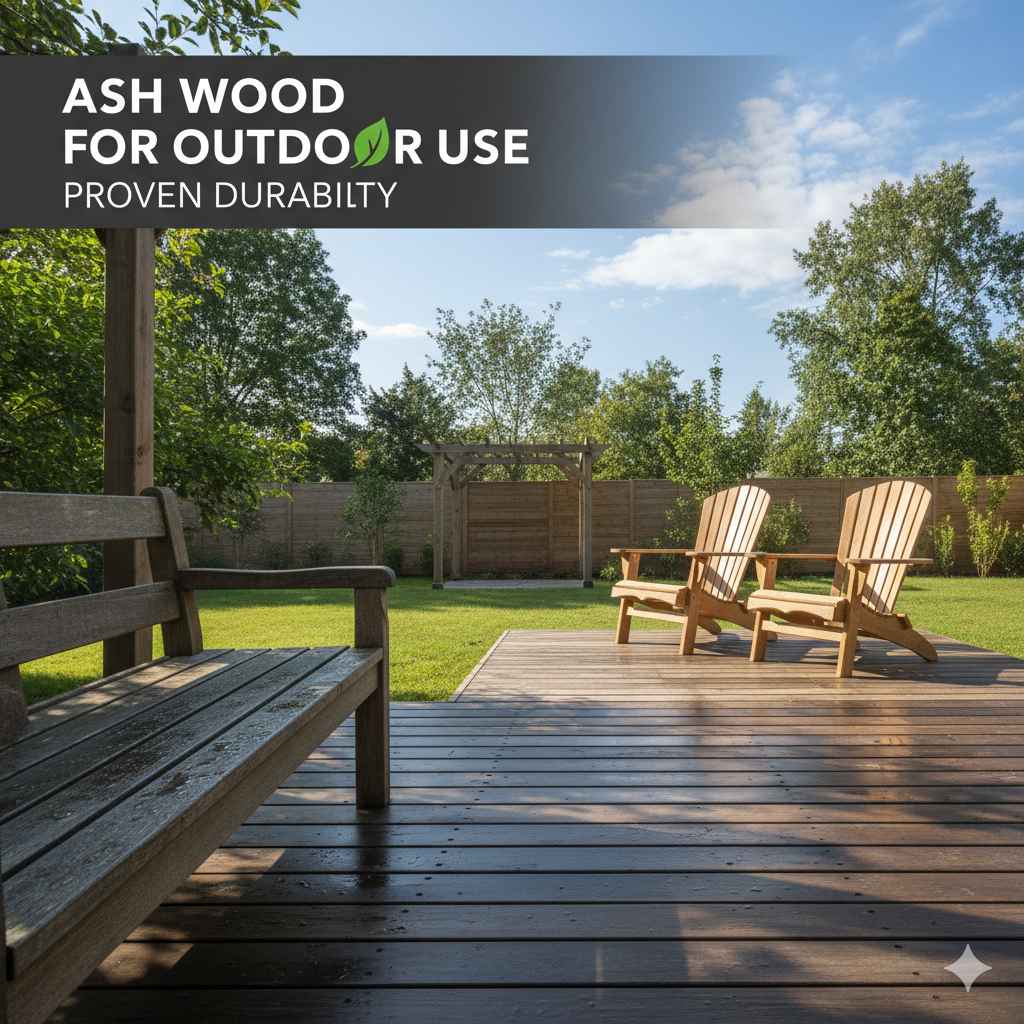
Ash is valued for its strength, flexibility, and attractive grain. However, ordinary ash should not be treated as a naturally decay-resistant outdoor species. Its performance in exposed conditions depends heavily on moisture protection and suitable treatment.
Untreated ash can be a poor choice for locations where rain and damp soil are common. If you want to use it outdoors, consider a protected setting, appropriate preservative treatment, and a suitable exterior finish.
For exposed structural parts, choose a material with documented suitability for the application rather than relying on ash’s indoor strength.
Suitable applications
Protected outdoor furniture and selected projects where moisture exposure can be controlled.
Main limitation
Its natural resistance to decay is limited compared with established durable outdoor species.
When Should You Choose Pressure-Treated Wood?
Pressure-treated lumber is useful when outdoor wood faces regular moisture or a higher risk of decay. Common uses include deck framing, posts, garden structures, and other exterior construction.
The treatment label matters more than a general claim that the wood is treated. The American Wood Protection Association uses a Use Category System to match preservative treatment with exposure conditions.
For example, above-ground exterior lumber may need a different treatment category from a post buried in soil. Marine exposure requires a separate level of protection. Always check the end tag and confirm that the treatment matches the job.
Treatment does not make every board suitable for every outdoor project. Some lumber is approved only for above-ground use. Using it in direct ground contact can lead to early failure.
Above-ground exposure
Select lumber rated for exterior above-ground conditions.
Ground contact
Choose lumber specifically labeled for the required ground-contact category.
Severe exposure
Use the higher treatment category required by the project specifications and applicable standards.
How to Choose Wood for Different Outdoor Projects
Choose wood based on where it will sit, how often it will get wet, and how easy it will be to maintain. A covered porch has a different moisture risk from a deck exposed to rain on every side.
A useful selection process starts with the most demanding part of the project. For example, deck posts and support beams need protection suited to their exposure. Decorative trim may need less demanding protection if it stays above ground and dries quickly.
The table below provides general material guidance. It is not a substitute for structural design, local building codes, treatment labels, or manufacturer specifications.
Source: woodrichbrand.com
Decks
Use suitable exterior decking and treated structural framing. Provide drainage and enough airflow below the deck.
Fences
Use decay-resistant heartwood or correctly treated posts and rails. Keep the post base suitable for the soil exposure.
Outdoor furniture
Consider cedar, teak, redwood, or other suitable species. Protect joints and allow furniture to dry after rain.
Exterior siding
Use species and grades suited to exterior exposure. Install a proper drainage plane and compatible finish system.
Garden structures
Choose lumber with a treatment rating that matches soil contact and moisture conditions.
Wood Selection by Exposure Level
Exposure level can help narrow the choices. Wood under a roof may face occasional dampness but receive less direct rain. Open decks and fences face full weather exposure. Posts set into soil face an even greater risk because they may remain damp for long periods.
The more difficult the drying conditions, the more important it becomes to use a suitable naturally durable species or properly treated product. Design details should still prevent standing water.
Covered outdoor area
Use suitable exterior wood with a finish that matches the expected moisture and sunlight exposure.
Fully exposed area
Favor durable heartwood, rated treated lumber, or another material designed for exterior weather.
Ground contact
Use wood specifically rated for the relevant ground-contact conditions.
Freshwater or marine exposure
Use materials and treatment systems specifically approved for the relevant water exposure.
Consider Climate Before Buying
Climate changes the way wood performs. In humid parts of the Southeast, wood may stay damp for longer after rain. In the Southwest, intense sunlight can cause rapid surface weathering. Cold regions may expose wood to repeated freezing and thawing, while coastal areas may add salt and moisture to the problem.
A material that performs well in a dry climate may need more protection in a humid region. This does not mean that one species is always best for one state. Local exposure, installation, and maintenance matter just as much.
Before purchasing, look at the actual conditions around the structure. Check whether rain reaches the wood, whether sprinklers hit it, and whether nearby plants block airflow. These details can change the right choice.
Humid climates
Prioritize drainage, airflow, decay resistance, and regular inspections.
Hot and sunny climates
Use a finish with suitable UV protection and inspect for checking and surface wear.
Cold climates
Allow water to drain before freezing conditions and inspect joints after seasonal changes.
Coastal climates
Consider corrosion-resistant fasteners and materials suitable for salt exposure.
How to Protect Wood From Outdoor Moisture
The best way to protect outdoor wood from moisture is to stop water from collecting and help the material dry quickly. A coating can reduce water absorption, but good design should do most of the work.
Start with the structure itself. Check the roof, flashing, drainage, ground clearance, and board spacing. If these parts direct water toward wood, even a high-quality finish may fail early.
The goal is not to keep every outdoor board completely dry. That is rarely possible. The goal is to prevent long periods of trapped moisture and reduce repeated water exposure.
Source: toolsradar.com
Improve drainage
Give rainwater a clear path away from wood and avoid flat surfaces that hold puddles.
Allow airflow
Leave suitable spaces between boards and around outdoor structures so damp areas can dry.
Protect end grain
Pay attention to cut ends because exposed end grain can absorb water readily.
Separate wood from soil
Avoid direct soil contact unless the lumber is specifically rated for that use.
Repair leaks
Fix leaking gutters, downspouts, sprinklers, and roof details that repeatedly wet wood.
Keep Outdoor Wood Above the Ground
Ground separation is one of the simplest ways to improve durability. Soil can hold moisture against wood and expose it to organisms that cause decay. A gap also makes it easier to inspect the lower parts of a structure.
Use suitable supports, post bases, or other approved construction details when the design allows. Do not assume that a concrete pad automatically protects wood. Moisture can move through concrete and masonry, so the connection needs proper detailing.
When direct ground contact is necessary, choose a treatment category designed for that exposure. A coating on ordinary untreated lumber is not a reliable substitute for correctly rated material.
Use proper supports
Keep above-ground framing away from soil and surfaces that remain wet.
Check lower joints
Inspect post bases and connections for trapped water, decay, and corrosion.
Improve Airflow Around Outdoor Structures
Airflow helps wet wood dry. This is especially important below decks, behind siding, and around furniture stored near walls. A tight space with poor ventilation can remain damp long after nearby surfaces have dried.
Remove leaves and other debris from narrow gaps. Trim plants that block airflow around fences and exterior walls. Keep stored items from pressing against damp wood surfaces.
For decks, follow the design requirements for board spacing and under-deck ventilation. Do not cut or remove structural parts to create extra space. If ventilation problems affect a building assembly, ask a qualified building professional to assess the design.
Clear debris
Remove leaves, soil, and dirt that hold moisture against wood.
Maintain open gaps
Keep intended drainage and ventilation spaces clear.
Manage nearby plants
Prevent shrubs and vines from trapping moisture against wood.
Seal Cut Ends and Vulnerable Joints
Cut ends and exposed joints deserve extra attention. The end grain can absorb water faster than many flat surfaces. This makes untreated cuts a possible weak point in otherwise protected lumber.
Use a compatible end-cut preservative when required by the lumber manufacturer’s instructions and the treatment system. Follow the label carefully. Not every coating is compatible with every treated product.
Inspect joints where water can collect. A small design change, such as a drip edge or improved drainage path, may provide more lasting protection than repeated surface coating.
Inspect fresh cuts
Check exposed ends after cutting treated or untreated lumber.
Use compatible products
Follow the treatment manufacturer’s directions for end-cut protection.
Avoid water traps
Adjust details that hold rain around joints, hardware, or horizontal surfaces.
Choosing the Right Outdoor Wood Finish
An outdoor finish helps protect wood from sunlight, moisture, and surface wear. The best finish depends on the wood species, the project, and the look you want. Paint, stain, and water-repellent products do not offer identical protection.
Paint forms a protective film over the surface. A good exterior paint system can block sunlight well, but it needs proper preparation and maintenance. If moisture gets behind a failing film, peeling and decay may follow.
Penetrating stains enter the surface rather than forming the same type of thick film. Pigmented stains help reduce UV exposure. Clear finishes preserve more of the natural grain but generally offer less sunlight protection.
A water-repellent preservative may help reduce water absorption. Some products also contain ingredients that protect against biological growth. Read the label to confirm the intended use and the level of protection.
Exterior paint
Useful for siding, fences, and suitable outdoor furniture when the surface is prepared correctly.
Solid-color stain
Provides strong color coverage while allowing the wood texture to remain partly visible.
Semitransparent stain
Adds pigment and UV protection while showing more of the natural grain.
Clear finish
Preserves the natural appearance but often needs more frequent attention under strong sunlight.
Water-repellent treatment
Can reduce water absorption when the product is designed for the wood and exposure.
How to Prepare Wood Before Applying a Finish
Preparation affects how well a finish bonds to wood. Start by checking for loose coatings, dirt, mildew, and damaged fibers. Repair the source of moisture before applying a new finish.
Clean the surface using a method suitable for the wood and coating. Avoid excessive pressure when washing because it can damage soft fibers and drive water into joints. Allow the wood to dry to the moisture level required by the finish manufacturer.
Sand only as needed and follow the coating instructions. Some products require a specific surface profile or primer. Others work best on clean, weathered wood with no loose fibers.
Apply the finish within the stated temperature and weather limits. Do not coat wet wood or apply a product when rain is expected during its required drying period.
Step 1: Inspect
Find rot, loose paint, cracks, damaged joints, and areas that remain wet.
Step 2: Clean
Remove dirt and loose material with a suitable cleaning method.
Step 3: Dry
Wait until the wood meets the moisture requirements on the finish label.
Step 4: Prepare
Sand or prime as required by the selected finish system.
Step 5: Apply
Follow the stated spread rate, coat count, drying time, and weather limits.
How Often Should Outdoor Wood Be Refinished?
There is no single maintenance schedule for every outdoor wood surface. A sunny deck may need attention sooner than a shaded fence. Horizontal surfaces often receive more direct rain and wear than vertical siding.
Inspect the finish at least once each year and after severe weather. Look for fading, peeling, water absorption, bare spots, and surface cracks. Refinish when the coating no longer provides the protection or appearance required.
Follow the product label rather than applying another coat automatically. Too many coats of some penetrating stains can create a surface film that peels or becomes sticky.
Decking
Check for wear, water absorption, loose coatings, and exposed areas.
Fences
Inspect the sunny sides, post bases, and exposed end grain.
Furniture
Check horizontal surfaces, joints, and areas that rub against clothing or other objects.
How to Inspect Outdoor Wood for Damage
Regular inspections help find early damage before it affects the whole structure. Start with the places that stay wet longest, such as post bases, deck joints, stair connections, and the lower edges of siding.
Look at the wood and the surrounding area. A dark stain may be dirt, mildew, or water damage. A soft section may suggest decay. Small holes may indicate insects, but they need further assessment to identify the cause.
Never rely on appearance alone when inspecting a structural member. Wood can look sound on the surface while the inside has lost strength. Serious damage near posts, beams, stairs, balconies, or railings requires a qualified assessment.
Discoloration
Look for new dark patches, unusual staining, or areas that remain wet.
Softness
Check accessible non-structural surfaces for soft or crumbling fibers.
Cracking
Look for deep splits that may affect joints or structural connections.
Insect evidence
Look for exit holes, tunnels, mud tubes, and unexplained wood dust.
Finish failure
Look for peeling paint, worn stain, bare wood, and water entering joints.
How to Check for Early Wood Rot
Begin with a visual inspection. Look for persistent dampness, fungal growth, damaged paint, and areas where water collects. Pay special attention to the lower ends of posts and the backs of boards.
A gentle probe with a suitable hand tool may help identify soft wood on accessible, non-structural surfaces. Do not use force that could damage sound material. Do not cut, drill, or remove parts of a structural assembly without a proper assessment.
If you find soft wood, identify the moisture source before planning a repair. Replacing a rotten board without fixing the leak or drainage problem often leads to another failure.
Check moisture sources
Inspect gutters, sprinklers, drainage paths, and nearby soil.
Check vulnerable joints
Look for trapped water around connections and fasteners.
Assess the damage
Determine whether the affected part is decorative or structural before attempting repairs.
When Should You Replace Outdoor Wood?
Replace wood when decay, splitting, or insect damage has reduced its ability to perform its intended job. A decorative trim board may be easy to replace. A weakened deck joist or railing post is a different matter because failure can cause injury.
Small surface checks and gray weathering do not always require replacement. If the wood remains firm and performs its intended function, cleaning and refinishing may be enough.
When a structural member is soft, deeply split, badly corroded at its connection, or visibly moving, restrict access to the affected area and contact a qualified contractor or structural professional. Do not try to hide the damage with filler or paint.
Repairable damage
Minor surface wear and coating failure may be addressed through cleaning, preparation, and refinishing.
Replacement needed
Severe decay, major splitting, and significant loss of material may require new lumber.
Professional assessment
Structural damage around decks, stairs, balconies, posts, and beams needs qualified review.
Common Mistakes That Reduce Outdoor Wood Durability
Many outdoor wood failures come from avoidable mistakes. People may buy durable lumber but install it in a way that traps water. Others apply a good finish without allowing the surface to dry.
These problems can shorten the useful life of a project and increase repair costs. A few checks during planning and installation can prevent many of them.
Choosing wood by appearance alone
An attractive board may not have enough natural decay resistance for full outdoor exposure.
Using the wrong treatment category
Above-ground treated lumber should not automatically be used in direct soil contact.
Applying finish to wet wood
Excess moisture can interfere with bonding and lead to early coating failure.
Ignoring end grain
Exposed cuts may absorb water and become weak points.
Trapping water around joints
Poor detailing can keep wood wet even when the main surface has a good finish.
Using unsuitable fasteners
Incompatible metal fasteners may corrode, stain wood, or weaken connections.
Skipping inspections
Small leaks and damaged coatings may become serious problems when left untreated.
Why the Wrong Fasteners Can Cause Problems
Outdoor wood needs fasteners that can handle moisture and remain compatible with the lumber. Some preservative-treated products can increase corrosion risk for certain metals. This can lead to rust stains, loose connections, or early fastener failure.
Use fasteners and connectors approved for the specific treatment and exposure. Stainless steel or suitable hot-dip galvanized products may be appropriate in many situations, but the correct choice depends on the preservative, environment, and manufacturer’s instructions.
Do not assume that every coated screw is suitable for every treated wood product. Check the product documentation before installation.
Check compatibility
Match fasteners and connectors to the wood treatment and exposure.
Consider coastal exposure
Salt air may require a more corrosion-resistant fastening system.
Inspect connections
Look for rust, loose screws, damaged connectors, and staining.
Why Paint Alone Cannot Stop Every Type of Decay
Paint can protect wood from sunlight and direct weather exposure, but it cannot correct a poor construction detail. Water may enter through cracks, joints, or unprotected cuts. If the coating then prevents easy drying, the trapped moisture can contribute to damage.
Paint also does not automatically protect against termites or insects inside the wood. Use appropriate materials and construction methods before relying on a finish.
A durable exterior system combines suitable lumber, drainage, surface preparation, compatible coating, and ongoing maintenance.
Fix water entry
Repair leaks and drainage issues before repainting.
Treat hidden damage
Assess decay and insect activity instead of covering the affected surface.
Maintain the coating
Repair peeling and exposed areas before moisture causes further damage.
How Long Does Outdoor Wood Last?
Outdoor wood service life varies widely. Species, treatment, climate, installation, and maintenance all affect the result. A naturally durable heartwood board in a well-drained location may last much longer than ordinary untreated lumber in wet soil.
It is not reliable to promise one lifespan for every cedar deck, treated post, or wooden fence. Even boards from the same species can perform differently because their heartwood content, quality, and exposure are not identical.
The USDA Forest Products Laboratory notes that wood can remain outdoors for very long periods when the right material and protection are used. However, weathering and decay remain separate concerns. A board can lose its appearance long before it loses its useful strength.
For planning, use the manufacturer’s documented service information where available. For structural projects, follow the design specifications and applicable building requirements rather than relying on general lifespan estimates.
Species
Naturally decay-resistant heartwood may provide better biological protection.
Treatment
Proper preservative treatment can improve performance under demanding exposure conditions.
Installation
Good drainage, ground separation, and airflow can reduce moisture-related damage.
Maintenance
Regular inspection and timely repairs help preserve the wood and its connections.
Local climate
Rain, humidity, sunlight, temperature, and insects change the deterioration risk.
Does Naturally Durable Wood Last Longer Than Treated Pine?
Both materials can perform well when selected for the right application. Naturally durable wood relies on properties found in the species, while treated pine relies on an approved preservative system.
Naturally durable heartwood may be attractive for visible surfaces and furniture. Treated pine may offer a practical choice for framing and support parts where the treatment category matches the exposure.
The better option depends on cost, availability, appearance, maintenance, and the required level of protection. There is no universal winner for every outdoor project.
Choose naturally durable wood
When appearance, natural resistance, and the available species meet the project needs.
Choose treated pine
When an approved treatment provides the required protection at a practical cost.
Does Outdoor Wood Need Protection Every Year?
Not every outdoor wood project needs a new coating every year. The right schedule depends on the finish, exposure, and condition of the surface. Some products require more frequent care than others.
Inspect the wood annually and follow the finish manufacturer’s maintenance instructions. Recoat when the surface shows wear or no longer repels water as intended.
Avoid unnecessary coating. A finish applied too often or over a poorly prepared surface can cause its own problems.
Inspect regularly
Check exposed surfaces and vulnerable joints at least once each year.
Follow the label
Use the stated recoat interval and preparation method.
Repair early
Fix small coating failures and moisture sources before damage spreads.
A Practical Outdoor Wood Durability Maintenance Plan
A simple maintenance plan helps keep outdoor wood in good condition without unnecessary work. The key is to inspect vulnerable areas, remove debris, manage moisture, and repair problems when they first appear.
The following schedule is a general starting point. Adjust it for local weather, project design, product instructions, and the condition of the wood.
After installation
Check drainage, board spacing, ground clearance, fasteners, and treatment labels.
During routine seasonal care
Remove leaves, clear drainage paths, and check for new leaks or standing water.
Once a year
Inspect posts, joints, exposed ends, coatings, fasteners, and signs of insect activity.
When damage appears
Find the cause, repair the source of moisture, and assess whether the affected material needs repair or replacement.
A Simple Inspection Checklist
Use this checklist when checking a deck, fence, shed, or other outdoor wood structure. Focus on places that receive water or stay shaded for long periods.
Record damaged areas and take photographs when useful. Comparing the same locations over time can help you see whether a problem is getting worse.
Surface
Check for fading, peeling, cracks, mildew, and soft fibers.
Connections
Check for loose fasteners, rust, movement, and trapped water.
Lower sections
Inspect post bases, soil contact, and areas near concrete.
Drainage
Check gutters, downspouts, sprinklers, and water runoff.
Surroundings
Remove leaves and check whether plants or stored objects block airflow.
When to Call a Professional
Some wood problems need more than routine maintenance. Structural decay can weaken a deck, stair, balcony, railing, or support post without making the full extent of the damage visible.
Contact a qualified contractor or structural professional if you find soft structural members, deep splits near connections, sagging, movement, or loose guardrails. Restrict access to areas that may be unsafe until they are assessed.
For suspected termites or widespread insect activity, use a qualified pest professional. For complex exterior wall or roof moisture problems, a building-envelope specialist may help identify the source.
Structural weakness
Get help for damaged beams, joists, posts, stairs, and railings.
Major decay
Seek an assessment when rot affects several connected parts.
Insect infestation
Ask a pest professional to identify the insect and treatment needs.
Repeated water damage
Get help when leaks continue despite basic drainage and maintenance work.
Research Findings and Next-Question Gap Map
A review of five relevant resources helps explain the main factors behind outdoor wood performance. The sources cover wood science, natural durability, preservative treatment, and exterior finishes. They also show why species selection alone cannot predict service life.
The USDA Forest Products Laboratory’s Wood Handbook provides technical background on wood properties, moisture, decay, preservation, and finishing. Its outdoor furniture and fence guidance explains the separate roles of weathering and biological decay.
The Wood Database explains the distinction between heartwood and sapwood and discusses natural decay resistance. The American Wood Protection Association describes a system for selecting preservative treatment based on intended exposure.
A 2025 review in BioResources examines exterior wood coatings and the factors that affect their performance. HUD’s residential durability guide adds practical detail about ground separation, moisture control, and decay prevention.
The main editorial improvement in this guide is to connect these topics into one practical selection and maintenance process. It also distinguishes surface weathering from structural decay and explains why a finish cannot replace correct treatment or construction.
Reviewed resource: USDA Wood Handbook
URL: https://research.fs.usda.gov/fpl/wood-handbook. Coverage: wood properties, moisture, decay, preservation, and finishes. Useful as the main technical reference.
Reviewed resource: USDA Outdoor Furniture, Artwork, Fences, and Play Equipment
URL: https://www.wood-database.com/wood-articles/wood-durability/. Coverage: natural durability, heartwood, sapwood, and weathering. Its broad service-life classifications should not be treated as a guarantee for every installation.
Reviewed resource: American Wood Protection Association
URL: https://awpa.com/standards/ucs. Coverage: treatment selection based on exposure and biodeterioration risk.
The following questions are useful next steps inferred from the main reader task. They are not presented as verified search-volume findings. Coverage refers only to the reviewed resources, not every page available online.
Which wood should I use for a deck?
Reader stage: before purchase. Basis: inferred next need. Reviewed coverage: answered across technical and treatment resources, but project-specific selection can be improved with a separate deck comparison. Benefit: helps match decking and framing to exposure. Priority: high.
Can I use treated lumber in direct soil contact?
Reader stage: material selection. Basis: inferred next need. Reviewed coverage: answered by AWPA treatment guidance and the USDA preservation material. Benefit: prevents incorrect treatment selection. Priority: high.
How can I tell surface weathering from wood rot?
Reader stage: inspection. Basis: inferred next need. Reviewed coverage: shallow across the reviewed general guides. Benefit: helps readers avoid unnecessary replacement while recognizing serious damage. Priority: high.
Does a clear finish protect outdoor wood from sunlight?
Reader stage: maintenance planning. Basis: inferred next need. Reviewed coverage: answered in the USDA finishing guide and coating review. Benefit: helps readers choose a finish based on appearance and UV protection. Priority: medium.
Which fasteners work with pressure-treated wood?
Reader stage: installation. Basis: inferred next need. Reviewed coverage: not fully checked in the selected competitor sample. Benefit: reduces corrosion and connection failure risks. Priority: medium.
How do I repair a rotten outdoor post?
Reader stage: after damage. Basis: inferred next need. Reviewed coverage: not checked in depth. Benefit: separates minor repairs from structural replacement. Priority: high, but requires a separate safety-focused repair guide.
Evidence Limits and Editorial Decisions
The research supports general principles, but it does not establish one service-life number for every wood species or climate. No hands-on outdoor exposure test was performed for this article. No individual product was tested or ranked.
Species names do not prove the heartwood content or quality of a particular board. Treatment labels and product specifications must be checked before construction. Local building codes and structural requirements also take priority over general advice.
The most useful next content topics are a separate outdoor wood species comparison, a pressure-treated lumber selection guide, and a safety-focused guide to repairing rotten deck posts. These topics serve different reader decisions and should not be forced into this article.
Documented facts
The reviewed technical and standards resources support the discussion of moisture, decay, natural resistance, treatment categories, and exterior finishes.
Analysis
The material selection and maintenance advice combines documented principles into practical decisions for outdoor projects.
Not established
Exact service life, universal species rankings, and product-specific performance without matching test conditions are not established here.
Frequently Asked Questions
Q
What is the most durable wood for outdoor use?
There is no single best species for every outdoor project. Black locust, cedar, redwood, teak, and selected other hardwoods have useful natural decay resistance. The best choice depends on heartwood content, local climate, exposure, cost, and maintenance.
Q
Does outdoor wood need to be sealed?
Not every outdoor wood product needs the same type of sealer. A suitable finish can reduce moisture absorption and UV damage, but naturally durable wood may also perform well without a film-forming coating in some settings. Follow the wood and finish manufacturer’s instructions.
Q
Is pressure-treated wood better than cedar outdoors?
Both can be suitable. Pressure-treated wood is useful when the project needs a specific level of preservative protection. Cedar offers natural heartwood resistance and a different appearance. The correct choice depends on exposure, intended use, budget, and treatment requirements.
Q
Can untreated wood last outdoors?
Yes, some untreated wood can last outdoors for many years when it has natural decay resistance and stays well drained. However, ordinary untreated lumber may deteriorate quickly in wet or ground-contact conditions. Species, heartwood content, and construction details matter.
Q
How can I stop outdoor wood from rotting?
Choose suitable wood, prevent standing water, improve airflow, separate wood from soil, protect vulnerable cuts, and maintain compatible finishes. Inspect the structure regularly and fix moisture problems before decay spreads. Use properly rated treated lumber where the exposure requires it.
✦ Wrapping Up
Conclusion
Wood outdoor durability depends on much more than the type of lumber you buy. Species, heartwood content, treatment, sunlight, moisture, insects, and construction all affect how long a project remains useful. A durable material can still fail when water stays trapped around its joints or when it is used outside its treatment rating.
Start by matching the wood to the exposure. Use naturally resistant heartwood where it makes sense, and select properly treated lumber for demanding applications. Build for drainage and airflow, protect vulnerable surfaces, and choose a finish that suits the project.
Regular inspection is just as important as the original material choice. Check the wood after severe weather, remove debris, repair leaks, and address early signs of damage. If decay affects structural parts, seek qualified help instead of hiding the problem with paint or filler.
The most reliable way to extend outdoor wood life is to manage moisture before it becomes a problem. Good material selection, careful installation, and simple maintenance can help protect outdoor structures and reduce the need for early replacement.
💡 Key Takeaway
Before starting your next outdoor wood project, identify its moisture exposure, choose a suitable species or treatment category, plan for drainage and airflow, protect exposed cuts, and create a yearly inspection schedule.