Band saw blade lubrication reduces friction and heat at the tooth-to-workpiece interface and helps carry chips out of the cut. For metal cutting in a U.S. shop, use the lubricant or coolant specified for your saw, blade, and material, then apply enough fluid to keep the cutting zone properly lubricated without flooding areas that should remain dry.
For U.S. metalworking shops, fabrication facilities, maintenance departments, and serious home workshops, band saw blade lubrication is mainly about controlling friction, heat, and chip evacuation. A metal-cutting band saw can generate substantial heat at the teeth, particularly when cutting stainless steel, alloy steel, tubing, or other difficult materials. A suitable cutting fluid helps the teeth enter the workpiece under better cutting conditions.
Lubrication does not compensate for an incorrect blade, excessive feed pressure, incorrect blade speed, poor tension, dull teeth, or misaligned guides. Band saw manufacturers commonly treat coolant flow, concentration, blade selection, speed, feed, and machine setup as interconnected factors. The correct lubrication method therefore starts with the saw manufacturer’s instructions and the requirements of the blade and material being cut.
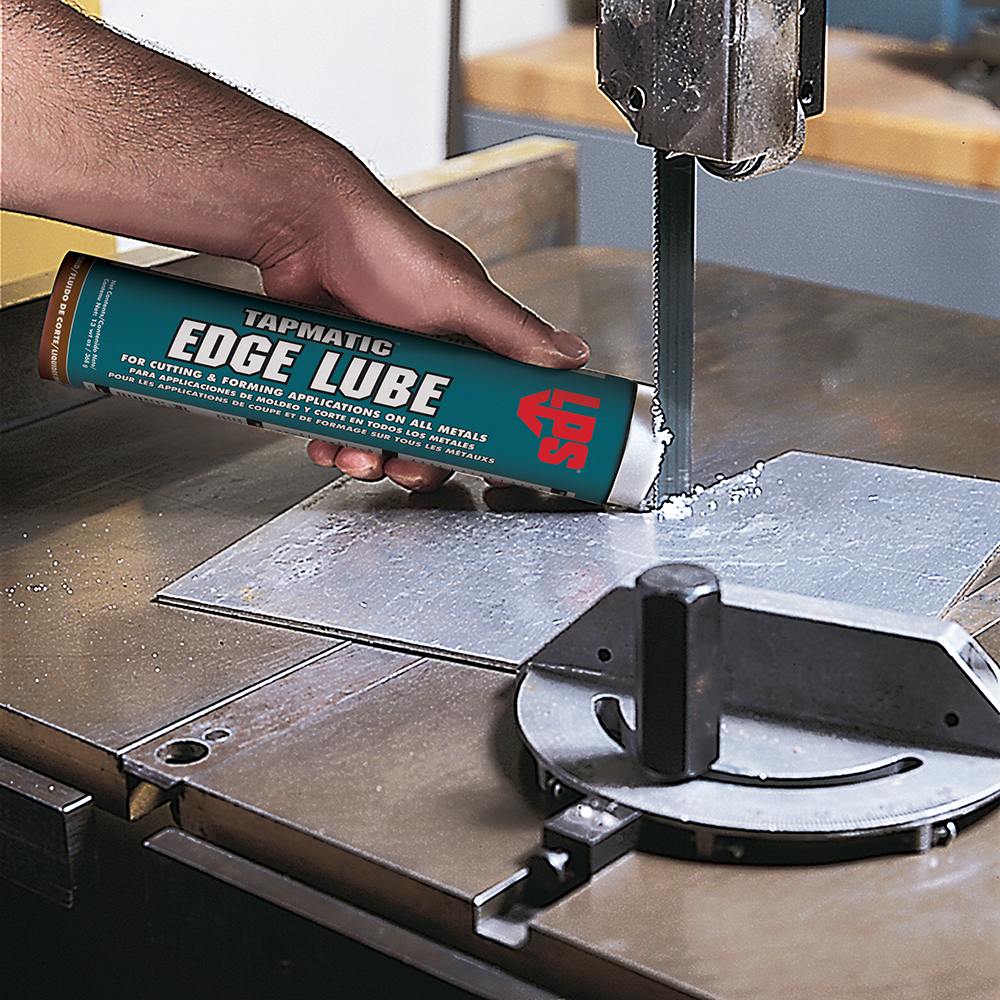
Source: itwprobrands.com
What Does Band Saw Blade Lubrication Do?
Band saw blade lubrication places a suitable cutting fluid between the moving blade and the workpiece to reduce friction and control heat. In metal cutting, the fluid also helps keep chips from packing into the tooth gullets and can protect the blade and machine from corrosion depending on the formulation.
The terms coolant, cutting fluid, cutting lubricant, and sawing fluid are sometimes used interchangeably, but they emphasize different functions. A coolant is generally selected for heat removal, while a lubricant is intended to reduce friction. Many metal-cutting fluids perform both functions, so the most useful question is not which word appears on the container but whether the product is specified for your band saw application.
Lubrication is especially useful when the blade is cutting metals that generate significant heat or tend to produce sticky chips. Stainless steel, some alloy steels, aluminum alloys, and other materials may require different fluid characteristics and cutting conditions. The blade manufacturer’s recommendations should take priority over a generic fluid recommendation.
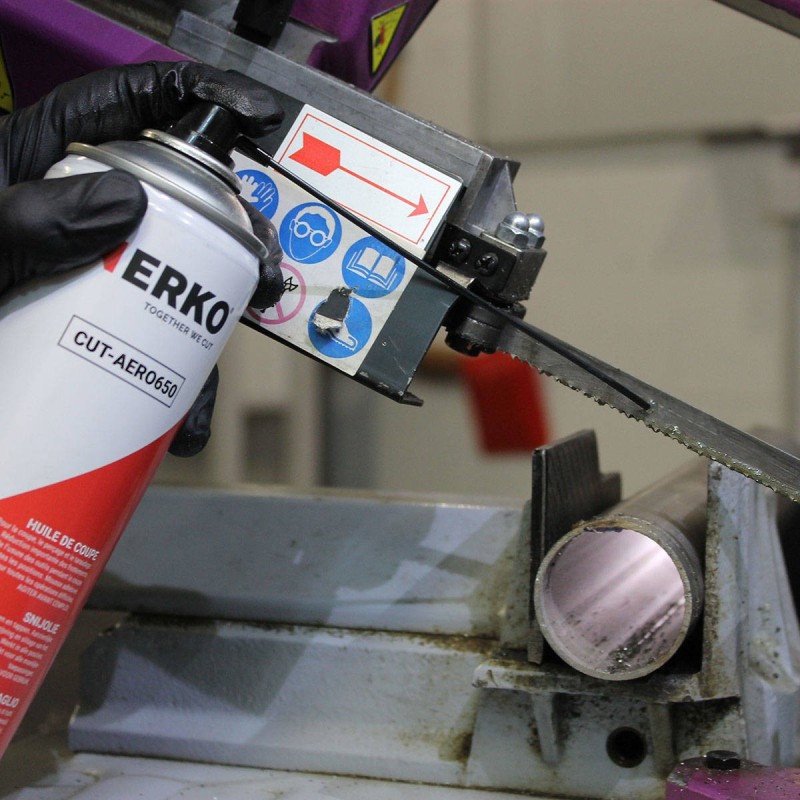
Source: commentfer.fr
Reduces friction
A suitable fluid reduces sliding and rubbing at the cutting interface, helping the teeth cut rather than drag excessively against the workpiece.
Controls heat
Cooling and lubrication reduce thermal stress on the teeth and help prevent conditions that accelerate tooth wear.
Improves chip evacuation
Properly applied fluid can help chips leave the tooth gullets instead of packing into them and interfering with the next part of the cut.
Supports blade life
Correct fluid selection and application can reduce wear caused by excessive heat, friction, and chip loading, although blade life also depends heavily on speed, feed, tooth selection, tension, and material.
Lubrication Is Not the Same as Machine Lubrication
Band saw blade lubrication refers to the cutting interface. It should not be confused with lubricating the machine’s bearings, gearbox, pivots, or other service points. Those components may require a completely different oil or grease, and some bearings may be permanently sealed and require no additional lubricant.
Do not substitute gearbox oil, bearing grease, penetrating oil, or a general-purpose household lubricant for a cutting fluid unless the saw or fluid manufacturer specifically permits it. The wrong product can interfere with blade tracking, contaminate machine components, damage seals, or create other maintenance problems.
Blade cutting zone
Use the specified cutting fluid or lubricant for the blade-to-workpiece interface.
Bearings and guides
Service these components only according to the machine manufacturer’s maintenance instructions.
Gearbox
Use the specified gear oil and service interval rather than the cutting fluid.
Which Lubricant Should You Use for a Band Saw Blade?
The correct lubricant depends on the machine, material, blade, cutting method, and delivery system. A horizontal metal-cutting band saw with a recirculating coolant tank has different requirements from a small vertical saw using a hand-applied lubricant. Start with the owner’s manual and the blade manufacturer’s recommendations.
Common options include water-soluble cutting fluids, semi-synthetic fluids, synthetic fluids, straight cutting oils, minimum-quantity lubrication fluids, and solid or wax-like lubricants for selected applications. There is no single formulation that is correct for every band saw.
For a recirculating system, concentration matters. A fluid that is too weak may provide inadequate lubrication and corrosion protection, while an overly concentrated mixture can increase residue, cost, or other operating problems. Use the concentration specified for the particular product and verify it with the recommended measurement method, such as a refractometer when applicable.
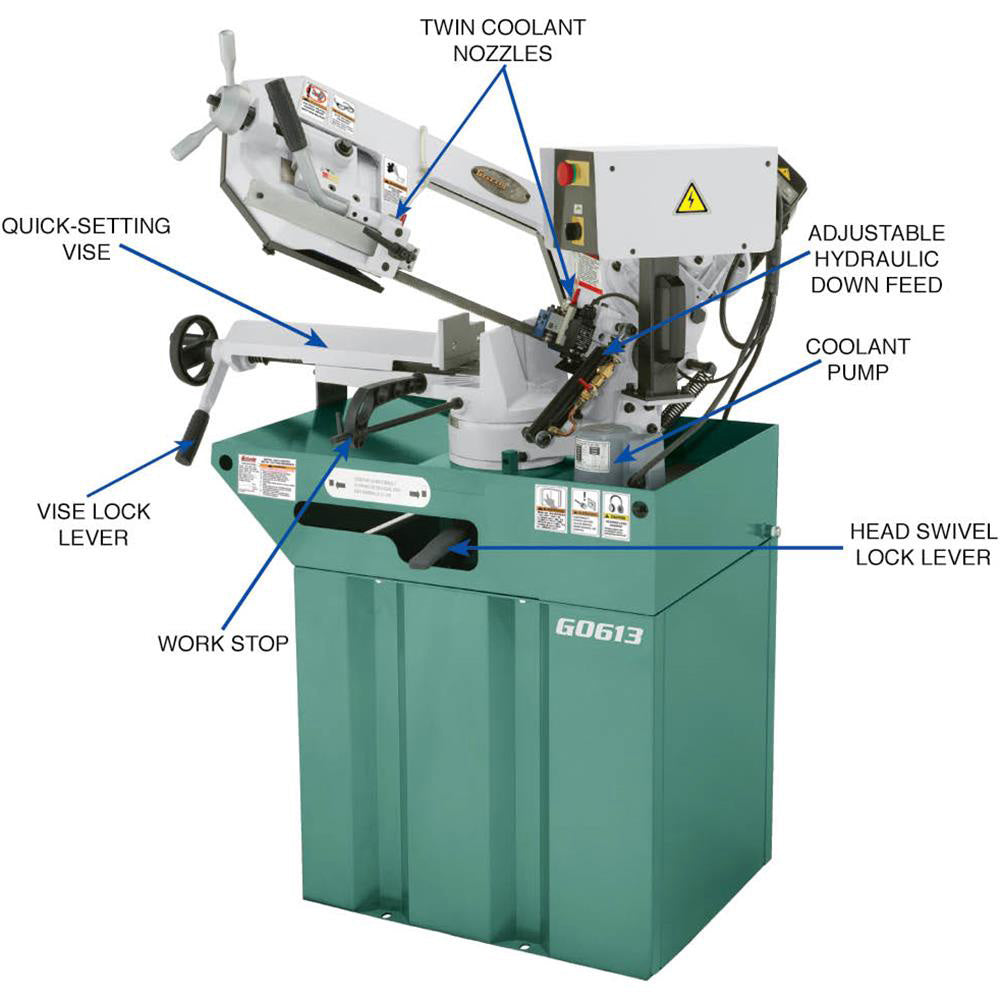
Source: bandsawbladesdirect.com
Water-soluble or emulsion coolant
Useful for machines equipped with a reservoir and pump where cooling, lubrication, and chip flushing are all required.
Semi-synthetic coolant
Combines properties of water-based cooling with lubricating additives and is commonly used in metal-cutting applications.
Synthetic coolant
Uses synthetic chemistry rather than conventional mineral oil and may be selected where clean operation and specific cooling characteristics are important.
Minimum-quantity lubrication
Applies a small controlled amount of lubricant directly to the blade rather than circulating a large volume of coolant.
Solid or wax lubricant
Can be useful for selected portable, vertical, or intermittent cutting operations where a flood system is impractical.
Should You Use Oil or Water-Based Coolant?
Neither is automatically better for every application. A flood coolant system is useful when the operation needs continuous cooling and chip flushing, while a targeted lubricant system can reduce fluid consumption and keep the machine and chips relatively dry. The decision should be based on the saw’s design, cutting conditions, material, and manufacturer recommendations.
For a machine designed around a recirculating coolant system, do not remove the coolant system simply because a concentrated lubricant appears easier to use. Likewise, do not add a random oil to a water-based coolant reservoir. Different fluid chemistries can behave poorly when mixed.
Check compatibility
Confirm that the fluid is suitable for the blade, workpiece, machine seals, pump, hoses, and coolant system.
Follow the label
Use the manufacturer’s mixing, handling, storage, and disposal instructions.
Avoid unapproved mixtures
Do not combine different coolant products unless their manufacturers specifically state that the combination is compatible.
How to Lubricate a Band Saw Blade Properly
Proper application means delivering the right fluid to the cutting area at a controlled rate while keeping the rest of the machine as clean and dry as the design requires. Before changing fluid type, installing an applicator, or modifying a coolant system, consult the machine manual.
The following procedure applies as a general framework for metal-cutting band saws. Exact controls, flow rates, concentration, and nozzle positions vary by machine.
Source: bemap.com.mx
1. Identify the cutting conditions
Confirm the workpiece material, blade type, tooth pitch, blade speed, feed setting, and whether the machine uses flood coolant, drip lubrication, mist, or minimum-quantity lubrication.
2. Select the specified fluid
Use a cutting fluid or lubricant intended for band saw or metal-cutting applications and compatible with your machine.
3. Prepare the system
For a reservoir system, clean and inspect the tank, screen, hoses, pump, and nozzles as required by the machine manual. Make the coolant mixture at the specified concentration.
4. Aim the delivery
Position the nozzle, brush, wick, or applicator so lubricant reaches the teeth, gullets, or cutting interface without unnecessarily spraying the wheels or other components.
5. Start lubrication before cutting
For a powered coolant system, establish fluid flow before the blade enters the workpiece. Do not wait until the blade is already overheating.
6. Adjust the amount
Use enough fluid to maintain the required cutting conditions without producing uncontrolled spray, pooling, or floor contamination.
7. Observe the cut
Watch for abnormal noise, excessive heat, chip packing, smoke, tooth loading, poor surface finish, or changes in cutting behavior.
8. Stop and inspect when conditions change
If the material, blade, speed, feed, or cutting geometry changes significantly, reassess lubrication rather than assuming the previous setting remains correct.
Where Should the Lubricant Hit the Blade?
The useful target is the cutting region where the teeth engage the workpiece. Depending on the saw design, delivery may be directed at both sides of the blade, the tooth gullets, or the point immediately before the blade enters the material. Some systems use guide-mounted nozzles or brushes specifically to place fluid close to the cutting teeth.
Avoid directing unnecessary fluid onto the drive wheels. A contaminated wheel surface can create tracking or traction problems on machines that are not designed for wet operation in that area. Always follow the machine manufacturer’s nozzle arrangement.
Good coverage
The cutting teeth remain adequately lubricated as they enter the workpiece.
Poor coverage
One side of the blade receives fluid while the opposite side or the tooth gullets remain dry.
Excessive coverage
Fluid sprays away from the cut, contaminates machine surfaces, or creates a floor and housekeeping problem without improving the cutting interface.
How Much Lubricant Does a Band Saw Blade Need?
There is no universal band saw blade lubrication rate. The correct amount depends on the fluid, delivery method, blade size, material, cutting speed, feed rate, and machine design. A manufacturer’s specified flow or concentration should take precedence over a generic rule.
For flood systems, the objective is adequate coverage of the blade and cutting zone rather than maximum flow. Too little coolant can allow the blade to overheat and load with chips. Too much flow can create unnecessary splashing, cleanup, slippery surfaces, and coolant consumption.
For minimum-quantity lubrication systems, the amount can be dramatically smaller because the lubricant is delivered directly to the cutting interface. Some commercial MQL systems specify only a few ounces of lubricant per shift, but that figure applies to the particular system and application and should not be treated as a universal setting for every band saw.
Source: maxtool.com
Signs of insufficient lubrication
Rising blade temperature, dry-looking teeth, chip welding or loading, excessive tooth wear, smoke, or deteriorating cut quality can indicate inadequate lubrication or another incorrect cutting condition.
Signs of excessive application
Heavy splashing, uncontrolled runoff, wet floors, excessive residue, or fluid reaching areas that should remain dry indicate that the delivery system may need adjustment.
Check concentration separately
A coolant can appear visually correct while having the wrong concentration. Use the measurement method specified by the coolant manufacturer.
A Simple Concentration Calculation
If a coolant manufacturer specifies a particular water-to-concentrate ratio, calculate the required quantities from the total mixture volume rather than estimating by eye. For example, a hypothetical 10:1 water-to-concentrate mixture contains 10 parts water for every 1 part concentrate, giving 11 total parts. A 11-gallon batch would therefore contain 10 gallons of water and 1 gallon of concentrate.
That example is only a calculation method, not a recommended band saw coolant ratio. Always use the ratio printed on the specific product label or technical documentation.
Measure the total batch
Decide how much finished coolant the reservoir requires.
Apply the specified ratio
Calculate water and concentrate quantities using the product’s stated mixing instructions.
Verify when required
Use a refractometer or other specified test method when the coolant manufacturer recommends concentration verification.
Band Saw Lubrication Problems and Troubleshooting
When a lubricated band saw still produces poor cuts or short blade life, do not assume the fluid is the only problem. Blade tension, tooth pitch, speed, feed, break-in, guide adjustment, workpiece movement, blade condition, and coolant concentration can produce similar symptoms.
Start with the safest and most useful checks. Stop the machine before inspecting the blade, guides, coolant system, or other moving components, and follow the manufacturer’s lockout or maintenance procedure where applicable.
Source: mscdirect.com
Blade overheats
Check coolant or lubricant flow first, then verify fluid concentration, nozzle alignment, blade speed, feed pressure, tooth selection, and whether the blade is dull or damaged.
Teeth load with chips
Check lubricant flow and concentration, chip-brush condition, tooth pitch, cutting speed, feed pressure, and material characteristics.
Blade breaks prematurely
Do not blame lubrication automatically. Check blade tension, feed pressure, blade selection, guide adjustment, wheel alignment, break-in procedure, and cutting fluid recommendations.
Cut wanders or deviates
Inspect blade tension, guide adjustment, tooth condition, workpiece clamping, feed settings, and blade selection. Lubrication alone will not correct mechanical misalignment.
Coolant makes a mess
Reduce uncontrolled flow only within the machine manufacturer’s acceptable range and redirect the nozzles toward the cutting zone. Inspect guards, trays, return paths, and leaks.
Coolant becomes dirty or develops an odor
Follow the fluid manufacturer’s maintenance procedure for checking concentration, contamination, biological growth, filtration, cleaning, and replacement.
Why Can a Properly Lubricated Blade Still Wear Quickly?
Lubrication is only one part of the cutting system. A blade can wear rapidly even with adequate fluid if the feed pressure is excessive, the blade speed is inappropriate, the tooth pitch does not match the material and section size, the blade was not properly broken in, the workpiece moves in the vise, or the guides are incorrectly adjusted.
Manufacturer troubleshooting guides commonly associate premature tooth wear and breakage with several interacting factors, including incorrect cutting fluid or concentration, excessive feed, incorrect speed, wrong tooth selection, hard scale, and poor machine adjustment. Treat lubrication as one diagnostic variable rather than the complete solution.
Cutting fluids require the same practical attention as other industrial chemicals and machine-maintenance materials. Read the product label and safety documentation before use, especially when using concentrated fluids, aerosols, or products that can produce mist.
Never apply lubricant to an exposed moving blade by hand. If the machine requires manual application, use the procedure and applicator specified for that operation and keep hands away from the blade. For maintenance, adjustment, cleaning, or nozzle work, disconnect power and follow the machine manufacturer’s safety procedure.
Coolant on the floor can create a slip hazard. Leaking hoses, misdirected nozzles, overflowing reservoirs, and contaminated trays should be corrected rather than accepted as normal operation.
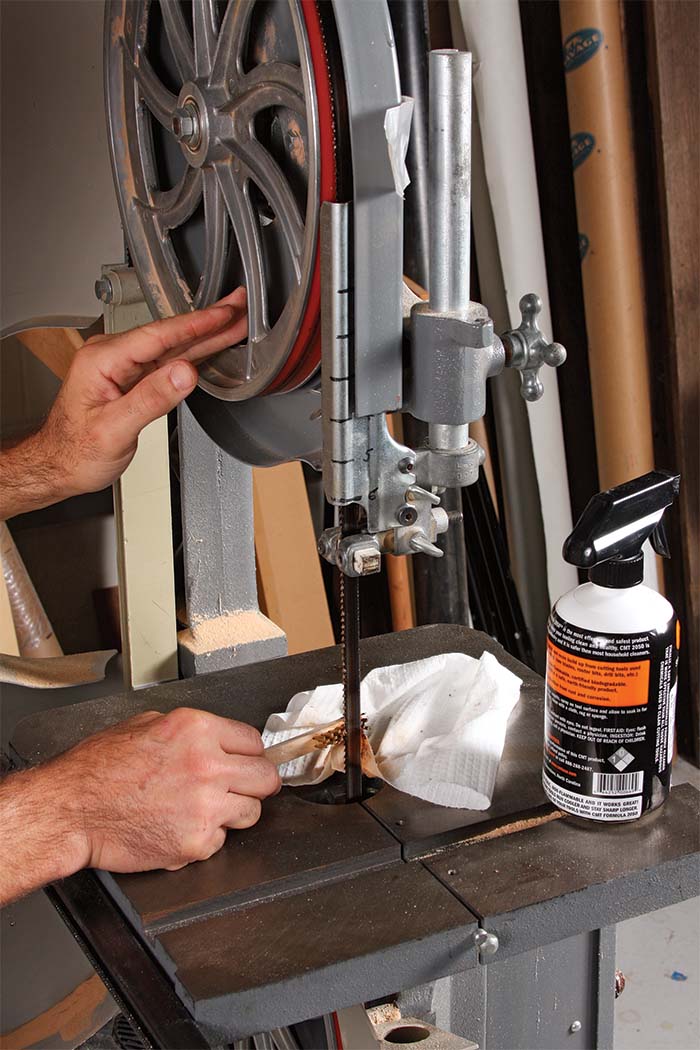
Source: finewoodworking.com
Wear appropriate PPE
Use the eye, hand, skin, hearing, and respiratory protection specified by the machine and fluid safety documentation for the actual operation.
Keep the floor dry
Control leaks and overspray promptly because cutting fluid can make walking surfaces slippery.
Protect the machine
Keep coolant away from electrical enclosures, drive components, bearings, and other areas that are not designed for fluid exposure.
Maintain the coolant
Inspect reservoir condition, concentration, contamination, filters, screens, hoses, and nozzles according to the fluid and machine instructions.
Dispose of fluid correctly
Follow the product safety documentation and applicable local, state, and federal requirements for used cutting fluid and contaminated materials.
What Should You Do Before Changing Coolant?
Identify the existing coolant, check the machine manual, and determine whether the replacement product is compatible with the reservoir, pump, hoses, seals, blade, and workpiece. Do not assume that two water-based fluids can simply be mixed together.
When changing products, follow the coolant manufacturer’s cleaning and flushing instructions. Remove accumulated chips and sludge from the reservoir and filtration system as required. A clean delivery system makes it easier to maintain consistent flow and concentration.
Record the existing product
Identify the brand, product name, concentration, and any relevant maintenance information.
Clean the system
Use the manufacturer’s recommended cleaning process before introducing a new chemistry.
Verify the new mixture
Prepare the replacement coolant according to its own instructions rather than copying the old mixture ratio.
Frequently Asked Questions
Q
Can you run a metal band saw without lubricant?
Some band saw operations can be performed dry, but whether dry cutting is appropriate depends on the blade, material, machine, cutting parameters, and manufacturer’s recommendations. For many metal-cutting applications, coolant or lubrication is used to control heat, reduce friction, and assist chip evacuation. Do not assume that slow feeding alone makes an otherwise unsuitable dry-cutting setup safe or effective.
Q
Can I use WD-40 as band saw blade lubricant?
A general-purpose water-displacing or penetrating product should not automatically be treated as a dedicated band saw cutting fluid. Metal-cutting applications can require specific cooling, lubricating, corrosion-control, and chip-management properties. Use a product explicitly suitable for the cutting operation and compatible with your machine.
Q
Should band saw coolant cover the entire blade?
Not necessarily. The objective is to deliver sufficient fluid to the cutting teeth and workpiece interface. On flood systems, the blade may receive substantial coolant, while targeted lubrication systems place a much smaller amount directly at the teeth. Follow the machine’s nozzle arrangement rather than trying to coat every part of the blade.
Q
Why does my band saw blade get hot even with coolant?
Possible causes include insufficient flow, incorrect coolant concentration, blocked or misaligned nozzles, excessive feed pressure, excessive blade speed, an inappropriate tooth pitch, a dull blade, poor break-in, or difficult material. Check the entire cutting setup instead of simply increasing coolant flow.
Q
How often should band saw coolant be changed?
There is no universal replacement interval. Coolant life depends on the product, concentration, contamination, machine usage, filtration, temperature, and maintenance practices. Follow the fluid manufacturer’s maintenance guidance and monitor the actual condition of the coolant rather than changing it solely on an arbitrary calendar interval.
✦ Wrapping Up
Conclusion
Effective band saw blade lubrication is a controlled cutting-process decision, not simply a matter of putting oil on the blade. The correct fluid, concentration, delivery method, and application point must match the machine, blade, material, and cutting conditions.
For a typical U.S. metalworking shop, begin with the band saw and blade manufacturer’s recommendations. Verify the coolant type and concentration, keep the delivery system clean, direct fluid toward the cutting zone, and monitor the blade for heat, chip loading, tooth wear, and changes in cut quality. If problems continue, inspect speed, feed, tension, tooth pitch, guides, break-in, and workpiece clamping before increasing lubrication.
💡 Key Takeaway
Before your next cut, verify five things: the correct blade, the correct cutting fluid, the correct concentration, proper delivery to the cutting zone, and the manufacturer’s recommended speed and feed. Correct all five together rather than relying on extra lubricant to compensate for an incorrect setup.