The safest band saw blade storage method keeps each blade supported, separated, protected from moisture and sharp teeth, and clearly labeled so you can identify it without unnecessary handling.
For U.S. woodworkers, cabinet shops, maintenance departments, and small fabrication shops, band saw blade storage is more than a housekeeping issue. A loose blade can occupy valuable shop space, become tangled with another blade, develop corrosion, or expose someone to sharp teeth when it is moved. A good storage system should therefore control the blade rather than simply give it somewhere to sit.
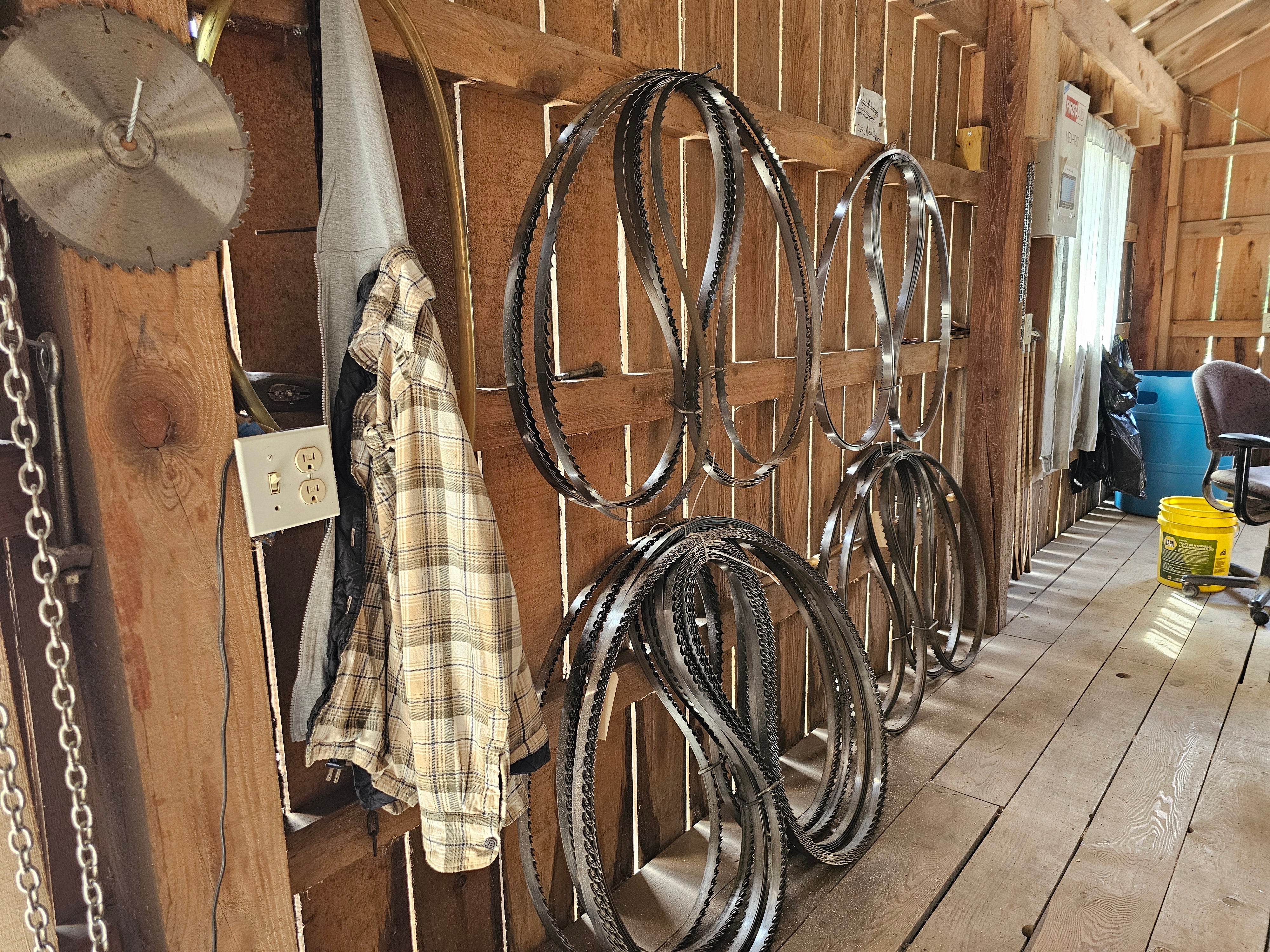
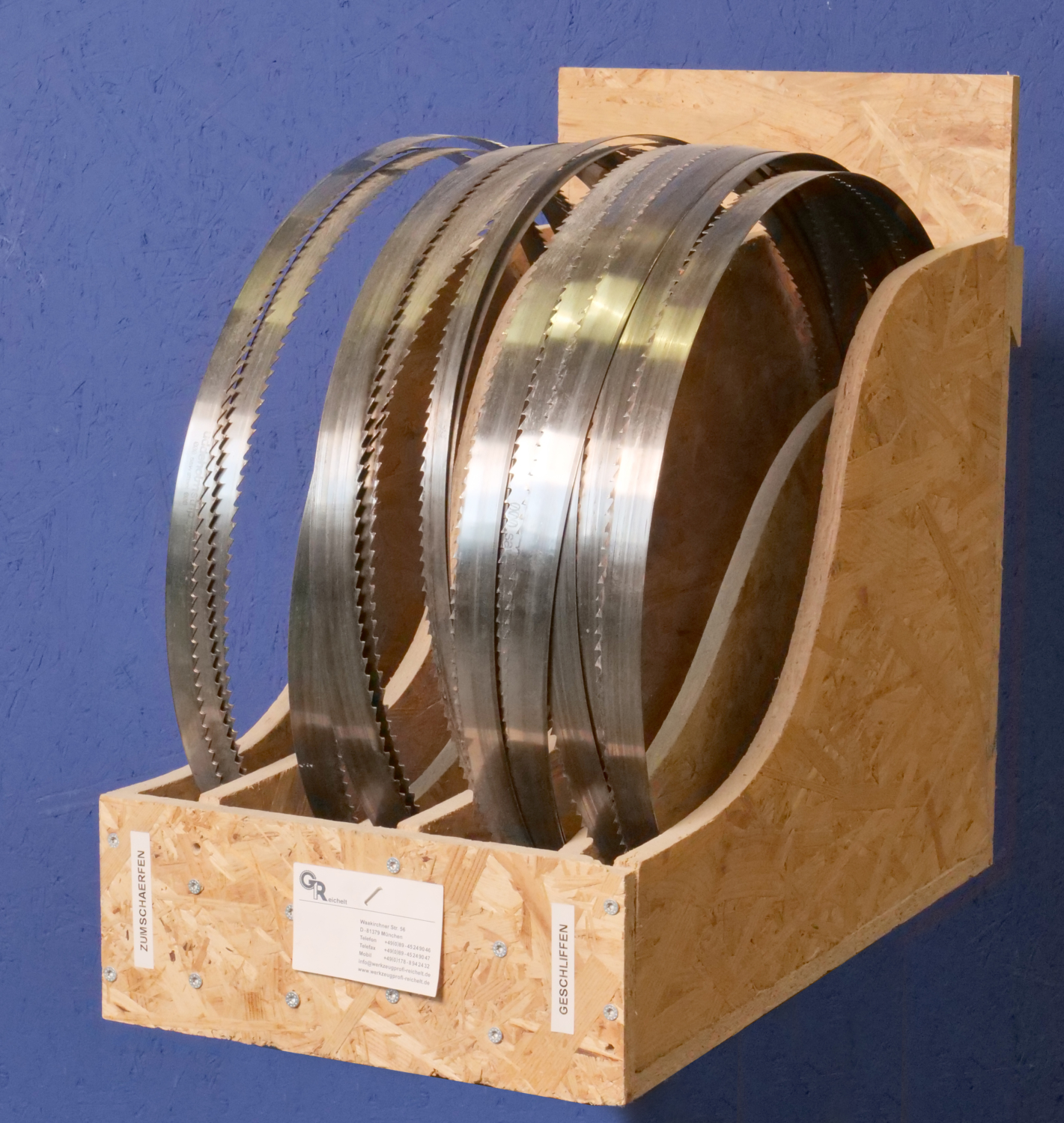
Most band saw blades can be stored either coiled or in an organized hanging system, depending on the blade size, storage space, and how frequently the blade is changed. Wall-mounted racks, vertical slots, dedicated boxes, drawers, and ceiling-mounted organizers are all workable approaches when they support the blade securely and keep the teeth from contacting surfaces or people. The key is to match the storage design to the blade dimensions and the conditions in the shop.
Source: pendellcompanies.com
Why Proper Band Saw Blade Storage Matters
Proper storage protects both the blade and the person handling it. A band saw blade is a long strip of hardened steel with sharp teeth along one edge, and its continuous loop can be awkward to control when it is loose. Allowing several blades to lie together on a bench or floor makes identification and handling harder and increases the chance of accidental contact with the teeth.
Storage also affects organization. Band saws commonly use blades with different lengths, widths, thicknesses, tooth counts, and tooth patterns. Woodworking guidance from WOOD Magazine notes that blade dimensions and tooth configuration vary according to the machine and cutting application. Keeping those specifications visible during storage makes it easier to select the appropriate blade without repeatedly unfolding or handling several blades.
A storage location should also protect blades from avoidable environmental damage. Moisture can promote corrosion on exposed steel, while contact with dirty floors, abrasive debris, or other tools can damage teeth or the blade body. Storage cannot restore a damaged blade, but it can reduce unnecessary damage between uses.
Source: werkbox3.de
Protect the teeth
Prevent the teeth from striking other tools, hard surfaces, or neighboring blades.
Control the blade
Keep the loop supported so it cannot fall, spring loose, or become tangled with another blade.
Make identification easy
Use labels or dedicated compartments so blade specifications can be identified before handling.
Reduce environmental exposure
Keep blades away from standing water, damp floors, corrosive materials, and unnecessary contamination.
What Should a Good Storage System Provide?
A useful storage system provides physical support, separation, protection, and identification. It should also allow the blade to be removed without pulling other blades out of position. For a small home shop, a simple wall rack may be sufficient. A professional shop with many blade types may benefit from individual compartments or a larger rack with clearly labeled positions.
Stable support
The rack, hook, shelf, or cabinet should remain secure under the weight and movement of the stored blades.
Adequate clearance
Provide enough room to remove one blade without forcing it against neighboring blades.
Protected access
Position the storage so normal movement through the shop does not expose people to protruding teeth.
How to Store Band Saw Blades Safely
Start by cleaning and inspecting the blade, then choose a storage position that supports it without creating unnecessary contact with the teeth. Do not place a loose blade where it can be stepped on, rolled over, struck by lumber, or buried under other tools.
If the blade is being stored in a coiled form, keep the loop controlled and place it in a rack, compartment, box, or other holder designed to contain it. If the blade is stored uncoiled, support it at enough points to prevent it from hanging loosely or becoming an obstruction.
Always follow the blade manufacturer’s handling instructions when they specify a particular method. Different blade constructions and sizes can have different handling considerations, so a storage method suitable for a small woodworking blade should not automatically be applied to a large industrial blade.
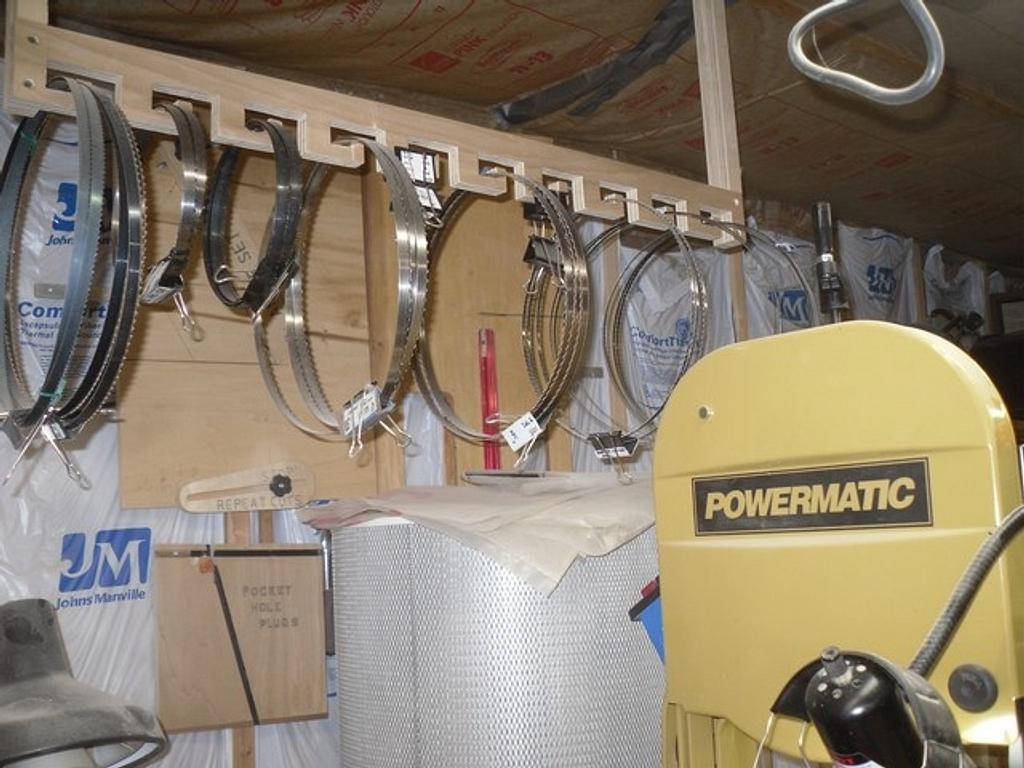
Source: craftisian.com
1. Clean the blade
Remove sawdust, pitch, chips, or other contamination that could retain moisture or interfere with inspection.
2. Inspect the cutting edge
Look for broken, chipped, missing, or unusually worn teeth before putting the blade into storage.
3. Inspect the weld
Check the welded joint for visible cracking, unusual distortion, or other damage.
4. Control the loop
If the blade is coiled, make sure the coil is stable and cannot unexpectedly expand during storage or removal.
5. Protect the teeth
Use the original packaging or an appropriate protective arrangement when it prevents the teeth from contacting other objects.
6. Label the blade
Record the blade length, width, thickness, tooth pitch, and application when those details are useful for selecting the next blade.
How Should You Handle a Coiled Blade?
A coiled blade should be handled deliberately because the stored loop can move unexpectedly if it is released or disturbed. Keep a firm grip on the blade while placing it into its storage position, and avoid holding the toothed edge against your hand. For larger or awkward blades, use a handling method that keeps the blade controlled throughout the transfer rather than trying to manage it with one hand.
Keep hands away from the teeth
Grip the blade in a controlled manner without placing fingers directly across the cutting edge.
Avoid uncontrolled release
Do not drop or throw a coiled blade into a box or onto a shelf where it can spring outward.
Use help for large blades
If the blade is too large or awkward to control safely, use an appropriate second person or handling method.
Band Saw Blade Storage Ideas for Different Shops
There is no single storage design that fits every workshop. The best layout depends on how many blades you own, how much wall and cabinet space is available, how often blades are changed, and whether the blades are stored coiled or supported in another configuration.
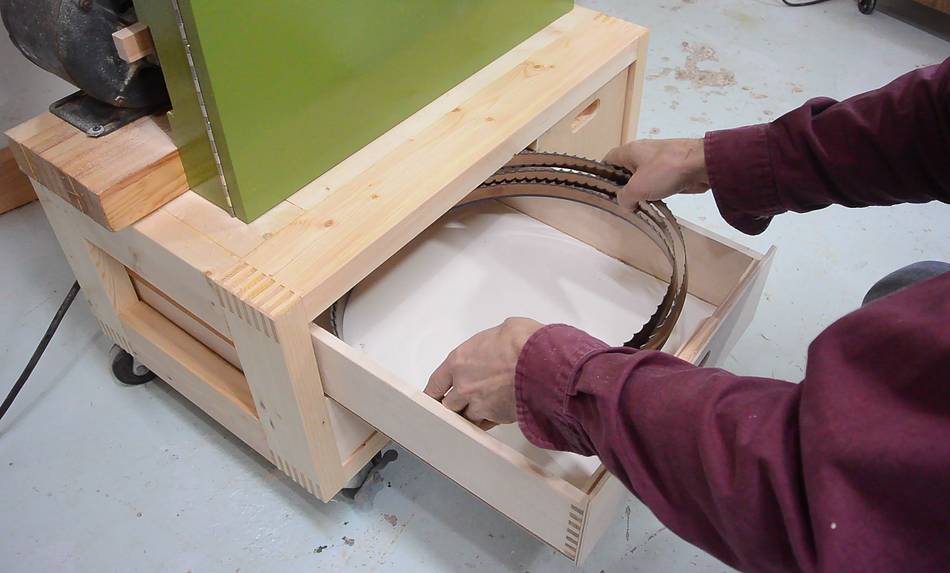
A simple rack is often practical for a small collection because it makes each blade visible and accessible. A compartmented box or cabinet is useful when blades need additional protection from dust and accidental contact. Drawers can work well when floor or wall space is limited, provided the blade can be removed without dragging its teeth across the drawer or neighboring blades.
Dedicated organizers can also make inventory management easier. For example, a rack can assign separate positions to different blade widths or tooth pitches. This prevents the common problem of pulling several blades apart just to find the one needed for a particular cut.
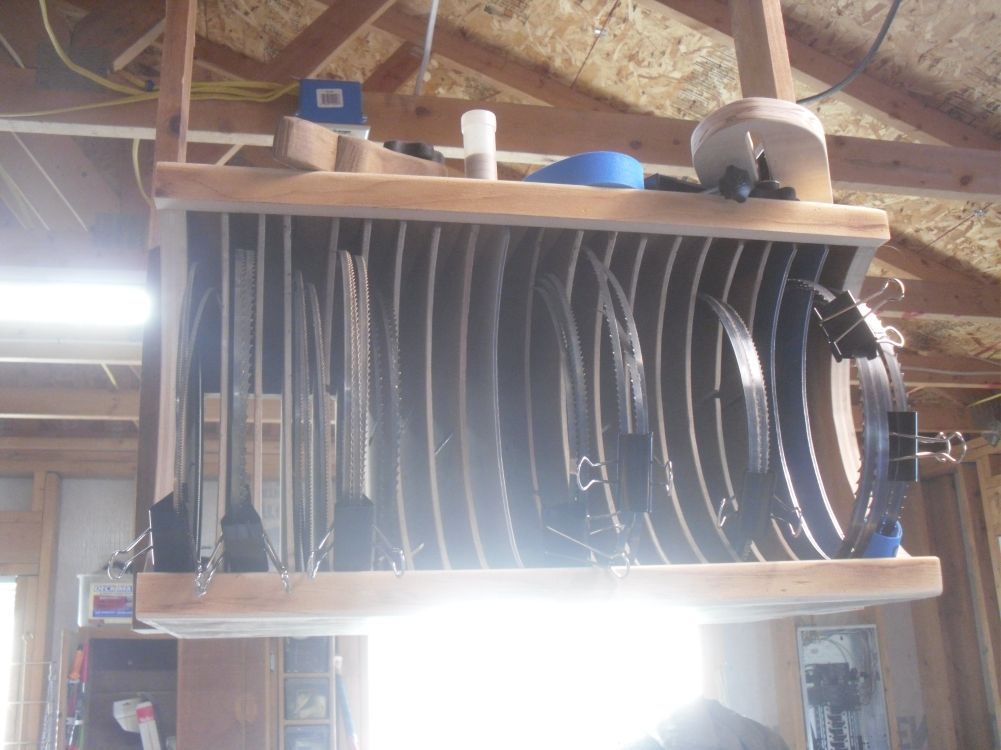
Source: instructables.com
Wall-mounted rack
A good choice when wall space is available and quick visual access is more important than enclosing the blades.
Compartmented box
Useful for keeping multiple coiled blades separated and reducing exposure to shop activity.
Drawer storage
Useful in compact workshops where vertical or wall-mounted storage is limited.
Ceiling-mounted rack
Can use otherwise unused overhead space, but the mounting structure must be appropriate for the load and must not create a falling-object hazard.
Cabinet storage
Provides a controlled location for larger blade collections and can keep blades away from dust, traffic, and other equipment.
Should Band Saw Blades Be Stored Coiled or Flat?
Either approach can work when the storage system properly supports the blade. Coiling saves space and works well with racks designed to hold loops. Flat or compartmented storage can make individual blades easier to separate and identify, especially when the collection contains many different sizes.
The important distinction is not simply whether the blade is coiled. The storage method must prevent uncontrolled movement, tooth damage, and contact with people. If a particular blade is too large, rigid, damaged, or difficult to control safely when coiled, use a storage method recommended for that blade rather than forcing it into a small coil.
Coiled storage
Space-efficient and convenient when the coil is securely contained and labeled.
Compartment storage
Makes individual blades easy to separate and can reduce blade-to-blade contact.
Supported hanging storage
Keeps blades visible and accessible but requires secure mounting and careful placement away from normal traffic.
How to Organize and Label Stored Band Saw Blades
Labeling turns a storage rack into a usable blade inventory. A label should contain enough information to identify the blade without removing it from storage. Useful fields include blade length, width, thickness, teeth per inch or tooth pitch, tooth pattern, material, and intended application.
For woodworking shops, it can also help to identify blades intended for resawing, general cutting, tight curves, or particular materials. The goal is not to create a complicated inventory system; it is to make the correct blade obvious before handling several sharp loops.
Use durable labels that can survive normal shop dust and handling. A removable clip, tag, or label attached to the storage position can be useful when blades are replaced frequently. If blades move between storage locations, labeling the blade itself or its protective packaging reduces the chance of losing identification.
Source: woodstore.net
Blade length
Record the welded or specified blade length used by the saw.
Blade width and thickness
These dimensions help confirm whether the blade is appropriate for the machine and intended cut.
Tooth pitch
Record TPI or the manufacturer’s specified pitch, particularly when multiple tooth configurations are stored together.
Tooth pattern
Identify configurations such as regular, skip, hook, or variable tooth when relevant.
Application
A short description such as resawing, curve cutting, general woodworking, or metal cutting can speed selection.
A Simple Blade Storage Label
A practical label might read: 105 in × 1/2 in × 0.025 in, 3 TPI, skip tooth, resaw. The exact fields should follow the information supplied by the blade manufacturer. Avoid guessing specifications from appearance alone, particularly when several blades look similar.
Use one consistent format
Keeping the same label order makes it easier to compare blades quickly.
Separate new and used blades when useful
A simple status mark can distinguish unused, serviceable, dull, or damaged blades.
Common Band Saw Blade Storage Mistakes
Many storage problems come from treating a band saw blade like an ordinary piece of hardware. Blades are thin, flexible, sharp, and sometimes difficult to control. A storage method that looks convenient can become hazardous if it allows blades to fall, protrude into a walkway, or become buried under other equipment.
Another common mistake is mixing blades without identification. Similar-looking blades can have different widths, tooth pitches, and intended applications. That can lead to unnecessary handling and incorrect blade selection. A simple label system often solves the problem without requiring an expensive organizer.
Avoid storing blades directly on damp concrete floors or in locations exposed to leaks and condensation. If corrosion is visible, clean and evaluate the blade before reuse rather than assuming the discoloration is harmless. A blade with damaged teeth, a questionable weld, significant corrosion, or another defect should not be installed simply because it was previously usable.
Source: woodgears.ca
Leaving blades loose on the floor
This exposes blades to impact, contamination, moisture, foot traffic, and accidental contact.
Stacking unidentified blades
Mixed piles make selection harder and require more handling of sharp blades.
Allowing teeth to contact each other
Repeated contact can damage cutting edges and makes blades more difficult to separate.
Using weak mounting hardware
A storage rack that pulls away from a wall or ceiling can create a falling-object hazard.
Ignoring corrosion
Visible rust or corrosion should trigger inspection before the blade is returned to service.
Forcing an unsuitable blade into a storage system
Storage dimensions should accommodate the blade rather than requiring excessive bending, compression, or unsafe handling.
When Should a Stored Blade Be Removed From Service?
Storage is not a substitute for blade inspection. Before installation, check the teeth, blade body, and welded joint. If the blade has broken teeth, severe corrosion, cracks, unusual deformation, or a damaged weld, follow the manufacturer’s guidance for disposal, repair, or replacement. When the condition cannot be evaluated confidently, do not put the blade into service merely because it fits the machine.
Broken or missing teeth
Do not assume a visibly damaged cutting edge will perform normally.
Questionable weld
The welded joint deserves particular attention because a failed weld can separate the continuous loop.
Severe corrosion
Heavy corrosion or pitting can affect the blade’s condition and warrants careful evaluation.
Bent or distorted blade body
A blade that no longer maintains its intended shape should be evaluated before use.
Frequently Asked Questions
Q
What is the best way to store band saw blades?
The appropriate method depends on blade size and the available shop space. A dedicated rack, compartmented box, cabinet, or drawer can all work when the blade is securely supported, protected from unnecessary contact, and easy to identify. For many small woodworking shops, a wall-mounted rack or compartmented organizer provides a practical balance of access and protection.
Q
Can you store band saw blades coiled?
Yes, band saw blades can be stored coiled when the blade can be safely controlled and the storage system is designed to contain the coil. The coil should be placed where it cannot expand unexpectedly, fall, or become tangled with another blade. Follow the blade manufacturer’s handling instructions for large or unusual blades.
Q
How do you keep band saw blades from rusting in storage?
Keep blades clean and dry and store them away from water, condensation, damp floors, and corrosive materials. Avoid trapping moisture inside packaging. Before long-term storage, inspect the blade and remove contamination according to the blade manufacturer’s maintenance recommendations.
Q
Should band saw blades be stored flat or hanging?
Either method can work. Hanging storage saves floor and shelf space and makes individual blades visible, while flat compartment storage can provide more physical separation. The deciding factors are secure support, safe access, adequate clearance, and protection of the teeth.
Q
How should I label stored band saw blades?
Use the blade manufacturer’s specifications where available. Useful information includes blade length, width, thickness, tooth pitch or TPI, tooth pattern, and intended application. A consistent label format helps you select a blade without repeatedly handling multiple sharp blades.
✦ Wrapping Up
Conclusion
Effective band saw blade storage is built around four goals: control, protection, identification, and dry storage. Whether you use a wall rack, compartmented box, cabinet, drawer, or another organizer, the blade should remain secure and accessible without creating unnecessary handling or contact with sharp teeth.
A good storage system also makes blade selection easier. Labeling blades by their dimensions and tooth configuration prevents unnecessary searching and helps keep blades suited to different cutting tasks separated. Regular inspection remains essential because proper storage can reduce damage but cannot make a worn or defective blade safe to use.
💡 Key Takeaway
Choose a storage system that securely supports every blade you own, keeps the teeth protected and away from normal traffic, keeps the blades dry, and lets you identify the correct blade before you handle it.