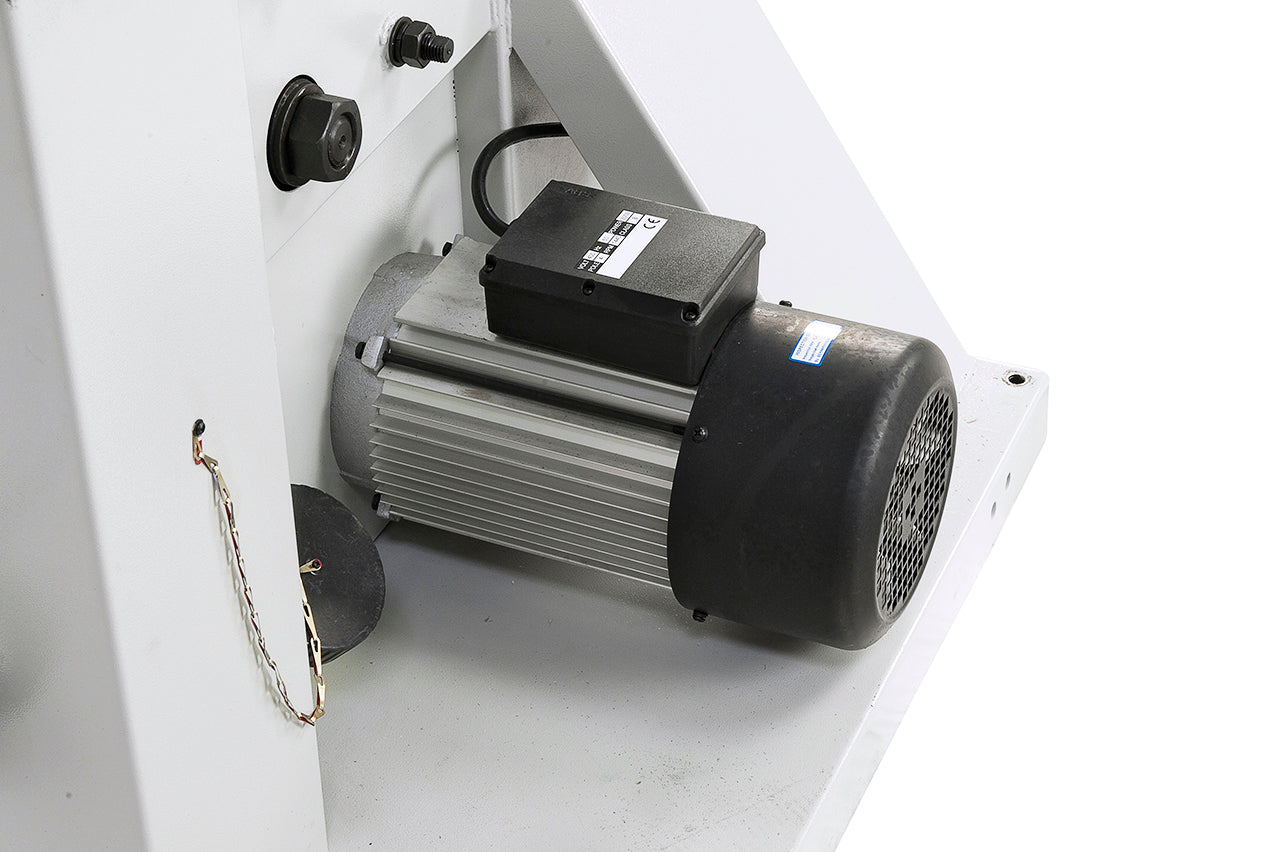
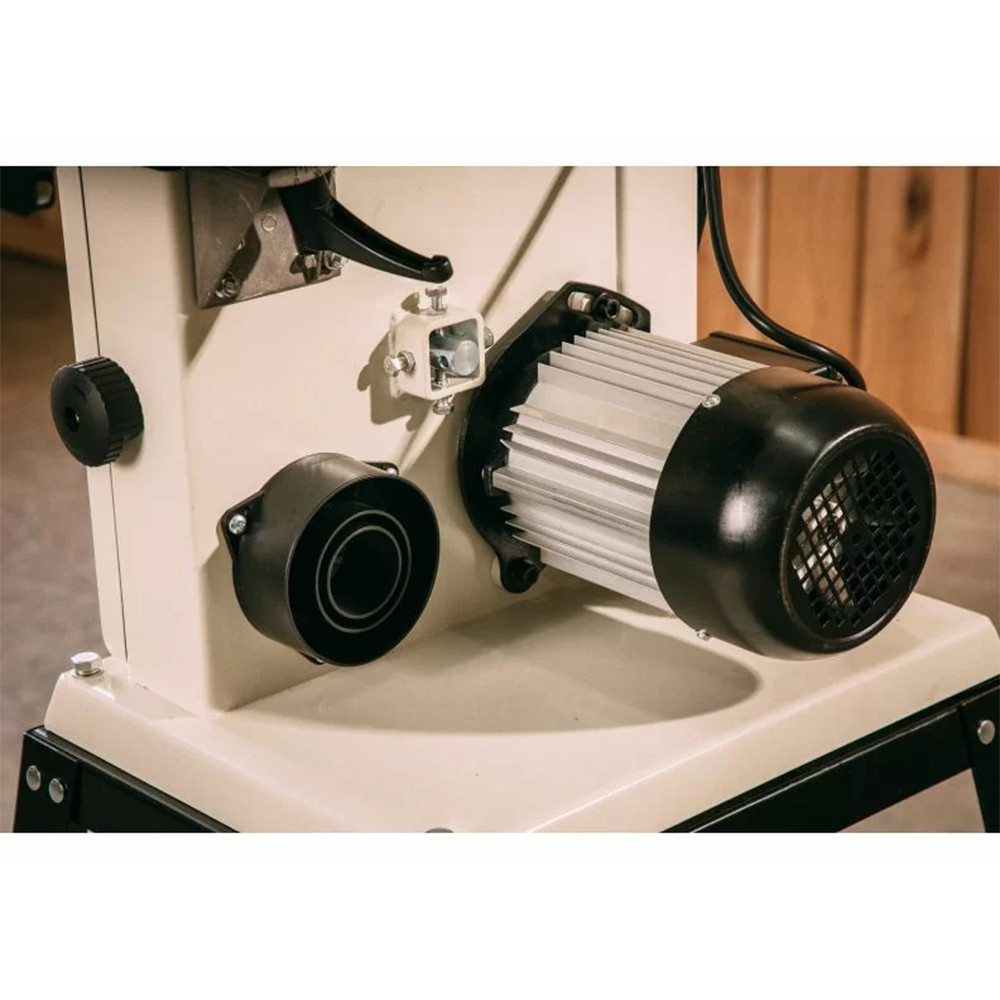
Band saw motor maintenance consists mainly of keeping the motor clean and adequately cooled, checking its mounting and electrical connections, inspecting the drive belt and pulleys, watching for abnormal noise or vibration, and following the motor manufacturer’s lubrication instructions. Many band saw motors use sealed bearings that do not require routine greasing, so do not lubricate a bearing unless the motor documentation specifically calls for it.
For U.S. woodworkers, cabinet shops, maintenance departments, and small fabrication shops, a band saw motor usually works in an environment filled with fine sawdust, chips, heat, and vibration. Those conditions make routine inspection especially useful because contamination or a loose drive system can affect cooling, power transmission, and motor life.
The motor should be treated as one part of the complete drive system rather than as an isolated component. A bandsaw can appear to have a motor problem when the actual cause is a slipping belt, misaligned pulley, overloaded blade, restricted cooling airflow, loose mounting hardware, or a worn bearing elsewhere in the drive train. Good maintenance therefore starts with a safe shutdown and a systematic inspection instead of immediately replacing the motor.
Source: upload.wikimedia.org
What Does Band Saw Motor Maintenance Include?
Band saw motor maintenance is the routine inspection, cleaning, adjustment, and servicing needed to keep the motor and its drive system operating within the conditions specified by the manufacturer. It normally includes external cleaning, cooling-air inspection, drive-belt and pulley inspection, motor-mount checks, electrical inspection, bearing assessment, and observation for abnormal temperature, noise, or vibration.
The exact maintenance requirements vary by band saw and motor design. A small U.S. benchtop wood band saw may use a compact induction or other enclosed motor with permanently lubricated bearings, while a larger industrial saw may use a heavier motor with serviceable bearings, a separate belt drive, or additional controls. The motor nameplate and the band saw owner’s manual should therefore take priority over a generic maintenance interval.
The most useful distinction is between maintenance that the operator can perform and work that requires electrical or motor-service expertise. Cleaning dust from the exterior and checking a belt are generally routine mechanical tasks. Opening electrical enclosures, testing energized circuits, servicing capacitors, changing motor wiring, or diagnosing a variable-frequency drive can expose you to hazardous voltage and should be handled only by a person qualified for that work.
Source: professional-tools.net
Cleaning
Remove accumulated sawdust and debris from the motor exterior, cooling openings, surrounding cabinet, and belt area without forcing contamination into electrical components.
Cooling
Keep the motor fan, ventilation openings, and surrounding air path clear so heat can leave the motor normally.
Mechanical inspection
Check motor mounting hardware, belt condition, pulley alignment, belt tension, shaft-related symptoms, and unusual vibration.
Electrical inspection
Look for damaged cords, loose connections, deteriorated insulation, damaged switches, overheating marks, and other visible electrical problems.
Why Motor Maintenance Matters
A motor converts electrical energy into rotational force that ultimately drives the band saw blade. If cooling is restricted or the mechanical load becomes abnormal, the motor can operate under more stress than intended. A slipping or poorly aligned belt can also create heat and vibration while reducing the amount of useful power reaching the drive wheel.
Routine maintenance does not eliminate every motor failure, but it can reveal developing problems before they become obvious during a cut. A change in sound, temperature, vibration, belt condition, or starting behavior is often more useful than waiting for the motor to stop completely.
How to Safely Prepare a Band Saw Motor for Maintenance
Start by stopping the band saw completely and disconnecting it from its power source. For equipment in a professional shop, follow the facility’s lockout and tagout procedure when the maintenance task falls within that procedure. Do not rely on the stop button alone when your hands will enter the machine or when guards will be removed.
After disconnecting the saw, allow rotating components to stop and verify that the machine cannot start unexpectedly. Some electrical systems, including equipment using electronic drives, can retain hazardous electrical energy after the incoming power is disconnected. Do not open an electrical enclosure or touch electrical components unless you are qualified to verify that the equipment is safe.
Wear appropriate eye protection when removing accumulated dust. Compressed air can spread fine wood dust and debris throughout the shop, so a vacuum is often preferable for general cleaning. If compressed air is used where the machine documentation permits it, direct the airflow so that debris is not driven deeper into the motor or electrical enclosure.
Source: static.wixstatic.com
Disconnect power
Unplug the machine or isolate its electrical supply according to the equipment and facility procedures before maintenance.
Prevent unexpected starting
Use the appropriate lockout procedure for workplace equipment and do not depend solely on the control switch.
Allow components to stop
Wait for the blade, wheels, belt, and other moving parts to come to a complete stop before opening guards.
Consider stored electrical energy
Treat capacitors and electronic drives as potentially hazardous until their safe state has been established by a qualified person.
Protect against dust
Use eye protection and suitable dust-control practices when cleaning the motor and machine cabinet.
Basic Maintenance Tools
A typical inspection may require a shop vacuum, clean cloths, appropriate screwdrivers or hex keys, wrenches, and a flashlight. A straightedge can help check pulley alignment on belt-driven machines. More advanced electrical or condition-monitoring tests require instruments and procedures appropriate to the specific motor and should not be improvised.
Keep lubricants away from belts
Oil or grease on a belt can change friction and contribute to slipping, deterioration, or contamination.
Use the manual for specifications
Fastener torque, belt tension, lubrication type, and service intervals can vary substantially between machines.
How to Clean and Inspect a Band Saw Motor
Cleaning the motor is one of the simplest parts of band saw motor maintenance, but the goal is controlled removal of contamination rather than forcing sawdust into the motor. Fine dust can accumulate around cooling openings, fan covers, mounting areas, and the surrounding cabinet.
With power safely isolated, inspect the motor exterior for heavy dust, pitch, oil contamination, damaged ventilation openings, loose covers, and signs of overheating. Clean accessible surfaces with a vacuum and cloth. Follow the band saw and motor manufacturer’s instructions if the motor requires a particular cleaning method.
Do not remove the motor’s electrical cover simply to clean inside unless the service instructions require it and you are qualified to perform that work. A clean exterior does not prove that the windings or electrical connections are healthy, and unnecessary disassembly can introduce additional risks.
Source: images.auctionet.com
Cooling openings
Make sure fan covers and ventilation passages are not packed with sawdust or other debris.
Motor housing
Look for accumulated dust, oil, damaged paint, corrosion, cracks, or other conditions that could indicate an environmental or mechanical problem.
Fan and cover
Check that the cooling fan and protective cover are secure and free from debris that could restrict airflow.
Mounting area
Remove accumulated dust around the motor base and inspect for loose mounting hardware or movement.
Cables and insulation
Inspect accessible wiring for cuts, abrasion, heat damage, loose strain relief, or other visible deterioration.
How Often Should You Clean the Motor?
There is no universal cleaning interval for every band saw. A machine used occasionally in a clean home workshop may need less attention than a production saw operating for long periods in a high-dust environment. Instead of relying on a single calendar interval, inspect the motor regularly and clean it whenever dust begins restricting ventilation or accumulating around the drive system.
The machine manual should take precedence if it specifies a cleaning schedule. Increased dust exposure, long operating periods, or visible buildup are reasons to inspect more frequently.
Inspect the Drive Belt, Pulleys, and Motor Mount
The motor and drive belt form a mechanical power-transfer system. A motor can be electrically healthy while the band saw still loses power because the belt is worn, slipping, contaminated, incorrectly tensioned, or misaligned. Inspection should therefore include the belt and pulleys whenever motor performance changes.
With the machine safely disconnected, inspect the belt for cracks, glazing, fraying, excessive wear, deformation, oil contamination, or other damage. Check the pulleys for obvious wear and make sure the belt sits correctly in the pulley groove or on the intended drive surface. Follow the machine manufacturer’s procedure for checking and adjusting belt tension rather than using a generic tension value.
Pulley alignment also matters. If the motor pulley and driven pulley are not in the same plane, the belt can run unevenly and experience unnecessary side loading. On some machines, motor position is adjustable specifically to set belt tension and alignment. Do not move the motor mount without recording its original position or following the manufacturer’s adjustment procedure.
Source: cdn11.bigcommerce.com
Inspect for belt damage
Replace a belt that is cracked, badly glazed, frayed, damaged, contaminated, or otherwise outside the manufacturer’s acceptable condition.
Check pulley alignment
Use the machine’s specified alignment method to verify that the motor and driven pulleys run in the intended plane.
Check belt tension
Use the manufacturer’s specified tensioning method because excessive or insufficient tension can both create problems.
Inspect motor mounts
Make sure mounting bolts and brackets are secure and that the motor does not move excessively during operation.
Keep the belt dry and clean
Prevent oil, grease, solvents, and other contaminants from reaching the belt unless the belt manufacturer specifically permits a particular treatment.
Symptoms of a Drive-Belt Problem
A slipping belt can produce squealing, inconsistent blade speed, visible belt dust, or a blade that slows noticeably under load. A stiff or deformed belt can contribute to vibration. Misalignment may cause abnormal belt tracking or accelerated wear. These symptoms can overlap with motor or blade problems, so inspect the entire drive system before assuming the motor itself has failed.
Motor Bearings and Lubrication
Motor bearing lubrication is one area where generic maintenance advice can cause damage. Many band saw motors use sealed, permanently lubricated bearings and are not designed for routine greasing. Other industrial motors may have grease fittings and a documented lubrication procedure. The correct approach is to identify the motor and follow its service instructions.
Never add grease simply because the motor is making noise. A bearing can become noisy because of wear, contamination, misalignment, electrical bearing damage, or another mechanical problem. Adding an incompatible lubricant or excessive grease can create additional heat and may not correct the underlying fault.
If the motor has manufacturer-specified grease fittings, use only the specified lubricant and quantity and follow the stated interval. Industrial motors can have specific grease types, quantities, and relubrication intervals. If the motor documentation says the bearings are sealed or permanently lubricated, routine greasing is not part of the maintenance procedure.
Source: professional-tools.net
Sealed bearings
Do not attempt to add lubricant to sealed bearings unless the manufacturer specifically provides a service procedure.
Regreasable bearings
Follow the motor manufacturer’s specified grease type, quantity, application method, and interval.
Do not mix unknown greases
Different grease formulations may not be compatible, so use the lubricant specified for the motor.
Investigate bearing noise
Grinding, rumbling, squealing, or rough rotation can indicate bearing or mechanical problems that require diagnosis rather than automatic lubrication.
Signs of a Motor Bearing Problem
Possible bearing problems include a new grinding or rumbling sound, increasing vibration, excessive shaft movement, abnormal heating near a bearing, or a change in motor noise that follows motor speed. These symptoms are not conclusive by themselves because belt alignment, pulley problems, blade loading, and other components can create similar sounds.
If bearing noise persists after the belt and surrounding mechanical components have been checked, stop using the machine until the condition can be evaluated. A qualified motor or machinery technician can determine whether the bearing needs replacement or whether another component is responsible.
Check Motor Temperature, Noise, and Vibration
Changes in temperature, sound, and vibration are useful condition indicators. A band saw motor will naturally become warm during operation, so warmth alone does not prove that the motor is overheating. The useful comparison is whether the motor is operating within the conditions specified by its manufacturer and whether its temperature or behavior has changed from normal operation.
An overloaded blade, excessive feed pressure, incorrect blade selection, belt problems, restricted cooling, low or incorrect supply voltage, bearing wear, or electrical faults can all contribute to abnormal motor behavior. A motor that becomes progressively hotter during similar work deserves investigation rather than simply being allowed to continue running.
Listen for changes in the normal motor sound. A new hum, grinding sound, rhythmic vibration, squeal, or repeated clicking can provide an early clue. Vibration should also be considered in relation to the belt, pulleys, wheels, blade, and machine frame because the motor may only be transmitting vibration generated elsewhere.
Source: static.wixstatic.com
Excessive heat
Investigate abnormal or rapidly increasing temperature rather than assuming the motor simply needs to cool down.
Burning odor
Stop the machine and investigate immediately if an electrical or insulation-burning smell develops.
New vibration
Check the motor mount, belt, pulleys, wheels, and other rotating components before concluding that the motor itself is defective.
Changed motor sound
A new grinding, rumbling, squealing, or electrical sound warrants inspection.
Repeated breaker trips
Do not repeatedly reset a tripped protective device without identifying the cause.
Why a Band Saw Motor May Overheat
Overheating can result from restricted cooling airflow, excessive mechanical load, incorrect electrical conditions, bearing problems, belt problems, or a motor fault. Blade selection and cutting technique can also affect the load placed on the motor. For example, forcing material through a dull or unsuitable blade can increase the cutting load even though the motor itself has not changed.
The correct response is to reduce risk and identify the cause. If the motor is unusually hot, smells of burning insulation, trips protection repeatedly, or behaves differently from normal, stop the machine and investigate according to the equipment documentation. Electrical measurements and internal motor tests should be performed by qualified personnel.
Band Saw Motor Maintenance Schedule
A practical maintenance schedule should combine frequent visual checks with periodic deeper inspections. The exact interval should come from the band saw and motor manufacturers because operating hours, dust exposure, motor design, and shop conditions differ.
For a U.S. home workshop, a useful routine is to inspect the motor and drive system during regular machine cleanups and perform a more complete inspection at intervals appropriate to the machine’s use. A production shop running the saw for many hours each week may need substantially more frequent inspections than an occasional hobby user.
The schedule below is a starting framework, not a replacement for the machine manual. When the manufacturer’s instructions specify a different interval, use those instructions.
Source: images.auctionet.com
Before use
Look for obvious damage, damaged cords or switches, excessive dust around the motor, loose guards, and unusual conditions around the belt and drive system.
During routine cleaning
Remove accumulated sawdust, inspect cooling openings, check the motor exterior, and look for belt contamination or visible wear.
Periodic mechanical inspection
Inspect belt condition and tension, pulley alignment, motor mounting hardware, and signs of abnormal vibration or movement.
Periodic electrical inspection
Inspect accessible wiring, switches, plugs, connectors, and electrical enclosures according to the machine’s service requirements and only perform electrical work within your qualifications.
Manufacturer-specified lubrication
Lubricate only components that the manufacturer identifies as serviceable and use the specified lubricant and quantity.
Adjusting the Schedule for Shop Conditions
Increase inspection frequency when the band saw operates in a high-dust environment, runs for long continuous periods, experiences frequent vibration, or is exposed to unusual contamination. A clean motor in a lightly used home workshop and a motor running every day in a production woodshop should not be treated as though they have identical maintenance demands.
Heavy dust
Inspect cooling openings and the motor exterior more frequently.
High operating hours
Use operating hours and manufacturer service intervals rather than relying only on a calendar.
Frequent vibration
Investigate the cause promptly because vibration can accelerate mechanical wear.
Band Saw Motor Troubleshooting: Symptoms and Likely Causes
When a band saw motor behaves differently, diagnose the symptom before replacing parts. A motor that does not start, overheats, makes unusual noise, or loses power can have several possible causes. Start with safe visual and mechanical checks, then move toward electrical diagnosis only when the required qualifications and equipment are available.
The table below is expressed as a troubleshooting framework rather than a definitive diagnosis. Several symptoms can have multiple causes, and the exact troubleshooting procedure depends on the band saw model and motor design.
Source: infinitools.mx
Motor does not start
Check the power supply, switch or control circuit, overload protection, cord, plug, and machine-specific interlocks. Do not open or test electrical components unless qualified.
Motor runs but blade slows
Inspect blade condition and cutting load, then check belt condition, belt tension, pulley alignment, and motor behavior.
Motor becomes unusually hot
Check cooling airflow, accumulated dust, mechanical load, belt condition, and abnormal bearing or electrical symptoms.
Motor makes grinding noise
Inspect for bearing or rotating-component problems and stop operation if the noise is severe or worsening.
Motor vibrates excessively
Inspect mounting hardware, belt condition, pulley alignment, motor shaft-related symptoms, and other rotating components.
Breaker or overload trips
Do not repeatedly reset the protection. Investigate the electrical supply, load, motor condition, and control system using the manufacturer’s troubleshooting procedure.
Burning smell
Stop the saw and disconnect power. A burning odor can indicate electrical insulation damage, excessive friction, belt problems, or another fault requiring inspection.
When to Stop Troubleshooting and Call a Professional
Professional service is appropriate when the motor requires internal repair, electrical testing beyond your qualifications, bearing replacement, winding diagnosis, capacitor service, or work inside an electronic drive. The same applies when a protective device repeatedly trips or when the cause of overheating cannot be established safely.
For a production machine, persistent motor problems should also be documented rather than repeatedly reset or temporarily bypassed. A qualified technician can determine whether the fault is in the motor, controls, wiring, drive belt, bearings, or another part of the machine.
Common Band Saw Motor Maintenance Mistakes
Many motor-maintenance problems come from doing the wrong task rather than failing to do enough maintenance. Applying lubricant to sealed bearings, spraying products into electrical components, overtightening belts, ignoring cooling restrictions, and repeatedly resetting an electrical protection device can make a developing problem worse.
Another common mistake is blaming every loss of cutting performance on the motor. Blade sharpness, tooth configuration, blade tension, guide adjustment, wheel condition, belt condition, pulley alignment, and cutting technique can all influence the load and performance of a band saw.
Source: upload.wikimedia.org
Greasing every bearing
Not every bearing has a grease fitting or requires service. Confirm the bearing design and manufacturer’s instructions first.
Using lubricant on the drive belt
Oil and grease can alter belt friction and cause slipping or deterioration.
Ignoring cooling passages
Dust buildup around the motor and fan can restrict airflow and contribute to excessive heat.
Overtightening the belt
More belt tension is not automatically better and can place unnecessary loads on shafts and bearings.
Repeatedly resetting protection
A breaker or overload that trips repeatedly is signaling a problem that should be investigated.
Opening electrical components unnecessarily
Electrical enclosures should be opened only by appropriately qualified personnel following safe procedures.
Replacing the motor too quickly
Check the belt, pulleys, mechanical load, cooling, controls, and other relevant components before concluding that the motor needs replacement.
What Good Maintenance Looks Like
A properly maintained band saw motor should have clear cooling paths, secure mounting, an appropriately maintained drive belt, no obvious electrical damage, and no unexplained changes in noise, temperature, or vibration. The goal is not to make the motor completely maintenance-free; it is to keep the motor operating within its designed conditions and identify abnormal changes early.
Frequently Asked Questions
Q
How often should a band saw motor be serviced?
There is no single interval that applies to every band saw motor. Follow the motor and band saw manufacturer’s maintenance schedule and adjust inspection frequency for operating hours, dust exposure, and shop conditions. Frequent visual cleaning and inspection are generally more useful than relying on a universal calendar interval.
Q
Do band saw motor bearings need grease?
Not necessarily. Many band saw motors use sealed bearings that are lubricated for their service life and are not intended for routine greasing. Some industrial motors use regreasable bearings with specific lubricant and quantity requirements. Identify the motor and follow its documentation before adding grease.
Q
Why does my band saw motor get hot?
A motor can become hot because of normal operating load, but excessive or unusual heating can be associated with restricted cooling, heavy dust buildup, excessive cutting load, belt problems, bearing problems, incorrect electrical conditions, or a motor fault. If the temperature is abnormal or accompanied by a burning odor, repeated overload trips, or unusual noise, stop the machine and investigate the cause.
Q
Can sawdust damage a band saw motor?
Sawdust can interfere with cooling when it accumulates around ventilation openings, fan covers, or the motor housing. The effect depends on the motor enclosure and the environment, but keeping the motor and surrounding area clean is a basic part of preventive maintenance.
Q
What should I check if the band saw motor runs but the blade slows down?
Start with the cutting load and blade condition, then inspect the drive belt, belt tension, pulley alignment, and motor mounting. A slipping belt can reduce power transmission even when the motor is running normally. If the motor itself is overheating, making abnormal noise, or repeatedly losing power, stop operation and have the system diagnosed.
Q
When should a band saw motor be replaced instead of repaired?
Replacement depends on the motor’s condition, availability of service parts, repair cost, machine requirements, and manufacturer specifications. A failed bearing, capacitor, switch, or other serviceable component does not automatically mean the entire motor must be replaced. Internal winding damage or a motor that cannot be economically or safely repaired may justify replacement.
✦ Wrapping Up
Conclusion
Effective band saw motor maintenance is mainly about controlling the conditions that affect the motor and its drive system. Keep sawdust from restricting cooling, inspect the belt and pulleys, verify secure mounting, watch for changes in temperature, sound, and vibration, and follow the motor manufacturer’s instructions for bearings and lubrication.
The most important maintenance rule is to avoid assumptions. Not every motor needs grease, not every hot motor is failing, and not every loss of cutting power originates in the motor. A systematic inspection can separate blade, belt, pulley, mechanical, cooling, and electrical problems before unnecessary parts are replaced.
For routine shop maintenance, begin with safe power isolation, clean inspection points, and documented observations. When the problem involves internal electrical components, persistent overload trips, severe overheating, winding faults, or other hazards beyond routine mechanical service, use a qualified technician.
💡 Key Takeaway
Before the next extended cutting session, disconnect the band saw from power and inspect the motor housing, cooling openings, mounting hardware, belt, pulleys, wiring, and surrounding area. Record anything that has changed from normal operation and use the manufacturer’s manual to determine the correct service procedure before making adjustments.