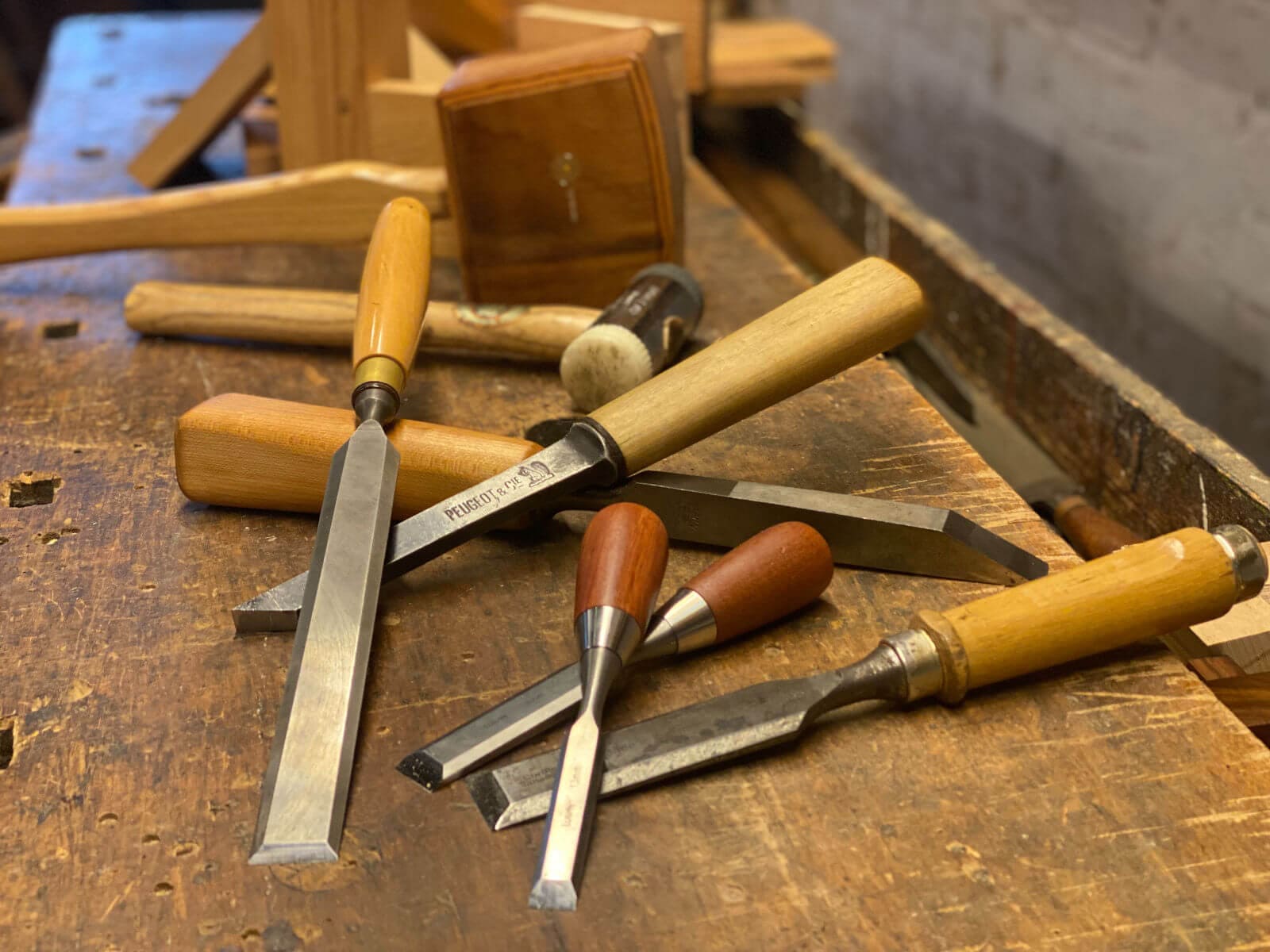
Wood chisel mushrooming happens when repeated hammer impacts spread the striking end outward, creating a dangerous deformed edge that needs correction or replacement.
In U.S. woodworking shops, wood chisels are commonly used for joinery, carving, trimming, and fitting tasks. Regular impact from a mallet or hammer can gradually deform the striking end of a chisel, especially on tools designed to receive repeated blows.
Wood chisel mushrooming is not the same as normal wear. A slightly marked handle or worn finish may be acceptable, but a metal head that flares outward can create sharp fragments when struck. Inspecting and maintaining the tool before continued use helps reduce avoidable workshop hazards.
Source: traditionelehoutbewerking.com
What Is Wood Chisel Mushrooming?
Wood chisel mushrooming is the outward spreading of material at the end of a chisel caused by repeated impact. The damaged area often develops a wider, uneven shape that resembles a mushroom cap.
The condition is most common on chisels that receive frequent blows. Over time, impact forces compress and deform the material at the striking end, changing the original profile of the tool.
Source: estag.fimagenes.com
Main cause
Repeated hammer or mallet strikes create stress that gradually spreads the material at the chisel head.
Common location
Damage usually appears at the striking end, although wooden handles can also deform from repeated impacts.
Why mushrooming happens
The striking end absorbs impact energy each time a chisel is driven into wood. If the force exceeds what the material and design can handle over many uses, the surface begins to deform.
Heavy-duty chisels may be designed for impact, but even these tools require inspection because damaged edges, cracks, or severe deformation can affect safe operation.
Material stress
Repeated compression changes the shape of the striking surface over time.
How to Identify a Mushroomed Chisel Head
A mushroomed chisel head is usually easy to identify by comparing the end of the tool with a new or undamaged chisel. The striking area may appear wider than the shaft, uneven, flattened, or rolled outward.
Before using the chisel again, inspect the edges carefully. Small surface marks may not require immediate repair, but sharp flares, cracks, or loose material require attention.
Source: popularwoodworking.com
Visible flare
The outer edge spreads beyond the original diameter of the chisel.
Raised metal edges
Thin raised sections can break away when struck.
Cracks or chips
Visible damage indicates the tool may need replacement rather than simple dressing.
How to Fix Wood Chisel Mushrooming Safely
The correct repair method depends on the type of chisel and the damaged area. The goal is to remove dangerous projections while preserving the tool’s intended shape.
For metal striking heads, the damaged mushroomed material is typically dressed back using appropriate tools. For wooden handles, damaged fibers may require trimming, reshaping, or replacement.
Source: traditionelehoutbewerking.com
Step 1: Stop using the damaged tool
Do not continue striking a chisel with severe mushrooming because loose fragments may break away.
Step 2: Inspect the damage
Check whether the issue affects only the surface or whether cracks and structural damage are present.
Step 3: Restore the shape
Remove rough edges and reshape the damaged area using a suitable maintenance method.
Step 4: Test before use
Confirm that the repaired area is smooth, secure, and free from loose material.
When replacement is safer than repair
A chisel should generally be replaced when the head is cracked, severely worn, bent, or cannot be restored without removing excessive material. Repairing a tool beyond its safe condition can create a greater risk than replacing it.
Replace when damaged
Deep cracks, missing pieces, or major deformation are signs that repair may not be practical.
How to Prevent Wood Chisel Mushrooming
Preventing wood chisel mushrooming starts with matching the tool to the job and using appropriate striking methods. Good maintenance reduces unnecessary stress on both the chisel and the user.
Woodworkers can extend chisel life by keeping tools clean, storing them properly, and checking the striking end regularly before heavy use.
Source: popularwoodworking.com
Use the right striking tool
Use a suitable mallet or hammer designed for the chisel type instead of applying uncontrolled impact.
Inspect regularly
Check for spreading metal, cracks, loose handles, and other signs of damage.
Store carefully
Protect chisels from accidental impacts and moisture that can damage handles.
Frequently Asked Questions
Q
Is a mushroomed chisel dangerous?
Yes, a severely mushroomed chisel can be dangerous because damaged material may break away during impact. Inspect the tool and correct the damage before continuing use.
Q
Can a mushroomed wood chisel be repaired?
Some mushroomed chisels can be repaired by carefully removing deformed material and restoring the striking surface. Tools with cracks or major structural damage may need replacement.
Q
What causes a chisel handle to mushroom?
Wooden handles can mushroom because repeated strikes compress and spread the wood fibers at the end of the handle. Some traditional designs use this controlled deformation as part of their setup.
Q
How often should I inspect a wood chisel?
Inspect a chisel before regular use, especially if it receives frequent impact. The inspection frequency depends on how often the tool is used and the force applied.
Q
Can I keep using a chisel with minor mushrooming?
Minor surface wear may not require immediate action, but any raised edges, cracks, or loose material should be addressed before more striking.
✦ Wrapping Up
Conclusion
Wood chisel mushrooming is a common result of repeated impact, but it should not be ignored. A quick inspection can reveal whether a tool only needs minor maintenance or whether replacement is the safer option.
Proper striking methods, regular checks, and careful storage help keep chisels reliable for woodworking projects in home shops and professional environments.
💡 Key Takeaway
Inspect the striking end of every impact-used chisel before work begins and repair or replace any tool with dangerous deformation.