Cabinet hinge installation requires accurate measuring, drilling, mounting, and final adjustment.
In the United States, cabinet hinge installation is a common home improvement task for kitchen remodels, bathroom upgrades, and cabinet repairs. Most modern cabinet doors use concealed European-style hinges that allow adjustment after installation.
A successful cabinet hinge installation depends on choosing the correct hinge type, placing the hardware accurately, and checking door alignment before final tightening. Careful preparation helps prevent uneven gaps, rubbing doors, and loose hardware.
Source: walmartimages.com
What You Need Before Installing Cabinet Hinges
Before starting cabinet hinge installation, gather the correct tools and confirm that the hinge matches the cabinet door style. Common tools include a drill, screwdriver, measuring tape, pencil, square, drill bits, and a hinge template when installing concealed hinges.
The installation method depends on the hinge type. Surface-mounted hinges attach directly to the cabinet and door, while concealed hinges usually require a recessed cup hole in the back of the door.
Source: nexusapp.co
Choose the correct hinge type
Verify whether the cabinet uses concealed, overlay, inset, or face-frame hinges before drilling or mounting.
Check door compatibility
Confirm door thickness, cabinet construction, and hinge opening angle requirements.
How to Install Cabinet Hinges Step by Step
Cabinet hinge installation starts with accurate marking. Measure hinge positions from the cabinet door edge and mark each location clearly before drilling.
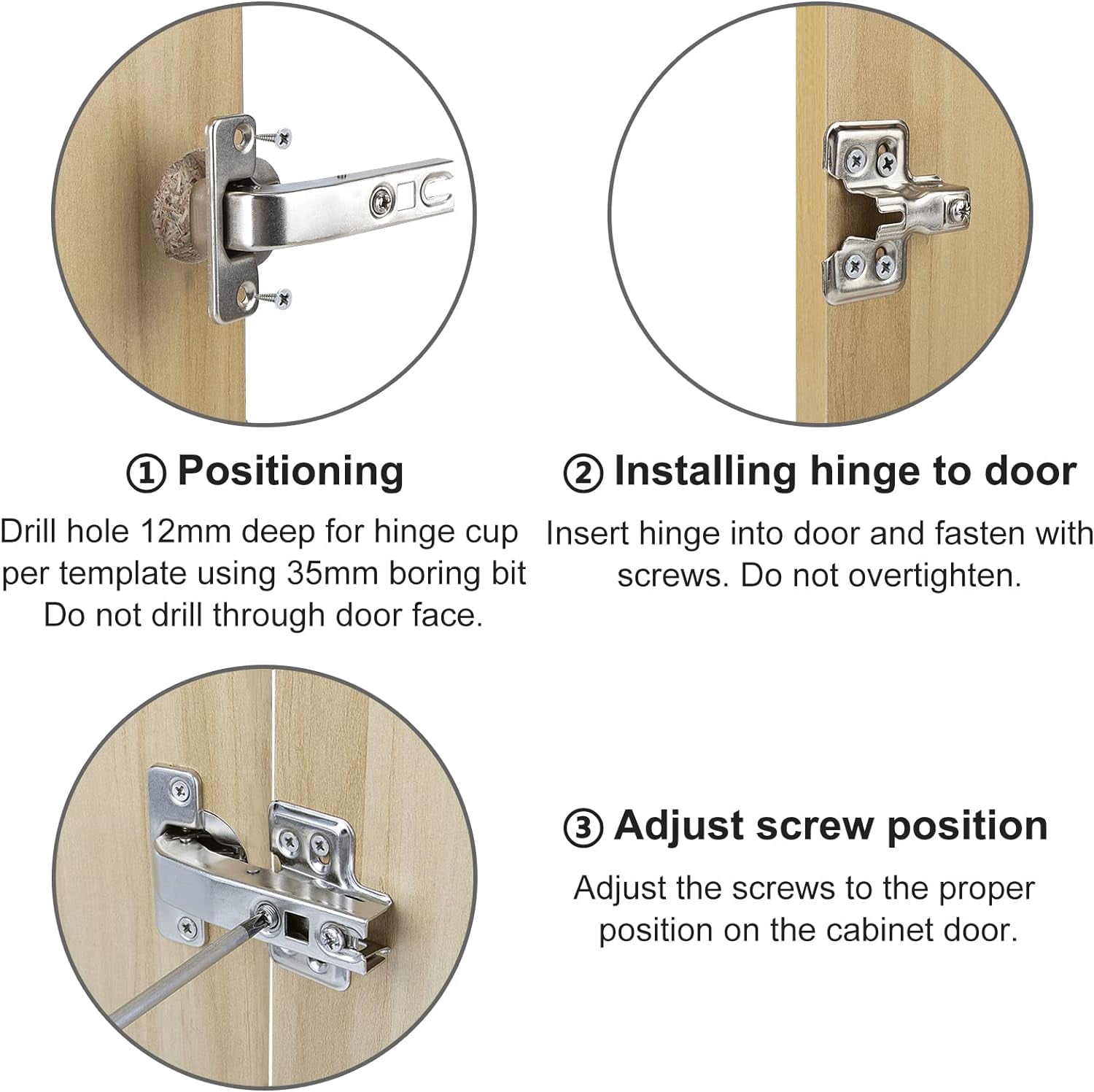
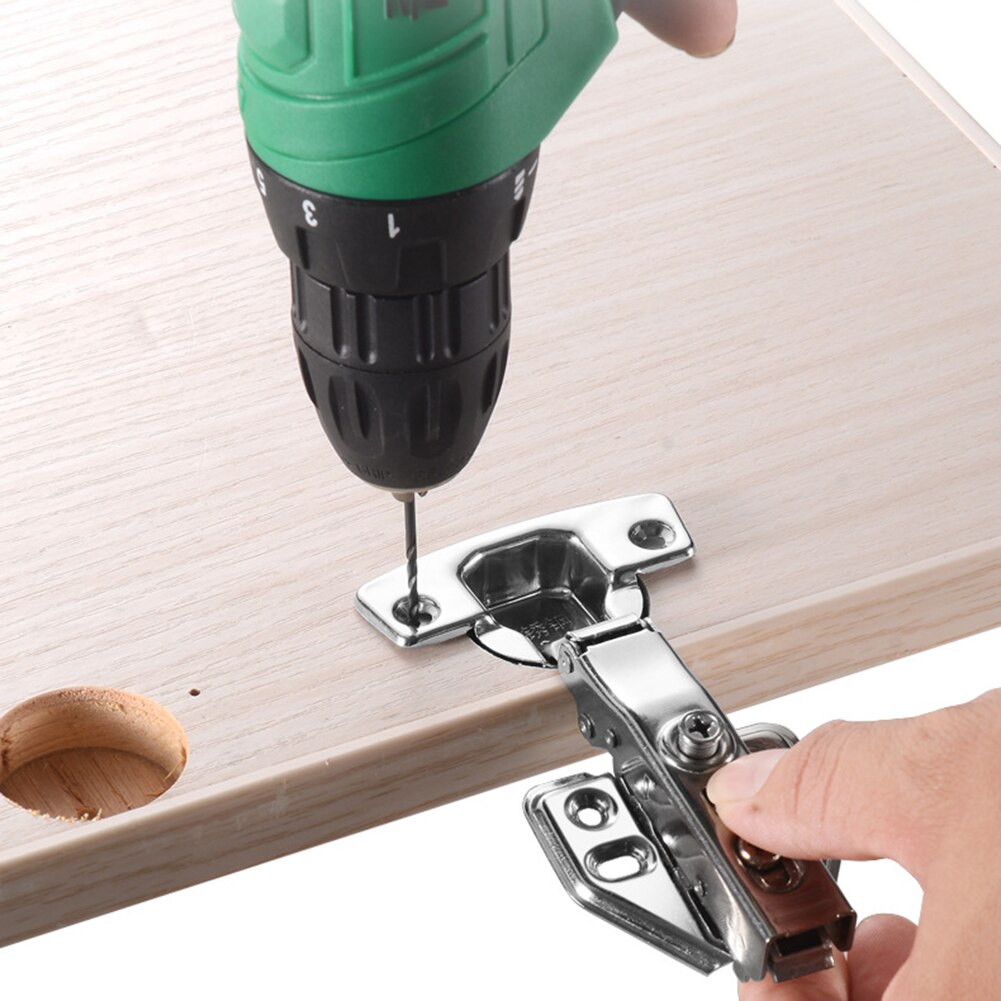
For concealed hinges, drill the hinge cup hole to the required depth using the recommended bit size for the hinge model. Insert the hinge cup, secure the screws, attach the mounting plates, and hang the door.
Source: globalso.com
Mark hinge locations
Use consistent measurements for top and bottom hinges so the door remains balanced.
Install mounting plates
Secure the cabinet-side plates firmly without over-tightening screws.
Attach the door
Clip or screw the hinge arms into place and check movement before final adjustment.
Drilling Concealed Hinge Cup Holes
Concealed hinge cups require careful drilling because the hole depth affects how the hinge sits inside the door. Use a guide when possible to keep the drill straight and avoid damaging the door surface.
Use controlled drilling
Drill slowly and remove wood chips regularly to maintain accuracy.
How to Adjust Cabinet Hinges After Installation
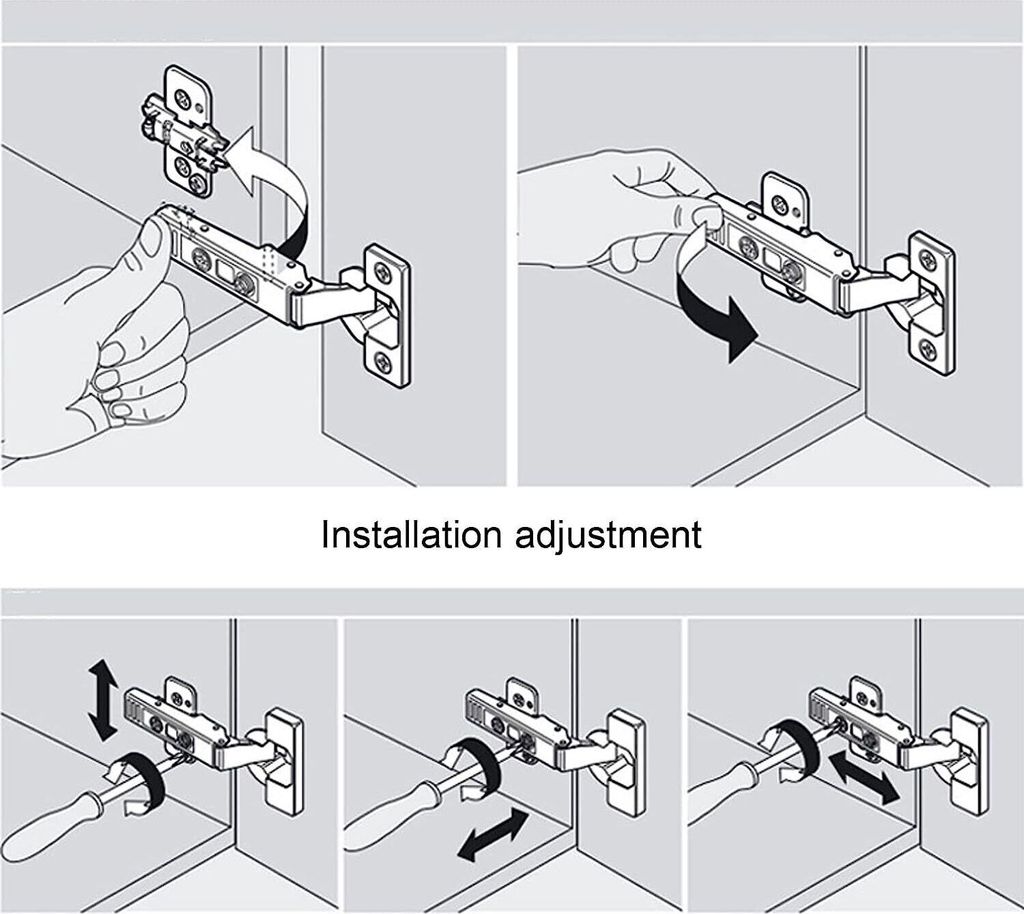
After cabinet hinge installation, most concealed hinges allow small adjustments to improve door alignment. These adjustments help correct uneven gaps, doors that sit too far forward, or doors that do not close evenly.
Adjust the hinge gradually and check the door position after each change. Large corrections may indicate incorrect hinge placement or a damaged cabinet component.
Source: kaufland.de
Side-to-side adjustment
Moves the door left or right to improve spacing between cabinet doors.
Depth adjustment
Moves the door closer to or farther from the cabinet frame.
Height adjustment
Raises or lowers the door position when supported by the hinge design.
Common Cabinet Hinge Installation Problems and Fixes
Most installation problems come from inaccurate measurements, incorrect screw placement, or selecting a hinge that does not match the cabinet style. Checking the cause before making adjustments prevents additional damage.
Source: nexusapp.co
Cabinet door sits unevenly
Check hinge alignment, mounting plate position, and adjustment screws.
Door will not close fully
Inspect for hinge interference, incorrect depth adjustment, or cabinet frame issues.
Loose hinge screws
Use properly sized screws and repair damaged mounting areas before reinstalling.
Frequently Asked Questions
Q
Can I install cabinet hinges without a template?
Yes, some cabinet hinges can be installed without a template, but templates improve accuracy for concealed hinge cup placement. Careful measuring is required when working without a guide.
Q
What size drill bit is commonly used for concealed cabinet hinges?
Many concealed European-style hinges use a 35 mm cup hole, but the correct size depends on the specific hinge model. Always confirm the hinge requirements before drilling.
Q
Why is my cabinet door not aligned after hinge installation?
Misalignment can result from incorrect hinge placement, loose screws, uneven cabinet surfaces, or adjustment settings. Check installation accuracy before making fine adjustments.
Q
How tight should cabinet hinge screws be?
Cabinet hinge screws should be secure but not overtightened. Excessive force can damage the wood or strip the screw hole.
Q
When should cabinet hinges be replaced instead of adjusted?
Replace hinges when parts are bent, damaged, corroded, or no longer hold the door correctly after adjustment. Minor alignment problems can often be corrected with adjustment screws.
✦ Wrapping Up
Conclusion
Cabinet hinge installation is a precise process that combines correct hardware selection, accurate measurements, careful mounting, and final adjustments. Taking time during preparation usually prevents common door alignment problems.
Whether installing new cabinets or replacing old hardware, checking the hinge fit and testing the door movement before finishing the project helps create a reliable result.
💡 Key Takeaway
Measure twice, drill carefully, and make small adjustments after installation to achieve properly aligned cabinet doors.