
Choose the right blade material, tooth count, and geometry for clean, safe cuts.
If you work with wood, your blade calls the shots. In The Ultimate Woodworking Blade Guide, I break down tooth geometry, materials, kerf, and setup so you get glassy edges and straight lines. I have spent years in busy shops and on dusty jobsites, tuning saws and testing blades. Use this roadmap to pick faster, safer, and sharper options that match your projects.
Blade basics: types and key terms
Every cut starts with choosing the right blade. Rip blades move fast with big gullets and fewer teeth. Crosscut blades use more teeth and fine geometry. A combination blade blends both.
Know these key terms:
- Tooth count. Lower for ripping (18–30). Higher for crosscuts (60–100).
- Gullet. The space that clears chips. Bigger gullets remove waste fast.
- Hook angle. Positive pulls into the cut. Negative slows the feed and adds control.
- Grind. ATB, FTG, TCG, and hybrids set how the tooth meets the wood.
- Kerf. The cut width. Thin kerf saves power. Full kerf tracks straighter.
Common picks:
- 24T FTG for fast rips.
- 40T ATB-R for general work.
- 60–80T ATB or Hi-ATB for fine crosscuts and plywood.
The Ultimate Woodworking Blade Guide helps you match these traits to your saw and task.
Materials and coatings: what your blade is made of
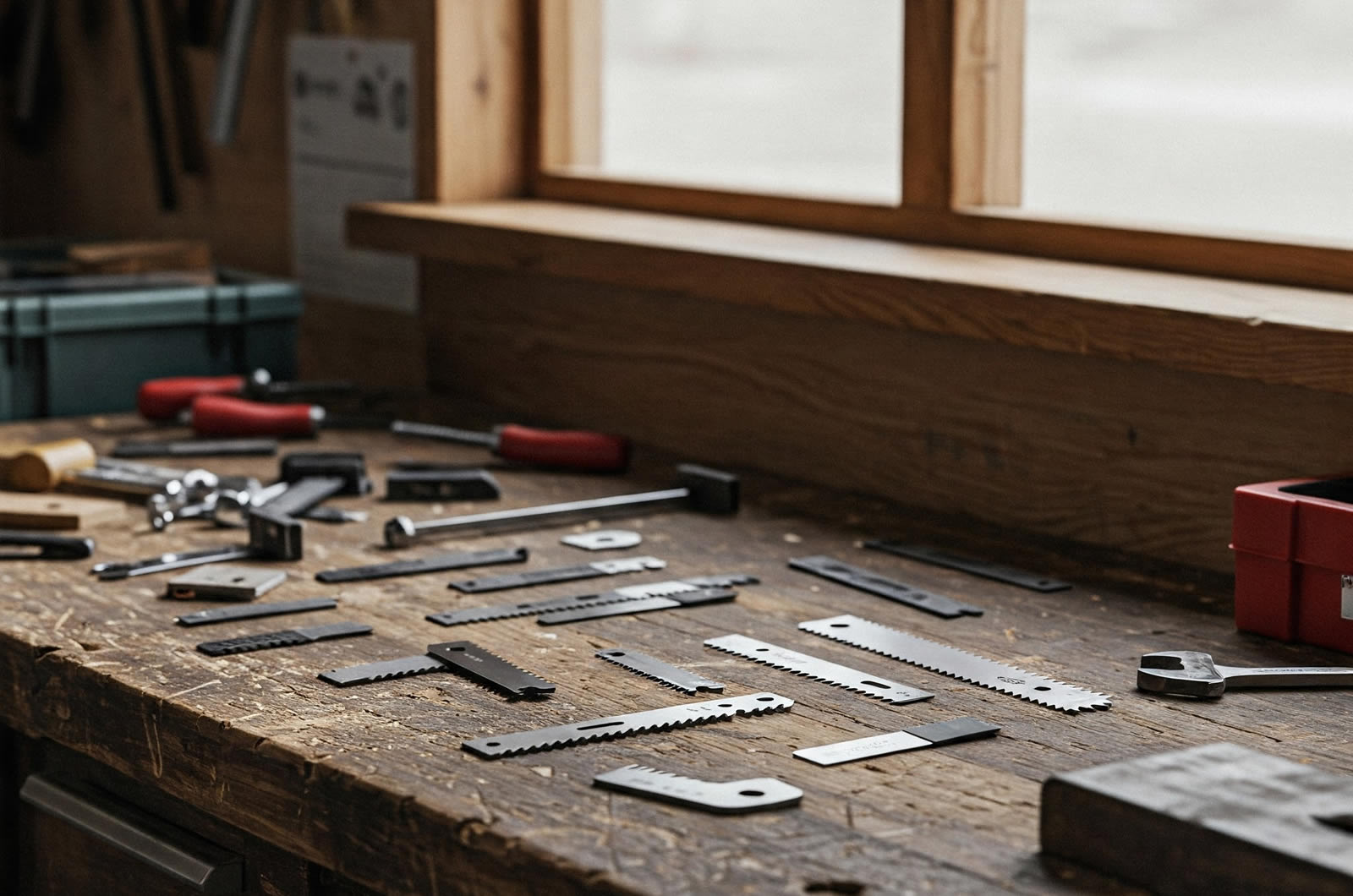
Blade plates are usually high‑carbon or alloy steel. Teeth are often micro‑grain carbide. Carbide lasts longer, stays sharp, and resists heat. Some jobs use cermet or PCD for very abrasive goods.
Key choices:
- Steel only. Cheap and flexible, but dulls fast.
- Carbide‑tipped. Best value for most wood shops.
- Cermet or PCD. For melamine at scale or very harsh use.
Coatings can cut friction and pitch. Non‑stick layers help shed resin. Laser‑cut plates and stress relief slots control heat and noise. The Ultimate Woodworking Blade Guide shows how these details boost life and cut quality.
Tooth geometry: ATB, FTG, TCG, and hook angle
Teeth shape the cut face:
- ATB. Alternate top bevel. Clean crosscuts in hardwood and ply.
- FTG. Flat top grind. Fast rips and glue‑ready edges with the right setup.
- TCG. Triple chip grind. Durable on laminate, MDF, and non‑ferrous.
- Hi‑ATB. Very sharp edges for veneer and melamine. More fragile.
Hook angle guides feed:
- Positive (10–22°). Fast rip cuts on table saws.
- Neutral to negative (0 to −5°). Safer on miter and track saws. Less self‑feed.
Combo grinds (ATB with rakers) balance speed and finish. The Ultimate Woodworking Blade Guide explains when each grind shines and when it struggles.

Kerf, plate, runout, and vibration control
Kerf sets cut width and power need:
- Thin kerf. About 0.090–0.098 inch. Great for underpowered saws and less waste.
- Full kerf. About 0.118–0.126 inch. Stiffer and tracks straighter.
Good plates run true. Look for low runout (under 0.003 inch). Clean arbors and flat flanges matter. Expansion slots reduce heat, whine, and warp. Blade stiffeners can help with thin kerf on heavy rips. The Ultimate Woodworking Blade Guide helps you pick kerf to match your motor and stock.

Choose by task: rip, crosscut, sheet goods, and more
Match the blade to the job:
- Ripping hardwood. 24–30T FTG or low‑ATB, +15–22° hook.
- Crosscut hardwood. 60–80T ATB, 10–15° hook.
- Plywood and veneer. 60–80T Hi‑ATB with a zero‑clearance insert.
- Melamine and laminate. 80–96T Hi‑ATB or TCG, often with a scoring pass.
- MDF and particleboard. TCG or high tooth count ATB for better wear.
- Non‑ferrous and plastics. TCG, negative hook, slow feed.
What blade should I use for plywood?
Use a 60–80T Hi‑ATB with a zero‑clearance insert. Score the face or use painter’s tape if tear‑out looms.
Can one blade do most work?
A quality 40–50T ATB‑R does well for many jobs. It will not beat a task‑specific blade, but it saves time and money.
Pro tip from my shop: When ripping 8/4 maple on a hybrid saw, thin kerf helps. But I add a blade stiffener, set the fence dead parallel, and feed steady. That cured burn marks overnight. The Ultimate Woodworking Blade Guide ties these choices to real jobs so you get clean results.
Blades by tool: table saw, miter saw, track saw, bandsaw
Each tool wants its own traits:
- Table saw. Positive hook is fine. Use riving knife and a zero‑clearance insert.
- Miter saw. Neutral to negative hook aids control and reduces lift.
- Track saw. Fine ATB, thin kerf, and a splinter guard give crisp edges.
- Circular saw. Thin kerf helps low power. Support the cut to fight tear‑out.
- Bandsaw. Think width and TPI. Use a 1/2 inch 3 TPI hook for resaw. A 1/4 inch 6–10 TPI for curves. Bi‑metal for long life.
Jigsaws prefer clean‑cut or reverse‑tooth blades for veneers. The Ultimate Woodworking Blade Guide maps these to real‑world cuts, from frames to cabinets.

Setup, alignment, and safety
A sharp blade fails if the setup is off. Check fence and miter slot parallel. Clean the arbor, snug the flange, and torque the nut. Raise the blade so the gullet clears the stock when ripping.
Use:
- Riving knife or splitter.
- Guard and dust collection.
- Zero‑clearance inserts.
- Featherboards and push sticks.
Wear eye and hearing protection. For MDF or exotic dust, use a P100 mask. The Ultimate Woodworking Blade Guide keeps safety baked into every step.

Maintenance: cleaning, sharpening, storage, and lifespan
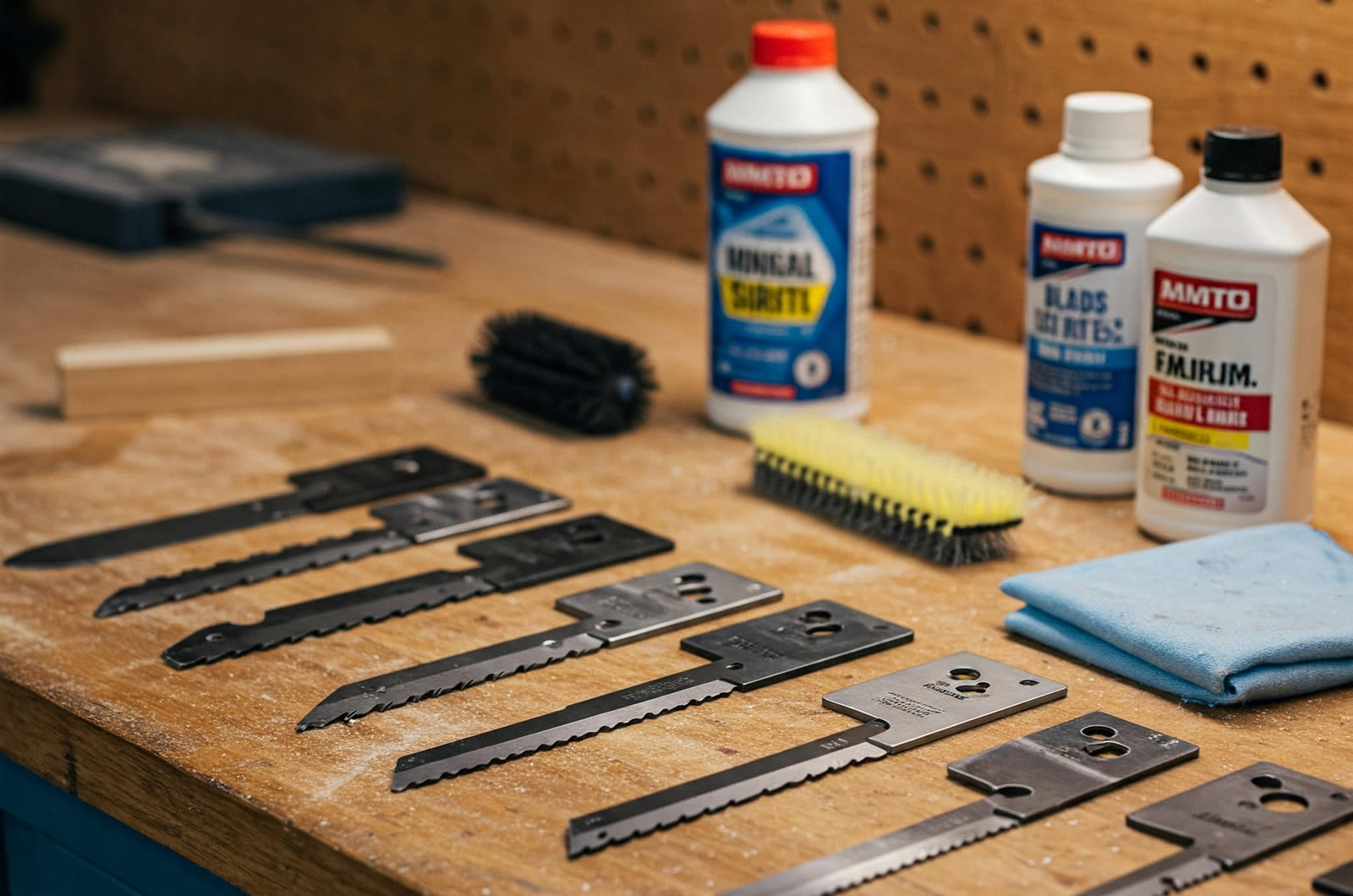
Pitch dulls teeth and heats plates. Clean with a citrus or blade‑safe cleaner. Soak for a few minutes, brush, rinse, and dry. Avoid harsh caustics and long soaks on carbide tools.
Sharpen before burns appear. A good carbide blade can take many sharpens if the plate stays true. Send to a trusted sharpener who matches the factory geometry. Store blades in sleeves or cases. Keep teeth apart to avoid chips. The Ultimate Woodworking Blade Guide stresses care, because care saves money.

Troubleshooting cut quality
Burn marks mean a dull blade, resin, slow feed, or misalignment. Clean first, then check fence and riving knife. Use the right tooth count and hook.
Tear‑out shows up with wrong grind or no support. Add a zero‑clearance insert and painter’s tape. Raise or lower blade height to change the exit angle.
Wander and washboard hint at runout or flex. Slow down, use a stiffer plate, or add stiffeners. The Ultimate Woodworking Blade Guide lists fixes so you can act fast.
Budget and buying guide: smart first picks
Start with three blades for a table saw:
- 24T rip for hardwood.
- 40–50T combo for daily use.
- 80T crosscut for fine trim and ply.
For sheet work, add a Hi‑ATB or TCG. For a miter saw, pick a 60–80T with neutral or negative hook. For a bandsaw, start with a 1/2 inch 3 TPI for resaw and a 1/4 inch 6 TPI for curves.
Price tiers:
- Value. Good steel and basic carbide.
- Mid. Better tensioning and micro‑grain carbide.
- Pro. Flat plates, tight runout, and premium grinds.
A quick story. I once “saved” money with a bargain 80T for melamine. It chipped doors and cost me a re‑cut. I swapped to a Hi‑ATB with a scoring pass and got crisp edges all day. That lesson lives in The Ultimate Woodworking Blade Guide so you skip the pain.
Sustainability, dust, and your health
Sharp blades cut cooler and cleaner, which lowers dust. Thin kerf saves power and wood. Sharpening extends life and keeps tools out of landfills. Use strong dust collection, and wear a respirator on MDF or exotic species. The Ultimate Woodworking Blade Guide backs choices that help your lungs and your wallet.
Frequently Asked Questions of The Ultimate Woodworking Blade Guide
How high should I set a table saw blade?
For ripping, raise the blade so the gullets clear the stock. For crosscuts, keep the teeth just above the board to reduce tear‑out.
Can I crosscut with a rip blade?
Yes, but expect a rougher edge and more tear‑out. Use a combo or crosscut blade when the edge will show.
Is thin kerf safe on a cabinet saw?
Yes, but match the riving knife thickness and consider a blade stiffener. Thin plates flex more on heavy rips.
How often should I clean my blades?
Clean when you see pitch or smell burn. In a busy shop, that can be every few days.
When do I replace a blade instead of sharpening?
Replace if teeth are missing, the plate is warped, or you hit metal. If past the safe diameter after many sharpens, retire it.
What tooth count is best for plywood?
Use 60–80 teeth with Hi‑ATB or fine ATB. Add a zero‑clearance insert for a crisp edge.
Conclusion
Great woodworking starts with a great blade choice, a sound setup, and steady care. Pick the right geometry, match kerf to your saw, and keep blades clean and sharp. Those steps bring safer cuts, smoother edges, and real time savings.
Use The Ultimate Woodworking Blade Guide as your shop checklist. Try one small upgrade this week, like a zero‑clearance insert or a proper crosscut blade. Want more tips and tested picks? Subscribe, share your wins, or ask a question below.