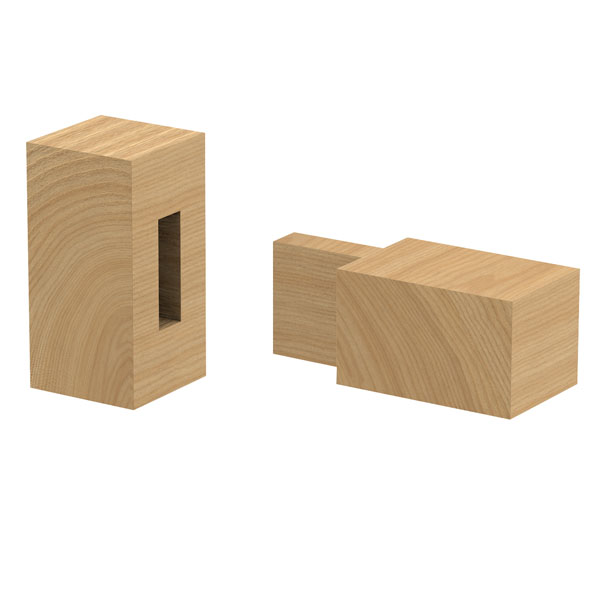
A blind mortise tenon is a hidden woodworking joint where a projecting tenon fits into a mortise that does not pass completely through the receiving piece.
In the United States, blind mortise tenon joints are widely used in furniture, cabinetry, chairs, tables, and architectural woodwork where builders need a strong connection without showing the end of the tenon. The joint combines mechanical support with a clean exterior appearance.
The basic method is to create a precisely sized cavity called a mortise and a matching projection called a tenon. The tenon stops inside the mortise instead of extending through the opposite face, which keeps the finished surface uninterrupted while maintaining a strong wood-to-wood connection.
Source: inthewoodshop.com
What Is a Blind Mortise Tenon Joint?
A blind mortise tenon joint connects two pieces of wood by inserting a tenon into a cavity that ends inside the receiving workpiece. Unlike a through mortise tenon, the tenon does not appear on the opposite side after assembly.
The mortise is the recessed opening, while the tenon is the shaped extension that fits into it. When properly sized, the joint resists twisting, pulling forces, and movement between connected parts.
Source: maginn.ie
Blind mortise
A closed-bottom cavity that receives the tenon and remains hidden after assembly.
Tenon
A reduced section of wood cut on the end of a rail or similar component that fits into the mortise.
Shoulder
The area around the tenon that contacts the face of the mortised piece and helps prevent racking.
How It Differs From Other Mortise Tenon Types
A through mortise tenon passes completely through the receiving piece and may be visible or wedged for decoration. A blind mortise tenon stays hidden, making it common when the outside appearance must remain clean.
Blind joint
Hidden tenon end and cleaner appearance.
Through joint
Visible tenon that may provide decorative or additional mechanical features.
How to Make a Blind Mortise Tenon
Making a blind mortise tenon requires accurate layout, controlled cutting, and careful fitting. The goal is a joint that slides together with firm hand pressure without splitting the surrounding wood.
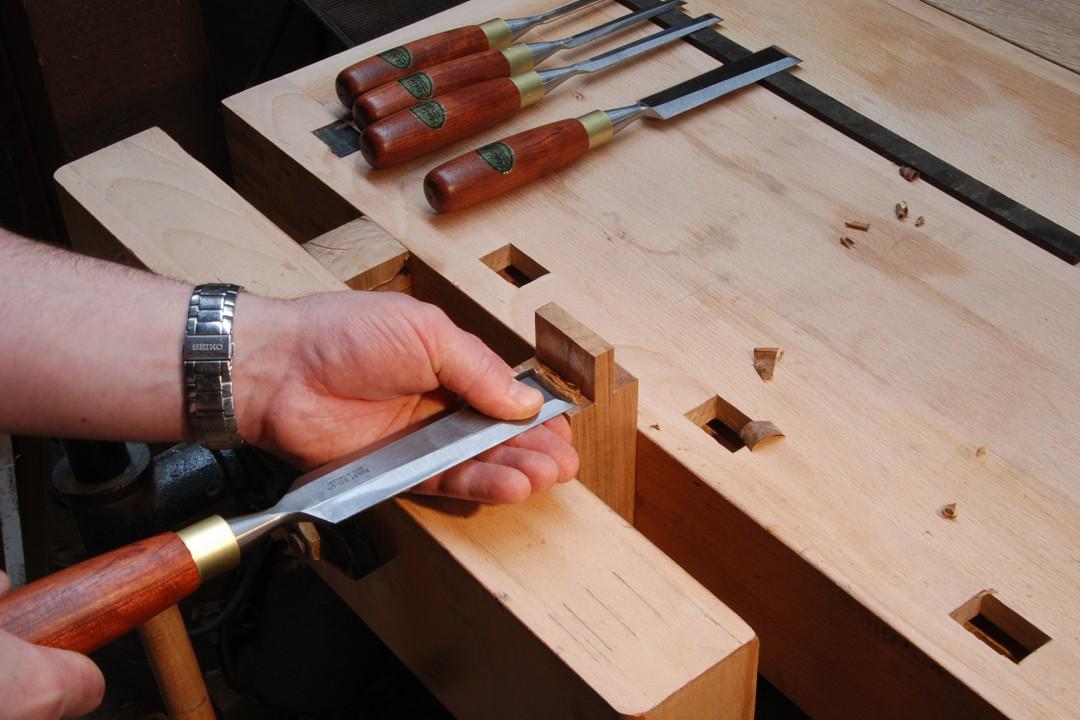
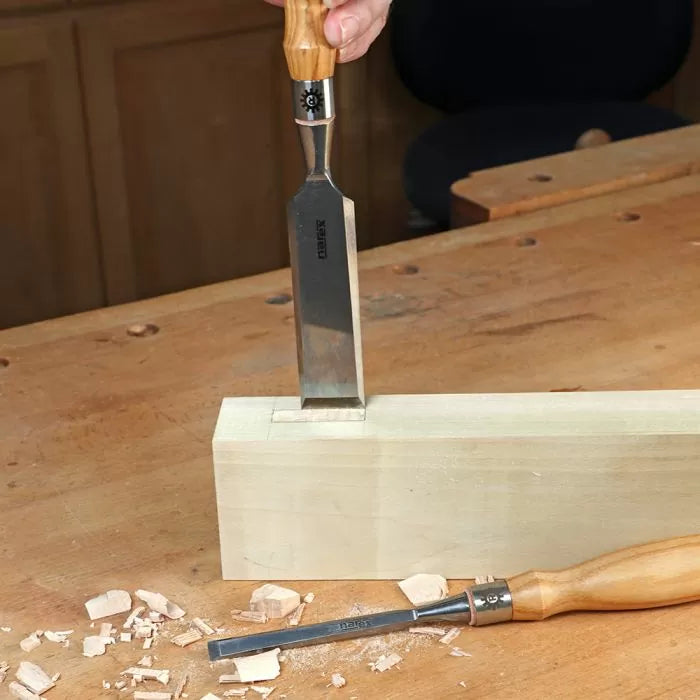
The exact tools can vary. Woodworkers may use chisels, saws, drill presses, routers, or dedicated mortising and tenoning machines depending on the project and available equipment.
Source: cdn11.bigcommerce.com
Prepare the stock
Mill both pieces to consistent dimensions before marking the joint.
Mark the mortise
Lay out the mortise location, width, and depth clearly using accurate reference faces.
Cut the mortise
Remove waste carefully and keep the cavity walls straight and square.
Cut the tenon
Match the tenon thickness and length to the completed mortise.
Test and assemble
Dry-fit the joint before applying glue to confirm alignment.
Signs of a Proper Fit
A successful blind mortise tenon should close fully at the shoulders, align without twisting, and require controlled pressure during assembly. The joint should not depend on excessive clamping force to close gaps.
Good fit
The tenon enters smoothly and holds alignment without looseness.
Poor fit
A loose joint may reduce strength, while an overly tight joint can split the surrounding wood.
Blind Mortise Tenon Dimensions and Design Considerations
Joint proportions depend on the size and purpose of the project. Furniture makers commonly balance tenon thickness, mortise depth, and remaining surrounding wood so that neither the tenon nor the mortised part becomes unnecessarily weak.
For many furniture applications, the tenon is designed as a substantial portion of the rail thickness while leaving enough material around the mortise to maintain strength.
Source: d18b2kerpwlhcq.cloudfront.net
Wood thickness
Thicker stock generally allows deeper and stronger mortises.
Joint depth
A deeper mortise can increase engagement but must leave enough surrounding material.
Wood movement
Solid wood changes dimension with humidity, so joint design must allow normal seasonal movement where needed.
Common Applications
Blind mortise tenons are frequently used in chair frames, table aprons, cabinet doors, face frames, and other furniture components where a strong connection is needed without exposed joinery.
Furniture frames
Provides a durable connection between rails and legs.
Cabinet construction
Keeps visible surfaces clean while maintaining strength.
Troubleshooting Blind Mortise Tenon Problems
Most blind mortise tenon failures come from layout errors, inaccurate cutting, or forcing parts together. Checking the cause before making corrections prevents further damage.
Source: infinitytools.com
Tenon will not enter
Possible causes include excessive thickness, inaccurate mortise width, or debris inside the cavity. Remove small amounts of material gradually.
Joint is loose
Possible causes include an oversized mortise or undersized tenon. Recutting is often safer than relying on excessive glue.
Shoulders do not close
Check for uneven tenon shoulders, incorrect reference faces, or waste remaining in the mortise.
Wood splits during assembly
The fit may be too tight or the surrounding material may be too thin for the joint design.
Tools and Safety Considerations
Blind mortise tenons can be made with hand tools or machines, but every method requires secure workholding and sharp cutting tools. Dull tools encourage excessive force, which increases the chance of mistakes or injury.
Wear appropriate eye protection when using powered equipment and follow the operating instructions for routers, saws, drills, and other machinery.
Source: cdn.shopify.com
Hand tools
Common options include marking tools, saws, chisels, and mallets.
Power tools
Routers, drill presses, and mortising machines can speed production when properly set up.
Frequently Asked Questions
Q
Is a blind mortise tenon stronger than a dowel joint?
Strength depends on design, material, and execution. A properly made blind mortise tenon provides a large glue surface and mechanical interlock, which is why it is widely used in structural furniture joinery.
Q
Should the mortise or tenon be cut first?
Many woodworkers cut the mortise first and then size the tenon to match because adjusting the tenon is usually easier than correcting an oversized mortise.
Q
Can beginners make blind mortise tenons?
Yes. Beginners can make them successfully by practicing layout, using sharp tools, and testing the fit on scrap wood before cutting final parts.
Q
Why is my blind mortise tenon joint loose?
A loose joint usually results from removing too much material from the mortise or tenon. Accurate measurement and gradual fitting help prevent this issue.
Q
Where should a blind mortise tenon not be used?
It may not be suitable when a project requires visible decorative joinery, unusual load directions, or very thin material that cannot support a properly sized mortise.
✦ Wrapping Up
Conclusion
A blind mortise tenon is a practical woodworking joint that combines hidden appearance with reliable mechanical strength. Its success depends on careful layout, accurate cutting, and a controlled fit between the mortise and tenon.
For woodworkers building furniture or cabinetry, learning this joint provides a foundation for many traditional and modern joinery projects.
💡 Key Takeaway
Start with accurately prepared stock, cut a clean mortise, fit the tenon gradually, and always dry-fit the joint before final assembly.