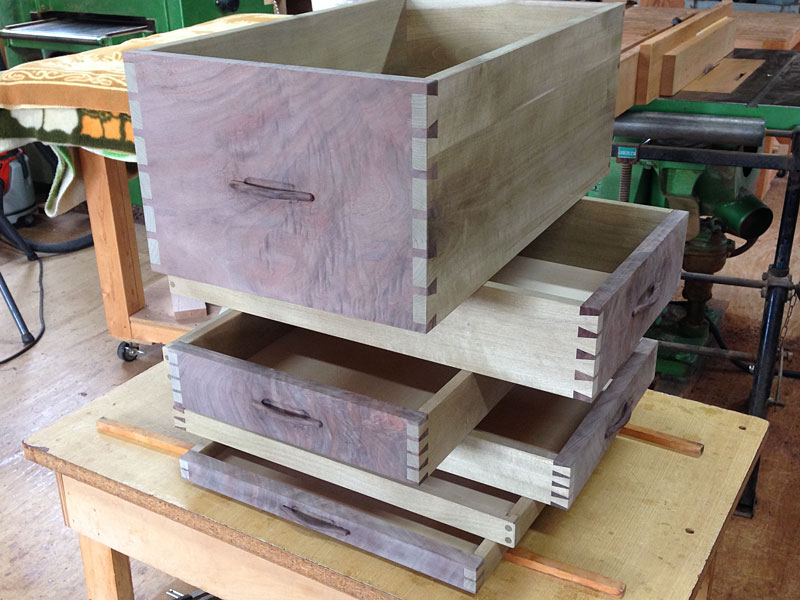
Drawer joinery methods connect drawer parts using mechanical joints that improve strength, alignment, and durability.
In the United States, drawer construction varies from simple cabinet boxes used in everyday kitchen storage to finely crafted furniture drawers built with traditional woodworking joints. The best drawer joinery method depends on the drawer size, expected load, available tools, appearance goals, and required durability.
Drawer joinery methods include dovetail joints, box joints, locking rabbets, dados, rabbets, and dowel-reinforced connections. Each method balances strength, production speed, appearance, and construction difficulty differently.
Source: finewoodworking.com
What Are Drawer Joinery Methods?
Drawer joinery methods are techniques used to connect drawer fronts, sides, backs, and bottoms into a stable box structure. The joint design affects how well the drawer handles repeated opening, closing, weight, and seasonal wood movement.
A strong drawer joint does more than hold pieces together with glue. Many traditional joints use interlocking shapes that resist pulling forces and help maintain alignment over time.
Source: popularwoodworking.com
Mechanical strength
Interlocking joints reduce dependence on adhesive alone by creating physical resistance between parts.
Visual appearance
Some joints are hidden for a clean look, while others are exposed as a design feature.
Main Drawer Parts That Require Joinery
Most drawers use four main box components: the front, sides, back, and bottom. Joinery choices are usually focused on connecting the front to the sides because this area receives the greatest stress during use.
Drawer front
The front panel carries much of the pulling force when the drawer is opened.
Drawer sides
The side panels support the drawer structure and connect the front and back.
Common Types of Drawer Joinery Methods
The most common drawer joinery methods include dovetails, box joints, locking rabbets, and simpler rabbet or dado connections. Each method serves different woodworking needs.
Traditional furniture makers often choose visible joints for craftsmanship and appearance, while cabinet manufacturers may prefer faster methods that provide consistent results.
Source: popularwoodworking.com
Dovetail joints
Dovetails use angled pins and tails that lock together mechanically. Half-blind dovetails are often used at drawer fronts because they hide the joint from the outside.
Box joints
Box joints use square interlocking fingers that create large glue surfaces and can be efficient for repeated drawer production.
Locking rabbets
Locking rabbet joints combine a simple cut profile with a mechanical connection suitable for many practical drawer applications.
Choosing Between Dovetails and Box Joints
Dovetails are often selected when appearance and traditional craftsmanship matter. Box joints can be easier to repeat accurately, especially when making multiple drawers with similar dimensions.
Choose dovetails when
You want a traditional appearance and strong mechanical corner connection.
Choose box joints when
You need efficient production with a visible interlocking pattern.
How to Select the Right Drawer Joinery Method
The right drawer joint depends on the project requirements rather than a single universal standard. A small decorative drawer and a heavily used kitchen drawer may need different construction approaches.
Consider the drawer material, expected weight, tools available, production quantity, and whether the joint will remain visible after installation.
Source: popularwoodworking.com
Heavy-use drawers
Use strong mechanically locked joints when drawers will hold heavy contents or receive frequent use.
Production drawers
Choose repeatable joints that match available equipment and manufacturing needs.
Visible furniture drawers
Consider appearance as well as strength because exposed joinery becomes part of the design.
Drawer Bottom Installation Considerations
The bottom panel is usually captured in grooves or dados cut into the drawer parts. A properly supported bottom helps prevent sagging and reduces stress on the corner joints.
Captured bottoms
Grooves around the drawer box help keep the bottom secure during use.
Common Drawer Joinery Mistakes and Fixes
Many drawer problems come from inaccurate measurements, poor alignment, or selecting a joint that does not match the intended use. Checking fit before final assembly helps prevent expensive corrections.
A joint that is too loose may weaken the drawer, while an overly tight joint can damage parts during assembly.
Source: haburikobo.com
Loose joints
Check cutting accuracy and adjust the joint before applying glue.
Misaligned parts
Dry-fit all components and confirm the drawer box is square before final assembly.
Ignoring wood movement
Allow solid wood components to expand and contract where required.
Signs of a Properly Built Drawer Joint
A successful drawer joint fits firmly without excessive force, keeps the drawer box square, and remains stable after assembly. The drawer should move smoothly without twisting or separating at the corners.
Correct fit
Parts meet cleanly with consistent contact between joint surfaces.
Frequently Asked Questions
Q
What is the strongest drawer joinery method?
Dovetail and box joints are commonly considered strong drawer joinery methods because their interlocking shapes resist separation. The best option depends on construction quality, material, and intended use.
Q
Are dovetail drawers always better?
Dovetails offer strength and a traditional appearance, but they are not the only effective drawer joint. Other methods can provide suitable performance with easier production or different design goals.
Q
Can plywood drawers use traditional joinery?
Yes, plywood drawers can use several joinery methods, including rabbets, dados, box joints, and some dovetail systems. The chosen method should match the plywood thickness and construction requirements.
Q
Why do drawer joints become loose over time?
Loose joints can result from excessive loads, inaccurate original cuts, adhesive failure, or wood movement. Repair depends on the joint type and the amount of damage.
Q
What tools are needed for drawer joinery?
Tools vary by method. Basic joints may require saws and measuring tools, while dovetails and box joints may use routers, jigs, chisels, or specialized cutting equipment.
✦ Wrapping Up
Conclusion
Drawer joinery methods provide different ways to build strong, accurate, and durable drawer boxes. Dovetails, box joints, locking rabbets, and simpler joints each have practical advantages depending on the project.
Selecting the right method requires balancing strength, appearance, available tools, and construction time. A well-fitted joint combined with proper drawer bottom support creates a drawer that performs reliably for years.
💡 Key Takeaway
Choose a drawer joinery method based on the drawer’s workload, material, and required appearance, then test-fit every joint before final assembly.