A fox wedge mortise is a hidden wedged mortise and tenon joint where concealed wedges expand the end of a tenon inside a tapered blind mortise, creating a strong mechanical lock.
In American woodworking shops, the fox wedge mortise is used when a builder needs the holding power of a wedged tenon without exposing wedges on the finished surface. The joint combines a blind mortise with a slotted tenon and internal wedges that spread the tenon as the parts are assembled.
The technique requires careful layout because the wedge size, mortise taper, tenon thickness, and wood movement all affect the final fit. When cut accurately, the joint creates a tight connection often used in traditional furniture, stools, frames, and restoration work.
Source: blog.axminstertools.com
What Is a Fox Wedge Mortise?
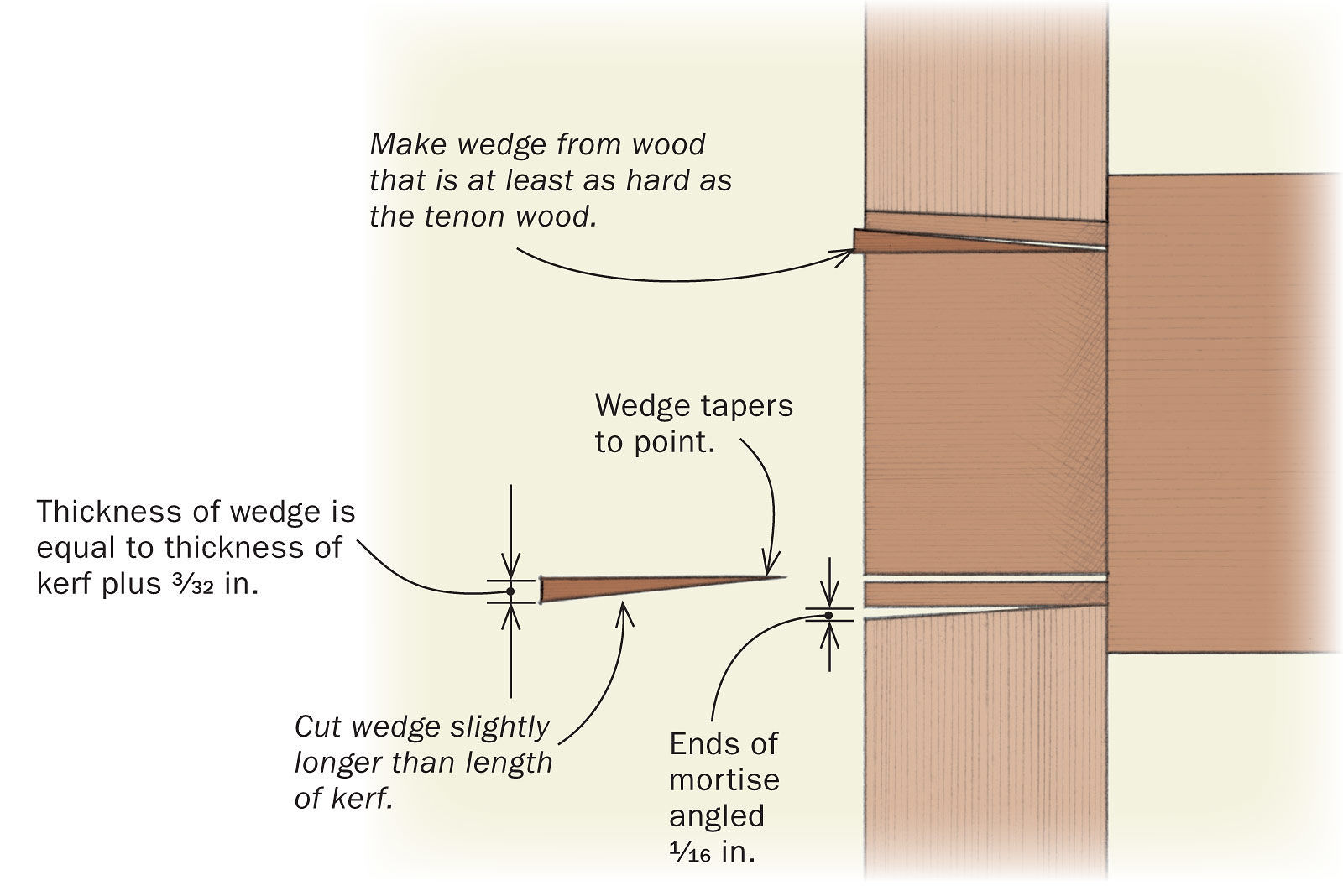
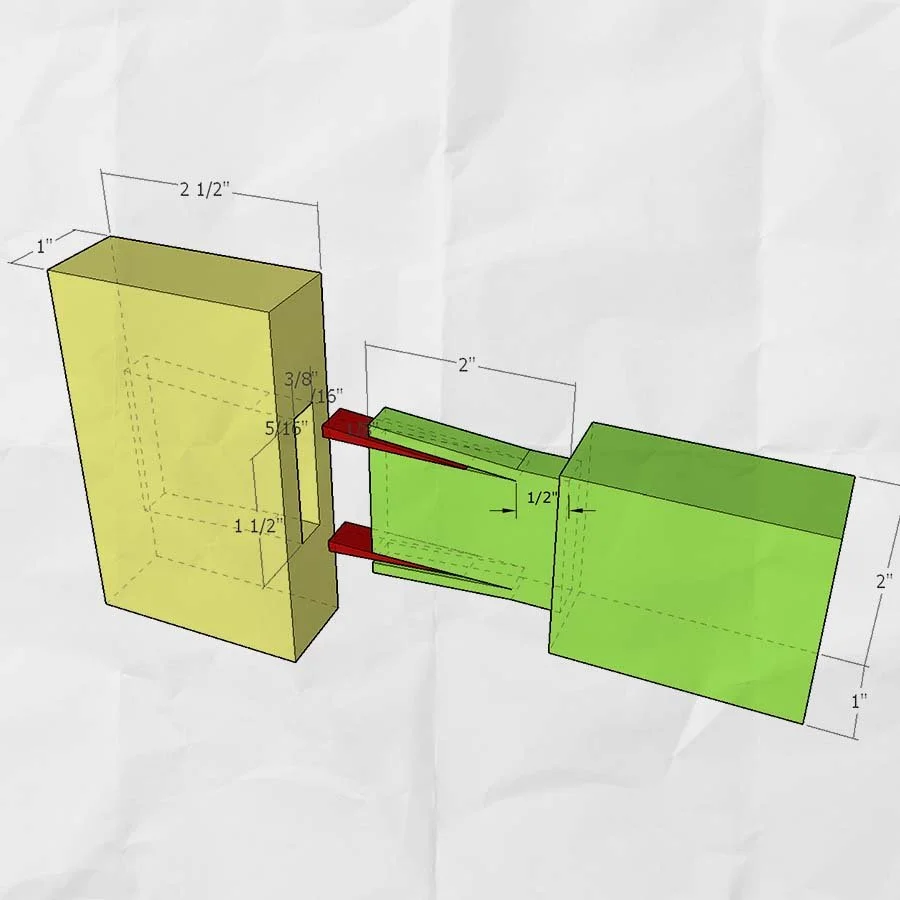
A fox wedge mortise is a type of blind wedged mortise and tenon joint. Unlike a through-wedged tenon, the wedges are hidden inside the joint and are driven into saw kerfs cut in the tenon before assembly.
During assembly, the tenon enters the blind mortise and the wedges contact the bottom of the mortise. Continued pressure drives the wedges deeper, spreading the tenon sides outward until they lock against the tapered mortise walls.
Source: finewoodworking.com
Blind mortise
The mortise does not pass completely through the receiving piece, so the wedging action remains hidden.
Internal expansion
The wedges spread the tenon inside the mortise to create a mechanical grip.
How the Mechanism Works
The joint depends on controlled expansion. The mortise is slightly enlarged toward its deeper end, and the tenon contains angled kerfs for the wedges. As the wedges move inward, they convert driving force into outward pressure against the mortise walls.
Tapered cavity
The wider lower mortise area gives the expanded tenon somewhere to lock.
Wedge movement
The wedges transform assembly pressure into sideways expansion.
How to Make a Fox Wedge Mortise Joint
Making a fox wedge mortise starts like a normal mortise and tenon joint, but the final shaping steps require additional precision. Practice pieces are recommended before cutting the final project because the joint is difficult to disassemble once locked.
Source: woodcraft.com
Prepare the stock
Choose straight-grained wood and mark the shoulder, tenon, and mortise locations carefully.
Cut the mortise
Create a blind mortise with the required internal taper or expanded area near the bottom.
Cut tenon kerfs
Saw the slots that will receive the wedges while keeping enough material for strength.
Fit and test
Check that the tenon seats correctly before final wedge installation.
Assemble
Insert the wedges and drive the joint together until the shoulders close firmly.
Signs of a Successful Joint
A properly made fox wedge mortise closes tightly at the shoulders, shows no unwanted gaps, and resists movement when pressure is applied. The wedges should expand the tenon without splitting the surrounding wood.
Tight shoulder fit
The visible joint line should close evenly around the tenon.
Controlled expansion
The tenon should fill the mortise without excessive force.
Fox Wedge Mortise Compared With Other Wedged Tenon Joints
The main difference between fox wedging and other wedged mortise and tenon methods is where the wedge action occurs. Through-wedged joints show the wedges on the outside, while a fox wedge mortise keeps the mechanism hidden.
Source: paulsellers.com
Fox wedge mortise
Uses a blind mortise and concealed wedges for a clean exterior appearance.
Through-wedged tenon
Uses visible wedges driven through the exposed end of the tenon.
Pinned mortise and tenon
Uses a peg or pin rather than internal expansion from wedges.
When to Choose This Joint
A fox wedge mortise is useful when a project requires a strong hidden connection and access to the rear of the joint is limited. It is less suitable when quick assembly, easy repair, or simple production methods are the priority.
Good applications
Traditional furniture, stools, structural frames, and restoration projects.
Less suitable applications
High-volume manufacturing where faster joinery methods are preferred.
Common Fox Wedge Mortise Problems and Fixes
Most failures happen because the parts do not match correctly. Checking the fit before final assembly prevents many problems because the joint is difficult to correct after the wedges are driven.
Source: images.squarespace-cdn.com
Joint will not close
Possible causes include wedges that are too thick, an oversized tenon, or insufficient mortise depth.
Loose joint
The mortise may be too wide, the wedges may not expand the tenon enough, or the taper may be incorrect.
Split wood
Reduce wedge thickness, improve kerf placement, and avoid forcing the assembly beyond the wood’s strength.
Safety Considerations
Use sharp tools, secure workpieces properly, and avoid excessive hammer force. A wedge that is driven too aggressively can split the tenon or damage the surrounding part.
Use test joints
Practice the geometry on scrap wood before assembling a final project.
Frequently Considered Design Factors
The best results come from balancing the wood species, joint proportions, and intended load. Harder woods may require different wedge proportions than softer woods because compression and splitting behavior vary.
Source: woodworkersuk.co.uk
Wood selection
Straight grain and stable stock reduce the chance of splitting during wedging.
Joint proportions
Tenon thickness and wedge size must leave enough surrounding material for strength.
Why Accuracy Matters
The fox wedge mortise has little tolerance for mistakes because the final locking action depends on several surfaces contacting at the correct time.
Measure twice
Confirm layout lines before cutting irreversible parts.
Frequently Asked Questions
Q
Is a fox wedge mortise stronger than a normal mortise and tenon joint?
A fox wedge mortise can provide strong mechanical resistance because the expanded tenon locks against the mortise walls. Actual strength depends on wood species, dimensions, workmanship, and loading conditions.
Q
Why is it called a fox wedge mortise?
The name refers to the hidden wedging method. The wedges are concealed inside a blind mortise rather than being visible from the outside.
Q
Can a fox wedge mortise be taken apart?
Usually it is difficult to disassemble without damage because the wedge expansion locks the tenon tightly inside the mortise.
Q
What tools are needed to make this joint?
Typical tools include layout tools, saws, chisels, marking tools, and measuring equipment. The exact setup depends on whether the joint is cut by hand or with machines.
Q
Should glue be used with a fox wedge mortise?
Glue may be used depending on the project, but the joint’s primary locking action comes from the mechanical expansion created by the wedges.
✦ Wrapping Up
Conclusion
The fox wedge mortise is a specialized woodworking joint that combines a clean exterior appearance with the mechanical benefits of wedging. Its hidden construction makes it valuable for traditional furniture and projects where visible wedges are undesirable.
Because the joint depends on precise geometry, careful layout and test fitting are more important than speed. Understanding how the mortise taper, tenon kerfs, and wedges interact is the key to making it work reliably.
💡 Key Takeaway
Start with a practice joint in scrap wood, verify the wedge action before final assembly, and focus on accurate proportions rather than forcing the parts together.