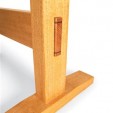
A wedged mortise tenon is a mortise and tenon joint strengthened by driving wooden wedges into slots or kerfs in the tenon. The wedges expand the tenon inside the mortise, creating a mechanical lock that improves resistance to pulling forces and adds a visible decorative feature.
In the United States, wedged mortise tenon joints are commonly used by furniture makers, timber framers, and restoration woodworkers who need a strong connection with traditional appearance. The joint builds on the standard mortise and tenon by adding wedges that spread the tenon and tighten its fit inside the receiving piece.
The main advantage of a wedged mortise tenon is that it does not rely only on adhesive strength. Correct layout, suitable wood selection, accurate cutting, and careful wedge installation are still essential because excessive expansion can split the surrounding wood or weaken the tenon.
Source: learn.kregtool.com
What Is a Wedged Mortise Tenon Joint?
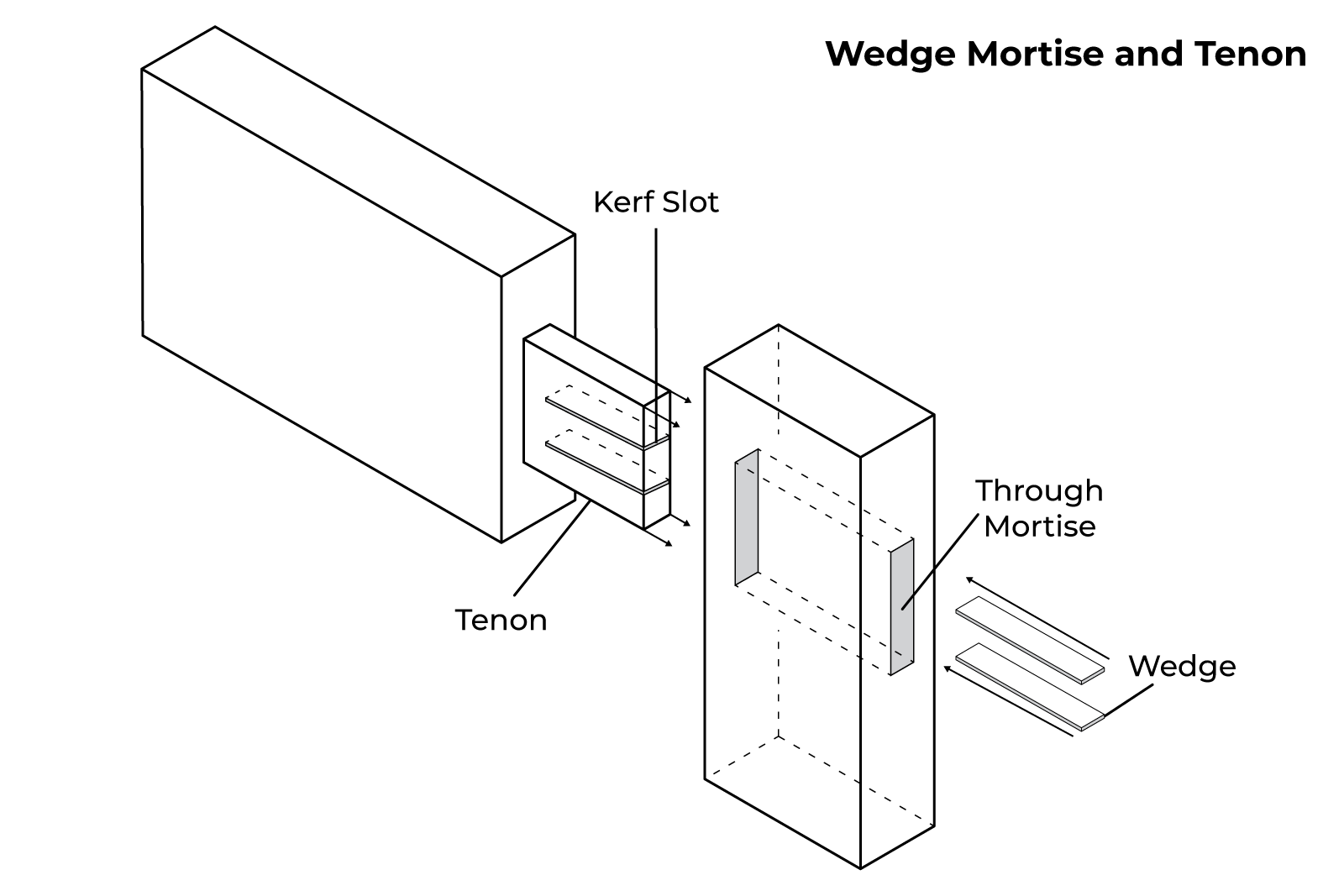
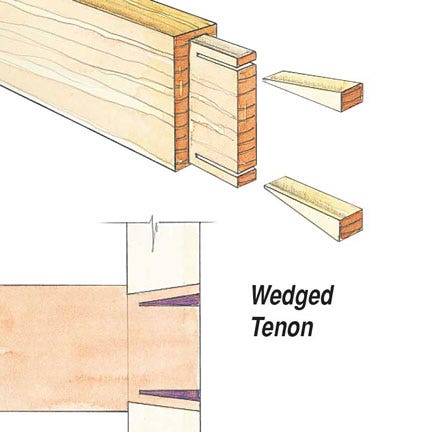
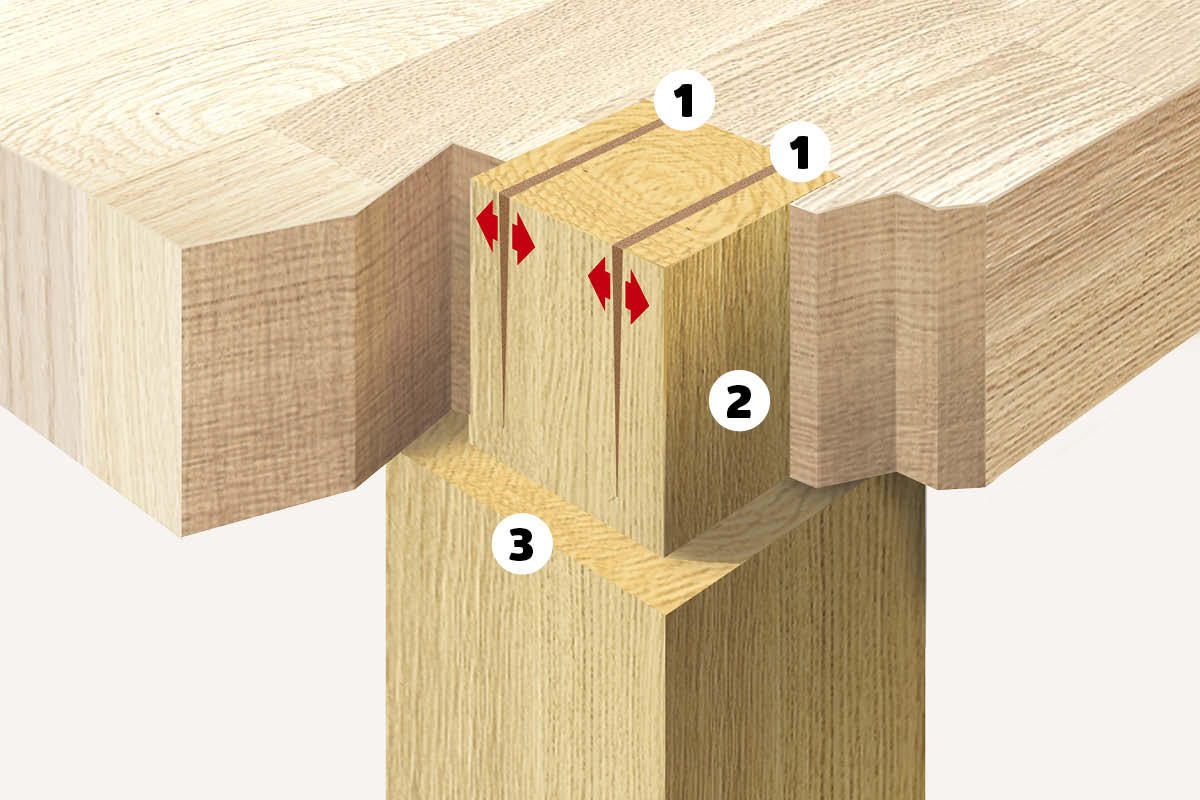
A wedged mortise tenon is a variation of the traditional mortise and tenon joint where one or more wedges are driven into prepared cuts in the tenon. As the wedges enter, they force the sides of the tenon outward against the mortise walls.
The joint combines two forms of strength: the close-fitting surfaces of the mortise and tenon and the mechanical expansion created by the wedges. This makes it useful for furniture frames, table bases, chairs, timber structures, and decorative exposed joinery.
Source: rockler.com
Mortise
The mortise is the cavity cut into one piece of wood that receives the tenon.
Tenon
The tenon is the projecting section cut on the end of another piece of wood that fits into the mortise.
Wedge
The wedge is a tapered wooden piece driven into the tenon to spread and lock the joint.
How the Wedge Creates Mechanical Strength
A standard mortise tenon mainly resists movement through the fit between the two pieces and, in many modern projects, glue. A wedged version adds a physical expansion mechanism. The wedge pushes the tenon outward, increasing contact with the mortise walls.
The effect is similar to a dovetail because the expanded tenon resists withdrawal. However, the final strength depends on the design, wood species, grain orientation, and accuracy of the cuts.
Improved resistance to pullout
The expanded tenon creates a stronger barrier against forces trying to separate the joint.
Visible craftsmanship
Contrasting wedges can become a deliberate decorative element in furniture design.
How to Make a Wedged Mortise Tenon Joint
Making a wedged mortise tenon begins with building an accurate standard mortise and tenon. The wedge system should be treated as a refinement of the joint rather than a way to correct poor fitting parts.
The exact dimensions depend on the project, timber size, and wood species. Test cuts on scrap wood are recommended before working on final parts.
Source: images-bonnier.imgix.net
Prepare the layout
Mark the mortise position, tenon shoulders, wedge location, and grain direction before cutting.
Cut the mortise
Create a clean mortise with consistent walls and enough material around it to prevent splitting.
Fit the tenon
Trim the tenon gradually until it enters firmly without forcing the surrounding wood apart.
Add wedge slots
Cut kerfs or openings in the tenon where the wedges will be installed.
Install wedges
Drive tapered wedges carefully and check that the joint tightens without cracking the wood.
Signs of a Successful Joint
A correctly made wedged mortise tenon should close tightly at the shoulders, show even wedge expansion, and have no visible splitting around the mortise or tenon.
Tight fit
The tenon remains stable before the wedges are installed and does not wobble inside the mortise.
Controlled expansion
The wedge spreads the tenon without forcing cracks into the surrounding material.
Design Factors That Affect Wedged Mortise Tenon Performance
The performance of a wedged mortise tenon depends on more than simply adding wedges. The joint must be designed around the material and the forces it will experience.
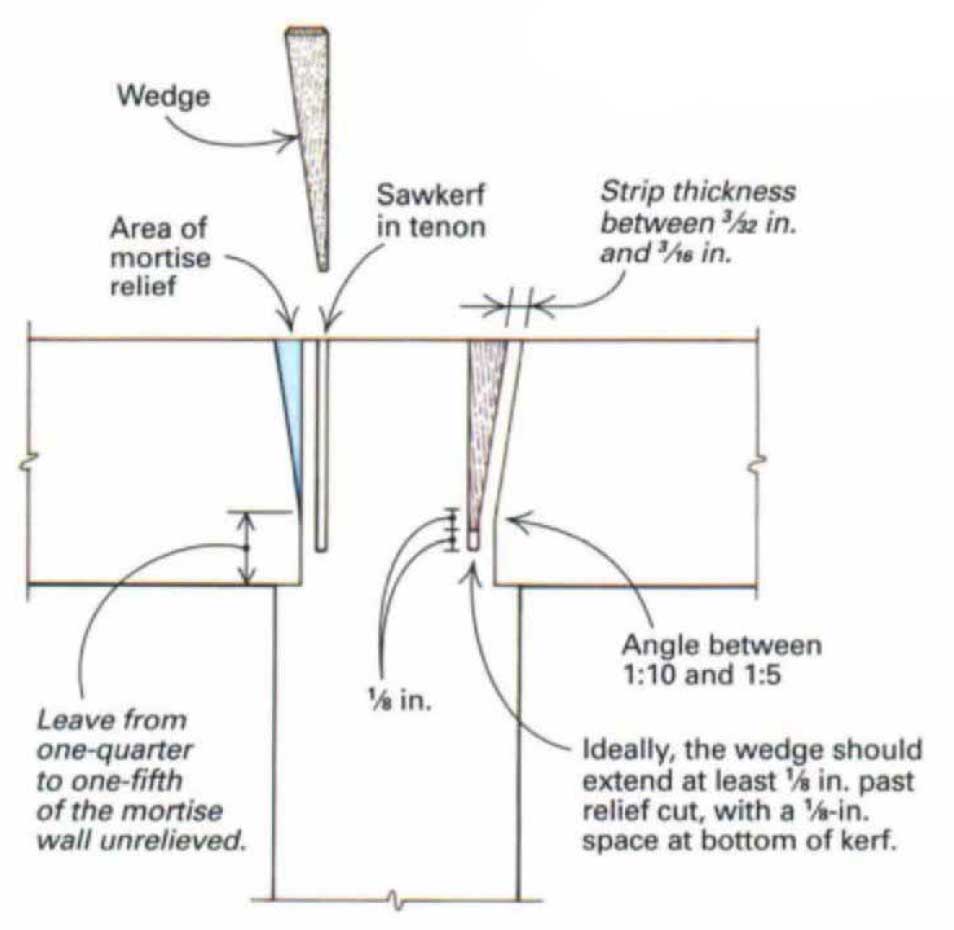
Woodworkers often adjust wedge size, tenon thickness, and mortise relief based on the dimensions of the project. There is no single universal measurement that works for every application.
Source: images.finewoodworking.com
Wood species
Dense or brittle woods may require more cautious wedge pressure because they respond differently to expansion.
Grain direction
The direction of the wedge slot and surrounding grain affects the risk of splitting.
Joint visibility
Exposed through wedges are often selected when the joinery is intended to contribute to the appearance of the piece.
Load conditions
Furniture subjected to racking or repeated movement may benefit from the mechanical locking action of wedged construction.
Common Mistakes and Troubleshooting
Most failures occur because the joint is forced beyond the strength of the surrounding wood or because the wedge geometry does not match the tenon design.
Split mortise area
Cause: excessive wedge pressure or poor grain orientation. Solution: reduce wedge size and review layout.
Loose joint after wedging
Cause: insufficient expansion or inaccurate fitting. Solution: check wedge contact and tenon preparation.
Cracked tenon
Cause: thin tenon strips or aggressive wedge angles. Solution: increase material strength and adjust the design.
Wedged Mortise Tenon Compared With Other Mortise Tenon Types
Different mortise tenon variations solve different design problems. A wedged mortise tenon is usually selected when extra mechanical locking strength or visible joinery is desired.
Source: media.popularwoodworking.com
Standard mortise tenon
Simpler to make and suitable for many furniture applications, but it does not have the same mechanical expansion feature.
Through mortise tenon
The tenon passes completely through the receiving piece and can be combined with wedges for strength and appearance.
Blind mortise tenon
The tenon remains hidden, creating a cleaner exterior appearance but usually removing the option for visible wedging.
When to Choose a Wedged Mortise Tenon
Choose a wedged mortise tenon when the project benefits from visible traditional joinery, added resistance to separation, or a connection that does not depend only on adhesive bonding.
Good applications
Tables, chairs, timber frames, benches, and exposed architectural joinery.
Less suitable applications
Projects requiring easy disassembly or very thin stock that cannot safely support wedge expansion.
Frequently Asked Questions
Q
Is a wedged mortise tenon stronger than a regular mortise tenon?
A wedged mortise tenon can provide greater resistance to separation because the wedge creates a mechanical lock. Actual strength depends on design, materials, workmanship, and the forces applied to the joint.
Q
Can a wedged mortise tenon be used without glue?
Some traditional applications use mechanical locking rather than relying entirely on glue. Modern projects may still use adhesive depending on the design goals and whether future disassembly is needed.
Q
What wood is best for wedges?
Wedges are commonly made from strong, stable hardwoods. The best choice depends on the main wood, grain direction, and the amount of expansion required.
Q
Why did my wedged tenon split the surrounding wood?
Splitting usually happens because the wedge created more force than the surrounding wood could handle. Check grain direction, wedge dimensions, mortise clearance, and tenon thickness before trying again.
Q
Are wedged mortise tenons suitable for beginners?
They are achievable for beginners who already understand basic mortise and tenon fitting. Practicing on scrap material first helps avoid damaging final project parts.
✦ Wrapping Up
Conclusion
A wedged mortise tenon strengthens a traditional woodworking joint by adding a carefully controlled mechanical expansion system. The wedge does more than decorate the connection; it changes how the tenon grips the mortise.
Successful results come from accurate layout, suitable materials, careful wedge sizing, and patience during fitting. When built correctly, this joint provides both structural function and visible craftsmanship.
💡 Key Takeaway
Before building a final wedged mortise tenon joint, make a test version from scrap wood to confirm the wedge angle, tenon fit, and expansion behavior.