Furniture knockdown construction is a building method that uses removable bolts, cams, screws, brackets, and other fittings to connect furniture parts. It allows furniture to ship in separate pieces, fit through tight spaces, and be assembled or taken apart when needed.
Across the United States, flat-pack desks, kitchen cabinets, bookshelves, bed frames, and office furniture are common in homes and workplaces. Many of these products use knockdown construction. Instead of shipping one large finished item, manufacturers send separate panels and parts that people can join at home. This can make storage, delivery, and moving much easier.
Furniture knockdown construction depends on careful planning. Each panel needs the right holes, fittings, and support points. A good design keeps parts aligned and holds them together under normal use. It must also allow the user to remove the fittings without damaging the main parts. The goal is simple: make furniture that is easy to ship, easy to build, and practical to use.
This guide explains how the method works, which fittings are common, and how to plan a reliable structure. It also covers materials, drilling, assembly, repair, and common mistakes. The advice applies to DIY projects, small workshops, and furniture production.
Source: storage.googleapis.com
What Is Furniture Knockdown Construction?
Furniture knockdown construction is a method of making furniture from separate parts that connect with removable fittings. The parts may include side panels, shelves, rails, legs, tops, backs, and support blocks. The manufacturer prepares the parts before packing them. The user joins them at the final location.
The term knockdown refers to the ability to take a product apart. You may also see the terms KD furniture, ready-to-assemble furniture, and flat-pack furniture. These terms often describe similar products, although not every ready-to-assemble design has the same level of disassembly.
A fixed furniture joint usually relies on glue, permanent screws, nails, or traditional joinery. A knockdown joint uses hardware that can be released. This difference makes the product easier to move and repair, but it also changes how the designer must plan the connections.
A typical flat-pack cabinet has two side panels, a top, a bottom, shelves, a back panel, and a set of connectors. The user joins the parts in a planned order. Once assembled, the fittings hold the cabinet together and help keep its shape.
Source: storage.googleapis.com
Separate components
The furniture is divided into individual parts that can fit into a package and pass through doors, hallways, and other tight spaces.
Removable connections
Bolts, cams, screws, and other fittings hold the parts together without relying on permanent glue at every joint.
Final assembly
The furniture is assembled at home, in an office, or at another installation site.
Future disassembly
The user can remove selected fittings when moving, replacing a part, or changing the furniture layout.
Knockdown Furniture Versus Fixed Furniture
Fixed furniture is normally assembled at the workshop or factory. Its joints may use glue, dowels, screws, or traditional wood joints. The finished item arrives as one piece or as a few large sections.
Knockdown furniture arrives in smaller parts. It needs more planning for hardware and drilling, but it can reduce the space needed for transport and storage. Neither method is always better. The right choice depends on the furniture type, use, location, and expected service life.
Fixed furniture
Often suits products that do not need regular disassembly and can be moved as a complete unit.
Knockdown furniture
Often suits flat-pack products, modular cabinets, office desks, and furniture that may need to move between locations.
Why Is Knockdown Construction Used in Furniture?
The main reason for using knockdown construction is to make furniture easier to transport and install. A fully assembled wardrobe takes up much more shipping space than its separate panels. A flat package can also be easier to carry into an apartment or upstairs room.
This method also supports modular design. A manufacturer can create several furniture products from a shared set of panels and fittings. A user may add shelves, change a cabinet layout, or replace a damaged part without replacing the entire product.
For American homes and businesses, this can be useful when furniture needs to pass through narrow doors, elevators, stairways, or small rooms. It can also help offices that move desks and storage units between work areas.
However, smaller packaging does not automatically mean a better product. Poor drilling, weak panel edges, and unsuitable fittings can lead to loose joints. Good knockdown design must balance transport needs with strength, stability, and repair.
Source: storage.googleapis.com
Lower shipping volume
Separate panels can fit into compact packages, which may help reduce the space required during storage and transport.
Simpler handling
Smaller parts are often easier to carry through homes, offices, stairways, and narrow access points.
Flexible layouts
Modular components can support changes to shelves, storage sections, and furniture arrangements.
Replaceable parts
A damaged panel or fitting may be replaced without rebuilding the entire furniture piece.
Convenient storage
Disassembled parts can take up less room when furniture is not in use, provided the parts are stored in a dry and safe place.
Where Is Knockdown Construction Commonly Used?
Knockdown construction is common in furniture that uses panels and repeated mechanical connections. Cabinets and wardrobes often use cam fittings. Beds may use connector bolts and cross dowels. Tables can use removable plates or bolts to connect their legs and frames.
Office furniture also uses this method. Desks, storage units, meeting tables, and shelving systems may need to move when a business changes its floor plan. Retail displays and modular storage can use similar fittings.
Bedroom furniture
Beds, wardrobes, dressers, nightstands, and storage units.
Living room furniture
Bookshelves, TV stands, media cabinets, and modular storage.
Office furniture
Desks, filing cabinets, conference tables, and workstation systems.
Kitchen furniture
Cabinet boxes, pantry units, and selected modular storage systems.
Commercial furniture
Retail displays, temporary counters, and portable storage units.
Common Types of Knockdown Furniture Fittings
The fitting is the key part of a knockdown joint. It must connect the furniture parts and hold them in the correct position. Some fittings pull two panels together. Others provide alignment or support.
There is no single fitting for every furniture design. A cam lock may work well for a cabinet corner, while a connector bolt and cross dowel may suit a bed rail. The designer must consider the load direction, material, access for tools, and ease of future removal.
Before selecting hardware, check the fitting manufacturer’s instructions. Hole size, drilling depth, panel thickness, and installation method vary between products. Similar-looking fittings may not be interchangeable.
Source: slideshare.net
Cam lock and cam bolt
A cam lock is a round fitting placed inside a large hole. It turns and grips a matching cam bolt to pull two panels together. This system is common in flat-pack cabinets and shelves.
Furniture connector bolts
These bolts connect furniture parts through matching holes. They may use an Allen key or another suitable tool for tightening and removal.
Cross dowels and barrel nuts
A cross dowel is a threaded metal cylinder placed inside one part. A bolt passes through the other part and enters the dowel. This creates a removable connection often used in bed frames.
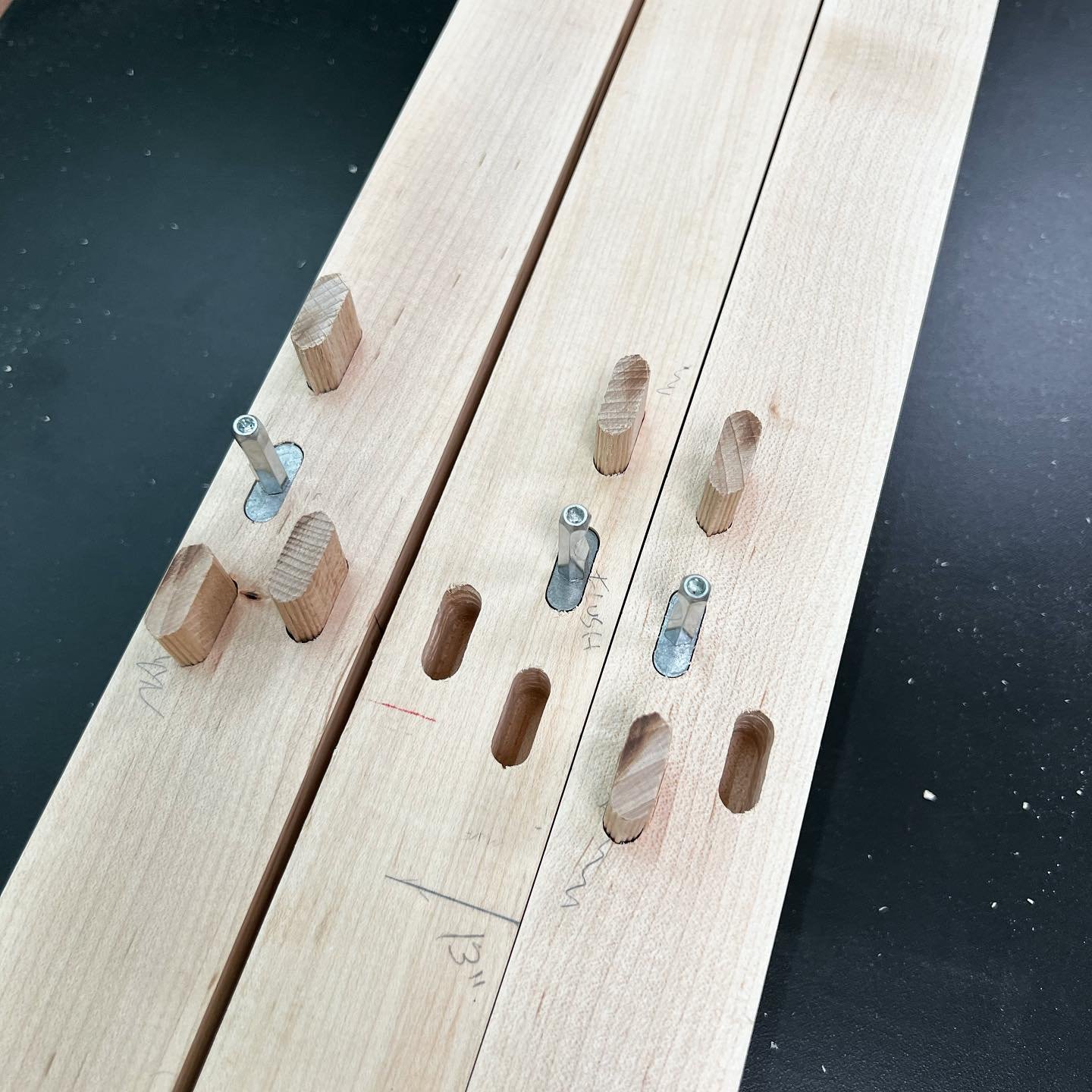
Wooden alignment dowels
These small wooden pins fit into matching holes in two panels. They help keep the parts in position and reduce unwanted movement during assembly.
Threaded inserts
A threaded insert provides a metal or other suitable threaded point inside a furniture component. It allows a matching bolt to be removed and installed without repeatedly cutting threads into the panel.
Corner blocks
These blocks connect two panels at an angle. They may be made from plastic, wood, or metal and can help support cabinet corners and other light or medium-duty joints.
Connector brackets
Metal brackets and plates connect parts with screws or bolts. Their shape and size determine where they can be used.
Confirmat screws
These furniture screws have a design suited to joining wood-based panels. They can be removed, but repeated use may wear the material around the screw hole.
How a Cam Lock System Works
A cam lock system uses two main parts: a cam bolt and a rotating cam. The bolt enters a matching hole in the adjoining panel. The cam sits in a larger prepared hole.
When you turn the cam with a screwdriver, its internal shape grips the bolt head. This action pulls the two parts together. The fitting stays mostly hidden inside the furniture, which gives the finished product a neat look.
The cam must face the correct direction before the parts meet. The bolt must also enter the cam fully. If the holes do not line up, forcing the panels together can damage the fitting or panel.
Step 1
Install the matching cam bolt in the correct prepared hole.
Step 2
Place the cam lock into its larger hole with its opening facing the bolt.
Step 3
Bring the two panels together and guide the bolt into the cam.
Step 4
Turn the cam as directed by the fitting manufacturer until the joint is secure.
How Cross Dowel Connections Work
A cross dowel creates a strong mechanical connection between two parts when the correct bolt and hardware are used. The threaded cylinder sits inside a cross hole. The bolt enters from the adjoining part and tightens into the cylinder.
This method is useful when a joint needs a removable bolt connection. The bolt and dowel must line up correctly. A poorly positioned cross dowel can make assembly difficult and may cause the bolt to enter at an angle.
Correct placement
The cross dowel must sit in the intended position so its threaded opening faces the bolt path.
Matching hardware
Use a bolt with the correct thread, length, and head type for the selected cross dowel.
Materials Used in Knockdown Furniture Construction
The furniture material affects how well a fitting works. Some materials hold screws and bolts better than others. The designer must match the connector to the panel instead of choosing hardware based on appearance alone.
Wood-based panels are common in knockdown furniture because they can be cut into flat, repeatable parts. Solid wood and metal can also be used. Each material has different properties and needs suitable drilling and fastening methods.
Panel thickness matters as well. A fitting made for a thick board may not work in a thin panel. The available edge distance and hole depth also affect the joint.
Source: toolsradar.com
Particleboard
Particleboard is made from wood particles and adhesive. It is common in affordable panel furniture. Correct pilot holes and suitable fittings help reduce edge damage. Repeated assembly can wear its holes.
Medium-density fiberboard
MDF has a smooth and even surface. It can work with selected furniture connectors, but its edges need careful handling because poorly placed fasteners can cause splitting or crumbling.
Plywood
Plywood uses layers of wood veneer. Its strength and screw-holding ability depend on its grade, thickness, construction, and condition. It can suit furniture that needs a strong panel structure.
Solid wood
Solid wood can provide strong connections when the grain, moisture movement, and fastener placement are considered. It may expand or shrink as humidity changes.
Metal
Steel and aluminum can form furniture frames, brackets, legs, and connector plates. The design must account for the correct threads, hole sizes, and corrosion protection.
Plastic
Plastic is used for corner blocks, clips, covers, and selected joining systems. Its strength depends on the plastic type, shape, and expected load.
How to Choose the Right Furniture Panel
Start by considering the purpose of the furniture. A small bedside cabinet has different needs from a large wardrobe or a bed frame. The material must support the expected load and accept the selected hardware.
Check the panel thickness, edge condition, surface finish, and moisture exposure. For large furniture, also consider the need for a back panel or other bracing to prevent the structure from moving sideways.
Do not assume that a thicker panel always creates a stronger joint. The connector, hole position, panel quality, and design all matter. A poorly placed bolt can damage even a thick board.
For cabinets
Choose stable panels that can hold the intended connectors and support the contents.
For beds
Use a frame and connector system designed for repeated loads and normal movement during use.
For desks
Consider the load from the top, legs, drawers, and equipment. Add suitable support against side movement.
How to Design Knockdown Furniture
Good knockdown furniture begins with a clear design plan. Before cutting the panels, decide which parts will remain separate and where the removable connections will sit. This helps prevent problems during drilling and assembly.
Start with the furniture’s purpose, size, and expected load. Then divide the structure into panels and smaller assembly groups. Identify the connections that need to come apart and those that can remain permanently fixed.
A cabinet, for example, may have removable side panels, a top, a bottom, and shelves. The back may use screws or another suitable attachment. The design must keep the cabinet square and resist side movement.
The drawings should show every part, its dimensions, its material, and its fitting positions. Each hole needs a clear location and drilling depth. A complete parts list also helps the workshop prepare the right hardware.
Source: home-dzine.co.za
Define the purpose
Decide how the furniture will be used, where it will stand, and what loads it must support.
Plan the separate parts
Divide the product into panels, rails, legs, shelves, and other parts that can be packed and joined.
Choose the connectors
Match each joint to the material, panel thickness, access needs, and expected use.
Prepare detailed drawings
Mark dimensions, drilling points, hole sizes, depths, and hardware locations.
Plan the assembly order
Make sure users can reach the fittings with the required tools and join the parts without obstruction.
Plan the packaging
Protect finished surfaces and keep all hardware, instructions, and small components organized.
Allow for Furniture Stability
A knockdown product must resist more than downward pressure. It may also face side movement, twisting, pulling, and repeated movement during normal use. These forces affect how the joints and panels should be arranged.
A tall cabinet needs a design that limits side-to-side movement. A desk needs stable connections between its top, legs, and frame. A bed needs joints that remain secure during normal movement and use.
Back panels, corner braces, cross rails, and properly placed connectors can help improve stability. Their size and location must suit the furniture design. Tall furniture may also need suitable wall anchoring to reduce the risk of tipping.
Prevent sideways movement
Use suitable back panels, braces, or structural connections to reduce racking.
Support the main loads
Place connectors where the frame and panels can transfer the expected loads.
Check the base
Make sure the legs, feet, and lower frame provide stable support on the intended floor.
Consider wall anchoring
Use suitable anti-tip hardware for tall or narrow furniture when the product instructions require it.
Plan Hole Positions and Tolerances
Hole accuracy is one of the most important parts of knockdown design. If the holes are too far apart or drilled at the wrong angle, the connectors may not meet. The user may then need to force the parts together, which can damage the panel.
Use a suitable drilling guide, jig, or machine setup to keep holes in the right position. Confirm the hardware dimensions before setting the drill size and depth. A sample assembly can reveal problems before full production begins.
Tolerance means the small allowed variation in a part’s dimensions. The designer should allow enough room for the parts to fit while keeping the finished joint tight. Too much clearance can create movement, while too little can make assembly difficult.
Use matching dimensions
Follow the hardware drawing and panel specifications rather than estimating hole sizes.
Keep holes square
Drill at the correct angle so bolts and fittings meet as intended.
Check edge distance
Leave enough material around each hole to reduce the risk of splitting or breakout.
Test a sample
Assemble a prototype to check fit, alignment, tool access, and joint behavior.
Step-by-Step Furniture Knockdown Construction Process
Building knockdown furniture requires a clear order of work. The process begins with a plan and ends with an assembled product that passes basic quality checks. Each step affects the next one, so do not skip the measuring and test-fitting stages.
The following process suits a basic panel furniture project. The exact tools, fittings, and dimensions will depend on the product and hardware instructions.
Source: timberbiscuitwoodworks.com
Step 1: Prepare the design
Draw the furniture from the front, side, and top. Add part sizes, panel thickness, joint positions, and fitting details.
Step 2: Make a parts list
List every panel, rail, shelf, leg, bracket, bolt, cam, dowel, and other component. Record the number of each part.
Step 3: Select the materials
Choose suitable panels or solid wood based on the expected load, appearance, budget, and hardware requirements.
Step 4: Cut the components
Cut the parts to the planned sizes. Check each edge and surface for damage before moving to drilling.
Step 5: Mark the joints
Transfer the connector positions from the drawing to each part. Use a square and measuring tools to keep the marks accurate.
Step 6: Drill the holes
Use the correct drill bit, guide, and depth setting for each fitting. Keep the holes clean and in the correct position.
Step 7: Install the hardware
Fit the cams, bolts, inserts, dowels, or brackets according to their instructions. Avoid damaging the panel during installation.
Step 8: Test the connections
Join the parts without forcing them. Check that the fittings meet and the panel edges line up.
Step 9: Complete the assembly
Follow the planned order and tighten the fittings evenly. Keep the furniture on a level and protected surface.
Step 10: Inspect the finished product
Check the joints, corners, surface finish, stability, and hardware. Correct any problems before putting the furniture into service.
Tools Needed for Knockdown Furniture Construction
The tools depend on the design and the fittings. A small DIY project may need only a screwdriver, Allen key, drill, measuring tape, and square. A workshop may use a drill press, boring machine, cutting equipment, and assembly jigs.
Choose tools that match the connector instructions. A drill with an adjustable depth stop can help control hole depth. A square helps keep the parts aligned. Clamps can hold panels in place while you check the fit.
Measuring tape
Measures panel dimensions and fitting positions.
Combination square
Checks right angles and helps mark straight reference lines.
Power drill
Creates holes for bolts, cams, dowels, and inserts.
Drill bits
Provide the sizes required by the selected fittings.
Screwdrivers
Turn compatible screws and cam locks.
Allen keys
Tighten connector bolts with matching hex sockets.
Clamps
Hold components in position during marking and test-fitting.
Safety glasses and dust protection
Help protect the eyes and lungs during cutting and drilling.
How to Check the Finished Assembly
A finished piece should stand in its intended position without obvious wobble or gaps. The panels should meet at the planned joints. Fittings should be seated correctly and should not show signs of stripped threads or damaged holes.
Check the furniture on a suitable level floor. Look for uneven legs, loose corners, and movement between adjoining panels. For a cabinet, confirm that the back and shelves fit as intended. For a bed, inspect the rail connections and support system before use.
Joint alignment
The connected panels should sit in the correct position without large gaps.
Secure fittings
The hardware should be fully engaged and tightened as directed.
Stable structure
The furniture should not show unexpected movement under normal handling.
No visible damage
The panels should not have fresh cracks, crushed edges, or enlarged fitting holes.
Choosing the Right Knockdown Joint for Each Furniture Type
Different furniture parts need different connections. A cabinet shelf does not face the same forces as a bed rail. The connector should match the joint’s purpose and the material around it.
The table below compares common choices by typical use. It is a design guide, not a load rating. Actual capacity depends on the hardware model, panel material, dimensions, installation quality, and test conditions.
Source: storage.googleapis.com
Cam locks
A common option for cabinet panels and flat-pack storage furniture. They offer concealed connections and straightforward assembly.
Cross dowels and bolts
Useful for furniture frames and joints that need a removable bolt connection, such as selected bed and table designs.
Corner blocks
Useful for connecting cabinet corners and supporting selected frame joints.
Threaded inserts
Useful where a bolt may need to be removed and installed more than once.
Connector brackets
Useful for selected frame connections, table legs, and furniture reinforcement.
Confirmat screws
Useful for joining selected manufactured-board panels, particularly where the design allows access to the screw head.
Recommended Connection Types by Furniture Application
A cabinet commonly uses cam and dowel fittings to join its side panels, top, and bottom. A bed may use connector bolts with cross dowels or a purpose-made bed fitting. A table can use removable plates or bolts to connect its legs and frame.
A bookshelf needs more than well-fitted corner joints. It also needs a suitable back or bracing system to resist sideways movement. A desk may need additional rails or a frame to support its top and reduce movement during use.
Always follow the hardware supplier’s specifications. Do not replace a connector with a similar-looking part unless the dimensions, threads, and intended use match.
Wardrobe
Cam locks, alignment dowels, suitable back-panel connections, and anti-tip hardware where required.
Bed frame
Purpose-made bed fittings, connector bolts, cross dowels, and suitable center support.
Dining table
Table plates, threaded inserts, connector bolts, or other fittings designed for the frame.
Bookshelf
Panel connectors, suitable screws, alignment dowels, and a properly secured back.
Office desk
Connector bolts, brackets, inserts, and frame supports selected for the intended load.
A Simple Hardware Selection Example
Imagine a small panel cabinet with two sides, a top, a bottom, and one shelf. The top and bottom need joints that pull the sides into position. Cam locks may suit these corners if the panel thickness and fitting specifications match.
Alignment dowels can help position the panels during assembly. The shelf may use fixed connectors or adjustable shelf supports, depending on whether the design allows the user to change its height. The back panel should also be attached in a way that supports the cabinet’s stability.
This example shows why connector choice must follow the furniture layout. One product can use several fitting types because each connection has a different job.
Main corner joints
Use a suitable removable connector that pulls the panels together.
Panel alignment
Use matching dowels or other alignment features where the design calls for them.
Adjustable shelf
Use compatible shelf pins and properly drilled support holes.
Back panel
Attach it according to the cabinet design so it helps maintain the correct shape.
Common Problems in Knockdown Furniture Construction
Most knockdown furniture problems begin with poor alignment, unsuitable hardware, damaged holes, or incorrect assembly. A fitting may look secure but still fail to hold the joint in the correct position.
The best way to avoid these problems is to check the parts before assembly. Follow the fitting instructions and stop if a bolt does not enter correctly. Forcing a connection can turn a small alignment problem into permanent panel damage.
Source: home-dzine.co.za
Misaligned holes
When two holes do not line up, the bolt or cam may fail to engage. Check the drilling positions and confirm that the correct parts are being joined.
Loose cam locks
A loose cam may result from an incorrect bolt, poor engagement, damaged material, or a cam that has not been turned correctly.
Stripped screw holes
Excessive tightening or repeated removal can damage the material around a screw. Stop tightening if the fitting no longer holds.
Cracked panel edges
A hole placed too close to an edge or a fitting installed with too much force can damage the panel.
Uneven furniture
Incorrect assembly order, an uneven floor, or misaligned parts can make a finished piece rock or lean.
Missing fittings
An incomplete hardware pack can prevent proper assembly. Identify the missing part before using a substitute.
How to Fix a Loose Knockdown Joint
Start by removing the load from the furniture. If the product is tall or heavy, get help to support it while checking the connection. Do not try to tighten a loose fitting while the structure is carrying its normal load.
Inspect the fitting and the surrounding panel. Check whether the cam is engaged, the bolt is correct, and the hole is still in good condition. If the fitting is simply loose, follow the manufacturer’s instructions to reconnect and tighten it.
If the hole is enlarged or the panel is cracked, tightening the same fitting may not solve the problem. A suitable repair insert or replacement panel may be needed. For load-bearing furniture, use a repair method designed for that joint rather than adding random screws.
Unload the furniture
Remove stored items and reduce pressure on the loose joint.
Inspect the hardware
Look for bent bolts, damaged threads, worn cams, and missing parts.
Check the panel
Look for cracks, crushed material, and enlarged holes.
Repair or replace
Use a compatible repair fitting or replace the damaged component when the original connection cannot hold.
Test before use
Reassemble the furniture and check its stability before returning items or applying normal loads.
Why Furniture Wobbles After Assembly
Wobbling can come from loose joints, an uneven floor, incorrect leg placement, or a structure that lacks enough support against sideways movement. A loose fitting is only one possible cause.
Check the floor first. Then inspect the legs, corner connections, back panel, and support rails. Tighten only the fittings that need attention and follow the product instructions.
If the furniture still moves after the connections are correct, the design may need suitable bracing or a repair. Do not use the furniture for its intended load until the cause has been corrected.
Check the floor
Confirm that all feet rest on a level and stable surface.
Check the joints
Inspect bolts, cams, screws, and brackets for looseness or damage.
Check the back
Make sure the back panel or other bracing is attached as designed.
Check the frame
Look for damaged rails, bent brackets, and uneven legs.
Safety and Quality Control in Knockdown Furniture
Safety starts with the design, not just the final assembly. The panels, fittings, and support parts must suit the intended use. A joint that works for a small cabinet may not be suitable for a bed or a heavy storage unit.
Furniture manufacturers should inspect both the individual parts and the assembled product. This includes checking panel sizes, hole positions, hardware counts, edge quality, and the finished joints. A sample unit can reveal errors that are difficult to see in separate parts.
For DIY work, use eye protection during drilling and cutting. Control wood dust and follow the safety instructions for the tools and materials. Keep small fittings away from children and pets during assembly.
Tall furniture can tip if it is poorly balanced or used in an unsafe way. Follow the product’s anti-tip instructions and use suitable wall anchoring where required. A wall anchor must match the wall material and the furniture’s intended fixing point.
Source: bestfurniture-catalog.blogspot.com
Check the materials
Inspect panels and frame parts for cracks, warping, damaged edges, and other defects.
Check the fittings
Confirm that the hardware matches the design and that no required parts are missing.
Check the drilling
Measure hole locations and depths to confirm that the fittings can engage correctly.
Check the assembly
Inspect the finished joints, alignment, support, and stability.
Check the instructions
Make sure the assembly order, part labels, and fitting diagrams are clear.
Check the packaging
Protect panels and hardware so parts do not shift, scratch, or become damaged during transport.
Furniture Load and Stability Checks
A furniture load check should follow a suitable test plan for the product type. Do not assume that a joint is safe because it holds a light load during a quick home inspection.
Manufacturers should use appropriate product requirements and test methods for the furniture category. The correct test depends on the intended use, design, material, and market. A home user should follow the stated weight limits and avoid improvised overload tests.
For a tall cabinet or bookcase, check the anti-tip instructions. For a bed, inspect the frame, center support, and rail connections. For a desk, check the top, legs, and frame before placing heavy equipment on it.
Follow stated limits
Use the furniture within the load limits supplied by its manufacturer.
Use the correct test method
Product makers should select suitable testing procedures for the intended furniture category.
Do not ignore damage
Stop using furniture with cracked panels, bent connectors, or joints that no longer hold.
Secure tall furniture
Use the required anti-tip system and suitable wall attachment.
How to Maintain and Reassemble Knockdown Furniture
Knockdown furniture needs basic care to keep its joints in good condition. Check the fittings from time to time, especially after moving the furniture or changing its layout. Loose connections should be addressed before they cause more damage.
When taking furniture apart, follow the reverse of the assembly process where the instructions allow it. Remove the fittings with the correct tool and keep small parts in labeled bags. Avoid pulling panels apart while a bolt or cam is still engaged.
Store the parts in a dry area. Protect the corners and finished surfaces from impact. Keep the assembly instructions with the hardware so the next assembly is easier.
Source: home-dzine.co.za
Inspect the joints
Look for loose bolts, worn cams, damaged threads, and enlarged holes.
Use the correct tool
Choose a screwdriver or Allen key that fits the hardware properly.
Avoid excess force
Do not overtighten fittings or force panels apart while the connectors remain engaged.
Protect the panels
Use padding or a suitable cover to protect corners, edges, and finished surfaces during storage.
Keep hardware organized
Place bolts, cams, dowels, and brackets in labeled bags for the next assembly.
Replace damaged parts
Use compatible replacement fittings or panels when the original parts no longer provide a secure connection.
Can Knockdown Furniture Be Assembled More Than Once?
Yes, many knockdown products are designed to be taken apart and assembled again. However, the number of safe assembly cycles depends on the connector and the material around it.
Metal inserts and suitable bolt connections may support repeated removal better than a screw repeatedly driven into a soft or damaged panel. Particleboard and MDF can lose holding strength when holes wear or break down.
Before each new assembly, inspect the holes and fittings. Replace damaged hardware and do not reuse a connector that is bent, stripped, or otherwise defective.
Check the fitting condition
Look for worn threads, bent bolts, and damaged cam locks.
Check the panel holes
Make sure the material around each hole remains firm and intact.
Follow the correct order
Use the original assembly instructions when rebuilding the furniture.
How to Pack Furniture for Moving
Take photographs of the assembled furniture before removing the parts. These can help you identify panel positions and connection points later. Label each major component with a removable tag.
Place the fittings in separate labeled bags. Protect the edges of panels with padding and keep heavy parts from pressing against delicate surfaces. Do not place loose metal fittings between finished panels without protection.
Keep the hardware and instructions together. This small step can save time when the furniture reaches its new location.
Photograph the furniture
Record the assembled structure and important connection points.
Label each part
Mark panels, rails, shelves, and other parts clearly.
Separate small hardware
Use labeled bags to prevent the fittings from getting mixed up.
Protect the surfaces
Wrap panels and corners to reduce scratches and impact damage.
Common Mistakes to Avoid During Knockdown Construction
Small mistakes can create major problems in knockdown furniture. A misplaced hole may prevent a cam from locking. A wrong bolt may damage the thread. An uneven frame may remain unstable even after every fitting has been tightened.
The best approach is to measure twice, check the hardware, and test the parts before final assembly. Follow the product drawings instead of relying on guesswork.
Source: storage.googleapis.com
Choosing fittings by appearance
Two connectors may look similar but have different thread sizes, hole requirements, and intended uses. Check the exact specifications.
Drilling without a guide
Freehand drilling can create angled or misplaced holes. Use a suitable guide or jig when accuracy matters.
Using too much force
Excessive tightening can strip threads, crush panels, or damage fittings. Follow the manufacturer’s instructions.
Ignoring panel thickness
A fitting designed for another thickness may not seat correctly or may break through the surface.
Skipping the test assembly
A prototype helps reveal alignment and tool-access problems before the furniture is fully produced.
Leaving out structural support
A cabinet or bookshelf may need a back panel, brace, or other support to resist sideways movement.
Mixing different hardware
Using mismatched bolts, cams, and inserts can create loose or damaged joints.
Ignoring damaged parts
A cracked panel or stripped fitting should be repaired or replaced before the furniture is used.
What to Do When Assembly Parts Do Not Fit
Stop before applying more force. Check the part labels, panel orientation, hole positions, and fitting type. A panel may simply be turned the wrong way or paired with the wrong connector.
Compare the parts with the assembly drawing. Check whether a dowel is too deep, a cam is facing the wrong way, or a bolt has the wrong length. Remove any fitting that is clearly misaligned and inspect the hole before trying again.
If the parts remain incompatible, contact the manufacturer or a qualified furniture repair professional. Do not enlarge a structural hole or replace a fitting without confirming that the repair is suitable.
Pause assembly
Do not force a bolt or panel into a connection that does not fit.
Compare the instructions
Check part numbers and connection diagrams.
Inspect the hardware
Look for incorrect, bent, or damaged fittings.
Seek the correct replacement
Use the original or a verified compatible part.
Research Findings and Important Questions the Guide Addresses
A review of five relevant resources on furniture construction and knockdown fittings was used to shape this guide. The reviewed material included a United Nations Industrial Development Organization furniture production manual, DT Online’s fitting reference, an Australian cabinetmaking training resource, a DIY Doctor joint guide, and a technical research paper on furniture designed for disassembly.
The reviewed resources explain common fittings, joint types, panel construction, and the role of accurate machining. They also show why the choice of connector must follow the furniture material and intended use. This guide brings those points together into a practical sequence for design, construction, assembly, repair, and future disassembly.
The main improvement is the connection between hardware selection and the full furniture life cycle. Readers need more than a list of fittings. They also need to know how to plan the holes, check the assembled product, identify joint damage, and prepare the parts for a later move.
The questions below include inferred next needs based on the construction task. They are editorial planning questions, not verified Search Console queries or measured search-demand findings.
Source: timberbiscuitwoodworks.com
Observed topic: Types of knockdown fittings
The reviewed DT Online, cabinetmaking, and DIY Doctor resources explain cams, bolts, cross dowels, brackets, and related fittings. This guide adds guidance on matching them to furniture applications.
Observed topic: Fixed versus removable joints
The UNIDO furniture production manual explains the difference between fixed and knockdown construction, including transport and assembly considerations.
Inferred next need: How to plan drilling
A reader who understands the fittings may next need to mark and drill accurate holes. This guide adds practical steps for measuring, alignment, depth, and test assembly.
Inferred next need: How to repair a loose connection
A user may encounter a loose joint after assembly or moving. This guide explains how to inspect the hardware and panel before choosing a repair.
Inferred next need: How many times can furniture be reassembled?
A future move may require another assembly cycle. This guide explains how material wear and connector condition affect reuse.
Inferred next need: How to check furniture stability
A completed product needs an inspection before use. This guide covers wobble, alignment, support, and anti-tip considerations.
Competitor Coverage and Reader Benefit
The reviewed pages provide useful information about individual fittings and basic furniture joints. Some explain the action of cam locks, while others focus on connector types or cabinetmaking methods. The UNIDO manual also addresses drawings, component planning, and production quality.
Coverage of the complete DIY workflow varies. The fitting references are useful for understanding hardware, but a reader may still need help moving from the design stage to drilling, assembly, inspection, and repair. This article connects those stages in one practical guide.
The reviewed resources do not establish a universal load rating or a fixed number of safe assembly cycles for all knockdown furniture. Those values depend on the product, materials, connectors, and test method. They should not be guessed or applied to every design.
Joint selection
Reviewed coverage: answered. Reader benefit: understand the main connector types and their typical uses.
Material compatibility
Reviewed coverage: answered in part. Reader benefit: connect material properties with hardware choice and panel thickness.
Drilling and assembly sequence
Reviewed coverage: varied. Reader benefit: follow a clear process from measurements to final inspection.
Troubleshooting damaged joints
Reviewed coverage: limited across the selected pages. Reader benefit: identify whether the problem is a loose fitting, damaged hole, or incorrect assembly.
Repeated disassembly
Reviewed coverage: limited. Reader benefit: understand why some panels and fittings wear faster than others.
Product-specific strength
Reviewed coverage: not established as a universal value. Reader benefit: avoid treating one connector or material as suitable for every load.
Frequently Asked Questions
Q
What is the main purpose of knockdown furniture construction?
The main purpose is to make furniture easier to transport, store, assemble, and take apart. It uses removable fittings to connect separate parts instead of relying only on permanent joints. This approach is common in flat-pack cabinets, desks, beds, and modular furniture.
Q
Which fittings are most common in knockdown furniture?
Common fittings include cam locks, cam bolts, connector bolts, cross dowels, threaded inserts, wooden dowels, corner blocks, and connector brackets. The right choice depends on the material, panel thickness, joint position, and intended use.
Q
Is knockdown furniture strong enough for everyday use?
Yes, a properly designed and assembled knockdown product can serve everyday needs. Its strength depends on the panel material, joint design, hardware, drilling accuracy, and support. Follow the manufacturer’s load limits and inspect the fittings regularly.
Q
Can I take apart and rebuild knockdown furniture?
Many knockdown products are designed for disassembly and reassembly. However, repeated assembly can wear panel holes and fittings. Inspect the hardware and surrounding material before rebuilding, and replace damaged parts when needed.
Q
What is the difference between a cam lock and a cross dowel?
A cam lock uses a rotating metal fitting that grips a matching bolt and pulls two panels together. A cross dowel is a threaded cylinder that receives a bolt from another part. Both create removable connections, but their shapes, installation methods, and typical applications differ.
Q
Why does my knockdown furniture become loose?
Loose joints can result from incomplete assembly, incorrect fittings, worn threads, enlarged holes, damaged panels, or movement during use. Remove the load, inspect the joint, and check the assembly instructions. Replace damaged parts instead of repeatedly tightening a connection that no longer holds.
Q
Does knockdown furniture need glue?
Not always. Many knockdown connections use mechanical fittings without glue so the furniture can be taken apart. Some designs use glue for selected dowels or permanent subassemblies. Follow the product design and fitting instructions rather than adding glue to every joint.
Q
What is the best material for knockdown furniture?
There is no single best material for every project. Plywood, particleboard, MDF, solid wood, metal, and plastic can all be used in suitable designs. The right material depends on the expected load, appearance, cost, panel thickness, moisture conditions, and connector requirements.
✦ Wrapping Up
Conclusion
Furniture knockdown construction makes it possible to build useful furniture from separate parts that connect with removable hardware. It supports flat-pack delivery, easier handling, modular design, and future repairs. Cam locks, connector bolts, cross dowels, threaded inserts, and brackets all have a role in this method.
A successful project needs more than suitable fittings. It also needs accurate drawings, compatible materials, correct drilling, and a clear assembly order. Every connection should match its purpose and the loads the furniture is expected to carry.
For DIY builders and furniture makers, the best starting point is a simple design with clear part labels and a suitable connector plan. Test the joints before final assembly. Inspect the finished product for alignment, stability, and damage, then keep the hardware and instructions safe for future use.
💡 Key Takeaway
Before building knockdown furniture, prepare a complete parts drawing, select fittings that match the material and panel thickness, mark and drill each connection accurately, and test the assembled structure before use. Keep the assembly instructions and spare hardware together so future repairs or moves are easier.