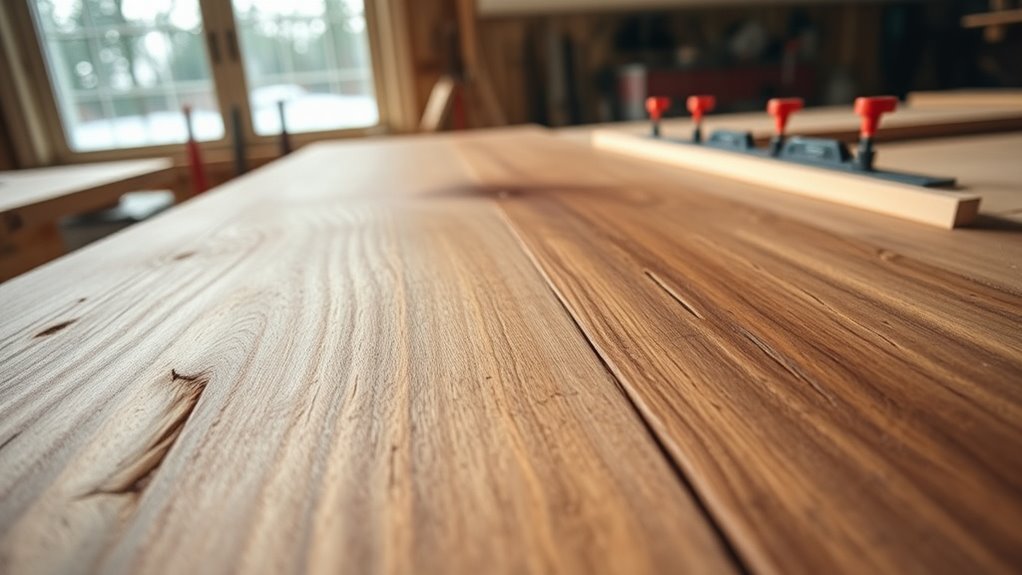
Furniture seasonal movement is the natural expansion and contraction of wood as indoor humidity changes throughout the year. Proper construction, flexible joints, balanced finishes, and stable indoor humidity help prevent cracks, gaps, warping, and loose connections.
Across the United States, homes face different seasonal conditions. A house in Minnesota may have very dry indoor air during a cold winter. A home in Florida may face high humidity for much of the year. Homes in Arizona can experience dry air, while houses in the Pacific Northwest may deal with damp conditions. These changes affect wood furniture, especially pieces made from solid lumber.
Wood takes in moisture from the air and releases it when the surrounding air becomes drier. This process changes the size of the wood. A dining table may become wider during a humid summer and narrower during a dry winter. A cabinet door may fit differently, and a drawer may slide less freely. These changes are normal, but poor construction can turn them into lasting damage.
Furniture seasonal movement is not a sign that a piece is poorly made. It is a basic property of natural wood. The real challenge is to design furniture that can move without damaging its joints, surface, frame, or finish. This guide explains why movement happens, which furniture parts are most affected, and how owners and furniture makers can manage it.
The main principle is simple: control moisture changes where practical, but never try to stop natural wood movement by locking a wide solid-wood panel in place. Good furniture design gives each part enough room to respond to its surroundings.
Source: michelleyorkedesign.com
What Is Furniture Seasonal Movement?
Furniture seasonal movement describes the changes in the size and shape of wood furniture caused by changes in moisture content. Wood is a natural material that continues to respond to its environment after a tree has been cut, dried, and made into furniture. It does not become completely motionless after construction.
Wood is hygroscopic. This means it can absorb moisture from the surrounding air and release moisture back into that air. When indoor humidity rises, wood usually gains moisture and expands. When humidity falls, wood loses moisture and shrinks.
The change does not happen at the same speed in every piece of furniture. Wood species, board width, grain direction, construction, finish, and the rate of humidity change all affect the result. A narrow chair leg may show little visible change, while a wide dining table can experience noticeable movement.
The USDA Forest Products Laboratory explains this relationship in its Wood Handbook. Its guidance covers moisture content, equilibrium moisture content, drying, and dimensional changes. These principles form the basis for understanding why furniture changes size with the seasons.
Source: decormatters.com
Expansion
Wood gains moisture from humid air. Its dimensions increase, mainly across the grain.
Contraction
Wood releases moisture into drier air. Its dimensions decrease, which can reveal gaps or expose unfinished edges.
Equilibrium moisture content
This is the moisture content wood tends to reach when it remains in a particular temperature and relative humidity environment.
Dimensional stability
This describes how well a material maintains its size and shape when moisture conditions change.
Why Does Wood Keep Moving After Furniture Is Built?
Drying lumber removes much of the water that was present in the living tree. However, dried wood still exchanges moisture with the surrounding air. Kiln drying does not make wood permanently dry or immune to humidity.
Furniture may remain in a home for decades. During that time, heating systems, air conditioning, open windows, cooking, and seasonal weather can change the indoor environment. The wood continues to adjust to those conditions.
A protective finish can slow this exchange. It cannot create a permanent moisture barrier under normal furniture conditions. This is why even well-finished furniture needs sound construction.
Indoor heating
Heating cold outdoor air during winter often lowers its relative humidity indoors.
Air conditioning
Air conditioning often reduces indoor moisture during warm weather, although the actual result depends on the system and local conditions.
Seasonal weather
Changes in outdoor humidity can affect indoor conditions, especially when windows and doors remain open.
Is Seasonal Movement Normal?
Yes. Small changes in panel width, joint gaps, drawer clearance, and wood appearance can be normal. A solid-wood tabletop may become slightly wider during a humid period and narrower during a dry period.
However, a large crack, a loose structural joint, a severely warped panel, or a door that remains stuck after humidity stabilizes deserves attention. Normal movement should not cause a well-designed piece to become unsafe or unusable.
The key difference is whether the furniture has room to move. A properly designed joint accommodates changes. A poorly designed joint resists them and transfers stress into the wood or adhesive.
How Wood Expands and Contracts With Humidity
Wood does not expand equally in every direction. Its grain structure controls how it responds to moisture. This is one of the most useful facts in furniture design because it helps explain why a tabletop needs more movement space than a narrow table leg.
Wood has three main directions of movement: tangential, radial, and longitudinal. Tangential movement follows the direction around the growth rings. Radial movement runs from the center of the tree toward its outer surface. Longitudinal movement follows the length of the grain.
Tangential movement is generally the greatest. Radial movement is smaller, and longitudinal movement is usually very small. The USDA Wood Handbook explains these differences and provides species-specific data for calculating dimensional changes.
This difference matters when two pieces of wood meet at an angle. A wide tabletop may change across its width while its supporting rails change very little in the same direction. If rigid fasteners prevent the top from moving, stress can build up.
Source: woodnbits.com
Tangential movement
This occurs around the growth rings and is usually the largest type of dimensional change.
Radial movement
This occurs across the growth rings and is generally smaller than tangential movement.
Longitudinal movement
This occurs along the grain and is usually minimal in normal furniture lumber.
Flatsawn, Quartersawn, and Riftsawn Lumber
The way a board is cut from a log affects its movement. Flatsawn lumber has growth rings that tend to lie at a low angle to the wide face. It often shows greater width movement and may cup as moisture conditions change.
Quartersawn lumber has growth rings positioned more vertically across the board’s face. Its width movement is generally lower than that of comparable flatsawn lumber. It can also produce a different grain pattern, which may be useful for furniture appearance and stability.
Riftsawn lumber has growth rings at an intermediate angle. It can offer a balance of appearance and dimensional behavior. However, the exact movement still depends on species and board characteristics.
A furniture maker should consider the cut when selecting lumber for a wide table, cabinet door, or other large panel. Choosing a more stable cut can reduce movement, but it does not remove the need for suitable joinery.
Flatsawn boards
Often economical and visually distinctive, but they may show more width movement.
Quartersawn boards
Usually offer better width stability and a straight grain appearance.
Riftsawn boards
Offer a relatively straight grain pattern and an intermediate growth-ring orientation.
Which Furniture Parts Move the Most?
Wide solid-wood panels deserve the most attention. A large tabletop contains a substantial amount of wood across the grain. A small change in moisture content can create a visible change in its total width.
Cabinet doors, wardrobe panels, wooden bed frames, and solid-wood drawer fronts can also change size. Narrow legs, rails, and small decorative parts usually show less visible movement because their dimensions across the grain are smaller.
The direction of the grain is just as important as the overall size. A wide panel may move significantly across its width while remaining almost the same length.
High movement potential
Wide solid-wood tabletops, cabinet panels, solid-wood doors, and large wooden lids.
Moderate movement potential
Wide drawer fronts, shelves, bed rails, and furniture panels.
Lower visible movement
Narrow legs, short rails, small trim parts, and many decorative components.
How Different Seasons Affect Wood Furniture in the United States
Seasonal furniture movement depends more on indoor moisture conditions than on the calendar alone. Still, the four seasons provide a useful way to understand common changes in American homes.
Winter often brings dry indoor air in homes that use central heating. Wood may release moisture and contract. Small gaps can appear between boards, and solid-wood drawer fronts may become slightly narrower.
Spring can bring changing humidity as temperatures rise and heating systems run less often. Wood begins to adjust to the new conditions. The transition may be gradual or uneven, depending on the local climate and home ventilation.
Summer often brings higher outdoor humidity in many parts of the country. Wood can absorb moisture and expand. Drawers may become tighter, doors may rub against their frames, and wide panels may become wider.
Fall brings another period of change as homes begin using heating systems again. Furniture may start to lose moisture as indoor conditions become drier. The direction and size of the change depend on local weather and household habits.
Source: boylesfrenchpolishers.co.uk
Winter
Heated indoor air can become dry, which may cause solid wood to contract.
Spring
Changing temperature and moisture levels can lead to gradual expansion or contraction.
Summer
Humid conditions may cause solid wood to absorb moisture and expand.
Fall
Indoor heating and falling outdoor temperatures can start another drying cycle.
Regional Climate Differences
The United States has several climate zones, so furniture does not behave in exactly the same way everywhere. A piece kept in a humid coastal home may face a different annual moisture range from an identical piece in a dry inland home.
In the Northeast and Midwest, cold winters can create very dry indoor conditions when heating systems operate for long periods. Summer humidity may then cause the same furniture to expand.
In the Southeast, high outdoor humidity can affect homes during much of the year. Air conditioning often changes indoor moisture levels, so the furniture responds to the actual indoor environment rather than outdoor humidity alone.
In the Southwest, dry air can encourage wood to lose moisture. Homes in the Pacific Northwest may experience damp outdoor conditions, but indoor heating can still create dry periods. Local conditions matter more than a broad regional label.
Northeast and Midwest
Watch for winter shrinkage and summer expansion, especially in homes with strong seasonal humidity changes.
Southeast and Gulf Coast
Monitor indoor humidity because prolonged humid weather can affect solid-wood furniture.
Southwest
Very dry indoor air can increase contraction and the chance of gaps or small surface checks.
Pacific Northwest
Consider indoor heating, ventilation, and moisture exposure rather than assuming outdoor dampness determines indoor conditions.
Why Indoor Conditions Matter More Than Outdoor Weather
A home creates its own indoor climate. Insulation, heating, cooling, ventilation, and daily activities all affect humidity. Two homes in the same city can have very different indoor moisture levels.
A furniture owner should measure the room where the furniture sits. An outdoor weather report cannot show the exact conditions around a dining table or cabinet.
A digital hygrometer can help track relative humidity. Taking readings in different seasons gives a clearer picture of the home’s normal moisture range. This information can guide decisions about humidifiers, dehumidifiers, and furniture placement.
Measure the room
Use an indoor hygrometer near the furniture rather than relying only on outdoor weather data.
Track seasonal changes
Record readings during heating and cooling seasons to identify repeated patterns.
Avoid sudden changes
Make gradual adjustments rather than exposing furniture to rapid humidity shifts.
Furniture Construction Methods That Allow Seasonal Movement
Good furniture construction does not try to eliminate wood movement. It allows wood parts to change size without placing too much stress on joints or nearby components. This principle is essential for solid-wood furniture.
A rigid connection between two parts with different movement directions can create problems. For example, a wide tabletop expands across its width, while a table apron may remain almost unchanged in length. A fixed connection can cause the top to crack or the joint to fail.
Furniture makers use several methods to manage this problem. These include floating panels, slotted screw holes, figure-eight fasteners, Z-clips, and breadboard ends. Each method has a specific purpose and must suit the design.
Source: woodcraftwiz.com
Floating construction
Allows a panel to move inside a surrounding frame without forcing the frame to expand.
Flexible fasteners
Secure furniture parts while allowing controlled movement in the required direction.
Movement-friendly joints
Keep connected parts aligned without locking different grain directions together.
Proper panel sizing
Provides enough clearance for the largest expected seasonal dimension.
Floating Panels in Cabinet Doors
A floating panel sits inside grooves cut into the surrounding frame. The panel remains held in place, but the frame does not glue its entire edge to the panel.
This construction gives the panel room to expand and contract across its grain. The frame can remain stable while the panel changes width. It is a common method for solid-wood cabinet doors and traditional furniture panels.
If a maker glues the full panel edge into the frame, the panel may place stress on the frame during a humid period. This can cause cracks or loose joints. A properly sized groove avoids that problem.
The groove must have enough depth and clearance for the expected movement. The panel should not become trapped when it expands.
Use suitable groove clearance
Leave enough space for the panel to expand without pushing the frame apart.
Avoid full-edge glue
Do not glue the entire perimeter of a solid-wood floating panel.
Keep the panel centered
Use suitable panel spacers or limited center restraint when the design requires it.
Tabletop Fasteners and Slotted Screw Holes
A solid-wood tabletop needs a secure connection to its base, but that connection must allow width movement. Figure-eight fasteners provide one solution. They pivot as the tabletop changes size while keeping the top attached.
Z-clips provide another option. They fit into grooves in the table apron and slide as the top expands or contracts. Wooden buttons and shop-made clips can provide a similar function when designed correctly.
Slotted screw holes are useful when a tabletop or panel must attach directly to another part. The slot should run in the direction of expected movement. A washer may help retain the screw without blocking the slot.
The important point is to avoid tightening a screw in a way that locks the panel against movement. A fixed point can help control the direction of movement, while other connections allow the panel to shift.
Figure-eight fasteners
Pivot as the solid-wood top changes width.
Z-clips
Slide inside grooves while holding the tabletop securely.
Slotted holes
Provide room for screws to shift with the panel.
Wooden buttons
Offer a traditional method for securing a tabletop while allowing movement.
Breadboard Ends and Cross-Grain Construction
Breadboard ends are short boards attached across the ends of a wide solid-wood panel. They help resist cupping and cover the exposed end grain. However, the end board must not prevent the main panel from changing width.
A traditional breadboard joint uses a tongue on the main panel and a matching mortise in the end board. The center can be fixed, while the outer connections use elongated holes that let the panel move.
Gluing the entire joint across its width defeats the purpose. The main panel and the breadboard end have different grain directions. They cannot change size freely if the whole joint is rigidly bonded.
WOOD Magazine’s breadboard guidance explains how the joint uses a central attachment and slotted outer connections. This approach keeps the end piece attached while allowing the panel to expand and contract.
The exact joint design depends on panel width, wood species, moisture range, and the type of furniture. A decorative end strip that is fully glued across a wide panel is not a substitute for a movement-friendly breadboard joint.
Anchor the center
Use the center connection to help keep the end piece aligned.
Allow movement at the sides
Use suitable elongated holes and pins or other movement-friendly connections.
Avoid rigid full-width glue
Do not lock the entire cross-grain connection in place.
Solid Wood and Engineered Wood Construction
Engineered wood products can reduce many of the movement problems associated with wide solid-wood panels. Plywood uses layers with different grain directions. MDF uses wood fibers bonded into a uniform panel. Both generally show less directional movement than a comparable wide solid-wood board.
Veneered furniture often uses a stable core with a thin real-wood surface. This allows a furniture maker to achieve a wood appearance without relying on a single wide solid-wood panel.
However, engineered panels are not immune to moisture. MDF edges can swell if water enters the material. Plywood can also suffer damage if its layers remain wet or its edges are poorly protected.
When solid wood connects to plywood or MDF, the joint still needs consideration. The solid-wood part can move more than the engineered panel. Suitable fasteners and connection details help reduce stress between them.
Solid hardwood
Provides natural grain and repair options but needs movement allowances.
Plywood
Offers useful dimensional stability for cabinet sides, shelves, and furniture cores.
MDF
Provides a uniform surface but needs protection from water and prolonged dampness.
Wood veneer
Provides a natural wood surface over a more stable core.
How to Protect Furniture From Seasonal Movement
Furniture owners can reduce seasonal problems by keeping indoor conditions reasonably stable and allowing furniture to respond naturally. The goal is not to keep wood at one exact dimension. The goal is to avoid large and sudden moisture changes.
Start by checking the room where the furniture sits. Look for heating vents, direct sunlight, exterior doors, damp walls, and areas with poor air circulation. These conditions can create local differences in temperature and moisture.
Next, check the furniture for movement-related symptoms. Look at tabletop gaps, door clearance, drawer operation, loose joints, and visible cracks. Compare the condition during different seasons before deciding that a part needs repair.
Good maintenance is often simple. Keep furniture away from direct heat, wipe up spills, use suitable cleaning methods, and avoid placing solid wood against a damp wall. If the home has very dry or humid air, consider managing the indoor environment.
Source: zeenews.india.com
Keep humidity reasonably stable
Avoid repeated extremes of very dry and very humid indoor air.
Control direct heat
Keep furniture away from heating vents, fireplaces, and radiators when practical.
Clean up spills
Remove standing water promptly to reduce the risk of localized swelling and finish damage.
Inspect joints
Check loose connections before they cause further damage.
Maintain Stable Indoor Humidity
A commonly used indoor relative humidity target is around 30% to 50%, although the best range depends on the building, climate, and other materials in the home. This is a practical starting point, not a universal furniture warranty or a strict requirement for every location.
A hygrometer helps you see whether the room becomes very dry during winter or unusually humid during summer. Track readings over time instead of making decisions based on one measurement.
A humidifier can help when indoor air becomes very dry. A dehumidifier may help when moisture remains high. However, either device should be used with care. Excess moisture can encourage mold and damage other household materials.
Avoid sudden changes in humidity. A rapid adjustment can create uneven moisture conditions between the surface and the interior of thick wood parts. Gradual changes are generally easier for furniture to handle.
Measure before adjusting
Use a hygrometer to identify the actual indoor condition.
Use suitable equipment
Choose humidification or dehumidification based on measured conditions and building needs.
Watch for condensation
Do not increase humidity to a level that causes window condensation or damp surfaces.
Maintain the equipment
Clean humidifiers and follow manufacturer instructions to avoid distributing contaminants.
Choose the Right Furniture Location
Furniture placement affects how evenly a piece responds to the room. A table placed directly beside a heating vent may dry faster on one side. This can create uneven movement and increase the chance of warping or finish problems.
Direct sunlight can heat a surface and affect its finish. A damp exterior wall can expose furniture to localized moisture. These conditions may affect one part of a piece more than another.
Leave a small gap between large furniture and exterior walls when practical. Allow air to circulate behind cabinets and wardrobes. Avoid placing solid-wood pieces where they receive repeated water exposure.
Avoid direct heating
Do not place wooden furniture directly in the path of hot air.
Limit strong sunlight
Use curtains or suitable window coverings to reduce prolonged direct exposure.
Allow airflow
Keep a little space behind large cabinets and wardrobes.
Check damp areas
Do not place valuable wood furniture against walls with leaks or persistent moisture.
Use Furniture Finishes Correctly
A finish slows the rate at which wood exchanges moisture with the air. Paint, varnish, lacquer, oil, and other finishes can provide different levels of protection. None makes solid wood completely immune to seasonal movement.
Balanced finishing matters. If one face of a panel receives a strong moisture-resistant coating while the other face remains unfinished, the two sides may respond differently to changing conditions. This can increase the risk of distortion.
When building furniture, apply the planned finish consistently to the relevant surfaces. Pay attention to edges and hidden areas where appropriate. Follow the finish manufacturer’s instructions for surface preparation, application, drying, and ventilation.
For existing furniture, do not apply a new coating simply because a drawer sticks or a tabletop develops a gap. First identify the cause. A finish cannot correct a rigid joint, a poorly fitted panel, or a serious moisture problem.
Protect exposed surfaces
Use a finish that suits the wood species, furniture purpose, and expected exposure.
Treat surfaces consistently
Avoid unnecessary differences in moisture protection between opposing faces.
Maintain the finish
Repair damaged coatings when suitable, following the finish manufacturer’s guidance.
Inspect Furniture at Seasonal Changes
A short inspection during seasonal transitions can reveal problems early. Check whether drawers slide normally, doors close without force, and tabletop joints remain secure.
Look for small cracks, gaps, raised veneer, loose fasteners, or changes in panel shape. Record what you see and compare it with earlier observations.
If a drawer becomes slightly tighter during a humid period but works normally again when conditions stabilize, the change may be seasonal. If it remains stuck or the furniture shows structural damage, further inspection is needed.
Check drawers
Look for rubbing, binding, and changes in clearance.
Check cabinet doors
Look for rubbing edges and changes in the gap around the door.
Check tabletops
Look for cracks, cupping, loose fasteners, and changes around breadboard ends.
Check furniture joints
Look for movement, gaps, creaking, or loose connections.
Common Signs of Seasonal Furniture Movement
The most common signs include changing gaps, tighter drawers, rubbing cabinet doors, small cracks, and slight changes in tabletop width. These signs do not always indicate a defect. Their meaning depends on the location, severity, and timing of the change.
A useful first step is to compare the problem with the indoor humidity. If a drawer becomes tight during a humid period, moisture-related expansion may be involved. If a tabletop develops a long crack while its fasteners remain rigid, the construction may be preventing natural movement.
Do not assume every furniture problem comes from humidity. Loose joints can result from wear, poor assembly, impact, or adhesive failure. Water damage, insect activity, and excessive loads can also change the shape of furniture.
Source: woodnbits.com
Small seasonal gaps
These may appear between boards when solid wood contracts during a dry period.
Tight drawers
A drawer may bind when its wooden parts expand in humid conditions.
Rubbing doors
A solid-wood door may become wider and rub against its frame.
Panel distortion
A panel may cup or warp when moisture changes are uneven or construction restricts movement.
How to Tell Seasonal Movement From Furniture Damage
Timing provides a useful clue. A problem that appears during a predictable humidity change and improves when indoor conditions stabilize may be related to seasonal movement. Damage that continues to grow or remains after conditions stabilize needs closer attention.
Location also matters. A small gap between solid-wood boards may be a normal result of contraction. A crack through a load-bearing joint is more concerning. A door that rubs slightly may need seasonal clearance, while a door with a loose hinge may need a hardware repair.
Check whether the affected area has signs of water exposure. Dark stains, swollen edges, soft material, and lifted veneer can indicate moisture damage rather than ordinary seasonal movement.
For valuable antique furniture, avoid sanding, trimming, or forcing parts to fit before understanding the cause. Removing wood to correct a temporary seasonal problem can create permanent gaps when the humidity changes again.
Likely seasonal change
The change follows indoor humidity patterns and may improve when conditions return to their earlier range.
Possible structural problem
The joint remains loose, the crack grows, or the furniture becomes unstable.
Possible water damage
The surface shows swelling, staining, softness, mold, or lifted veneer.
Possible hardware problem
The door or drawer moves unevenly because of loose hinges, slides, or fasteners.
What to Do When a Drawer Becomes Stuck
First, remove heavy items from the drawer. Open and close it gently to identify where it rubs. Do not force the drawer, because pressure can damage the front, slides, or surrounding frame.
Next, check the room’s humidity and look for recent changes. If the drawer is made from solid wood and the room has become unusually humid, expansion may be the cause.
Inspect the drawer slides and cabinet opening. A loose slide, damaged runner, or misaligned cabinet can create similar symptoms. Correct those problems before changing the wood.
If the drawer works poorly only during certain seasons, allow conditions to stabilize before considering permanent changes. If it remains stuck, a furniture repair professional can inspect the fit and identify whether adjustment is necessary.
Remove excess weight
Take heavy contents out before testing the drawer.
Find the contact point
Look for rubbing along the sides, top, bottom, or rear.
Check the hardware
Inspect runners, slides, screws, and alignment.
Avoid forced trimming
Do not remove wood until you know the problem will not disappear as humidity changes.
When Cracks and Warping Need Professional Attention
A small surface check may be cosmetic, but a deep crack can affect the strength of a furniture part. A wide tabletop that has split near a rigid fastener may need a repair that also corrects the original movement restriction.
Severe cupping, twisted frames, loose leg joints, and unstable chairs should not be ignored. These problems may affect how safely the furniture can support weight.
A qualified furniture repair professional or experienced woodworker can assess the material, joint design, moisture condition, and extent of damage. Antique furniture may need a conservator who can protect its original materials and finish.
Stop using furniture that feels unstable or has a failing load-bearing part. Do not rely on extra screws or glue as a quick fix when the original cause remains unknown.
Deep structural cracks
Seek an assessment when a crack affects a leg, rail, frame, or important joint.
Severe warping
Get help when doors, panels, or frames no longer fit or function correctly.
Loose load-bearing joints
Stop using the affected furniture if it can tip, collapse, or fail under normal use.
Historic or valuable furniture
Consult a suitable specialist before sanding, cutting, or replacing original parts.
How to Estimate Seasonal Wood Movement
A movement estimate helps a furniture maker decide how much clearance a panel or joint needs. The estimate depends on the wood species, board orientation, original moisture content, expected final moisture content, and the board’s dimensions.
A moisture meter can help measure the moisture content of lumber. A hygrometer measures relative humidity in the surrounding air. These tools measure different things, but together they can help explain why a furniture part changes size.
The USDA Forest Products Laboratory provides dimensional change coefficients for many wood species. These coefficients can be used to estimate movement over a defined moisture-content range. A general rule of thumb cannot replace species-specific data when a precise fit matters.
Source: woodcraftwiz.com
Wood species
Different species have different dimensional change characteristics.
Board width
A wider board usually shows a larger total change across its width.
Grain orientation
Flatsawn and quartersawn boards may show different movement.
Moisture change
The expected change in wood moisture content affects the estimate.
A Simple Furniture Movement Calculation
For a basic estimate, use the dimensional change coefficient for the exact species and the relevant moisture-content range. A simplified calculation is: dimensional change equals the original dimension multiplied by the change in moisture content and the appropriate dimensional change coefficient.
For example, assume a hypothetical 30-inch-wide solid-wood panel has a dimensional change coefficient of 0.002 for the direction being measured. If the wood moisture content changes by 5 percentage points, the estimated change is 30 multiplied by 5 multiplied by 0.002. The result is 0.30 inch.
This example uses an assumed coefficient to show the method. It is not a measured result for every wood species. The actual coefficient must come from reliable data for the species, direction, and moisture range involved.
A furniture maker should also account for measurement uncertainty, grain orientation, and the way the panel is restrained. The calculation estimates movement. It does not decide the correct joint design by itself.
Original width
Measure the panel in the direction where movement is expected.
Moisture change
Use the expected difference in moisture content, expressed in percentage points.
Dimensional coefficient
Choose the appropriate species-specific value for tangential or radial movement.
Estimated change
Multiply the original dimension by the moisture change and the relevant coefficient.
Why a General Movement Allowance Can Be Misleading
A fixed allowance may work for one species and climate but fail for another. A wide flatsawn panel in a humid home may need more movement space than a narrow quartersawn panel in a climate-controlled room.
A common mistake is to use a single percentage for all wood furniture. Species, cut, width, moisture range, and construction all affect the result. A number copied from a general woodworking guide should not be treated as a universal rule.
For important furniture projects, use current technical data and calculate the movement for the actual panel. When the result is uncertain, consult an experienced furniture maker before final assembly.
Do not ignore species
White oak, maple, cherry, pine, and other woods do not have identical movement characteristics.
Do not ignore board orientation
The same species may behave differently when flatsawn or quartersawn.
Do not confuse air humidity with wood moisture
Relative humidity describes the air, while moisture content describes the water in the wood.
Common Mistakes That Increase Seasonal Furniture Problems
Most serious movement problems begin when furniture construction ignores the natural behavior of wood. A rigid joint, poor moisture control, or unsuitable panel design can turn a normal seasonal change into a crack or failed connection.
Furniture owners can also make problems worse by forcing parts to fit during an unusual humidity period. Cutting a swollen drawer or trimming a cabinet door may seem like a quick fix, but the part could become too small when the wood dries.
The best approach is to identify the cause before making changes. Some problems require only better room conditions. Others need a repair that changes the original construction.
Source: michelleyorkedesign.com
Gluing wide panels across the grain
Rigid cross-grain glue joints can prevent natural movement and cause cracks or joint failure.
Using fixed tabletop fasteners
Screws that lock a wide solid-wood top to its base can create excessive stress.
Ignoring moisture conditions
Large humidity changes can increase movement and affect furniture fit.
Applying finish to only one side
Uneven moisture protection can contribute to uneven moisture exchange.
Forcing stuck furniture parts
Excessive force can damage joints, hardware, and surrounding wood.
Mistake 1: Treating Wood as a Completely Stable Material
Even properly dried wood continues to respond to moisture. Furniture makers should account for this behavior during design rather than expecting the material to remain at one fixed size.
A wide panel needs room to expand and contract. A narrow decorative strip may need much less. The design should reflect the size and grain direction of each component.
Mistake 2: Trying to Stop Movement With More Screws
Adding screws does not automatically make a furniture connection stronger. If the screws prevent a panel from moving, they may increase stress instead.
The better solution is to use a suitable connection that holds the parts together while allowing controlled movement. The number and position of fasteners should follow the joint design.
Mistake 3: Confusing a Seasonal Gap With a Broken Joint
A small gap between boards may appear during a dry period and close again when humidity rises. This can be normal. However, a gap at a structural joint may indicate a different problem.
Check the location and direction of the gap. Look for loose parts, movement under normal use, and changes in the surrounding finish. Avoid adding glue until you understand whether the gap is expected.
Mistake 4: Making Permanent Repairs During Extreme Conditions
A swollen cabinet door may return closer to its normal size after indoor humidity falls. Trimming it during a humid period can leave a large gap later.
Whenever practical, stabilize the indoor environment and observe the furniture before making irreversible changes. Severe structural damage is an exception and should receive prompt professional attention.
Mistake 5: Assuming a Finish Stops Wood Movement
A finish slows moisture exchange, but it cannot prevent the wood from responding to its surroundings. A finished tabletop can still expand and contract across its width.
A finish should protect the surface and help moderate moisture changes. It should not replace floating panels, flexible fasteners, or suitable construction details.
Seasonal Movement in Different Types of Furniture
Not all furniture reacts to seasonal conditions in the same way. Solid wood, engineered panels, upholstery, and mixed-material furniture have different moisture responses. Knowing the material helps owners choose the right care method.
Dining tables and desks often have wide solid-wood tops. Cabinets and wardrobes may have solid-wood doors or engineered panels. Chairs and beds contain narrow structural parts that can still develop loose joints when wood changes size.
Upholstered furniture has additional materials to consider. Fabric, leather, foam, and wood frames respond differently to temperature and humidity. A change in the fabric’s appearance does not necessarily mean the wooden frame has moved.
Source: zeenews.india.com
Dining tables
Wide tops need suitable attachment systems and enough room for cross-grain movement.
Cabinets and wardrobes
Solid-wood doors and panels need suitable clearance and floating construction.
Beds and chairs
Joints should remain secure while the wooden parts respond to moisture changes.
Upholstered furniture
Wood frames, fabric, leather, and foam need different forms of environmental care.
Dining Tables and Desks
Dining tables and desks often have the widest solid-wood panels in a home. Their width makes seasonal movement more noticeable than it is in many smaller furniture pieces.
Check how the tabletop attaches to the base. Movement-friendly fasteners should allow the top to change width without becoming loose or damaging the apron.
For a solid-wood table, small seasonal changes along board joints may occur. Large cracks, severe cupping, or loose connections require closer inspection.
Keep the top away from direct heat
Avoid placing a solid-wood table directly beside a heating source.
Check fasteners
Make sure the tabletop attachment allows the intended movement.
Protect against spills
Clean water and other liquids promptly to prevent localized moisture damage.
Cabinets and Wardrobes
Cabinet doors may become tighter or looser as their wooden panels change width. A frame-and-panel door handles this by allowing the central panel to move inside its frame.
Large cabinet sides made from solid wood also need movement allowances. A cabinet with plywood or MDF sides may be more dimensionally stable, but exposed edges still need protection from water.
If a door begins rubbing, check the hinges and cabinet alignment before sanding the edge. A loose hinge can look like a seasonal wood problem.
Check hinge alignment
Confirm that the door is not rubbing because of loose or misaligned hardware.
Inspect panel clearance
Look for signs that a solid panel has become trapped inside its frame.
Protect cabinet edges
Keep exposed engineered wood edges dry and in good condition.
Beds, Chairs, and Other Frames
Bed frames and chairs rely on joints to carry repeated loads. Seasonal movement may change the fit of wooden connections, but movement should not make the furniture unsafe.
A chair that starts to wobble may have a loose joint, worn adhesive, or damaged rail. A bed that begins to creak may have loose hardware or a change in joint fit.
Inspect these pieces carefully because their connections affect user safety. Do not assume that a loose chair leg is simply a seasonal issue.
Inspect load-bearing joints
Check legs, rails, stretchers, and corner connections.
Check hardware
Look for loose bolts, screws, and brackets.
Stop using unstable furniture
Repair loose or damaged structural parts before placing weight on them.
Upholstered and Mixed-Material Furniture
Upholstered furniture combines several materials that respond differently to the indoor environment. Wood frames can change size, while fabric and leather may respond to moisture, temperature, and direct sunlight in their own ways.
Leather may become dry or stiff under some conditions. Fabric can change in feel or appearance, and foam can age or lose support. These changes should not automatically be blamed on wood movement.
Keep upholstered furniture away from direct sunlight and excessive heat. Follow the care instructions for the specific fabric or leather. If the frame becomes loose or unstable, have the structural parts inspected.
Protect the upholstery
Use cleaning and conditioning methods that match the material and manufacturer guidance.
Inspect the frame
Check for loose rails, broken supports, and movement at structural joints.
Avoid excess moisture
Do not saturate upholstery or wooden frame components during cleaning.
Frequently Asked Questions
Q
How much does solid wood furniture move seasonally?
The amount depends on the wood species, board width, grain orientation, and change in moisture content. A wide flatsawn tabletop may move much more than a narrow quartersawn component. Use species-specific dimensional change data when an accurate estimate is needed.
Q
Does furniture move more in summer or winter?
In many US homes, solid wood expands during humid summer conditions and contracts during dry winter conditions. However, the actual pattern depends on indoor humidity. Air conditioning, heating, ventilation, and local climate can change the normal seasonal cycle.
Q
Can wood furniture stop expanding and contracting?
No. Solid wood continues to exchange moisture with its surroundings. A suitable finish can slow this process, but it cannot stop it. Proper construction and stable indoor conditions help manage movement.
Q
What indoor humidity is best for wood furniture?
A relative humidity range around 30% to 50% is a common indoor management target. The suitable range depends on the building, local climate, and other materials in the home. Use a hygrometer to track conditions and avoid sudden changes or condensation.
Q
Why do wooden drawers stick during humid weather?
Wood can absorb moisture and expand across its grain. This may reduce the clearance between the drawer and its opening. Check the humidity, drawer slides, and cabinet alignment before sanding or trimming the wood. A seasonal problem may improve when indoor conditions stabilize.
Q
Does plywood have seasonal wood movement?
Yes, plywood can change dimension with moisture, but its cross-layer construction usually makes it more dimensionally stable than a comparable wide solid-wood panel. Prolonged moisture exposure can still damage plywood, especially at exposed edges and damaged layers.
Q
Should I repair a furniture crack during winter?
First identify whether the crack is a normal seasonal gap or structural damage. A small gap caused by dry indoor air may close when humidity rises. A deep crack, failed joint, or unstable furniture part needs professional assessment. Avoid filling or forcing a seasonal gap before understanding its cause.
✦ Wrapping Up
Conclusion
Furniture seasonal movement is a natural part of owning and building solid-wood furniture. Wood absorbs and releases moisture as indoor conditions change. This causes expansion and contraction, mainly across the grain. Wide panels show the largest visible changes, while narrow parts often move less.
The best way to manage this process is to combine good construction with sensible care. Furniture makers should use floating panels, movement-friendly fasteners, and suitable cross-grain joints. Furniture owners should maintain reasonably stable indoor conditions, avoid direct heat and moisture, and inspect important connections throughout the year.
A small seasonal gap or change in drawer fit does not always mean furniture damage. The timing, location, and severity of the problem matter. When a crack grows, a joint becomes loose, or furniture becomes unstable, a qualified repair professional should assess it.
Natural wood has its own rhythm. Good furniture design respects that rhythm rather than fighting it. When furniture has room to move, it can remain useful, attractive, and structurally sound through changing seasons.
💡 Key Takeaway
Start by measuring the indoor relative humidity where your furniture sits. Inspect wide solid-wood panels, drawers, doors, and structural joints. Keep indoor conditions reasonably stable, avoid forcing swollen parts, and seek professional help for deep cracks, severe warping, or unstable furniture.