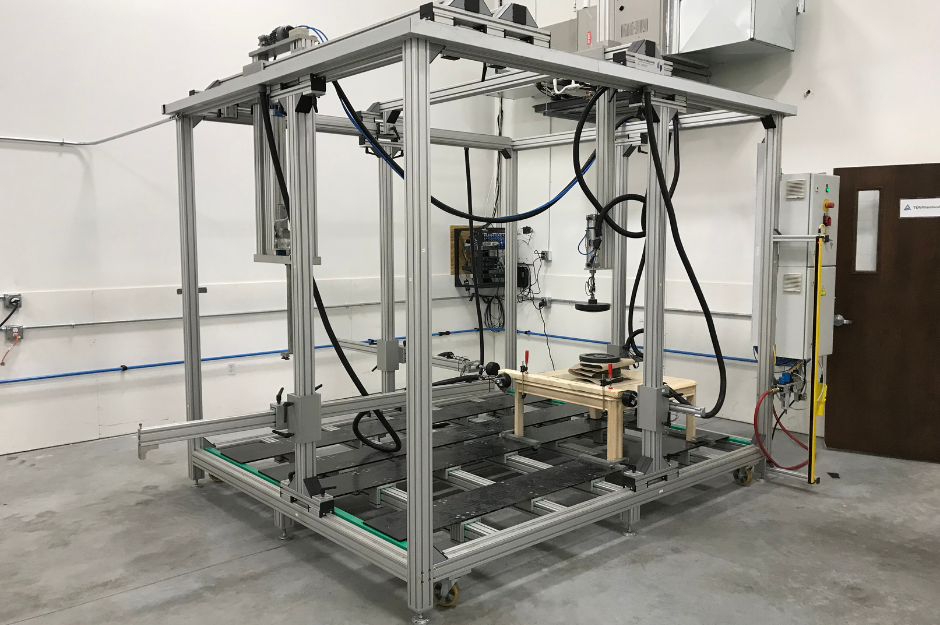
Furniture structural testing checks whether a piece of furniture can support its intended loads, resist repeated use, remain stable, and hold its shape without unsafe failure. It uses controlled loads, movement, impact, and stability checks to find weak points before furniture reaches American homes, offices, schools, and public spaces.
Across the United States, furniture must handle many types of daily use. A dining chair may support a person several times a day. An office desk may hold heavy equipment for years. A dresser may face repeated drawer use and the risk of tipping. These demands make structural quality a real safety concern for American buyers, builders, and furniture makers. Furniture structural testing helps show whether a product can handle its intended job.
The process checks the strength of frames, joints, legs, panels, fasteners, and other load-bearing parts. A test lab may apply weight, push or pull a structure, repeat a movement, or check how a product reacts to an uneven surface. The goal is to find weak points under controlled conditions. A good test plan also checks whether a product stays safe after repeated use.
Different furniture types need different tests. A chair needs seating, backrest, and leg strength checks. A table needs load and stability checks. A storage unit needs shelf, drawer, and tip-over checks. One test cannot prove that every part of every furniture item is safe. The test plan must match the product, its design, its intended users, and the risks that may arise during normal use.
This guide explains how structural tests work, which parts they examine, how manufacturers use the results, and which US standards may apply. It also explains the limits of test reports. A passing result is useful evidence, but it does not mean a product can withstand every load, misuse, or unusual condition.
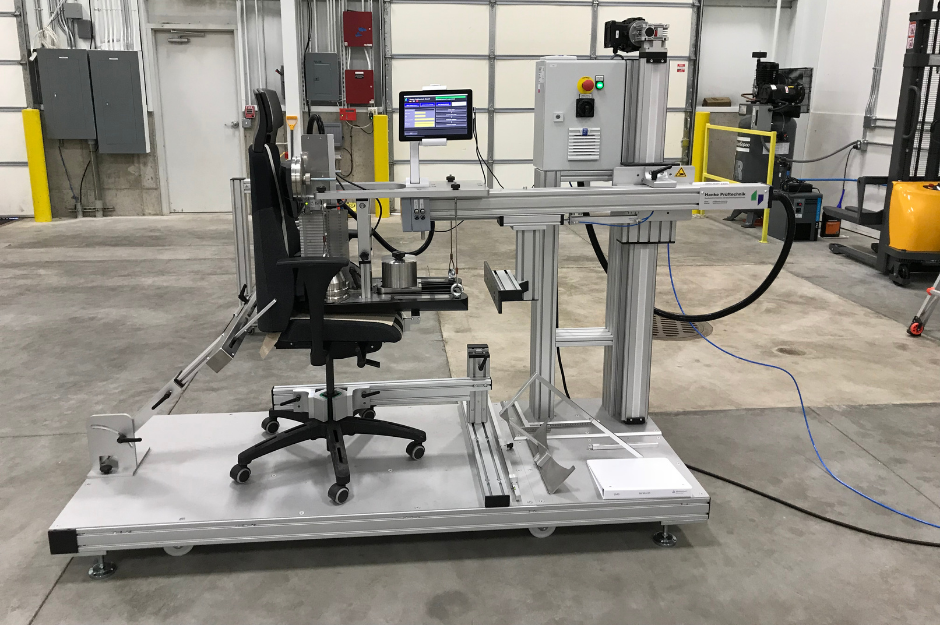
Source: go.tuv.com
What Is Furniture Structural Testing?
Furniture structural testing is a controlled process that checks the physical strength and performance of furniture. It shows how a product responds to weight, force, movement, and repeated use. The process helps manufacturers find weak parts before they cause damage or injury.
A furniture structure is the system of parts that supports its shape and function. It may include a frame, legs, rails, panels, braces, joints, screws, bolts, brackets, and support blocks. Each part works with the others. A weak joint can affect the whole item, even when the main frame uses strong material.
Testing does not focus on appearance alone. A chair may look strong but have weak joints. A table may have a thick top but unstable legs. A cabinet may hold its shelf load yet tip when a drawer opens. Structural tests look at how the full product behaves under planned conditions.
The test plan starts with the product’s intended use. A home dining chair does not face the same demands as a public waiting-room chair. A small bedside table does not carry the same risks as a tall storage unit. Good testing accounts for these differences.
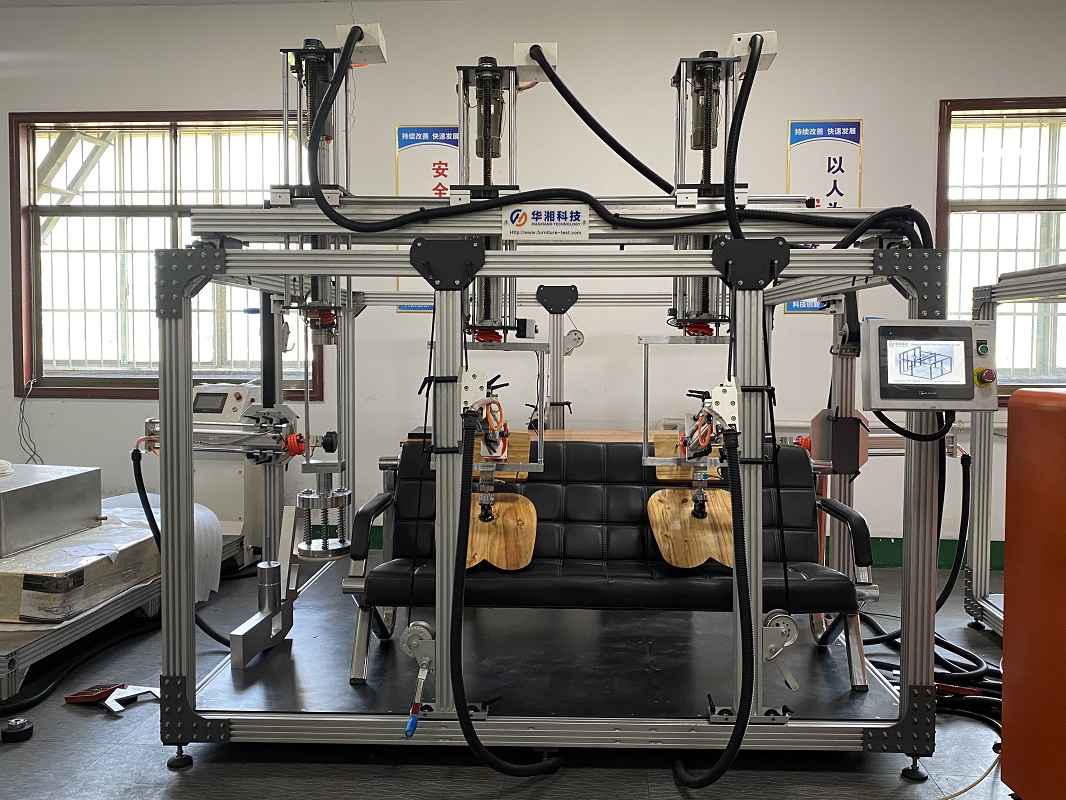
Source: tonyhk.hk
Strength
Checks whether a furniture part can carry a planned load or resist a set force without breaking or suffering unacceptable damage.
Stability
Checks whether furniture stays upright and resists tipping, sliding, or unwanted movement under defined test conditions.
Durability
Checks how a product responds to repeated loading and movement over a test cycle.
Structural integrity
Checks whether the frame, joints, fasteners, and support parts remain connected and functional.
Why Does Structural Testing Matter?
Structural testing can reveal defects that a visual inspection may miss. A small crack inside a joint may not appear on the outside. A screw may seem tight but may pull out under a larger load. A thin support rail may bend after repeated use.
Finding these issues early can reduce repair costs, returns, recalls, and product failures. It also gives design teams useful feedback. They can change a joint, add support, select a better material, or adjust the product’s shape before mass production.
For buyers, test information can help explain what a product has been assessed to do. For manufacturers, it supports design review, supplier control, and quality checks. For retailers and importers, it can help with product compliance and risk review.
Which Furniture Parts Need Structural Testing?
The main load-bearing parts need close attention because they carry weight and transfer force through the furniture. A test plan should also check the connections between these parts. A strong leg cannot help much if its joint pulls away from the frame.
The exact inspection points depend on the design. A wooden chair may rely on mortise-and-tenon joints and corner blocks. A metal chair may use welded tubes and bolts. A cabinet may rely on side panels, shelf supports, and back panels to keep its shape.
Testing the complete product is often more useful than testing one part alone. Individual material tests can explain why a component behaves in a certain way. Full-product tests show how the assembled structure responds when all parts work together.
Source: rockhillasia.com
Frames and support rails
Check the main frame for bending, twisting, cracking, and loss of shape under planned loads.
Legs and feet
Check leg strength, foot connections, uneven contact, and the risk of breakage or movement.
Joints and fasteners
Check screws, bolts, dowels, welds, brackets, and bonded joints for loosening, separation, or pullout.
Panels and shelves
Check whether shelves, tops, side panels, and back panels bend, crack, or lose their connection to the frame.
Moving parts
Check drawer runners, hinges, folding supports, recliner mechanisms, and other parts that move during use.
Backrests and armrests
Check whether these parts can resist the forces expected during normal sitting and movement.
How Furniture Design Changes the Test Plan
Furniture design affects where force travels. A four-leg chair transfers a person’s weight through its seat frame and legs. A cantilever chair relies on a curved support structure. A wall-mounted shelf transfers load into its mounting system and the wall. Each design needs a different test setup.
Material choice also changes the result. Solid wood may split along the grain. Particleboard may suffer fastener pullout. Metal tubing may bend or buckle. Plastic parts may crack or deform. Test teams should identify the likely failure points before choosing a method.
The size and shape of a product matter too. A tall, narrow cabinet has a different stability risk from a low, wide cabinet. A long table may need support checks near its center. A folding chair needs tests for both its frame and locking system.
Wood furniture
Pay attention to grain direction, panel thickness, joint fit, screw holding, moisture, and possible splitting.
Metal furniture
Pay attention to weld quality, tube thickness, corrosion, bolt connections, and bending.
Plastic furniture
Pay attention to molded sections, stress points, material aging, cracks, and deformation.
Mixed-material furniture
Pay attention to how different materials connect and how their movement changes under load.
Common Types of Furniture Structural Tests
Furniture labs use several test methods because each one checks a different type of stress. Static tests apply a set load for a defined period. Dynamic tests apply movement or repeated force. Impact tests examine how a product responds to a sudden load. Stability tests look at the risk of tipping or loss of balance.
A test method must define the equipment, product setup, load location, force, duration, and pass or fail criteria. Without these details, two test results may not be comparable. A report should identify the method and version used.
The following methods are common parts of furniture evaluation. They are general descriptions, not universal load values. The correct force and test cycle must come from the relevant standard, product specification, or qualified test plan.
Source: furnitest.com
Static load testing
Applies a controlled load to a selected part of the furniture to assess strength and deformation.
Durability testing
Repeats a movement or load to assess how the structure performs over many use cycles.
Impact testing
Applies a controlled sudden force to assess resistance to impact-related damage.
Stability testing
Checks whether the product remains upright under specified loading and force conditions.
Joint strength testing
Checks whether connections resist separation, rotation, loosening, or other forms of failure.
Static Load Testing
Static load testing checks how furniture responds to a steady force. A test team places a controlled weight on a seat, shelf, tabletop, or another load-bearing area. The team then checks for bending, cracking, joint movement, or permanent deformation.
For example, a shelf test may place a specified load across the shelf surface. The test may measure how far the shelf bends and whether it returns to its original shape after the load is removed. The allowed limit depends on the test specification.
A product may pass a short static test but still fail during repeated use. This is why static testing should not replace durability testing when the product faces frequent movement or loading.
Main purpose
Find weak areas that may bend, crack, break, or lose their shape under a planned load.
Cyclic and Durability Testing
Cyclic testing repeats a movement or load for a set number of cycles. A chair may receive repeated seating loads. A drawer may open and close many times. A recliner may go through repeated operating cycles.
This method helps reveal wear that may not appear during a single test. Repeated force can loosen fasteners, weaken joints, wear moving parts, and cause cracks to grow.
The test report should state the number of cycles, force level, speed, setup, and any failure observed. A cycle count alone does not prove a specific number of years of real-world use. Actual use varies by user, environment, and maintenance.
Main purpose
Assess whether the product keeps its required strength and function after repeated use.
Impact and Drop Testing
Impact testing checks the response to a sudden force. Depending on the product and standard, a test may use a controlled impact device or a defined drop setup. It can help identify brittle parts, weak connections, and areas that crack under a sudden load.
A chair leg may suffer damage if the chair strikes a hard floor. A table corner may be exposed to impact during movement. A storage unit may face force when a door or drawer closes.
The impact location and energy matter. A test on one corner does not automatically establish impact resistance at every point. The report should identify the exact setup.
Main purpose
Find damage caused by controlled sudden forces and check whether the product remains functional.
Stability and Tip-Over Testing
Stability testing checks whether furniture can remain upright under defined forces. It is especially relevant to tall cabinets, dressers, bookcases, and other storage units. A unit may have enough material strength yet still tip because its center of gravity moves beyond its support base.
A stability test may use an angled surface, a horizontal force, a defined load arrangement, or other conditions required by the relevant standard. The test team checks whether the product tips, slides, or loses support.
In the United States, clothing storage units within the scope of 16 CFR Part 1261 must meet the applicable federal requirements based on ASTM F2057. These requirements include stability tests involving clothing loads, horizontal force, and a carpet-related condition with a child-weight test apparatus. The rule also addresses warning information and anti-tip restraints.
This federal requirement applies to the defined clothing storage units within its scope. It should not be described as a universal test rule for every desk, table, bookcase, or chair.
Main purpose
Check the risk of tipping under the specific conditions required by a standard or test plan.
Furniture Structural Testing Standards in the United States
Furniture standards give manufacturers and test labs a shared method for checking product performance. They define test setups, equipment, conditions, and performance limits for specific types of furniture. The right standard depends on the product and its intended use.
ASTM International develops many furniture-related standards. BIFMA develops standards for commercial furniture, including office furniture. ANSI approval identifies standards developed through the American National Standards Institute process. Some standards are voluntary, while others become mandatory when a law or regulation adopts them.
A standard number alone is not enough. The test team must confirm the correct edition, product scope, and any applicable federal or state requirements. A test report should identify the exact standard and version used.
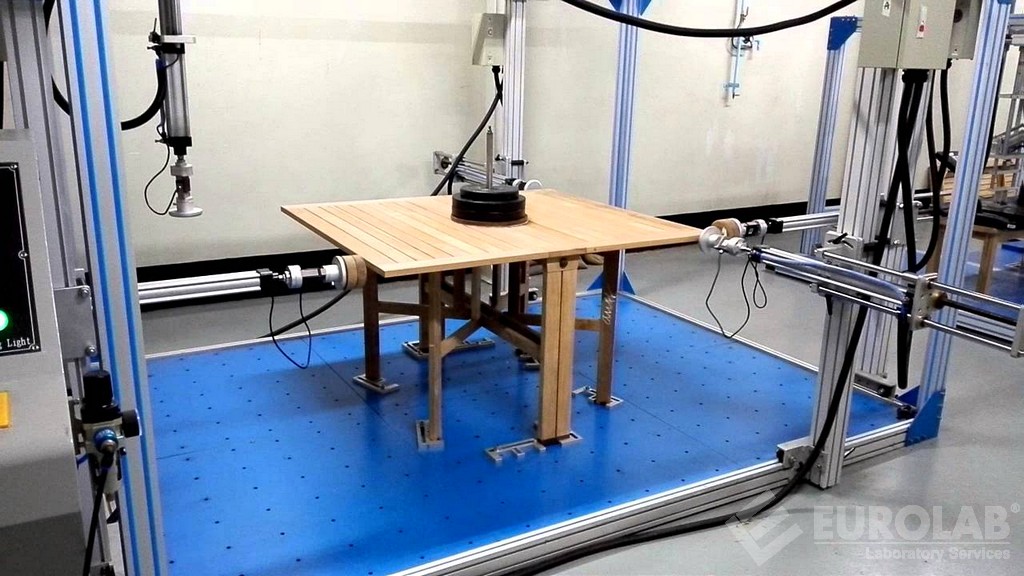
Source: eurolab.net
ASTM standards
Provide test methods and safety specifications for selected furniture categories and product risks.
ANSI/BIFMA standards
Provide performance, safety, durability, and structural evaluation methods for commercial and office furniture.
Federal CPSC rules
Set mandatory requirements for products within the scope of applicable consumer product safety regulations.
ISO standards
Provide international test methods that may be used in product development, sourcing, and evaluation.
ANSI/BIFMA Office Furniture Testing
ANSI/BIFMA standards are widely used in the commercial furniture sector. BIFMA explains that its standards provide a common basis for evaluating safety, durability, and structural adequacy. The test levels and conditions are developed through a standards process that involves industry and other stakeholders.
ANSI/BIFMA X5.1 addresses general-purpose office chairs. It defines tests, laboratory equipment, conditions, and recommended minimum levels for evaluating chair safety, durability, and structural adequacy. The test plan may cover different parts and functions of a chair rather than one simple weight test.
An office chair may need evaluation of its seat, back, arms, base, casters, and operating mechanisms. The exact tests depend on the applicable edition and chair category. Buyers should ask which version was used instead of relying on a broad claim that a chair is BIFMA tested.
Useful for
General-purpose office chairs and relevant commercial seating evaluations within the standard’s scope.
ASTM F2057 and Clothing Storage Units
ASTM F2057 is a key standard for clothing storage unit stability. The US Consumer Product Safety Commission adopted the relevant requirements into 16 CFR Part 1261. The rule applies to defined clothing storage units manufactured after September 1, 2023.
The scope includes certain free-standing bedroom storage furniture. The CPSC definition uses conditions that include a height of at least 27 inches, a mass of at least 30 pounds, and an enclosed storage volume of at least 3.2 cubic feet. The exact product scope and regulatory text should be checked before making a compliance decision.
The required stability assessment considers loaded storage, open drawers or doors, horizontal force, and carpet-related conditions. The regulation also requires an anti-tip restraint that meets the applicable specification to be packaged with the product.
Manufacturers and importers must also review the relevant certification requirements. A General Certificate of Conformity or other applicable certificate should identify the correct rule and be supported by appropriate testing or a valid testing program.
Useful for
Manufacturers, importers, and sellers of clothing storage units that fall within the federal rule.
How to Choose the Correct Standard
Start with the product category and intended use. Identify whether the item is residential, commercial, office, educational, or public-use furniture. Then check the standards that cover its design and possible hazards.
Do not assume that a standard for one type of furniture applies to another. An office chair standard does not automatically cover a dining chair. A storage unit stability rule does not replace the strength testing needed for a desk or table.
If a product is sold in several markets, the manufacturer may need more than one test plan. A US rule may differ from a requirement in another country. A qualified compliance professional or accredited laboratory can help identify the correct scope.
How Furniture Structural Testing Is Performed
A sound structural test begins with a clear test plan. The plan identifies the product, the intended use, the likely failure points, the selected standard, and the acceptance criteria. It also explains how the sample will be prepared and how the results will be recorded.
Testing should follow a repeatable sequence. If the setup changes between samples, the results may not provide a fair comparison. The lab should control the test conditions and record any change that could affect the result.
The following steps explain a common testing workflow. A formal compliance test must follow the exact requirements of the applicable standard rather than this general outline.
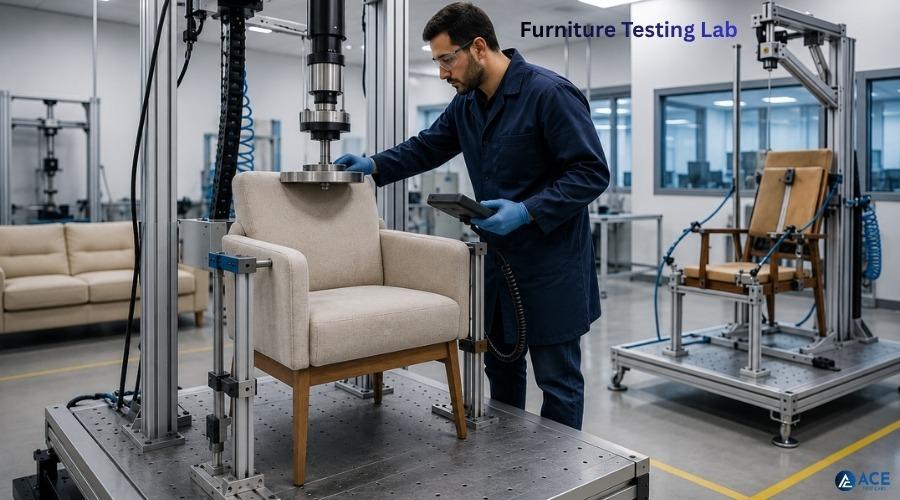
Source: acetestgroup.com
Step 1: Identify the product
Record the model, dimensions, materials, intended use, assembly method, and production version.
Step 2: Review the design
Study drawings, load paths, joints, fasteners, support points, and likely failure areas.
Step 3: Select test methods
Choose the relevant static, cyclic, impact, stability, or component tests.
Step 4: Prepare the sample
Assemble the product as directed and check that all parts and fasteners match the test specification.
Step 5: Apply the test
Use calibrated equipment to apply the defined force, load, movement, or impact.
Step 6: Record the result
Measure movement, deformation, damage, loosening, tipping, or loss of function.
Step 7: Review and correct
Compare the result with the acceptance criteria, investigate failures, and repeat relevant tests after design changes.
Prepare the Furniture Sample
The sample must represent the product being evaluated. Its materials, dimensions, fasteners, and assembly details should match the stated production configuration. A special prototype may not represent the product that customers receive.
The test team should inspect the sample before testing. It should record existing cracks, loose screws, surface damage, and assembly issues. These observations help separate pre-existing defects from damage caused during the test.
Assembly instructions matter. If the product is sold as a flat-pack item, the sample should be assembled using the stated method. Incorrect assembly can affect the result and make the test less useful.
Record sample details
Include the model, batch, material, dimensions, assembly date, and any relevant component changes.
Control conditions
Record relevant temperature, humidity, conditioning, and surface conditions when required by the method.
Apply Loads and Measure Movement
The lab positions the furniture in the required test fixture. It then applies the specified load or force at the correct point. The load must be controlled so the test can be repeated.
Measuring equipment may include load cells, force gauges, displacement sensors, measuring tools, and data recording systems. The type of equipment depends on the test. The lab should confirm that its instruments are suitable and calibrated.
The team records what happens during and after loading. A shelf may bend. A chair joint may move. A bolt may loosen. A cabinet may start to rotate. These results should be compared with the test’s stated limits.
Measure deformation
Record changes in shape or position while the load is applied and after it is removed.
Inspect connections
Check for joint movement, fastener pullout, cracks, broken welds, and separation.
Check function
Confirm whether drawers, doors, folding parts, and other moving features still work as intended.
Evaluate the Test Result
A test result must be compared with a clear acceptance rule. That rule may come from a published standard, a regulatory requirement, or a documented product specification. The lab should not create a pass limit after seeing the result.
A product may fail because it breaks, tips, loses a required function, or exceeds an allowed deformation limit. The report should explain the failure and identify the location where it occurred.
If a test fails, the manufacturer should investigate the cause. A design change may solve the problem, but the change must be checked. A stronger screw, for example, may not help if the surrounding panel is too weak to hold it.
Pass
The tested sample meets all applicable acceptance criteria under the recorded conditions.
Fail
The sample does not meet one or more required criteria or suffers a prohibited failure.
Inconclusive
The test cannot support a clear decision because of an invalid setup, missing data, equipment issue, or other limitation.
Equipment Used for Furniture Structural Testing
Furniture test labs use equipment that can apply and measure controlled forces. The equipment must suit the product and the test method. A chair test may need a different fixture from a cabinet stability test.
A machine does not make a result reliable by itself. The test setup, calibration, sample preparation, and method all affect the result. A lab must use the equipment as required by the selected standard.
Source: huakaijc.en.made-in-china.com
Universal testing machine
Applies controlled tension or compression to materials and components. It can help measure strength and deformation.
Furniture durability machine
Applies repeated loads or movements to furniture parts such as seats, backs, drawers, and mechanisms.
Load cells
Measure the force applied during a test.
Force gauges
Measure selected push or pull forces in a controlled test setup.
Displacement sensors
Measure movement, bending, or changes in position.
Impact equipment
Applies controlled impact forces or drops when required by the test method.
Stability fixtures
Support repeatable stability tests and help control the product position and loading conditions.
Why Equipment Calibration Matters
Calibration helps confirm that measuring equipment gives results within known limits. If a force gauge reads incorrectly, the lab may apply too much or too little force. This can affect the pass or fail decision.
The lab should maintain calibration records and follow the equipment maker’s instructions and its quality system. It should also check for damage, wear, and setup errors before use.
When comparing two reports, check whether the equipment and methods were suitable for the same test. Different setups can produce results that should not be treated as direct equivalents.
How to Interpret a Furniture Structural Test Report
A useful test report explains what was tested, how the test was performed, and what the results mean. It should contain enough detail for another qualified person to understand the test conditions and evaluate the findings.
A pass statement without supporting details has limited value. Buyers and manufacturers should check the exact product model, test method, sample condition, and result. They should also check whether the report covers the product as sold.
A test report does not automatically prove legal compliance for every market. The applicable regulation may require specific tests, documentation, labels, or certification. The report must cover the relevant requirements.
Source: go.tuv.com
Product identification
Check the manufacturer, model number, sample description, materials, and product version.
Standard and edition
Check the exact standard number, revision, test method, and any deviations.
Test conditions
Review the applied loads, force locations, cycle counts, duration, and environmental conditions.
Measured results
Look for actual measurements, observed damage, and documented pass or fail decisions.
Laboratory information
Check the lab identity, report date, test personnel, and relevant accreditation scope.
Limitations
Read any exclusions, sample restrictions, deviations, and conditions that limit the report’s use.
What Does a Passing Test Actually Prove?
A passing test shows that the tested sample met the stated acceptance criteria under the recorded conditions. This is useful evidence about the product’s performance. It is not proof that the item cannot fail under any possible condition.
The result may not cover every production unit. Manufacturing differences, supplier changes, poor assembly, damage during shipping, and material variation can affect later products. A manufacturer should use production quality controls to keep later units consistent with the tested sample.
A passing result also does not establish a product’s exact service life. A cycle test measures performance under a defined laboratory method. It should not be converted into years of use unless a validated relationship supports that estimate.
Questions to Ask Before Accepting a Test Report
A buyer or product manager can ask a few direct questions before relying on a report. These questions help show whether the evidence matches the product and its intended market.
Was the exact product tested?
Confirm the model, size, materials, hardware, and design match the product being purchased or sold.
Was the correct standard used?
Confirm the method and edition cover the product and its intended use.
Were all required tests completed?
Check the full test list rather than relying on one successful strength test.
Were any changes made afterward?
Ask whether the design, material, supplier, or production process changed after testing.
Common Furniture Structural Testing Failures
A failed test often points to a weak connection, poor load distribution, unsuitable material, or unstable design. The visible damage is not always the original cause. A broken panel, for example, may result from a fastener that concentrates force in a small area.
Manufacturers should investigate the full failure path. Simply replacing a broken part may hide the real problem. The correction should address why the failure happened and whether another part could now become the weakest point.
Source: tonyhk.hk
Joint separation
A connection may open when glue, screws, dowels, bolts, or brackets cannot resist the applied force.
Frame bending
A frame may bend when its material, shape, or support layout cannot resist the load.
Fastener pullout
A screw or bolt may pull from its mounting material because of poor engagement or weak surrounding material.
Panel cracking
A panel may crack because of stress concentration, poor support, material defects, or an unsuitable design.
Weld failure
A welded connection may crack or separate because of a weld defect, poor joint design, or excessive force.
Unstable base
Furniture may tip or rock because its base, center of gravity, or support layout does not provide enough stability.
Mechanism failure
A moving part may jam, loosen, deform, or stop working after repeated operation.
How Manufacturers Can Correct Structural Failures
The first step is to document the failure. Record the exact location, applied force, test stage, sample condition, and visible damage. Photos and measurements can help the design team understand the event.
Next, review the load path. Identify where the force entered the product and how it moved through the frame and connections. Check whether one part carries more force than expected.
Possible corrections include changing the joint design, adding a brace, increasing support, changing material thickness, improving fastener engagement, or adjusting the base dimensions. The best correction depends on the cause.
After a change, repeat the relevant test. A design change can affect more than one performance area. For example, a thicker panel may improve stiffness but add weight and change stability. The updated product needs a suitable review before production approval.
Find the root cause
Separate the original design or material issue from damage caused by the test itself.
Make a controlled change
Record the new material, dimensions, joint, fastener, or support design.
Retest the affected areas
Repeat the failed test and assess any other tests affected by the change.
Update production controls
Make sure suppliers and assembly teams use the approved design and parts.
Factors That Affect Furniture Structural Performance
Furniture performance depends on more than the strength of its main material. Design, joints, manufacturing quality, assembly, moisture, temperature, and daily use can all affect the result. A test plan should consider the factors that matter for the product.
A material that performs well in one design may perform poorly in another. A thick board with weak edge fasteners may fail before a thinner board with better support. The whole structure matters more than one specification.
Material quality
Wood grade, metal quality, plastic formulation, and panel construction affect structural performance.
Joint design
Joint shape, contact area, fastener type, and bonding method affect how forces move through the structure.
Furniture dimensions
Height, width, depth, span, and support spacing affect strength and stability.
Manufacturing accuracy
Poor drilling, weak welds, uneven cuts, and incorrect assembly can reduce performance.
Environmental conditions
Moisture and temperature can change the behavior of some materials and connections.
Use and maintenance
Overloading, repeated movement, loose fasteners, and poor care can affect long-term performance.
The Role of Moisture and Temperature
Wood and wood-based panels can change as moisture levels change. Wood may expand or shrink. This movement can place stress on joints and finishes. Poorly controlled moisture can also contribute to warping or other damage.
Metal furniture may face corrosion when exposed to moisture and unsuitable conditions. Corrosion can reduce the effective section of a part or weaken a connection. Protective coatings and suitable material selection can reduce this risk.
Plastic materials can respond to heat, cold, and aging in different ways. Some may become more brittle or lose stiffness under certain conditions. The exact behavior depends on the material and formulation.
A test team should use the environmental conditions required by the selected method. If a product will face unusual conditions, the manufacturer may need additional testing. A standard room-temperature result should not be treated as proof of performance in every climate.
How Assembly Affects Structural Safety
Many US consumers assemble furniture at home. The final structure depends on correct assembly. Missing bolts, reversed brackets, loose screws, and incorrect panel positions can change how the product carries weight.
Manufacturers should provide clear instructions and suitable hardware. Assembly steps should identify the correct parts and explain when fasteners need tightening. If a product needs wall anchoring, the instructions should explain the correct restraint method and suitable mounting conditions.
A test on a correctly assembled product does not prove that an incorrectly assembled product is safe. Consumers should follow the supplied instructions and avoid using furniture with loose or damaged structural parts.
Furniture Structural Testing for Different Product Types
Different furniture types need different structural checks. The main test priorities depend on how people use the product and which parts carry the load. A test plan should reflect those differences instead of applying one generic method to every item.
The following table gives a practical overview. It identifies common test priorities, not universal requirements or fixed load limits. The applicable standard or product specification must define the actual test conditions.
Common Test Priorities by Furniture Type
The comparison below can help a product team plan its first review. It should be followed by a standards check and a risk assessment.
Chairs
Seat strength, backrest strength, leg stability, arm strength, joint durability, and repeated seating loads.
Tables and desks
Top loading, leg strength, frame stiffness, joint strength, resistance to rocking, and overall stability.
Frame strength, center support, side rail connections, slat support, and repeated loading.
Sofas and couches
Seat support, backrest strength, frame joints, arm support, and repeated seating durability.
Folding furniture
Hinge strength, locking devices, frame stability, repeated folding, and resistance to accidental collapse.
Outdoor furniture
Frame strength, joint durability, corrosion-related concerns, stability, and environmental exposure.
Example: Testing a Wooden Dining Chair
A wooden dining chair needs more than a simple seat load check. Its legs, seat rails, backrest, and joints work together. The test plan should examine the full structure and the way it responds to repeated use.
A lab may use the relevant seating standard to check seat loading, backrest loading, stability, and durability. The exact forces and cycles must come from the selected method. The lab then records any cracking, loosening, permanent movement, or loss of function.
If the chair fails at a rear leg joint, the design team should inspect the joint and the surrounding wood. The cause may be a small contact area, poor grain direction, a weak fastener, or an unsuitable joint shape. The team should correct the cause and retest the revised design.
Example: Testing a Storage Cabinet
A storage cabinet needs shelf and frame strength checks. The test team should also assess doors, drawers, hinges, and fasteners. If the cabinet falls within the federal clothing storage unit rule, its stability must be evaluated under the applicable requirements.
A shelf may hold its planned load but still sag too much. A drawer may operate well when empty but fail when loaded. A tall unit may remain stable on a hard floor but face a different risk on carpet.
This example shows why product testing must reflect real use conditions. A single successful test cannot cover every possible structural and safety concern.
Common Mistakes in Furniture Structural Testing
Testing can produce misleading results when the method does not match the product. A strong test process requires clear specifications, controlled conditions, and honest reporting. The following mistakes can reduce the value of a test program.
Using the wrong standard
A test designed for one furniture category may not cover the risks of another. Confirm the product scope before testing.
Testing only one component
A strong panel may connect to a weak frame. Test the full assembly when the product structure requires it.
Ignoring repeated use
A product may pass a single load test but fail after repeated movement. Include suitable durability testing.
Using an unrepresentative sample
A prototype with different materials or hardware may not represent the final production model.
Skipping calibration checks
Incorrect measuring equipment can affect force readings and test decisions.
Ignoring assembly instructions
An incorrect setup can make the test invalid or produce results that do not reflect the product as sold.
Treating a pass as unlimited approval
A passing result applies to the tested conditions and scope. It does not prove resistance to every form of misuse or damage.
Failing to retest design changes
A change in materials, dimensions, fasteners, or joints may affect structural performance and require further evaluation.
Why One Strength Test Is Not Enough
Furniture faces several types of stress during use. A chair may support a person while also receiving sideways movement. A drawer unit may carry storage loads and face horizontal pulling forces. A desk may support equipment while people lean against its edge.
One test checks only the conditions included in that method. A static test does not replace a cyclic test. A stability test does not replace a joint strength test. A product team should build a test plan that covers the important failure risks.
The number of tests should come from product risk, relevant standards, and intended use. More tests do not always mean better evidence if they are poorly selected or unrelated to the product.
How Consumers Can Assess Furniture Structural Quality
Consumers can check several visible features before buying furniture, but a home inspection is not a substitute for laboratory testing. Buyers should look for clear product information, suitable construction, and evidence that relevant safety requirements have been addressed.
A product listing may mention testing or certification. Buyers should ask what was tested and which standard was used. A broad statement such as quality tested does not explain the test conditions or results.
For tall storage furniture, buyers should pay special attention to tip-over prevention. Check whether the product includes the required restraint when applicable. Follow the manufacturer’s installation instructions and secure the unit to a suitable wall structure.
Inspect the frame
Look for visible cracks, bent parts, loose connections, and uneven support.
Check the joints
Look for gaps, loose screws, weak brackets, or parts that move when they should remain fixed.
Review the assembly guide
Confirm that the instructions are clear and that all listed hardware is supplied.
Check the load information
Follow the manufacturer’s stated weight limits and intended-use guidance.
Ask for test details
Request the standard number, test report scope, and exact model identification when safety claims matter.
Review tip-over protection
Use the supplied anti-tip restraint where required or recommended, following the correct installation method.
What Should You Do If Furniture Feels Unstable?
Stop using furniture that rocks, leans, or has a loose structural connection. Do not try to prove its strength by adding more weight or applying extra force. Such actions can cause sudden failure.
Check the assembly instructions if the product is new. Tighten only the fasteners and connections that the manufacturer identifies for adjustment. Do not drill new holes, add random screws, or change a structural joint without suitable guidance.
If the frame is cracked, a weld has broken, or a load-bearing part has separated, keep people away from the item until it has been assessed or repaired. Contact the manufacturer or a qualified furniture repair professional when the damage affects structural safety.
For a dresser or other covered storage unit, do not ignore a missing or damaged anti-tip restraint. Secure the unit as directed and contact the manufacturer if the supplied parts do not fit or work as intended.
When to Use a Professional Furniture Testing Laboratory
A professional test laboratory is useful when a manufacturer needs reliable performance data, a buyer needs evidence for a safety decision, or a product must meet a specific standard. A qualified lab can help select methods, prepare samples, perform tests, and issue a documented report.
Manufacturers should consider professional testing before mass production, after major design changes, and when a product faces a regulatory requirement. Importers and retailers may also need independent evidence to review supplier claims.
The laboratory’s capabilities matter. A lab may offer furniture testing but not have the equipment or accreditation scope for every test. The customer should confirm that the lab can perform the exact method required.
New product development
Use testing to identify structural weaknesses before approving a design for production.
Regulatory compliance
Use an appropriate lab when a furniture category is subject to mandatory US safety requirements.
Supplier verification
Use independent testing when a buyer needs to verify a supplier’s performance claims.
Design changes
Review the need for retesting when materials, hardware, dimensions, or construction methods change.
Product failure investigation
Use suitable technical testing to help identify why a furniture product failed.
How to Select a Furniture Testing Lab
Start by asking whether the lab has experience with the relevant furniture category. A lab that mainly tests office chairs may not be the best choice for a specialized storage unit or outdoor furniture product.
Ask about accreditation. ISO/IEC 17025 accreditation can provide evidence that a laboratory is competent for the specific tests listed in its accreditation scope. Accreditation should be checked against the actual method required, not treated as a blanket approval for every service the lab offers.
Request a sample report or report outline. Check whether it includes product identification, test methods, measured results, photographs, deviations, and a clear conclusion. Ask how the lab handles failed samples and retesting.
The lowest test price is not always the best choice. A useful service should match the product risk, required standard, reporting needs, and project schedule.
Check technical scope
Confirm that the lab can perform the exact standard and test method needed.
Check accreditation scope
Verify the relevant method rather than relying only on a general accreditation logo.
Check reporting quality
Make sure the final report will identify the sample, conditions, results, and limitations.
Check sample requirements
Ask how many production-representative samples are needed and how they should be prepared.
Building a Reliable Furniture Structural Testing Program
A reliable testing program should continue after the first product passes. Manufacturers need a process that connects design testing with supplier checks, production inspection, and customer feedback. This helps keep later products consistent with the approved design.
The program should identify critical parts and set clear controls for them. A small change to a fastener or panel can affect the whole structure. A controlled change process helps the team decide whether additional testing is needed.
Testing should also connect with quality records. Keep the approved drawings, material specifications, sample details, test reports, corrective actions, and production checks together. These records help explain what was approved and why.
Create a product risk review
Identify the main hazards, load-bearing parts, moving parts, and likely failure modes.
Define the test plan
Select relevant standards, test methods, sample quantities, and acceptance criteria.
Control suppliers
Set clear specifications for materials, hardware, dimensions, and approved component sources.
Check production consistency
Inspect critical dimensions, connections, and assembly quality during production.
Manage design changes
Review whether material, supplier, or construction changes affect the original test evidence.
Review complaints and failures
Use customer reports, returns, and product investigations to identify recurring problems.
A Simple Structural Testing Decision Process
A manufacturer can use a short decision process to plan testing. First, identify the furniture category and intended use. Next, identify the main structural risks and applicable standards. Then select a suitable lab or qualified internal test method.
After testing, compare the findings with the acceptance criteria. If the sample passes, keep the report and link it to the approved design. If it fails, investigate the root cause and correct the design or production issue. Retest before approving the revised product.
If the applicable standard or regulatory scope is unclear, do not guess. Ask a qualified compliance professional or the relevant laboratory to review the product and the current requirements.
Product defined
The model, intended use, and construction details are known.
Risks identified
The team has listed the important structural and safety concerns.
Method confirmed
The selected standard and edition match the product.
Results reviewed
The test data meet the acceptance criteria or a corrective action is open.
Production controlled
The approved design and components match the products being manufactured.
Frequently Asked Questions
Q
What is the main purpose of furniture structural testing?
The main purpose is to check whether furniture can support its intended loads, resist repeated use, and remain stable under defined conditions. It helps identify weak frames, joints, panels, fasteners, and support parts before a product reaches the market. It also supports design improvement and product safety reviews.
Q
Which furniture items need structural testing?
Chairs, tables, desks, beds, cabinets, dressers, sofas, folding furniture, and outdoor furniture may all need structural evaluation. The test plan depends on the product’s intended use, construction, risks, and applicable standards. Products subject to mandatory regulations must meet the requirements that apply to their category.
Q
What is the difference between furniture strength and durability testing?
Strength testing checks how a product responds to a defined load or force. Durability testing checks how it responds to repeated loads or movements. A product may pass a one-time strength test but still develop wear, loose joints, or cracks during repeated use. Both methods may be needed for a complete evaluation.
Q
Is furniture structural testing mandatory in the United States?
It depends on the product category and applicable regulations. Certain clothing storage units must meet the federal stability requirements in 16 CFR Part 1261, which are based on ASTM F2057. Other furniture products may be evaluated under voluntary ASTM or ANSI/BIFMA standards, buyer specifications, or other applicable rules. Manufacturers and importers should confirm the exact legal requirements for their products.
Q
Does a furniture testing certificate guarantee that a product will never break?
No. A test report or certificate provides evidence within a defined scope and under stated conditions. It does not guarantee that furniture will never fail, especially if it is overloaded, assembled incorrectly, damaged, altered, or used outside its intended purpose. Buyers should review the exact model, standard, test conditions, and limitations.
✦ Wrapping Up
Conclusion
Furniture structural testing helps show whether a product can handle the demands of its intended use. It checks the parts that carry weight, the joints that hold the structure together, and the systems that keep furniture stable. Static, cyclic, impact, and stability tests each provide different information.
The best testing plan starts with the product and its risks. A chair, desk, cabinet, and bed do not need identical tests. Manufacturers should choose suitable standards, prepare representative samples, use controlled equipment, and review every result against clear acceptance criteria.
For US products, the applicable rules and standards matter. ANSI/BIFMA provides important guidance for office furniture. ASTM standards cover several furniture categories. Federal requirements also apply to certain clothing storage units. A qualified laboratory can help confirm the correct methods and document the results.
A passing test is a useful step, not a promise of unlimited performance. Manufacturers must maintain production quality, control design changes, and respond to failures. Consumers should follow assembly instructions, respect load limits, and secure covered storage units against tip-over risks.
💡 Key Takeaway
Before approving, buying, or manufacturing furniture, identify its intended use, review its structural risks, and confirm the relevant testing standard. Request a report that names the exact model, test method, conditions, and results. If the product has a structural defect or stability problem, stop using it until a qualified person has assessed the risk.