Outdoor furniture repair involves cleaning, fixing, and restoring damaged patio furniture so it remains safe, useful, and attractive. You can repair many loose joints, small cracks, rust spots, broken wicker strands, faded finishes, and damaged cushions at home. The best method depends on the furniture material and the type of damage.
Across the United States, outdoor furniture faces rain, strong sunlight, wind, snow, humidity, and changes in temperature. A patio chair in Florida may suffer from moisture and heat, while furniture in Minnesota may face freezing weather and snow. These conditions can weaken joints, damage finishes, fade fabric, and cause metal parts to rust. Regular care and timely repairs can help prevent small problems from becoming major ones.
Before starting a repair, identify the material and inspect the entire piece. A wooden bench needs a different repair method than an aluminum chair or a resin wicker sofa. Some problems are easy to fix with basic tools, while others need replacement parts or professional work. The main goal is to restore the furniture without hiding damage that could make it unsafe.
This guide explains how to inspect outdoor furniture, repair common materials, choose suitable supplies, and decide when replacement makes more sense. It also covers safety checks and simple ways to protect restored furniture from future damage. You can use these steps for patio chairs, garden benches, dining tables, porch swings, loungers, and other outdoor pieces.
Source: repairsofadubai.ae
How to Inspect Outdoor Furniture Before Repairing It
Start with a full inspection. Do not focus only on the visible scratch or broken part. Damage often spreads to nearby joints, fasteners, and support points. A chair with one loose leg may also have worn screws or a cracked seat frame.
Move the furniture to a level surface with good light. Remove cushions and loose accessories so you can see the frame. Clean away loose dirt before checking the material. Take photos if you plan to remove parts or replace hardware.
Separate structural damage from cosmetic damage. Structural problems affect strength and stability. Cosmetic problems affect the surface or appearance. Always deal with structural concerns first.
Source: storage.googleapis.com
Check the frame
Look for cracks, bends, splits, deep rust, loose joints, and weak support sections. Check the underside of seats and tables.
Check all fasteners
Look for missing screws, loose bolts, damaged brackets, stripped holes, and corroded fittings.
Check the seating surface
Inspect wicker strands, fabric slings, vinyl straps, cushion seams, and support panels for tears or sagging.
Check the finish
Look for peeling paint, cracked coatings, rough wood, stains, chalky aluminum, and areas where moisture may enter.
Check stability
Gently rock the furniture on a flat surface. Do not sit on a chair that has a cracked frame or a loose support.
When Is Outdoor Furniture Safe to Repair?
Small surface scratches, loose screws, minor rust, and worn cushions are usually suitable for home repair. A solid wooden chair with a loose joint may also be repairable if the wood around the joint remains firm. A stable frame makes most cosmetic repairs easier.
Stop using furniture with a broken load-bearing leg, a badly bent frame, a cracked weld, or a deeply corroded support. A surface patch cannot restore the original strength of every damaged material. Ask a qualified furniture repair professional to inspect valuable or heavily damaged pieces.
Repair at home
Minor scratches, loose hardware, small finish defects, and replaceable cushions or straps.
Parts that have lost their strength or cannot hold a reliable repair.
Essential Tools and Materials for Outdoor Furniture Repair
The right tools make repairs easier and help prevent extra damage. You do not need a large workshop for basic patio furniture restoration. A small set of hand tools, cleaning supplies, and material-specific products will cover many common jobs.
Choose supplies based on the furniture material. An adhesive made for indoor crafts may fail in rain or direct sunlight. A general-purpose paint may not bond well to a metal frame or flexible plastic. Read the product label before buying or applying any repair material.
Prepare a clean and dry work area. Use a workbench or stable surface when possible. Keep small screws and fittings in labeled containers so you do not lose them during disassembly.
Source: carpenterdubai.com
Basic hand tools
Keep screwdrivers, a wrench set, pliers, a measuring tape, a utility knife, and a soft mallet nearby.
Cleaning supplies
Use mild dish soap, clean water, soft cloths, a sponge, and a soft-bristle brush.
Surface preparation
Use suitable sandpaper, a sanding block, a plastic scraper, and a wire brush for approved metal surfaces.
Repair materials
Choose exterior wood glue, outdoor wood filler, compatible metal primer, outdoor paint, suitable fasteners, or replacement wicker strands as needed.
Protective equipment
Wear safety glasses, work gloves, and suitable respiratory protection when sanding or working with products that release dust or fumes.
How to Choose Outdoor-Rated Repair Products
Outdoor furniture needs materials that can handle the conditions where the furniture will be used. Look for products labeled for exterior use and check their stated compatibility with wood, metal, plastic, or fabric. Water resistance alone does not prove that a product can withstand sunlight, movement, or repeated exposure to rain.
Check the temperature range, curing time, surface preparation instructions, and recommended topcoat. If the furniture will sit near a pool or the ocean, consider the effects of chlorine, salt, and moisture. Use corrosion-resistant hardware that is compatible with the frame material to reduce the risk of corrosion around fasteners.
For wooden furniture
Use exterior wood glue, suitable wood filler, outdoor stain, or a compatible exterior sealer.
For metal furniture
Use a metal-compatible rust-inhibiting primer and an exterior finish designed for the metal surface.
For wicker and plastic
Use replacement strands or adhesives specifically approved for the type of resin or plastic involved.
How to Repair Wooden Outdoor Furniture
Wooden patio furniture can often be restored when its main structure remains sound. Teak, eucalyptus, cedar, pine, and other outdoor woods react differently to moisture and sunlight. Identify the wood and its existing finish before choosing a repair product.
Gray wood is not always damaged wood. Some hardwoods develop a natural silver-gray surface as they weather. If the wood feels firm and has no deep cracks or rot, you may only need to clean it and apply a suitable finish. Soft spots, deep splits, and loose joints need closer attention.
Do not apply glue, filler, or stain to wet wood. Moisture can affect adhesion and finish quality. Let the furniture dry fully after cleaning and before starting the repair.
Source: shoe.splen.co.uk
Small cracks
Clean the crack, remove loose debris, and use a suitable exterior wood filler when the damage is cosmetic and does not affect structural strength.
Loose joints
Take apart accessible joints, remove failed adhesive where practical, apply compatible exterior wood glue, and clamp the joint according to the product instructions.
Rough surfaces
Sand with suitable grit, working with the wood grain, and remove all sanding dust before applying a new finish.
Peeling paint
Remove loose paint, smooth the edges, prime exposed wood when required, and apply an exterior-rated finish.
Step-by-Step Wood Furniture Repair
First, wash the furniture with mild soap and water. Use a soft brush to remove dirt from corners and joints. Rinse gently and allow the wood to dry. Check for soft areas, insect damage, and deep cracks before moving forward.
Next, remove loose finish and damaged surface fibers with suitable sandpaper. Keep the sanding pressure even. Avoid removing more wood than needed. If a joint is loose, disassemble it only when you can do so without splitting the surrounding wood.
Apply the correct repair material. Use exterior wood glue for suitable joint repairs and a compatible exterior filler for small cosmetic gaps. Clamp glued joints as directed. Do not use filler as a substitute for missing structural wood.
After the repair has cured, sand the area smooth. Apply a suitable outdoor oil, stain, paint, or sealer. Follow the label for the number of coats and drying time. Keep the furniture dry until the finish has cured.
Success check
The repaired joint should remain closed and stable, with no visible movement during a careful inspection.
If the repair fails
Check for damp wood, poor adhesive compatibility, damaged joint surfaces, or movement during curing. Replace weakened wood rather than adding more filler.
How to Protect Wood After Repair
Keep wooden furniture slightly above wet soil or standing water. Good airflow under the legs helps the wood dry after rain. Pay close attention to end grain, joints, and horizontal surfaces because these areas can collect moisture.
Use an outdoor cover that allows suitable airflow rather than trapping moisture against the wood. Inspect the finish from time to time. Recoat when the product instructions or visible wear indicate that protection has weakened.
Prevent water damage
Keep furniture away from standing water and improve drainage around its feet.
Protect the finish
Use an exterior oil, stain, or sealer that matches the wood and the desired appearance.
How to Repair Metal Patio Furniture
Metal patio furniture commonly uses aluminum, steel, wrought iron, or stainless steel. Each material has different repair needs. Steel and iron can rust when their protective finish breaks. Aluminum does not develop iron rust, but it can oxidize and develop a dull or chalky surface.
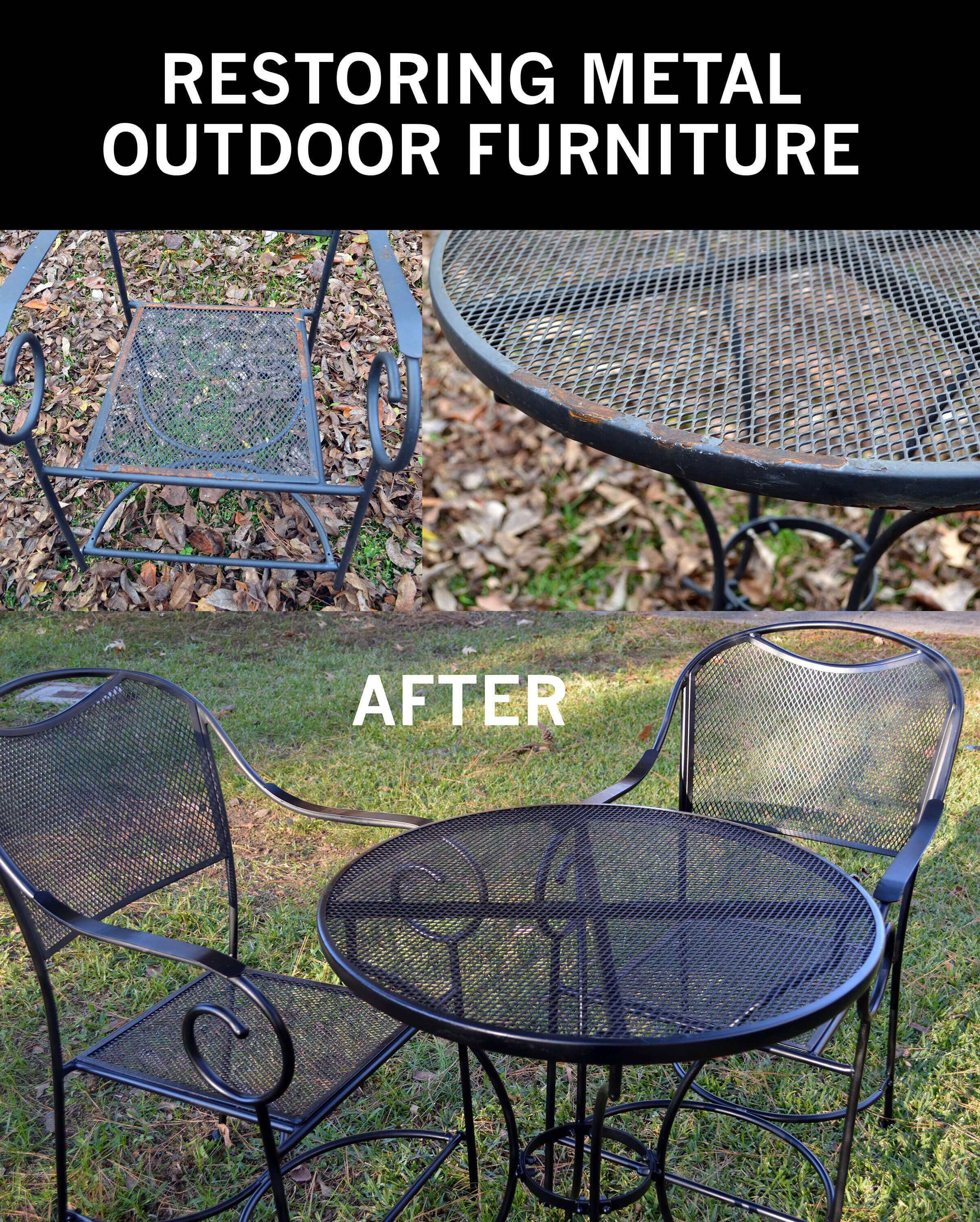
Start by cleaning the frame with mild soap and water. Rinse it and let it dry. Look closely at welds, joints, screw holes, and the underside of the legs. Surface rust may be manageable, but deep corrosion can weaken the frame.
Do not assume that fresh paint will fix a damaged frame. Paint improves surface protection and appearance. It does not restore metal that has lost significant thickness or a broken structural weld.
Source: designconundrum.com
Rust spots
Remove loose rust with a suitable brush or abrasive, clean the surface, and apply a compatible rust-inhibiting primer and exterior topcoat.
Scratched paint
Clean the scratch, prepare the exposed surface, and use a compatible touch-up coating.
Loose bolts
Replace missing or badly corroded hardware with correctly sized, outdoor-rated fasteners.
Chalky aluminum
Clean with a non-abrasive product approved for the finish and use a compatible coating if the surface needs refinishing.
Step-by-Step Metal Furniture Restoration
Place the furniture on a stable surface. Remove cushions and detachable accessories. Clean away dirt, grease, and loose debris. Let the frame dry before preparing the damaged area.
For steel or iron, remove loose paint and surface rust with a wire brush or suitable sandpaper. Do not grind deeply into the frame. If you find a hole, severe pitting, or a crack near a joint, stop and seek professional assessment.
Remove dust and prepare the surface according to the primer instructions. Apply a metal-compatible rust-inhibiting primer where required. Let it dry for the stated time, then apply thin coats of exterior metal paint.
For aluminum, use products that are specifically compatible with aluminum and its existing coating. Do not use a steel rust treatment as if aluminum were iron. Repair minor finish damage with a suitable coating and replace worn fasteners where necessary.
Allow the coating to cure fully before returning the furniture to use. Recheck all bolts, joints, and feet. A fresh finish should look even and should not hide cracks or unstable connections.
Important warning
Do not weld a patio frame at home unless you have the proper training, equipment, and knowledge of the metal and its construction.
Signs of success
The finish should cover the prepared area evenly, and the frame should remain stable without cracks or excessive movement.
How to Fix Loose Metal Furniture Hardware
Loose hardware can make a strong chair or table feel unstable. Inspect the fastener and the hole before tightening anything. A screw that turns without becoming secure may have damaged threads or a stripped hole.
Use the correct replacement size and type. Avoid forcing a larger screw into a thin metal frame without checking whether the change is suitable. A threaded insert or professional repair may be a better option for a damaged connection.
Replace worn fasteners
Use outdoor-rated hardware that fits the original connection and is compatible with the frame.
Check the joint
Make sure the bracket and surrounding metal are not cracked, bent, or badly corroded.
How to Repair Wicker and Resin Wicker Furniture
Wicker furniture may use natural plant fibers or synthetic resin strands. These materials can look similar, but they do not respond to the same repair products. Natural wicker can become brittle when exposed to unsuitable outdoor conditions, while synthetic wicker can crack, stretch, or break after prolonged sunlight exposure.
Check whether the damaged strand is natural or synthetic. Look at the weave, texture, color, and furniture care instructions. If the frame underneath is sound, replacing a few damaged strands may restore the appearance without replacing the whole chair.
Clean the furniture before repairing it. Use mild soap, water, and a soft brush. Avoid harsh cleaners and aggressive scrubbing, which can damage the strands or remove their finish.
Source: youtube.com
Loose strands
Carefully return loose strands to their original weave pattern and secure them with a material-compatible repair method.
Broken strands
Replace damaged sections with strands that match the material, width, shape, and color as closely as possible.
Sagging seats
Inspect the support frame and underlying weave before attempting to tighten or replace the seating surface.
Faded resin
Clean gently and use a compatible outdoor product only if the furniture manufacturer permits it.
Steps for Replacing a Broken Wicker Strand
Find the damaged strand and inspect the surrounding weave. Take a photo before removing anything. This gives you a useful reference for the original pattern.
Remove the damaged section carefully. Avoid cutting nearby strands or scratching the frame. Measure the replacement length and choose a strand with a similar profile and flexibility.
Weave the new strand through the existing pattern. Follow the same direction and overlap as the surrounding material. Keep the tension even, but do not pull so hard that nearby strands stretch or break.
Secure the ends with a repair method approved for that material. Trim excess material only after the repair is secure. Allow any adhesive to cure fully before placing weight on the seat.
Match the weave
A similar color is not enough. The replacement strand should also have a compatible width, shape, and flexibility.
Avoid excessive tension
Overtightening can distort the weave and place extra stress on the surrounding strands.
Can You Repair Natural and Synthetic Wicker the Same Way?
No. Natural wicker needs care that protects its fibers from excessive moisture and drying. Synthetic resin wicker needs products that do not attack or weaken its plastic material. Use separate repair methods and follow the furniture manufacturer’s care instructions.
If many strands have cracked or the entire seating surface has lost its shape, a professional reweave or replacement section may be more practical than patching each damaged strand.
Natural wicker
Use compatible natural fibers and avoid prolonged exposure to rain and damp storage.
Synthetic wicker
Use matching resin strands and avoid harsh solvents or excessive heat.
How to Repair Plastic and Resin Patio Furniture
Plastic patio furniture is light, easy to clean, and often simple to maintain. However, sunlight and repeated stress can make some plastics brittle. Chairs may develop cracks around the legs, seat, or back support. These areas carry weight, so a small crack can become a serious safety problem.
First, identify the type of plastic if possible. Check the product label or manufacturer’s information. Different plastics need different adhesives and repair methods. A glue that bonds one plastic may not bond another.
Clean the damaged area with mild soap and water. Let it dry fully. Inspect the crack and determine whether it affects a load-bearing section. If it does, replacing the damaged part or the entire chair is usually safer than relying on a surface patch.
Source: shoe.splen.co.uk
Surface scratches
Clean the area and use a plastic-compatible finishing product if the manufacturer allows it.
Small non-structural cracks
Use a repair product specifically designed for the identified plastic, following its preparation and curing instructions.
Broken chair legs
Replace the chair or a manufacturer-approved structural component rather than relying on ordinary glue.
Chalky surfaces
Wash gently and use a compatible plastic care product to improve the surface where appropriate.
When Should You Replace Plastic Furniture?
Replacement is often the better choice when a chair has a crack through its leg, a broken support rib, or a split seat. These areas carry body weight and can fail without much warning. A patch may look secure while remaining weak under repeated movement.
Check replacement parts before discarding an otherwise sound set. Some manufacturers sell replacement legs, feet, or other components. Use only parts that match the furniture design and are approved for the intended use.
Replace
The frame has a deep structural crack, brittle support areas, or a broken load-bearing section.
Consider repair
The damage is limited to a small non-structural area and a compatible repair system is available.
How to Repair Outdoor Furniture Fabric, Straps, and Cushions
Outdoor furniture fabric can fade, tear, stretch, or develop weak seams. Sunlight and moisture can also affect the cushion filling. Many fabric problems can be addressed without replacing the frame, which makes this a useful area for careful home repair.
Inspect the fabric and its support system separately. A sagging sling may have stretched beyond recovery, while a loose cushion seam may need only a small stitch repair. Check the frame beneath the fabric before buying replacement material.
Choose replacement fabric that is suitable for outdoor use. Check its dimensions, attachment style, stretch, and compatibility with the original furniture. A fabric that looks similar may not have the strength or fit needed for a safe seat.
Source: tantrumsandtools.com
Small fabric tears
Repair minor non-structural tears with an outdoor fabric repair method approved for the material.
Loose seams
Use suitable outdoor thread and a compatible sewing method to restore the seam.
Sagging slings
Replace stretched or damaged sling fabric with a correctly sized replacement.
Worn straps
Replace damaged vinyl or fabric straps with compatible outdoor furniture straps and fittings.
Flat cushions
Inspect the foam and cover separately. Replace deteriorated filling when a cover repair alone will not restore comfort.
How to Replace Outdoor Chair Sling Fabric
Sling chairs use tensioned fabric attached to a frame. A worn sling may sag even when the metal frame remains strong. Measure the old sling and the frame according to the replacement supplier’s instructions before ordering new material.
Remove the old fabric and retain any reusable attachment parts. Check the frame for sharp edges, corrosion, and damaged channels. Do not install new fabric over a damaged frame.
Fit the replacement sling using the correct spline, rods, or attachment system for the chair. Follow the supplier’s installation method. Some slings need controlled stretching and special tools, so professional installation may be more practical for complex designs.
Check that the fabric sits evenly and that both sides have suitable tension. Do not use the chair if the fabric slips, tears, or pulls away from its attachment points.
Measure carefully
Use the replacement manufacturer’s measuring guide rather than guessing from the visible fabric width.
Check attachment points
Replace damaged splines, rods, or fittings with compatible components.
How to Restore Outdoor Cushions
Start by checking the care label. Brush away loose dirt and clean the cover with a method approved for the fabric. Avoid harsh chemicals unless the manufacturer specifically allows them. Some cleaners can affect color, water resistance, or fabric strength.
Let wet covers and cushion inserts dry fully. Open removable covers when possible and dry the filling separately if the care instructions permit it. Do not store damp cushions in sealed containers because trapped moisture can lead to odor and mildew.
Repair a small seam opening with suitable outdoor thread. Replace badly damaged foam or filling when it no longer provides even support. If the cover has extensive UV damage or widespread tears, replacement may be more reliable.
Dry completely
Make sure both the cover and filling are dry before storage.
Check the seams
Inspect corners, zippers, and high-stress stitching for signs of failure.
How to Choose Between Repairing and Replacing Outdoor Furniture
The best choice depends on structural condition, repair complexity, replacement-part availability, and total cost. A faded finish does not usually justify replacing an entire furniture set. A badly damaged frame may not be worth repairing, even if the surface still looks attractive.
Start by identifying every part that needs attention. Add the cost of materials, replacement components, tools you do not own, and professional labor where needed. Compare that total with the cost of a suitable replacement piece.
Consider the value of the furniture too. A well-made wooden bench or a quality metal frame may justify specialist repair. A low-cost plastic chair with several structural cracks may be better replaced.
Source: youtube.com
Repair when
The main frame is sound, the damage is limited, replacement parts are available, and the repair can restore safe use.
Replace when
The structure is badly weakened, several major parts have failed, or a reliable repair would cost more than a suitable replacement.
Use a professional when
The piece has complex construction, valuable materials, broken welds, or structural damage that needs specialist tools.
A Simple Outdoor Furniture Repair Cost Comparison
There is no single repair price for every patio chair or table. Costs depend on material, design, damage, local labor rates, and replacement-part availability. Get a written estimate when the repair requires professional work.
For a useful comparison, estimate the full repair cost rather than looking only at the price of glue or paint. Include preparation, hardware, replacement fabric, delivery, and any work needed to restore the finish.
Example: Wooden chair
A chair with one loose joint and a worn finish may need adhesive, clamps, sanding supplies, and exterior finish. Repair is worth considering if the wood remains sound.
Example: Metal dining set
A set with light surface rust may need cleaning, primer, and paint. Deep corrosion at several frame joints may make professional repair or replacement more sensible.
Example: Wicker sofa
A sofa with a sound frame and a few broken strands may need only a small reweave. Widespread damage across the seat and back may require a larger restoration.
Common Outdoor Furniture Repair Mistakes to Avoid
A repair can fail when the method does not match the material. Rushing surface preparation, using the wrong adhesive, or returning furniture to use too soon can waste time and create safety risks. Careful preparation often matters more than the number of products you use.
Do not cover serious structural damage with paint, filler, or decorative trim. These materials may hide a problem without restoring strength. Always inspect the frame and support points before finishing the repair.
Using indoor products outside
Indoor glue, paint, and filler may not withstand moisture, sunlight, temperature changes, or repeated movement.
Painting over rust
Remove loose rust and prepare the surface as directed before applying a compatible primer and finish.
Ignoring moisture
Applying glue or a finish to damp wood or wet surfaces can lead to poor bonding and an uneven result.
Using too much adhesive
Excess adhesive can interfere with joints and finishes. Follow the product directions and remove excess material as instructed.
Skipping a test area
Test cleaners, coatings, and repair products in a hidden area to check for discoloration or damage.
Ignoring curing time
Drying and curing are not always the same. Wait until the product reaches the required cure before using the furniture.
Using pressure washers carelessly
Strong water pressure can damage wicker, fabric, wood fibers, coatings, and joints.
Safety Rules for DIY Furniture Restoration
Work in a well-ventilated area when sanding, painting, or using adhesives and solvents. Follow the safety instructions on every product. Wear eye protection and suitable gloves, and use respiratory protection when the product label or task requires it.
Control dust when sanding old paint or unknown coatings. Older furniture may contain coatings that need special handling. If you suspect lead-based paint, do not dry-sand or scrape it casually. Use current EPA guidance and a qualified lead-safe professional when required.
Keep children and pets away from wet coatings, sharp tools, loose fasteners, and repair chemicals. Store products in their original containers. Never mix cleaners or chemicals unless the product instructions explicitly allow it.
Stop for structural damage
Do not use a chair or bench with a cracked load-bearing part while waiting for repair.
Protect yourself
Use the protective equipment and ventilation required by the product label.
Dispose of waste safely
Follow local rules for paint, solvents, chemical containers, and contaminated sanding waste.
How to Maintain Repaired Outdoor Furniture
Regular maintenance helps protect repaired furniture from repeat damage. You do not need a complicated schedule. A quick inspection after harsh weather and a more complete check at the start and end of the outdoor season can catch many problems early.
Clean dirt and spills before they become difficult to remove. Keep furniture away from standing water where possible. Use covers that fit well and allow suitable airflow, and store removable cushions in a dry location.
Maintenance needs depend on local weather. Coastal homes may need more frequent checks for salt exposure and corrosion. Homes in hot, sunny areas may need closer attention to fading, plastic brittleness, and fabric wear. Cold regions may need seasonal storage and protection from snow and ice.
Clean regularly
Use mild soap and suitable cleaning tools. Follow the material and manufacturer care instructions.
Inspect fasteners
Check screws, bolts, brackets, and joints for movement or corrosion.
Protect wood
Keep wooden feet out of standing water and maintain the finish when needed.
Protect metal
Touch up damaged coatings before corrosion spreads and replace badly worn hardware.
Protect fabric
Clean spills promptly, dry cushions fully, and store removable fabric parts when they are not in use.
Store carefully
Use a dry storage area during long periods of non-use when the material and available space allow it.
Seasonal Outdoor Furniture Maintenance Checklist
At the start of spring, inspect the furniture before regular use. Check for winter damage, rust, loose screws, cracked wood, and worn fabric. Clean the pieces and complete any needed repairs before placing them back on the patio.
During summer, remove spills and dirt promptly. Check fabric for fading and frames for loose fasteners. After heavy rain or storms, make sure cushions and furniture joints have dried properly.
At the end of the outdoor season, clean the furniture and inspect the finish. Store cushions and removable parts in a dry place. Cover or move furniture according to its material and the weather in your area.
Spring
Inspect, clean, tighten suitable fasteners, and repair damage before regular use.
Summer
Remove spills, protect against strong sunlight, and check for loose parts after storms.
Fall
Clean thoroughly, dry all parts, and prepare furniture for seasonal storage.
Winter
Keep furniture protected from conditions that exceed its outdoor rating and inspect stored pieces periodically.
When to Hire a Professional Outdoor Furniture Repair Service
Some repairs need more than basic tools. Professional help is useful when a furniture frame has a cracked weld, a badly damaged support, extensive wood rot, or a complex sling system. A specialist may also help restore valuable vintage pieces or furniture with unusual materials.
Ask the repair service what work it will perform. A good estimate should identify the damaged parts, proposed repair method, replacement materials, labor, and any limits on the finished repair. Ask whether the work restores structural strength or only improves appearance.
Compare the estimate with the cost of replacement. Also consider the quality of the original furniture and the availability of matching parts. A well-built piece may justify a careful restoration even when the repair takes more work.
Frame welding
Cracked or broken metal joints need proper assessment and suitable metalworking skills.
Major wood damage
Rotten legs, broken structural rails, and complex joints may need replacement parts and specialist woodworking.
Large wicker restoration
A full seat or back reweave may need specialist materials and experience.
Custom sling replacement
Complex frames and unusual attachment systems may require professional measuring and installation.
Valuable furniture
Antique or high-value pieces may need a restorer who understands their construction and original finish.
Questions to Ask Before Hiring a Repair Service
Ask whether the service has experience with your furniture material and design. Request a clear explanation of the repair process and the parts it plans to replace. Find out whether the service will inspect the entire frame rather than only the visible damage.
Ask about the expected finish, curing time, warranty, and care instructions after repair. A written estimate helps you compare services and avoid paying for cosmetic work that leaves a structural problem unresolved.
Repair method
What damaged parts will be repaired or replaced, and how will the service check the finished work?
Materials
Are replacement parts and finishes suitable for the original furniture and outdoor conditions?
Total cost
Does the estimate include labor, materials, transport, and any additional work?
Aftercare
How long must the furniture remain unused, and what maintenance will it need?
Frequently Asked Questions
Q
Can I repair outdoor furniture myself?
Yes. Many basic repairs are suitable for DIY work. You can tighten loose hardware, remove minor surface rust, refinish solid wood, replace cushions, and repair a few wicker strands. However, broken load-bearing parts, cracked welds, and badly damaged frames need professional assessment or replacement.
Q
What is the best glue for outdoor furniture repair?
The best glue depends on the material and the type of joint. Exterior-rated wood glue can work for suitable wooden joints. Plastic and resin furniture need an adhesive specifically designed for the identified plastic. Metal joints may need mechanical fasteners or professional repair rather than ordinary household glue. Always follow the manufacturer’s surface preparation and curing instructions.
Q
How do I repair rust on metal patio furniture?
For minor surface rust on steel or iron, clean the area, remove loose rust, and prepare the surface as directed by the coating manufacturer. Apply a compatible rust-inhibiting primer and exterior metal paint. Do not paint over deep corrosion or a weakened frame. Aluminum oxidation needs a different cleaning and finishing method.
Q
Can broken resin wicker furniture be repaired?
Yes. A few broken strands can often be replaced with matching resin wicker when the frame remains sound. Remove the damaged section carefully, weave in a compatible replacement, and secure it using an approved method. Widespread cracking or a damaged support frame may require professional restoration or replacement.
Q
How much does outdoor furniture repair cost?
The cost depends on the material, damage, replacement parts, labor, and local service rates. Small DIY repairs may need only basic supplies, while custom sling replacement, welding, and extensive restoration can cost much more. Compare the full repair estimate with the price of a suitable replacement before making a decision.
Q
How can I stop outdoor furniture from getting damaged again?
Clean furniture regularly, keep it away from standing water, inspect fasteners, and repair damaged finishes early. Store cushions in a dry place and use suitable furniture covers. Choose storage and protection methods that match the material and local weather conditions.
✦ Wrapping Up
Conclusion
Outdoor furniture does not always need replacement when it starts to show signs of wear. Many wooden, metal, wicker, plastic, and fabric pieces can be restored with the right repair method. The first step is to identify the material, inspect the full structure, and understand the type of damage.
Small problems are often easier to fix than major ones. Clean surfaces before applying repair products, use materials made for outdoor conditions, and allow enough time for each repair to cure. Never use filler, paint, or glue to hide serious structural damage.
A little care after restoration can also make a real difference. Keep furniture clean, protect it from excess moisture, inspect it after harsh weather, and store removable parts properly. These simple habits help preserve both the appearance and useful life of your patio furniture.
💡 Key Takeaway
Start with one damaged chair or table. Clean it, inspect its frame and joints, identify its material, and list the parts that need repair. Fix structural problems first, use compatible outdoor-rated materials, and test the finished piece for stability before returning it to use.