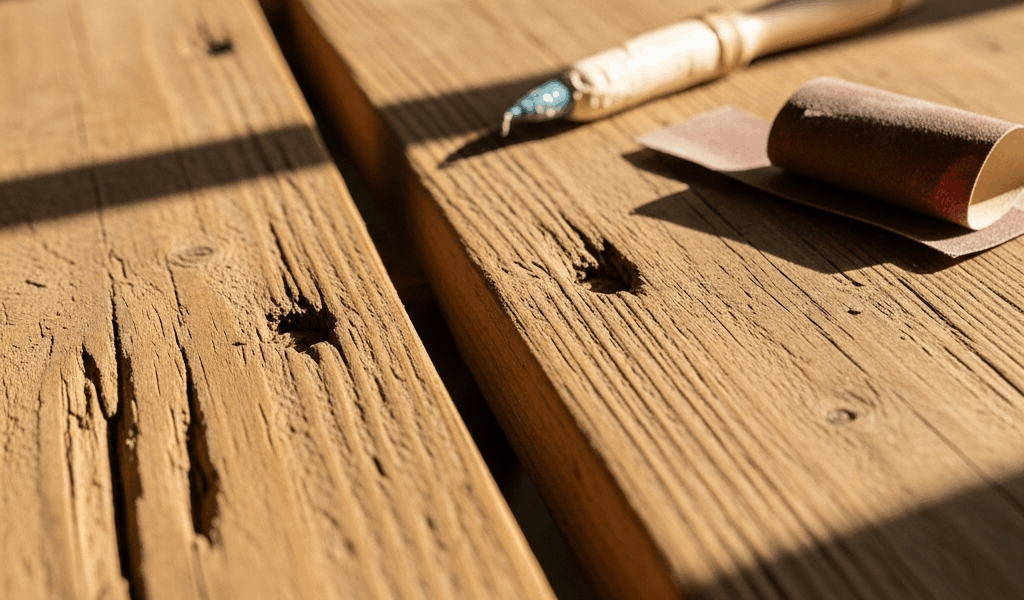
Tabletop expansion gaps provide room for solid wood to expand and contract as indoor humidity changes. Proper spacing and flexible attachment methods help prevent cracks, splits, warped surfaces, and damaged joints.
Across the United States, wood furniture faces changing indoor conditions throughout the year. A dining table in a heated Minnesota home may face dry winter air, while a table in humid Florida may absorb more moisture during summer. These changes affect solid wood, even when the furniture stays indoors. Tabletop expansion gaps and flexible joints help manage this natural movement.
Wood takes in moisture from the air when humidity rises. It releases moisture when the air becomes dry. This causes wood to swell or shrink, mostly across the grain. A wide tabletop can move enough to put serious stress on its joints and supporting frame. A well-planned gap or sliding attachment gives the wood room to move without damaging the table.
Not every gap in a tabletop is an expansion gap. A space between two boards may point to a failed glue joint or seasonal shrinkage. A planned clearance around a panel or inside a mechanical attachment serves a different purpose. Knowing the difference helps woodworkers choose the right repair or construction method.
This guide explains why tabletop gaps matter, how to plan them, and how to choose suitable fasteners. It also covers common mistakes, inspection steps, and practical ways to protect a table through seasonal changes.
Source: cults3d.com
What Are Tabletop Expansion Gaps?
Tabletop expansion gaps are planned spaces or clearances that let wood change size without damaging the furniture. They are part of a construction plan, not random openings left between boards. Their purpose is to prevent wood from pushing against or pulling away from fixed parts.
A solid wood tabletop does not remain exactly the same width throughout the year. Its boards respond to changes in moisture. When a table has no room for this movement, stress builds inside the wood and its joints.
An expansion gap can appear inside a joint, around a floating panel, or within a tabletop attachment. It does not always mean leaving an open space between the boards that form the visible surface.
Source: artisanfurnituremakers.com
Movement clearance
Space that lets a solid wood panel grow or shrink without pressing against a fixed frame.
Joint clearance
Room inside a joint or fastener that allows parts to slide while remaining connected.
Visible panel gap
An open line between boards. This may be a design feature, a seasonal change, or a sign of a joint problem.
Why Expansion Gaps Matter
Wood needs freedom to respond to its surroundings. A rigid connection can stop that movement at the point where the wood needs it most. The resulting force may crack a board, break a glue joint, or distort the table frame.
A suitable clearance spreads the stress across a planned movement path. It helps the tabletop stay secure while allowing its width to change. This balance is the main goal of sound solid wood furniture construction.
Prevent splitting
Movement space reduces stress when a tabletop becomes narrower during dry weather.
Protect the frame
Flexible connections reduce the force that a swelling tabletop places on the apron and rails.
Maintain appearance
Correctly planned joints help reduce uneven edges, loose connections, and surface damage.
Why Solid Wood Tabletops Expand and Contract
Wood changes size because it exchanges moisture with the surrounding air. This process continues after a tree becomes lumber. The amount of movement depends on the wood species, grain direction, moisture change, and starting moisture level.
The U.S. Department of Agriculture Forest Products Laboratory explains that wood reaches an equilibrium moisture content based on its surrounding conditions. When the air becomes more humid, dry wood can gain moisture. When the air becomes drier, wood can lose moisture and shrink.
The change is not equal in every direction. Wood moves most across the growth rings in the tangential direction. Radial movement is usually smaller. Movement along the grain is much smaller than movement across it.
This difference matters when a wide tabletop meets a narrow apron or fixed support. The tabletop may change width while the frame changes very little. A rigid joint forces both parts to resist each other.
Source: coppiceandcrown.co.uk
High humidity
Wood takes in moisture and becomes wider. A tabletop may press against its frame if the design leaves no movement space.
Low humidity
Wood loses moisture and becomes narrower. Poor joints may open, and boards may pull away from fixed supports.
Grain direction
Flatsawn, riftsawn, and quartersawn boards can show different amounts of movement.
Wood species
Different species have different shrinkage and swelling rates. One movement allowance does not suit every tabletop.
Seasonal Movement in American Homes
Many homes in the United States experience indoor humidity changes during the year. Heating systems can make winter air much drier. Summer weather can raise indoor humidity, especially when air conditioning or moisture control is limited.
A table near a heating vent may face a stronger local change than one in a room with stable conditions. Direct sunlight and nearby exterior doors can also affect the surface environment. These factors make the table’s location part of the design decision.
A finish can slow the rate at which wood gains or loses moisture. It cannot stop the process. Applying finish to every face and edge helps create more balanced moisture exchange, but it does not remove the need for movement clearance.
Dry indoor air
Check for shrinking boards, open glue joints, and gaps near fixed edges.
Humid indoor air
Check for tight clearances, raised edges, and pressure against the table frame.
Why Wide Tabletops Need More Attention
The wider a solid wood panel becomes, the more total movement it can experience. A small change in each inch adds up across a large dining table. This is why a wide top needs a careful attachment plan.
For example, a 36-inch-wide tabletop can move more than a 12-inch-wide board under the same moisture change. The exact amount depends on the species, grain orientation, and moisture range. A fixed screw pattern that works on a narrow side table may not suit a large dining table.
Small side tables
Movement is often easier to manage, but solid wood still needs a suitable attachment.
Dining tables
Greater width makes seasonal movement and fastener placement more important.
Large conference tables
Wide panels may need carefully planned attachment points and more movement clearance.
How Much Expansion Gap Does a Tabletop Need?
There is no single expansion gap measurement for every tabletop. The correct allowance depends on the expected change in moisture content, the wood species, and the board’s grain orientation. A fixed rule such as one gap size for every foot of tabletop width can lead to poor results.
A better method is to estimate the expected dimensional change. The USDA Forest Products Laboratory provides species-specific dimensional change coefficients for this purpose. These coefficients help estimate movement within the stated moisture content range.
For a practical estimate, multiply the starting board width by the relevant dimensional change coefficient and the change in moisture content. Use the coefficient that matches the grain direction and species.
Source: myminifactory.com
Measure the actual top
Record the tabletop width across the grain. Do not use its length as the movement width.
Identify the species
Find a suitable dimensional change coefficient for the wood being used.
Check moisture conditions
Estimate the moisture content range the table may experience in its final room.
Plan the attachment
Provide enough travel in the fasteners or joints to cover the estimated movement.
A Simple Wood Movement Calculation
The USDA calculation for dimensional change can be written as follows: change in dimension equals the starting dimension multiplied by the dimensional change coefficient and the change in moisture content.
Consider a hypothetical flat-grained white fir tabletop that is 24 inches wide. Assume its moisture content rises from 8 percent to 11 percent. Using a tangential coefficient of 0.00245, the estimated width change is 24 multiplied by 0.00245 multiplied by 3. The result is 0.1764 inch.
This example is an estimate, not a universal gap recommendation. It applies to the stated wood, grain direction, and moisture change. The actual attachment must also account for the location of the fixed point and the amount of movement available on each side.
Starting width
24 inches.
Moisture change
An increase from 8 percent to 11 percent, or 3 percentage points.
Dimensional change coefficient
0.00245 for the stated white fir example.
Estimated expansion
0.1764 inch across the tabletop width.
Where Should the Movement Space Go?
Movement can be shared between both edges when the tabletop is held near its center. In this arrangement, each edge moves outward or inward by roughly half the total width change.
Some designs use a different fixed point. A tabletop may be secured along one reference edge while the other edge moves. The important detail is to make sure the attachment allows the full expected movement in the correct direction.
Do not simply divide a movement estimate by two unless the design actually allows the top to move equally in both directions. The position of the fasteners controls how the movement is shared.
Center-fixed design
Movement is generally shared between the left and right sides.
One-side reference
Most movement must be accommodated at the opposite side.
Floating attachment
The fasteners allow the tabletop to slide while keeping it secured to the base.
Common Methods for Allowing Tabletop Expansion
The best attachment method holds the tabletop firmly while allowing movement across the grain. Several woodworking methods meet this need. The right choice depends on the apron design, tabletop size, available tools, and expected movement.
The attachment should not pull the tabletop tightly against a fixed frame. It should also prevent the top from shifting freely, lifting, or becoming unstable during normal use. A good design balances these two needs.
Source: myminifactory.com
Figure-eight fasteners
Metal connectors that pivot as the tabletop changes width.
Z-clips
Metal clips that slide inside grooves cut into the apron or rail.
Wooden buttons
Small wooden blocks that engage grooves and move with the tabletop.
Slotted screw holes
Oversized or elongated holes that let screws travel as the top changes width.
Figure-Eight Tabletop Fasteners
Figure-eight fasteners use a small metal plate with two circular ends. One end attaches to the tabletop and the other attaches to the apron. The connector can pivot as the tabletop expands or contracts.
These fasteners are useful when a woodworker wants a simple and relatively hidden attachment. They need properly sized recesses so they can rotate without binding against the rail or tabletop.
Their movement range is limited by the fastener design and recess size. For a wide tabletop, check that the available rotation can handle the calculated movement before choosing this method.
Main benefit
They are compact and provide a simple mechanical connection.
Main limitation
Their available movement may be insufficient for some wide solid wood tops.
Installation tip
Cut suitable recesses and test the fastener movement before final assembly.
Z-Clips and Tabletop Clips
Z-clips provide a sliding connection between the tabletop and its apron. One end screws to the underside of the top. The other end sits inside a groove in the apron.
As the top changes width, the clip can slide along the groove. This method is useful for many solid wood tables because it provides a clear movement path without relying only on the rotation of a small plate.
The groove must have enough travel for the expected movement. A clip that reaches the end of its slot too early can still place stress on the wood.
Main benefit
The sliding connection can provide useful movement over a longer distance.
Main limitation
The groove must be correctly sized and aligned with the direction of movement.
Installation tip
Check the clip’s travel and use suitable screws that do not penetrate the visible tabletop surface.
Wooden Tabletop Buttons
Wooden buttons are small blocks fitted into grooves along the table apron. A tongue or projecting edge engages the groove while a screw holds the button to the tabletop.
The button moves inside the groove as the top changes width. Woodworkers can make these parts from workshop offcuts, which makes them useful for traditional furniture projects.
The groove must allow the button to slide without becoming loose enough to lose its hold. The button should also have enough strength to resist normal lifting and handling forces.
Main benefit
They can be made from matching wood and adjusted to suit the table.
Main limitation
Poorly fitted buttons may bind or fail to hold the tabletop securely.
Installation tip
Test the button inside the groove before attaching the top.
Slotted Screw Holes
Slotted screw holes provide another way to allow movement. Instead of using a fixed round hole, the woodworker creates an elongated opening in the rail or apron.
The screw passes through the slot and enters the underside of the tabletop. As the top changes width, the screw can move along the opening. The slot must run across the grain, in the direction the top needs to move.
Use a washer or suitable screw head to keep the connection secure without clamping the moving part so tightly that it cannot slide. Check the screw length and remaining wood thickness before assembly.
Main benefit
This method uses simple hardware and can be made with common woodworking tools.
Main limitation
A slot that runs in the wrong direction cannot provide the required movement.
Installation tip
Keep the screw secure while leaving enough clearance for the screw to travel.
How to Plan and Install Tabletop Expansion Gaps
A reliable installation starts before the tabletop meets the base. The woodworker should understand the wood’s movement, inspect the table design, and choose an attachment that can handle the expected change.
Do not install fasteners based only on equal spacing around the apron. Their location and travel matter more than a neat-looking pattern. Each connection must support the top without blocking movement.
Tools and materials
Prepare a tape measure, straightedge, drill, suitable bits, chisel, screwdriver, clamps, fasteners, and a moisture meter when available.
Safety equipment
Wear eye and hearing protection when drilling, routing, or cutting slots. Secure the workpiece before using power tools.
Project information
Know the wood species, tabletop width, grain direction, attachment style, and expected indoor conditions.
Step 1: Inspect the Tabletop and Base
Start by checking the tabletop for cracks, loose glue joints, cupping, and uneven edges. Look at the underside to see how the top meets the apron or support rails.
Identify whether the top is solid wood, plywood, MDF, or a veneered panel. This matters because different materials respond differently to moisture. Do not assume that every tabletop needs the same expansion arrangement.
Check the grain
Find the direction across the boards because this is usually where most movement occurs.
Check the supports
Look for fixed screws, glue blocks, rigid cleats, and other parts that may prevent movement.
Step 2: Estimate the Expected Movement
Measure the tabletop across the grain. Identify the species and estimate the moisture content range that the table may experience in its final location.
Use a reliable wood movement reference to estimate the dimensional change. If the wood species or moisture conditions are unknown, avoid relying on a generic measurement. A qualified furniture maker can help assess unusual or large tabletops.
Record the width
Measure the full panel rather than only one board in a glued-up top.
Record the grain orientation
Determine whether the boards are flatsawn, riftsawn, or quartersawn.
Allow for travel
Make sure each fastener has enough available movement for the design.
Step 3: Choose the Attachment Method
Select the attachment based on the tabletop width, apron construction, and expected movement. Z-clips and wooden buttons offer sliding movement. Figure-eight fasteners provide pivoting movement. Slotted screw holes offer a direct and simple alternative.
Check the hardware dimensions before cutting any grooves or recesses. Different fasteners have different shapes and movement limits. Follow the manufacturer’s installation details when using a commercial connector.
Choose compatible hardware
The fastener must fit the apron and provide the required travel.
Plan the fixed point
Decide how the tabletop will remain aligned while the remaining connections move.
Step 4: Cut the Grooves or Recesses
Mark each attachment location before cutting. Keep the slots aligned with the direction of tabletop movement. Use a router, drill, or other suitable tool according to the joint design.
For figure-eight fasteners, make recesses that allow the connector to pivot. For Z-clips, make a groove that matches the clip dimensions. For slotted holes, create a clean opening with enough travel and sound surrounding material.
Avoid cutting too close to the edge of a narrow rail. A weak rail can split under screw pressure. Test the hardware in a sample piece when the joint is unfamiliar.
Use accurate marks
Check the location of every groove before cutting.
Keep the slot clean
Remove chips and rough edges that could stop a fastener from moving.
Protect the material
Use suitable cutting depth and avoid weakening the rail.
Step 5: Attach the Tabletop
Place the tabletop on the base and check its alignment. Install the fasteners according to the selected design. Keep the top secure without locking its movement across the grain.
Use screws of suitable length and diameter. A screw that is too long may break through the surface. A screw that is too short may not provide a reliable connection.
Do not over-tighten a sliding fastener. The goal is to hold the top in place while allowing the planned movement. Check each connector by hand before completing the installation.
Check the screw length
Make sure the screw enters the tabletop or apron safely without penetrating an exposed face.
Check the movement
Confirm that sliding clips and buttons can travel inside their grooves.
Check alignment
Make sure the top sits evenly on the base and does not rock.
Step 6: Test and Inspect the Finished Table
Inspect the table from above and below. Look for loose screws, blocked slots, uneven gaps, and contact between moving parts. Confirm that the tabletop remains securely connected to the base.
A successful installation has no forced joints or trapped fasteners. The tabletop should stay level and stable while retaining its planned movement clearance. Record the initial condition so future seasonal checks have a useful reference.
Good result
The top sits flat, the fasteners remain secure, and the moving connections are not blocked.
Poor result
The top binds against the apron, the screws loosen, or the surface starts to crack.
Expansion Gaps in Different Tabletop Materials
Not all tabletops need the same expansion allowance. Solid wood, plywood, MDF, and veneered panels respond differently to changes in humidity. The construction method should match the material rather than follow a single rule.
Solid wood has natural grain directions and can show significant movement across its width. Engineered panels use bonded layers or fibers to create more stable dimensions. They can still change with moisture, but their behavior differs from a wide solid wood slab.
Solid hardwood
Needs a movement-friendly attachment because seasonal width changes can be significant.
Plywood
Crossed veneer layers improve dimensional stability compared with a solid wood panel.
MDF
Usually has limited directional movement compared with solid wood, but moisture can cause swelling and damage.
Veneered panels
Need protection from moisture and careful support around their edges.
Solid Wood Tabletops
Solid wood tops need special attention because the boards expand and contract across their grain. Their attachment should allow this movement without making the table loose.
A wide top made from maple, oak, walnut, or cherry can experience different movement depending on the species and board cut. Estimate the change rather than assuming that all hardwoods behave alike.
Recommended approach
Use suitable tabletop fasteners, buttons, or correctly designed slotted attachments.
Plywood and Engineered Tabletops
Plywood uses layers of veneer with alternating grain directions. This construction limits directional movement and often makes plywood suitable for stable furniture tops.
MDF uses compressed wood fibers and resin. It does not behave like solid lumber, but it can swell when exposed to moisture. Protect exposed edges and use suitable screws or inserts for the material.
A veneered MDF or plywood tabletop usually does not need the same sliding attachment system as a wide solid wood top. However, the base and panel still need a sound connection that suits their construction.
Recommended approach
Follow the panel manufacturer’s guidance and use suitable edge support and fasteners.
Mixed-Material Tabletops
Some tables combine solid wood, metal, glass, and engineered panels. These materials may respond differently to temperature and moisture. A rigid connection between parts with different movement patterns can create stress.
Use connectors designed for the specific material combination. Glass panels need appropriate supports and should not be treated like solid wood boards. Metal frames may need adjustable or slotted connections when paired with a wide solid wood top.
Recommended approach
Use material-compatible hardware and follow the design requirements for each component.
Breadboard Ends and Their Expansion Gaps
Breadboard ends are crosswise pieces attached to the ends of a solid wood tabletop. They help keep the main panel flat and hide its end grain. They also create a movement challenge because the tabletop changes width while the breadboard changes very little in length.
A properly made breadboard joint allows the main top to move across its grain. The center may be fixed while the outer portions use elongated holes or other sliding connections. This lets the panel change width without splitting the end piece.
The joint may show a small seasonal change at its edges. In a dry period, the tabletop may become narrower than the breadboard. In a humid period, the panel may become wider. This does not automatically mean the joint has failed.
Center attachment
A fixed center point can help keep the panel aligned.
Elongated holes
Slotted holes allow outer pins or screws to move with the tabletop.
Limited glue area
Glue should be used only where the joint design permits movement.
Seasonal alignment
The panel edges may sit slightly inside or outside the breadboard ends during different seasons.
How to Avoid Breadboard Joint Failure
Do not glue the full length of a breadboard joint across a wide solid wood top. This locks two parts that move in different directions. The top may crack, or the joint may separate under stress.
Use a suitable tongue-and-groove or mortise-and-tenon design. Keep the outer fasteners free to move inside their elongated openings. The center attachment should provide alignment without blocking the rest of the panel.
Plan the final edge position according to the moisture conditions during construction. A top built in a dry season may later expand. A top built in a humid season may later shrink. Allow for the expected change before cutting the end pieces to final length.
Avoid full-width glue
Do not lock the whole cross-grain joint unless the design specifically accommodates movement.
Check pin clearance
Make sure the pins do not prevent the panel from changing width.
Inspect both ends
Look for cracks, loose pins, and uneven movement.
How to Identify and Fix Tabletop Gap Problems
A gap in a tabletop does not always mean the original expansion allowance was wrong. The cause may be seasonal shrinkage, a failed glue joint, loose hardware, poor storage, or incorrect construction.
Start by checking where the gap appears and whether it changes with the season. A planned clearance in a hidden joint is different from an opening between the boards on the visible surface. The repair should address the cause rather than simply cover the opening.
Gap between boards
May result from wood shrinkage, a weak glue joint, or a failed panel connection.
Gap near the apron
May indicate a moving tabletop, a loose fastener, or an attachment that has shifted.
Gap at a breadboard end
May be normal seasonal movement or a sign of a damaged joint.
Gap around an engineered panel
May result from poor fitting, swelling, or damaged edge material.
Problem: Gaps Between Glued Boards
When a tabletop develops an opening between its boards, inspect the glue line and surrounding wood. A narrow opening that changes with the season may be linked to moisture movement. A joint that remains open or shows broken glue may need repair.
Do not fill a large structural gap with ordinary wood filler and assume the problem is solved. Filler does not restore a failed glue joint or provide room for movement. The top may need to be disassembled, cleaned, and rejoined by a skilled woodworker.
Check the glue line
Look for broken adhesive, separated fibers, and signs of an old repair.
Check moisture
Measure the wood when possible and compare it with the room conditions.
Repair the cause
Use an appropriate joint repair instead of relying on surface filler.
Problem: The Tabletop Is Pressing Against the Frame
A tabletop that pushes against its apron may have insufficient movement clearance. Tight screws, rigid glue blocks, or poorly placed cleats can prevent the top from expanding.
Inspect the underside before changing any fasteners. Find the connections that block movement and determine whether the frame is also damaged. A furniture maker can help if the top is already cracked or the apron has separated.
Inspect the fasteners
Look for screws that pass through tight round holes across the grain.
Check the slots
Look for clips that have reached the ends of their grooves.
Correct the attachment
Replace unsuitable fixed connections with a movement-friendly design where appropriate.
Problem: The Gap Changes During the Year
A gap that becomes wider in dry weather and smaller in humid weather may reflect normal seasonal movement. Compare the changes over time before making a repair.
Keep the room conditions reasonably stable when practical. Avoid placing the table next to a strong heat source or leaving it in direct sunlight for long periods. A sudden change in appearance deserves a closer inspection.
Record the change
Measure the gap and note the date and room conditions.
Check the joint
Make sure the opening does not come from a failed glue connection.
Avoid rushed repairs
Do not fill a seasonal opening before understanding how the wood moves.
Common Mistakes When Planning Expansion Gaps
Many tabletop failures begin with a small construction mistake. A screw may look secure, a glue line may appear strong, or a gap may seem too small to matter. Problems often appear later when the wood experiences a different moisture level.
Good construction means planning for movement before assembly. It is easier to create suitable slots and clearances during construction than to repair a cracked tabletop later.
Gluing the top to the apron
A wide solid wood top should not be rigidly glued across its grain to a fixed frame.
Using tight round screw holes
Fixed holes can prevent the tabletop from moving and create stress.
Ignoring grain direction
Movement calculations based on the wrong direction may produce an unsuitable allowance.
Using one measurement for every species
Different woods have different dimensional change rates.
Assuming finish stops movement
A protective finish slows moisture exchange but does not make solid wood dimensionally fixed.
Over-tightening fasteners
Excess pressure can prevent sliding clips or buttons from working as intended.
Filling every visible gap
Some gaps are part of a working joint or seasonal movement and should not be filled.
When Professional Help Is Needed
Seek help from a qualified furniture maker when a tabletop has a deep crack, a badly separated glue joint, or a distorted frame. These problems may need more than a simple adjustment.
Large conference tables, valuable antique furniture, and heavy solid wood tops deserve careful inspection before any structural repair. Avoid cutting new slots or drilling near damaged joints without understanding the load and attachment design.
Deep structural cracks
A damaged panel may need professional repair or reconstruction.
Loose or unstable base
A damaged apron or leg connection may create a safety risk.
Valuable furniture
A specialist can help preserve original construction and finish.
How to Maintain Tabletop Expansion Gaps Over Time
A good expansion system needs little daily attention, but regular checks can prevent small problems from becoming major repairs. Inspect the underside, fasteners, and visible joints at sensible intervals.
Try to keep the table in a stable indoor environment. Sudden changes in moisture and temperature can increase stress on wood. Avoid placing the table directly over a heat vent or against a damp exterior wall.
Clean the surface with products suitable for its finish. Avoid soaking the tabletop with water or leaving wet items on it for long periods. These habits help protect both the surface and the wood beneath it.
Inspect the hardware
Check for loose screws, damaged clips, and fasteners that no longer slide.
Watch the joints
Look for cracks, separated boards, and changes around breadboard ends.
Control indoor conditions
Avoid extreme humidity changes when practical.
Protect the finish
Use suitable cleaning products and avoid excess water.
Keep records
Note unusual movement so you can compare the table’s condition over time.
A Simple Seasonal Inspection
Inspect the tabletop during a dry period and again during a more humid period if those conditions occur in your area. Compare the width, edge alignment, and visible gaps. A small change may be normal, but a sudden crack or loose joint needs attention.
Check the underside for fasteners that have reached the ends of their slots. Look for screws that have loosened or clips that have become trapped. Correct problems before the next major change in humidity.
Surface
Check for new cracks, raised edges, and uneven board joints.
Underside
Check movement clearance and the condition of the attachment hardware.
Frame
Check the apron, legs, and rails for loose joints or signs of stress.
Choosing the Right Tabletop Expansion Design
The right design depends on the tabletop material, width, construction style, and expected environment. A small side table may use a simple attachment system, while a large dining table needs more careful movement planning.
The most useful decision is not which fastener looks best. It is which system can hold the top securely and provide enough movement for the wood. Ease of installation, access for future repairs, and the appearance of the underside also matter.
For a traditional solid wood table
Consider wooden buttons, Z-clips, or suitable slotted attachments.
For a compact tabletop
Figure-eight fasteners may work when their movement range matches the design.
For a large solid wood top
Calculate movement carefully and choose a connection with adequate travel.
For plywood or MDF
Use a suitable attachment based on the panel construction and its edge strength.
For breadboard ends
Use a joint that secures the center while allowing the outer portions to move.
A Practical Decision Process
First, identify the tabletop material. Next, determine the direction and likely amount of movement. Then compare attachment methods based on their available travel and strength.
If the design has a fixed apron, make sure the top can move across its width. If it has a floating panel, make sure the panel has room inside its frame. If it uses a breadboard end, make sure the joint does not lock the full cross-grain connection.
Finally, inspect the finished connection. A correct design should keep the table stable while allowing the wood to respond naturally to its environment.
Material first
Identify whether the top is solid wood or an engineered panel.
Movement second
Estimate the expected dimensional change using suitable reference data.
Hardware third
Select fasteners with enough movement and suitable holding strength.
Inspection last
Check the completed table for binding, loose parts, and structural damage.
Research Notes and Practical Evidence
The guidance in this article is based on established wood science and published woodworking construction methods. The USDA Forest Products Laboratory’s Wood Handbook explains moisture-related dimensional change and provides coefficients for estimating movement in different wood species.
Woodcraft’s tabletop fastener guidance describes Z-clips, wooden buttons, and figure-eight fasteners. Fine Woodworking also documents slotted screw holes, buttons, and other ways to attach solid wood tops without preventing seasonal movement.
WOOD Magazine’s guidance on wood movement and breadboard ends explains why cross-grain connections need suitable freedom. These sources support the construction principles used here. No independent tabletop laboratory test or first-hand installation test is claimed.
Documented evidence
USDA Forest Products Laboratory publications describe wood moisture relations, dimensional change, and species-specific movement coefficients.
Published construction guidance
Woodcraft and Fine Woodworking describe practical methods for securing solid wood tabletops while allowing movement.
Practical analysis
The decision steps and examples explain how those documented principles apply to tabletop design.
Research limitation
Exact clearance requirements cannot be established without the wood species, moisture conditions, dimensions, and attachment design.
Next-Question Gap Map
The following map separates practical questions inferred from the construction task from questions that have been verified through the reviewed technical material. It does not claim measured search demand or a live search ranking.
How much should a solid wood tabletop expand?
Reader stage: planning. Basis: inferred next need. Reviewed coverage: answered in general woodworking and USDA material. Reader benefit: a species-based calculation instead of a universal measurement. Priority: high. Placement: movement calculation section.
Which tabletop fasteners allow seasonal movement?
Reader stage: construction. Basis: documented in Woodcraft and Fine Woodworking guidance. Reviewed coverage: answered, with practical selection details. Reader benefit: choosing a suitable connection. Priority: high. Placement: attachment methods section.
Should there be a visible gap between tabletop boards?
Reader stage: diagnosis. Basis: inferred next need from the distinction between panel gaps and attachment clearance. Reviewed coverage: partially answered across the inspected woodworking material. Reader benefit: avoiding unnecessary filler or incorrect repairs. Priority: high. Placement: definitions and troubleshooting sections.
Do plywood and MDF tabletops need the same expansion allowance?
Reader stage: material selection. Basis: inferred next need. Reviewed coverage: shallow in the inspected solid wood attachment guides. Reader benefit: choosing hardware that matches the panel. Priority: medium. Placement: material comparison section.
Why does a breadboard end show a seasonal gap?
Reader stage: construction and maintenance. Basis: documented in WOOD Magazine and Fine Woodworking material. Reviewed coverage: answered, with a practical explanation of seasonal alignment. Reader benefit: distinguishing normal movement from joint failure. Priority: high. Placement: breadboard section.
Can a finish stop tabletop expansion?
Reader stage: maintenance. Basis: documented in WOOD Magazine guidance. Reviewed coverage: answered. Reader benefit: avoiding false confidence in surface coatings. Priority: medium. Placement: wood movement and maintenance sections.
Frequently Asked Questions
Q
Should a solid wood tabletop have expansion gaps?
Yes, a solid wood tabletop needs a way to accommodate seasonal movement. This does not always mean leaving a visible gap between the boards. Proper fasteners, sliding joints, and suitable clearances can allow the top to change width without damaging its frame.
Q
How wide should a tabletop expansion gap be?
The required clearance depends on the wood species, tabletop width, grain direction, and expected moisture change. Estimate the movement using suitable wood movement data. Then provide enough travel in the attachment system to accommodate that change.
Q
Should I leave gaps between solid wood tabletop boards?
Normally, boards in a conventional edge-glued solid wood tabletop should form tight, sound glue joints. An open space between boards is not a standard substitute for movement clearance. A designed center gap or decorative separation is a different construction choice and needs its own support plan.
Q
Can I screw a solid wood tabletop directly to its frame?
You can use screws if the attachment allows the top to move across its grain. Slotted holes, suitable oversized holes, and movement-friendly fasteners can provide this freedom. Tight round holes and rigid glue connections may restrict movement and cause damage.
Q
Do figure-eight fasteners allow enough tabletop movement?
They can work for suitable tabletop designs, but their movement range is limited by the connector and its recess. Check the expected movement before using them on a wide solid wood top. Z-clips or wooden buttons may provide a better sliding arrangement for some designs.
Q
Do tabletop expansion gaps change with the seasons?
Yes. A gap or clearance may become more visible as wood shrinks during dry conditions and less visible as wood expands during humid conditions. A planned movement joint should accommodate these changes without binding or losing support.
Q
Can wood filler repair a gap in a tabletop?
Wood filler may suit small cosmetic defects, but it does not repair a failed structural glue joint. It also does not replace a planned movement allowance. Inspect the gap first and identify whether it comes from seasonal shrinkage, joint failure, or poor construction.
Q
Does sealing both sides of a tabletop prevent wood movement?
No. Sealing both sides can slow moisture exchange and help balance the surface response. It cannot prevent wood from expanding or contracting. Solid wood still needs a suitable attachment and movement clearance.
✦ Wrapping Up
Conclusion
Tabletop expansion gaps help solid wood furniture handle natural changes in moisture. They provide room for a tabletop to grow or shrink without placing excessive stress on its joints, apron, or supporting frame. The right design depends on the material, wood species, grain direction, and expected indoor conditions.
Figure-eight fasteners, Z-clips, wooden buttons, and slotted screw holes offer practical ways to attach a solid wood top. Breadboard ends and floating panels also need carefully planned joints. Each method should hold the parts securely while allowing the required movement.
Do not treat every visible gap as an expansion gap. An opening between boards may indicate a failed glue joint, while a changing edge clearance may be part of a working joint. Inspect the construction before filling, tightening, or replacing any part.
Good tabletop construction begins with an understanding of wood movement. A little planning during the build can help prevent costly repairs and keep a table stable through many changes in season and indoor humidity.
💡 Key Takeaway
Before building or repairing a tabletop, identify the material, measure its width across the grain, estimate its seasonal movement, and choose an attachment system with enough travel. Check every fastener before final assembly and inspect the table as indoor conditions change.