
A complete kit of smart, safe, accurate add‑ons that boost every cut.
If you want cleaner joints, faster builds, and fewer mistakes, you need the right helpers. This is The Ultimate Woodworking Accessories Guide I use and teach. You will learn what to buy first, what to skip, and how to set up each piece for pro results. I will share wins, misses, data, and shop notes so you can move with confidence.

Safety essentials: protect your eyes, ears, lungs, and hands
Safety is the first stop in The Ultimate Woodworking Accessories Guide because skill grows only when you feel safe and calm. You need a simple kit you use every time. That kit saves time, money, and stress.
My core safety set includes:
- Eye protection Choose impact-rated glasses with side shields.
- Hearing protection Choose earmuffs with a Noise Reduction Rating of 25+.
- Dust masks or respirators Use at least a P2/P95 for sanding and cutting.
- Push sticks and push blocks Keep your hands away from blades on saws and jointers.
- Featherboards Hold stock against fences for safer, cleaner cuts.
- Blade guards and riving knives Reduce kickback on table saws.
- Non-slip mats and shoes Prevent slips around dust and offcuts.
From my bench: After I added featherboards and a tall push block, my rip cuts got cleaner, and my shoulders relaxed. Safety gear is not a tax. It is a performance boost.
Evidence note: Safety standards link wood dust to cough, asthma, and nose issues. A good mask and dust control cut that risk a lot.
Measuring and marking tools for perfect layout
A big lesson in The Ultimate Woodworking Accessories Guide is this: a project is only as true as the lines you draw. Good layout speeds you up, even when parts are complex.
Must-haves that earn their keep:
- Tape measure and story stick Use a fixed story stick to avoid small reading errors.
- Combination square and engineer’s square Check for 90 degrees and mark lines fast.
- Marking knife Make crisp lines that guide the chisel or saw tooth.
- Wheel marking gauge Set repeatable offsets, like 1/4 inch shoulders.
- Bevel gauge Lock in odd angles for repeat cuts.
- Calipers and depth gauge Check dowel fit, mortise depth, and bit height.
Tip: Use one reference edge for all marks. If you flip boards, errors grow. Mark your reference face and edge with a pencil triangle.
From my shop: I stopped chasing a wavy bookcase after I bought a true engineer’s square. It fixed a “mystery” that had cost me hours.

Clamping and workholding that actually holds flat
Clamps are not all the same. In The Ultimate Woodworking Accessories Guide, I group them by job so you can build a stable kit that fits your space and budget.
Core clamp set:
- F-style clamps Light, quick, and cheap. Great for general use.
- Parallel-jaw clamps Keep panels flat and square during glue-ups.
- Bar or pipe clamps Long reach for slabs and tables.
- Spring clamps Hold edge banding and small parts.
- Corner and band clamps Align frames and boxes at 90 degrees.
- Toggle clamps and bench dogs Add repeatable hold-down on jigs and benches.
- A solid vise Face or tail vise holds parts for planing, sawing, and chiseling.
Glue-up tip: Use cauls wrapped in packing tape to keep panels flat. Set light, even pressure. Too much force bows the work.
Mistake to avoid: Buying only short clamps. You can pad short clamps with blocks, but you cannot stretch steel. Mix lengths early.

Cutting and sawing accessories for cleaner, safer cuts
The Ultimate Woodworking Accessories Guide would be weak without cut control. These helpers raise accuracy and reduce kickback.
Add these to your kit:
- Zero-clearance inserts Support the cut and stop tear-out on table saws.
- Quality blades Choose a sharp, task-matched blade. Keep a glue-line rip and a fine crosscut.
- Crosscut sled Safer and more square than a miter gauge for many cuts.
- Miter gauge with stop block Great for repeat parts and odd angles.
- Track saw guides and clamps Straight, chip-free cuts on sheet goods.
- Featherboards and board buddies Control the work against the fence.
- Splitters or riving knives Prevent the kerf from closing on the blade.
- Push shoes for jointers Give better grip and keep hands distant.
From the field: My first cabinet set had ragged edges. A zero-clearance insert and a 80-tooth blade fixed that overnight. It felt like cheating, but it was just good setup.

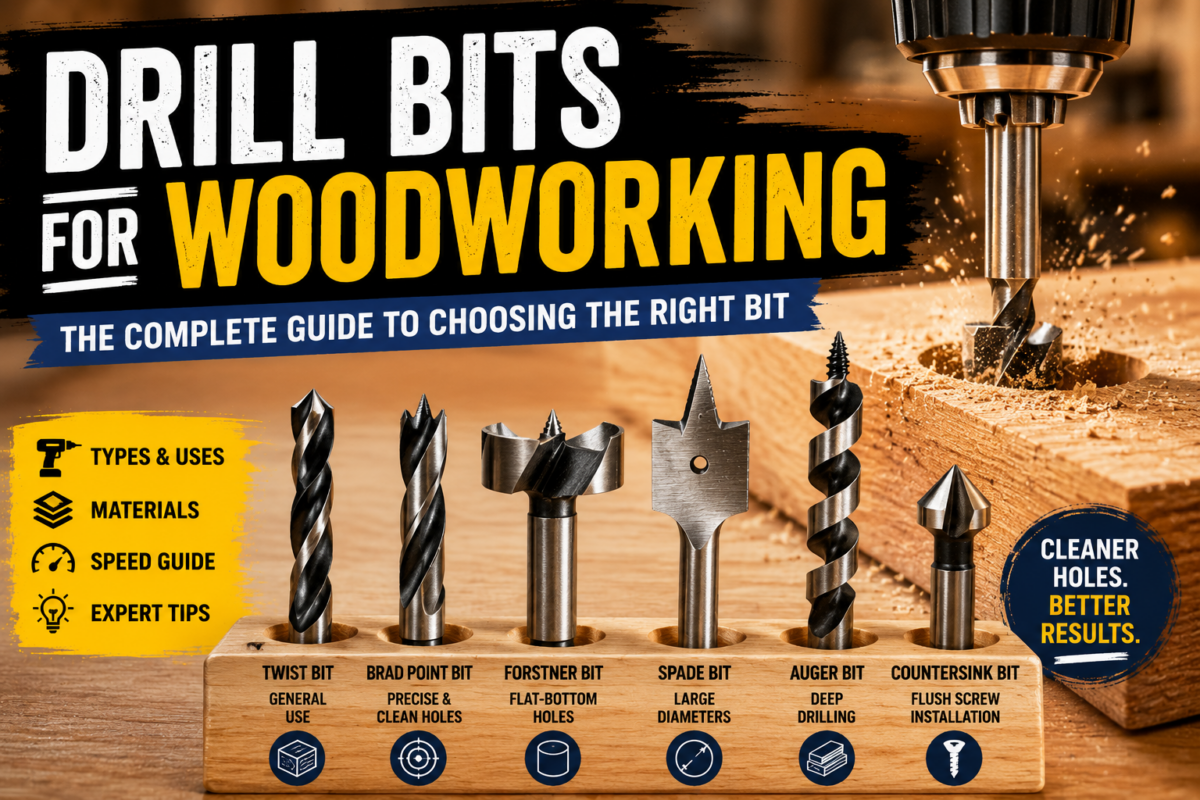
Drilling and boring accessories for crisp holes
Clean holes and square pockets add real polish. In The Ultimate Woodworking Accessories Guide, I stress bit choice and depth control.
What works best:
- Brad-point bits Clean entry and exit in hardwood and softwood.
- Forstner bits Flat-bottom holes for hinges and joinery.
- Countersink bits Seat screws flush or slightly below the surface.
- Pocket-hole jig Fast, strong face frames and repairs.
- Dowel or shelf pin jigs Even spacing with no math errors.
- Drill press table and fence Square holes and repeat positions.
- Depth stops and collars Consistent depth protects your work and your table.
Pro tip: Back up the exit side with scrap. This prevents blowout on through-holes.

Sanding and surface prep that saves finish time
A smooth surface starts early. The Ultimate Woodworking Accessories Guide aims to cut sanding time while raising quality.
What to keep on hand:
- Random-orbit sander with dust port Work through grits: 80, 120, 150, 180, 220.
- Abrasive sheets and rolls Keep fresh paper. Dull paper burns wood.
- Interface pads Follow curves without gouges.
- Sanding blocks and cork blocks Keep faces flat by hand.
- Card scrapers Quick tear-out removal with less dust.
- Tack cloths and clean rags Lift dust before finish.
Shop lesson: I now pencil-stripe the surface before each grit. I sand until all lines are gone. This simple step prevents swirl ghosts under finish.

Dust collection and air quality upgrades
Clean air is part of The Ultimate Woodworking Accessories Guide because dust harms both health and accuracy. Fine dust hangs in the air and lands in fresh finish.
Helpful gear:
- Shop vacuum with a high-efficiency bag Great for portable tools and small shops.
- Dust separators and cyclones Catch chips before the filter. Boost suction.
- Full-size dust collector Feed big tools with 4 inch hose or larger.
- Flexible hose, blast gates, and quick connects Make setup fast, so you actually use it.
- Ambient air cleaner Scrub fine dust after you stop cutting.
- Mask or respirator Wear it during cutting and sanding.
Research aligns with what we feel in our lungs. Fine dust is the issue, not only big chips. Better capture plus a good mask is the fix.

Jigs and fixtures that multiply accuracy
Jigs turn repeat tasks into a calm, steady flow. In The Ultimate Woodworking Accessories Guide, these are the silent heroes.
My short list:
- Crosscut and panel sleds Safer, square cuts on the table saw.
- Dovetail and box-joint jigs Tight, repeatable joinery fast.
- Tapering and circle-cutting jigs Clean and repeatable shapes.
- Mortise and tenon jigs Square, strong joints without a big mortiser.
- Router table with fence, lifts, and stops Control profiles and joinery with care.
- Stop blocks and flip stops Make identical parts without measuring.
Anecdote: I fought a wobbly taper leg jig for a week. I rebuilt it with a wider fence and sandpaper grip. The next set of legs matched within a hair.

Finishing accessories for pro results
A great finish needs clean tools and a dust-free plan. The Ultimate Woodworking Accessories Guide lists simple aids that make a big difference.
What I use:
- High-quality brushes Keep for varnish and water-based finish. Clean well.
- Foam and microfiber rollers Level coats on big panels.
- HVLP sprayer Smooth coats fast with less overspray.
- Wiping rags and lint-free cloths Even coats of oil and wax.
- Mixing cups, filters, and stir sticks Stop debris and streaks.
- Drying racks and stands Save space and reduce dust landings.
- Test boards Try color, sheen, and number of coats before you touch the piece.
Tip: Strain finish before you load the gun or brush. Keep a “finish log” with mix ratios, temps, and times. It pays off when you need to match later.
Sharpening and maintenance for keen edges
Sharp tools are safer and faster. The Ultimate Woodworking Accessories Guide treats sharpening as a core skill, not a chore.
A solid kit:
- Flattening surface and stones Keep stones true and edges keen.
- Honing guides Repeat the angle on planes and chisels.
- Strops with compound Polish and remove the burr.
- Diamond plates Fast cut on hard steels and carbide.
- Blade and bit gauges Set consistent angles and heights.
From my bench: A sharp low-angle plane saved a flamed maple top that sandpaper would have torn to fuzz. Sharp is the shortcut.
Storage and organization that speeds the build
Good storage is thinking made visible. In The Ultimate Woodworking Accessories Guide, I push simple systems that reveal your next step.
Try these:
- French cleat walls Move holders as your kit grows.
- Small parts boxes for screws and bits Label by size and head type.
- Blade and bit racks Protect edges and save search time.
- Mobile bases and carts Bring tools to the work, not the other way around.
- Cord and hose wraps Prevent kinks and tears.
One rule: A home for every accessory. After a project, put it back. This beats any fancy app.
What to buy first, next, and later
This path from The Ultimate Woodworking Accessories Guide keeps costs in check.
Start here:
- First buys Safety kit, a few key clamps, a square, a marking knife, and a push stick.
- Next buys Crosscut sled, zero-clearance insert, brad-point bits, random-orbit sander with dust.
- Later buys Router table, more parallel clamps, HVLP sprayer, air cleaner, specialty jigs.
If you are a beginner, rent or borrow before you buy big. If you are advanced, upgrade the tools you touch all day, like clamps and blades.
Budget vs premium: where to spend and where to save
Smart spend is a theme in The Ultimate Woodworking Accessories Guide. Some buys pay back for years. Others can be basic.
Spend more on:
- Safety gear Comfortable, you will wear it more.
- Clamps Parallel and long clamps hold value and shape.
- Squares and layout tools Accuracy here saves every cut.
- Dust filters and respirators Health is not a place to gamble.
Save or go mid-range on:
- Sandpaper Buy in bulk, but keep it fresh.
- Jigs you rarely use Make or borrow before you invest.
- Specialty bits Use only when the project calls for it.
Data point from the shop: My premium square and clamps outlasted three sanders and two vacs. Quality here outlives trends.
Care, calibration, and accuracy checks
The Ultimate Woodworking Accessories Guide is only as good as your setup. A 10-minute check saves a 10-hour fix.
Do these often:
- Check fence and blade for square Use a reliable square and a feeler gauge.
- Wax tables and fences Reduce friction and protect from rust.
- Clean dust filters and bags Keep suction strong and cut fines in the air.
- Refresh zero-clearance inserts Replace when ragged or burned.
- True your stones and strops Sharp tools need flat references.
Shop habit: I keep a checklist on the wall. I tap it before big glue-ups and finish days.
Common mistakes and how to avoid them
I made each of these at least once. The Ultimate Woodworking Accessories Guide flags them so you do not repeat them.
Watch for:
- Buying tools twice Start with a plan and a short priority list.
- Skipping dust control The cleanup tax kills flow and finish.
- Using dull blades You press harder and lose accuracy.
- Over-clamping Glued parts bow and twist. Use just enough pressure.
- Mixing brands without checks Fit, threads, and tracks may not match.
Fixes:
- Test on scrap first Always. It is cheaper than a new board.
- Label settings and stops Write the setup on blue tape right on the fence.
- Practice the cut Run the motion with the tool off to spot risks.
Buyer’s checklist and quick comparison factors
Use this fast screen when you add to your kit. It keeps The Ultimate Woodworking Accessories Guide practical.
Ask:
- Fit and compatibility Will it work with your tools and tracks?
- Accuracy and repeatability Can you set it and trust it?
- Build and materials Will it last or flex under load?
- Ergonomics Will you enjoy using it for long sessions?
- Dust and safety Does it improve capture or reduce risk?
- Support and warranty Can you get parts and help if needed?
I also keep a log of model numbers, shims, and blade kerfs. This tiny file has saved me many trips to the store.
Frequently Asked Questions of The Ultimate Woodworking Accessories Guide
What accessories should a beginner buy first?
Start with safety gear, a pair of F-style clamps, a combination square, a marking knife, and a push stick. These tools raise accuracy and keep your hands safe from day one.
How many clamps do I really need?
Start with eight to ten mixed clamps, then add as projects grow. Focus on two to four long clamps and the rest in medium lengths.
What dust setup works in a small garage?
Use a shop vacuum with a high-efficiency bag and a cyclone separator. Add a mask and open a window or run an air cleaner when sanding.
Do I need a crosscut sled if I have a miter gauge?
A sled is safer and more square for many cuts, especially wide boards. It also supports the work to reduce tear-out.
What grit sequence should I use for sanding?
Work 80, 120, 150, 180, then 220 for most hardwoods. Do not skip grits, and erase the pencil stripes at each step.
Is an HVLP sprayer worth it for a hobbyist?
If you finish cabinets or many parts, yes. It saves time and lays down smoother coats with less dust in the air.
How do I keep my layout accurate on big panels?
Use a track saw with a guide and a stop system. Mark from one reference edge and check square with a long straightedge.
Conclusion
You now have a clear path to pick, set up, and use the helpers that raise your craft. The Ultimate Woodworking Accessories Guide showed what to buy first, what to skip, and how to avoid the most common traps. With safe hands, clean air, and true lines, your joinery and finish will speak for themselves.
Start small. Add one useful accessory this week, and put it to work on a simple project. Share your wins, ask questions, and keep the momentum. If this guide helped, subscribe for more tips, project plans, and tested picks.
Pingback: The Ultimate Woodworking Sharpening Guide: Pro Tips - wood craftard