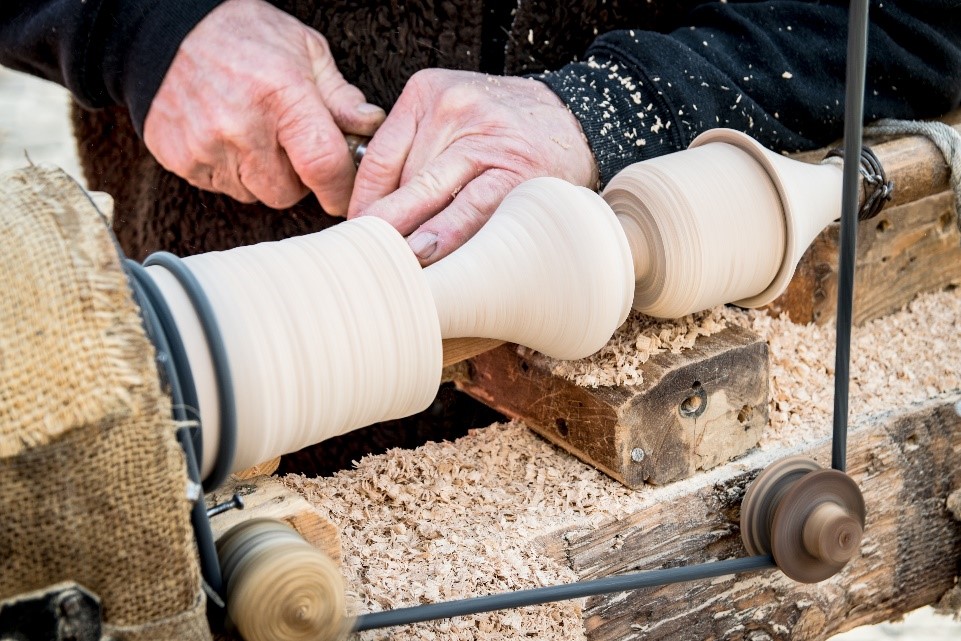
Spindle turning is a wood lathe technique that shapes long pieces of wood held between centers.
In the United States, spindle turning is commonly used by hobby woodworkers, furniture makers, and craft professionals to create items such as table legs, chair spindles, tool handles, and decorative pieces. The process involves rotating a wood blank along its grain direction while carefully removing material with turning tools.
A successful spindle turning project depends on accurate setup, sharp tools, controlled cutting technique, and careful measurement. Beginners usually start by learning how to create a cylinder, add beads and coves, and produce smooth transitions before attempting complex designs.
Source: images.squarespace-cdn.com
What Is Spindle Turning and How Does It Work?
Spindle turning is a woodturning method where a piece of wood rotates around its center axis while tools remove material from the outside surface. The wood is usually supported between two points called centers, with the grain running parallel to the lathe axis.
Unlike bowl turning, which works across the end grain, spindle turning focuses on creating long, narrow shapes. This makes it suitable for furniture parts and decorative components that need consistent round profiles.
Source: designingbuildings.co.uk
Typical spindle projects
Common examples include table legs, chair parts, stair balusters, candlesticks, pens, and handles.
Main turning goal
The goal is to transform a rough blank into a balanced shape with smooth curves, accurate dimensions, and a clean finish.
Spindle Turning Compared With Faceplate Turning
The main difference is the direction of the wood grain and how the blank is mounted. Spindle turning keeps the grain aligned with the lathe axis, while faceplate turning usually works with the grain positioned differently for bowls and hollow forms.
Spindle turning
Best for long narrow objects that require symmetrical profiles.
Faceplate turning
Better suited for wider shapes such as bowls and platters.
Tools and Materials Needed for Spindle Turning
A basic spindle turning setup requires a wood lathe, suitable turning tools, measuring equipment, and a stable work area. The exact equipment depends on the project size and the user’s experience level.
Beginners should focus on learning tool control rather than collecting many tools. A small selection of sharp, properly maintained tools can complete many basic spindle projects.
Source: upload.wikimedia.org
Wood lathe
The lathe rotates the workpiece and provides the support needed for controlled cutting.
Spindle gouge
A spindle gouge is commonly used for shaping curves, beads, and general spindle profiles.
Calipers and measuring tools
Accurate measurements help create matching diameters and repeatable designs.
How to Turn a Spindle Step by Step
The spindle turning process follows a predictable sequence: prepare the blank, mount it securely, create a cylinder, mark the design, shape the profile, refine the surface, and apply a finish.
Working slowly during the early stages helps prevent uneven cuts and makes later shaping easier.
Source: upload.wikimedia.org
Prepare the blank
Select straight-grained wood, cut it slightly oversized, and mark the center points on both ends.
Mount the wood
Install the blank securely between centers and confirm that it rotates freely before cutting.
Round the blank
Use a roughing gouge to remove corners and create a consistent cylinder.
Shape the design
Use spindle tools to create tapers, beads, coves, and other details.
How to Know Your Cut Is Working Correctly
A good spindle cut usually produces controlled shavings, smooth movement across the wood, and a surface that requires minimal sanding. Excessive vibration, catches, or torn fibers indicate that the tool position or cutting technique needs adjustment.
Good signs
Smooth tool movement, consistent diameter, and clean grain cutting.
Warning signs
Chatter marks, burning, rough fibers, and sudden tool grabs.
Common Spindle Turning Mistakes and How to Fix Them
Most spindle turning problems come from setup issues, incorrect tool use, or rushing the shaping process. Identifying the cause helps prevent repeated mistakes.
Source: upload.wikimedia.org
Uneven spindle shape
Use calipers frequently and remove small amounts of material instead of cutting aggressively.
Rough surface finish
Improve tool sharpness, adjust cutting direction, and refine the final passes.
Tool catches
Check tool support, maintain bevel contact, and avoid forcing the cutting edge into the wood.
Excess vibration
Confirm the blank is secure, reduce unsupported length, and check lathe speed settings.
Spindle Turning Safety Practices
Wood lathes involve fast-moving parts, sharp tools, and flying chips, so safe habits are essential. Always follow the operating instructions for your specific lathe and use appropriate protective equipment.
Before turning, inspect the wood for cracks, loose sections, or defects that could create hazards when the blank rotates.
Source: upload.wikimedia.org
Wear eye protection
Use safety glasses or a full face shield to protect against flying chips and fragments.
Check mounting security
Make sure centers, chucks, and workpieces are firmly secured before starting the lathe.
Keep tools supported
Always use the tool rest correctly and avoid cutting without stable support.
Frequently Asked Questions
Q
What wood is best for beginner spindle turning?
Softwoods and straight-grained hardwoods are often easier for beginners because they cut predictably and allow practice without excessive resistance. Choose wood that is free from large cracks, knots, or defects.
Q
What is the most important spindle turning tool?
A spindle gouge is one of the most useful tools for shaping common spindle forms. However, successful turning depends more on sharp edges, proper technique, and tool control than on owning a large collection of tools.
Q
How fast should a lathe run for spindle turning?
The correct speed depends on the size, weight, and balance of the workpiece and the lathe manufacturer’s guidance. Larger or uneven blanks generally require slower speeds until they are balanced.
Q
Can beginners learn spindle turning without classes?
Many beginners learn through manuals, videos, and practice projects, but instruction from an experienced woodturner can help develop safe habits and correct tool techniques faster.
Q
Why does my spindle have rough areas after turning?
Rough areas can result from dull tools, incorrect cutting angles, unstable support, or working against the grain direction. Adjusting technique and improving tool sharpness usually helps.
✦ Wrapping Up
Conclusion
Spindle turning is a foundational woodturning skill that teaches important abilities such as tool control, measurement, shaping, and finishing. By practicing simple forms first, woodworkers can gradually build confidence for more detailed projects.
A reliable process matters more than speed. Careful preparation, secure mounting, sharp tools, and controlled cuts create better results while reducing common problems.
💡 Key Takeaway
Start with a simple cylindrical spindle project, practice basic cuts, and focus on safe technique before adding complex decorative details.