The main router base types are fixed, plunge, and D-handle bases, with trim, offset, and router-table configurations serving more specialized jobs. The right base depends mainly on how you start the cut, how you control depth, and how much stability you need.
For woodworkers in the United States, router base selection usually comes down to the work you plan to do with common 1/4-inch and 1/2-inch shank router bits. A fixed base keeps the motor at a set height during a cut, while a plunge base allows the bit to move vertically into the workpiece. D-handle designs change the way the tool is held and controlled rather than creating a completely different cutting mechanism.
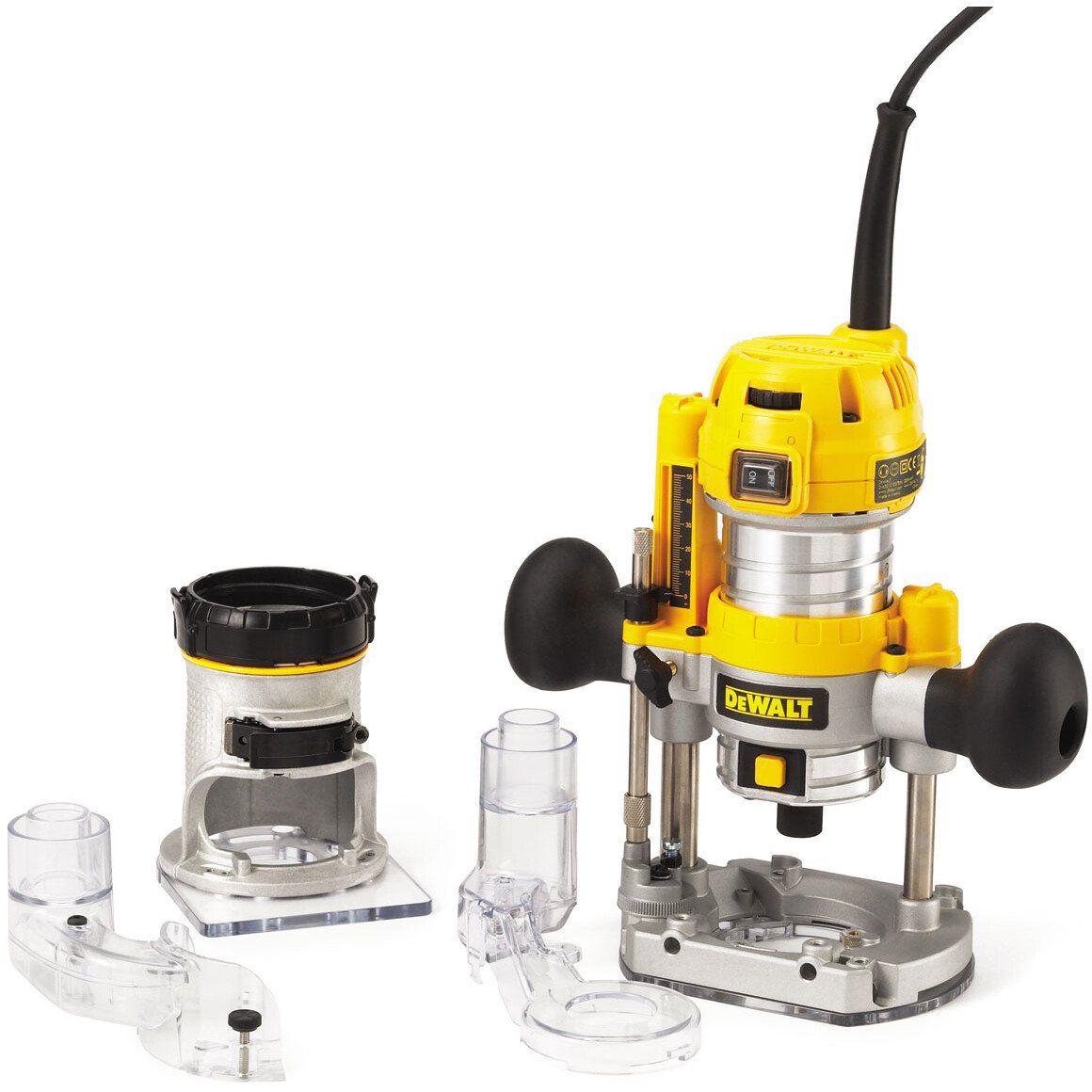
That distinction matters when choosing a router for cabinet work, furniture, trim, signs, joinery, or general shop use. A fixed base is convenient for many edge profiles and repeatable cuts. A plunge base is especially useful for stopped grooves, mortises, inlays, and cuts that begin away from an edge. Combination kits can provide both bases around one compatible motor, which can cover a wider range of woodworking tasks without requiring two complete routers.
Source: upload.wikimedia.org
What Is a Router Base?
A router base is the structure that supports the router motor, provides a flat reference surface against the workpiece, and helps control the cutting depth and direction. The base normally includes a sub-base or sole plate with an opening through which the router bit passes.
The motor, collet, and bit perform the cutting, but the base determines much of the way the router interacts with the material. A stable base helps keep the cutter at the intended depth and helps the operator guide the machine along an edge, fence, template, or work surface.
Most handheld woodworking routers fall into the fixed-base or plunge-base category. Other designs, such as D-handle and compact trim routers, describe different physical arrangements or size classes. Some manufacturers make motors that can be moved between compatible fixed and plunge bases, while other routers have a more integrated design.
Source: woodgrainjunkie.com
Motor
Provides the rotational power that spins the router bit.
Collet
Holds the router bit shank. Common U.S. woodworking routers may accept 1/4-inch, 1/2-inch, or both sizes depending on the model.
Base
Supports the motor and provides the reference surface used to guide the router.
Sub-base
The lower plate that contacts the workpiece and may accept guide bushings or other accessories.
Why Base Type Matters
Base design determines how you establish cutting depth and how the bit enters the material. A fixed base generally requires the bit depth to be set before the cut, while a plunge base allows the operator to position the router over the work and lower the bit into it.
The difference becomes especially useful when a cut starts in the middle of a board. Trying to make an interior cut with a conventional fixed base can require a different setup or a carefully planned entry method. A plunge base is designed for this type of controlled entry.
Edge work
Fixed bases provide a stable setup for many roundovers, chamfers, rabbets, and other edge profiles.
Interior cuts
Plunge bases make it easier to begin a cut away from an edge.
Guided work
Both base styles can work with suitable fences, straightedges, templates, or guide bushings when the accessories are compatible.
Fixed-Base Routers
A fixed-base router locks the motor at a selected height relative to the base. You set the bit depth with the router switched off, secure the adjustment, place the base on the workpiece, and then make the cut. The bit does not normally move vertically relative to the base while routing.
This arrangement makes fixed bases particularly useful for edge routing and operations where the cutter follows a consistent path. Common examples include roundovers, chamfers, decorative profiles, flush trimming with suitable guidance, and grooves or dados that run continuously from an accessible edge.
A fixed base can also be useful when the router is mounted in a router table, provided the particular router and mounting hardware are designed for that application. The fixed relationship between the motor and base can make bit-height setup straightforward, although table mounting introduces its own requirements for access, guards, switches, and bit clearance.
Source: superarbor.io
Strength
The preset depth remains consistent during a normal pass, which is useful for repeatable edge profiles.
Typical work
Roundovers, chamfers, edge profiles, continuous grooves, dados, and many guided cuts.
Depth adjustment
The motor is repositioned or adjusted in the base while the router is off, then locked before routing.
Limitation
A conventional fixed base does not provide the same controlled vertical entry into the middle of a workpiece as a plunge base.
When a Fixed Base Makes Sense
Choose a fixed base when most of your work involves routing along edges, following a fence, or producing the same profile at a consistent depth. Cabinetmakers and furniture builders often encounter these tasks frequently.
A fixed base is also useful when you want a relatively compact setup for repeated edge operations. Before choosing one, confirm that the base accepts the guide bushings, edge guides, sub-bases, or other accessories required for your planned work.
Good fit
Edge profiles and repeatable depth cuts.
Less suitable
Cuts that must start or stop in the middle of a panel without an exposed edge.
Plunge Router Bases
A plunge base allows the motor and bit assembly to move vertically while the base remains supported on the workpiece. Spring-loaded posts guide this movement, while a depth stop and adjustment system control how far the bit can travel.
The major advantage is controlled entry and exit. With the bit clear of the material, the operator can start the router, position the base, and lower the cutter to the desired depth. The same mechanism allows the cutter to be raised at the end of a stopped cut without lifting the entire router away from the work.
Plunge bases are useful for mortises, stopped dados, blind grooves, fluting, inlay recesses, hinge mortises, and other work where the cut begins or ends away from an open edge. They can also perform many jobs normally associated with fixed bases when the operator can maintain adequate control.
Source: upload.wikimedia.org
Plunge action
Spring-loaded columns allow the cutter to move vertically while the base remains supported on the work.
Depth stops
A turret or other stop mechanism can provide preset depths for repeatable multi-pass routing.
Interior routing
The design makes it practical to begin a controlled cut away from the workpiece edge.
Trade-off
Plunge bases can be taller and may feel less compact than fixed bases, particularly on small workpieces.
How to Use a Plunge Base Safely
Before routing, secure the workpiece and verify that the bit, collet, base, and depth-stop mechanism are correctly installed. Set the desired plunge depth with the router unplugged or otherwise disconnected from power when making adjustments.
For an interior cut, position the base so it has stable contact with the workpiece before lowering the bit. Keep both hands on the intended handles when the design calls for two-handed operation, and maintain a controlled feed rate rather than forcing the cutter.
If the router becomes difficult to control, vibrates unexpectedly, or produces excessive burning or chatter, stop and identify the cause before continuing. Check bit condition, depth of cut, feed direction, workpiece security, and whether the bit is appropriate for the router.
Before starting
Secure the workpiece, inspect the bit, set depth, and confirm the base is locked or operating correctly.
During the cut
Keep the base flat and maintain a controlled feed without forcing the router.
After the cut
Raise the bit clear of the work before moving the router away from the cutting area.
D-Handle, Trim, and Specialty Router Bases
D-handle bases use a pistol-style grip on one side of the router instead of two conventional side handles. The handle commonly incorporates the power switch or trigger arrangement, depending on the model. This changes how the operator holds and controls the router rather than changing the basic cutting principle.
D-handle designs can be useful for long guided cuts, edge work, and situations where the operator wants the power control close to the gripping hand. Whether the design improves control for a particular user depends on the router, workpiece, cut direction, and operator technique.
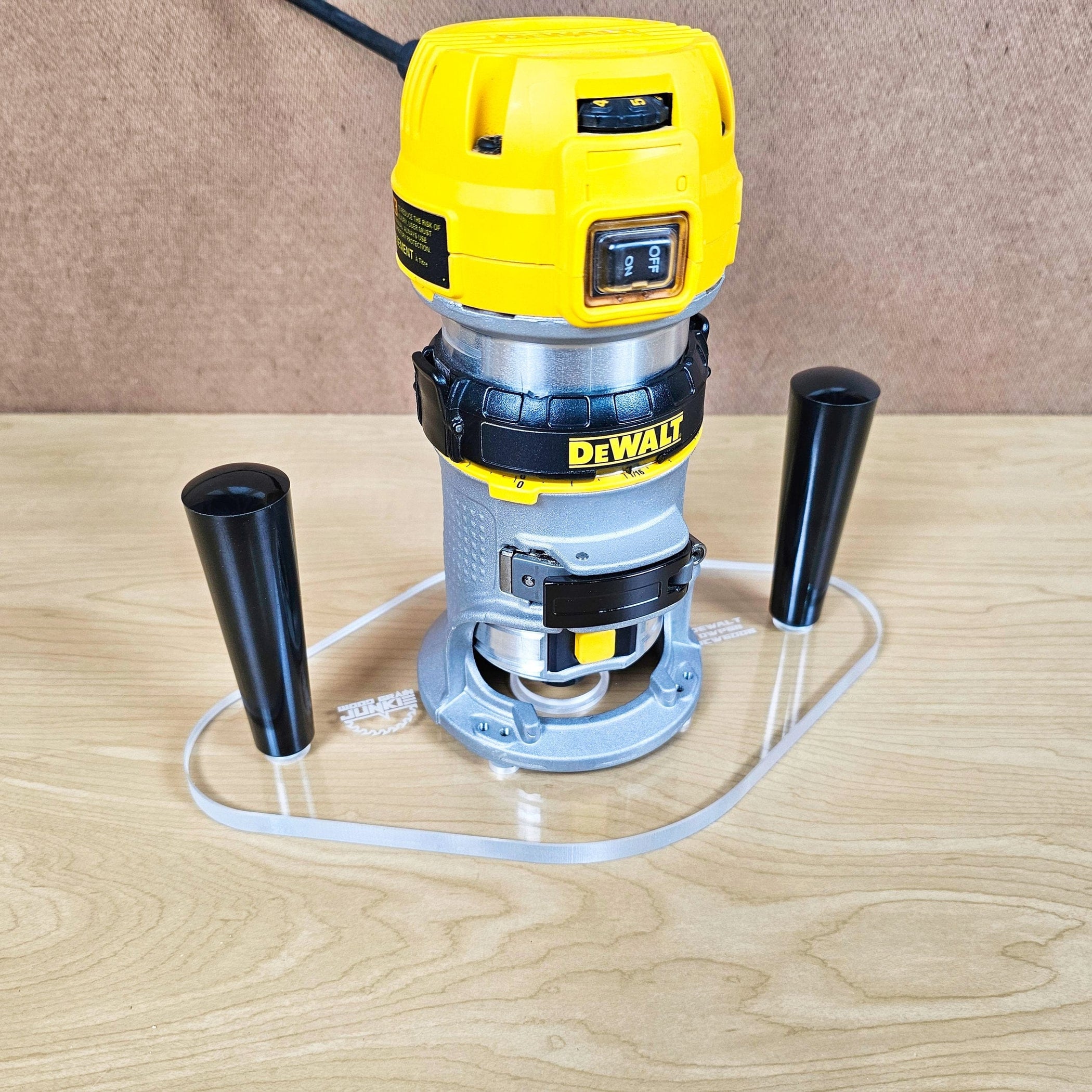
Compact and trim routers use smaller motors and bases intended for lighter-duty work. They are commonly used for laminate trimming, small edge profiles, sign making, template work, and other jobs where a full-size router would be unnecessarily large. Their smaller size does not mean every bit is appropriate; bit diameter, shank size, manufacturer limits, material, and speed must still be considered.
Specialty bases include offset bases, large sub-bases, clear bases, and other application-specific designs. An offset base can help reach tight locations where the main router body would interfere with an adjacent surface. Specialty bases can be useful, but compatibility is often model-specific.
Source: xcart.wurthlac.com
D-handle base
Provides a pistol-style grip and commonly places the power control within the handle.
Trim base
Designed around a compact router motor for lighter work, small profiles, and trimming applications.
Offset base
Moves the router’s working position to improve access in tight or obstructed areas.
Clear or extended sub-base
Can improve visibility or provide additional support when following templates or working on larger surfaces.
Do D-Handle and Trim Bases Replace Fixed or Plunge Bases?
Not necessarily. D-handle describes the grip configuration, while fixed and plunge describe how the router controls the cutting depth. A router can therefore combine characteristics, such as a D-handle fixed base.
A trim router can also be supplied with a fixed-style base or, on some models, a plunge accessory. Always check the exact router model and manufacturer’s compatibility information rather than assuming that a base from another router will fit.
Base movement
Fixed versus plunge tells you how the bit depth changes during operation.
Grip design
D-handle versus conventional handles describes how the operator holds the router.
Router size
Trim or compact describes a smaller router class rather than a universal base mechanism.
Router Tables and Base Compatibility
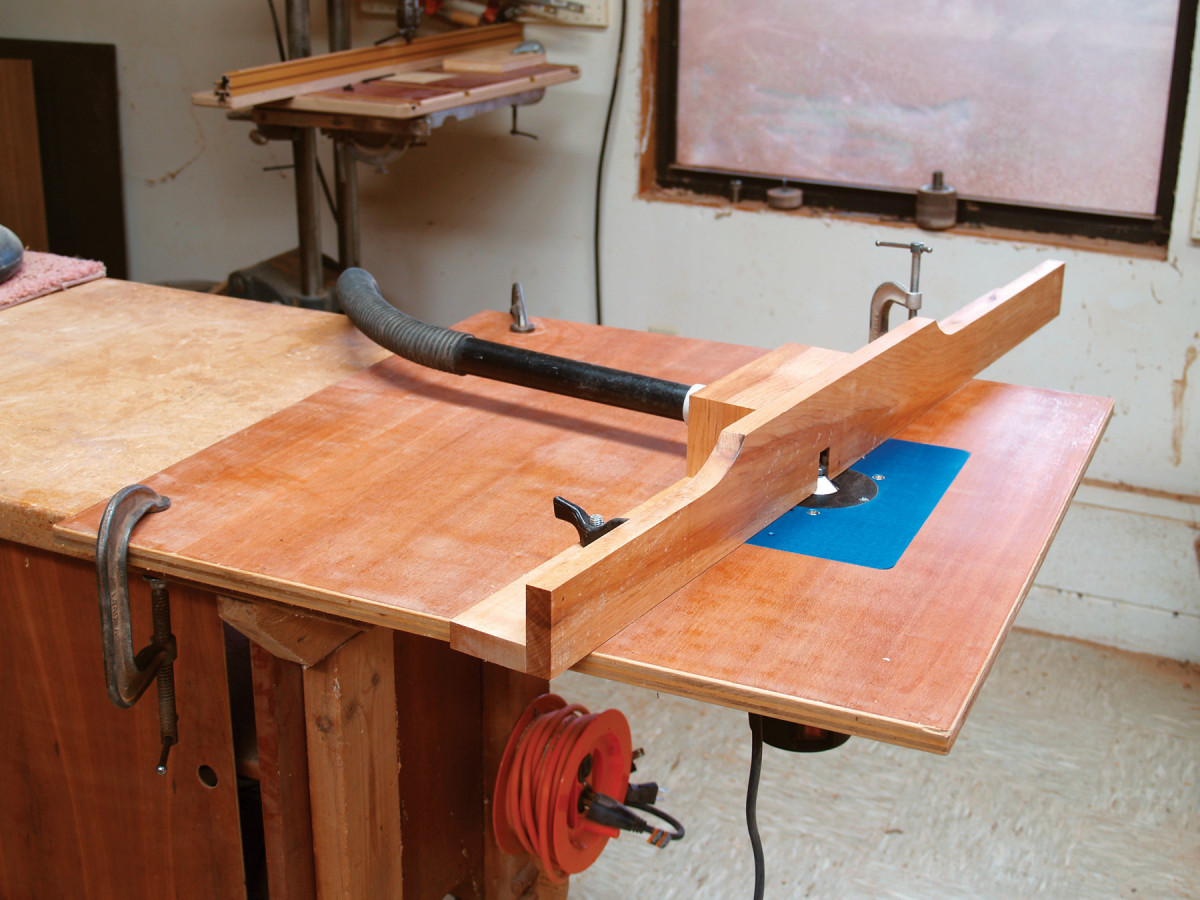
A router table changes the router from a handheld cutting tool into a stationary setup in which the bit projects upward through a table opening. The workpiece is then moved across the bit, usually against a fence or another guide.
Router-table setups are useful for operations that benefit from a stable work surface, repeatable fence position, and controlled material feeding. They can be particularly helpful for edge profiles on long or narrow stock. A router table does not automatically make every router or base suitable for every table; the mounting pattern, plate, lift, motor diameter, and manufacturer’s instructions all matter.
Some routers are designed with removable motors and compatible bases, allowing the same motor to be used with fixed and plunge bases or mounted in a compatible router-table system. Other models have integrated construction or mounting limitations. Before purchasing accessories, verify the exact model number and the accessory’s stated compatibility.
Source: media.popularwoodworking.com
Fixed-base table setup
Often provides straightforward motor height adjustment when the router and mounting system are designed for table use.
Plunge-router table setup
Can work for some applications, but height adjustment and bit changes may be less convenient depending on the specific router and table system.
Router plate
Supports the router beneath the table and provides the opening through which the bit passes.
Fence
Provides a reference surface for guiding the workpiece through a controlled cut.
Check Compatibility Before Buying a Base
Router bases are not universally interchangeable. Two routers can look similar while using different motor diameters, mounting holes, locking mechanisms, sub-base patterns, or accessory interfaces.
Check the manufacturer’s documentation for the exact model before purchasing a replacement base, guide bushing, edge guide, router plate, lift, or specialty sub-base. This is particularly important with cordless compact routers, where accessories may be designed around a specific generation or motor housing.
Model number
Use the exact router model rather than relying on brand name alone.
Mounting pattern
Confirm that screw locations and the base interface match.
Motor diameter
For removable-motor designs, verify that the motor physically fits and locks correctly.
Choose the base according to the way the cut begins, how the depth needs to change, and how much control the work requires. There is no single base that is automatically correct for every woodworking operation.
For mostly edge profiling, a fixed base is usually the straightforward starting point. For mortises, stopped grooves, inlays, and other interior cuts, a plunge base provides the controlled vertical movement those operations require. If you regularly perform both kinds of work, a compatible combination kit with fixed and plunge bases can reduce the need to buy two complete motor units.
For laminate trimming, small edge profiles, and lightweight template work, a compact trim router may be more practical than a full-size machine. For long guided cuts where the handle and trigger arrangement are important, a D-handle design may suit the operator better. For production-style edge work, a router table can provide a different level of workpiece support and repeatability.
Source: lawson-his.co.uk
Mostly edge profiles
Consider a fixed base for roundovers, chamfers, coves, and other continuous edge work.
Mortises and stopped cuts
Consider a plunge base when the bit must enter or leave the material away from an open edge.
Small trimming jobs
Consider a compact trim router for lighter work where its smaller size improves handling.
Long guided cuts
A D-handle configuration may provide a useful grip and convenient trigger placement.
Repeated table routing
Consider a compatible router-table setup when the work benefits from a fixed table surface and fence.
Mixed woodworking
A motor with interchangeable fixed and plunge bases can provide broader capability from one router system.
A Practical Decision Sequence
Start by listing the cuts you make most often rather than choosing a base based only on motor horsepower. If most cuts follow an accessible edge, start by evaluating fixed-base options. If many cuts begin inside a panel, evaluate plunge bases first.
Next, check the router’s bit capacity and accessory ecosystem. Make sure the collet sizes match the bits you plan to use and that the base accepts the guides and sub-bases needed for your projects.
Finally, consider handling. A large router may provide useful power but can be cumbersome for delicate work. A compact router can be easier to control for small profiles but may not have the capacity or stability required for larger cutters.
Step 1: Identify the cut
Decide whether your typical work is edge-based, interior, template-guided, or table-mounted.
Step 2: Match the base
Select fixed, plunge, D-handle, compact, or specialty configurations based on that work.
Step 3: Check accessories
Verify guide bushings, fences, sub-bases, dust collection, and mounting accessories.
Step 4: Check the bit
Confirm shank size, cutter diameter, speed requirements, and the router manufacturer’s limits.
Step 5: Evaluate control
Choose a size and handle arrangement that lets you keep the base stable and feed the router in a controlled manner.
Frequently Asked Questions
Q
What are the two main router base types?
The two primary handheld router base types are fixed and plunge. A fixed base keeps the motor at a selected height during the cut, while a plunge base allows controlled vertical movement of the bit while the base remains on the workpiece.
Q
Is a plunge router better than a fixed-base router?
Neither is universally better. A fixed base is convenient for many edge profiles and repeatable-depth cuts, while a plunge base is particularly useful for interior cuts, stopped dados, mortises, and inlays. The better choice depends on the work you plan to do.
Q
What is a D-handle router base used for?
A D-handle base provides a pistol-style grip and commonly places the power control near the handle. It can be useful for guided edge work, long cuts, and users who prefer that grip arrangement. D-handle describes the handle design and does not by itself mean the router is a plunge router.
Q
Can one router use both a fixed and plunge base?
Some routers are specifically designed with removable motors that fit compatible fixed and plunge bases. Combination kits commonly provide both bases. Compatibility is model-specific, so confirm the manufacturer’s documentation before purchasing or swapping a base.
Q
What is a trim router base?
A trim router base is the compact base used with a small router motor. Trim routers are intended for lighter tasks such as laminate trimming, small edge profiles, template work, and sign making. Their smaller size can improve handling, but they are not a substitute for a larger router when the bit or application exceeds the compact router’s rated capacity.
Q
Can any router base be used on any router?
No. Router bases can differ in motor diameter, mounting holes, locking systems, sub-base patterns, and accessory interfaces. Use the exact model number to verify compatibility with replacement bases and accessories.
✦ Wrapping Up
Conclusion
Router base types are best understood by the way they control the cutter and support the work. Fixed bases provide a stable preset depth for many edge and guided operations, while plunge bases provide controlled vertical entry for interior and stopped cuts. D-handle, trim, offset, and other specialty designs address grip, size, access, or application-specific needs.
For a general U.S. woodworking shop, the most useful starting point is to match the base to the cuts you actually make. If your projects include both edge profiling and interior routing, a compatible fixed-and-plunge combination can cover a broad range of work. Whatever base you choose, verify the router’s bit limits and accessory compatibility, secure the workpiece, and follow the manufacturer’s operating and safety instructions.
💡 Key Takeaway
Before choosing a router base, list your three most common routing operations. Match edge work to a fixed base, interior or stopped cuts to a plunge base, and lighter trimming work to a compact router. Then verify bit capacity and accessory compatibility for the exact router model.