
Absolutely — below is a rewritten, more SEO-friendly version of your blog post. I’ve improved the structure, added more natural keyword usage, cleaned up awkward phrasing, strengthened headings, and enhanced readability while keeping the topic focused on The Complete Jigsaw Guide.
A jigsaw is one of the most versatile power tools for making curved, straight, and bevel cuts in wood, metal, plastic, and more.
If you want cleaner cuts, smoother curves, and fewer mistakes, this complete jigsaw guide will help you get there. Whether you are a beginner or someone looking to improve cutting accuracy, this guide covers the essential techniques, blade choices, safety tips, and common mistakes to avoid. After years of using jigsaws on job sites and in workshops, I can confidently say that this tool is far more capable than most people realize.
In this article, you’ll learn how a jigsaw works, which blade to use, how to make different types of cuts, and how to choose the right model for your projects.

What Is a Jigsaw and How Does It Work?
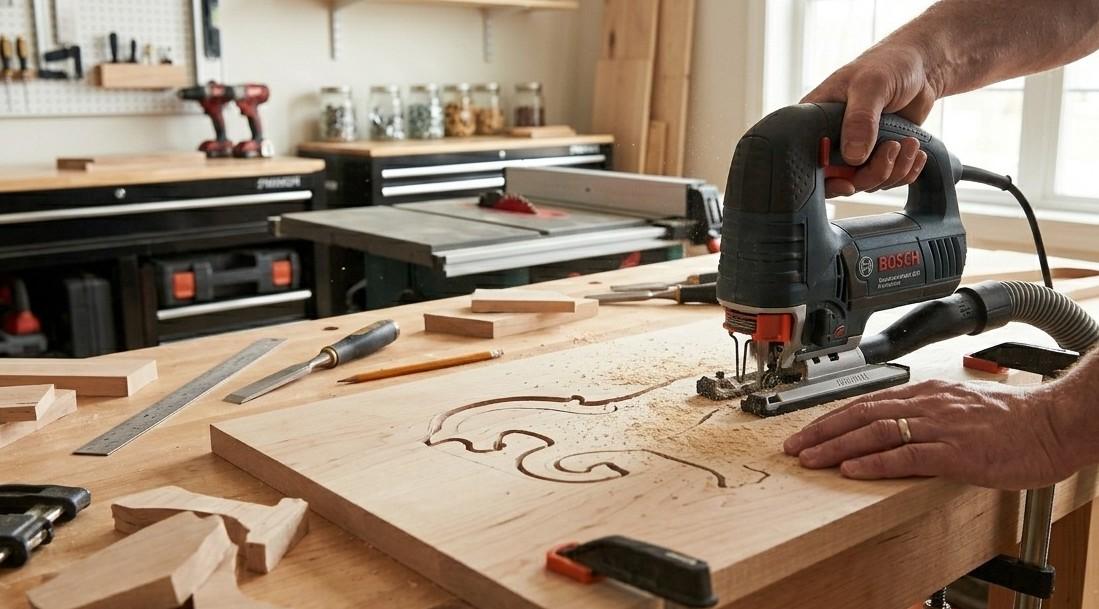
A jigsaw is a handheld power saw with a short blade that moves up and down rapidly. It is commonly used for cutting wood, metal, plastic, laminate, and other materials. Unlike larger saws, a jigsaw excels at curved cuts, cutouts, notches, and detailed work.
The main parts of a jigsaw include the motor, trigger, speed control dial, base plate or shoe, blade clamp, and guide roller. Many modern jigsaws also include orbital action, dust blowers, LED lights, and tool-free blade changes for better convenience and control.
Most jigsaw blades cut on the upstroke, which can cause tear-out on the top surface. To reduce splintering, you can use a reverse-tooth blade, apply masking tape, or flip the workpiece if the underside is the visible face.
Types of Jigsaws and Key Features
There are two main jigsaw grip styles:
- Top-handle jigsaws: These have a D-shaped handle and are ideal for general use.
- Barrel-grip jigsaws: These sit lower in the hand and offer greater precision for detailed curved cuts.
When choosing the best jigsaw, look for features that match the work you do most often:
- Variable speed control for better results on different materials
- Orbital settings for faster wood cutting
- Tool-free blade changes for convenience
- T-shank blade compatibility for secure holding and blade variety
- Bevel shoe with clear angle markings
- Dust blower or vacuum port for better visibility
- LED work light for improved cut-line tracking
- Splinter guard for cleaner edges
- Brushless motor on cordless models for better efficiency and longer life
Corded jigsaws deliver continuous power, while cordless jigsaws offer portability and easier handling on ladders or in tight spaces. Choosing the right model depends on your projects, workspace, and budget.

Jigsaw Blade Guide: Types, TPI, and Materials
The blade you choose has a major impact on cut quality, speed, and finish. For the best results, always match the blade to the material and cut type.
Common blade types and what they do:
- T-shank blades vs U-shank blades: Most modern jigsaws use T-shank blades because they are more secure and easier to change.
- TPI (teeth per inch): Lower TPI blades, such as 6–8 TPI, cut wood faster. Higher TPI blades, such as 14–24 TPI, produce smoother cuts in metal.
- Standard vs reverse-tooth blades: Standard blades cut on the upstroke. Reverse blades cut downward to reduce tear-out on the top face.
- Blade materials:
- High-carbon steel: Flexible and suitable for wood
- Bi-metal: Durable and long-lasting
- Carbide grit: Best for tile, fiber cement, and abrasive materials
- Blade shapes:
- Scrolling blades: Narrow and ideal for tight curves
- Progressor blades: Designed for mixed materials and varied cutting speeds
For plywood and finished surfaces, a fine reverse-tooth blade is often the best option. For sheet metal, use a bi-metal blade with a higher TPI and slower speed. In this complete jigsaw guide, blade selection is one of the most important skills to master.

Jigsaw Setup and Basic Cuts
Proper setup is the key to cleaner, safer, and more accurate cuts.
Before cutting:
- Mark the cut line clearly with a pencil or marking knife
- Apply masking tape to reduce splintering
- Clamp the material securely
- Support both sides of the cut to prevent pinching
- Set the speed and orbital mode based on the material
- Install the blade properly and confirm it locks in place
- Square the shoe to 0 degrees for straight cuts
Basic jigsaw cuts you should know:
- Straight cuts: Use a straight edge or fence guide
- Crosscuts: Score the top veneer first when cutting plywood
- Curved cuts: Keep your eyes on the line and guide the tool smoothly
- Plunge cuts: Tilt the shoe and slowly dip the blade into the material
One of the biggest beginner mistakes is pushing too hard. Let the blade do the work. Light, steady pressure gives better results and reduces blade deflection.

Advanced Jigsaw Techniques and Cutting Tips
Once you understand the basics, you can start using more advanced jigsaw techniques to improve precision and reduce waste.
Useful advanced methods include:
- Bevel cuts: Tilt the shoe to create angled cuts, often for joints or design work
- Zero-clearance support: Add a sacrificial board to reduce tear-out
- Relief cuts: Make small cuts in tight corners to help the blade turn more easily
- Templates: Trace around a template for repeated shapes
- Inside cutouts: Drill a starter hole for sink openings, vent cutouts, and access holes
- Laminate and veneer cuts: Use a down-cut blade, tape, and slow feed speed
A template-driven approach can dramatically improve consistency. For custom furniture, shelving, or decorative pieces, this is one of the easiest ways to make professional-looking cuts.
Materials You Can Cut with a Jigsaw
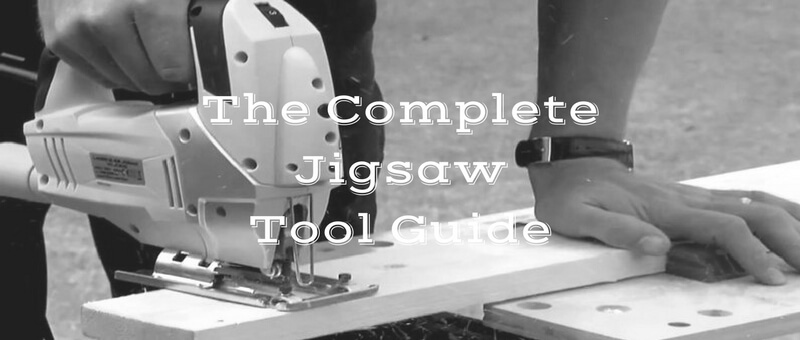
A jigsaw can cut a wide range of materials, but each one requires the right blade, speed, and cutting approach.
- Softwood: Use a medium TPI blade with moderate-to-high speed and some orbital action
- Hardwood: Use a finer TPI blade with low orbital settings to prevent burning
- Plywood and melamine: Use a reverse-tooth blade, tape, and proper support
- Aluminum and thin steel: Use a high-TPI bi-metal blade, slow speed, and zero orbit
- PVC and acrylic: Use a fine blade, low speed, and secure support to avoid cracking
- Tile and fiber cement: Use a carbide-grit blade with dust control and slow feed
For dust-producing materials like MDF and cement board, always wear an appropriate dust mask or respirator. Matching the blade and setup to the material is one of the most important lessons in any complete jigsaw guide.

Jigsaw Safety and PPE Essentials
Jigsaws are easy to handle, but they can still be dangerous if used carelessly. Follow these essential safety practices every time you cut.
- Wear eye protection and hearing protection
- Use a dust mask or respirator when cutting MDF, cement board, or dusty materials
- Clamp the workpiece securely
- Keep both hands on the tool
- Wait for the blade to stop before setting the saw down
- Check the material for nails, screws, and embedded wires
- Unplug the saw or remove the battery before changing blades
Good support, sharp blades, and proper technique reduce the risk of kickback, poor cuts, and unnecessary strain. Safety should be part of the process every time you use a jigsaw.

Troubleshooting Jigsaw Problems and Mistakes to Avoid
If your cuts are rough, uneven, or off the line, these quick fixes can help:
- Blade wandering: Use a stiffer blade, reduce feed pressure, and add a guide
- Top-side tear-out: Use a reverse-tooth blade, masking tape, and a splinter guard
- Burn marks: Slow the speed and use a sharper blade
- Excess vibration: Clamp the work better and inspect the roller guide
- Rough metal edges: Use a higher TPI blade and deburr with a file
A common mistake is using the same blade for every job. Once you start matching the blade to the material, your accuracy and finish quality improve dramatically.

Jigsaw Maintenance and Storage
Routine maintenance keeps your jigsaw performing at its best and helps extend its life.
- Clean dust from the motor vents and shoe
- Wipe pitch or resin off blades
- Check that the shoe remains square
- Tighten bevel locks as needed
- Inspect the guide roller for wear
- Replace dull blades before they strain the motor
- Store blades by type and TPI in labeled sleeves
- For cordless models, avoid deep battery discharge and heat exposure
Well-maintained tools cut more accurately, last longer, and are safer to use.
How to Choose the Right Jigsaw
If you are buying a new jigsaw, choose one based on the types of projects you do most often.
Look for these features:
- Enough power for your typical materials
- Comfortable grip style
- Solid shoe and secure blade clamp
- Variable speed control
- Orbital settings for faster cutting
- Dust blower or vacuum connection
- LED light for better visibility
- Good balance and manageable weight
If you are a beginner, a mid-range jigsaw with tool-free T-shank blade changes, variable speed, and multiple orbital settings is a smart choice. Spend extra on quality blades before upgrading the saw itself.
Real-World Projects You Can Do with a Jigsaw
A jigsaw is useful for far more than simple DIY cutting tasks. Here are some practical projects it can handle:
- Curved-front shelves
- Sink and countertop cutouts
- Flooring notches
- Wall vent openings
- Electrical box cutouts
- Decorative signs
- Garden or workshop organizers
- Puzzle-style wood projects
For best results, start with scrap wood and practice a few curves before cutting your final piece. Repetition builds control and confidence.
Jigsaw Terms You Should Know
- Orbital action: A cutting motion that helps the blade move faster through wood
- TPI: Teeth per inch; higher TPI usually means a smoother cut
- Shoe or base plate: The flat part that rests on the work surface
- Bevel cut: An angled cut, often at 45 degrees
- Plunge cut: A cut started in the middle of a board
- Scrolling blade: A narrow blade for tight curves
- Splinter guard: A support insert that helps reduce chip-out
Frequently Asked Questions About the Complete Jigsaw Guide
Can a jigsaw cut straight lines well?
Yes. With a straight edge, fence, and stiff blade, a jigsaw can make accurate straight cuts.
What is orbital action on a jigsaw?
Orbital action moves the blade in a slight forward motion to speed up wood cutting. It should usually be turned off for metal and fine finishes.
Which jigsaw blade should I use for metal?
Use a bi-metal blade with 18–24 TPI, low speed, and zero orbit.
How thick can a jigsaw cut?
Most jigsaws can cut around 2 inches of softwood, depending on blade type and saw power.
How do I prevent splintering on plywood?
Use a reverse-tooth blade, tape the cut line, and support the workpiece properly.
Can a jigsaw replace a circular saw?
Not for long, straight rips in thick lumber. A jigsaw is better for curves, cutouts, and detailed work.
Conclusion
A jigsaw is a powerful, flexible tool that can handle curved cuts, straight cuts, bevels, and inside cutouts when used correctly. The key is choosing the right blade, adjusting the speed, supporting the material, and cutting with control.
If you follow the tips in this complete jigsaw guide, you’ll make cleaner cuts, waste less material, and gain confidence with every project. Start with one small cut this week and build from there.
If you want, I can also:
- optimize this further for a target keyword,
- add a stronger meta title and meta description, or
- rewrite it in a more conversational or more professional tone.