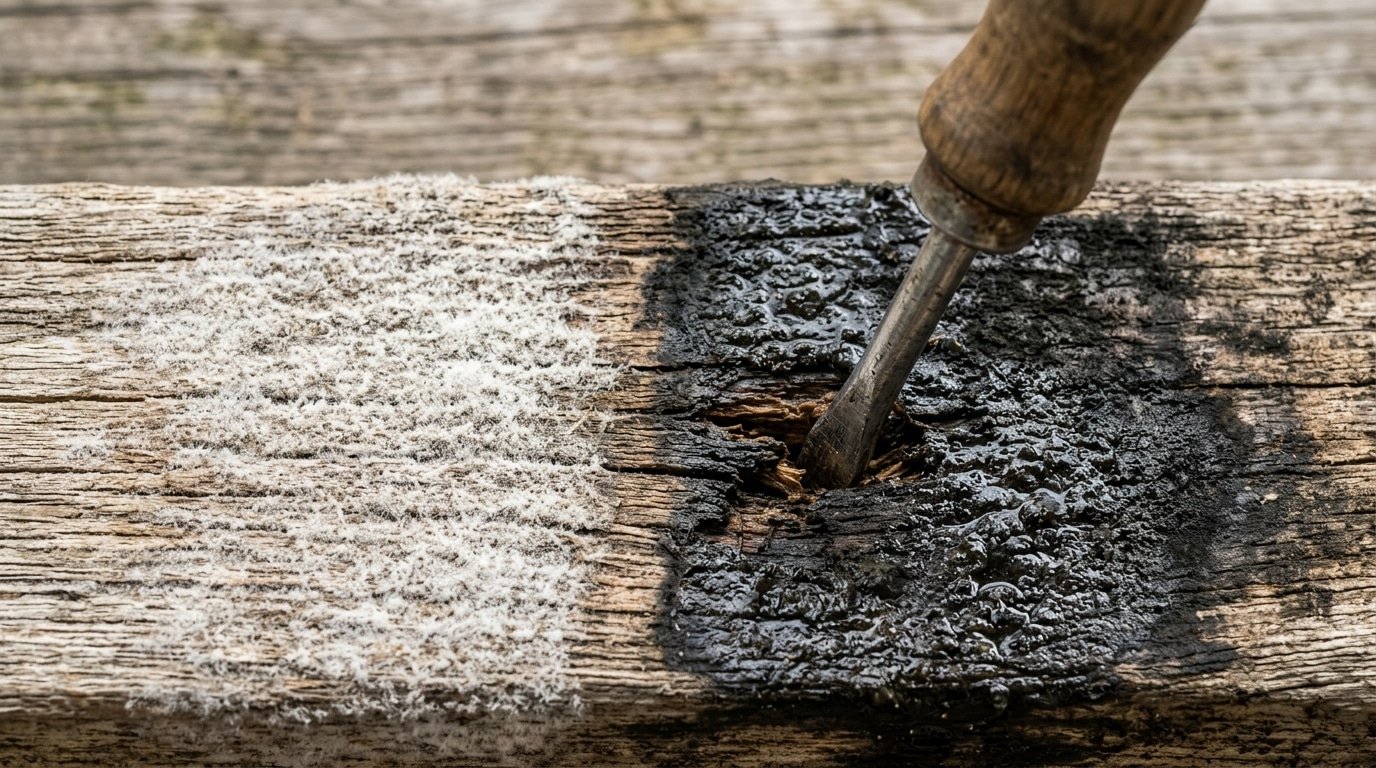
Remove mold from sound wood by cleaning the surface with mild detergent and water, then drying it fully. Fix the moisture source first. Replace wood that is badly damaged or cannot be cleaned safely.
Across the United States, mold on wood is a common problem in basements, bathrooms, garages, crawl spaces, and homes with roof or plumbing leaks. Warm, damp weather can make the problem worse. Floods and poor airflow can also leave wood wet long enough for mold to grow. A small patch may look harmless, but moisture can hide behind the surface.
Wood mold removal starts with two jobs. First, stop the water or damp air that feeds the growth. Next, clean the affected wood and dry it well. This order matters because mold can return when moisture remains. The U.S. Environmental Protection Agency also advises cleaning mold and fixing the water problem rather than treating the visible stain alone.
Not every moldy wood item needs to go in the trash. Sound wood with light surface growth may be cleaned. Painted, sealed, or finished wood can often be wiped with mild detergent and water. Raw wood needs more care because mold can enter its pores and cracks. Deep growth, soft wood, large affected areas, or hidden damage may call for a trained mold cleanup professional.
This guide explains how to spot mold, choose a safe cleaning method, protect yourself, and decide when to repair or replace wood. It also covers common mistakes, drying methods, and ways to stop the growth from coming back. The goal is to leave the wood clean, dry, and safe to use.
Source: pinterest.com
What Causes Mold to Grow on Wood?
Mold grows when spores land on a damp surface and find enough moisture to grow. Wood gives mold a food source because it contains organic matter. Dust, dirt, and other material on the surface can also feed growth. Once moisture stays in the wood, mold may spread across the surface or into small cracks.
Wood does not need to sit in standing water to develop mold. A slow leak, wet insulation, poor airflow, or repeated condensation may be enough. A damp basement can also affect stored wood, furniture, shelves, and floor joists.
Mold growth often begins before a homeowner sees a clear stain. The surface may look normal while the back of a board or the area behind a wall stays wet. This is why a musty smell or a history of water damage deserves attention.
Source: artsystemsfl.com
Roof and plumbing leaks
Water from a damaged roof, pipe, sink, or appliance can soak wood floors, wall frames, cabinets, and ceiling supports.
High indoor humidity
Damp indoor air can lead to condensation on wood near windows, exterior walls, and cold surfaces.
Flood damage
Floodwater can leave wood wet and may bring dirt, sewage, and other harmful material into a home.
Poor ventilation
Bathrooms, closets, basements, and crawl spaces may hold damp air when fresh air cannot move through them.
Wet items in storage
Damp furniture, firewood, boxes, and lumber can develop mold when stored in a closed or humid space.
Why Does Mold Return After Cleaning?
Mold returns when the conditions that caused it remain. For example, wiping a moldy shelf will not solve a roof leak above it. The shelf may look clean for a short time, but new growth can appear as moisture builds again.
Mold spores are present in normal indoor and outdoor air. You cannot remove every spore from a home. The useful goal is to stop active growth by keeping wood and nearby materials dry. A clean surface and a repaired water source work together.
Hidden moisture
Water may remain behind a wall, under flooring, or inside a wood joint.
Incomplete cleaning
A quick wipe may leave mold and dirty material in pores, cracks, and joints.
Ongoing condensation
Cold wood can collect moisture when warm, humid air reaches its surface.
How to Identify Mold on Wood
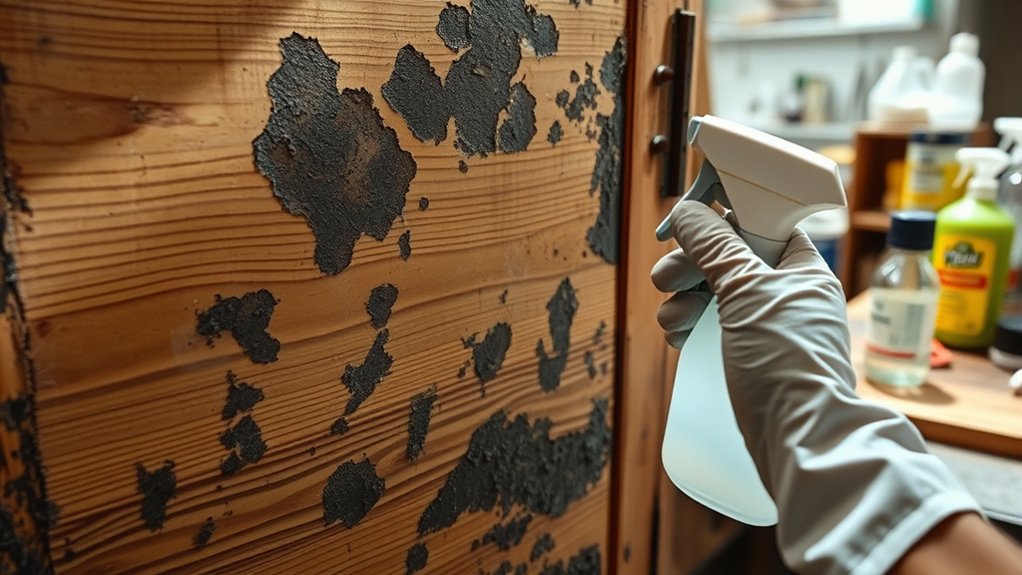
Mold on wood may appear as white, green, gray, brown, or black spots. It can look fuzzy, powdery, slimy, or flat. The color alone cannot tell you what type of mold is present or how harmful it may be.
A musty smell is another clue. You may notice it in a basement, closet, cabinet, or room with poor airflow. If the smell remains after you clean the visible surface, mold or moisture may be hidden nearby.
Do not assume every dark mark is mold. Dirt, old stains, paint marks, and natural wood patterns can look similar. Wood rot is also different from surface mold. Rot can break down the wood itself and weaken its strength.
Source: moldmasterpro.com
Visible spots
Look for patches, dots, fuzzy areas, or uneven growth on the wood surface.
Musty odor
A damp, earthy smell can point to hidden moisture or mold growth.
Soft or weak wood
Wood that feels spongy, breaks apart, or crumbles may have decay rather than simple surface mold.
Peeling finish
Bubbling paint, lifting varnish, or loose coating may point to moisture trapped below the finish.
Repeated dampness
A wet feel, water marks, or condensation can show that the wood has an ongoing moisture problem.
Mold Versus Wood Rot
Surface mold often grows on the outside of wood. It may leave stains, but the wood can still feel firm. Wood rot happens when decay fungi break down the wood structure. This damage can reduce strength and make a board unsafe to support weight.
A small mold patch on a firm table may be a cleaning job. A soft floor joist or crumbling window frame is a repair issue. Do not sand or paint over damaged wood and assume it is sound. A qualified carpenter or building professional should check structural wood when its strength is in doubt.
Surface mold
Often appears as spots or a film while the wood remains firm.
Wood rot
May cause soft areas, cracks, crumbling, loss of shape, or a spongy feel.
Old water stains
May remain after the wood has dried and the mold has been removed. A stain alone does not prove active growth.
Can You Identify Toxic Mold by Its Color?
No. Black mold is not a reliable visual diagnosis of a specific species or health risk. Many types of mold can look dark, and some molds that are not black can also cause health effects. Color, smell, and appearance cannot establish toxicity.
The practical response is the same for visible indoor mold: limit exposure, remove the growth safely, and fix the moisture source. Most homeowners do not need a mold species test to decide that visible growth should be addressed.
Do not judge by color
A black patch does not prove that a particular toxic mold is present.
Focus on moisture
Find the leak or damp condition that supports growth.
When Can You Remove Mold From Wood Yourself?
You may be able to clean a small area of mold on sound wood if the water source is known and fixed, the affected area is easy to reach, and you can protect yourself from exposure. The EPA says that many mold problems covering less than about 10 square feet can be handled by homeowners. This is roughly a patch measuring 3 feet by 3 feet.
That size is a general guide, not a guarantee that every small job is safe. A small patch caused by sewage, floodwater, or hidden wall damage can need professional help. The type of wood, location, amount of moisture, and health of the people in the home also matter.
Do not handle mold cleanup if you have asthma, chronic lung disease, a mold allergy, or a weakened immune system. The CDC advises people in these groups to avoid taking part in mold cleanup. Children should also stay away from the work area.
Source: storage.googleapis.com
A small, isolated patch
The growth is limited, visible, and away from hidden wall spaces or building systems.
Firm wood
The wood has no clear signs of rot, deep decay, or major damage.
A known moisture source
You can repair the leak, improve airflow, or correct the cause of condensation.
Suitable protection
You have the right respirator, gloves, goggles, and a safe way to clean and dry the area.
When Should You Hire a Mold Removal Professional?
Hire a trained mold remediation professional when the affected area is larger than about 10 square feet, the damage is widespread, or the source is not clear. You should also seek help when mold is hidden behind walls, under floors, or inside a ceiling cavity.
Floodwater and sewage create added risks. A professional who has experience with contaminated water damage can assess the affected wood and nearby materials. Do not use ordinary household cleaning steps on materials that may have been exposed to sewage or chemical pollutants.
If mold may be inside an HVAC system, do not run the system until the issue has been assessed. It may spread mold and contaminated dust through the home. Ask a qualified HVAC or mold remediation professional to inspect the affected system.
Large growth
More than about 10 square feet of mold is a reason to consult professional remediation guidance.
Hidden growth
A strong musty smell with no visible source may point to mold behind wood panels or inside walls.
Structural damage
Soft floor joists, beams, roof framing, or support posts need a qualified assessment.
Contaminated water
Sewage and floodwater damage require special protection and cleanup methods.
Health concerns
People with respiratory conditions or weakened immune systems should avoid the cleanup area.
Tools and Safety Gear Needed for Wood Mold Removal
Prepare your tools and safety gear before disturbing mold. Scrubbing, wiping, and moving moldy wood can send spores and dust into the air. Good protection helps reduce contact with your eyes, skin, and lungs.
For a small cleanup, the CDC recommends at least a NIOSH-approved N95 respirator, protective gloves, and goggles that seal around the eyes. A loose face mask or open-vent safety glasses do not provide the same protection. Follow the respirator maker’s instructions to get a proper fit.
Keep children, pets, and other people away from the work area. Open doors or windows when this can be done without spreading mold through the home. Do not direct a fan across an active mold patch, since moving air may spread spores and dust.
Source: livingstylebliss.com
N95 respirator
Use a NIOSH-approved respirator that fits your face and is worn as directed.
Protective gloves
Use rubber, nitrile, vinyl, or other suitable protective gloves.
Sealed goggles
Choose goggles that keep small particles away from your eyes.
Cleaning cloths
Use disposable cloths or materials that can be safely cleaned after the job.
Mild detergent
A basic household detergent and clean water are often enough for suitable wood surfaces.
Plastic bags
Use strong bags to contain used cloths and small contaminated waste.
Drying equipment
A dehumidifier and suitable ventilation can help dry the wood and nearby area.
Protect the Area Before Cleaning
Remove clean items from the immediate work area. Cover nearby furniture and surfaces that cannot be moved. Keep the work zone separate from rooms used by other people, where practical.
For a small job, avoid aggressive brushing or sanding. These actions can spread contaminated dust. If the mold covers a large area or the work involves removing wall panels, flooring, or insulation, use a trained remediation team with suitable containment.
Clear nearby items
Move clean belongings away from the affected wood before work begins.
Protect nearby surfaces
Use suitable plastic covering where dust or debris could settle.
Keep people away
Do not allow children, pets, or vulnerable people into the cleanup area.
Step-by-Step Guide to Removing Mold From Wood
The safest cleaning method depends on the wood finish and the depth of the damage. Finished wood is often easier to clean than raw wood because the coating creates a barrier. Still, water can enter through cracks, joints, worn finishes, and damaged edges.
Start by checking the material and the moisture source. If the wood is sound and the growth is small, a careful detergent-and-water cleaning may work. If the wood is soft, deeply stained, or damaged, stop and seek professional advice before removing material.
The EPA lists damp wiping, scrubbing, and suitable HEPA vacuuming among cleanup methods for wood surfaces. A HEPA vacuum is best used for final cleanup after the material has been dried and the moldy debris has been removed. Do not use an ordinary household vacuum on dry mold.
Source: oceanplayer.com
Step 1: Find the moisture source
Check for plumbing leaks, roof damage, water entry, condensation, and poor ventilation. Repair the source before cleaning.
Step 2: Check the wood
Look for soft spots, swelling, loose coatings, deep cracks, and signs of decay. Stop if the wood may have lost its strength.
Step 3: Put on safety gear
Wear a properly fitted N95 respirator, gloves, and sealed goggles before touching the affected surface.
Step 4: Prepare mild cleaning solution
Mix a small amount of mild household detergent with clean water. Follow the detergent label and avoid making the wood overly wet.
Step 5: Wipe or scrub gently
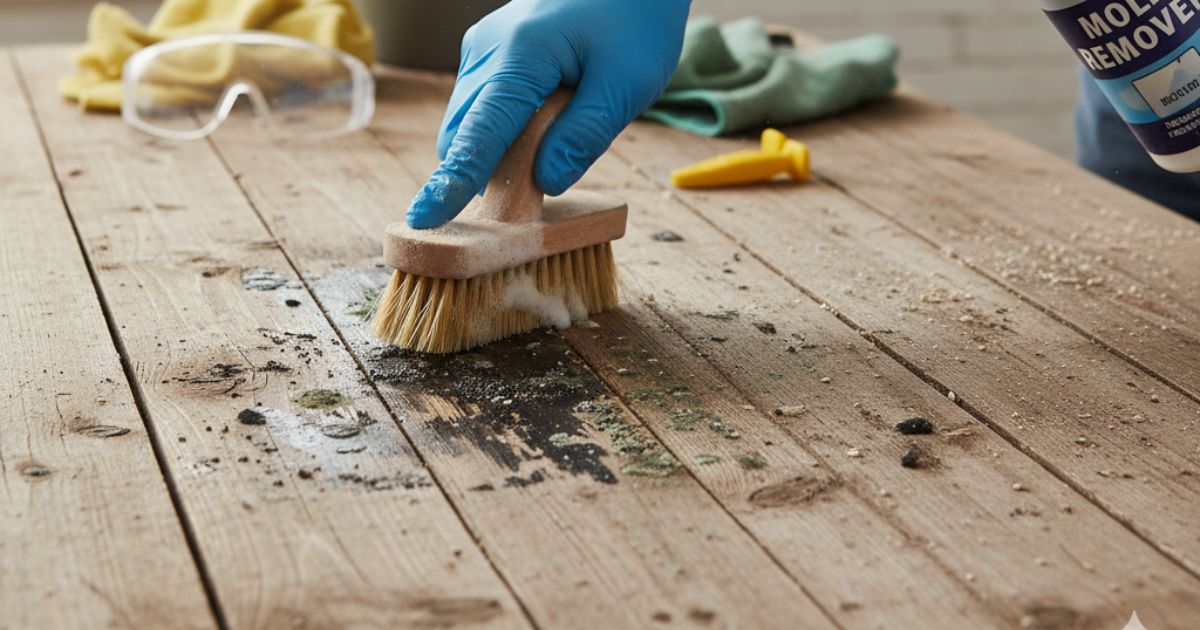
Use a damp cloth or soft brush to remove surface growth. Work carefully and avoid splashing or spreading dirty water.
Step 6: Remove cleaning residue
Use a clean, lightly damp cloth to remove detergent residue where needed. Avoid soaking the wood.
Step 7: Dry the wood
Use suitable airflow and a dehumidifier to dry the wood and the surrounding space. Check joints, edges, and the back of the material.
Step 8: Check the result
Look for remaining growth, damp areas, and musty odors. Arrange further inspection if the mold or smell remains.
How to Clean Mold From Finished or Sealed Wood
Finished wood includes many cabinets, tables, doors, shelves, and trim pieces. Its paint, varnish, or sealant can help protect the wood below. If the finish is sound, begin with a damp cloth and mild detergent.
Wipe a small test area first. This helps you check whether the cleaner changes the color or shine of the finish. Clean the affected area with gentle strokes and use as little water as possible.
Do not let water sit around joints, screw holes, or damaged edges. Dry the surface with a clean cloth after wiping. If the coating is cracked or peeling, moisture may have reached the wood underneath.
Test first
Check the cleaner on a hidden spot to avoid damage to the finish.
Use gentle pressure
Avoid rough pads and hard scrubbing that can remove paint or varnish.
Dry at once
Do not leave standing water on the surface or inside joints.
How to Clean Mold From Unfinished Wood
Raw or unfinished wood needs extra care because it absorbs water more easily. Mold may grow in pores and small gaps that are hard to reach with a cloth. Light surface growth on firm wood may be cleaned, but deep growth can be difficult to remove fully.
Use a lightly damp cloth or a soft brush with a mild detergent solution. Work in small areas and avoid soaking the board. Remove loosened material without aggressive dry brushing or sanding.
Allow the wood to dry fully before you apply a finish or return it to storage. If growth remains inside cracks or the wood stays musty, ask a remediation professional to assess it. Do not cover unresolved growth with paint or sealant.
Limit water
Use a damp cloth rather than pouring water over the wood.
Avoid dry sanding
Sanding can send mold-contaminated dust into the air.
Check the depth
Deep stains, soft areas, or growth inside joints may need professional treatment.
How to Remove Mold From Wood Furniture
Wood furniture can often be cleaned if the mold is limited to the surface and the frame remains sound. Move the item away from damp walls and inspect the underside, back, drawers, and legs. Mold often grows where air cannot move freely.
Clean a small affected area with mild detergent and a damp cloth. Check the maker’s care instructions when the furniture has a delicate finish or special coating. Dry the piece before returning it to use.
Valuable antiques, family heirlooms, and items with delicate finishes may need a furniture restoration specialist. Strong cleaners and rough scrubbing can remove original finishes and lower the item’s value.
Inspect hidden parts
Check the back, bottom, drawer spaces, and joints for mold or dampness.
Protect the finish
Use a mild cleaner and test it on a hidden area first.
Dry before storage
Do not place damp furniture against a wall or inside a closed cabinet.
Which Cleaner Is Best for Moldy Wood?
Mild detergent and water are a practical starting point for suitable wood surfaces. They help loosen and remove mold and dirt without relying on a harsh chemical treatment. The cleaning method matters as much as the product because mold and contaminated material must be physically removed.
The best choice depends on whether the wood is finished, raw, painted, or damaged. Always check the cleaner label and test it on a small hidden area. A product that works on tile or metal may stain wood or harm its finish.
Do not assume that a stronger chemical will give a better result. Some products can damage wood, leave residue, or create harmful fumes. Good cleaning, complete drying, and moisture control are more useful than relying on a chemical claim.
Mild dish detergent
A suitable option for small areas of surface mold on sound, finished wood. Use a small amount with water and dry the surface well.
Wood-safe cleaning products
Some products are made for finished wood. Check the label for the type of surface and follow the stated directions.
Specialist cleaning products
These may be useful in some cases, but their suitability depends on the wood, finish, and type of damage.
Professional remediation
Extensive or hidden growth may require controlled removal and specialist equipment rather than a household cleaner.
Should You Use Bleach on Wood Mold?
Bleach is not the first choice for every moldy wood surface. The EPA recommends detergent and water for cleaning mold from hard surfaces, while mold inside porous materials may be difficult to remove completely. Wood has pores and joints that can hold moisture and contamination.
Bleach can also change the color of wood and damage some finishes. It may not reach growth inside the material. Using more bleach does not solve a leak or dry a damp board.
The CDC gives safety guidance for household bleach use and says never to mix bleach with ammonia or any other cleaner. If you choose a bleach product for a suitable surface, follow its label, use fresh air, and wear the required protection. Never mix cleaning chemicals.
Do not mix products
Mixing bleach with ammonia, acids, or other cleaners can release dangerous gases.
Protect the finish
Bleach can discolor or damage some wood coatings.
Do not rely on bleach alone
It does not repair moisture damage or replace the need to remove mold and dry the wood.
Can Vinegar or Baking Soda Remove Mold From Wood?
Vinegar and baking soda are common home cleaning suggestions. However, neither should be treated as a guaranteed way to remove every type of mold from wood. Their use does not replace physical cleaning, proper drying, or repair of the moisture source.
Vinegar is acidic and may affect some finishes. Baking soda can leave residue in wood pores and joints. If you want to use a household product, check its suitability for the surface and test it in a hidden area first.
For most small areas of suitable wood, a mild detergent solution is a simpler starting point. If growth remains after careful cleaning, do not keep adding stronger products. Review the condition of the wood and consider professional help.
Vinegar
May affect certain coatings and is not a guaranteed treatment for mold inside wood.
Baking soda
May leave residue and does not solve deep moisture problems.
Mild detergent
A useful first option for removing surface growth from suitable wood.
How to Dry Wood After Mold Removal
Drying is a key part of successful mold cleanup. Even a clean-looking board can support new growth if it stays damp. The wood and nearby materials must become dry, not just feel dry on the surface.
Start by removing the source of water. Repair leaks, improve drainage, and deal with condensation. Then use suitable ventilation and a dehumidifier to lower indoor moisture. The right approach depends on the room, the amount of water, and the type of wood.
The EPA advises drying wet materials within 24 to 48 hours when possible to help prevent mold growth. This is a useful response target, not a guarantee that mold will or will not grow after a set time. If mold is already visible, use a proper cleanup method instead of treating the time window as a reason to leave it in place.
Repair leaks
Fix plumbing, roof, window, and appliance leaks before focusing on surface drying.
Use a dehumidifier
Lower indoor humidity in damp rooms and spaces where wood is drying.
Improve safe airflow
Allow fresh air to move through the room without blowing dust from moldy material into clean areas.
Check hidden surfaces
Inspect the back of boards, joints, and nearby wall cavities when water may have entered them.
Monitor moisture
A suitable moisture meter can help compare readings across affected and unaffected wood.
How Dry Should Wood Be Before You Seal or Paint It?
Wood should be fully dry and free of active mold before you apply paint, stain, varnish, or a sealant. The right moisture level depends on the wood species, product instructions, room conditions, and intended use.
A moisture meter can help you check the material. Take readings in several places rather than relying on one spot. Compare the affected wood with a similar dry piece in the same building.
Follow the finish maker’s moisture limits and preparation instructions. Painting over wet or moldy wood can trap moisture and lead to peeling or renewed growth. A coating cannot fix a leak or restore wood that has rotted.
Check several areas
Look for differences between the surface, edges, and deeper parts of the wood.
Follow product instructions
Use the moisture limits listed for the chosen paint, stain, or sealant.
Wait for full drying
Do not cover damp wood or active mold with a new finish.
When Should Moldy Wood Be Replaced?
Some moldy wood can be cleaned and kept. Other wood should be removed because mold has reached deep into the material or the wood has lost its strength. The decision depends on the depth of growth, the condition of the board, its location, and the ability to dry it fully.
Wood that remains firm and has light surface growth may be suitable for cleaning. A board that is soft, swollen, cracked, or crumbling needs a closer inspection. Mold on a structural beam or floor joist should not be treated as a simple surface cleaning job.
Replacement may also be needed when the material has been heavily affected by sewage or other contaminated water. A professional can assess the risks and determine which materials can be cleaned and which should be removed.
Deep or widespread growth
Mold that reaches deep cracks, joints, or inaccessible areas may be hard to remove fully.
Soft or crumbling wood
Loss of firmness may point to decay and reduced strength.
Repeated mold growth
Growth that returns after cleaning may signal hidden moisture or damage that needs further work.
Contaminated materials
Wood exposed to sewage or polluted floodwater may need specialist removal.
Structural damage
Damaged support wood needs assessment before anyone decides to keep or replace it.
Can You Save Moldy Wood Furniture?
You may be able to save furniture when the mold is limited to a small surface area and the wood remains sound. Clean it with a suitable mild cleaner, dry it fully, and keep it away from damp walls. Check the underside and joints before returning it to the room.
Furniture made from veneer, particleboard, or fiberboard needs special care. Water can damage these materials and cause swelling or separation. If the material has broken down, surface cleaning may not restore it.
For antiques or valuable pieces, consult a furniture conservator or restoration specialist. Aggressive cleaning can remove the original finish or damage the wood.
Usually worth assessing
Solid wood furniture with light surface growth and no structural damage.
Needs extra care
Veneer, carved wood, glued joints, and delicate finishes.
May need replacement
Swollen particleboard, broken fiberboard, or wood that has lost its strength.
Common Wood Mold Removal Mistakes to Avoid
A rushed cleanup can spread mold or damage the wood. Many common mistakes happen because people focus on removing visible stains rather than fixing the moisture problem. A better approach uses gentle cleaning, safe handling, and careful drying.
Avoid aggressive methods that create dust or damage the surface. Do not mix cleaning products or use a strong chemical without checking its label. When the job is too large or the wood is damaged, stop and seek trained help.
Cleaning without fixing the leak
New growth may appear when water continues to reach the wood.
Dry brushing mold
A dry brush can release mold and dust into the air.
Using too much water
Excess water can soak raw wood and make the problem worse.
Sanding active mold
Sanding can create airborne dust and spread contamination beyond the work area.
Painting over mold
Paint does not remove mold or solve the moisture problem. The coating may peel.
Using an ordinary vacuum
A standard vacuum may spread fine mold particles into the air.
Ignoring hidden damage
Mold behind a panel or under a floor may continue growing after the visible surface is clean.
Mixing cleaning chemicals
Combining bleach with ammonia or other cleaners can release dangerous gases.
Why Is Painting Over Mold a Bad Idea?
Paint covers a surface but does not remove the mold underneath. If moisture remains, growth may continue below the coating. The paint can then blister, crack, or peel.
Clean the affected wood and make sure it is dry before applying a new finish. If the wood is badly stained or damaged, ask a qualified professional about suitable repair options. Do not use paint as a substitute for mold removal.
Remove growth first
Clean suitable wood before considering a new coating.
Fix moisture
Repair leaks and control indoor humidity.
Check the wood
Make sure the material is firm and dry before applying a finish.
How to Prevent Mold From Returning on Wood
The best way to prevent mold is to keep wood dry. This means controlling leaks, reducing indoor humidity, and allowing air to move through damp spaces. A clean board can still develop mold again if the same moisture conditions remain.
Check areas where water often collects. These include basements, crawl spaces, bathrooms, kitchens, window frames, and roof spaces. A short inspection after heavy rain or a plumbing repair can help you find moisture before it causes major damage.
The CDC and EPA both stress moisture control as a central part of mold prevention. The aim is not to remove every mold spore from your home. It is to prevent spores from finding the damp conditions they need to grow.
Repair leaks quickly
Check pipes, roofs, gutters, windows, and appliances for water entry.
Control indoor humidity
Use a dehumidifier when needed and address damp rooms before condensation develops.
Improve ventilation
Use bathroom and kitchen exhaust fans that vent outdoors.
Keep furniture away from damp walls
Leave space for air to move behind large cabinets, shelves, and sofas.
Store wood in dry areas
Keep lumber, firewood, and furniture away from wet floors and damp walls.
Dry water-damaged materials quickly
Act as soon as possible after leaks or floods. Aim to dry suitable wet materials within 24 to 48 hours.
Inspect problem areas
Check basements, crawl spaces, cabinets, and window frames on a regular basis.
What Indoor Humidity Helps Prevent Mold?
Keeping indoor relative humidity below 60 percent can help limit mold growth. A practical target is often around 30 to 50 percent when conditions allow. A basic digital hygrometer can help you monitor the air in your home.
Humidity is not the only factor. A small leak can keep one piece of wood wet even when the room reading looks normal. Check both the room air and the wood itself when you suspect a moisture problem.
If a basement or crawl space stays damp, a dehumidifier may help. It should be used along with proper drainage, ventilation, and leak repairs. Empty and maintain the unit as directed by its maker.
Use a hygrometer
Measure indoor relative humidity instead of guessing by feel.
Watch cold surfaces
Check windows, exterior walls, and pipes for condensation.
Address local moisture
A normal room reading does not rule out a leak inside a wall or floor.
How to Store Wood to Avoid Mold
Store lumber and other wood products in a dry, clean space. Keep them off damp floors and away from walls that show signs of water entry. Leave enough room for air to move around the stored material.
Do not wrap damp wood in plastic and leave it in a warm space. Trapped moisture can create conditions that support mold. Allow wet wood to dry before long-term storage.
Firewood should be stored outdoors in a suitable dry, well-ventilated location and kept away from direct contact with the soil. Bring only the amount needed indoors, rather than storing a large damp pile inside the home.
Raise wood off the floor
Use dry supports to reduce contact with damp concrete or soil.
Allow air movement
Avoid tight stacks against walls and other damp surfaces.
Check before storage
Do not store wood while it is still wet from rain or a leak.
How to Know When Wood Mold Removal Is Complete
A successful cleanup leaves the wood clean, dry, and free of visible mold and loose debris. The moisture source must also be fixed. A clean surface alone is not enough if the back of the board or the wall behind it remains wet.
The EPA recommends checking the work area after cleanup. There should be no visible mold or moldy debris, no ongoing water problem, and no musty odor caused by remaining growth. A musty smell that stays after cleaning can mean more investigation is needed.
Some dark marks may remain even after successful cleaning. Mold can stain wood, and the original appearance may not return. A stain does not always mean that active mold remains, so judge the result along with the moisture condition and the state of the material.
No visible growth
The cleaned surface has no remaining visible mold or loose contaminated debris.
The wood is dry
The surface and deeper areas are dry, with no ongoing water entry.
The moisture source is fixed
Leaks, drainage issues, and condensation problems have been addressed.
No persistent musty odor
The affected area no longer has a smell that suggests hidden mold or damp materials.
No new growth
Follow-up checks show that mold has not returned.
Do You Need a Mold Test After Cleaning?
Most homeowners do not need a mold test to confirm that a small cleanup is complete. The CDC does not recommend routine home mold testing. There are no simple universal indoor mold limits that tell you whether a home is safe based on one sample.
Visible mold should be addressed whether or not a test identifies its species. A professional inspection may be useful when mold is hidden, the source is unclear, or a large building problem needs assessment. The need for testing depends on the specific situation.
For an ordinary small cleanup, focus on removing visible growth, drying the wood, fixing moisture, and checking for recurrence. If the smell or dampness remains, arrange a closer inspection rather than relying on a test alone.
Small visible problem
A routine mold test is usually not needed when the source is clear and cleanup is straightforward.
Hidden moisture
A professional inspection may help locate growth behind walls or under floors.
Large or complex damage
A qualified remediation professional can decide whether sampling has a useful role.
Choosing a Professional Wood Mold Removal Service
A good mold remediation service should inspect the moisture source, assess the affected materials, and explain how it will control exposure during cleanup. The contractor should not simply spray a product over the visible growth and leave. The work should address both mold and the conditions that support it.
Ask for a written plan before work begins. It should explain what materials will be cleaned, what may need removal, how the area will be protected, and how the team will handle waste. Ask how the company will check that the wood and surrounding areas are dry.
Check references and ask about training and relevant experience. The EPA advises homeowners to look for contractors who have experience with mold cleanup and follow recognized professional or government guidance. Compare the proposed work rather than choosing a service based only on price.
Ask for a site inspection
The contractor should assess the size, location, moisture source, and type of affected wood.
Request a clear work plan
The plan should describe cleaning, removal, containment, drying, and waste handling.
Check references
Ask for past customer references and details of similar jobs.
Discuss safety measures
Ask how the company will protect residents and workers from mold exposure.
Ask about follow-up
A reliable service should explain how it will verify that moisture problems have been addressed.
Questions to Ask Before Hiring
Before you agree to a job, make sure you understand what the contractor will do and what the price includes. A useful proposal should separate cleaning from repair and replacement costs. It should also explain what happens if hidden mold is found during the work.
What caused the mold?
Ask whether the company has identified the water or humidity source.
Can the wood be saved?
Ask which materials can be cleaned and which need replacement.
How will you prevent spread?
Ask about protective gear, containment, and safe debris removal.
How will you dry the area?
Ask which drying methods and moisture checks will be used.
What is included in the estimate?
Check whether inspection, cleanup, drying, repairs, and follow-up are included.
Frequently Asked Questions
Q
Can You Remove Mold From Wood Without Damaging It?
Yes, in many cases. Sound wood with light surface growth can often be cleaned with mild detergent and water. Use a damp cloth or soft brush, avoid soaking the material, and dry it fully. Test the cleaner on a hidden spot first if the wood has a finish.
Deep growth, damaged coatings, and soft wood need more care. A professional can help decide whether cleaning or replacement is the better option.
Q
How Long Does It Take to Remove Mold From Wood?
A small surface cleanup may take a short time, but drying can take much longer. The total time depends on the wood thickness, moisture level, room humidity, and airflow. A damp board may need extended drying before it is ready for use or refinishing.
Do not rush the process. The wood should be dry throughout, not just dry to the touch.
Q
Can Mold Grow Inside Wood?
Yes. Mold can grow in pores, cracks, joints, and other spaces in wood. This is one reason deeply affected or heavily damaged wood can be difficult to clean fully.
If mold remains inside the material or the wood has become soft, swollen, or weak, seek professional advice. Surface wiping may not be enough.
Q
Does Sunlight Kill Mold on Wood?
Sunlight and warmth may help dry some exposed wood, but sunlight alone is not a reliable mold removal method. It does not remove mold and contaminated material from cracks or pores.
Use proper cleaning and drying methods. Also fix the moisture source so mold does not return when the wood is placed back in its normal location.
Q
Can You Sand Mold Off Wood?
Do not dry-sand active mold as a normal home cleanup method. Sanding can send mold-contaminated dust into the air and expose people in nearby rooms. It may also spread contamination beyond the original area.
If damaged wood needs sanding as part of a larger repair, ask a qualified professional about safe methods and dust control. Mold should be addressed before any refinishing work begins.
Q
Does Moldy Wood Always Need to Be Replaced?
No. Sound wood with limited surface growth may be cleaned and kept. Wood that is soft, crumbling, deeply affected, or contaminated by sewage may need removal.
The decision also depends on the role of the wood. A damaged decorative shelf and a weakened floor joist have very different safety needs. Have structural wood checked by a qualified professional.
Q
Will Mold Return After Wood Mold Removal?
Mold can return if the wood or surrounding area stays damp. A leak, poor ventilation, condensation, or hidden water damage can create the same conditions again.
Repair the source, dry the materials, and keep indoor humidity under control. Check the area after cleanup for new spots, dampness, and musty odors.
✦ Wrapping Up
Conclusion
Wood mold removal is most effective when you treat the cause as well as the visible growth. Start by finding the leak, condensation, or humidity problem. Then decide whether the wood is sound enough to clean. Small areas of surface mold may be handled with mild detergent, careful wiping, and full drying.
Safety should guide every step. Wear the right protection, keep vulnerable people away, and avoid methods that spread contaminated dust. Large areas, hidden growth, sewage damage, and weakened structural wood need qualified help. Do not rely on bleach, paint, or a quick surface treatment to solve a deeper problem.
After cleanup, keep the area dry and check it from time to time. Good ventilation, quick leak repairs, and sensible storage can help protect wood in your home. A clean, dry surface is the best starting point for long-term mold control.
💡 Key Takeaway
Inspect the affected wood today. Find and repair the moisture source, check whether the wood is firm, and measure the size of the affected area. If the growth is small and the wood is sound, use proper protection and a mild detergent cleaning method. Dry the area fully and seek professional help if the damage is extensive, hidden, contaminated, or structural.