
Wood Screw Heads may look like a small detail, but they play a major role in woodworking results. The right head style helps a screw sit correctly, creates a clean finish, and reduces the chance of splitting wood.
In U.S. woodworking shops, builders, contractors, and DIY users choose screw heads based on the material, project design, and final appearance. A cabinet maker may prefer a hidden flat head, while a deck builder may choose a stronger exterior screw head with better grip.

What Are Wood Screw Heads?
Wood Screw Heads are the top part of a screw that connects with a driver bit. The head transfers turning force from the tool into the screw shaft so the fastener can enter the wood.
Different head designs change how the screw behaves. Some heads sit flush with the wood surface, while others stay above the surface to spread pressure over a wider area.
- ✦ Driving function
The head shape and drive slot help the tool grip the screw during installation.
- ✦ Surface finish
Some heads create a smooth appearance by sitting below or level with the wood surface.
- ✦ Load distribution
Larger heads can spread force across a wider area and improve holding performance.
Common Types of Wood Screw Heads
Wood Screw Heads come in several common styles. Each type has a specific purpose, from furniture building to outdoor construction.
Understanding these designs helps you select screws that match both the strength needs and the visual goals of your project.
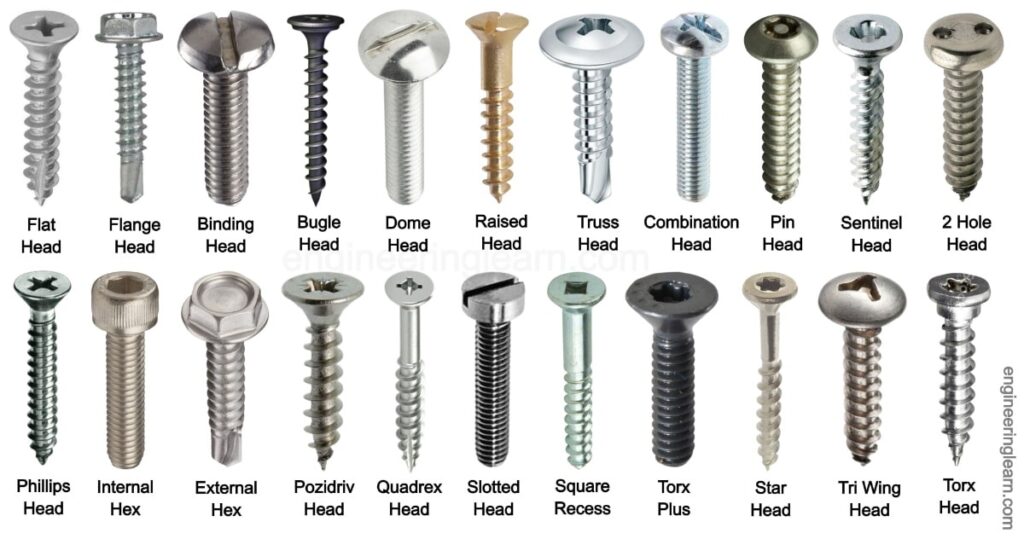
- ✦ Flat head
Flat heads are designed to sink into a countersunk hole and create a smooth surface.
- ✦ Pan head
Pan heads have a rounded top and provide a wider bearing surface for secure fastening.
- ✦ Oval head
Oval heads combine a decorative rounded top with a partially countersunk shape.
- ✦ Trim head
Trim heads have a smaller diameter and work well when a less visible fastener is needed.
Flat Head Wood Screws
Flat head screws are among the most popular Wood Screw Heads for furniture and general woodworking. They sit flush with the surface when used with a proper countersink.
They work well for shelves, cabinets, trim, and many indoor projects where a clean finish matters.
- ✦ Best use
Furniture, plywood projects, cabinets, and decorative woodworking.
Pan Head Wood Screws
Pan heads have a rounded top that remains visible after installation. Their wider surface helps hold thin materials securely.
They are common in hardware assembly, metal-to-wood connections, and projects where a flush finish is not required.
- ✦ Main advantage
The wider head spreads pressure and reduces the chance of pulling through soft materials.
How Screw Head Shape Changes Woodworking Performance
The shape of Wood Screw Heads affects installation quality and long-term performance. A head that matches the job creates better contact and reduces stress on the wood.
Professional woodworkers often test different screw styles on scrap wood before starting a finished project. This simple step helps avoid surface damage and poor alignment.

- ✦ Flush installation
Countersunk heads create a flat surface that works well for finished wood products.
- ✦ Visible fastening
Rounded heads provide a traditional look and can add a decorative touch.
- ✦ Material protection
The correct head reduces crushing, cracking, and surface marks around the screw.
Countersunk Versus Non-Countersunk Heads
Countersunk heads have a cone-shaped underside that allows them to sit below the wood surface. Non-countersunk heads stay on top and provide a larger contact area.
The choice depends on whether appearance or holding surface matters more for the project.
- ✦ Countersunk benefit
Creates a smooth finish for painted, stained, or visible wood surfaces.
Wood Screw Head Drive Styles
The drive style is the shape inside the screw head where the driver fits. A good match between the driver and head prevents slipping and damage.
Modern woodworking often uses star or square drives because they provide strong grip during installation with power tools.

- ✦ Phillips drive
A common cross-shaped drive found on many general-purpose screws.
- ✦ Square drive
A drive style that reduces slipping and works well for repeated installations.
- ✦ Torx drive
A star-shaped drive that provides strong torque control for heavy-duty projects.
How to Choose the Right Wood Screw Head
Selecting Wood Screw Heads starts with understanding the project requirements. Think about the material, location, appearance, and amount of force the joint will handle.
For example, a visible hardwood table may need a clean flat head, while an outdoor structure may need a stronger head designed for weather exposure.

- ✦ Consider the material
Softwoods, hardwoods, plywood, and composite materials may need different screw head designs.
- ✦ Match the finish
Choose a head style that fits whether the screw will be hidden or visible.
- ✦ Think about strength
Heavy-duty joints often benefit from larger heads and stronger drive systems.
Wood Screw Heads for Indoor Projects
Indoor furniture and trim projects often focus on appearance. Flat heads and trim heads are common because they create a cleaner final look.
Using the correct countersink depth helps prevent dents and keeps the surface smooth.
- ✦ Common projects
Cabinets, shelves, tables, picture frames, and decorative woodwork.
Wood Screw Heads for Outdoor Projects
Outdoor projects require screws that can handle moisture and changing temperatures. Decks, fences, and outdoor furniture often use specialized construction screws.
The head design should provide secure fastening without damaging treated lumber or outdoor materials.
- ✦ Common projects
Deck boards, garden structures, outdoor furniture, and fences.
Common Mistakes When Using Wood Screw Heads
Many woodworking problems happen because the wrong screw head style is used. Even a high-quality screw can fail when it does not match the material or application.
Experienced builders know that preparation matters. Pilot holes, correct driver bits, and proper screw selection all improve results.
- ✦ Using the wrong driver
A poor driver fit can strip the head and make removal difficult.
- ✦ Skipping countersinking
Flat heads may damage the wood surface if they are forced into place without preparation.
- ✦ Choosing appearance over function
A decorative head may not provide enough strength for demanding projects.