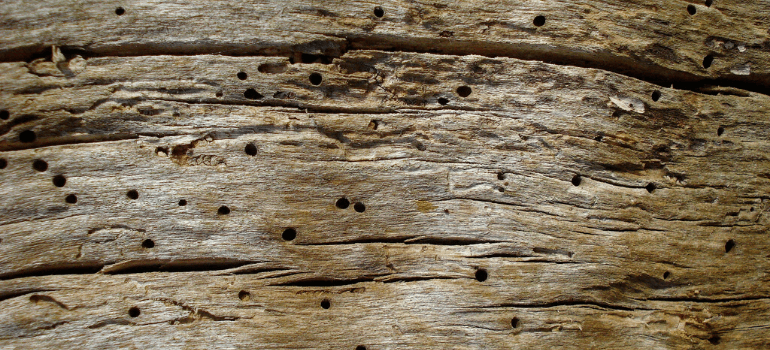
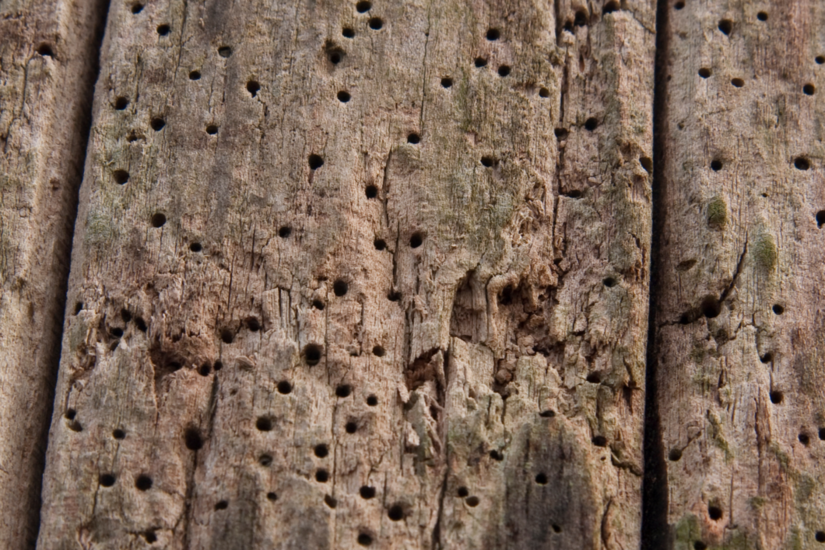
Woodworm damage is identified by small round holes, fine wood powder, internal tunnels, and weakened timber. Fresh powder and new holes can suggest active beetle activity, but old holes alone do not prove that insects are still present.
Homeowners across the United States may find small holes, loose powder, or damaged wood in floors, furniture, wall studs, and roof timbers. These signs can point to wood-boring beetles. People often use the word woodworm for the damage, even though the insects are beetle larvae rather than true worms. In American homes, powderpost beetles and old house borers are among the important pests to consider.
The first step is to look at the holes and the material around them. Check the size, shape, color, and location of each opening. Then look for fresh frass, which is a mix of wood particles and insect waste. These clues help narrow down the possible pest and show whether further inspection is needed.
Not every hole means an active infestation. Some insects leave old damage in lumber before it reaches a building. Other holes may appear after wood has been cut, sanded, or repaired. A careful inspection should separate old marks from new activity before anyone spends money on treatment.
This guide explains how to recognize wood-boring insect damage in American homes. It also covers how to inspect timber, tell insect damage from rot and other problems, assess possible structural risks, and decide when to call a qualified pest professional.
Source: fantasticpestcontrol.co.uk
What Is Woodworm Damage?
Woodworm damage is the harm caused by insects that bore into and feed on wood. In most home settings, the main culprits are beetle larvae. These young insects live inside timber and create tunnels as they grow.
The word woodworm can be confusing in the United States. It does not describe one specific insect. It is a general name often used for the damage caused by several types of wood-boring beetles.
The adult beetle may leave a small hole when it comes out of the wood. The larva usually causes most of the internal damage before that happens. This means a homeowner may notice the holes long after the feeding began.
The damage can affect furniture, hardwood floors, trim, wall studs, roof supports, and other wooden parts of a building. The risk depends on the insect, the amount of tunneling, the wood type, and the location.
Source: tradefoxapp.com
Exit holes
Small openings left when adult beetles chew their way out of the wood.
Internal galleries
Tunnels made by larvae as they feed inside the timber.
Frass
Fine powder, small wood pieces, and insect waste pushed from tunnels or openings.
Weak timber
Wood that loses strength when insects remove enough material from its inside.
Why the Larval Stage Matters
Adult beetles are often easy to miss. They may live for a short time and leave the wood soon after emerging. The larvae are the main source of damage because they spend much of their development inside the timber.
A larva can create a network of tunnels that remains hidden below the surface. When the adult finally emerges, the visible hole gives the first clear clue that an insect has used the wood.
Hidden feeding
Larvae can damage timber without creating obvious surface marks at first.
Delayed discovery
A homeowner may notice exit holes months or years after the insect entered the wood.
The Most Common Signs of Woodworm Damage
The most useful signs are small holes, fresh powder, internal tunnels, and changes in wood strength. Look for several clues together rather than relying on one mark. A combination of signs gives a better picture of what may be happening.
Start with a bright light and inspect the full surface. Check both sides of loose boards and furniture when safe. Pay close attention to joints, cracks, unfinished edges, and areas where dust can collect.
A single hole may have little meaning. Many holes, fresh powder, and damaged wood in the same area deserve closer attention. The pattern matters more than one isolated mark.
Source: integrumservices.co.uk
Small round holes
Look for tiny circular openings in exposed wood. They may be scattered across a board or grouped in one area.
Fine wood powder
Look for pale or brown powder near holes, under furniture, or on floors below wooden parts.
Surface weakness
Wood may feel weak or crumble when damage has removed much of its inner material. Do not rely on pressing hard against structural timber.
Visible tunnels
Open galleries may appear when damaged wood breaks or an existing crack exposes the inside.
Adult beetles
Small beetles near windows, doors, or damaged wood may help with identification, but one beetle does not prove an active infestation.
Small Round Exit Holes
Round holes are among the best-known signs of wood-boring beetles. Many powderpost beetles leave small openings after reaching adulthood. These holes often look neat and circular, almost as if someone made them with a tiny drill.
The hole size can help narrow down the possible insect. Some powderpost beetles leave openings around 1/32 to 1/8 inch wide. Other wood-boring beetles can leave larger openings. These measurements are clues, not a final diagnosis.
Check whether the inside of a hole looks pale and fresh or dark and weathered. A fresh-looking opening in an old finished surface may suggest recent activity. However, lighting, cleaning, sanding, and wood age can affect its appearance.
Hole pattern
Record whether openings are scattered, clustered, or limited to one board.
Hole edges
Look for clean edges, worn edges, paint damage, and loose fibers.
Fine Powder and Frass
Frass is a mixture of wood fragments and insect waste. It can look like flour, fine dust, or tiny grains. The texture changes with the insect species and the wood it attacks.
Some beetles produce very fine powder that resembles talcum powder. Others leave a more gritty material. You may find it below an opening, inside a joint, or along the edge of a floorboard.
Fresh material may be pale and loose. Older deposits can turn yellow, become caked, or collect household dust. Fresh-looking frass is a useful clue, but it should be checked again over time.
Fresh deposits
New pale powder near a hole may point to recent beetle activity.
Old deposits
Yellowed, dirty, or compacted powder may be linked to older damage.
Repeated deposits
Powder that returns after careful cleaning suggests that material may still be coming from inside the wood.
Weak, Crumbling, or Damaged Timber
Heavy insect activity can leave timber full of tunnels. The outer surface may remain in place while much of the inner wood has been eaten away. This can make a board feel light, weak, or brittle.
You may notice a damaged edge breaking away or a thin layer of wood falling off. A floorboard may also lose support when the damage reaches a large part of its cross-section.
Do not use a screwdriver or sharp tool to test a load-bearing beam, joist, stair support, or roof member. A professional should assess structural wood when its strength is in doubt.
Crumbling edges
The surface breaks into small pieces when the damaged area is disturbed.
Soft spots
Some areas feel weaker than nearby sound wood, although moisture and decay can cause similar symptoms.
Loss of support
A sagging floor or loose structural connection needs prompt professional inspection.
How to Identify Fresh and Old Woodworm Damage
The main challenge is deciding whether the damage is active or old. Exit holes can stay visible long after beetles have left. Old frass may also remain inside a tunnel and fall out when the wood moves.
A useful approach is to record the condition of the wood, clean the loose powder from a safe area, and inspect it again after a suitable interval. This creates a simple record of change rather than relying on memory.
No single sign can confirm every active infestation. Fresh holes, new powder, live beetles, and repeated changes provide stronger evidence when they appear together.
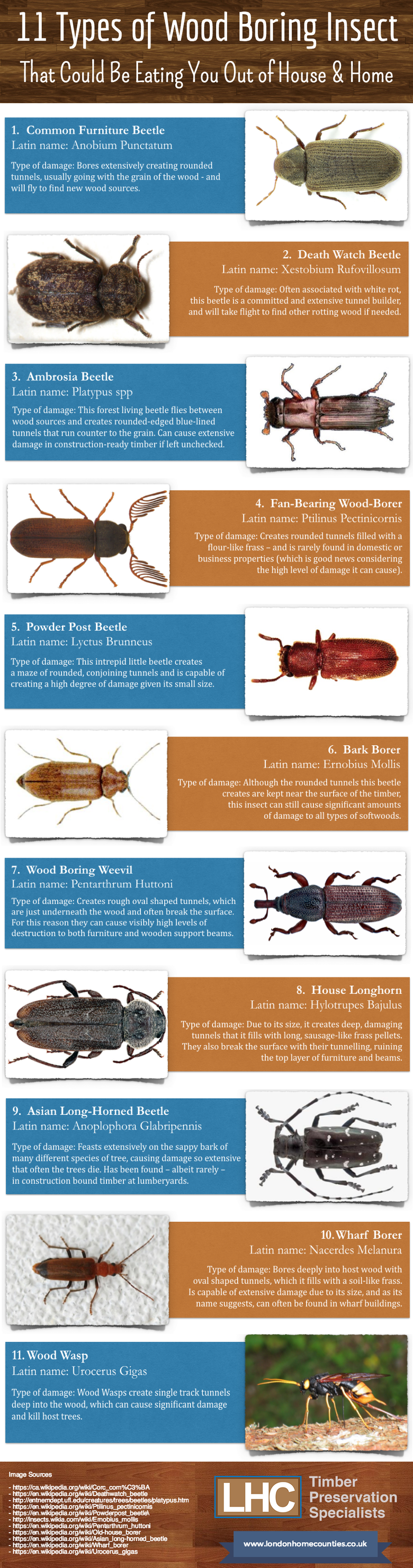
Source: londonhomecounties.co.uk
Check the hole color
New openings may look lighter inside than the surrounding aged wood.
Check the powder
Fresh, loose frass near an opening can suggest current or recent activity.
Check for change
New holes or repeated powder deposits after cleaning are more useful than a one-time observation.
Check the finish
A new hole that cuts through an older paint or stain layer may indicate that the opening formed after the finish was applied.
A Simple Monitoring Method
Take clear photos of the damaged area. Include a ruler or coin beside the holes to show their size. Write down the date and the exact location.
If the wood is not structurally important and the area can be cleaned safely, remove loose dust with a suitable vacuum. Do not scrape, drill, or disturb a damaged structural member.
Check the same area again over the following weeks. If fresh powder appears or new holes develop, contact a pest professional for identification. The right monitoring period depends on the suspected insect and local conditions, so a lack of new powder over a short period does not prove that the infestation has ended.
Record the first inspection
Photograph the holes, powder, wood surface, and nearby area.
Keep the area clean
Remove loose debris only when the wood is safe to disturb.
Repeat the inspection
Look for fresh powder, new openings, or changes in the surface.
Save the evidence
Keep dated photographs to help a pest professional compare changes.
Why Old Holes Can Be Misleading
Some lumber arrives at a home with insect holes already present. Beetles may have attacked the tree or stored wood before it was cut and sold. The openings may only become visible after milling or installation.
Old damage can also remain after a treatment or after the insects have completed their life cycle. Removing the beetles does not fill their tunnels or repair lost wood.
This is why a professional should consider the wood’s age, source, condition, and history before recommending treatment.
Old lumber
Holes may have formed before the timber entered the building.
Previously treated wood
Existing holes can remain after a successful pest treatment.
Wood movement
Vibration or handling can release old powder from existing tunnels.
Different Wood-Boring Beetles and Their Damage
Different beetle groups leave different signs. Their size, preferred wood, tunnel pattern, and frass can help an inspector narrow down the cause. Correct identification matters because one treatment may not work for every insect.
In the United States, powderpost beetles are a major group to consider. Old house borers and other wood-boring beetles can also affect buildings and wooden objects.
The common name woodworm does not tell you which species is present. Avoid choosing a treatment based only on the size of one hole.
Source: cgtcarpentry.co.uk
Powderpost beetles
Often leave small round exit holes and powdery frass. Different groups attack different wood types.
Old house borers
Their larvae mainly attack softwood, including pine, and can cause serious internal damage.
False powderpost beetles
Some species attack wood that still contains bark or has not been fully seasoned.
Carpenter bees
Make round nesting holes in exposed wood but do not eat the wood as food.
Powderpost Beetles
Powderpost beetles are small insects whose larvae feed inside wood. Their name comes from the fine powder that some species leave in their tunnels. They can damage floors, furniture, cabinets, paneling, and other wooden items.
Lyctid powderpost beetles usually attack the sapwood of hardwoods such as oak, ash, hickory, and maple. Anobiine powderpost beetles can attack both hardwood and softwood. Bamboo can also be vulnerable to some wood-boring beetles.
Their exit holes are often small and round. The powder can be very fine, although its texture differs among beetle groups. Several generations may damage susceptible wood if conditions allow repeated infestation.
Typical clue
Small round holes with fine powder around or below the openings.
Common locations
Hardwood floors, unfinished furniture, cabinets, trim, and exposed structural timber.
Old House Borers
Old house borers are longhorn beetles whose larvae attack softwood. Pine is a common host. They are especially relevant when inspecting older buildings and structural timber.
The larvae can remain inside the wood for a long period. Their feeding tunnels may be larger than those made by many powderpost beetles. Adults leave larger oval or roundish openings.
A homeowner should not identify an old house borer from a hole alone. The size, wood species, frass, and adult insect features all matter.
Typical clue
Larger emergence holes and internal tunnels in softwood, especially pine.
Common locations
Roof framing, wall framing, and other softwood building materials.
False Powderpost Beetles
False powderpost beetles include several species that attack wood in different conditions. Some prefer wood that is fresh or contains bark. Their presence in a piece of furniture or building timber does not always mean they can reinfest the same seasoned material.
The openings can be larger than those of many common powderpost beetles. The tunnels may contain tightly packed frass that sticks together rather than falling out as loose powder.
An insect specialist may need to examine an adult beetle or a sample of the damaged wood to confirm the group.
Typical clue
Round openings and galleries filled with fine or coarse packed material.
Common locations
Bark-containing lumber, firewood, decorative wood, and certain stored wooden products.
Carpenter Bees and Other Lookalikes
Carpenter bees create round openings in exposed wood to build nests. Unlike beetle larvae, they do not eat the wood. They remove material while making tunnels for their young.
Carpenter ants can also be mistaken for wood-boring pests. They make nests in wood but do not consume wood as food. They often prefer timber that has already been damaged by moisture or decay.
Termites are another important possibility. Their feeding damage may look different from beetle galleries. Subterranean termites can build mud tubes, while drywood termites can leave small pellets and damage inside wood.
Carpenter bees
Look for larger, clean, circular entrance holes in exposed exterior wood.
Carpenter ants
Look for smooth galleries, ant activity, and possible moisture damage.
Termites
Look for mud tubes, discarded wings, damaged wood, or drywood termite pellets.
How to Inspect Wood for Insect Damage
A good inspection starts with a full view of the wood and moves toward the damaged areas. The aim is to collect useful clues without causing more damage. You do not need special equipment for a first visual check.
Start with areas that show holes, powder, cracks, or surface changes. Then inspect nearby wood to see whether the signs are limited to one item or spread across several parts of the building.
If the affected wood is high above the floor, inside a wall, or part of a roof or floor support, do not attempt unsafe access. A trained inspector can examine those areas with suitable tools.
Source: alamy.com
Bright flashlight
Helps reveal small openings, cracks, and powder in dark corners.
Ruler
Provides a scale for photographs and helps record hole size.
Camera
Creates a record of the location and condition of the damage.
Gloves and dust protection
Help reduce contact with dust and debris during a basic visual inspection.
Step 1: Identify the Wood Location
First, identify what type of wood you are checking. It may be a hardwood floor, softwood beam, cabinet, door frame, window trim, or outdoor deck. The location can help narrow down which pests are likely.
Note whether the wood is painted, stained, sealed, or unfinished. Some beetles prefer cracks and exposed pores where they can lay eggs. A surface finish can reduce access, but it does not guarantee that wood is free of insects.
Indoor timber
Check furniture, flooring, cabinets, trim, and exposed framing.
Outdoor timber
Check decks, fences, siding, porch supports, and exposed wooden structures.
Hidden timber
Arrange professional access when the suspected damage is behind a wall or ceiling.
Step 2: Examine the Surface
Use a flashlight to scan the full surface. Look for circular openings, cracks, blisters, peeling finish, and small piles of dust. Examine both the visible face and accessible edges.
Count the holes in a small area and take a photograph with a ruler beside them. This makes later comparisons easier. Avoid drilling new holes or cutting into a board just to see what is inside.
Check the edges
Look for holes and loose fibers near joints and exposed ends.
Check the underside
Inspect accessible furniture bottoms and loose boards for hidden powder.
Check nearby surfaces
Look for powder on floors, shelves, window sills, and other surfaces below the wood.
Step 3: Examine the Frass
Look closely at the powder without assuming that every pile is insect waste. Ordinary sawdust from repairs, construction, or woodworking can look similar.
Compare the powder with the holes and the location where it collects. If the material appears to come from a specific opening, photograph it before cleaning. A professional may ask for a small sample in a sealed container.
Texture
Record whether the material is fine, gritty, coarse, or pellet-like.
Color
Record whether it is pale, reddish, brown, yellow, or dark.
Location
Note whether it sits directly below a hole or appears in a nearby crack.
Step 4: Check for Structural Warning Signs
Look for sagging floors, loose joints, cracked supports, or wood that has lost its normal shape. These signs may have several causes, including insects, decay, water damage, or poor construction.
A visual check cannot measure the full strength of a beam or joist. If a load-bearing member looks damaged, stop using the affected area when practical and arrange an inspection by a qualified professional.
Floor movement
Unusual sagging, bouncing, or movement may point to a support problem.
Roof movement
A sagging roof line or damaged roof support needs prompt assessment.
Loose connections
Separated joints or shifting supports can indicate reduced structural capacity.
How to Tell Woodworm Damage From Wood Rot
Woodworm damage and wood rot can look similar, but they have different causes. Wood-boring insects create tunnels as they feed. Wood rot develops when certain fungi break down the wood structure, usually under damp conditions.
Both problems can weaken timber. They can also occur in the same area because moisture damage may create conditions that attract other pests. A correct diagnosis should check for both insects and decay.
Do not assume that holes always mean beetles or that soft wood always means insects. The texture, moisture condition, and shape of the damage help separate these problems.
Source: cgtcarpentry.co.uk
Insect damage
Often includes small holes, galleries, frass, and signs of beetle emergence.
Wood rot
Often includes soft, crumbly, cracked, or discolored wood linked to moisture.
Combined damage
May include insect holes and fungal decay in the same timber.
Signs of Wood Rot
Rot often makes wood soft, weak, or brittle. Brown rot may cause darkening, shrinkage, and cracks across the grain. White rot can leave wood pale and fibrous.
Moisture is a major factor in most wood decay problems. Leaks, poor drainage, damp crawl spaces, and poor ventilation can keep timber wet enough for fungi to grow.
Some discoloration does not mean the wood has lost structural strength. Surface mold and sapstain fungi can change the color without causing the same structural damage as decay fungi.
Soft texture
The wood may feel spongy or break apart more easily than sound timber.
Cracks
Some forms of rot create shrinkage cracks and changes in the wood’s shape.
Moisture
Leaks or damp conditions may be present near the damaged area.
Can Woodworm and Rot Occur Together?
Yes. A damp area may support fungal growth and attract insects that use weakened wood for shelter or nesting. Carpenter ants, for example, often use wood that has already been damaged by moisture.
A professional inspection should identify the source of moisture as well as the insect or fungus. Treating insects without fixing a leak may leave the underlying problem in place.
If the wood is structurally damaged, both the pest issue and the loss of strength need attention. Pest control alone cannot restore timber that has already lost a large part of its structure.
Check the moisture source
Look for plumbing leaks, roof leaks, poor drainage, and damp crawl spaces.
Check the timber
Have weakened structural wood assessed before deciding whether it can remain in place.
What Determines the Severity of Woodworm Damage?
The number of holes alone does not tell you how much strength the wood has lost. A board with many small holes may still have enough sound material for its intended use. A beam with fewer openings may have serious damage if its internal galleries are large or concentrated in a critical area.
The most useful factors are the depth of the tunnels, the amount of remaining sound wood, the timber’s location, and the load it carries. Moisture and the type of beetle also affect the risk.
A furniture panel and a floor joist do not have the same structural role. Damage to a decorative piece may be mainly cosmetic. Damage to a support can affect the safety of a building.
Source: londonhomecounties.co.uk
Depth of damage
Deep tunnels can remove more wood than the surface openings suggest.
Timber size
Thin boards may be affected more quickly than large sections of sound wood.
Wood location
Damage to beams, joists, roof supports, and stairs deserves greater attention.
Activity
New powder and holes may indicate continuing damage rather than an old, completed attack.
Cosmetic Damage
Cosmetic damage affects the appearance of wood without clearly showing a loss of useful strength. A few holes in a decorative panel or furniture surface may fall into this group.
The item still needs an inspection if fresh frass or new holes appear. Cosmetic damage can be an early sign of a wider infestation, especially when nearby unfinished wood is also affected.
Typical example
A small number of holes in a decorative wooden cabinet.
Next step
Record the damage and arrange pest identification if signs suggest current activity.
Moderate Damage
Moderate damage may include several holes, visible galleries, and small areas of weakened wood. The item may still be usable, but its condition needs a closer assessment.
The decision to repair or replace depends on the amount of sound wood that remains and the item’s purpose. A furniture restorer may be suitable for valuable furniture, while structural timber needs a building professional.
Typical example
A floorboard with several openings and visible internal tunnels.
Next step
Have the affected area assessed before sanding, filling, or covering the damage.
Severe Structural Damage
Severe damage can leave large internal spaces and little sound wood between the surface and the center of a timber member. A damaged joist or beam may no longer carry its intended load safely.
Warning signs include deep galleries, crumbling wood, sagging, and loose connections. These conditions need prompt professional assessment.
Do not attempt to repair a load-bearing member with ordinary wood filler or surface epoxy. Such products do not automatically restore the original structural capacity.
Typical example
A floor support with extensive internal tunneling and visible loss of strength.
Next step
Arrange a qualified structural inspection and keep people away from an unsafe area.
Common Mistakes When Identifying Woodworm Damage
A poor diagnosis can lead to wasted money and missed damage. Many people focus on the holes alone and overlook the condition of the surrounding wood. Others treat a surface without checking whether the insects are still inside.
A careful inspection should use several clues. It should also consider other pests, old construction damage, and moisture problems.
Source: tradefoxapp.com
Assuming every hole is active
Old exit holes can remain after the insects have left. Look for fresh evidence before deciding that treatment is needed.
Calling all powder sawdust
Construction dust, sanding waste, and ordinary dirt can resemble frass. Check whether the material is linked to an opening.
Ignoring wood type
Different beetle groups prefer different materials. Hardwood and softwood can point toward different pests.
Treating before identification
A product that works on one pest may not control another. Confirm the likely insect first.
Ignoring moisture
A damp environment can support other wood problems and may increase the risk of some beetle infestations.
Covering the evidence
Filling holes, painting over powder, or sanding the surface before inspection can hide useful clues.
Why Surface Treatments May Not Work
Many wood-boring beetle larvae live deep inside timber. A product applied only to the surface may not reach every larva or gallery.
Some treatments work only on specific insect groups or accessible wood. Others are used to protect suitable untreated timber against future attack rather than repair existing damage.
Read the product label carefully and follow all legal use directions. For a widespread or hidden infestation, ask a licensed pest control professional to assess the options.
Wrong pest
The chosen product may not be suitable for the insect present.
Poor access
The treatment may not reach larvae inside thick or concealed timber.
No moisture repair
The environmental condition that helped the problem may remain.
Why Filling Holes Is Not Pest Control
Wood filler can improve the appearance of small holes. It does not prove that insects have been removed. It also cannot replace wood that larvae have already consumed.
Filling holes too early can hide signs that a pest professional needs to see. If the item has value or carries a load, obtain an inspection before cosmetic repairs.
Identify first
Confirm the likely cause and activity before making cosmetic repairs.
Assess strength
Make sure the wood can still perform its intended role.
When to Call a Wood Pest Professional
Call a qualified pest professional when you find repeated fresh powder, many new holes, live beetles, or signs of damage across several wooden items. Professional help is also useful when the insect cannot be identified from visible signs.
A licensed professional can inspect the timber, identify the likely pest, and decide whether the infestation is active. Depending on the case, the inspection may include moisture readings, close examination of holes, and review of an insect sample.
If structural timber is damaged, a pest inspection may not be enough. A structural engineer or qualified building professional may need to assess the remaining strength and decide whether repair or replacement is needed.
Source: integrumservices.co.uk
Repeated fresh frass
New powder keeps appearing after the area has been cleaned.
Widespread holes
Several boards, rooms, or pieces of furniture show similar damage.
Hidden infestation
The suspected damage is inside a wall, ceiling, floor system, or roof.
Structural warning signs
A joist, beam, stair support, or roof member looks weak or damaged.
Uncertain pest
The signs could point to beetles, termites, carpenter bees, or another pest.
What to Ask During an Inspection
Ask the inspector which insect is suspected and what evidence supports that conclusion. A useful report should separate confirmed signs from possible causes.
Ask whether the activity appears current, whether the damaged wood has lost strength, and whether nearby timber needs inspection. Request an explanation of the treatment method and its limits.
If the wood is structural, ask whether a separate building assessment is needed. A pest treatment does not automatically make weakened timber safe.
Pest identity
Ask for the likely insect group and the evidence used to identify it.
Activity status
Ask whether the signs point to a live infestation or old damage.
Treatment scope
Ask which wood areas will be treated and what the method cannot reach.
Repair needs
Ask whether damaged timber needs repair or replacement.
Safety During Inspection
Do not climb onto an unstable floor or roof to inspect damaged wood. Avoid cutting into walls or removing large sections of timber without knowing what they support.
Do not handle unknown insects with bare hands. Keep children and pets away from pest products and loose debris. Follow the label and safety instructions for any approved treatment.
If a floor, ceiling, or roof appears at risk of collapse, leave the area and arrange urgent professional help.
Avoid unsafe access
Use a professional for high, concealed, or unstable areas.
Avoid unapproved chemicals
Never mix pest products or use them in ways that the label does not allow.
How to Prevent Future Wood-Boring Beetle Damage
Prevention starts with dry, well-maintained wood and careful inspection of new materials. Some beetles prefer exposed or unfinished timber. Others may enter a home through infested furniture, stored lumber, or firewood.
Good building maintenance can reduce the conditions that support wood damage. Fix leaks, improve drainage, and keep crawl spaces and other enclosed areas properly ventilated.
No single step prevents every wood-boring insect. Prevention works best when several sensible measures are used together.
Inspect new wood
Check lumber, furniture, flooring, and decorative wood for holes and powder before bringing them indoors.
Store firewood outside
Keep firewood away from the home and bring in only the amount needed for immediate use.
Control moisture
Repair plumbing and roof leaks, improve drainage, and manage damp crawl spaces.
Protect exposed wood
Use suitable finishes on appropriate wood surfaces to reduce exposed cracks and egg-laying sites.
Inspect regularly
Check older furniture, floors, and exposed structural timber for new holes or powder.
Keep Crawl Spaces and Basements Dry
Crawl spaces and basements can collect moisture when drainage and ventilation are poor. Damp timber may become more suitable for certain wood-boring beetles and fungi.
Check for standing water, plumbing leaks, wet insulation, and blocked vents. The correct solution depends on the building design and local conditions.
A moisture meter can help an inspector compare readings in different areas. One reading should not be treated as a complete diagnosis because wood species, season, and location can affect the result.
Repair leaks
Fix plumbing and roof leaks before treating the wood.
Improve drainage
Direct water away from the foundation and prevent standing water.
Manage ventilation
Use suitable ventilation or moisture control for the building.
Inspect Furniture and New Lumber
Wooden furniture and lumber can carry beetles into a building. Look at unfinished surfaces, joints, undersides, and exposed edges before installation or storage.
Properly kiln-dried or air-dried wood is generally less likely to carry certain infestations than unsuitable untreated material. However, drying does not make every piece of wood immune to later attack.
Keep suspect items separate from clean furniture and structural timber until they have been inspected. This can help prevent a small problem from spreading.
Check before purchase
Look for holes, loose powder, and damaged edges.
Separate suspect items
Avoid storing questionable wood beside clean furniture or lumber.
Use suitable finishes
Protect appropriate exposed surfaces with a suitable paint, varnish, or sealant.
What to Do After Identifying Woodworm Damage
Once you find possible insect damage, the next step is to decide whether the problem is cosmetic, active, or structural. These are separate questions. A live infestation may exist in wood that is still strong, while old insect damage may leave a weak board that needs repair.
Keep a record of the signs and avoid hiding them before an inspection. If the damage is limited to one removable item, a pest professional or furniture specialist can help assess the safest option.
If structural wood is involved, arrange a building assessment before using fillers or carrying out repairs. The goal is to remove the cause, preserve sound timber, and restore any lost structural function.
Document the signs
Take dated photos and record the location, number of holes, and condition of the wood.
Confirm the insect
Use a qualified pest professional when the cause or activity status is unclear.
Assess the timber
Have damaged load-bearing wood checked by a qualified building professional.
Fix contributing conditions
Repair leaks and address poor ventilation or unsuitable wood storage.
Decide between monitoring, treatment, restoration, and timber replacement based on the findings.
Should You Repair or Replace Damaged Wood?
Repair may be suitable when damage is limited and enough sound wood remains. A furniture restorer may fill small cosmetic holes after the pest problem has been assessed and controlled.
Replacement may be safer when a board has lost too much material or when structural timber cannot carry its intended load. The decision should account for the member’s size, location, and role.
Do not judge the repair by appearance alone. A smooth surface can hide deep galleries and weak internal wood.
Consider repair
When the damage is limited, the item is sound, and the pest issue has been addressed.
Consider replacement
When the timber has extensive internal damage or has lost its required strength.
Get structural advice
When the affected timber supports floors, walls, stairs, or roofs.
Frequently Asked Questions
Q
What Does Woodworm Damage Look Like?
Woodworm damage often appears as small round holes in the surface of wood. You may also find fine powder, internal tunnels, and weakened timber. The exact signs depend on the beetle species and the type of wood.
Q
How Can I Tell If Woodworm Is Still Active?
Fresh powder, new holes, and live beetles can suggest current activity. Clean and monitor a safe affected area, then check for new powder over time. Repeated deposits are a stronger warning than old holes alone, but a pest professional can provide a more reliable assessment.
Q
Are Woodworm Holes Always a Sign of an Infestation?
No. Holes may come from an old infestation or may have formed before the wood was installed. Some timber arrives with insect damage already present. Look for fresh frass and changes in the wood before deciding that the infestation is active.
Q
Can Woodworm Damage Make a House Unsafe?
Yes, extensive internal tunneling can weaken structural timber. Damage to floor joists, roof supports, beams, or other load-bearing parts can create a safety risk. Have these areas assessed by a qualified professional if you find signs of serious damage.
Q
Does Woodworm Prefer Wet or Dry Wood?
The answer depends on the beetle group. Some wood-boring beetles prefer wood with higher moisture levels, while others can attack seasoned or relatively dry wood. Moisture control is useful, but dry conditions alone do not guarantee that all beetle activity will stop.
Q
Can I Treat Woodworm Damage Without a Professional?
You can document visible signs and monitor a safe, non-structural item. However, widespread activity, hidden damage, uncertain pest identification, and weakened structural timber need professional assessment. Treatment must match the insect and the location of the larvae.
Q
Does Wood Filler Stop Wood-Boring Beetles?
No. Wood filler can cover small holes and improve the surface, but it does not reliably kill larvae or remove an infestation. Confirm that the pest issue has been addressed before carrying out cosmetic repairs.
✦ Wrapping Up
Conclusion
Woodworm Damage Identification starts with a close look at holes, frass, tunnels, and the condition of the timber. Small round openings and fine powder are common signs of wood-boring beetles, but old damage can look much like a current infestation. Fresh evidence and repeated changes help make the difference.
The type of wood and the location of the damage also matter. Powderpost beetles, old house borers, and other insects attack different materials and leave different clues. Rot, carpenter bees, carpenter ants, and termites can also cause damage that looks similar at first.
A careful inspection helps prevent unnecessary treatment and missed structural problems. Record what you find, monitor safe areas, and ask a qualified professional to identify uncertain pests. If a beam, joist, or roof support looks weak, seek a structural assessment rather than relying on a surface repair.
Prevention begins with regular inspection, suitable wood protection, good drainage, and moisture control. These steps help protect wooden parts of a home and make new problems easier to spot.
💡 Key Takeaway
Photograph every suspicious hole, record its size and location, and check for fresh powder. Do not assume old holes mean active insects. Arrange a pest inspection when new signs appear, and seek structural advice whenever load-bearing wood looks weak.