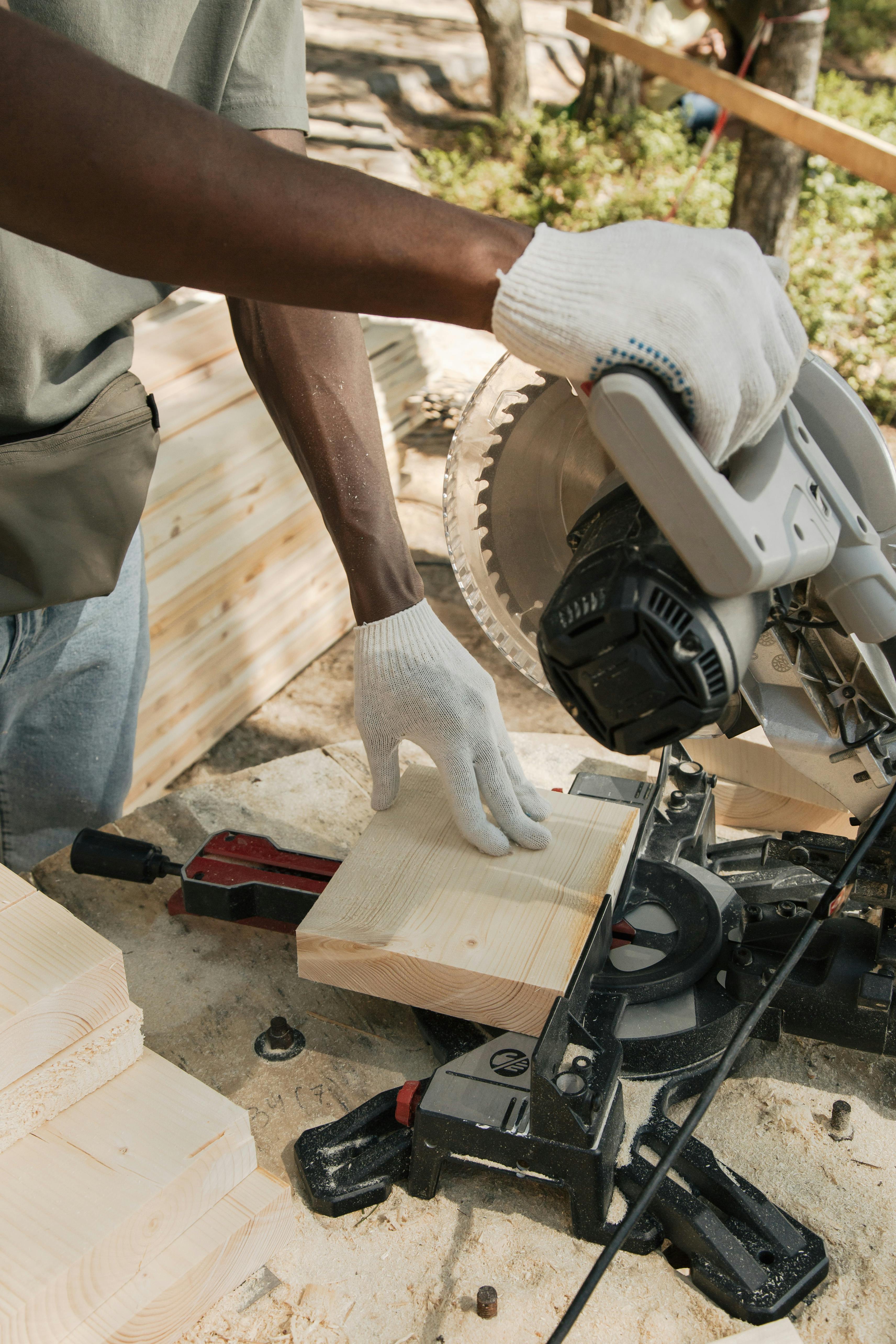
Safe track saw use starts with a sound saw, a functioning guard, the correct blade, stable workpiece support, appropriate eye and hearing protection, and a cutting position that keeps your hands and body away from the blade path and potential kickback.
For U.S. woodworkers, remodelers, cabinetmakers, and construction crews, a track saw can make breaking down plywood and other sheet goods easier to control, but the guide rail does not make the tool risk-free. A track saw is still a powered circular saw with a rapidly rotating blade, and the same basic hazards include blade contact, kickback, flying particles, dust, noise, and accidental startup.
The safest approach is to treat every cut as a controlled operation rather than relying on the rail for protection. Inspect the saw before use, confirm that its guard and plunge mechanism operate correctly, secure the material, keep both hands in their intended positions, stay out of the likely kickback path, and wait for the blade to stop before setting the tool down or making adjustments. In U.S. workplaces, applicable OSHA requirements also require power tools to be maintained safely and guards to be used when the equipment is designed to accept them.
Source: pexels.com
What Makes a Track Saw Dangerous?
A track saw combines a handheld circular saw with a guide rail. The rail controls the travel path, but the exposed cutting area still contains a high-speed rotating blade. The main hazards come from the blade, the workpiece, the saw’s movement, and the material produced during cutting.
Kickback is one of the most important hazards to understand. It can occur when the blade binds, the kerf closes around the blade, the workpiece shifts, or the saw becomes difficult to control. A sudden movement can push the saw or material toward the operator. The exact behavior depends on the saw design, blade, material, cut, and circumstances.
Blade contact is another obvious hazard. The guide rail may help keep the saw moving in a straight line, but it does not prevent a hand from entering the blade area. A momentary loss of attention or an attempt to stabilize a moving workpiece can put the operator in danger.
Source: pixabay.com
Blade contact
The rotating blade can cause severe injury if a hand or another body part enters the cutting area.
Kickback
A pinched or bound blade can cause sudden movement of the saw or workpiece.
Flying particles
Wood chips, splinters, dust, and damaged blade fragments can be thrown during cutting.
Dust and noise
Cutting wood and sheet materials can generate airborne dust and significant noise, especially during repeated work.
Unexpected movement
An unsecured rail, unstable workpiece, cord, battery problem, or poor footing can interfere with controlled cutting.
Why the Guide Rail Does Not Make a Track Saw Risk-Free
The guide rail helps constrain the saw’s travel, which can make a straight cut easier to control than freehand cutting. However, the rail is an accuracy and guidance system, not a substitute for guarding, workpiece support, training, and safe body positioning. A track saw should never be treated as inherently safe simply because it follows a rail.
Guidance is not guarding
The rail guides the tool but does not shield the operator from the blade.
Accuracy is not protection
A straight cut can still involve kickback, dust, noise, and blade-contact hazards.
Inspect the Track Saw Before Every Cutting Session
A short pre-use inspection can identify problems before the blade starts moving. Do not use the saw if a critical safety mechanism is damaged, missing, or not functioning as intended. Follow the owner’s manual for the exact inspection and operating procedure for your model.
Check the blade for cracks, damaged teeth, excessive resin buildup, or other visible defects. A dull or damaged blade can increase resistance and make the material more likely to bind. OSHA’s woodworking requirements specifically address removing dull, badly set, improperly filed, or improperly tensioned saws from service before they cause sticking, jamming, or kickback.
Operate the lower or blade-covering guard and plunge mechanism without powering the blade. The mechanism should move as the manufacturer specifies and should not be deliberately blocked, tied back, or removed. If the guard does not function correctly, stop and have the problem corrected before use.
Source: epa.gov
Blade
Confirm that the blade is the correct type and size for the saw and that it is clean, secure, and free of visible damage.
Guard
Verify that the blade guard moves and returns correctly according to the manufacturer’s instructions.
Base and plunge mechanism
Check for damage, excessive play, or anything that could interfere with controlled plunging and cutting.
Inspect the rail for damage, debris, loose components, or contamination that could cause the saw to move unexpectedly.
Power source
Inspect the cord, plug, battery, and connections according to the saw manufacturer’s instructions.
Do Not Modify or Defeat Safety Features
Do not tape, tie, remove, wedge, or otherwise defeat a guard or safety mechanism to make a cut easier. OSHA guidance emphasizes that guards should remain in working order and that workers should not bypass or tamper with machine guarding. If a particular operation appears incompatible with the normal safety system, stop and consult the manufacturer’s instructions or a qualified service professional rather than improvising a workaround.
Stop when a safety device fails
Take the saw out of service until the defect is properly corrected.
Use the manufacturer’s procedure
Different track saws use different guard, plunge, blade, and riving-knife arrangements, so model-specific instructions matter.
Set Up the Workpiece for Safe Cutting
Support the material before starting the saw. A large sheet of plywood or MDF can sag as the cut progresses, and that movement can affect the blade and the saw. Arrange supports so the cut can be completed without the material collapsing, shifting, or pinching the blade.
The offcut also needs consideration. If the piece being removed drops, twists, or closes the kerf, it can interfere with the blade. Plan where both the main panel and the offcut will be supported before starting the cut.
Keep the guide rail firmly positioned. Depending on the rail and material, this may involve the rail’s grip surface, clamps, or another manufacturer-approved method. Keep sawdust and debris away from the contact surfaces so the rail can sit as intended.
Source: burst.shopify.com
Support both sides when appropriate
Arrange supports to prevent the panel from sagging or shifting as the cut separates the material.
Plan the offcut
Make sure the falling or moving section cannot interfere with the blade or push the saw.
Secure the rail
Use the rail’s intended gripping or clamping method when additional restraint is needed.
Clear the cutting path
Confirm that nails, screws, hidden fasteners, clamps, cords, and other obstacles are not in the blade path.
Set the Cutting Depth Correctly
Set the blade depth according to the saw manufacturer’s instructions and the material being cut. The goal is to provide the cutting depth needed for the material without unnecessarily exposing more blade than the operation requires. A deeper-than-needed blade setting can increase the amount of exposed blade below the workpiece.
Check the material thickness
Measure or verify the actual thickness rather than relying only on a nominal sheet size.
Follow the manual
Use the depth-setting procedure specified for your exact track saw model.
Use Safe Body and Hand Positioning
Keep both hands on the saw’s designated handles when the operating procedure calls for two-handed control. Never place a hand in front of, behind, or directly beside the blade opening to steady the workpiece or guide the saw.
Keep your body positioned so you are not directly in the expected path of a sudden saw or workpiece movement. The exact stance depends on the tool design and cutting direction, so follow the manufacturer’s instructions and maintain a balanced position throughout the cut.
Do not reach across the saw while the blade is moving. If the material shifts or a clamp needs adjustment, stop the saw, disconnect power as appropriate, wait for the blade to stop completely, and then correct the setup.
Source: pxhere.com
Keep hands on the intended controls
Use the handles and grip areas specified by the manufacturer rather than reaching toward the blade or workpiece.
Stay balanced
Maintain stable footing and avoid awkward positions that could cause you to lose control.
Stay clear of the blade path
Do not put any part of your body where the blade or a suddenly moving saw could reach it.
Do not overreach
Reposition yourself or the workpiece instead of stretching beyond a stable operating position.
Never Reach Under the Workpiece
Do not place a hand underneath the panel to catch an offcut or check where the blade is. The blade can remain dangerous during coast-down, and the position of the material can make it difficult to judge where the teeth are. If an offcut needs support, arrange that support before starting the cut.
Support before cutting
Use a planned support system rather than trying to catch or hold a falling piece by hand.
Wait for complete stoppage
Do not touch the workpiece near the blade until the blade has completely stopped and the tool is safe to handle.
Follow a Controlled Cutting Procedure
Once the workpiece, rail, blade, and operator position are ready, make the cut in a deliberate sequence. Avoid rushing the saw through the material or forcing the tool when resistance increases.
Start with the saw positioned according to the manufacturer’s instructions. Allow the blade to reach the appropriate operating condition before entering the material when the manual requires it. Keep the saw firmly engaged with the rail and move it at a controlled rate that matches the material and blade.
If the saw binds, stalls, vibrates unusually, produces unexpected noise, or becomes difficult to move, stop. Do not force the tool forward. Disconnect power as appropriate and determine why the cut became difficult before continuing.
Source: loc.gov
Prepare before powering on
Confirm that the rail, workpiece, depth setting, blade, and body position are ready before activating the saw.
Use controlled pressure
Let the blade perform the cutting instead of forcing the saw through material.
Watch for changing resistance
A sudden increase in resistance can indicate a material-support or blade problem that needs attention.
Finish safely
After the cut, follow the manufacturer’s procedure for removing the saw from the material and wait for the blade to stop.
What to Do If the Saw Kicks Back or Binds
If the saw suddenly binds or kicks back, do not attempt to fight the movement by grabbing the blade area or reaching around the tool. Release the operating control as the manufacturer’s instructions direct, maintain control if possible, and allow the blade to stop. Disconnect the power source before investigating the cause.
After the tool is safe, inspect the blade, cut line, material support, rail position, and cutting depth. Look for a closing kerf, unsupported material, a damaged or unsuitable blade, an obstruction, or another condition that could have caused the problem. Correct the underlying condition before making another cut.
Stop forcing the cut
A difficult cut should be treated as a problem to diagnose, not as a situation where more force is appropriate.
Disconnect before inspection
Remove the electrical or battery power source according to the manufacturer’s safe procedure before working around the blade.
Wear Appropriate Personal Protective Equipment
Eye protection should be part of normal track saw use because cutting can produce chips, splinters, and airborne particles. OSHA’s saw safety guidance emphasizes eye and face protection for workers exposed to saw hazards.
Hearing protection may also be appropriate when the noise level or duration of exposure warrants it. For dust-producing materials, use effective dust collection and follow applicable respiratory protection requirements. A dust mask or respirator should not be treated as a substitute for controlling dust at its source.
Wear clothing that will not create an entanglement hazard. Avoid loose sleeves, dangling cords, jewelry, and other items that could interfere with a power tool. Tie back long hair and maintain a clean, uncluttered work area.
Source: wikimedia.org
Eye protection
Use suitable safety glasses or other eye protection appropriate to the work environment.
Hearing protection
Use hearing protection when noise exposure makes it appropriate.
Dust control
Use compatible dust extraction where possible and follow applicable workplace respiratory-protection requirements.
Work clothing
Avoid loose clothing, dangling accessories, and other potential entanglement hazards.
Footing
Wear appropriate footwear and keep floors clear of sawdust, scraps, cords, and other trip hazards.
Gloves Are Not a Substitute for Safe Hand Positioning
Work gloves may provide useful protection for certain handling tasks, but they do not make it safe to put a hand near a moving blade. Gloves can also affect grip and dexterity depending on the task. Follow the tool manufacturer’s instructions and the hazard assessment for the job rather than assuming gloves eliminate blade-contact risk.
Use PPE for the actual hazard
Select protection based on eye, hearing, dust, handling, and other hazards present during the job.
They have different hazard profiles and operating methods, so a simple universal safety ranking is not appropriate. A track saw keeps the saw moving along a guide rail and is useful for breaking down large panels, while a table saw uses a fixed blade and feeds material through it. Safe operation depends on the tool, setup, material, guarding, operator training, and cutting task.
Q
Can a track saw kick back?
Yes. A track saw can experience kickback or sudden movement if the blade binds, the material shifts or pinches the blade, the cut is improperly supported, or another condition interferes with the blade. Stable support, a suitable blade, correct depth, controlled feeding, and proper body positioning help reduce the risk.
Q
Should I clamp the track saw rail?
Use the rail’s intended grip system and add compatible clamps when the manufacturer recommends or when the work requires additional restraint. Clamping can be particularly useful when the material surface or cutting position does not provide reliable rail grip. Make sure clamps cannot enter the blade path.
Q
How deep should a track saw blade be set?
Use the depth-setting procedure specified by the saw manufacturer and set the blade for the material being cut. Avoid unnecessarily exposing additional blade below the workpiece. The correct setting can vary with the saw design, blade, and material.
Q
What should I do if the track saw blade gets stuck?
Stop applying forward pressure and follow the manufacturer’s procedure for stopping the saw. Once the blade has completely stopped, disconnect the power source before investigating. Check the blade, material support, rail alignment, cutting depth, and kerf for conditions that could have caused binding. Do not pull or twist the saw free while the blade is still rotating.
✦ Wrapping Up
Conclusion
Track saw safety is mainly about controlling the blade, material, tool, and operator position throughout the entire cut. A guide rail can improve control and accuracy, but it does not replace a functioning guard, proper workpiece support, suitable PPE, careful setup, or safe cutting technique.
Before every job, inspect the saw and blade, secure the material and rail, confirm the cutting path, and establish a stable operating position. During the cut, avoid forcing the saw and stay alert for binding or unusual resistance. After cutting, wait for the blade to stop completely before handling the saw or clearing the work area.
💡 Key Takeaway
Before your next track saw cut, use a simple sequence: inspect the saw, select the correct blade, secure the material, secure the rail, set the depth, put on appropriate PPE, keep your hands and body clear of the blade path, make the cut under control, and disconnect power before making any adjustment or clearing a problem.