Clean a band saw blade by first stopping and disconnecting the saw, removing loose debris with a suitable brush, then cleaning stubborn buildup with a blade-safe cleaner and wiping the blade dry before reinstalling or using it.
For woodworkers and metalworking shops in the United States, regular band saw blade cleaning is a practical part of machine maintenance. A blade can collect sawdust, resin, pitch, adhesive residue, or metal chips as it moves through material and around the wheels. That buildup can interfere with cutting and can carry debris into the wheel, guide, and blade-tracking areas.
The cleaning method should match the contamination and the blade. A woodworking blade with resin buildup does not necessarily need the same treatment as a metal-cutting blade covered with chips or cutting fluid. Manufacturer instructions should take priority, particularly for specialized coatings, carbide blades, coolant systems, and industrial machines.
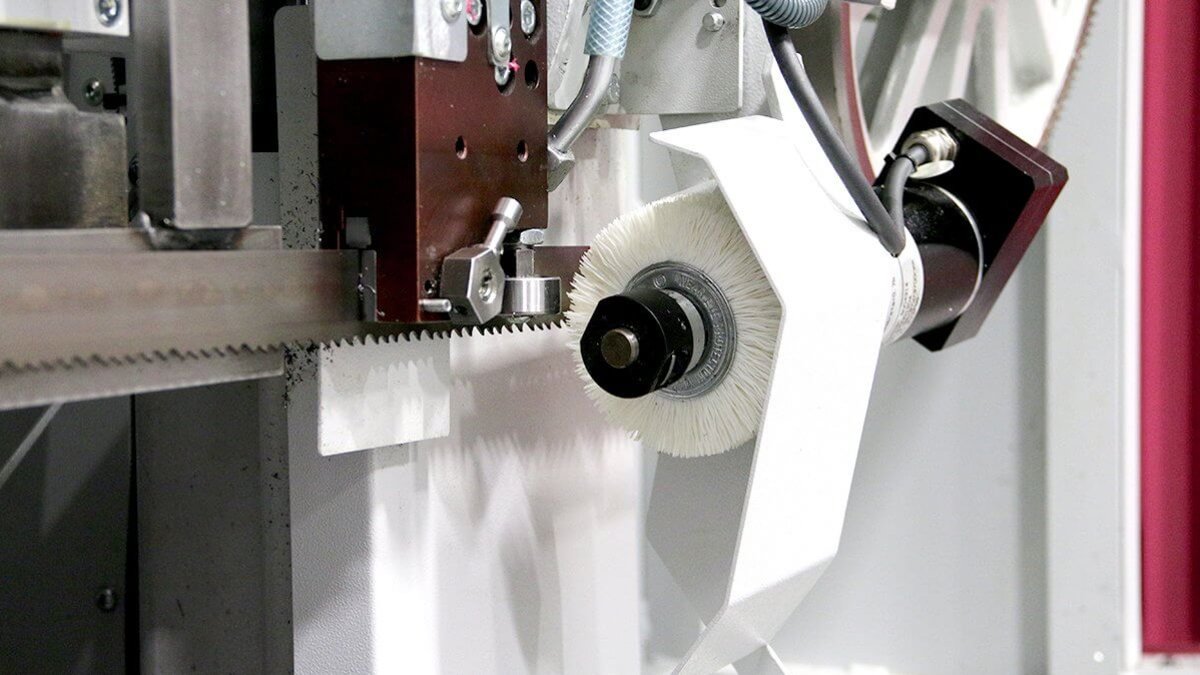
The simplest approach is prevention. A properly positioned chip or blade brush can remove debris while the saw operates, while periodic manual cleaning deals with residue that the brush does not remove. Manufacturers and bandsaw maintenance references also emphasize keeping wheels, guides, and related components clean because debris in these areas can affect blade tracking and machine performance.
Source: hamer.su
Why Clean a Band Saw Blade?
A band saw blade should be cleaned because accumulated material can interfere with the tooth gullets, cutting action, blade movement, and surrounding machine components. Woodworking blades commonly collect sawdust, resin, and pitch, while metal-cutting blades can carry chips and cutting-fluid residue around the machine.
The tooth gullets are particularly important because they provide space for chips to leave the cutting zone. When debris packs into the gullets, the blade has less available space for carrying chips away from the workpiece. Cleaning therefore supports the blade’s intended cutting function, but it does not compensate for an incorrect tooth pitch, feed rate, blade speed, or damaged teeth.
Blade cleaning also needs to be considered as part of overall bandsaw maintenance. Debris that remains attached to the blade can travel around the wheels and guides. Keeping these areas clean helps preserve proper blade movement and makes it easier to identify wear, damage, or alignment problems.
Source: behringersaws.com
Sawdust and wood chips
Loose wood debris can collect around the blade, wheels, guides, and tires, particularly when dust extraction or chip removal is inadequate.
Resin and pitch
Sticky deposits from wood can adhere to the blade and are usually more difficult to remove than loose sawdust.
Metal chips
Metal-cutting operations can leave chips in the blade gullets. A suitable chip brush is commonly used to remove these chips during operation.
Coolant and cutting-fluid residue
Metalworking machines may leave fluid residue on the blade and nearby components, so cleaning should follow the machine and fluid manufacturer’s maintenance instructions.
What Happens When a Blade Stays Dirty?
A dirty blade may show symptoms such as packed tooth gullets, visible residue on the blade, increased debris around the wheels, or inconsistent cutting. However, these symptoms do not prove that cleaning is the only problem. Dull teeth, incorrect blade selection, poor tension, tracking problems, guide misalignment, excessive feed pressure, and incorrect blade speed can produce similar cutting symptoms.
Inspect before assuming
Look at the teeth, gullets, weld, blade body, wheels, guides, and tires before deciding that contamination is the primary cause of poor cutting.
How to Clean a Band Saw Blade Safely
The safest manual cleaning procedure starts with the machine completely stopped and isolated from its power source. Do not attempt to wipe, brush, scrape, or reposition an exposed blade while the band saw can start unexpectedly.
The exact procedure varies with the saw design. A woodworking benchtop bandsaw, a large vertical machine, a horizontal metal-cutting saw, and a portable sawmill can use different blade widths, guides, guards, coolants, and cleaning systems. Consult the machine’s owner’s manual before removing the blade or applying a chemical cleaner.
Source: stanki.ru
1. Shut down the machine
Turn the saw off, wait until all moving components have stopped, and disconnect or isolate the machine from its power source before putting your hands near the blade.
2. Wear appropriate protection
Use eye protection and appropriate hand protection for the task. Treat the teeth as sharp even when the blade is dull.
3. Remove loose debris
Use a suitable dry brush, soft shop brush, or other manufacturer-approved cleaning method to remove loose sawdust and chips.
4. Address stuck residue
For pitch, resin, or other adhered material, apply only a cleaner confirmed to be compatible with the blade and surrounding machine components.
5. Clean the gullets
Work carefully around the tooth spaces so packed debris is removed without striking, bending, or damaging the teeth.
6. Wipe and inspect
Remove remaining residue and inspect the blade for cracked teeth, missing teeth, damaged welds, unusual wear, corrosion, or other defects.
7. Inspect the machine
Check the wheels, tires, blade guides, thrust bearings, and blade path for accumulated material before returning the saw to service.
How to Clean a Blade Without Removing It
If the machine manufacturer permits cleaning with the blade installed, clean only after the machine has been completely stopped and isolated from power. Use the access provided by the machine’s guards rather than reaching into confined areas. A brush designed for blade or chip cleaning can be useful for removing loose material from accessible areas.
Do not turn the wheel by hand while holding a rag or brush against the blade unless the manufacturer’s procedure specifically calls for that method and the machine is designed for it. A hand-turned blade can still cut fingers or pull material unexpectedly.
Keep fingers away from teeth
Use a tool or brush that provides adequate reach rather than placing fingers directly against the cutting edge.
Do not scrape aggressively
Aggressive scraping can damage teeth, coatings, or the blade body and may create a new problem while removing the old residue.
When Should You Remove the Blade?
Remove the blade when the machine’s maintenance procedure requires it, when the blade needs a thorough inspection, or when contamination cannot be safely reached with the blade installed. Blade removal also makes it easier to inspect the full circumference, weld, tooth pattern, and blade body.
Follow the machine manual
Blade removal procedures differ by saw, so use the manufacturer’s instructions for tension release, guards, guides, and reinstallation.
Choosing a Brush for Band Saw Blade Cleaning
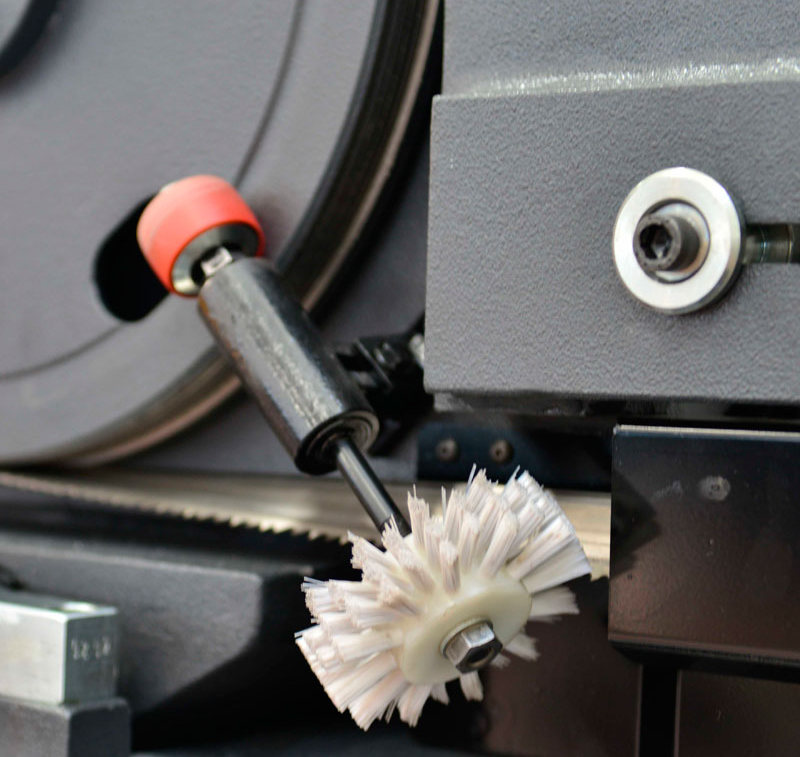
A blade-cleaning brush should remove material without damaging the blade. Commercial chip brushes are available with different diameters, bore sizes, and filament materials. The correct configuration depends on the saw and its blade, not simply on the appearance of the brush.
Nylon brushes are used for applications where a relatively non-aggressive cleaning action is needed. Metal wire brushes are also used on some industrial saws, but their suitability depends on the machine, blade, material being cut, and manufacturer’s design. A brush should never be installed merely because it physically fits the machine.
Source: metalmaster.ru
Nylon brush
Nylon can provide a less aggressive cleaning action and is used in commercial bandsaw and power-saw blade cleaning applications.
Wire brush
Wire brushes can remove stubborn chips and buildup, particularly in industrial metal-cutting applications, but the brush must be correctly specified and positioned.
Brush diameter
The diameter affects how the brush contacts the blade and whether the assembly fits the machine correctly.
Bore and mounting
The brush must match the shaft, arbor, or mounting system specified for the saw.
Blade contact
The brush should contact the blade sufficiently to clean it without creating excessive pressure or interfering with blade movement.
Should You Use a Wire Brush on a Band Saw Blade?
A wire brush can be appropriate when the saw manufacturer or brush manufacturer specifies it for the application, especially on industrial metal-cutting equipment. It is not automatically the right choice for every blade. A woodworking blade with a coating, fine teeth, or delicate configuration may require a less aggressive cleaning method.
The safest decision is to match the brush material and mounting arrangement to the machine manufacturer’s recommendations. If the documentation does not specify the appropriate brush, avoid experimenting with an aggressive powered brush directly against the blade.
Match the brush to the application
Consider blade material, tooth configuration, machine type, cutting material, and the manufacturer’s cleaning recommendations.
How to Remove Resin, Pitch, and Stubborn Buildup
Loose sawdust is usually easy to brush away, but resin and pitch require a different approach. These sticky deposits can bond to the blade surface and tooth gullets, especially when cutting resinous wood. The goal is to soften and remove the contamination without damaging the blade or exposing the machine to an incompatible solvent.
Start with mechanical cleaning using an appropriate brush. If residue remains, use a blade-safe cleaner recommended for the particular blade and machine. Read the cleaner’s label and safety information before use, and provide the ventilation and personal protective equipment specified by the product manufacturer.
Do not assume that a cleaner safe for one bandsaw component is safe for every component. Some cleaners can affect paints, plastics, rubber tires, seals, adhesives, or protective finishes. Keep chemicals away from components unless their compatibility is established.
Source: machineryhouse.co.nz
Avoid excessive soaking
Do not leave the blade submerged or heavily saturated with cleaner unless the blade manufacturer specifically permits that treatment.
Do not use an unknown solvent
An aggressive solvent may attack machine finishes, rubber components, plastics, coatings, or adhesives.
Remove loosened residue
After cleaning, wipe away the dissolved material rather than allowing it to dry back onto the blade.
Dry before use
Follow the cleaner manufacturer’s instructions regarding drying and residue before putting the blade back into service.
Cleaning Resin From a Woodworking Bandsaw Blade
For a woodworking blade covered with resin, first isolate the saw and remove loose dust. Brush the teeth and blade body carefully, then apply a compatible resin or pitch cleaner according to its instructions. Work gradually instead of forcing hardened deposits from the teeth. Once the residue has been removed, inspect the blade for damaged teeth and check the surrounding wheels and guides for transferred buildup.
Pay attention to the gullets
Resin that remains between the teeth can restrict chip space and should be removed carefully without rounding or damaging the tooth edges.
Cleaning Metal Chips From a Bandsaw Blade
Metal-cutting band saws commonly use chip brushes to remove chips from the blade during operation. The brush should be positioned according to the machine manufacturer’s instructions so it cleans the blade without excessive interference. If chips continue to accumulate, inspect the brush condition, mounting position, blade selection, cutting speed, feed, and coolant or cutting-fluid system rather than simply increasing brush pressure.
A dirty blade can indicate another problem
Excessive chip packing may result from an unsuitable tooth pitch, incorrect cutting conditions, poor chip evacuation, or a worn cleaning brush.
Preventing Band Saw Blade Buildup
Preventing buildup is usually easier than removing hardened contamination later. A correctly positioned blade or chip brush can continuously remove debris, while proper blade selection and cutting conditions reduce the amount of material that becomes trapped in the gullets.
For woodworking, keeping the machine’s wheels, tires, guides, and blade path clean is also important. A maintenance reference from Woodcraft describes using a brush in the lower wheel housing to reduce sawdust buildup and emphasizes keeping wheels clean for proper tracking. For portable sawmill applications, Wood-Mizer also describes blade lubrication systems intended to keep blades free of pitch, sap, and sawdust while sawing.
For metal cutting, commercial chip brushes are designed to remove chips from blade gullets during operation. The brush is only one part of the chip-management system, however. Blade tooth selection, cutting parameters, coolant, workpiece material, and machine setup all influence chip evacuation.
Source: woodgears.ca
Use a correctly positioned chip brush
A brush should make the intended contact with the blade without excessive pressure or interference.
Choose the correct blade
Tooth pitch and blade configuration should match the material and thickness being cut so chips have adequate space to leave the cut.
Keep wheels and tires clean
Debris on wheel surfaces can interfere with blade tracking and should be removed as part of routine machine maintenance.
Maintain blade guides
Dirty or worn guides can affect blade movement and cutting performance. Clean and inspect them according to the machine manual.
Control cutting conditions
Excessive feed pressure, incorrect blade speed, or an unsuitable tooth pattern can contribute to poor chip evacuation and premature blade wear.
How Often Should You Clean a Band Saw Blade?
There is no single cleaning interval that applies to every band saw. Cleaning frequency depends on the material being cut, resin content, production volume, blade type, cutting-fluid use, dust collection, and whether the machine has continuous chip removal.
Instead of relying only on a calendar interval, inspect the blade and surrounding machine regularly. Clean when visible buildup begins to accumulate, when gullets become packed, or when debris is being carried into wheels and guides. Follow the machine manufacturer’s scheduled maintenance intervals for components such as guides and bearings.
Light woodworking use
Inspect the blade after cutting sessions and clean when resin, pitch, or dust begins accumulating.
Resinous wood
Inspect more frequently because sticky deposits can build faster than ordinary dry sawdust.
Industrial metal cutting
Monitor the chip brush and blade during production and follow the machine manufacturer’s maintenance schedule.
Signs That a Blade Cleaning System Needs Attention
If a blade brush is installed but chips or sawdust continue to accumulate, inspect the brush for wear, the mounting position for alignment, and the blade for excessive buildup. A brush that no longer makes the intended contact may not clean effectively.
Do not compensate for a worn brush by forcing it harder against the blade. Excessive brush pressure can introduce unnecessary friction or interfere with blade movement. Correct the mounting or replace the brush when required by the equipment design.
Visible buildup remains
Persistent debris after normal cutting can indicate a worn, incorrectly positioned, or unsuitable cleaning brush.
Brush damage
Missing, bent, excessively worn, or contaminated bristles can reduce cleaning effectiveness.
Common Band Saw Blade Cleaning Mistakes
Most cleaning problems come from treating the blade as if it were an ordinary piece of metal rather than a precision cutting component. Cleaning should remove contamination without changing the tooth geometry, damaging the blade body, or introducing a new machine-maintenance problem.
The safest method is conservative: isolate the machine, use the least aggressive cleaning method that works, follow the blade and machine manufacturer’s instructions, and inspect the result before returning the saw to operation.
Source: toolstoredirect.co.uk
Cleaning while the saw is energized
Never put a hand, rag, brush, or scraper against a blade that can move unexpectedly.
Using the wrong chemical
An unsuitable solvent can damage machine components, finishes, tires, seals, or blade coatings.
Scraping teeth aggressively
Hard scraping can damage tooth edges and may bend or deform delicate components.
Ignoring the wheels
Cleaning only the blade while leaving heavy debris on the wheels or tires can leave the underlying tracking problem unresolved.
Forcing the chip brush
More brush pressure is not automatically better. The brush should be correctly positioned for the machine and blade.
Assuming cleaning fixes every cutting problem
A clean blade can still be dull, incorrectly tensioned, incorrectly tracked, improperly guided, or unsuitable for the material.
When Cleaning Is Not Enough
Replace or professionally service a blade when inspection reveals broken or missing teeth, a damaged weld, cracks, severe corrosion, significant deformation, or other defects that make continued use inappropriate. Cleaning cannot restore damaged tooth geometry or structural integrity.
If a clean blade still wanders, burns wood, produces poor cuts, or struggles to evacuate chips, investigate blade selection, tension, tracking, guides, feed rate, blade speed, and machine condition.
Clean but still cutting poorly
Move from cleaning to a complete blade and machine inspection instead of repeatedly applying cleaner.
Frequently Asked Questions
Q
What is the best way to clean a band saw blade?
The appropriate method depends on the blade and contamination. Start by isolating the machine, then remove loose sawdust or chips with a suitable brush. For resin or pitch, use a cleaner specifically confirmed as compatible with the blade and machine. Finish by wiping away residue and inspecting the blade.
Q
Can you use WD-40 to clean a band saw blade?
Do not assume that a general-purpose water-displacing or penetrating product is suitable for every bandsaw blade or machine component. Check the blade and machine manufacturer’s recommendations and the product’s intended use before applying it. A dedicated blade or resin cleaner with confirmed compatibility is a more controlled approach when such a product is recommended.
Q
How do you remove pitch from a band saw blade?
Disconnect and isolate the saw, remove loose debris, then apply a compatible pitch or resin cleaner according to its instructions. Allow the cleaner to work for the specified period, remove the softened residue with an appropriate brush or cloth, and dry the blade as directed. Avoid aggressive scraping that can damage the teeth.
Q
How do you keep metal chips off a band saw blade?
A correctly selected and positioned chip brush is commonly used to remove chips from metal-cutting band saw blades during operation. If chips continue to pack into the gullets, inspect the brush and then check tooth pitch, blade speed, feed, coolant or cutting-fluid delivery, and the material being cut.
Q
Can a dirty band saw blade cause poor cuts?
Yes, buildup can interfere with tooth gullets and blade movement, but poor cutting has many possible causes. Check the blade for contamination as well as dull or damaged teeth, then inspect tension, tracking, guides, blade selection, cutting speed, and feed conditions before identifying cleaning as the sole cause.
✦ Wrapping Up
Conclusion
Band saw blade cleaning is a straightforward maintenance task when it is matched to the blade, material being cut, and machine design. Loose sawdust and chips can usually be managed with appropriate brushing, while resin and pitch require a compatible cleaning product and more deliberate removal.
For U.S. woodworking shops, garages, fabrication facilities, and sawmill operations, the most useful approach is to combine routine inspection with prevention. Keep the blade, wheels, guides, and surrounding blade path free of unnecessary buildup, maintain the chip or blade brush when the machine uses one, and follow the manufacturer’s instructions for chemicals, blade removal, tension, and maintenance.
If cleaning does not resolve a cutting problem, stop treating the blade as the only suspect. Inspect its teeth and weld, then check the blade selection, tension, tracking, guides, speed, feed, and overall machine condition.
💡 Key Takeaway
Before the next cutting session, inspect the blade and its gullets, clean visible buildup with a blade-appropriate method, check the cleaning brush and surrounding wheels, and confirm that the saw is correctly adjusted before returning it to service.