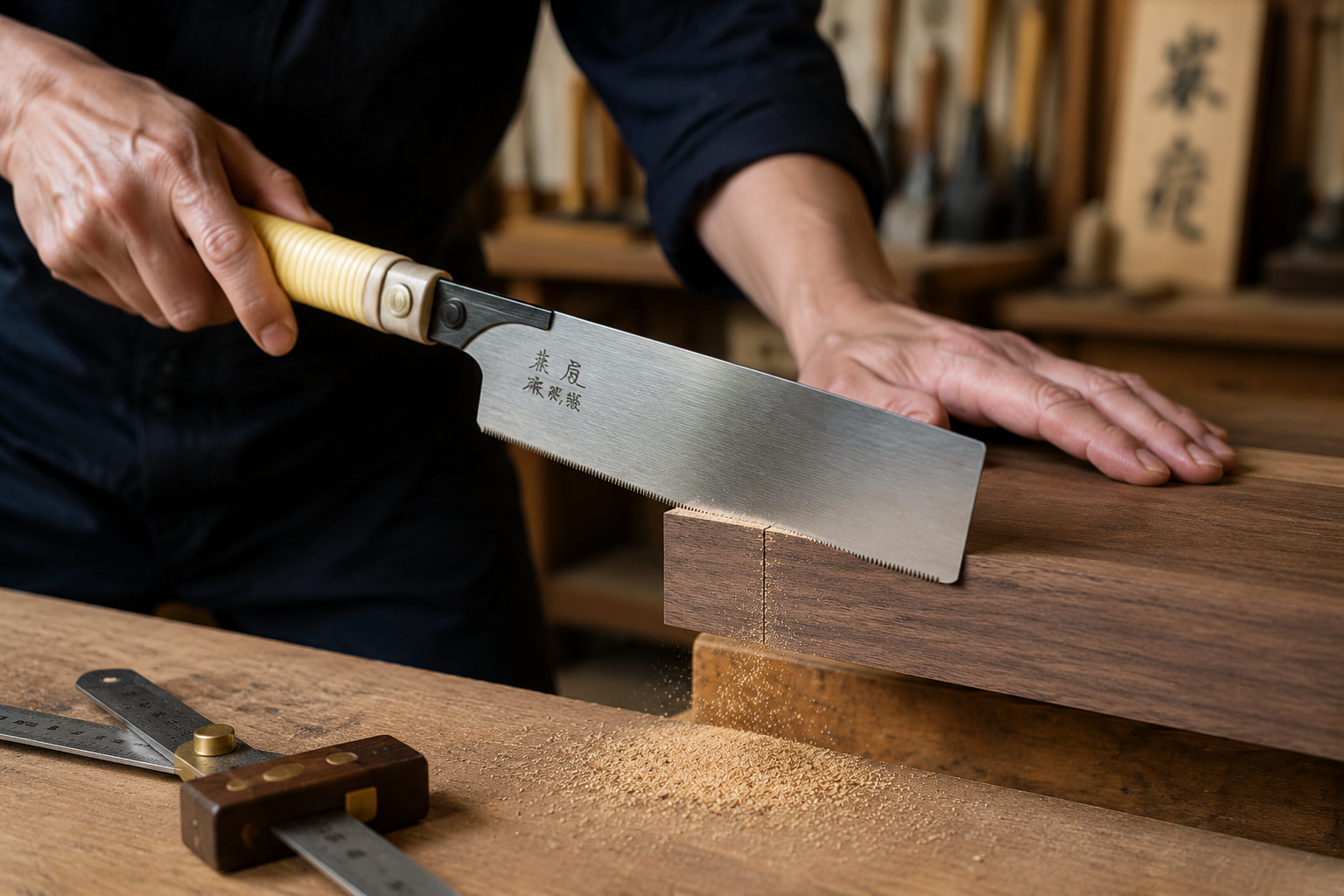
Japanese saw technique uses controlled pull strokes to make accurate, clean wood cuts.
For American woodworkers, DIY users, and carpenters, learning Japanese saw technique starts with changing one basic habit: the saw cuts when you pull it toward your body instead of pushing it forward. This pulling action keeps the thin blade under tension, helping many users guide the cut with less force.
Japanese hand saws such as ryoba, dozuki, and kataba saws are designed for different woodworking tasks. The best results come from correct setup, light grip pressure, proper alignment, and allowing the teeth to remove material instead of forcing the blade through the wood.
Source: zsxkvszxbhpwnvzxdydv.supabase.co
What Is Japanese Saw Technique?
Japanese saw technique is a woodworking method based on using a pull saw motion rather than the push motion common with many Western saws. The blade teeth face toward the handle, allowing the saw to cut as it moves back toward the user.
The thin blade design can create a narrow kerf, which means less wood is removed during cutting. This can help with detailed joinery, trimming, and projects where accuracy matters.
Pull stroke cutting
The cutting action happens during the backward stroke, while the forward movement is usually a light reset motion.
Thin flexible blade
The blade can stay tensioned during pulling, allowing controlled movement when used correctly.
Common Japanese Saw Types
Ryoba saws have two cutting edges and are commonly used for both ripping along the grain and crosscutting across the grain. Dozuki saws include a reinforced back and are often used for precise joinery cuts.
Ryoba
Useful for general woodworking because one blade can handle multiple cutting directions.
Dozuki
Designed for controlled fine cuts such as joinery and detail work.
How to Use a Japanese Saw Step by Step
Successful Japanese saw technique begins before the first cut. Mark the cutting line clearly, secure the material, and position yourself so you can watch the blade follow the mark.
Use the following process to develop a controlled pull stroke.
Prepare the workpiece
Mark the cut line and secure the wood so movement does not affect accuracy.
Hold the saw lightly
Use a relaxed grip because excessive force can cause the blade to twist or bind.
Pull smoothly
Keep your arm and saw aligned, then use steady strokes without pushing down aggressively.
How to Start a Straight Cut
Place the teeth at the beginning of the cut line and use short, controlled pulls until a groove forms. Once the kerf is established, continue with longer strokes using the full blade length.
Choosing the Right Cutting Motion and Angle
The correct angle depends on the material thickness and the type of cut. A shallow angle can help with thin stock, while thicker material may require a slightly higher angle to keep more teeth engaged.
Avoid changing direction rapidly during the stroke. Smooth movement produces cleaner results and reduces unnecessary stress on the blade.
Thin material
Use controlled shallow strokes and avoid forcing the teeth into the surface.
Thick material
Use steady full-length pulls and allow the saw teeth to remove material gradually.
Common Japanese Saw Technique Mistakes
Many beginners struggle because they use habits developed from push saws. Recognizing the difference between the two cutting styles helps prevent poor results.
Using too much pressure
Pressing down can damage the blade and reduce cutting accuracy.
Holding too tightly
A stiff grip limits natural blade movement and makes straight cuts harder.
Ignoring blade direction
Japanese saw teeth are designed for pulling, not aggressive forward pushing.
Frequently Asked Questions
Q
Is a Japanese saw harder to use than a Western saw?
A Japanese saw can feel unfamiliar at first because the cutting motion is different. Most users need practice adjusting to the pull stroke and lighter pressure.
Q
Can beginners use Japanese saws?
Yes. Beginners can learn Japanese saw technique by starting with simple cuts, clear markings, and controlled strokes. Proper handling is more important than physical strength.
Q
What is the difference between a ryoba and a dozuki saw?
A ryoba usually has two cutting edges for different grain directions, while a dozuki has a reinforced back and is commonly used for detailed precision work.
Q
Why does my Japanese saw cut crooked?
Crooked cuts often come from poor alignment, uneven pressure, or changing the blade angle during the stroke. Check your body position and let the saw move naturally.
Q
How should a Japanese saw be maintained?
Keep the teeth clean from sawdust and store the blade safely to prevent damage. Replaceable blades should be changed according to the manufacturer’s instructions when cutting performance declines.
✦ Wrapping Up
Conclusion
Japanese saw technique focuses on control, accuracy, and efficient pull strokes. The method becomes easier when users stop forcing the tool and allow the blade design to work as intended.
With proper preparation, a relaxed grip, and consistent practice, Japanese saws can become reliable tools for detailed woodworking and everyday projects.
💡 Key Takeaway
Start with a simple straight cut, focus on smooth pull strokes, and improve accuracy before increasing speed.